
Galectins are a family of carbohydrate-binding proteins with specificity for N-acetyl-lactosamine-containing glycoproteins. At least 14 mammalian galectins share structural similarities in their carbohydrate recognition domains (CRD), forming three groups often termed prototype (one CRD), tandem-repeat (two CRDs) and chimeric (one CRD, unique N-terminus) (1, 2). All lack classical signal peptides, but are present and active both within and outside of the cell. Galectins are involved in cell adhesion, migration, survival, and apoptosis, and are often up- or down-regulated in cancer (1-3). Galectin-4 is a 36 kDa tandem-repeat galectin found throughout the gastrointestinal tract, but also present in well-differentiated breast and liver carcinomas (3, 4). Each CRD binds a different set of carbohydrate groups, including those found on erythrocyte blood group antigens (3, 5). CRD1 also binds cholesterol 3-sulfate and other sulfatides, which are concentrated within lipid raft membrane microdomains (6, 7). Endocytosed Galectin-4 is thought to play a role in forming the rafts, delivering them to the intestinal apical membrane, and stabilizing highly detergent-resistant "superrafts" (7-9). Human Galectin-4 shares 76%, 77%, 78%, and 80% amino acid (aa) identity with mouse, rat, bovine, and porcine Galectin-4, respectively, with the highest identity occurring within the CRDs. A potential splice variant begins at aa 132 and lacks most of the first CRD (10). Galectin-4 expression is concentrated within microvilli in the gastrointestinal epithelium, where it can interact with CD3 and bind activated T cells in the lamina propria during intestinal inflammation (11, 12). Either pro- or anti-inflammatory activity has been shown, depending on the mouse model used. Galectin-4 can also bind lung, spleen, and kidney macrophages, although its expression is normally low in these tissues (5).

Scientific images may be resized, cropped, or adjusted for brightness or contrast for presentation purposes. These updates are limited to presentation and do not affect the underlying scientific interpretation of the data. Where available, additional source data may be provided upon request.
Key Product Details
Species Reactivity
Validated:
Cited:
Applications
Validated:
Cited:
Label
Antibody Source
Product Specifications
Immunogen
Ala2-Ile326
Accession # Q8K419
Specificity
Clonality
Host
Isotype
Scientific Data Images for Mouse Galectin-4 Antibody
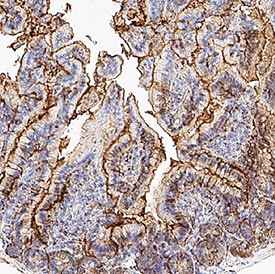
Detection of Galectin‑4 in Mouse Intestine.
Galectin‑4 was detected in immersion fixed paraffin-embedded sections of Mouse Intestine using Goat Anti-Mouse Galectin‑4 Antigen Affinity-purified Polyclonal Antibody (Catalog # AF2128) at 3 µg/mL for 1 hour at room temperature followed by incubation with the Anti-Goat IgG VisUCyte™ HRP Polymer Antibody (Catalog # VC004). Before incubation with the primary antibody, tissue was subjected to heat-induced epitope retrieval using VisUCyte Antigen Retrieval Reagent-Basic (Catalog # VCTS021). Tissue was stained using DAB (brown) and counterstained with hematoxylin (blue). Specific staining was localized to cytoplasm and plasma membrane in intestinal epithelial cells. View our protocol for IHC Staining with VisUCyte HRP Polymer Detection Reagents.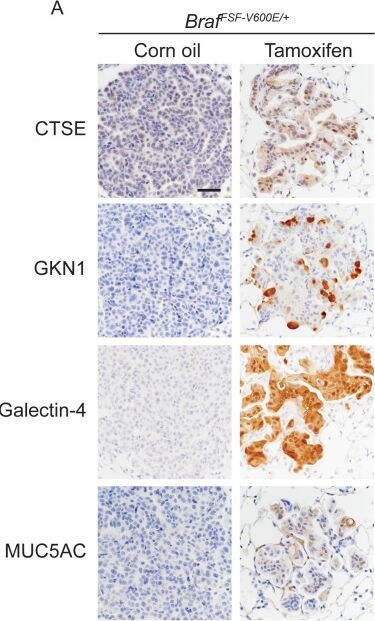
Detection of Galectin-4 by Immunohistochemistry
Nkx2-1 deletion in established BRAF-mutant LUAD induces mucinous adenocarcinoma without altering tumor growth.(A) Immunostaining for indicated mucin/gastric markers in NKX2-1-positive and -negative LUADs. Lung tumor sections were obtained from corn oil or tamoxifen treated BrafFSF-V600E/+;Trp53frt/frt;Nkx2-1f/f;Rosa26FSF-CreERT2/FSF-CreERT2 mice 6 weeks post-initiation with Ad5CMV-FlpO adenovirus (2 × 10⁷ pfu/mouse). Scale bar: 100 µm. (B, C) Quantitation of MCM2-positive cells in lung tumors at 6 weeks after initiation, and following corn oil/tamoxifen injections at 3 weeks. Lung neoplasia was initiated with Ad5CMV-FlpO adenovirus (2 × 10⁷ pfu/mouse) in BrafFSF-V600E/+;Trp53frt/frt;Nkx2-1f/f;Rosa26FSF-CreERT2/FSF-CreERT2 and KrasFSF-G12D/+;Trp53frt/frt;Nkx2-1f/f;Rosa26FSF-CreERT2/FSF-CreERT2 mice. Graphs represent mean ± S.D. Multiple tumors in BrafFSF-V600E/+;Trp53frt/frt;Nkx2-1f/f;Rosa26FSF-CreERT2/FSF-CreERT2 oil (n = 7 mice); tamoxifen administered (n = 5 mice); KrasFSF-G12D/+;Trp53frt/frt;Nkx2-1f/f;Rosa26FSF-CreERT2/FSF-CreERT2 oil (n = 4 mice) and tamoxifen administered (n = 5 mice) were analyzed. (D) Representative images of high-grade tumors obtained from a BrafFSF-V600E/+;Trp53frt/frt;Nkx2-1f/f;Rosa26FSF-CreERT2/FSF-CreERT2 mouse that had received tamoxifen injections. Scale bar: 100 µm. (E) Grades for individual tumors based on criteria described for Figure 1D. Histopathologic assessment was performed for mice enrolled in survival study (Figure 2E). Image collected and cropped by CiteAb from the following open publication (https://pubmed.ncbi.nlm.nih.gov/33821796), licensed under a CC-BY license. Not internally tested by R&D Systems.Applications for Mouse Galectin-4 Antibody
Immunohistochemistry
Sample: Immersion fixed paraffin-embedded sections of Mouse Intestine
Western Blot
Sample: Recombinant Mouse Galectin‑4 (Catalog # 2128-GA)
Reviewed Applications
Read 3 reviews rated 4.7 using AF2128 in the following applications:
Formulation, Preparation, and Storage
Purification
Reconstitution
Reconstitute at 0.2 mg/mL in sterile PBS. For liquid material, refer to CoA for concentration.
Formulation
Shipping
Stability & Storage
- 12 months from date of receipt, -20 to -70 °C as supplied.
- 1 month, 2 to 8 °C under sterile conditions after reconstitution.
- 6 months, -20 to -70 °C under sterile conditions after reconstitution.
Calculators
Background: Galectin-4
References
- Yang, R-Y. et al. (2008) Expert Rev. Mol. Med. 10:e17.
- Elola, M.T. et al. (2007) Cell. Mol. Life Sci. 64:1679.
- Huflejt, M.E. and H. Leffler (2004) Glycoconj. J. 20:247.
- Recreche, H. et al. (1997) Eur. J. Biochem. 248:225.
- Markova, V. et al. (2006) Int. J. Mol. Med. 18:65.
- Ideo, H. et al. (2007) J. Biol. Chem. 282:21081.
- Delacour, D. et al. (2005) J. Cell Biol. 169:491.
- Braccia, A. et al. (2003) J. Biol. Chem. 278:15679.
- Stechly, L. et al. (2009) Traffic 10:438.
- Entrez accession # EAW56820.
- Hokama, A. et al. (2004) Immunity 20:681.
- Paclik, D. et al. (2008) PLoS ONE 3:e2629.
Alternate Names
Gene Symbol
UniProt
Additional Galectin-4 Products
Product Documents for Mouse Galectin-4 Antibody
Certificate of Analysis
To download a Certificate of Analysis, please enter a lot or batch number in the search box below.
Note: Certificate of Analysis not available for kit components.
Product Specific Notices for Mouse Galectin-4 Antibody
For research use only
Related Research Areas
Citations for Mouse Galectin-4 Antibody
 Powered by Bioz
Customer Reviews for Mouse Galectin-4 Antibody (3)
Have you used Mouse Galectin-4 Antibody?
Submit a review and receive an Amazon gift card!
$25/€18/£15/$25CAN/¥2500 for a review with an image
$10/€7/£6/$10CAN/¥1110 for a review without an image
Submit a review
Customer Images
-
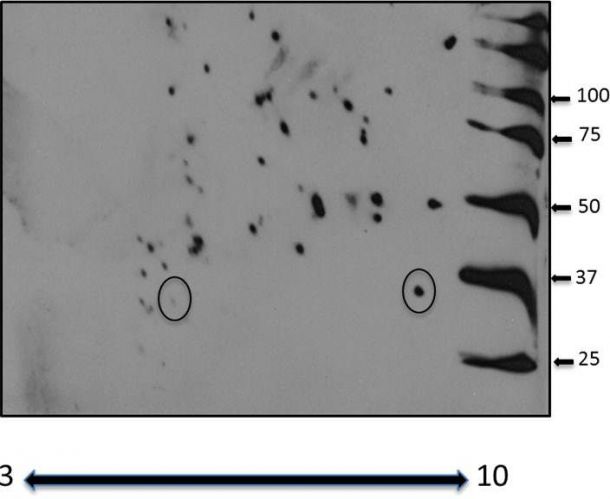
Application: 2D gel, protein modificationSample Tested: Cell LysatesSpecies: HumanVerified Customer | Posted 10/26/2015Although there were mutliple bands, the one circled are galectin-4, the others are interactors isolated on a 2D gel. Using human cell lysates in 2D buffer. <br />Specificity: Specific<br />Sensitivity: Sensitive<br />Buffer: BSA<br />Dilution: 1:1000

-
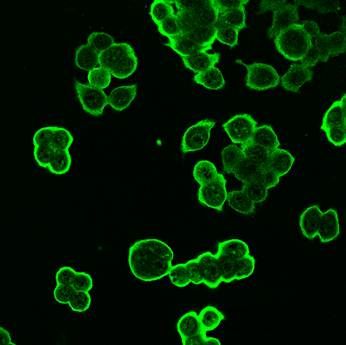
Application: Immunocytochemistry/ImmunofluorescenceSample Tested: Cancer CellsSpecies: HumanVerified Customer | Posted 10/26/2015This antibody is as good as the monoclonal antibody from R&D. <br />Specificity: Specific<br />Sensitivity: Reasonably sensitive<br />Buffer: PBS<br />Dilution: 1:1000
-
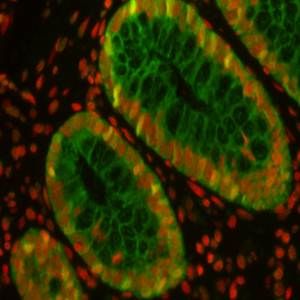
Application: Immunocytochemistry/ImmunofluorescenceSample Tested: Colon tissueSpecies: HumanVerified Customer | Posted 10/26/2015Very specific, Red is propidium iodide the nuclear stain. <br />Specificity: Specific<br />Sensitivity: Reasonably sensitive<br />Buffer: PBS<br />Dilution: 1:500
There are no reviews that match your criteria.
Protocols
Find general support by application which include: protocols, troubleshooting, illustrated assays, videos and webinars.
- Antigen Retrieval Protocol (PIER)
- Antigen Retrieval for Frozen Sections Protocol
- Appropriate Fixation of IHC/ICC Samples
- Cellular Response to Hypoxia Protocols
- Chromogenic IHC Staining of Formalin-Fixed Paraffin-Embedded (FFPE) Tissue Protocol
- Chromogenic Immunohistochemistry Staining of Frozen Tissue
- ClariTSA™ Fluorophore Kits
- Detection & Visualization of Antibody Binding
- Fluorescent IHC Staining of Frozen Tissue Protocol
- Graphic Protocol for Heat-induced Epitope Retrieval
- Graphic Protocol for the Preparation and Fluorescent IHC Staining of Frozen Tissue Sections
- Graphic Protocol for the Preparation and Fluorescent IHC Staining of Paraffin-embedded Tissue Sections
- Graphic Protocol for the Preparation of Gelatin-coated Slides for Histological Tissue Sections
- IHC Sample Preparation (Frozen sections vs Paraffin)
- Immunofluorescent IHC Staining of Formalin-Fixed Paraffin-Embedded (FFPE) Tissue Protocol
- Immunohistochemistry (IHC) and Immunocytochemistry (ICC) Protocols
- Immunohistochemistry Frozen Troubleshooting
- Immunohistochemistry Paraffin Troubleshooting
- Preparing Samples for IHC/ICC Experiments
- Preventing Non-Specific Staining (Non-Specific Binding)
- Primary Antibody Selection & Optimization
- Protocol for Heat-Induced Epitope Retrieval (HIER)
- Protocol for Making a 4% Formaldehyde Solution in PBS
- Protocol for VisUCyte™ HRP Polymer Detection Reagent
- Protocol for the Preparation & Fixation of Cells on Coverslips
- Protocol for the Preparation and Chromogenic IHC Staining of Frozen Tissue Sections
- Protocol for the Preparation and Chromogenic IHC Staining of Frozen Tissue Sections - Graphic
- Protocol for the Preparation and Chromogenic IHC Staining of Paraffin-embedded Tissue Sections
- Protocol for the Preparation and Chromogenic IHC Staining of Paraffin-embedded Tissue Sections - Graphic
- Protocol for the Preparation and Fluorescent IHC Staining of Frozen Tissue Sections
- Protocol for the Preparation and Fluorescent IHC Staining of Paraffin-embedded Tissue Sections
- Protocol for the Preparation of Gelatin-coated Slides for Histological Tissue Sections
- R&D Systems Quality Control Western Blot Protocol
- TUNEL and Active Caspase-3 Detection by IHC/ICC Protocol
- The Importance of IHC/ICC Controls
- Troubleshooting Guide: Immunohistochemistry
- Troubleshooting Guide: Western Blot Figures
- Western Blot Conditions
- Western Blot Protocol
- Western Blot Protocol for Cell Lysates
- Western Blot Troubleshooting
- Western Blot Troubleshooting Guide
- View all Protocols, Troubleshooting, Illustrated assays and Webinars