VCAM-1 (Vascular Cell Adhesion Molecule-1; CD106) is a transmembrane molecule that mediates the adhesion of immune cells to the vascular endothelium during inflammation. It binds to several integrins including alpha4/beta1 (VLA-4), alpha4/beta7, alpha9/beta1, and alphaD/beta2. It is expressed constitutively in the bone marrow where it regulates T cell, B cell, and hematopoietic progenitor cell migration. A soluble form VCAM-1 can promote monocyte chemotaxis.
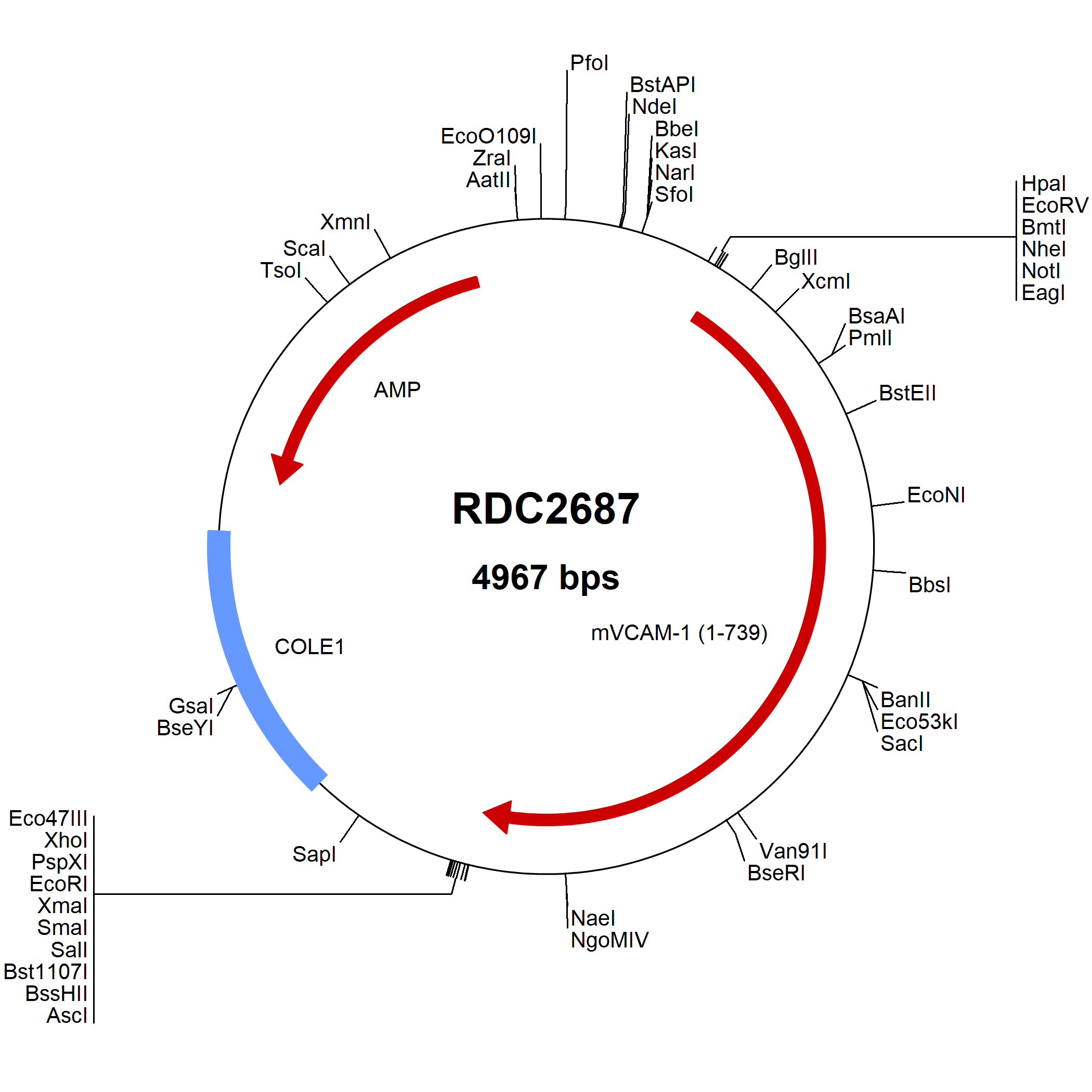
Mouse VCAM-1/CD106 (AAA40545) VersaClone cDNA
R&D Systems | Catalog # RDC2687

Loading...
Loading...
Formulation, Preparation, and Storage
Shipping
The product is shipped at ambient temperature. Upon receipt, store it immediately at the temperature recommended below.
Storage
Store the unopened product at -20 to -70 °C. Use a manual defrost freezer and avoid repeated freeze-thaw cycles. Do not use past expiration date.
Background: VCAM-1/CD106
Long Name
Vascular Cell Adhesion Molecule 1
Alternate Names
CD106, VCAM1
Gene Symbol
VCAM1
UniProt
Additional VCAM-1/CD106 Products
Product Documents for Mouse VCAM-1/CD106 (AAA40545) VersaClone cDNA
Certificate of Analysis
To download a Certificate of Analysis, please enter a lot or batch number in the search box below.
Note: Certificate of Analysis not available for kit components.
Product Specific Notices for Mouse VCAM-1/CD106 (AAA40545) VersaClone cDNA
For research use only
Related Research Areas
Customer Reviews for Mouse VCAM-1/CD106 (AAA40545) VersaClone cDNA
There are currently no reviews for this product. Be the first to review Mouse VCAM-1/CD106 (AAA40545) VersaClone cDNA and earn rewards!
Have you used Mouse VCAM-1/CD106 (AAA40545) VersaClone cDNA?
Submit a review and receive an Amazon gift card!
$25/€18/£15/$25CAN/¥2500 for a review with an image
$10/€7/£6/$10CAN/¥1110 for a review without an image
Submit a review
Loading...
Associated Pathways