
NQO-1 Antibody (A180) - BSA Free
Novus Biologicals | Catalog # NB200-209

![Western Blot: NQO-1 Antibody (A180) [NB200-209]](https://resources.rndsystems.com/images/products/NQO-1-Antibody-A180-Western-Blot-NB200-209-img0019.jpg "Western Blot: NQO-1 Antibody (A180) [NB200-209]")
Scientific images may be resized, cropped, or adjusted for brightness or contrast for presentation purposes. These updates are limited to presentation and do not affect the underlying scientific interpretation of the data. Where available, additional source data may be provided upon request.
Key Product Details
Validated by
Species Reactivity
Validated:
Cited:
Applications
Validated:
Cited:
Label
Antibody Source
Format
Product Specifications
Immunogen
Reactivity Notes
Localization
Specificity
Clonality
Host
Isotype
Theoretical MW
Disclaimer note: The observed molecular weight of the protein may vary from the listed predicted molecular weight due to post translational modifications, post translation cleavages, relative charges, and other experimental factors.
Scientific Data Images for NQO-1 Antibody (A180) - BSA Free
![Immunocytochemistry/ Immunofluorescence: NQO-1 Antibody (A180) [NB200-209]](https://resources.rndsystems.com/images/products/NQO-1-Antibody-A180-Immunocytochemistry-Immunofluorescence-NB200-209-img0010.jpg "Immunocytochemistry/ Immunofluorescence: NQO-1 Antibody (A180) [NB200-209]")
Immunocytochemistry/ Immunofluorescence: NQO-1 Antibody (A180) [NB200-209]
Immunocytochemistry/Immunofluorescence: NQO-1 Antibody (A180) [NB200-209] - NQO1 antibody was tested in U2OS cells with Dylight 488 (green). Nuclei and beta-tubulin were counterstained with DAPI (blue) and Dylight 550 (red).![Immunohistochemistry-Paraffin: NQO-1 Antibody (A180) [NB200-209]](https://resources.rndsystems.com/images/products/NQO-1-Antibody-A180-Immunohistochemistry-Paraffin-NB200-209-img0014.jpg "Immunohistochemistry-Paraffin: NQO-1 Antibody (A180) [NB200-209]")
Immunohistochemistry-Paraffin: NQO-1 Antibody (A180) [NB200-209]
Immunohistochemistry-Paraffin: NQO-1 Antibody (A180) [NB200-209] - Analysis of NQO1 in human breast cancer using DAB with hematoxylin counterstain.![Flow Cytometry: NQO-1 Antibody (A180) [NB200-209]](https://resources.rndsystems.com/images/products/NQO-1-Antibody-A180-Flow-Cytometry-NB200-209-img0018.jpg "Flow Cytometry: NQO-1 Antibody (A180) [NB200-209]")
Flow Cytometry: NQO-1 Antibody (A180) [NB200-209]
Flow Cytometry: NQO-1 Antibody (A180) [NB200-209] - An intracellular stain was performed on U-87 cells with NQO-1 [A180] Antibody NB200-209AF647 (blue) and a matched isotype control (orange). Cells were fixed with 4% PFA and then permeabilized with 0.1% saponin. Cells were incubated in an antibody dilution of 2.5 ug/mL for 30 minutes at room temperature. Both antibodies were conjugated to Alexa Fluor 647.![Western Blot: NQO-1 Antibody (A180) [NB200-209]](https://resources.rndsystems.com/images/products/NQO-1-Antibody-A180-Western-Blot-NB200-209-img0007.jpg "Western Blot: NQO-1 Antibody (A180) [NB200-209]")
Western Blot: NQO-1 Antibody (A180) [NB200-209]
Western Blot: NQO-1 Antibody (A180) [NB200-209] - Detection of NQO1 in A549 lysates using NB 200-209. Lane 1: 0.5 ug/ml. Lane 2: 2 ug/ml. Exposure: 1 second.![Immunohistochemistry-Paraffin: NQO-1 Antibody (A180) [NB200-209]](https://resources.rndsystems.com/images/products/NQO-1-Antibody-A180-Immunohistochemistry-Paraffin-NB200-209-img0012.jpg "Immunohistochemistry-Paraffin: NQO-1 Antibody (A180) [NB200-209]")
Immunohistochemistry-Paraffin: NQO-1 Antibody (A180) [NB200-209]
Immunohistochemistry-Paraffin: NQO-1 Antibody (A180) [NB200-209] - Immunohistochemistry showing Anti-NQ01 on formalin fixed paraffin embedded human kidney tissue![Flow (Intracellular): NQO-1 Antibody (A180) [NB200-209]](https://resources.rndsystems.com/images/products/NQO-1-Antibody-A180-Flow-Intracellular-NB200-209-img0015.jpg "Flow (Intracellular): NQO-1 Antibody (A180) [NB200-209]")
Flow (Intracellular): NQO-1 Antibody (A180) [NB200-209]
Flow (Intracellular): NQO-1 Antibody (A180) [NB200-209] - An intracellular stain was performed on U87MG cells with NQO1 (A180) antibody NBP2-24917 (blue) along with a matched isotype control NBP2-27287 (orange). Cells were fixed with 4% PFA and permeabilized with 0.1% saponin. Cells were incubated in an antibody dilution of 1 ug/mL for 30 minutes at room temperature, followed by mouse F(ab)2 IgG (H+L) APC-conjugated secondary antibody (F0101B, R&D Systems).![Flow Cytometry: NQO-1 Antibody (A180) [NB200-209]](https://resources.rndsystems.com/images/products/NQO-1-Antibody-A180-Flow-Cytometry-NB200-209-img0016.jpg "Flow Cytometry: NQO-1 Antibody (A180) [NB200-209]")
Flow Cytometry: NQO-1 Antibody (A180) [NB200-209]
Flow Cytometry: NQO-1 Antibody (A180) [NB200-209] - Detection of NQO-1 in Human A549 Cell Line by Flow Cytometry. Human A549 cell line was stained with Mouse Anti- NQO-1 Monoclonal Antibody (Catalog # NB200-209, filled histogram), or Mouse IgG1 isotype control (Catalog # MAB002, open histogram) followed by APC-conjugated Anti-Mouse IgG Secondary Antibody (Catalog # F0101B). To facilitate intracellular staining, cells were fixed with FlowX FoxP3 Fixation & Permeabilization Buffer Kit (Catalog # FC012).Images may not be copied, printed or otherwise disseminated without express written permission of Novus Biologicals a bio-techne brand.
![Flow Cytometry: NQO-1 Antibody (A180) [NB200-209]](https://resources.rndsystems.com/images/products/NQO-1-Antibody-A180-Flow-Cytometry-NB200-209-img0017.jpg "Flow Cytometry: NQO-1 Antibody (A180) [NB200-209]")
Flow Cytometry: NQO-1 Antibody (A180) [NB200-209]
Flow Cytometry: NQO-1 Antibody (A180) [NB200-209] - An intracellular stain was performed on U-87 cells with NQO-1 [A180] Antibody NB200-209C (blue) and a matched isotype control (orange). Cells were fixed with 4% PFA and then permeabilized with 0.1% saponin. Cells were incubated in an antibody dilution of 2.5 ug/mL for 30 minutes at room temperature. Both antibodies were conjugated to DyLight 650.![Simple Western: NQO-1 Antibody (A180) [NB200-209]](https://resources.rndsystems.com/images/products/NQO-1-Antibody-A180-Simple-Western-NB200-209-img0013.jpg "Simple Western: NQO-1 Antibody (A180) [NB200-209]")
Simple Western: NQO-1 Antibody (A180) [NB200-209]
Simple Western: NQO-1 Antibody (A180) [NB200-209] - Simple Western lane view shows a specific band for NQO-1 in 0.5 mg/ml of A431 lysate. This experiment was performed under reducing conditions using the 12-230 kDa separation system.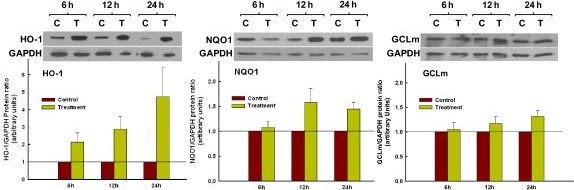
Western Blot: NQO-1 Antibody (A180) [NB200-209] -
Western Blot: NQO-1 Antibody (A180) [NB200-209] - Antioxidant enzyme synthesis in response to orange oil treatment. Immunoblot analysis demonstrating expression of HO-1, NQO1 & GCLm proteins at 6, 12 & 24 hrs following 15 min treatment of BEAS-2B cells with the oil preparation or time-matched soy oil control. Representative blots from one of three separate experiments are shown above. Densitometric evaluations of each target protein blot normalized to its corresponding GAPDH for all three experiments are provided below. Bars represent mean ± SEM. Image collected & cropped by CiteAb from the following publication (https://respiratory-research.biomedcentral.com/articles/10.1186/1465-99…), licensed under a CC-BY license. Not internally tested by Novus Biologicals.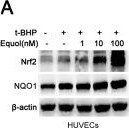
Western Blot: NQO-1 Antibody (A180) [NB200-209] -
Western Blot: NQO-1 Antibody (A180) [NB200-209] - Equol attenuated ER stress by activating Nrf2 in vitro & in vivo.(A) HUVECs were incubated with different concentrations (1, 10 & 100 nM) of equol for 24 h before treatment with t-BHP (50 μM) for another 6 h. The expression of Nrf2 & NQO1 was detected by western blotting. (C) Total tissue lysates from the thoracic & abdominal aorta of apoE-/- mice with or without equol treatment were immunoblotted with anti-Nrf2 & anti-beta -actin antibodies. (E) Cells were transfected with Nrf2 siRNA for 5~6 h; the medium was then replaced with fresh culture medium, followed by incubation for another 24 h. Thereafter, the cells were treated with equol (100 nM) for 24 h & then were incubated with t-BHP (50 μM) for an additional 6 h. The cells were collected & lysed, & western blot analysis was performed. (B)(D)(F) The bar charts show the quantification of the indicated proteins. (G) HUVECs were transfected with Nrf2 siRNA & treated as described in (C), & cell apoptosis was assayed using the Cell Death Detection ELISAplus Kit. Values are presented as means ± SD. n = 3, *p < 0.05, **p < 0.01, ***p < 0.001 versus the control group, RC group or siRNA treated with no drug group; #p < 0.01, ##p < 0.001 versus the t-BHP-treated group & siRNA plus t-BHP treated group. Image collected & cropped by CiteAb from the following publication (https://pubmed.ncbi.nlm.nih.gov/27907038), licensed under a CC-BY license. Not internally tested by Novus Biologicals.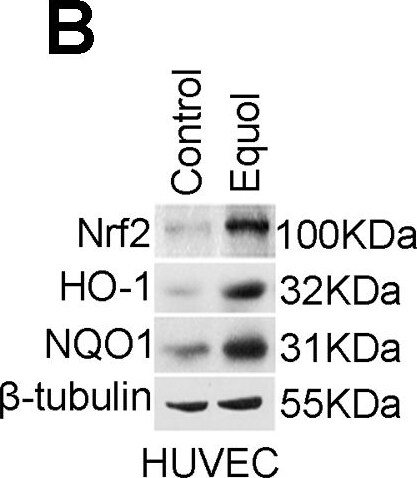
Western Blot: NQO-1 Antibody (A180) [NB200-209] -
Western Blot: NQO-1 Antibody (A180) [NB200-209] - S-(-)equol primarily up-regulated Nrf2 protein expression activating ARE-dependent response.(A) Whole EA.hy926 cells lysates of cells treated with 250 nM S-(-)equol, 500 nM daidzein, or 50 µM tBHQ for 24 h were subjected to immunoblot analysis with anti-Nrf2, anti-HO-1, anti-NQO1, & anti-beta -tubulin antibodies. (B) Total HUVECs lysates of cell treated with 250 nM S-(-)equol for 24 h were immunoblotted with anti-Nrf2 & anti-beta -tubulin antibodies. (C) EA.hy926 cells were transfected with plasmids containing an HA-tagged Nrf2 open reading frame & the renilla firefly luciferase gene. Medium was changed after 6 hours of incubation. Where indicated, extracts from HA-Nrf2 EA hy.92 cells were additionally probed with anti-HA antibody, anti-Nrf2, anti-HO-1, anti-NQO1 & anti-beta -tubulin antibodies. Values are means of three independent experiments with standard deviations represented by vertical bars. Mean values were significantly different compared to controls (*p<0.05). Total RNA was extracted from EA.hy926 cells or HUVECs treated as indicated, & Nrf2 (D), HO-1 (E), & NQO1 (F) mRNA was measured by real-time RT-PCR analysis. The values shown represent the mean ± SD obtained for three independent experiments (*p<0.05). Image collected & cropped by CiteAb from the following publication (https://pubmed.ncbi.nlm.nih.gov/24260155), licensed under a CC-BY license. Not internally tested by Novus Biologicals.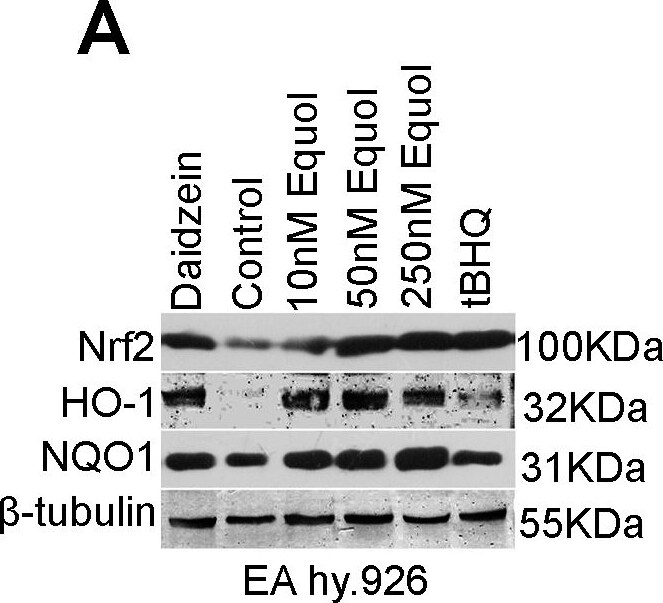
Western Blot: NQO-1 Antibody (A180) [NB200-209] -
Western Blot: NQO-1 Antibody (A180) [NB200-209] - S-(-)equol primarily up-regulated Nrf2 protein expression activating ARE-dependent response.(A) Whole EA.hy926 cells lysates of cells treated with 250 nM S-(-)equol, 500 nM daidzein, or 50 µM tBHQ for 24 h were subjected to immunoblot analysis with anti-Nrf2, anti-HO-1, anti-NQO1, & anti-beta -tubulin antibodies. (B) Total HUVECs lysates of cell treated with 250 nM S-(-)equol for 24 h were immunoblotted with anti-Nrf2 & anti-beta -tubulin antibodies. (C) EA.hy926 cells were transfected with plasmids containing an HA-tagged Nrf2 open reading frame & the renilla firefly luciferase gene. Medium was changed after 6 hours of incubation. Where indicated, extracts from HA-Nrf2 EA hy.92 cells were additionally probed with anti-HA antibody, anti-Nrf2, anti-HO-1, anti-NQO1 & anti-beta -tubulin antibodies. Values are means of three independent experiments with standard deviations represented by vertical bars. Mean values were significantly different compared to controls (*p<0.05). Total RNA was extracted from EA.hy926 cells or HUVECs treated as indicated, & Nrf2 (D), HO-1 (E), & NQO1 (F) mRNA was measured by real-time RT-PCR analysis. The values shown represent the mean ± SD obtained for three independent experiments (*p<0.05). Image collected & cropped by CiteAb from the following publication (https://pubmed.ncbi.nlm.nih.gov/24260155), licensed under a CC-BY license. Not internally tested by Novus Biologicals.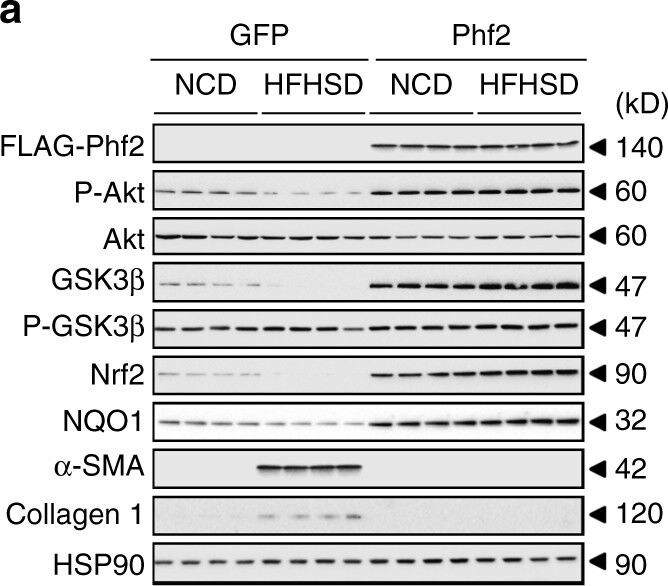
Western Blot: NQO-1 Antibody (A180) [NB200-209] -
Western Blot: NQO-1 Antibody (A180) [NB200-209] - Phf2 protects the liver from high fat & high sucrose diet-induced fibrogenesis during obesity. GFP or Phf2 were overexpressed through AAV strategy specifically in the liver of 7-week-old male C57Bl/6 J mice. Mice were then fed with either a chow diet (NCD) or with a high fat & high sucrose diet (HFHSD) for 16 weeks. Mice were studied in the fed state. a Representative western blot analysis showing the contribution of Phf2 overexpression to the regulation of the PI3K/Akt signaling & pro-fibrogenic pathways in liver extracts (n = 15 per group). b (Left) Oral glucose tolerance test & insulin levels during the OGTT test. (right) Insulin tolerance test (n = 15 per group). c Liver sections stained with hematoxylin & eosin (H&E), trichrome masson & sirius red are shown. Scale bars = 100 μm (n = 10 per group). d Percentage of fibrotic area & percentage of apoptotic hepatocytes (n = 15 per group). e Relative oxidized GSSG content & measurement of Gpx activity (n = 10 per group). f Levels of carbonylated proteins (n = 10 mice per group). All error bars represent mean ± SEM. Statistical analyses were made using unpaired t-test (b) or Anova, followed by Bonferonni’s test (d, e). *P < 0.01 HFHSD/GFP compared to HFHSD/Phf2, $P < 0.01 HFHSD/GFP compared to NCD/GFP, £P < 0.01 HFHSD/Phf2 compared to HFHSD/GFP Image collected & cropped by CiteAb from the following publication (https://www.nature.com/articles/s41467-018-04361-y), licensed under a CC-BY license. Not internally tested by Novus Biologicals.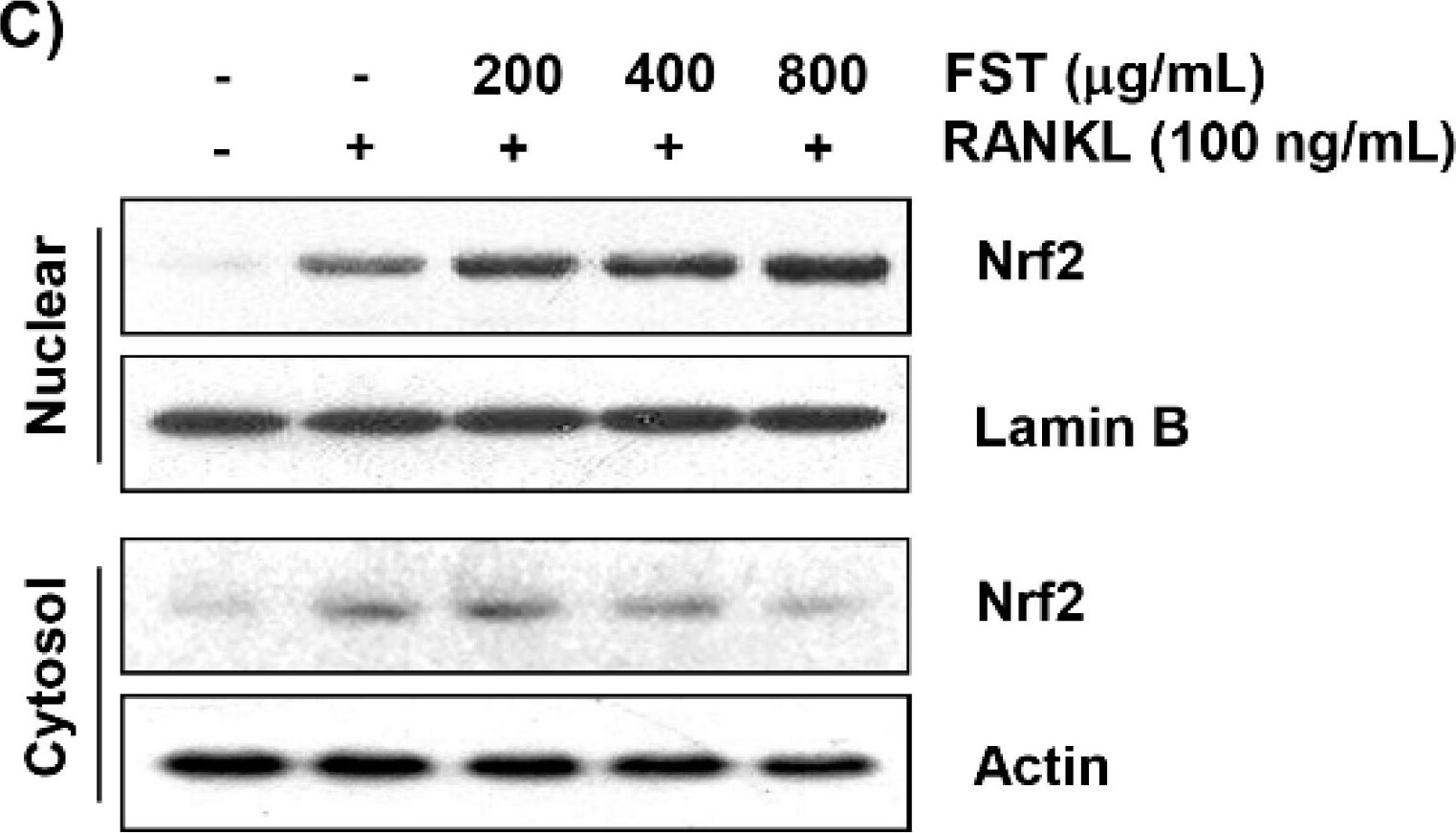
Western Blot: NQO-1 Antibody (A180) [NB200-209] -
Western Blot: NQO-1 Antibody (A180) [NB200-209] - Activation of Nrf2 signaling pathway by FST in RAW 264.7 mouse macrophage-like cells. Cells were treated with FST with or without 100 ng/mL RANKL for 5 days. (A) Total cellular proteins were isolated from cells & the expression levels of Nrf2 & its regulatory proteins were assessed by Western blot analysis. beta -actin was used as the internal control. (C) The expression of nuclear & cytosol Nrf2 were determined by Western blotting. Lamin B & beta -actin were used as internal controls for the nuclear & cytosolic fractions, respectively. The results shown are representative of three independent experiments. (B,D) Statistical analyses were conducted using analysis of variances between groups. * p < 0.05 & *** p < 0.0001 when compared to control. # p < 0.05 & ### p < 0.0001 when compared to RANKL treatment. RANKL: receptor of activator of nuclear factor kappa-B ligand; FST: fermented sea tangle extract; Nrf2: nuclear factor-erythroid 2-related factor 2; p-Nrf2: phosphorylated nuclear factor-erythroid 2-related factor 2; HO-1: heme oxygenase-1; NQO-1: NAD(P)H quinone oxidoreductase 1; +: cells treated the reagent; -: cells untreated the reagent. Image collected & cropped by CiteAb from the following publication (https://pubmed.ncbi.nlm.nih.gov/31357503), licensed under a CC-BY license. Not internally tested by Novus Biologicals.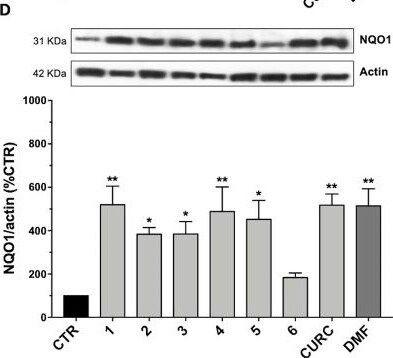
Western Blot: NQO-1 Antibody (A180) [NB200-209] -
Western Blot: NQO-1 Antibody (A180) [NB200-209] - Nrf2-pathway activation by hybrids: nuclear translocation & targets induction. (A) Nuclear cellular extracts of SH-SY5Y cells were treated for 3 hours with compounds at 5 µM, 500 nM, & 50 nM or with 20, 10, & 5 µM dimethyl fumarate (DMF). Nrf2 protein content in the nucleus was determined by Western blot. Anti-lamin A/C was used as a protein loading control. Results are shown as ratio Nrf2/lamin A/C ± SEM; *p < 0.05, **p < 0.01 & ****p < 0.0001 versus CTR; Dunnett’s multiple comparison test (F ratio = 6.797, n≥3). (B–C) RNA from total cellular extracts of SH-SY5Y cells, treated for 24 hours with 5 μM compounds or 20 μM DMF, were analyzed for NQO1 (B) & HO-1 (C) mRNA expression by RT-qPCR. GAPDH was used as housekeeping gene. Results are shown as mean ± SEM; *p < 0.05, **p < 0.01, & ***p < 0.001 versus CTR; Dunnett’s multiple comparison test (B, n≥3, F ratio = 10.44; C, n≥3, F ratio = 13.95). (D–E) Cellular extracts of SH-SY5Y cells treated for 24 hours with compounds at 5 μM or 20 μM DMF were analyzed for NQO1 (D) & HO-1 (E) protein levels by Western blot. Anti-actin was used as protein loading control. Results are shown as ratio (% of CTR) ± SEM; *p < 0.05, **p < 0.01, ***p < 0.001, & ****p < 0.0001 versus CTR; Dunnett’s multiple comparison test (D, n ≥ 3, F ratio = 5.144; E, n≥3, F ratio = 17.26). Image collected & cropped by CiteAb from the following publication (https://pubmed.ncbi.nlm.nih.gov/32047434), licensed under a CC-BY license. Not internally tested by Novus Biologicals.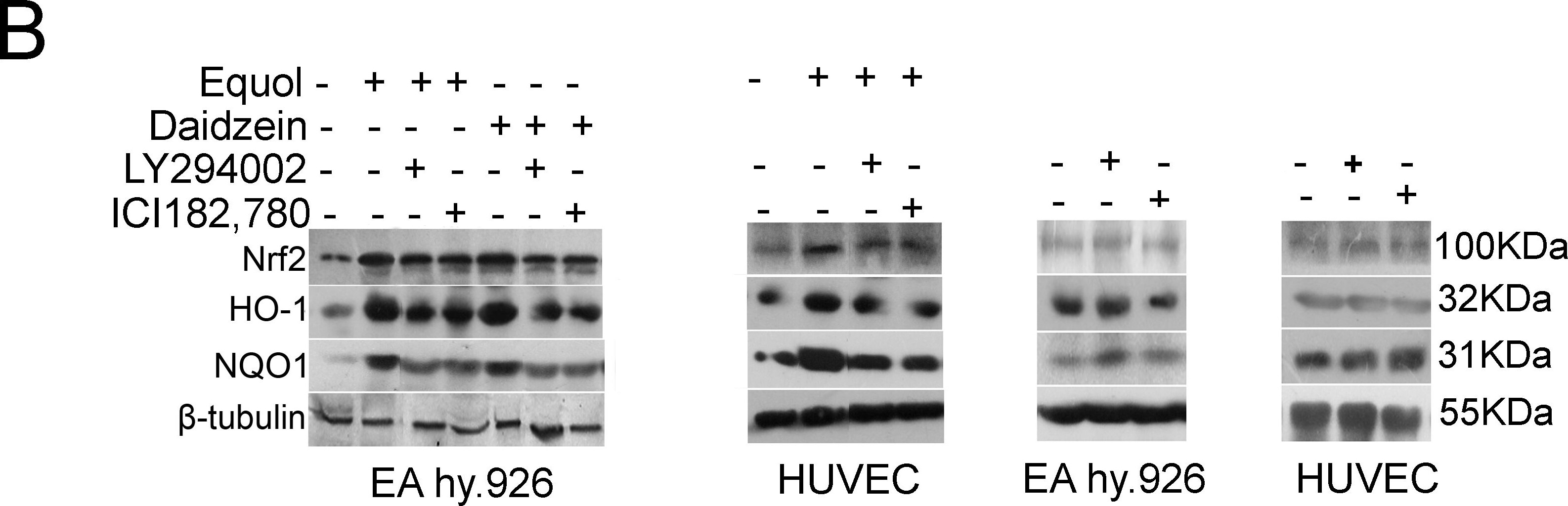
Western Blot: NQO-1 Antibody (A180) [NB200-209] -
Western Blot: NQO-1 Antibody (A180) [NB200-209] - The effects of PI3K/Akt & ER inhibitors on S-(-)equol-induced Nrf2 activation in endothelial cells.(A) EA.hy926 cells or HUVECs transfected w/ ARE-dependent firefly luciferase reporter gene (F) & the renilla firefly luciferase gene (R), & treated w/ 250 nM S-(-)equol in the presence or absence of 10 µM LY294002 or 100 nM ICI182,780 for 16 h. The potency of induction is expressed as the relative luminescence (R/F) measured using the dual luciferase reporter assay system (mean ± SD, n = 3). *p<0.05 versus w/ control group, #p<0.05 versus w/ S-(-)equol treated group. (B) EA.hy926 cells or HUVECs incubated w/ or w/out 10 µM LY294002 or 100 nM ICI182,780 for 30 min & then w/ or w/out 250 nM S-(-)equol or 500 nM daidzein for 24 h. Whole cell lysates then immunoblotted w/ antibodies against Nrf2, HO-1, NQO1, & beta -tubulin. Values are means of three independent experiments w/ standard deviations represented by vertical bars. Mean values significantly different compared w/ controls (*p<0.05). (C) EA.hy926 cells or HUVECs cotransfected w/ the HA-Nrf2 & renilla firefly luciferase expression plasmids treated w/ 250 nM S-(-)equol in the presence or absence of 10 µM LY294002 or 100 nM ICI182,780 for 16 h, & HA-Nrf2 localization analyzed by confocal microscopy. (D) EA.hy926 cells incubated w/ 250 nM S-(-)equol, 500 nM daidzein w/ or w/out 10 µM LY294002 or 100 nM ICI182,780 for 16 h & then immunostained w/ an antibody against Nrf2, & Nrf2 localization analyzed by confocal microscopy. Values (intensity of nuclear versus cytoplasmic) are means of counting 100 cells w/ standard deviations represented by vertical bars. *p<0.05 versus w/ control group, #p<0.05 versus w/ S-(-)equol treated group. Image collected & cropped by CiteAb from the following publication (https://pubmed.ncbi.nlm.nih.gov/24260155), licensed under a CC-BY license. Not internally tested by Novus Biologicals.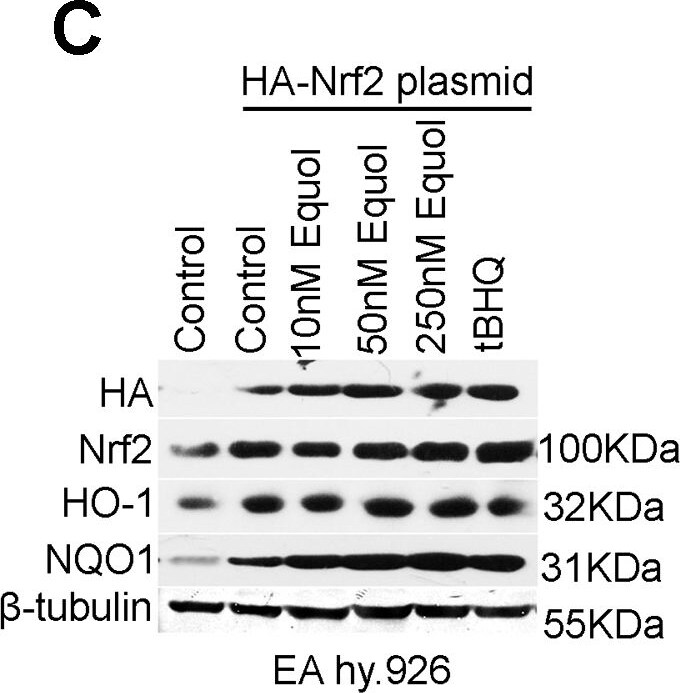
Western Blot: NQO-1 Antibody (A180) [NB200-209] -
Western Blot: NQO-1 Antibody (A180) [NB200-209] - S-(-)equol primarily up-regulated Nrf2 protein expression activating ARE-dependent response.(A) Whole EA.hy926 cells lysates of cells treated with 250 nM S-(-)equol, 500 nM daidzein, or 50 µM tBHQ for 24 h were subjected to immunoblot analysis with anti-Nrf2, anti-HO-1, anti-NQO1, & anti-beta -tubulin antibodies. (B) Total HUVECs lysates of cell treated with 250 nM S-(-)equol for 24 h were immunoblotted with anti-Nrf2 & anti-beta -tubulin antibodies. (C) EA.hy926 cells were transfected with plasmids containing an HA-tagged Nrf2 open reading frame & the renilla firefly luciferase gene. Medium was changed after 6 hours of incubation. Where indicated, extracts from HA-Nrf2 EA hy.92 cells were additionally probed with anti-HA antibody, anti-Nrf2, anti-HO-1, anti-NQO1 & anti-beta -tubulin antibodies. Values are means of three independent experiments with standard deviations represented by vertical bars. Mean values were significantly different compared to controls (*p<0.05). Total RNA was extracted from EA.hy926 cells or HUVECs treated as indicated, & Nrf2 (D), HO-1 (E), & NQO1 (F) mRNA was measured by real-time RT-PCR analysis. The values shown represent the mean ± SD obtained for three independent experiments (*p<0.05). Image collected & cropped by CiteAb from the following publication (https://pubmed.ncbi.nlm.nih.gov/24260155), licensed under a CC-BY license. Not internally tested by Novus Biologicals.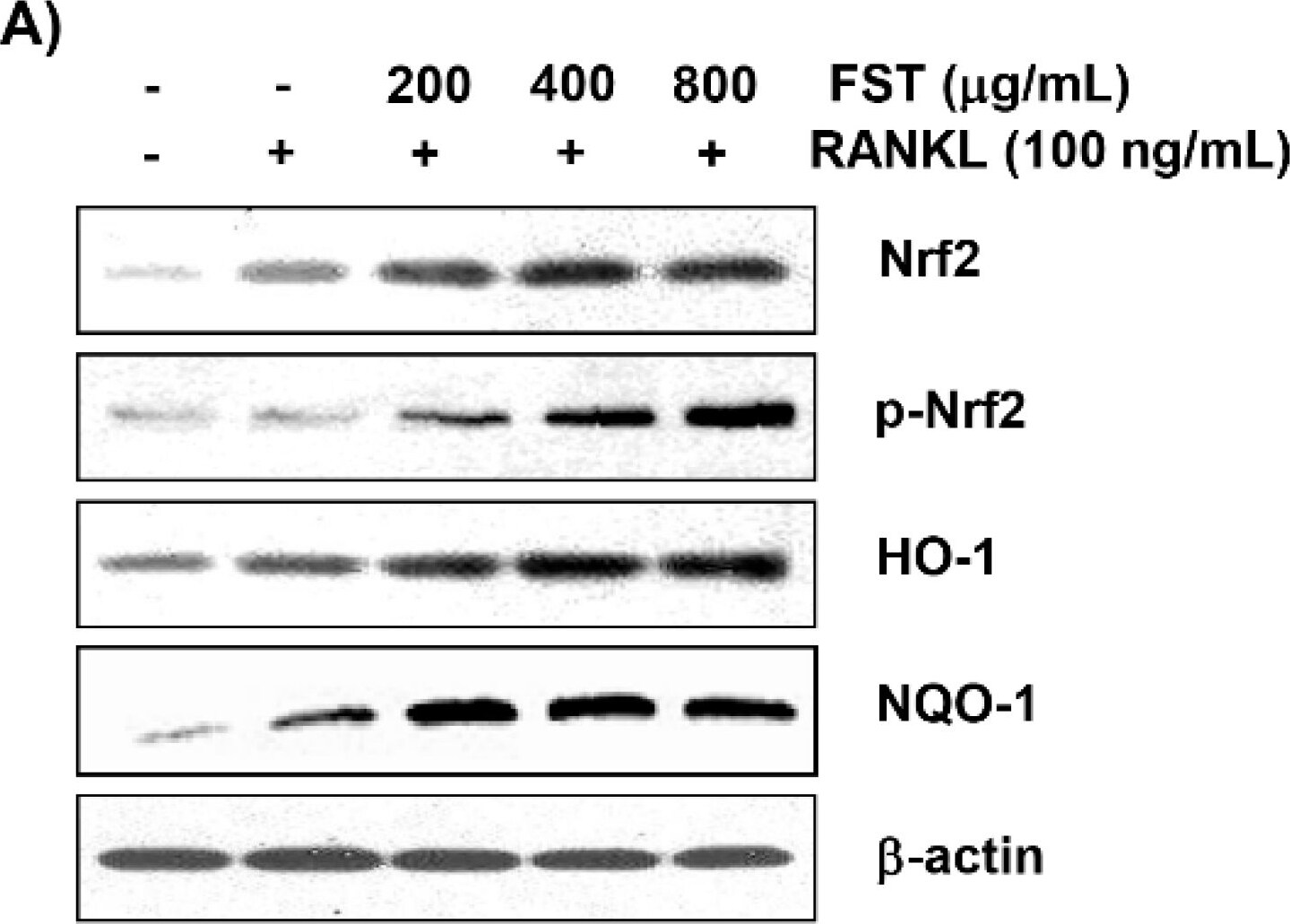
Western Blot: NQO-1 Antibody (A180) [NB200-209] -
Western Blot: NQO-1 Antibody (A180) [NB200-209] - Activation of Nrf2 signaling pathway by FST in RAW 264.7 mouse macrophage-like cells. Cells were treated with FST with or without 100 ng/mL RANKL for 5 days. (A) Total cellular proteins were isolated from cells & the expression levels of Nrf2 & its regulatory proteins were assessed by Western blot analysis. beta -actin was used as the internal control. (C) The expression of nuclear & cytosol Nrf2 were determined by Western blotting. Lamin B & beta -actin were used as internal controls for the nuclear & cytosolic fractions, respectively. The results shown are representative of three independent experiments. (B,D) Statistical analyses were conducted using analysis of variances between groups. * p < 0.05 & *** p < 0.0001 when compared to control. # p < 0.05 & ### p < 0.0001 when compared to RANKL treatment. RANKL: receptor of activator of nuclear factor kappa-B ligand; FST: fermented sea tangle extract; Nrf2: nuclear factor-erythroid 2-related factor 2; p-Nrf2: phosphorylated nuclear factor-erythroid 2-related factor 2; HO-1: heme oxygenase-1; NQO-1: NAD(P)H quinone oxidoreductase 1; +: cells treated the reagent; -: cells untreated the reagent. Image collected & cropped by CiteAb from the following publication (https://pubmed.ncbi.nlm.nih.gov/31357503), licensed under a CC-BY license. Not internally tested by Novus Biologicals.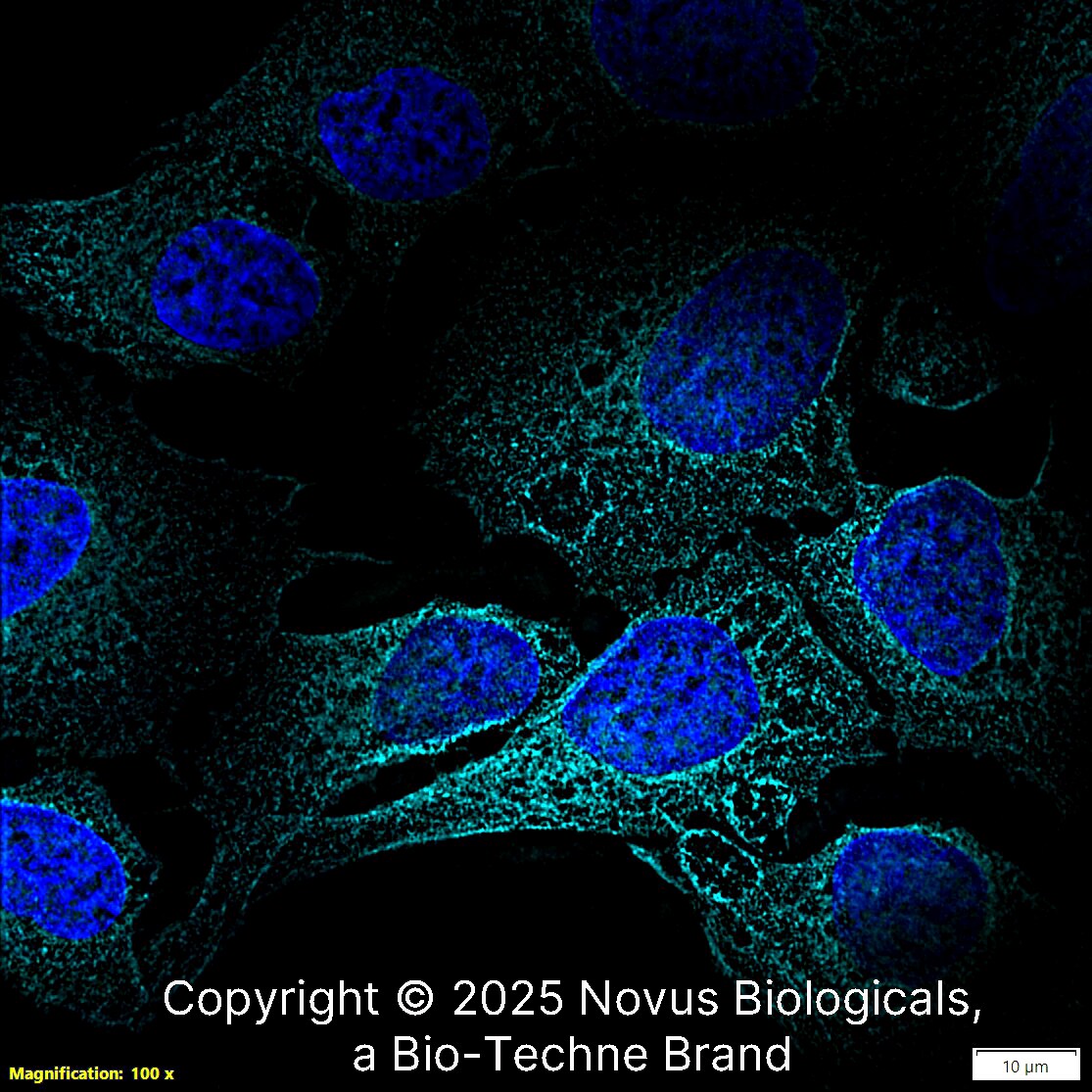
NQO-1 (A180) in U-2 OS Human Cell Line.
NQO-1 (A180) was detected in immersion fixed U-2 OS human osteosarcoma cell line using Mouse anti-NQO-1 (A180) Protein G Purified Monoclonal Antibody conjugated to DyLight 650 (Catalog # NB200-209C) (light blue) at 10 µg/mL overnight at 4C. Cells were counterstained with DAPI (blue). Cells were imaged using a 100X objective and digitally deconvolved.Applications for NQO-1 Antibody (A180) - BSA Free
Flow Cytometry
Immunocytochemistry/ Immunofluorescence
Immunohistochemistry
Immunohistochemistry-Frozen
Immunohistochemistry-Paraffin
Immunoprecipitation
Simple Western
Western Blot
The observed molecular weight of the protein may vary from the listed predicted molecular weight due to post translational modifications, post translation cleavages, relative charges, and other experimental factors. Prior to immunostaining paraffin tissues, antigen retrieval with sodium citrate buffer (pH 6.0) is recommended.
In Simple Western only 10 - 15 uL of the recommended dilution is used per data point.
See Simple Western Antibody Database for Simple Western validation: Tested in A431 lysate 0.5 mg/mL, separated by Size, antibody dilution of 1:100, apparent MW was 37 kDa. Separated by Size-Wes, Sally Sue/Peggy Sue.
The observed molecular weight of the protein may vary from the listed predicted molecular weight due to post translational modifications, post translation cleavages, relative charges, and other experimental factors.
Flow Cytometry Panel Builder
Bio-Techne Knows Flow Cytometry
Save time and reduce costly mistakes by quickly finding compatible reagents using the Panel Builder Tool.
Advanced Features
- Spectra Viewer - Custom analysis of spectra from multiple fluorochromes
- Spillover Popups - Visualize the spectra of individual fluorochromes
- Antigen Density Selector - Match fluorochrome brightness with antigen density

Formulation, Preparation, and Storage
Purification
Formulation
Format
Preservative
Concentration
Shipping
Stability & Storage
Background: NQO-1
Long Name
Alternate Names
Gene Symbol
Additional NQO-1 Products
Product Documents for NQO-1 Antibody (A180) - BSA Free
Certificate of Analysis
To download a Certificate of Analysis, please enter a lot or batch number in the search box below.
Product Specific Notices for NQO-1 Antibody (A180) - BSA Free
This product is for research use only and is not approved for use in humans or in clinical diagnosis. Primary Antibodies are guaranteed for 1 year from date of receipt.
Related Research Areas
Citations for NQO-1 Antibody (A180) - BSA Free
 Powered by Bioz
Customer Reviews for NQO-1 Antibody (A180) - BSA Free
There are currently no reviews for this product. Be the first to review NQO-1 Antibody (A180) - BSA Free and earn rewards!
Have you used NQO-1 Antibody (A180) - BSA Free?
Submit a review and receive an Amazon gift card!
$25/€18/£15/$25CAN/¥2500 for a review with an image
$10/€7/£6/$10CAN/¥1110 for a review without an image
Submit a review
Protocols
View specific protocols for NQO-1 Antibody (A180) - BSA Free (NB200-209):
Antigen Unmasking:
Bring slides to a boil in 10 mM sodium citrate buffer (pH 6.0) then maintain at a sub-boiling temperature for 10 minutes. Cool slides on bench-top for 30 minutes (keep slides in the sodium citrate buffer at all times).
Staining:
1. Wash sections in deionized water three times for 5 minutes each.
2. Wash sections in PBS for 5 minutes.
3. Block each section with 100-400 ul blocking solution (1% BSA in PBS) for 1 hour at room temperature.
4. Remove blocking solution and add 100-400 ul diluted primary antibody. Incubate overnight at 4 C.
5. Remove antibody solution and wash sections in wash buffer three times for 5 minutes each.
6. Add 100-400 ul HRP polymer conjugated secondary antibody. Incubate 30 minutes at room temperature.
7. Wash sections three times in wash buffer for 5 minutes each.
8. Add 100-400 ul DAB substrate to each section and monitor staining closely.
9. As soon as the sections develop, immerse slides in deionized water.
10. Counterstain sections in hematoxylin.
11. Wash sections in deionized water two times for 5 minutes each.
12. Dehydrate sections.
13. Mount coverslips.
Western Blot Protocol
1. Perform SDS-PAGE on samples to be analyzed, loading 40 ug of total protein per lane.
2. Transfer proteins to membrane according to the instructions provided by the manufacturer of the membrane and transfer apparatus.
3. Stain according to standard Ponceau S procedure (or similar product) to assess transfer success, and mark molecular weight standards where appropriate.
4. Rinse the blot.
5. Block the membrane using standard blocking buffer for at least 1 hour.
6. Wash the membrane in wash buffer three times for 10 minutes each.
7. Dilute primary antibody in blocking buffer and incubate 1 hour at room temperature.
8. Wash the membrane in wash buffer three times for 10 minutes each.
9. Apply the diluted HRP conjugated secondary antibody in blocking buffer (as per manufacturers instructions) and incubate 1 hour at room temperature.
10. Wash the blot in wash buffer three times for 10 minutes each (this step can be repeated as required to reduce background).
11. Apply the detection reagent of choice in accordance with the manufacturers instructions.
Note: Tween-20 can be added to the blocking or antibody dilution buffer at a final concentration of 0.05-0.2%.
Immunohistochemistry-Paraffin Embedded Sections
Antigen Unmasking:
Bring slides to a boil in 10 mM sodium citrate buffer (pH 6.0) then maintain at a sub-boiling temperature for 10 minutes. Cool slides on bench-top for 30 minutes.
Staining:
1. Wash sections in deionized water three times for 5 minutes each.
2. Wash sections in wash buffer for 5 minutes.
3. Block each section with 100-400 ul blocking solution for 1 hour at room temperature.
4. Remove blocking solution and add 100-400 ul diluted primary antibody. Incubate overnight at 4 C.
5. Remove antibody solution and wash sections in wash buffer three times for 5 minutes each.
6. Add 100-400 ul biotinylated diluted secondary antibody. Incubate 30 minutes at room temperature.
7. Remove secondary antibody solution and wash sections three times with wash buffer for 5 minutes each.
8. Add 100-400 ul Streptavidin-HRP reagent to each section and incubate for 30 minutes at room temperature.
9. Wash sections three times in wash buffer for 5 minutes each.
10. Add 100-400 ul DAB substrate to each section and monitor staining closely.
11. As soon as the sections develop, immerse slides in deionized water.
12. Counterstain sections in hematoxylin.
13. Wash sections in deionized water two times for 5 minutes each.
14. Dehydrate sections.
15. Mount coverslips.
*The above information is only intended as a guide. The researcher should determine what protocol best meets their needs. Please follow safe laboratory procedures.
Find general support by application which include: protocols, troubleshooting, illustrated assays, videos and webinars.
- 7-Amino Actinomycin D (7-AAD) Cell Viability Flow Cytometry Protocol
- Antigen Retrieval Protocol (PIER)
- Antigen Retrieval for Frozen Sections Protocol
- Appropriate Fixation of IHC/ICC Samples
- Cellular Response to Hypoxia Protocols
- Chromogenic IHC Staining of Formalin-Fixed Paraffin-Embedded (FFPE) Tissue Protocol
- Chromogenic Immunohistochemistry Staining of Frozen Tissue
- ClariTSA™ Fluorophore Kits
- Detection & Visualization of Antibody Binding
- Extracellular Membrane Flow Cytometry Protocol
- Flow Cytometry Protocol for Cell Surface Markers
- Flow Cytometry Protocol for Staining Membrane Associated Proteins
- Flow Cytometry Staining Protocols
- Flow Cytometry Troubleshooting Guide
- Fluorescent IHC Staining of Frozen Tissue Protocol
- Graphic Protocol for Heat-induced Epitope Retrieval
- Graphic Protocol for the Preparation and Fluorescent IHC Staining of Frozen Tissue Sections
- Graphic Protocol for the Preparation and Fluorescent IHC Staining of Paraffin-embedded Tissue Sections
- Graphic Protocol for the Preparation of Gelatin-coated Slides for Histological Tissue Sections
- ICC Cell Smear Protocol for Suspension Cells
- ICC Immunocytochemistry Protocol Videos
- ICC for Adherent Cells
- IHC Sample Preparation (Frozen sections vs Paraffin)
- Immunocytochemistry (ICC) Protocol
- Immunocytochemistry Troubleshooting
- Immunofluorescence of Organoids Embedded in Cultrex Basement Membrane Extract
- Immunofluorescent IHC Staining of Formalin-Fixed Paraffin-Embedded (FFPE) Tissue Protocol
- Immunohistochemistry (IHC) and Immunocytochemistry (ICC) Protocols
- Immunohistochemistry Frozen Troubleshooting
- Immunohistochemistry Paraffin Troubleshooting
- Immunoprecipitation Protocol
- Intracellular Flow Cytometry Protocol Using Alcohol (Methanol)
- Intracellular Flow Cytometry Protocol Using Detergents
- Intracellular Nuclear Staining Flow Cytometry Protocol Using Detergents
- Intracellular Staining Flow Cytometry Protocol Using Alcohol Permeabilization
- Intracellular Staining Flow Cytometry Protocol Using Detergents to Permeabilize Cells
- Preparing Samples for IHC/ICC Experiments
- Preventing Non-Specific Staining (Non-Specific Binding)
- Primary Antibody Selection & Optimization
- Propidium Iodide Cell Viability Flow Cytometry Protocol
- Protocol for Heat-Induced Epitope Retrieval (HIER)
- Protocol for Liperfluo
- Protocol for Making a 4% Formaldehyde Solution in PBS
- Protocol for VisUCyte™ HRP Polymer Detection Reagent
- Protocol for the Characterization of Human Th22 Cells
- Protocol for the Characterization of Human Th9 Cells
- Protocol for the Fluorescent ICC Staining of Cell Smears - Graphic
- Protocol for the Fluorescent ICC Staining of Cultured Cells on Coverslips - Graphic
- Protocol for the Preparation & Fixation of Cells on Coverslips
- Protocol for the Preparation and Chromogenic IHC Staining of Frozen Tissue Sections
- Protocol for the Preparation and Chromogenic IHC Staining of Frozen Tissue Sections - Graphic
- Protocol for the Preparation and Chromogenic IHC Staining of Paraffin-embedded Tissue Sections
- Protocol for the Preparation and Chromogenic IHC Staining of Paraffin-embedded Tissue Sections - Graphic
- Protocol for the Preparation and Fluorescent ICC Staining of Cells on Coverslips
- Protocol for the Preparation and Fluorescent ICC Staining of Non-adherent Cells
- Protocol for the Preparation and Fluorescent ICC Staining of Stem Cells on Coverslips
- Protocol for the Preparation and Fluorescent IHC Staining of Frozen Tissue Sections
- Protocol for the Preparation and Fluorescent IHC Staining of Paraffin-embedded Tissue Sections
- Protocol for the Preparation of Gelatin-coated Slides for Histological Tissue Sections
- Protocol for the Preparation of a Cell Smear for Non-adherent Cell ICC - Graphic
- Protocol: Annexin V and PI Staining by Flow Cytometry
- Protocol: Annexin V and PI Staining for Apoptosis by Flow Cytometry
- R&D Systems Quality Control Western Blot Protocol
- TUNEL and Active Caspase-3 Detection by IHC/ICC Protocol
- The Importance of IHC/ICC Controls
- Troubleshooting Guide: Fluorokine Flow Cytometry Kits
- Troubleshooting Guide: Immunohistochemistry
- Troubleshooting Guide: Western Blot Figures
- Western Blot Conditions
- Western Blot Protocol
- Western Blot Protocol for Cell Lysates
- Western Blot Troubleshooting
- Western Blot Troubleshooting Guide
- View all Protocols, Troubleshooting, Illustrated assays and Webinars
FAQs for NQO-1 Antibody (A180) - BSA Free
-
Q: How was it determined that NB200-209 antibody does not cross react with NQo2?
A: When this antibody was raised our collaborators performed the testing necessary to confirm that there was no cross-reactivity with NQO2. We do not have the lab notes available regarding the test that was used to determine this. We did a protein blast between human NQO1 and NQO2 and found that the identity is only 48% between the 2 sequences. Generally, we predict that identity must be 86%+ unless there is an empirical determination of cross-reactivity. Since it is listed in our notes then it has been tested and confirmed.