
Palladin Antibody (1E6) - BSA Free
Novus Biologicals | Catalog # NBP1-25959

![Knockdown Validated: Palladin Antibody (1E6) [NBP1-25959]](https://resources.rndsystems.com/images/products/Palladin-Antibody-1E6-Knockdown-Validated-NBP1-25959-img0012.jpg "Immunocytochemistry/ Immunofluorescence: Palladin Antibody (1E6) [NBP1-25959]")
Scientific images may be resized, cropped, or adjusted for brightness or contrast for presentation purposes. These updates are limited to presentation and do not affect the underlying scientific interpretation of the data. Where available, additional source data may be provided upon request.
Key Product Details
Validated by
Species Reactivity
Validated:
Cited:
Applications
Validated:
Cited:
Label
Antibody Source
Format
Product Specifications
Immunogen
Reactivity Notes
Localization
Clonality
Host
Isotype
Theoretical MW
Disclaimer note: The observed molecular weight of the protein may vary from the listed predicted molecular weight due to post translational modifications, post translation cleavages, relative charges, and other experimental factors.
Scientific Data Images for Palladin Antibody (1E6) - BSA Free
![Western Blot: Palladin Antibody (1E6) [NBP1-25959]](https://resources.rndsystems.com/images/products/Palladin-Antibody-1E6-Western-Blot-NBP1-25959-img0003.jpg "Western Blot: Palladin Antibody (1E6) [NBP1-25959]")
Western Blot: Palladin Antibody (1E6) [NBP1-25959]
Western Blot: Palladin Antibody (1E6) [NBP1-25959] - MDA-MB-231 lysate.![Knockdown Validated: Palladin Antibody (1E6) [NBP1-25959]](https://resources.rndsystems.com/images/products/Palladin-Antibody-1E6-Knockdown-Validated-NBP1-25959-img0013.jpg "Western Blot: Palladin Antibody (1E6) [NBP1-25959]")
![Immunocytochemistry/ Immunofluorescence: Palladin Antibody (1E6) [NBP1-25959]](https://resources.rndsystems.com/images/products/Palladin-Antibody-1E6-Immunocytochemistry-Immunofluorescence-NBP1-25959-img0005.jpg "Immunocytochemistry/ Immunofluorescence: Palladin Antibody (1E6) [NBP1-25959]")
Immunocytochemistry/ Immunofluorescence: Palladin Antibody (1E6) [NBP1-25959]
Immunocytochemistry/Immunofluorescence: Palladin Antibody (1E6) [NBP1-25959] - Immunofluorescence on a7r5 cells.![Western Blot: Palladin Antibody (1E6) [NBP1-25959]](https://resources.rndsystems.com/images/products/Palladin-Antibody-1E6-Western-Blot-NBP1-25959-img0009.jpg "Western Blot: Palladin Antibody (1E6) [NBP1-25959]")
Western Blot: Palladin Antibody (1E6) [NBP1-25959]
Western Blot: Palladin Antibody (1E6) [NBP1-25959] - Western blot analysis of HeLa (A), A431 (B), NIH3T3 (C), and PC-12 (D) cell line extracts using Palladin antibody at 1ug/ml.![Immunohistochemistry-Paraffin: Palladin Antibody (1E6) [NBP1-25959]](https://resources.rndsystems.com/images/products/Palladin-Antibody-1E6-Immunohistochemistry-Paraffin-NBP1-25959-img0010.jpg "Immunohistochemistry-Paraffin: Palladin Antibody (1E6) [NBP1-25959]")
Immunohistochemistry-Paraffin: Palladin Antibody (1E6) [NBP1-25959]
Immunohistochemistry-Paraffin: Palladin Antibody (1E6) [NBP1-25959] - Palladin was detected in immersion fixed paraffin-embedded sections of human heart using Mouse Anti-Human Palladin (1E6) Monoclonal Antibody (Catalog # NBP1-25959) at 1:100 for 1 hour at room temperature followed by incubation with the Anti-Mouse IgG VisUCyte™ HRP Polymer Antibody (Catalog # VC001). Tissue was stained using DAB (brown) and counterstained with hematoxylin (blue). Specific staining was localized to the cytoplasm in cardiomyocytes.![Flow Cytometry: Palladin Antibody (1E6) [NBP1-25959]](https://resources.rndsystems.com/images/products/Palladin-Antibody-1E6-Flow-Cytometry-NBP1-25959-img0011.jpg "Flow Cytometry: Palladin Antibody (1E6) [NBP1-25959]")
Flow Cytometry: Palladin Antibody (1E6) [NBP1-25959]
Flow Cytometry: Palladin Antibody (1E6) [NBP1-25959] - An intracellular stain was performed on HeLa cells with Palladin Antibody [1E6] NBP1-25959AF488 (blue) and a matched isotype control (orange). Cells were fixed with 4% PFA and then permeabilized with 0.1% saponin. Cells were incubated in an antibody dilution of 5 ug/mL for 30 minutes at room temperature. Both antibodies were conjugated to Alexa Fluor 488.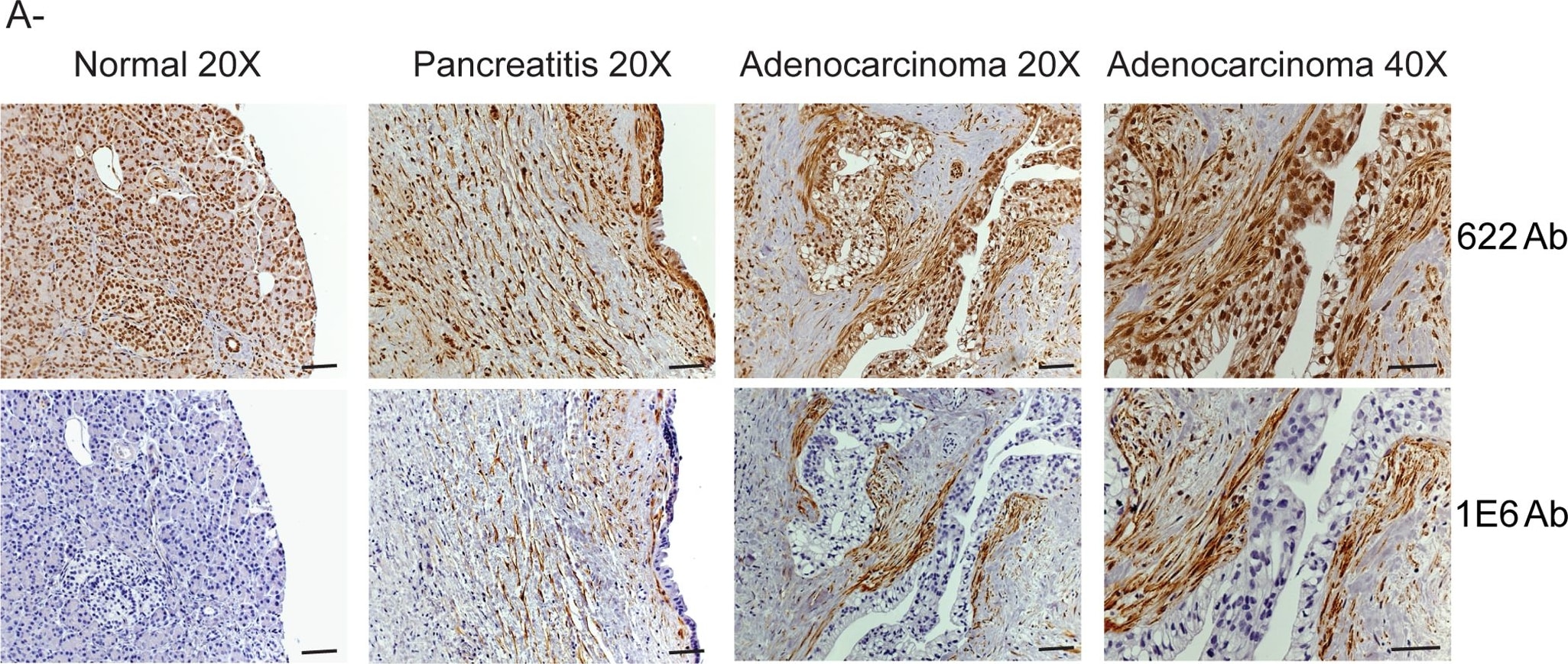
Immunohistochemistry: Palladin Antibody (1E6) [NBP1-25959] -
Immunohistochemistry: Palladin Antibody (1E6) [NBP1-25959] - Palladin staining of paraffin-embedded patient tissues.A. IHC staining was performed using standard antigen-retrieval protocols, & counter-stained with hematoxylin. Tissue sections were stained for palladin using two palladin antibodies: polyclonal 622 & monoclonal 1E6. Palladin stain is detected with brown reaction product. In tumor sections, palladin is detected at dramatically elevated levels in the stromal fibroblasts. Note also the expanded stroma around the neoplastic cells, which is characteristic of the desmoplastic reaction. Scale bars, 200 µM. B. Quantification of immunohistochemistry results. Ten sections each of normal pancreatitis & adenocarcinoma specimens were stained with four different antibodies (622, COM, 1E6 & 4D10) & scored by two pathologists, as described in the text. Results for both ductal epithelium (left) & stroma (right) stained with various palladin antibodies are shown for normal pancreas (n = 9, blue), pancreatitis (n = 7, red) & pancreatic adenocarcinoma (n = 10, yellow). The results confirmed that palladin levels are increased in the stroma, & not the epithelial tumor cells, of the adenocarcinomas. Although palladin levels are also increased in cases of chronic pancreatitis, they do not reach the same levels as in the tumors. Compared to the polyclonal 622 & COM, the monoclonal antibodies 1E6 & 4D10 are effective at distinguishing between pancreatitis & cancer. C. Double-label immunostaining for palladin (1E6 Ab) & alpha -SMA in sections of pancreatic tumors confirms that palladin is strongly detected in a population of activated TAFs that surround the neoplastic cells. Scale bars, 200 µM. Image collected & cropped by CiteAb from the following publication (https://dx.plos.org/10.1371/journal.pone.0010347), licensed under a CC-BY license. Not internally tested by Novus Biologicals.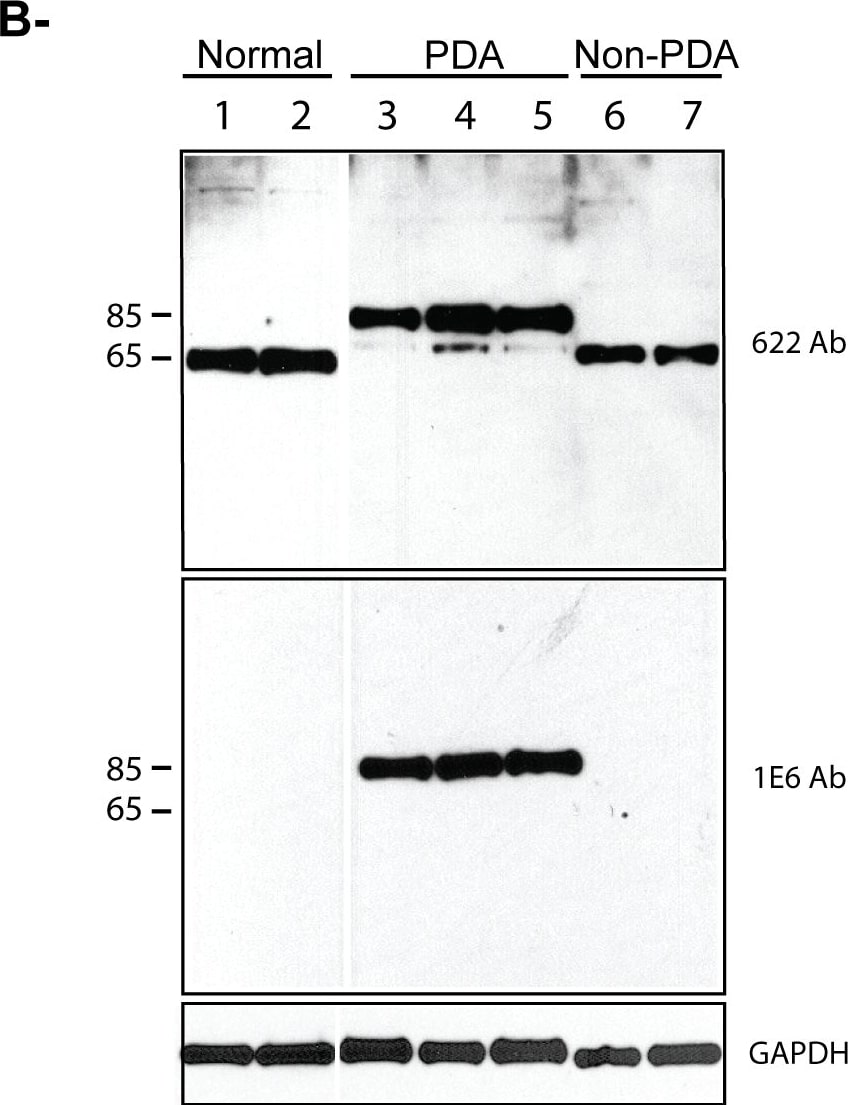
Western Blot: Palladin Antibody (1E6) [NBP1-25959] -
Western Blot: Palladin Antibody (1E6) [NBP1-25959] - Analysis of human palladin isoforms in pancreatic tissues.A. Human palladin isoforms. Proline-rich domains are represented by red boxes, & Ig-like domains are shown as blue boxes. The epitope recognized by the 1E6 & 4D10 antibodies is highlighted in green. The region amplified by RT-qPCR is highlighted in light blue. Isoform #1, 3 & 4 are the primary products of the palladin gene & have been detected by immunoblotting. The sequences of these isoforms are published. The sequences of isoforms #2, 5, 6, & 7 were obtained from genomic databases. “ND”: not-determined. B. Western blot analysis of pancreas samples. Small pieces of fresh tissue were snap-frozen in liquid nitrogen, ground in a chilled mortar & pestle, extracted in a detergent-containing lysis buffer, & centrifuged at 15,000×g to remove any unsolubilized particulates. The supernatant was boiled in Laemmli sample buffer & resolved by SDS-PAGE, with 15 µg protein loaded per lane. The samples were immunoblotted & probed with two anti-palladin antibodies & an antibody to GADPH (a housekeeping gene) as a control for equal loading. Lanes 1–2: normal pancreas. Lanes 3–5: primary adenocarcinoma tumors (PDA). Lane 6–7: Non-primary adenocarcinoma tumors (Non-PDA) (Lane 6: solid pseudopapillary tumor, Lane 7: neuroendocrine tumor). C. RT-qPCR. Total RNA was isolated from normal tissue (patients 1–4) & PDA tumors (patients 1–3), reverse transcribed, & subjected to RT-qPCR using gene-specific primers. Each bar represents the mean + SEM (0.06–0.35%) from three or more independent determinations. Image collected & cropped by CiteAb from the following publication (https://dx.plos.org/10.1371/journal.pone.0010347), licensed under a CC-BY license. Not internally tested by Novus Biologicals.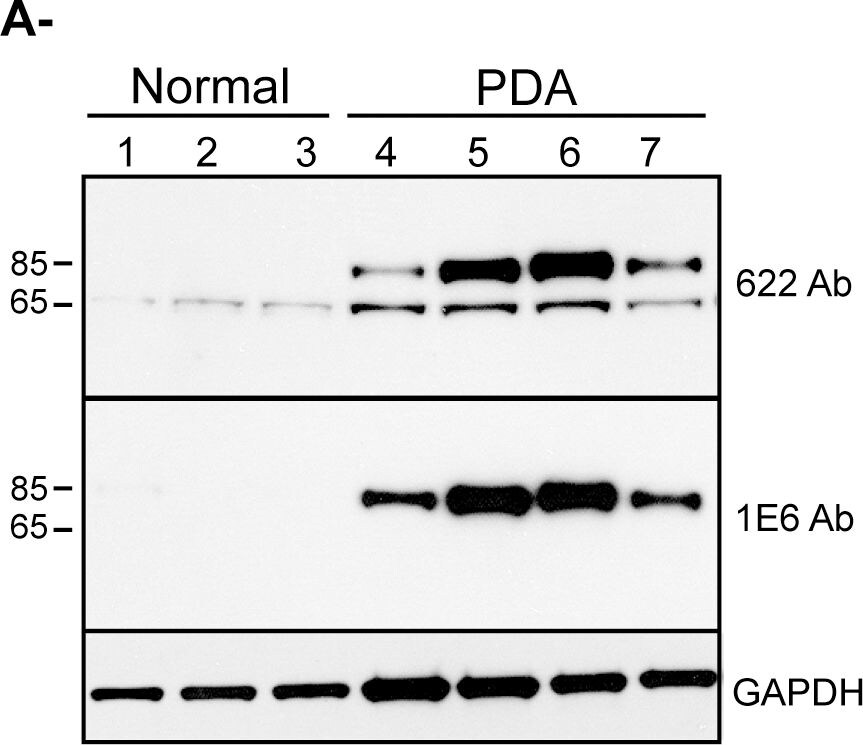
Western Blot: Palladin Antibody (1E6) [NBP1-25959] -
Western Blot: Palladin Antibody (1E6) [NBP1-25959] - Detection of palladin in post-surgical samples collected with 18-gauge needles.A. Samples of normal (lane 1 to 3) & pancreatic adenocarcinoma (lanes 4 to 7) were obtained from donated post-surgical organs using 18-gauge needles. Tissue samples were snap-frozen, ground, lysed & analyzed as in Figure 1. The blot was stained with both monoclonal (1E6) & polyclonal (622) palladin antibodies, & the major band (85–90 kDa) was detected by both antibodies in all tumor samples. B. Same samples (normal, lane 1–3 & PDA, lane 4–7) were analyzed for epithelial vs myofibroblast markers. The blot was stained with both, anti-E-cadherin antibody (as an epithelial cell marker) & anti-alpha SMA antibody (as a myofibroblast marker). Blots were stained for tubulin as a control for equal loading. Image collected & cropped by CiteAb from the following publication (https://dx.plos.org/10.1371/journal.pone.0010347), licensed under a CC-BY license. Not internally tested by Novus Biologicals.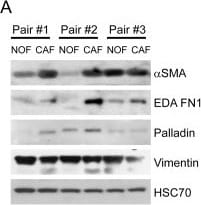
Western Blot: Palladin Antibody (1E6) [NBP1-25959] -
Western Blot: Palladin Antibody (1E6) [NBP1-25959] - CAFs & NOFs are biochemically & morphologically different & CAF exosomes can also be transferred to CRC cells(A) Western blot of paired primary NOFs & CAFs for myofibroblastic markers alpha-smooth muscle actin ( alpha -SMA), fibronectin ED-A (ED-A FN1), palladin & vimentin. HSC-70 was used as an equal loading control. (B) Light microscopy of representative primary NOF & CAF cells (10x). (C) Fluorescence microscopy demonstrating phalloidin staining of F-actin filaments (green), counterstained with DAPI (blue; 40x). (D) Mean surface area & (E) intensity of phalloidin staining in a representative NOF-CAF pair. (F) Flow cytometry of DLD1 cells (control) & DLD1 cells co-cultured with CAF exosomes (exosome). The proportion of cells under the M1 region is given as a percentage. (G) Co-culture of CAF exosomes with DLD1 & SW480 cells with resultant increase in miR-199b & miR-21-5p. Data is presented as mean +/− SEM. Student's t-test (D, E) or paired t-test (F, G): *p<0.05, **p<0.01, ***p<0.001. Image collected & cropped by CiteAb from the following publication (https://pubmed.ncbi.nlm.nih.gov/29283887), licensed under a CC-BY license. Not internally tested by Novus Biologicals.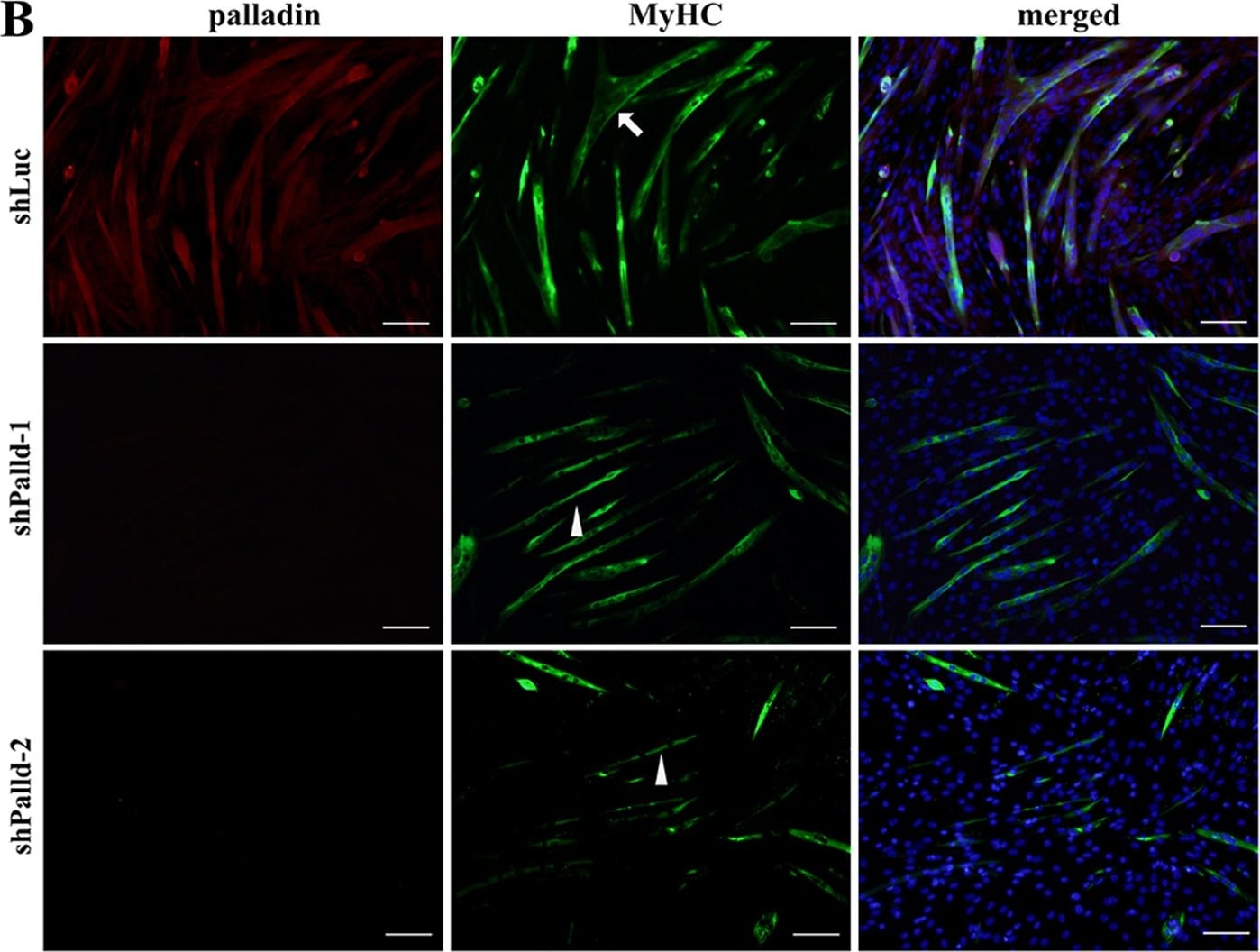
Immunocytochemistry/ Immunofluorescence: Palladin Antibody (1E6) [NBP1-25959] -
Immunocytochemistry/ Immunofluorescence: Palladin Antibody (1E6) [NBP1-25959] - Effect of palladin depletion on terminal differentiation of C2C12 cells.(A) Phase contrast images of stable transfectants at late stages of differentiation. Scale bar is 50 μm. (B) Representative immunofluorescence images of stable transfectants at day 5 of differentiation. Cells were labeled with palladin (red), MyHC (green), & DAPI (blue). Scale bar is 100 μm. (C) Fusion index analysis of stable transfectants at day 5 (left) & day 7 (right) of differentiation. A minimum of 4,000 nuclei were counted from random fields of each cell line. Note that palladin depletion resulted in a decrease of the fusion index at the late stage of differentiation. (D) Quantification of multinucleated myotubes throughout the course of differentiation. (E) Quantification of the number of MyHC-positive cells in stable transfectants. All error bars indicate the means ± SD of at least four independent experiments. * indicates statistically significant difference from control cells, * p<0.05, ** p<0.01, *** p<0.001 by Student’s t-test. ns = not significant. Image collected & cropped by CiteAb from the following publication (https://pubmed.ncbi.nlm.nih.gov/25875253), licensed under a CC-BY license. Not internally tested by Novus Biologicals.Applications for Palladin Antibody (1E6) - BSA Free
Flow Cytometry
Immunocytochemistry/ Immunofluorescence
Immunohistochemistry
Immunohistochemistry-Paraffin
Immunoprecipitation
Western Blot
Flow Cytometry Panel Builder
Bio-Techne Knows Flow Cytometry
Save time and reduce costly mistakes by quickly finding compatible reagents using the Panel Builder Tool.
Advanced Features
- Spectra Viewer - Custom analysis of spectra from multiple fluorochromes
- Spillover Popups - Visualize the spectra of individual fluorochromes
- Antigen Density Selector - Match fluorochrome brightness with antigen density

Formulation, Preparation, and Storage
Purification
Formulation
Format
Preservative
Concentration
Shipping
Stability & Storage
Background: Palladin
Additional Palladin Products
Product Documents for Palladin Antibody (1E6) - BSA Free
Certificate of Analysis
To download a Certificate of Analysis, please enter a lot or batch number in the search box below.
Product Specific Notices for Palladin Antibody (1E6) - BSA Free
This product is for research use only and is not approved for use in humans or in clinical diagnosis. Primary Antibodies are guaranteed for 1 year from date of receipt.
Citations for Palladin Antibody (1E6) - BSA Free
 Powered by Bioz
Customer Reviews for Palladin Antibody (1E6) - BSA Free
There are currently no reviews for this product. Be the first to review Palladin Antibody (1E6) - BSA Free and earn rewards!
Have you used Palladin Antibody (1E6) - BSA Free?
Submit a review and receive an Amazon gift card!
$25/€18/£15/$25CAN/¥2500 for a review with an image
$10/€7/£6/$10CAN/¥1110 for a review without an image
Submit a review
Protocols
View specific protocols for Palladin Antibody (1E6) - BSA Free (NBP1-25959):
Procedure Guide for NBP1-25959 - Palladin Antibody
Western Blot Protocol
1. Perform SDS-PAGE (4-12% MOPS) on samples to be analyzed, loading 30 ug of total protein per lane.
2. Transfer proteins to Nitrocellulose according to the instructions provided by the manufacturer of the transfer
apparatus.
3. Rinse membrane with dH2O and then stain the blot using Ponceau S for 1-2 minutes to access the transfer of
proteins onto the nitrocellulose membrane. Rinse the blot in water to remove excess stain and mark the lane locations
and locations of molecular weight markers using a pencil.
4. Rinse the blot in TBS for approximately 5 minutes.
5. Block the membrane using 5% NFDM + 1% BSA in TBS + Tween, 1 hour at RT.
6. Rinse the membrane in dH2O and then wash the membrane in wash buffer [TBS + 0.1% Tween] 3 times for 10
minutes each.
7. Dilute the mouse anti-Palladin primary antibody (NBP1-25959) in blocking buffer and incubate 1 hour at room
temperature.
8. Rinse the membrane in dH2O and then wash the membrane in wash buffer [TBS + 0.1% Tween] 3 times for 10
minutes each.
9. Apply the diluted rabbit-IgG HRP-conjugated secondary antibody in blocking buffer (as per manufacturers
instructions) and incubate 1 hour at room temperature.
10. Wash the blot in wash buffer [TBS + 0.1% Tween] 3 times for 10 minutes each (this step can be repeated as
required to reduce background).
11. Apply the detection reagent of choice in accordance with the manufacturers instructions (Pierce ECL).
Note: Tween-20 can be added to the blocking or antibody dilution buffer at a final concentration of 0.05-0.2%, provided
it does not interfere with antibody-antigen binding.
(c) 2009 Novus Biologicals - Palladin Antibody - Page 1
Find general support by application which include: protocols, troubleshooting, illustrated assays, videos and webinars.
- 7-Amino Actinomycin D (7-AAD) Cell Viability Flow Cytometry Protocol
- Antigen Retrieval Protocol (PIER)
- Antigen Retrieval for Frozen Sections Protocol
- Appropriate Fixation of IHC/ICC Samples
- Cellular Response to Hypoxia Protocols
- Chromogenic IHC Staining of Formalin-Fixed Paraffin-Embedded (FFPE) Tissue Protocol
- Chromogenic Immunohistochemistry Staining of Frozen Tissue
- ClariTSA™ Fluorophore Kits
- Detection & Visualization of Antibody Binding
- Extracellular Membrane Flow Cytometry Protocol
- Flow Cytometry Protocol for Cell Surface Markers
- Flow Cytometry Protocol for Staining Membrane Associated Proteins
- Flow Cytometry Staining Protocols
- Flow Cytometry Troubleshooting Guide
- Fluorescent IHC Staining of Frozen Tissue Protocol
- Graphic Protocol for Heat-induced Epitope Retrieval
- Graphic Protocol for the Preparation and Fluorescent IHC Staining of Frozen Tissue Sections
- Graphic Protocol for the Preparation and Fluorescent IHC Staining of Paraffin-embedded Tissue Sections
- Graphic Protocol for the Preparation of Gelatin-coated Slides for Histological Tissue Sections
- ICC Cell Smear Protocol for Suspension Cells
- ICC Immunocytochemistry Protocol Videos
- ICC for Adherent Cells
- IHC Sample Preparation (Frozen sections vs Paraffin)
- Immunocytochemistry (ICC) Protocol
- Immunocytochemistry Troubleshooting
- Immunofluorescence of Organoids Embedded in Cultrex Basement Membrane Extract
- Immunofluorescent IHC Staining of Formalin-Fixed Paraffin-Embedded (FFPE) Tissue Protocol
- Immunohistochemistry (IHC) and Immunocytochemistry (ICC) Protocols
- Immunohistochemistry Frozen Troubleshooting
- Immunohistochemistry Paraffin Troubleshooting
- Immunoprecipitation Protocol
- Intracellular Flow Cytometry Protocol Using Alcohol (Methanol)
- Intracellular Flow Cytometry Protocol Using Detergents
- Intracellular Nuclear Staining Flow Cytometry Protocol Using Detergents
- Intracellular Staining Flow Cytometry Protocol Using Alcohol Permeabilization
- Intracellular Staining Flow Cytometry Protocol Using Detergents to Permeabilize Cells
- Preparing Samples for IHC/ICC Experiments
- Preventing Non-Specific Staining (Non-Specific Binding)
- Primary Antibody Selection & Optimization
- Propidium Iodide Cell Viability Flow Cytometry Protocol
- Protocol for Heat-Induced Epitope Retrieval (HIER)
- Protocol for Liperfluo
- Protocol for Making a 4% Formaldehyde Solution in PBS
- Protocol for VisUCyte™ HRP Polymer Detection Reagent
- Protocol for the Characterization of Human Th22 Cells
- Protocol for the Characterization of Human Th9 Cells
- Protocol for the Fluorescent ICC Staining of Cell Smears - Graphic
- Protocol for the Fluorescent ICC Staining of Cultured Cells on Coverslips - Graphic
- Protocol for the Preparation & Fixation of Cells on Coverslips
- Protocol for the Preparation and Chromogenic IHC Staining of Frozen Tissue Sections
- Protocol for the Preparation and Chromogenic IHC Staining of Frozen Tissue Sections - Graphic
- Protocol for the Preparation and Chromogenic IHC Staining of Paraffin-embedded Tissue Sections
- Protocol for the Preparation and Chromogenic IHC Staining of Paraffin-embedded Tissue Sections - Graphic
- Protocol for the Preparation and Fluorescent ICC Staining of Cells on Coverslips
- Protocol for the Preparation and Fluorescent ICC Staining of Non-adherent Cells
- Protocol for the Preparation and Fluorescent ICC Staining of Stem Cells on Coverslips
- Protocol for the Preparation and Fluorescent IHC Staining of Frozen Tissue Sections
- Protocol for the Preparation and Fluorescent IHC Staining of Paraffin-embedded Tissue Sections
- Protocol for the Preparation of Gelatin-coated Slides for Histological Tissue Sections
- Protocol for the Preparation of a Cell Smear for Non-adherent Cell ICC - Graphic
- Protocol: Annexin V and PI Staining by Flow Cytometry
- Protocol: Annexin V and PI Staining for Apoptosis by Flow Cytometry
- R&D Systems Quality Control Western Blot Protocol
- TUNEL and Active Caspase-3 Detection by IHC/ICC Protocol
- The Importance of IHC/ICC Controls
- Troubleshooting Guide: Fluorokine Flow Cytometry Kits
- Troubleshooting Guide: Immunohistochemistry
- Troubleshooting Guide: Western Blot Figures
- Western Blot Conditions
- Western Blot Protocol
- Western Blot Protocol for Cell Lysates
- Western Blot Troubleshooting
- Western Blot Troubleshooting Guide
- View all Protocols, Troubleshooting, Illustrated assays and Webinars
FAQs for Palladin Antibody (1E6) - BSA Free
-
Q: What is the MW of the Palladin when run on a native gel?
A: The only QC experiments we have for this antibody in WB were run under reducing conditions, so we do not know the MW size when run on a native gel. I checked our WB publication list and did not see any evidence of the size of Palladin on a native gel.