
Synaptic adhesion-like molecule 4 (SALM4; also leucine-rich repeat and fibronectin type-III domain-containing protein 3 (Lrfn3) is an approximately 90 kDa member of the Lrfn family of type I transmembrane glycoproteins. Human SALM4 is synthesized as a 628 amino acid (aa) precursor that contains a 16 aa signal sequence, a 523 aa extracellular domain (ECD), a 21 aa transmembrane region, and a 68 aa cytoplasmic region. The ECD consists of six leucine-rich repeats (LRR), an IgC2-like domain, and a fibronectin type-III domain, tandemly aligned in that order. In addition, there are five potential sites for N-linked glycosylation. SALM4 and SALM5 lack a C-terminal intracellular PDZ binding domain, which is conserved among SALMs 1-3. Mature human SALM4 shares 96% aa sequence identity with mature mouse SALM4. Northern blot analysis showed that in mice, SALM4 is strongly expressed in the adult brain and is also present in the adult gastrointestinal tract and kidneys. It is distributed throughout the neuron, including the growth cone. In the developing mouse embryo, a temporal expression profile blot revealed a general increment of expression around E10.5, with weak expression detected before E10.5. SALM4, like the other SALMs, promotes neurite outgrowth. Specifically, the SALMs modify total outgrowth and neurite branching.
SALM4/LRFN3 Antibody - BSA Free
Novus Biologicals | Catalog # NBP2-41098

![Western Blot: SALM4/LRFN3 AntibodyBSA Free [NBP2-41098]](https://resources.rndsystems.com/images/products/SALM4-LRFN3-Antibody-Western-Blot-NBP2-41098-img0001.jpg "Western Blot: SALM4/LRFN3 AntibodyBSA Free [NBP2-41098]")
Scientific images may be resized, cropped, or adjusted for brightness or contrast for presentation purposes. These updates are limited to presentation and do not affect the underlying scientific interpretation of the data. Where available, additional source data may be provided upon request.
Key Product Details
Species Reactivity
Validated:
Predicted:
Applications
Label
Antibody Source
Format
Product Specifications
Immunogen
Specificity
Clonality
Host
Isotype
Scientific Data Images for SALM4/LRFN3 Antibody - BSA Free
Western Blot: SALM4/LRFN3 AntibodyBSA Free [NBP2-41098]
Western Blot: SALM4/LRFN3 Antibody [NBP2-41098] - Western blot analysis of LRFN3 in K562 lysate with LRFN3 antibody at (A) 1 and (B) 2 ug/mL.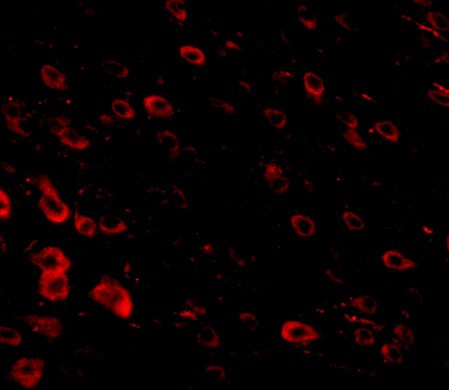
Immunocytochemistry/ Immunofluorescence: SALM4/LRFN3 Antibody - BSA Free [NBP2-41098] -
Immunocytochemistry/ Immunofluorescence: SALM4/LRFN3 Antibody - BSA Free [NBP2-41098] - Immunofluorescence of SALM4/LRFN3 in mouse brain tissue with SALM4/LRFN3 antibody at 20 u/mL.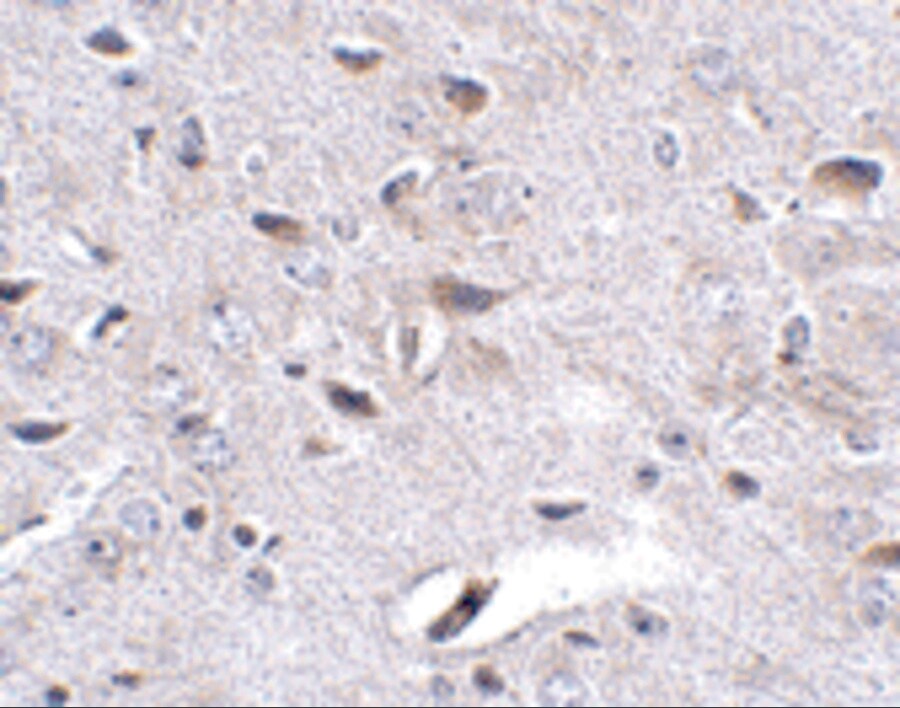
Immunohistochemistry: SALM4/LRFN3 Antibody - BSA Free [NBP2-41098] -
Immunohistochemistry: SALM4/LRFN3 Antibody - BSA Free [NBP2-41098] - Immunohistochemistry of SALM4/LRFN3 in mouse brain tissue with SALM4/LRFN3 antibody at 2.5 u/mL.Applications for SALM4/LRFN3 Antibody - BSA Free
Immunocytochemistry/ Immunofluorescence
Immunohistochemistry
Immunohistochemistry-Paraffin
Western Blot
Formulation, Preparation, and Storage
Purification
Formulation
Format
Preservative
Concentration
Shipping
Stability & Storage
Background: SALM4/LRFN3
Long Name
Alternate Names
Gene Symbol
Additional SALM4/LRFN3 Products
Product Documents for SALM4/LRFN3 Antibody - BSA Free
Certificate of Analysis
To download a Certificate of Analysis, please enter a lot or batch number in the search box below.
Product Specific Notices for SALM4/LRFN3 Antibody - BSA Free
This product is for research use only and is not approved for use in humans or in clinical diagnosis. Primary Antibodies are guaranteed for 1 year from date of receipt.
Related Research Areas
Customer Reviews for SALM4/LRFN3 Antibody - BSA Free
There are currently no reviews for this product. Be the first to review SALM4/LRFN3 Antibody - BSA Free and earn rewards!
Have you used SALM4/LRFN3 Antibody - BSA Free?
Submit a review and receive an Amazon gift card!
$25/€18/£15/$25CAN/¥2500 for a review with an image
$10/€7/£6/$10CAN/¥1110 for a review without an image
Submit a review
Protocols
Find general support by application which include: protocols, troubleshooting, illustrated assays, videos and webinars.
- Antigen Retrieval Protocol (PIER)
- Antigen Retrieval for Frozen Sections Protocol
- Appropriate Fixation of IHC/ICC Samples
- Cellular Response to Hypoxia Protocols
- Chromogenic IHC Staining of Formalin-Fixed Paraffin-Embedded (FFPE) Tissue Protocol
- Chromogenic Immunohistochemistry Staining of Frozen Tissue
- ClariTSA™ Fluorophore Kits
- Detection & Visualization of Antibody Binding
- ELISA Sample Preparation & Collection Guide
- ELISA Troubleshooting Guide
- Fluorescent IHC Staining of Frozen Tissue Protocol
- Graphic Protocol for Heat-induced Epitope Retrieval
- Graphic Protocol for the Preparation and Fluorescent IHC Staining of Frozen Tissue Sections
- Graphic Protocol for the Preparation and Fluorescent IHC Staining of Paraffin-embedded Tissue Sections
- Graphic Protocol for the Preparation of Gelatin-coated Slides for Histological Tissue Sections
- How to Run an R&D Systems DuoSet ELISA
- How to Run an R&D Systems Quantikine ELISA
- How to Run an R&D Systems Quantikine™ QuicKit™ ELISA
- ICC Cell Smear Protocol for Suspension Cells
- ICC Immunocytochemistry Protocol Videos
- ICC for Adherent Cells
- IHC Sample Preparation (Frozen sections vs Paraffin)
- Immunocytochemistry (ICC) Protocol
- Immunocytochemistry Troubleshooting
- Immunofluorescence of Organoids Embedded in Cultrex Basement Membrane Extract
- Immunofluorescent IHC Staining of Formalin-Fixed Paraffin-Embedded (FFPE) Tissue Protocol
- Immunohistochemistry (IHC) and Immunocytochemistry (ICC) Protocols
- Immunohistochemistry Frozen Troubleshooting
- Immunohistochemistry Paraffin Troubleshooting
- Preparing Samples for IHC/ICC Experiments
- Preventing Non-Specific Staining (Non-Specific Binding)
- Primary Antibody Selection & Optimization
- Protocol for Heat-Induced Epitope Retrieval (HIER)
- Protocol for Making a 4% Formaldehyde Solution in PBS
- Protocol for VisUCyte™ HRP Polymer Detection Reagent
- Protocol for the Fluorescent ICC Staining of Cell Smears - Graphic
- Protocol for the Fluorescent ICC Staining of Cultured Cells on Coverslips - Graphic
- Protocol for the Preparation & Fixation of Cells on Coverslips
- Protocol for the Preparation and Chromogenic IHC Staining of Frozen Tissue Sections
- Protocol for the Preparation and Chromogenic IHC Staining of Frozen Tissue Sections - Graphic
- Protocol for the Preparation and Chromogenic IHC Staining of Paraffin-embedded Tissue Sections
- Protocol for the Preparation and Chromogenic IHC Staining of Paraffin-embedded Tissue Sections - Graphic
- Protocol for the Preparation and Fluorescent ICC Staining of Cells on Coverslips
- Protocol for the Preparation and Fluorescent ICC Staining of Non-adherent Cells
- Protocol for the Preparation and Fluorescent ICC Staining of Stem Cells on Coverslips
- Protocol for the Preparation and Fluorescent IHC Staining of Frozen Tissue Sections
- Protocol for the Preparation and Fluorescent IHC Staining of Paraffin-embedded Tissue Sections
- Protocol for the Preparation of Gelatin-coated Slides for Histological Tissue Sections
- Protocol for the Preparation of a Cell Smear for Non-adherent Cell ICC - Graphic
- Quantikine HS ELISA Kit Assay Principle, Alkaline Phosphatase
- Quantikine HS ELISA Kit Principle, Streptavidin-HRP Polymer
- R&D Systems Quality Control Western Blot Protocol
- Sandwich ELISA (Colorimetric) – Biotin/Streptavidin Detection Protocol
- Sandwich ELISA (Colorimetric) – Direct Detection Protocol
- TUNEL and Active Caspase-3 Detection by IHC/ICC Protocol
- The Importance of IHC/ICC Controls
- Troubleshooting Guide: ELISA
- Troubleshooting Guide: Immunohistochemistry
- Troubleshooting Guide: Western Blot Figures
- Western Blot Conditions
- Western Blot Protocol
- Western Blot Protocol for Cell Lysates
- Western Blot Troubleshooting
- Western Blot Troubleshooting Guide
- View all Protocols, Troubleshooting, Illustrated assays and Webinars