
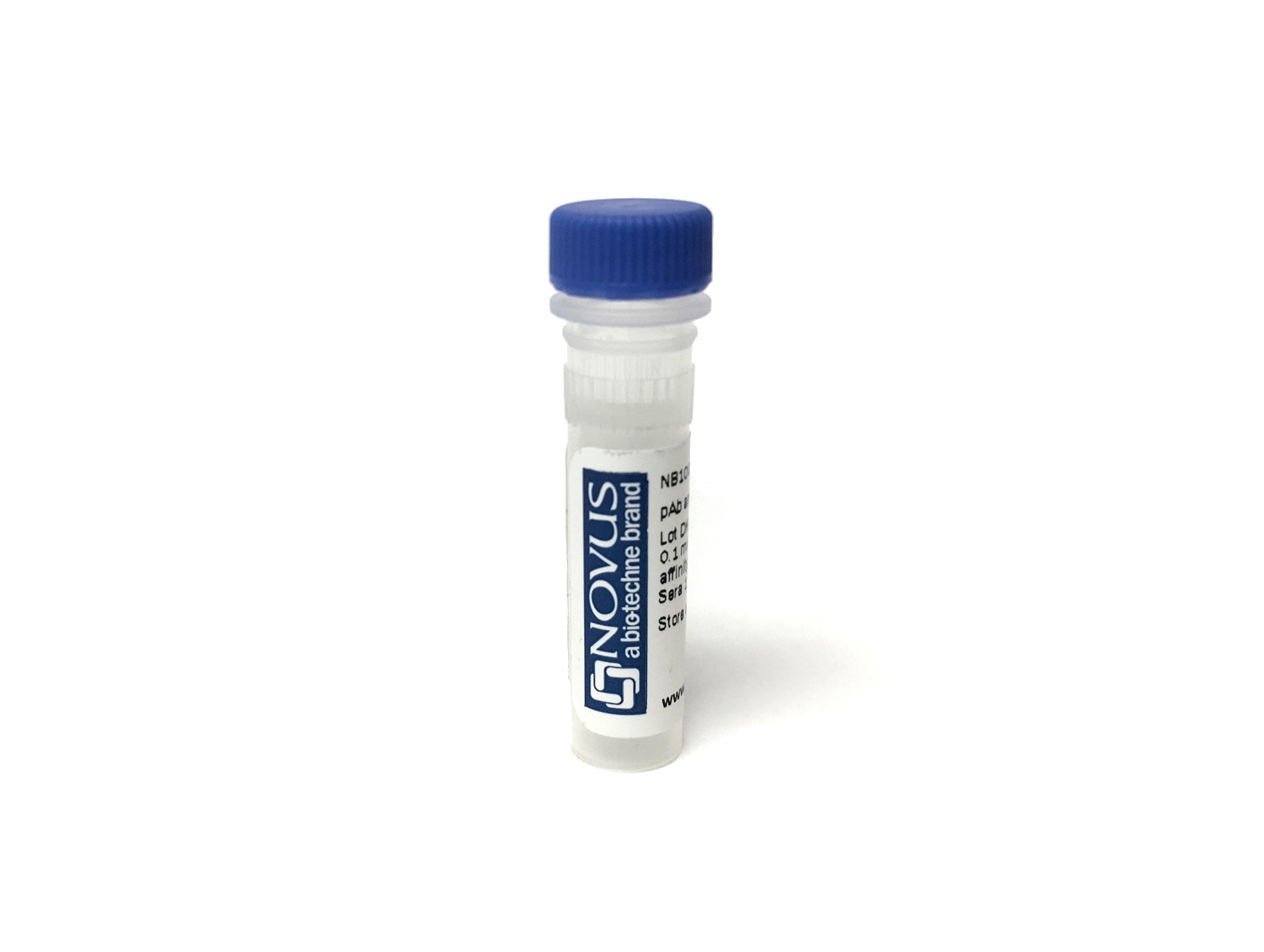
Serum Amyloid A1 Antibody (Reu86.5)
Novus Biologicals | Catalog # NBP3-11246

Loading...
Key Product Details
Species Reactivity
Human, Mouse
Applications
Immunohistochemistry-Paraffin, Immunohistochemistry-Frozen, Western Blot, Immunoassay
Label
Unconjugated
Antibody Source
Monoclonal Mouse IgG1 Clone # Reu86.5
Loading...
Product Specifications
Immunogen
The antibody is raised against human SAA and Helix Pomatia Haemocyanine.
Clonality
Monoclonal
Host
Mouse
Isotype
IgG1
Applications for Serum Amyloid A1 Antibody (Reu86.5)
Application
Recommended Usage
Immunoassay
Optimal dilutions of this antibody should be experimentally determined.
Immunohistochemistry-Frozen
Optimal dilutions of this antibody should be experimentally determined.
Immunohistochemistry-Paraffin
Optimal dilutions of this antibody should be experimentally determined.
Western Blot
Optimal dilutions of this antibody should be experimentally determined.
Application Notes
For Western blotting and Immunohistochemistry dilutions to be used depend on detection system applied. It is recommended that users test the reagent and determine their own optimal dilutions. The typical starting working dilution is 1:10.
Formulation, Preparation, and Storage
Purification
Protein G purified
Formulation
0.2 um filtered solution in PBS, 0.1% BSA
Preservative
0.02% Sodium Azide
Concentration
0.1 mg/ml
Shipping
The product is shipped with polar packs. Upon receipt, store it immediately at the temperature recommended below.
Stability & Storage
Store at 4C.
Background: Serum Amyloid A1
Recently, a broader view of SAA expression and function has been emerging. Expression studies show production of SAA proteins in histologically normal, atherosclerotic, Alzheimer, inflammatory, and tumor tissues. SAA has been found to have binding sites for high density lipoproteins, calcium, laminin, and heparin/heparan-sulfate. Also adhesion motifs were identified and new functions, affecting cell adhesion, migration, proliferation and aggregation discovered. These findings emphasize the importance of SAA in various physiological and pathological processes, including inflammation, atherosclerosis, thrombosis, AA-amyloidosis, rheumatoid arthritis, and neoplasia. SAA has also a number of immunomodulatory roles, it can induce chemotaxis and adhesion molecule expression, has cytokine-like properties and can promote the upregulation of metalloproteinases. It enhances the binding of high-density lipoprotein to macrophages and thus helps in the delivery of lipids to sites of injury for use in tissue repair. It is thus thought to be an integral part of the disease processes. In addition, recent experiments suggest that SAA may play a "housekeeping" role in normal human tissues.
Elevated levels of SAA over time predispose to secondary amyloidosis, extracellular accumulation of amyloid fibrils, derived from a circulating precursor, in various tissue and organs. The most common form of amyloidosis occurs secondary to chronic inflammatory disease, particularly rheumatoid arthritis.
The antibody is raised against human SAA and Helix Pomatia Haemocyanine. It reacts with the SAA-1 type.
Alternate Names
PIG4, SAA1
Gene Symbol
SAA1
Additional Serum Amyloid A1 Products
Product Documents for Serum Amyloid A1 Antibody (Reu86.5)
Certificate of Analysis
To download a Certificate of Analysis, please enter a lot or batch number in the search box below.
Product Specific Notices for Serum Amyloid A1 Antibody (Reu86.5)
This product is for research use only and is not approved for use in humans or in clinical diagnosis. Primary Antibodies are guaranteed for 1 year from date of receipt.
Related Research Areas
Customer Reviews for Serum Amyloid A1 Antibody (Reu86.5)
There are currently no reviews for this product. Be the first to review Serum Amyloid A1 Antibody (Reu86.5) and earn rewards!
Have you used Serum Amyloid A1 Antibody (Reu86.5)?
Submit a review and receive an Amazon gift card!
$25/€18/£15/$25CAN/¥2500 for a review with an image
$10/€7/£6/$10CAN/¥1110 for a review without an image
Submit a review
Protocols
Find general support by application which include: protocols, troubleshooting, illustrated assays, videos and webinars.
- Antigen Retrieval Protocol (PIER)
- Antigen Retrieval for Frozen Sections Protocol
- Appropriate Fixation of IHC/ICC Samples
- Cellular Response to Hypoxia Protocols
- Chromogenic IHC Staining of Formalin-Fixed Paraffin-Embedded (FFPE) Tissue Protocol
- Chromogenic Immunohistochemistry Staining of Frozen Tissue
- ClariTSA™ Fluorophore Kits
- Detection & Visualization of Antibody Binding
- ELISA Sample Preparation & Collection Guide
- ELISA Troubleshooting Guide
- Fluorescent IHC Staining of Frozen Tissue Protocol
- Graphic Protocol for Heat-induced Epitope Retrieval
- Graphic Protocol for the Preparation and Fluorescent IHC Staining of Frozen Tissue Sections
- Graphic Protocol for the Preparation and Fluorescent IHC Staining of Paraffin-embedded Tissue Sections
- Graphic Protocol for the Preparation of Gelatin-coated Slides for Histological Tissue Sections
- How to Run an R&D Systems DuoSet ELISA
- How to Run an R&D Systems Quantikine ELISA
- How to Run an R&D Systems Quantikine™ QuicKit™ ELISA
- IHC Sample Preparation (Frozen sections vs Paraffin)
- Immunofluorescent IHC Staining of Formalin-Fixed Paraffin-Embedded (FFPE) Tissue Protocol
- Immunohistochemistry (IHC) and Immunocytochemistry (ICC) Protocols
- Immunohistochemistry Frozen Troubleshooting
- Immunohistochemistry Paraffin Troubleshooting
- Preparing Samples for IHC/ICC Experiments
- Preventing Non-Specific Staining (Non-Specific Binding)
- Primary Antibody Selection & Optimization
- Protocol for Heat-Induced Epitope Retrieval (HIER)
- Protocol for Making a 4% Formaldehyde Solution in PBS
- Protocol for VisUCyte™ HRP Polymer Detection Reagent
- Protocol for the Preparation & Fixation of Cells on Coverslips
- Protocol for the Preparation and Chromogenic IHC Staining of Frozen Tissue Sections
- Protocol for the Preparation and Chromogenic IHC Staining of Frozen Tissue Sections - Graphic
- Protocol for the Preparation and Chromogenic IHC Staining of Paraffin-embedded Tissue Sections
- Protocol for the Preparation and Chromogenic IHC Staining of Paraffin-embedded Tissue Sections - Graphic
- Protocol for the Preparation and Fluorescent IHC Staining of Frozen Tissue Sections
- Protocol for the Preparation and Fluorescent IHC Staining of Paraffin-embedded Tissue Sections
- Protocol for the Preparation of Gelatin-coated Slides for Histological Tissue Sections
- Quantikine HS ELISA Kit Assay Principle, Alkaline Phosphatase
- Quantikine HS ELISA Kit Principle, Streptavidin-HRP Polymer
- R&D Systems Quality Control Western Blot Protocol
- Sandwich ELISA (Colorimetric) – Biotin/Streptavidin Detection Protocol
- Sandwich ELISA (Colorimetric) – Direct Detection Protocol
- TUNEL and Active Caspase-3 Detection by IHC/ICC Protocol
- The Importance of IHC/ICC Controls
- Troubleshooting Guide: ELISA
- Troubleshooting Guide: Immunohistochemistry
- Troubleshooting Guide: Western Blot Figures
- Western Blot Conditions
- Western Blot Protocol
- Western Blot Protocol for Cell Lysates
- Western Blot Troubleshooting
- Western Blot Troubleshooting Guide
- View all Protocols, Troubleshooting, Illustrated assays and Webinars
Loading...