
Staufen Antibody - BSA Free
Novus Biologicals | Catalog # NBP1-33202

![Western Blot: Staufen Antibody [NBP1-33202]](https://resources.rndsystems.com/images/products/Staufen-Antibody-Western-Blot-NBP1-33202-img0011.jpg "Western Blot: Staufen Antibody [NBP1-33202]")
Loading...
Key Product Details
Validated by
Biological Validation
Species Reactivity
Validated:
Human, Mouse
Cited:
Human
Predicted:
Chicken (94%), Rat (94%), Rhesus Macaque (100%). Backed by our 100% Guarantee.
Applications
Validated:
Western Blot, Immunocytochemistry/ Immunofluorescence, Immunoprecipitation
Cited:
Western Blot
Label
Unconjugated
Antibody Source
Polyclonal Rabbit IgG
Format
BSA Free
Loading...
Product Specifications
Immunogen
Recombinant protein encompassing a sequence within the C-terminus region of human Staufen. The exact sequence is proprietary.
Reactivity Notes
Zebrafish (81%), Xenopus laevis (86%).
Localization
Rough endoplasmic reticulum
Clonality
Polyclonal
Host
Rabbit
Isotype
IgG
Theoretical MW
63 kDa.
Disclaimer note: The observed molecular weight of the protein may vary from the listed predicted molecular weight due to post translational modifications, post translation cleavages, relative charges, and other experimental factors.
Disclaimer note: The observed molecular weight of the protein may vary from the listed predicted molecular weight due to post translational modifications, post translation cleavages, relative charges, and other experimental factors.
Scientific Data Images for Staufen Antibody - BSA Free
Western Blot: Staufen Antibody [NBP1-33202]
Staufen-Antibody-Western-Blot-NBP1-33202-img0011.jpg![Immunocytochemistry/ Immunofluorescence: Staufen Antibody [NBP1-33202]](https://resources.rndsystems.com/images/products/Staufen-Antibody-Immunocytochemistry-Immunofluorescence-NBP1-33202-img0008.jpg "Immunocytochemistry/ Immunofluorescence: Staufen Antibody [NBP1-33202]")
Immunocytochemistry/ Immunofluorescence: Staufen Antibody [NBP1-33202]
Immunocytochemistry/Immunofluorescence: Staufen Antibody [NBP1-33202] - Mock and treated HeLa cells were fixed in 4% paraformaldehyde at RT for 15 min.Green: Staufen stained by Staufen antibody diluted at 1:500.Blue: Fluoroshield with DAPI.![Western Blot: Staufen Antibody [NBP1-33202]](https://resources.rndsystems.com/images/products/Staufen-Antibody-Western-Blot-NBP1-33202-img0005.jpg "Western Blot: Staufen Antibody [NBP1-33202]")
Western Blot: Staufen Antibody [NBP1-33202]
Western Blot: Staufen Antibody [NBP1-33202] - Sample (30 ug of whole cell lysate) A: Neuro2A diluted at 1:1000![Western Blot: Staufen Antibody [NBP1-33202]](https://resources.rndsystems.com/images/products/Staufen-Antibody-Western-Blot-NBP1-33202-img0010.jpg "Western Blot: Staufen Antibody [NBP1-33202]")
Western Blot: Staufen Antibody [NBP1-33202]
Western Blot: Staufen Antibody [NBP1-33202] - Various whole cell extracts (30 ug) were separated by 10% SDS-PAGE, and the membrane was blotted with Staufen antibody diluted at 1:5000. The HRP-conjugated anti-rabbit IgG antibody (NBP2-19301) was used to detect the primary antibody.![Immunoprecipitation: Staufen Antibody [NBP1-33202]](https://resources.rndsystems.com/images/products/Staufen-Antibody-Immunoprecipitation-NBP1-33202-img0006.jpg "Immunoprecipitation: Staufen Antibody [NBP1-33202]")
Immunoprecipitation: Staufen Antibody [NBP1-33202]
Immunoprecipitation: Staufen Antibody [NBP1-33202] - Staufen antibody staining 30 ug whole cell lysate of Lane A: 293 (input), Lane B: control rabbit IgG-IP, Lane C: Stau1-IP, Lane D: Post-IP lysate from control rabbit IgG-IP, Lane E:Post-IP lysate from Stau1-IP; diluted at 1:3000.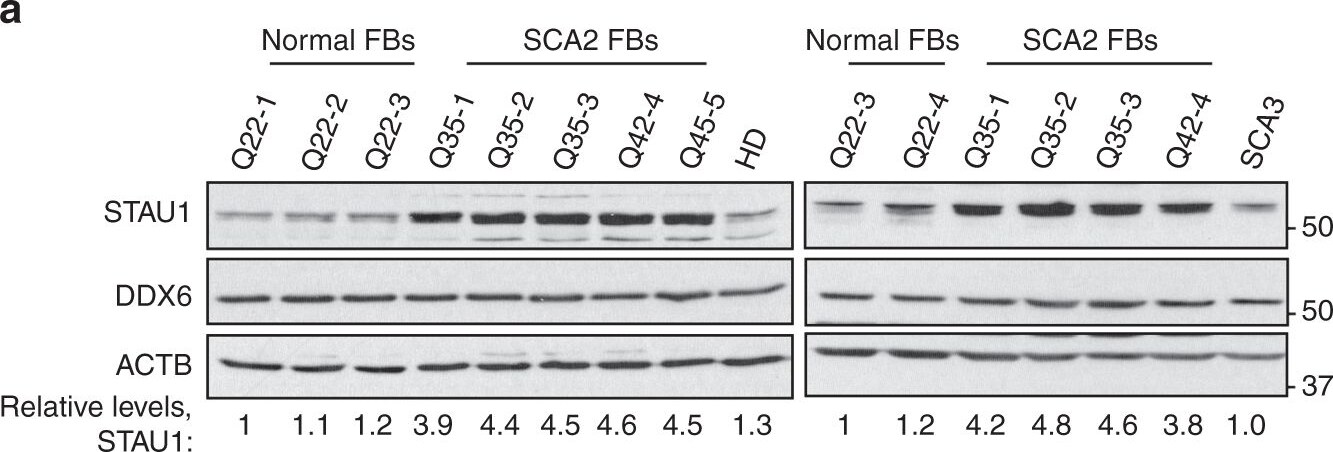
Western Blot: Staufen Antibody [NBP1-33202] -
Staufen1 protein but not mRNA steady-state levels are increased in neurodegenerative disease cells & tissues. Western blot analysis of SCA2- FBs (a) & LBCs (b) show increased STAU1 levels compared with normal controls. DDX6 levels are unchanged. HD & SCA3 patient (polyQ expanded) FBs were used as additional controls. Four normal & five SCA2 FBs, & two normal & three SCA2 LBCs were used. c, d Western blot analyses of ATXN2Q127 (c) & BAC-Q72 (d) mouse cerebellar extracts (24 weeks of age) showing increased Stau1 levels compared with wild-type or BAC-Q22 controls (n = 2–3 animals per group). e Western blot of FB extracts from an ALS patient with the TDP-43G298S mutation show increased STAU1 levels. beta -Actin was used as loading control & representative blots of three independent experiments are shown. f–hSTAU1 RNA levels are unaltered in SCA2 & ALS cells & SCA2 mice. qRT-PCR analyses of STAU1 mRNA in SCA2 FBs & ALS FB with TDP-43G298S mutation (f) or SCA2 LBCs (g). h qRT-PCR analyses of cerebellar RNAs from ATXN2Q127 & BAC-Q72 mice compared to wild-type littermates (24 weeks of age; n = animals per group). Gene expression levels were normalized to Actb Image collected & cropped by CiteAb from the following publication (https://pubmed.ncbi.nlm.nih.gov/30194296), licensed under a CC-BY license. Not internally tested by Novus Biologicals.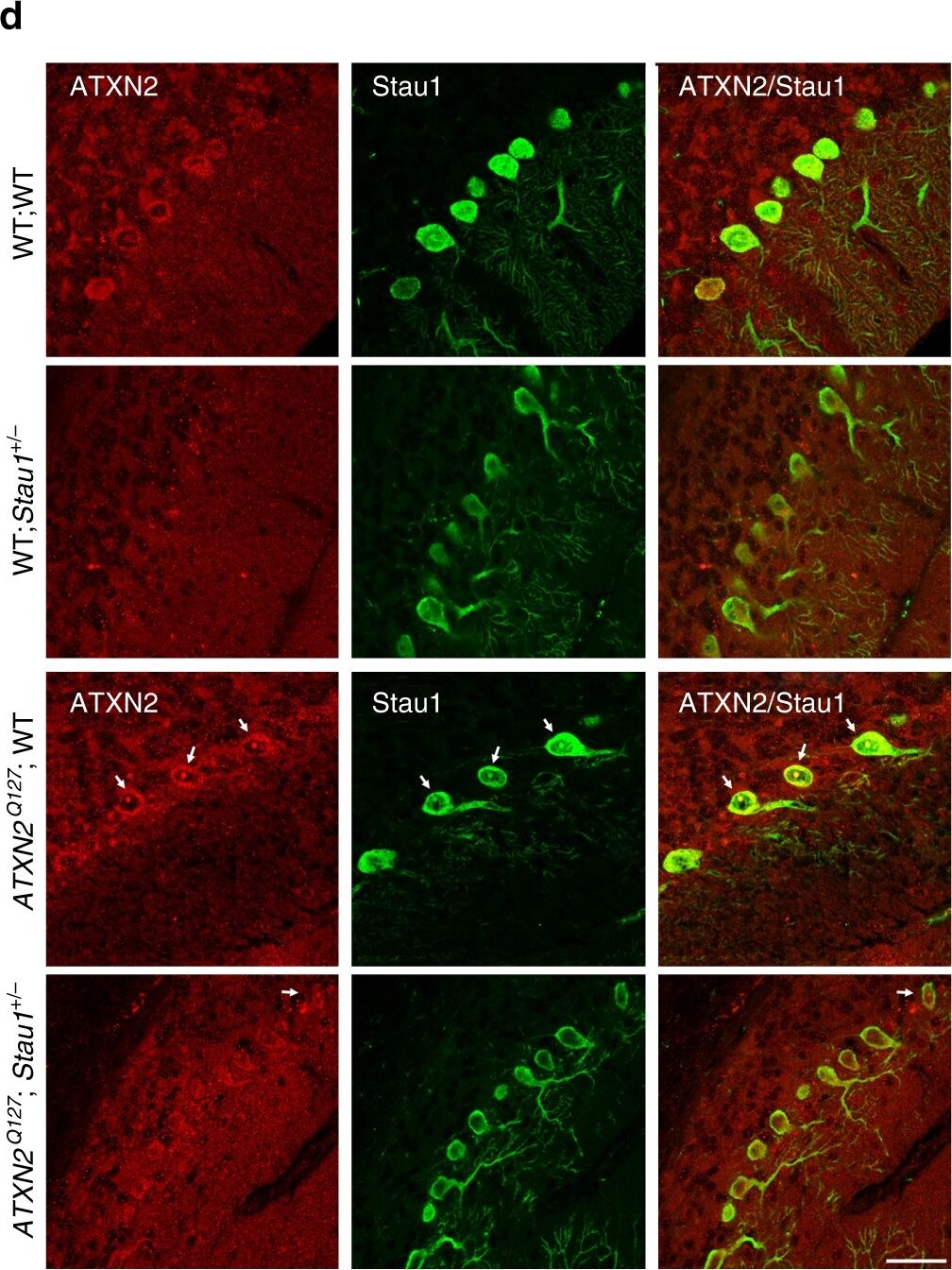
Western Blot: Staufen Antibody [NBP1-33202] -
Western Blot: Staufen Antibody [NBP1-33202] - Silencing of STAU1 mitigates SCA2 phenotypes. aStau1 haploinsufficiency improves abnormal motor behavior of ATXN2Q127 mice as determined by rotarod behavior at 8, 12, 16, & 20 weeks of age. ATXN2Q127;Stau1+/- mice (green) have improved rotarod performance compared with ATXN2Q127 littermates (red) starting at 12 weeks of age. Note that Stau1 haploinsufficiency (orange) by itself does not alter motor function; n = 9–15 mice per group. Values shown are mean ± SE. Significance was determined using generalized estimating equations (GEE). NS, nonsignificant, *P < 0.05, **P < 0.01. b, c Reduction of Stau1 in vivo improves levels of key cerebellar proteins towards normalization. b Western blotting of cerebellar extracts from ATXN2Q127;Stau1+/- mice showing improvement of protein levels for Calb1, Pcp2, Rgs8, Pcp4, Homer3, & Fam107b towards normalization. Each lane represents cerebellar extract from an individual mouse. beta -Actin is used as a loading control & the blots are from three replicate experiments. c Quantitative analysis of western blots shown in b. Data are mean ± SD, **P < 0.01, ***P < 0.001, Student t-test. d Combined immunostaining of ATXN2 (red) & Stau1 (green) of cerebellar sections from ATXN2Q127 & crossed ATXN2Q127;Stau1+/- mice (34 weeks of age) demonstrating reduced ATXN2-Stau1 aggregates in crossed ATXN2Q127;Stau1+/- mice. Scale bar, 30 µM. e Model for STAU1 in the pathology of SCA2 & other neurodegenerative diseases Image collected & cropped by CiteAb from the following publication (https://pubmed.ncbi.nlm.nih.gov/30194296), licensed under a CC-BY license. Not internally tested by Novus Biologicals.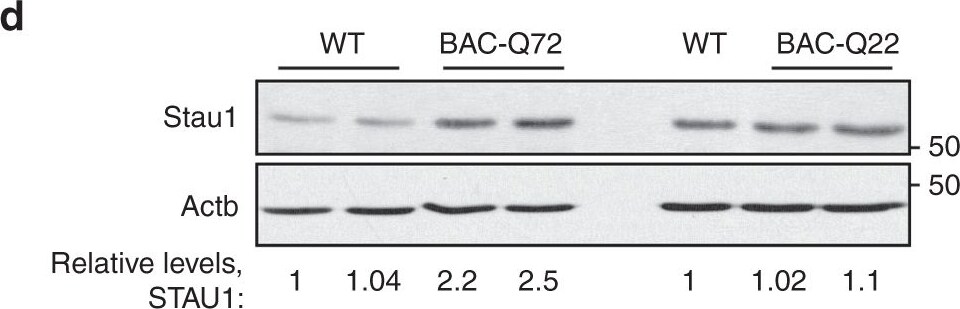
Western Blot: Staufen Antibody [NBP1-33202] -
Western Blot: Staufen Antibody [NBP1-33202] - Staufen1 protein but not mRNA steady-state levels are increased in neurodegenerative disease cells & tissues. Western blot analysis of SCA2- FBs (a) & LBCs (b) show increased STAU1 levels compared with normal controls. DDX6 levels are unchanged. HD & SCA3 patient (polyQ expanded) FBs were used as additional controls. Four normal & five SCA2 FBs, & two normal & three SCA2 LBCs were used. c, d Western blot analyses of ATXN2Q127 (c) & BAC-Q72 (d) mouse cerebellar extracts (24 weeks of age) showing increased Stau1 levels compared with wild-type or BAC-Q22 controls (n = 2–3 animals per group). e Western blot of FB extracts from an ALS patient with the TDP-43G298S mutation show increased STAU1 levels. beta -Actin was used as loading control & representative blots of three independent experiments are shown. f–hSTAU1 RNA levels are unaltered in SCA2 & ALS cells & SCA2 mice. qRT-PCR analyses of STAU1 mRNA in SCA2 FBs & ALS FB with TDP-43G298S mutation (f) or SCA2 LBCs (g). h qRT-PCR analyses of cerebellar RNAs from ATXN2Q127 & BAC-Q72 mice compared to wild-type littermates (24 weeks of age; n = animals per group). Gene expression levels were normalized to Actb Image collected & cropped by CiteAb from the following publication (https://pubmed.ncbi.nlm.nih.gov/30194296), licensed under a CC-BY license. Not internally tested by Novus Biologicals.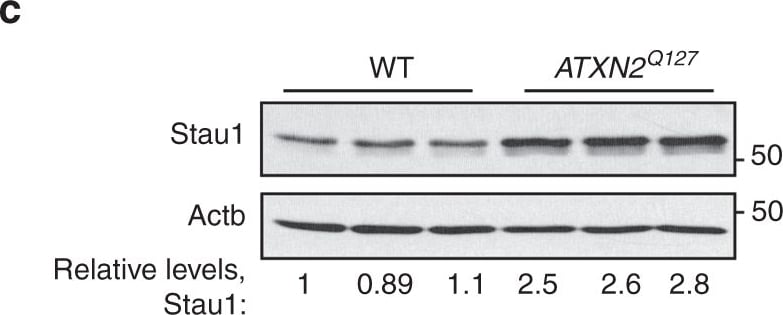
Western Blot: Staufen Antibody [NBP1-33202] -
Western Blot: Staufen Antibody [NBP1-33202] - Staufen1 protein but not mRNA steady-state levels are increased in neurodegenerative disease cells & tissues. Western blot analysis of SCA2- FBs (a) & LBCs (b) show increased STAU1 levels compared with normal controls. DDX6 levels are unchanged. HD & SCA3 patient (polyQ expanded) FBs were used as additional controls. Four normal & five SCA2 FBs, & two normal & three SCA2 LBCs were used. c, d Western blot analyses of ATXN2Q127 (c) & BAC-Q72 (d) mouse cerebellar extracts (24 weeks of age) showing increased Stau1 levels compared with wild-type or BAC-Q22 controls (n = 2–3 animals per group). e Western blot of FB extracts from an ALS patient with the TDP-43G298S mutation show increased STAU1 levels. beta -Actin was used as loading control & representative blots of three independent experiments are shown. f–hSTAU1 RNA levels are unaltered in SCA2 & ALS cells & SCA2 mice. qRT-PCR analyses of STAU1 mRNA in SCA2 FBs & ALS FB with TDP-43G298S mutation (f) or SCA2 LBCs (g). h qRT-PCR analyses of cerebellar RNAs from ATXN2Q127 & BAC-Q72 mice compared to wild-type littermates (24 weeks of age; n = animals per group). Gene expression levels were normalized to Actb Image collected & cropped by CiteAb from the following publication (https://pubmed.ncbi.nlm.nih.gov/30194296), licensed under a CC-BY license. Not internally tested by Novus Biologicals.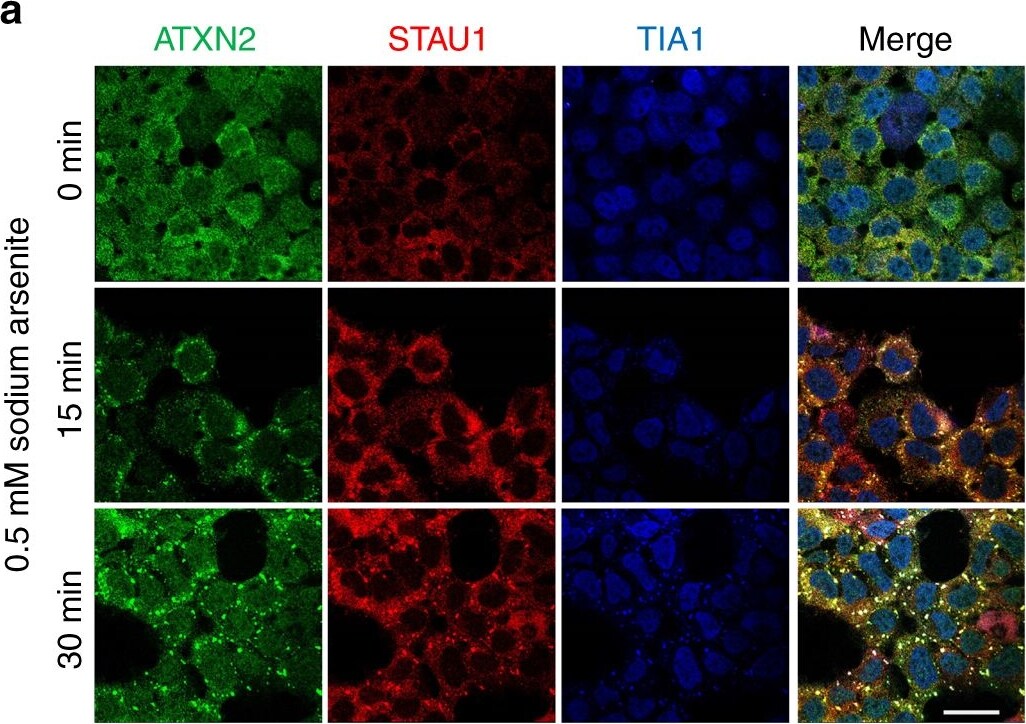
Western Blot: Staufen Antibody [NBP1-33202] -
Western Blot: Staufen Antibody [NBP1-33202] - Co-localization of Staufen1 with ATXN2 in stress-granule-like structures. a ATXN2 & STAU1 co-localize in SGs. Immunostaining of HEK-293 cells with antibodies against ATXN2, STAU1, & TIA-1 show co-localization of STAU1 with ATXN2 & TIA-1 in SGs during stress (0.5 mM sodium arsenite for 15 & 30 min) that are not present in the absence of stress. Scale bar, 10 µM. b Constitutively present SG-like structures positive for both ATXN2 & STAU1 in SCA2 FBs, but not in normal FBs (white arrows). Cells were stained with antibodies to ATXN2 & STAU1. Scale bar, 100 µM. c Increased numbers of aggregates in SCA2 FBs at 37 °C. Aggregates > 4 pixels per cell positive for both ATXN2 & STAU1 are shown. One-hundred normal & 96 SCA2-FBs were used for analyses. Data are mean ± SD, **P < 0.01, Student t-test. d Histograms representing the quantities & sizes of ATXN2-STAU1 co-localized granules in normal vs. SCA2 FBs. e In vivo co-localization of ATXN2 (green) with Stau1 (red) to aggregates in cerebellar PCs of 24-weeks-old ATXN2Q127 mice (white arrows). Scale bar, 30 µM. f Co-localized ATXN2 (red) & STAU1 (green) to aggregates (white arrows) in cerebellar PCs from a human SCA2 brain, that are absent in an unaffected control. Scale bar, 30 µM. g Immunoprecipitation of ATXN2 with STAU1. Non-RNase A or RNase A treated HEK-293 cell extracts expressing Flag-tagged ATXN2-(Q22 or Q108) were subjected to immunoprecipitation with Flag mAb beads & analyzed by western blotting. STAU1 shows RNA-dependent interactions with wild-type & mutant ATXN2. ATXN2 also co-immunoprecipitates with DDX6 & PABPC1, known ATXN2 interactors. Representative blots of three independent experiments are shown Image collected & cropped by CiteAb from the following publication (https://pubmed.ncbi.nlm.nih.gov/30194296), licensed under a CC-BY license. Not internally tested by Novus Biologicals.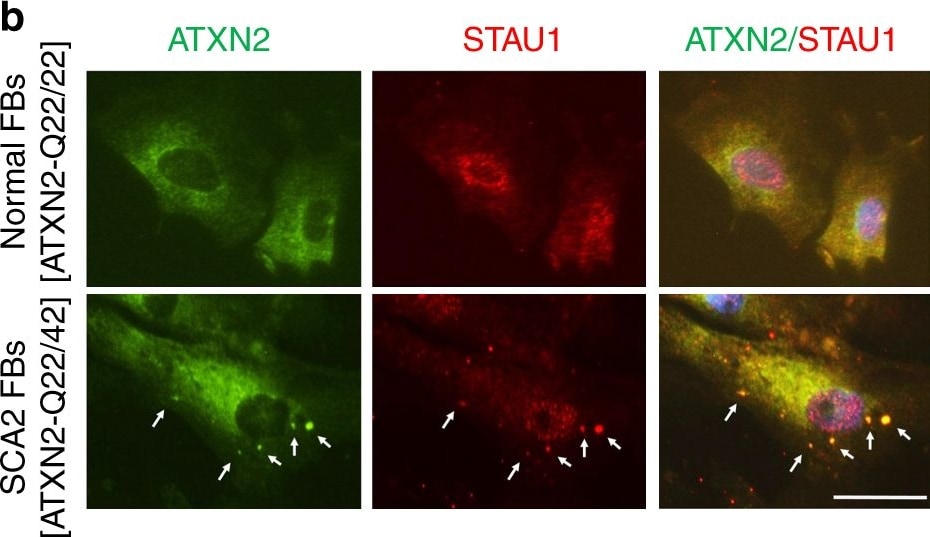
Western Blot: Staufen Antibody [NBP1-33202] -
Western Blot: Staufen Antibody [NBP1-33202] - Co-localization of Staufen1 with ATXN2 in stress-granule-like structures. a ATXN2 & STAU1 co-localize in SGs. Immunostaining of HEK-293 cells with antibodies against ATXN2, STAU1, & TIA-1 show co-localization of STAU1 with ATXN2 & TIA-1 in SGs during stress (0.5 mM sodium arsenite for 15 & 30 min) that are not present in the absence of stress. Scale bar, 10 µM. b Constitutively present SG-like structures positive for both ATXN2 & STAU1 in SCA2 FBs, but not in normal FBs (white arrows). Cells were stained with antibodies to ATXN2 & STAU1. Scale bar, 100 µM. c Increased numbers of aggregates in SCA2 FBs at 37 °C. Aggregates > 4 pixels per cell positive for both ATXN2 & STAU1 are shown. One-hundred normal & 96 SCA2-FBs were used for analyses. Data are mean ± SD, **P < 0.01, Student t-test. d Histograms representing the quantities & sizes of ATXN2-STAU1 co-localized granules in normal vs. SCA2 FBs. e In vivo co-localization of ATXN2 (green) with Stau1 (red) to aggregates in cerebellar PCs of 24-weeks-old ATXN2Q127 mice (white arrows). Scale bar, 30 µM. f Co-localized ATXN2 (red) & STAU1 (green) to aggregates (white arrows) in cerebellar PCs from a human SCA2 brain, that are absent in an unaffected control. Scale bar, 30 µM. g Immunoprecipitation of ATXN2 with STAU1. Non-RNase A or RNase A treated HEK-293 cell extracts expressing Flag-tagged ATXN2-(Q22 or Q108) were subjected to immunoprecipitation with Flag mAb beads & analyzed by western blotting. STAU1 shows RNA-dependent interactions with wild-type & mutant ATXN2. ATXN2 also co-immunoprecipitates with DDX6 & PABPC1, known ATXN2 interactors. Representative blots of three independent experiments are shown Image collected & cropped by CiteAb from the following publication (https://pubmed.ncbi.nlm.nih.gov/30194296), licensed under a CC-BY license. Not internally tested by Novus Biologicals.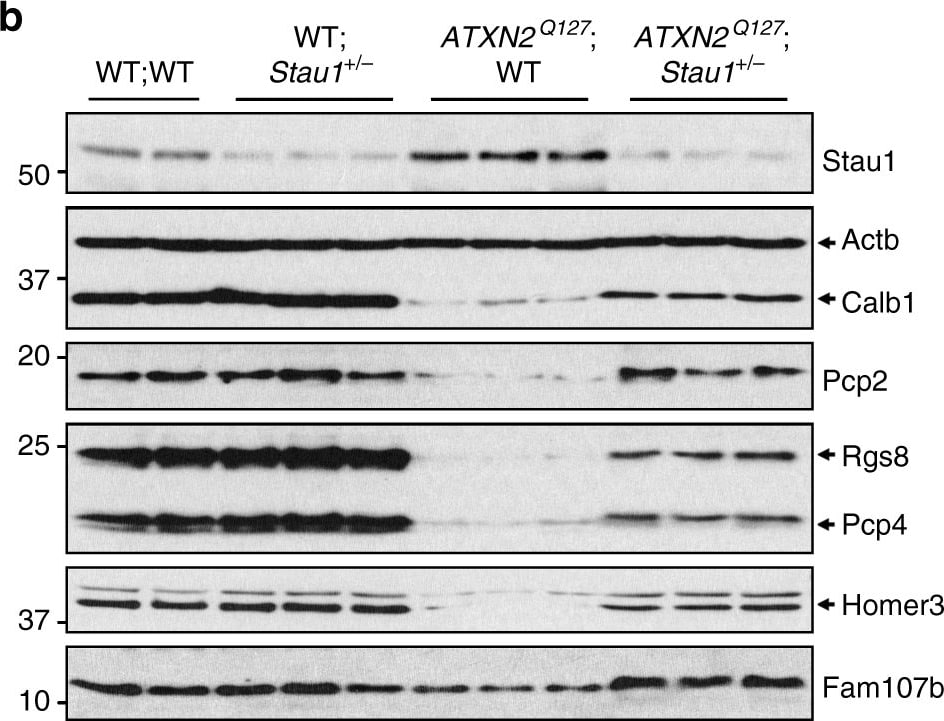
Western Blot: Staufen Antibody [NBP1-33202] -
Western Blot: Staufen Antibody [NBP1-33202] - Silencing of STAU1 mitigates SCA2 phenotypes. aStau1 haploinsufficiency improves abnormal motor behavior of ATXN2Q127 mice as determined by rotarod behavior at 8, 12, 16, & 20 weeks of age. ATXN2Q127;Stau1+/- mice (green) have improved rotarod performance compared with ATXN2Q127 littermates (red) starting at 12 weeks of age. Note that Stau1 haploinsufficiency (orange) by itself does not alter motor function; n = 9–15 mice per group. Values shown are mean ± SE. Significance was determined using generalized estimating equations (GEE). NS, nonsignificant, *P < 0.05, **P < 0.01. b, c Reduction of Stau1 in vivo improves levels of key cerebellar proteins towards normalization. b Western blotting of cerebellar extracts from ATXN2Q127;Stau1+/- mice showing improvement of protein levels for Calb1, Pcp2, Rgs8, Pcp4, Homer3, & Fam107b towards normalization. Each lane represents cerebellar extract from an individual mouse. beta -Actin is used as a loading control & the blots are from three replicate experiments. c Quantitative analysis of western blots shown in b. Data are mean ± SD, **P < 0.01, ***P < 0.001, Student t-test. d Combined immunostaining of ATXN2 (red) & Stau1 (green) of cerebellar sections from ATXN2Q127 & crossed ATXN2Q127;Stau1+/- mice (34 weeks of age) demonstrating reduced ATXN2-Stau1 aggregates in crossed ATXN2Q127;Stau1+/- mice. Scale bar, 30 µM. e Model for STAU1 in the pathology of SCA2 & other neurodegenerative diseases Image collected & cropped by CiteAb from the following publication (https://pubmed.ncbi.nlm.nih.gov/30194296), licensed under a CC-BY license. Not internally tested by Novus Biologicals.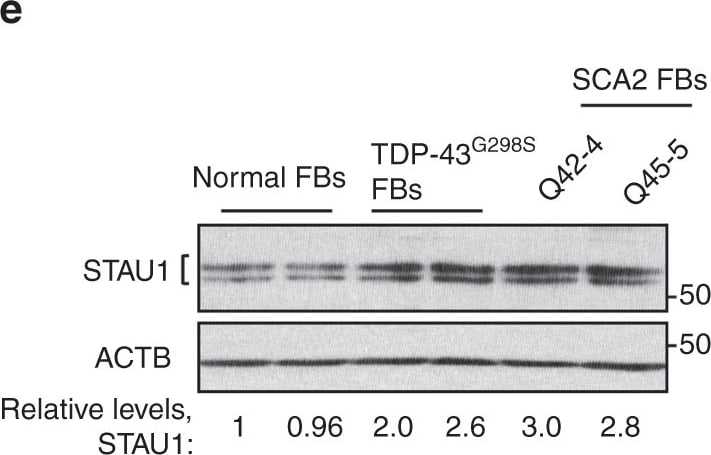
Western Blot: Staufen Antibody [NBP1-33202] -
Western Blot: Staufen Antibody [NBP1-33202] - Staufen1 protein but not mRNA steady-state levels are increased in neurodegenerative disease cells & tissues. Western blot analysis of SCA2- FBs (a) & LBCs (b) show increased STAU1 levels compared with normal controls. DDX6 levels are unchanged. HD & SCA3 patient (polyQ expanded) FBs were used as additional controls. Four normal & five SCA2 FBs, & two normal & three SCA2 LBCs were used. c, d Western blot analyses of ATXN2Q127 (c) & BAC-Q72 (d) mouse cerebellar extracts (24 weeks of age) showing increased Stau1 levels compared with wild-type or BAC-Q22 controls (n = 2–3 animals per group). e Western blot of FB extracts from an ALS patient with the TDP-43G298S mutation show increased STAU1 levels. beta -Actin was used as loading control & representative blots of three independent experiments are shown. f–hSTAU1 RNA levels are unaltered in SCA2 & ALS cells & SCA2 mice. qRT-PCR analyses of STAU1 mRNA in SCA2 FBs & ALS FB with TDP-43G298S mutation (f) or SCA2 LBCs (g). h qRT-PCR analyses of cerebellar RNAs from ATXN2Q127 & BAC-Q72 mice compared to wild-type littermates (24 weeks of age; n = animals per group). Gene expression levels were normalized to Actb Image collected & cropped by CiteAb from the following publication (https://pubmed.ncbi.nlm.nih.gov/30194296), licensed under a CC-BY license. Not internally tested by Novus Biologicals.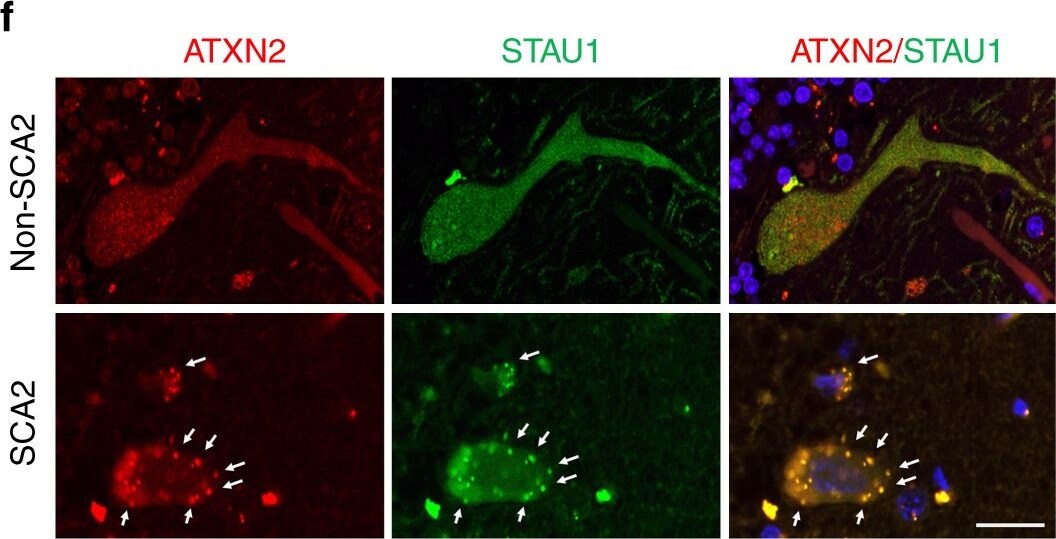
Western Blot: Staufen Antibody [NBP1-33202] -
Western Blot: Staufen Antibody [NBP1-33202] - Co-localization of Staufen1 with ATXN2 in stress-granule-like structures. a ATXN2 & STAU1 co-localize in SGs. Immunostaining of HEK-293 cells with antibodies against ATXN2, STAU1, & TIA-1 show co-localization of STAU1 with ATXN2 & TIA-1 in SGs during stress (0.5 mM sodium arsenite for 15 & 30 min) that are not present in the absence of stress. Scale bar, 10 µM. b Constitutively present SG-like structures positive for both ATXN2 & STAU1 in SCA2 FBs, but not in normal FBs (white arrows). Cells were stained with antibodies to ATXN2 & STAU1. Scale bar, 100 µM. c Increased numbers of aggregates in SCA2 FBs at 37 °C. Aggregates > 4 pixels per cell positive for both ATXN2 & STAU1 are shown. One-hundred normal & 96 SCA2-FBs were used for analyses. Data are mean ± SD, **P < 0.01, Student t-test. d Histograms representing the quantities & sizes of ATXN2-STAU1 co-localized granules in normal vs. SCA2 FBs. e In vivo co-localization of ATXN2 (green) with Stau1 (red) to aggregates in cerebellar PCs of 24-weeks-old ATXN2Q127 mice (white arrows). Scale bar, 30 µM. f Co-localized ATXN2 (red) & STAU1 (green) to aggregates (white arrows) in cerebellar PCs from a human SCA2 brain, that are absent in an unaffected control. Scale bar, 30 µM. g Immunoprecipitation of ATXN2 with STAU1. Non-RNase A or RNase A treated HEK-293 cell extracts expressing Flag-tagged ATXN2-(Q22 or Q108) were subjected to immunoprecipitation with Flag mAb beads & analyzed by western blotting. STAU1 shows RNA-dependent interactions with wild-type & mutant ATXN2. ATXN2 also co-immunoprecipitates with DDX6 & PABPC1, known ATXN2 interactors. Representative blots of three independent experiments are shown Image collected & cropped by CiteAb from the following publication (https://pubmed.ncbi.nlm.nih.gov/30194296), licensed under a CC-BY license. Not internally tested by Novus Biologicals.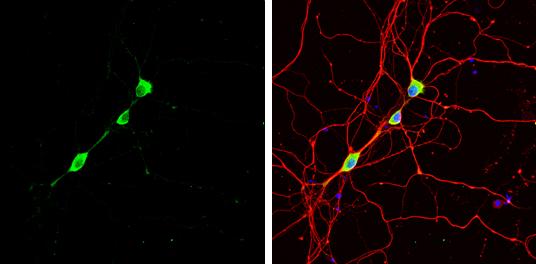
Immunocytochemistry/ Immunofluorescence: Staufen Antibody [NBP1-33202] -
Staufen antibody detects Staufen protein by immunofluorescent analysis.Sample: DIV9 rat E18 primary hippocampal neuron cells were fixed in 4% paraformaldehyde at RT for 15 min.
Green: Staufen stained by Staufen antibody (NBP1-33202) diluted at 1:500.
Red: beta Tubulin 3/ Tuj1, stained by beta Tubulin 3/ Tuj1 antibody [GT11710] diluted at 1:500.
Blue: Fluoroshield with DAPI.
Applications for Staufen Antibody - BSA Free
Application
Recommended Usage
Immunocytochemistry/ Immunofluorescence
1:100-1:1000
Immunoprecipitation
1:500-1:3000
Western Blot
1:500-1:3000
Formulation, Preparation, and Storage
Purification
Antigen Affinity-purified
Formulation
PBS, 20% Glycerol
Format
BSA Free
Preservative
0.025% Proclin 300
Concentration
Concentrations vary lot to lot. See vial label for concentration. If unlisted please contact technical services.
Shipping
The product is shipped with polar packs. Upon receipt, store it immediately at the temperature recommended below.
Stability & Storage
Aliquot and store at -20C or -80C. Avoid freeze-thaw cycles.
Background: Staufen
Alternate Names
double-stranded RNA-binding protein Staufen homolog 1, FLJ25010, RNA binding protein (Drosophila), RNA-binding protein), staufen, RNA binding protein, homolog 1 (Drosophila)
Gene Symbol
STAU1
UniProt
Additional Staufen Products
Product Documents for Staufen Antibody - BSA Free
Certificate of Analysis
To download a Certificate of Analysis, please enter a lot or batch number in the search box below.
Product Specific Notices for Staufen Antibody - BSA Free
This product is for research use only and is not approved for use in humans or in clinical diagnosis. Primary Antibodies are guaranteed for 1 year from date of receipt.
⚠ WARNING: This product can expose you to chemicals including mercury, which is known to the State of California to cause reproductive toxicity with developmental effects. For more information go to www.P65Warnings.ca.gov.Citations for Staufen Antibody - BSA Free
 Powered by Bioz
Customer Reviews for Staufen Antibody - BSA Free
There are currently no reviews for this product. Be the first to review Staufen Antibody - BSA Free and earn rewards!
Have you used Staufen Antibody - BSA Free?
Submit a review and receive an Amazon gift card!
$25/€18/£15/$25CAN/¥2500 Yen for a review with an image
$10/€7/£6/$10CAN/¥1110 Yen for a review without an image
Submit a review
Protocols
Find general support by application which include: protocols, troubleshooting, illustrated assays, videos and webinars.
- Appropriate Fixation of IHC/ICC Samples
- Cellular Response to Hypoxia Protocols
- ClariTSA™ Fluorophore Kits
- Detection & Visualization of Antibody Binding
- ICC Cell Smear Protocol for Suspension Cells
- ICC Immunocytochemistry Protocol Videos
- ICC for Adherent Cells
- Immunocytochemistry (ICC) Protocol
- Immunocytochemistry Troubleshooting
- Immunofluorescence of Organoids Embedded in Cultrex Basement Membrane Extract
- Immunohistochemistry (IHC) and Immunocytochemistry (ICC) Protocols
- Immunoprecipitation Protocol
- Preparing Samples for IHC/ICC Experiments
- Preventing Non-Specific Staining (Non-Specific Binding)
- Primary Antibody Selection & Optimization
- Protocol for VisUCyte™ HRP Polymer Detection Reagent
- Protocol for the Fluorescent ICC Staining of Cell Smears - Graphic
- Protocol for the Fluorescent ICC Staining of Cultured Cells on Coverslips - Graphic
- Protocol for the Preparation and Fluorescent ICC Staining of Cells on Coverslips
- Protocol for the Preparation and Fluorescent ICC Staining of Non-adherent Cells
- Protocol for the Preparation and Fluorescent ICC Staining of Stem Cells on Coverslips
- Protocol for the Preparation of a Cell Smear for Non-adherent Cell ICC - Graphic
- R&D Systems Quality Control Western Blot Protocol
- TUNEL and Active Caspase-3 Detection by IHC/ICC Protocol
- The Importance of IHC/ICC Controls
- Troubleshooting Guide: Western Blot Figures
- Western Blot Conditions
- Western Blot Protocol
- Western Blot Protocol for Cell Lysates
- Western Blot Troubleshooting
- Western Blot Troubleshooting Guide
- View all Protocols, Troubleshooting, Illustrated assays and Webinars
Loading...