
Survivin Antibody - BSA Free
Novus Biologicals | Catalog # NB100-56167

![Western Blot: Survivin Antibody [NB100-56167]](https://resources.rndsystems.com/images/products/Survivin-Antibody-Western-Blot-NB100-56167-img0005.jpg "Western Blot: Survivin Antibody [NB100-56167]")
Scientific images may be resized, cropped, or adjusted for brightness or contrast for presentation purposes. These updates are limited to presentation and do not affect the underlying scientific interpretation of the data. Where available, additional source data may be provided upon request.
Loading...
Key Product Details
Species Reactivity
Validated:
Human, Mouse, Rat, Gerbil
Cited:
Human, Mouse, Rat
Predicted:
Bovine (91%), Canine (92%), Feline (92%), Orangutan (100%), Porcine (92%). Backed by our 100% Guarantee.
Applications
Validated:
Immunohistochemistry, Immunohistochemistry-Paraffin, Immunohistochemistry-Frozen, Western Blot, Immunocytochemistry/ Immunofluorescence, Immunoprecipitation
Cited:
Immunohistochemistry, IF/IHC
Label
Unconjugated
Antibody Source
Polyclonal Rabbit IgG
Format
BSA Free
Loading...
Product Specifications
Immunogen
This Survivin Antibody was developed against full-length recombinant human survivin protein.
Reactivity Notes
Immunogen displays the following percentage of sequence identity for non-tested species: guinea pig (87%). Rat reactivity reported in scientific literature (PMID: 18358624). Mouse reactivity reported in scientific literature (PMID: 28011476). Human reactivity reported in scientific literature (PMID: 24916171).
Clonality
Polyclonal
Host
Rabbit
Isotype
IgG
Theoretical MW
16 kDa.
Disclaimer note: The observed molecular weight of the protein may vary from the listed predicted molecular weight due to post translational modifications, post translation cleavages, relative charges, and other experimental factors.
Disclaimer note: The observed molecular weight of the protein may vary from the listed predicted molecular weight due to post translational modifications, post translation cleavages, relative charges, and other experimental factors.
Scientific Data Images for Survivin Antibody - BSA Free
Western Blot: Survivin Antibody [NB100-56167]
Western Blot: Survivin Antibody [NB100-56167] - Analysis of Survivin using [NB100-56167]. Survivin was detected in the two tumor cell lines, Jurkat (T cell lymphoma) and RS11846 (non-Hodgkin's lymphoma), but not in lysates from normal tissues. Survivin RP, full-length recombinant human survivin protein was used as a positive control. Bands observed slightly lower than the theoretical molecular weight, 16 kDa.![Western Blot: Survivin Antibody [NB100-56167]](https://resources.rndsystems.com/images/products/Survivin-Antibody-Western-Blot-NB100-56167-img0006.jpg "Western Blot: Survivin Antibody [NB100-56167]")
Western Blot: Survivin Antibody [NB100-56167]
Survivin-Antibody-Western-Blot-NB100-56167-img0006.jpg![Immunohistochemistry: Survivin Antibody [NB100-56167]](https://resources.rndsystems.com/images/products/Survivin-Antibody-Immunohistochemistry-NB100-56167-img0002.jpg "Immunohistochemistry: Survivin Antibody [NB100-56167]")
Immunohistochemistry: Survivin Antibody [NB100-56167]
Immunohistochemistry: Survivin Antibody [NB100-56167] - Immunohistochemical analysis of Survivin in formalin-fixed paraffin-embedded human prostate and breast cancer using Survivin Antibody [NB100-56167]. A and A1, prostate cancer at low and high magnification, respectively. B and B1, breast cancer. B1 is a high magnification of an area of metastasis. Hematoxylin-eosin counterstain.![Immunohistochemistry-Paraffin: Survivin Antibody [NB100-56167]](https://resources.rndsystems.com/images/products/Survivin-Antibody-Immunohistochemistry-Paraffin-NB100-56167-img0004.jpg "Immunohistochemistry-Paraffin: Survivin Antibody [NB100-56167]")
Immunohistochemistry-Paraffin: Survivin Antibody [NB100-56167]
Immunohistochemistry-Paraffin: Survivin Antibody [NB100-56167] - Analysis of Survivin in a formalin-fixed paraffin-embedded human brain tissue microarray using Survivin Antibody [NB100-56167]. A. Differential expression of Survivin in brain tumors from six different patients. A1-A3, high magnification from A. A1, gemistocytic astrocytoma. A2, medulloblastoma. A3, choroid plexus papilloma. Hematoxylin-eosin counterstain.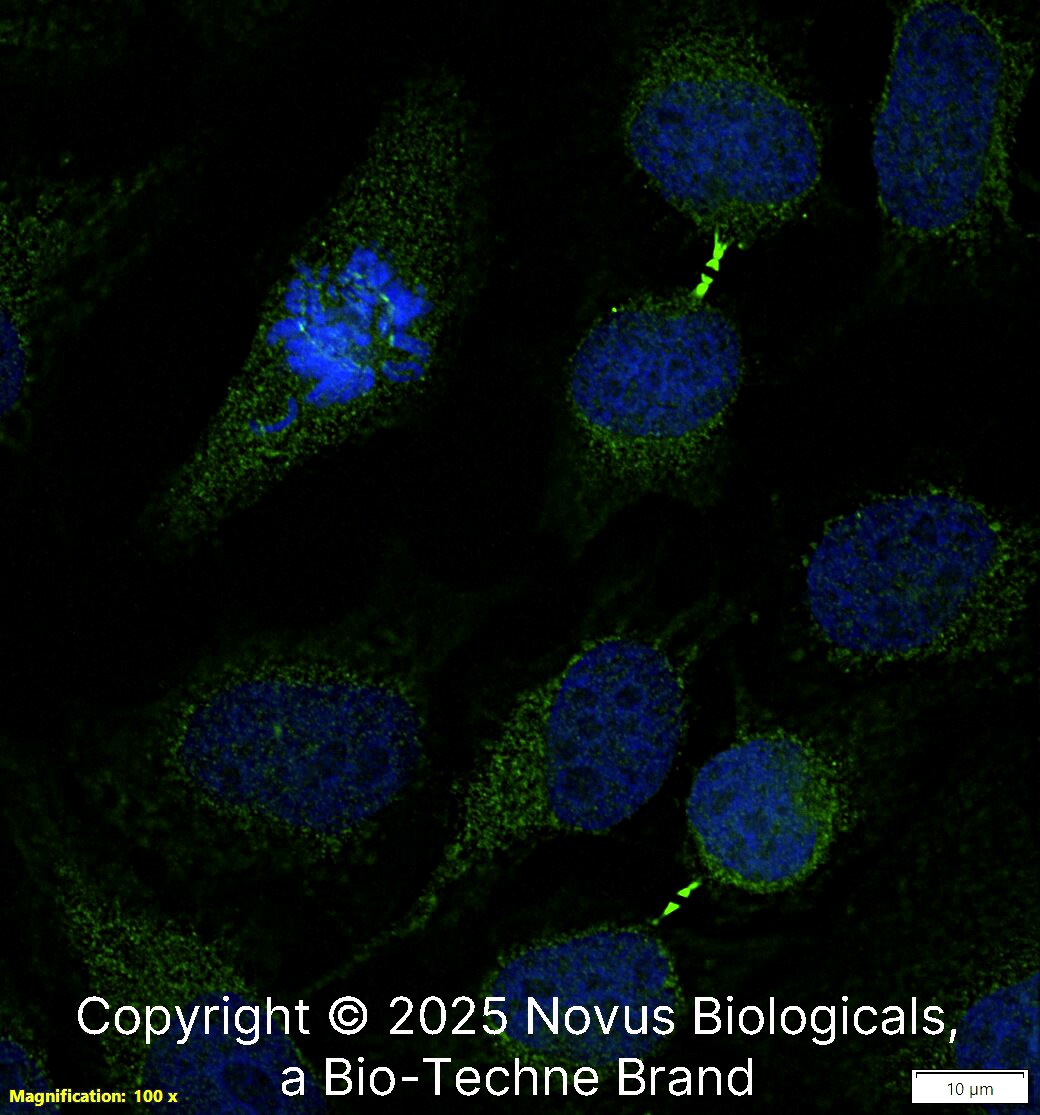
Survivin in HeLa Human Cell Line.
Survivin was detected in immersion fixed HeLa human cervix adenocarcinoma cell line using Rabbit anti-Survivin Whole Serum (Catalog # NB100-56167) at a 1:500 dilution overnight at 4C. Cells were stained using DyLight 488-conjugated Anti-Rabbit IgG (H+L) Cross-Absorbed Secondary Antibody (green), and counterstained with DAPI (blue). Cells were imaged using a 100X objective and digitally deconvolved.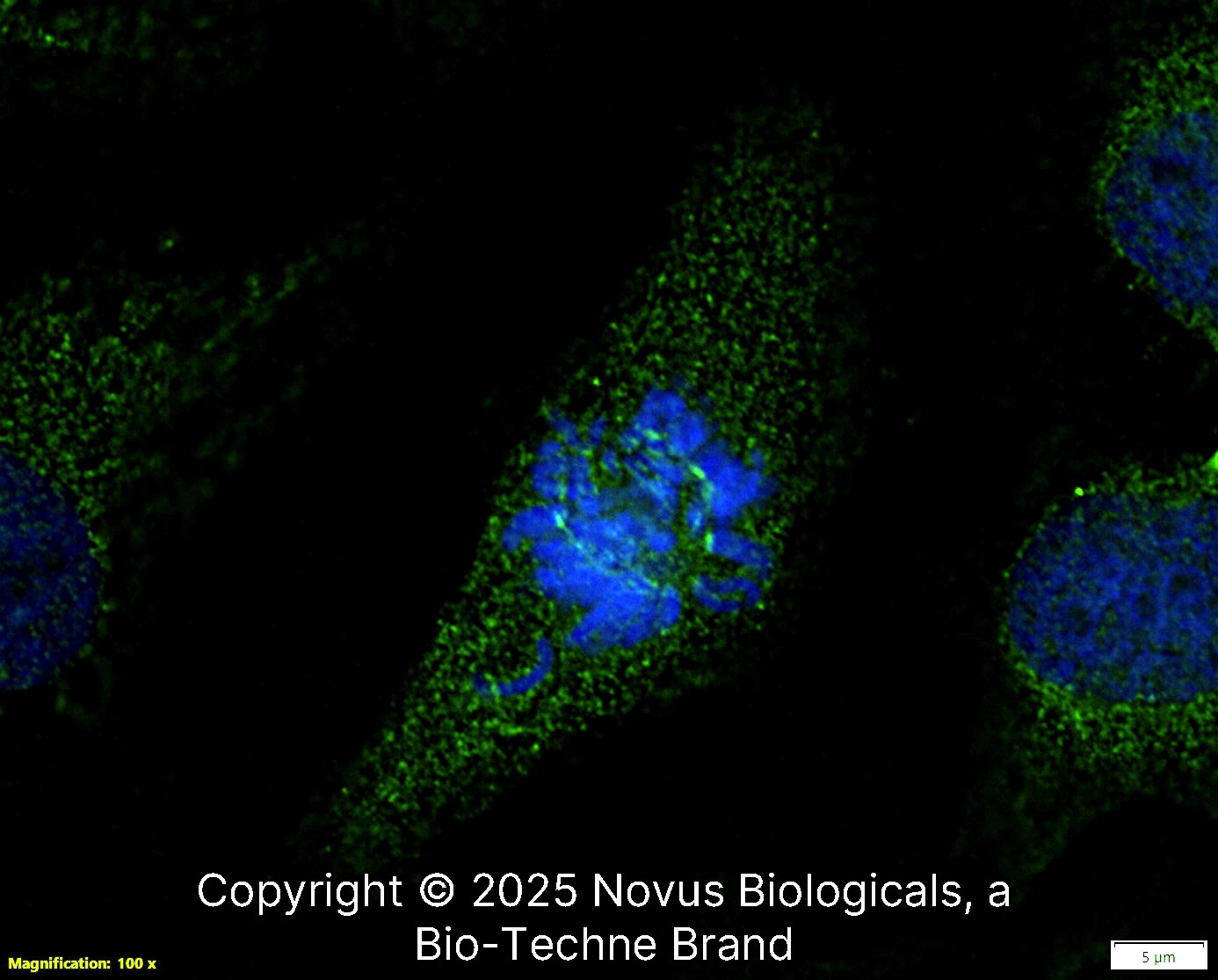
Survivin in HeLa Human Cell Line.
Survivin was detected in immersion fixed HeLa human cervix adenocarcinoma cell line using Rabbit anti-Survivin Whole Serum (Catalog # NB100-56167) at a 1:500 dilution overnight at 4C. Cells were stained using DyLight 488-conjugated Anti-Rabbit IgG (H+L) Cross-Absorbed Secondary Antibody (green), and counterstained with DAPI (blue). Cells were imaged using a 100X objective and digitally deconvolved.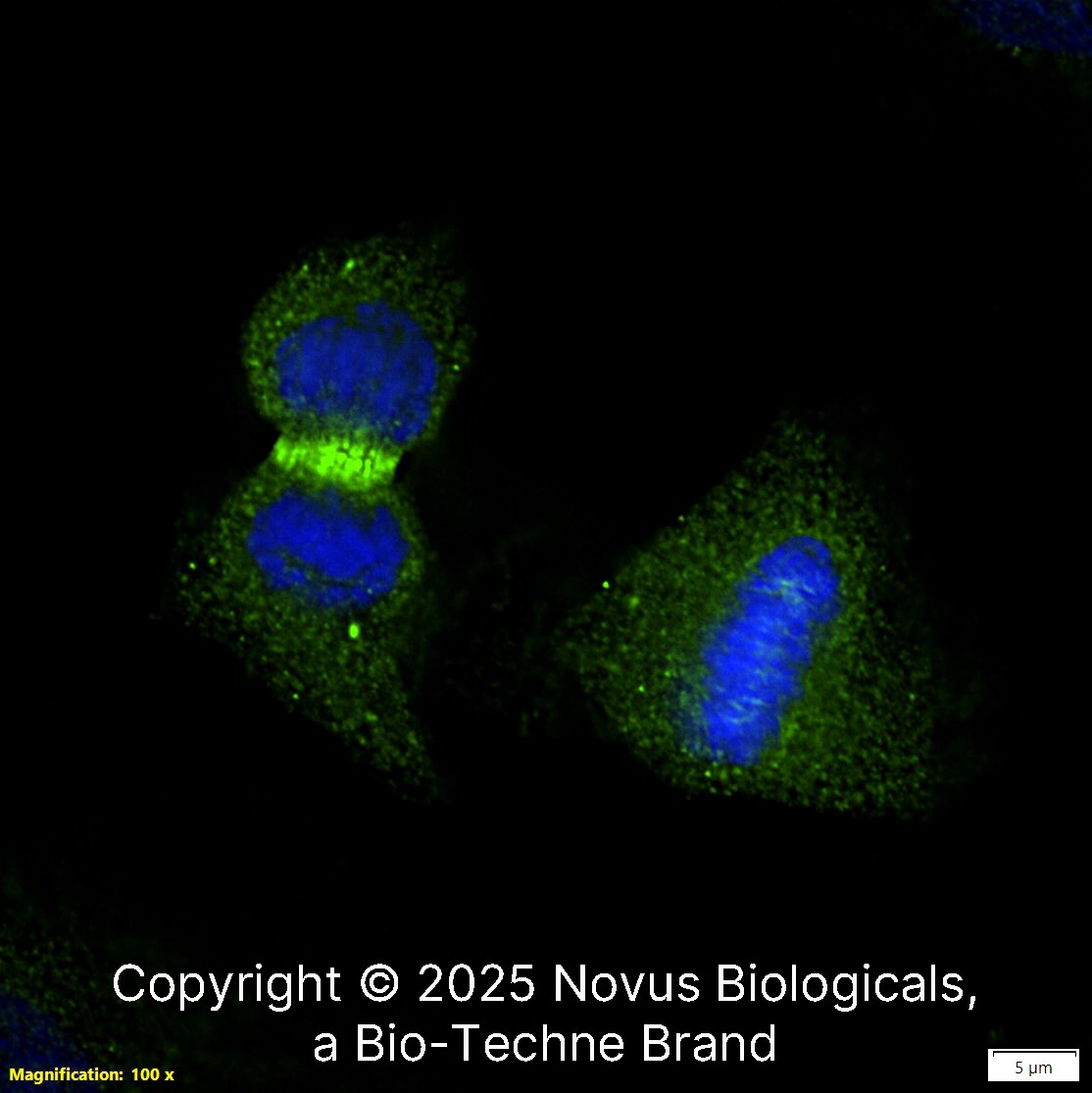
Survivin in HeLa Human Cell Line.
Survivin was detected in immersion fixed HeLa human cervix adenocarcinoma cell line using Rabbit anti-Survivin Whole Serum (Catalog # NB100-56167) at a 1:500 dilution overnight at 4C. Cells were stained using DyLight 488-conjugated Anti-Rabbit IgG (H+L) Cross-Absorbed Secondary Antibody (green), and counterstained with DAPI (blue). Cells were imaged using a 100X objective and digitally deconvolved.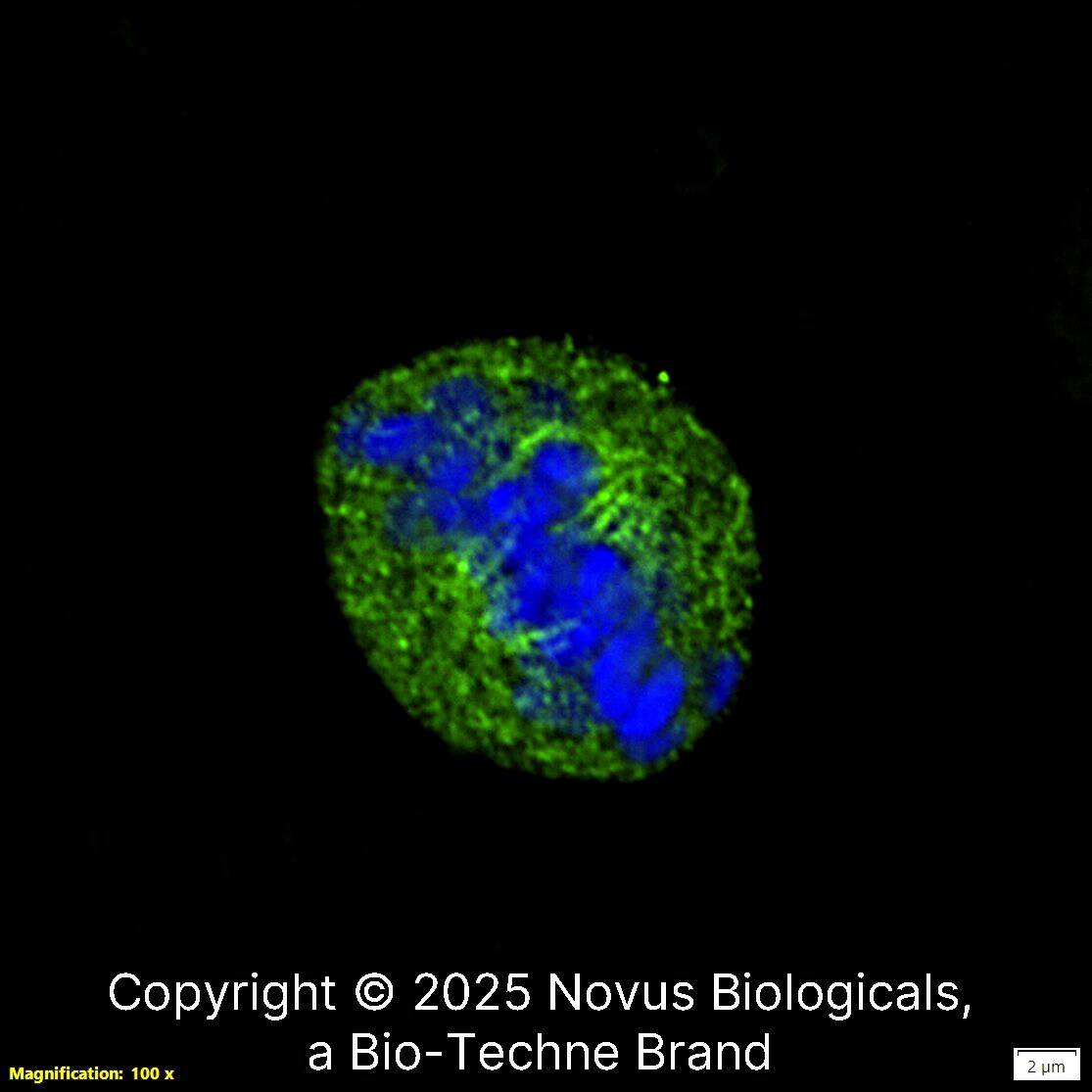
Survivin in CHO-K1 Chinese Hamster Cell Line.
Survivin was detected in immersion fixed CHO-K1 Chinese hamster ovary epithelium cell line using Rabbit anti-Survivin Whole Serum (Catalog # NB100-56167) at a 1:500 dilution overnight at 4C. Cells were stained using DyLight 488-conjugated Anti-Rabbit IgG (H+L) Cross-Absorbed Secondary Antibody (green), and counterstained with DAPI (blue). Cells were imaged using a 100X objective and digitally deconvolved.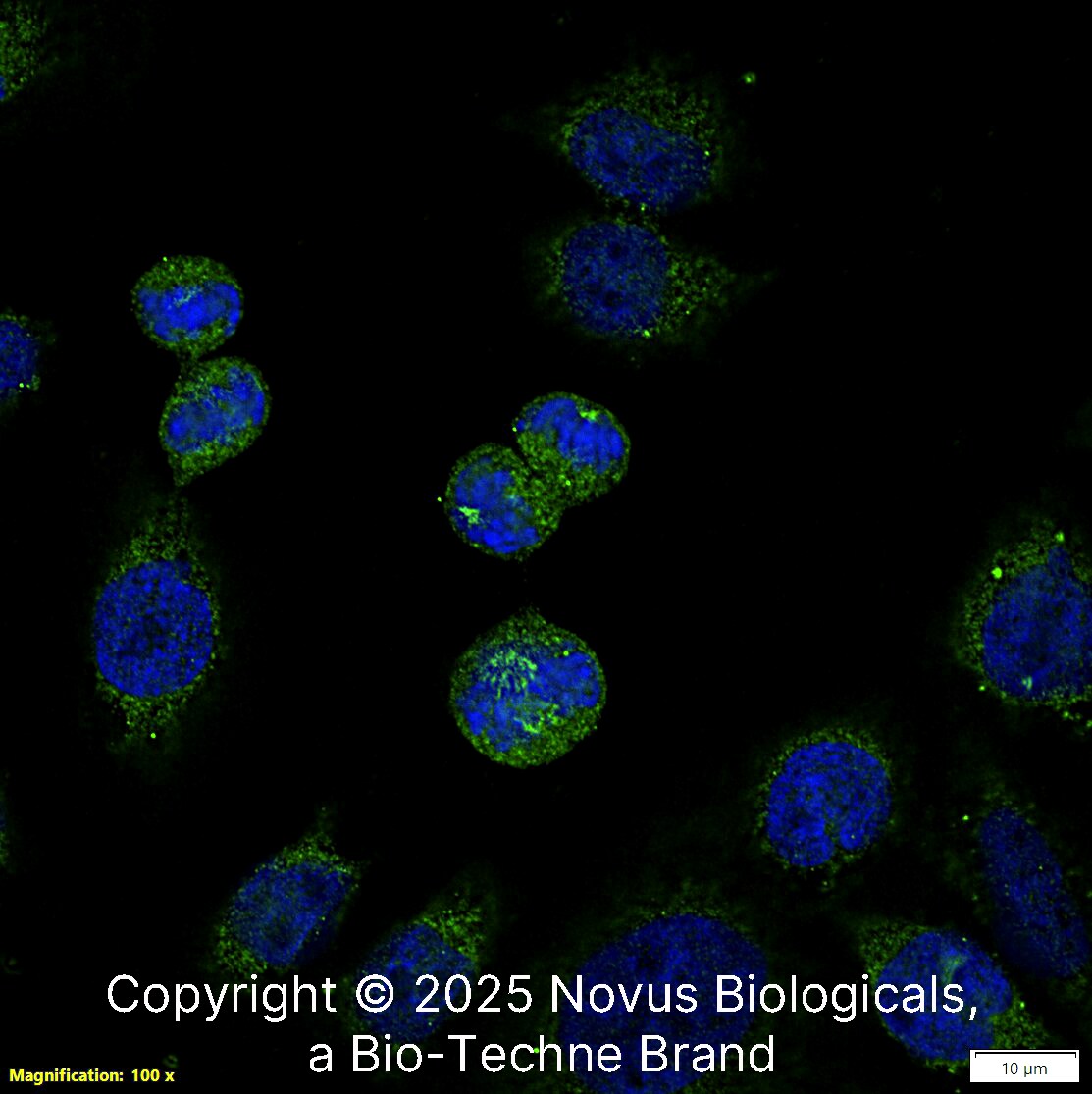
Survivin in CHO-K1 Chinese Hamster Cell Line.
Survivin was detected in immersion fixed CHO-K1 Chinese hamster ovary epithelium cell line using Rabbit anti-Survivin Whole Serum (Catalog # NB100-56167) at a 1:500 dilution overnight at 4C. Cells were stained using DyLight 488-conjugated Anti-Rabbit IgG (H+L) Cross-Absorbed Secondary Antibody (green), and counterstained with DAPI (blue). Cells were imaged using a 100X objective and digitally deconvolved.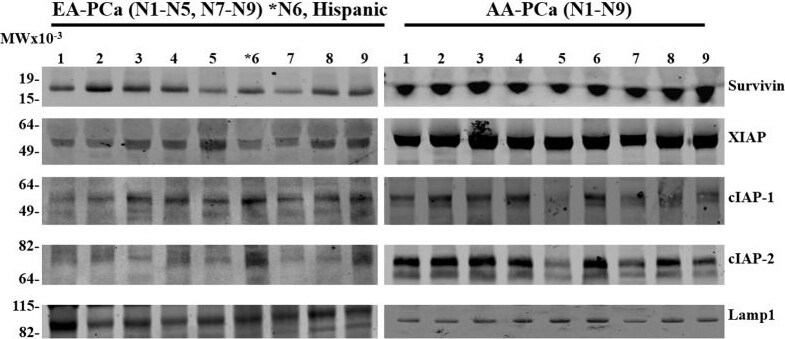
Western Blot: Survivin Antibody - BSA Free [NB100-56167] -
Representative Western blots showing the IAP levels in EV derived from individual European American (EA) (N1-N5) & (N7-N9), *N6 and African American (AA) (N1-N9) patients with prostate cancer (PCa).Specific antibodies against Survivin, XIAP, cIAP-1, cIAP-2, and Lamp1 were used for the Western blotting analysis of total exosomal proteins. The blots from both patient groups were processed under identical conditions; Lamp 1 was used as loading control. (*N6, Hispanic.) (Both blots were done side by side in the same gel running and transferring apparatus, blocking, washing buffers, and antibody incubations were done in the same time, in the same incubating trays under the identical exposure to keep the consistencies.) Image collected and cropped by CiteAb from the following open publication (https://pubmed.ncbi.nlm.nih.gov/28981528), licensed under a CC-BY license. Not internally tested by Novus Biologicals.Applications for Survivin Antibody - BSA Free
Application
Recommended Usage
Immunocytochemistry/ Immunofluorescence
1:500
Immunohistochemistry
1:10-1:500. Use reported in scientific literature (PMID 24916171)
Immunohistochemistry-Frozen
1:10-1:500
Immunohistochemistry-Paraffin
1:1000-1:5000
Immunoprecipitation
1:50-1:200
Western Blot
1:1000-1:2000
Application Notes
The observed molecular weight of the protein may vary from the listed predicted molecular weight due to post translational modifications, post translation cleavages, relative charges, and other experimental factors.
Formulation, Preparation, and Storage
Purification
Unpurified
Formulation
Whole antisera
Format
BSA Free
Preservative
0.05% Sodium Azide
Concentration
This product is unpurified. The exact concentration of antibody is not quantifiable.
Shipping
The product is shipped with polar packs. Upon receipt, store it immediately at the temperature recommended below.
Stability & Storage
Store at -20C. Avoid freeze-thaw cycles.
Background: Survivin
Besides being highly abundant in fetal development and expressed in proliferating adult cells such as activated T lymphocytes, erythroblasts, and self-renewing stem cells, survivin is generally absent in adult tissues. However, it is elevated in common cancers such as lung, colon, pancreas, breast and prostate where it drives proliferation, metastasis, poor prognosis, and decreased patient survival (2).
Survivin has been shown to be involved in multiple cellular processes including cell cycle progression, mitotic spindle assembly, kinetochore attachment, angiogenesis, migration, and its anti-apoptotic activity has been linked to both its monomeric and homodimeric forms. Survivin impacts the function of other IAP members, c-IAP1 and c-IAP-2, or modulates the inhibitory activity of XIAP against caspases by forming a stable complex with XIAP and HBXIP. During the intrinsic apoptotic pathway, survivin may prevent the release of mitochondrial APAF1 into the cytoplasm or hinder the association of SMAC with other IAPS, which results in prolonged cell survival (3).
References
1. Sah NK, Seniya C. (2015) Survivin splice variants and their diagnostic significance. Tumour Biol. 36(9):6623-31. PMID: 26245993
2. Lladser A, Sanhueza C, Kiessling R, Quest AF. (2011) Is survivin the potential Achilles' heel of cancer? Adv Cancer Res. 111:1-37. PMID: 21704829
3. Wheatley SP, Altieri DC. (2019) Survivin at a glance. J Cell Sci. 132(7). PMID: 30948431
Alternate Names
API4, BIRC5
Gene Symbol
BIRC5
UniProt
Additional Survivin Products
Product Documents for Survivin Antibody - BSA Free
Certificate of Analysis
To download a Certificate of Analysis, please enter a lot or batch number in the search box below.
Product Specific Notices for Survivin Antibody - BSA Free
This product is for research use only and is not approved for use in humans or in clinical diagnosis. Primary Antibodies are guaranteed for 1 year from date of receipt.
Related Research Areas
Citations for Survivin Antibody - BSA Free
 Powered by Bioz
Customer Reviews for Survivin Antibody - BSA Free
There are currently no reviews for this product. Be the first to review Survivin Antibody - BSA Free and earn rewards!
Have you used Survivin Antibody - BSA Free?
Submit a review and receive an Amazon gift card!
$25/€18/£15/$25CAN/¥2500 for a review with an image
$10/€7/£6/$10CAN/¥1110 for a review without an image
Submit a review
Protocols
Find general support by application which include: protocols, troubleshooting, illustrated assays, videos and webinars.
- Antigen Retrieval Protocol (PIER)
- Antigen Retrieval for Frozen Sections Protocol
- Appropriate Fixation of IHC/ICC Samples
- Cellular Response to Hypoxia Protocols
- Chromogenic IHC Staining of Formalin-Fixed Paraffin-Embedded (FFPE) Tissue Protocol
- Chromogenic Immunohistochemistry Staining of Frozen Tissue
- ClariTSA™ Fluorophore Kits
- Detection & Visualization of Antibody Binding
- Fluorescent IHC Staining of Frozen Tissue Protocol
- Graphic Protocol for Heat-induced Epitope Retrieval
- Graphic Protocol for the Preparation and Fluorescent IHC Staining of Frozen Tissue Sections
- Graphic Protocol for the Preparation and Fluorescent IHC Staining of Paraffin-embedded Tissue Sections
- Graphic Protocol for the Preparation of Gelatin-coated Slides for Histological Tissue Sections
- ICC Cell Smear Protocol for Suspension Cells
- ICC Immunocytochemistry Protocol Videos
- ICC for Adherent Cells
- IHC Sample Preparation (Frozen sections vs Paraffin)
- Immunocytochemistry (ICC) Protocol
- Immunocytochemistry Troubleshooting
- Immunofluorescence of Organoids Embedded in Cultrex Basement Membrane Extract
- Immunofluorescent IHC Staining of Formalin-Fixed Paraffin-Embedded (FFPE) Tissue Protocol
- Immunohistochemistry (IHC) and Immunocytochemistry (ICC) Protocols
- Immunohistochemistry Frozen Troubleshooting
- Immunohistochemistry Paraffin Troubleshooting
- Immunoprecipitation Protocol
- Preparing Samples for IHC/ICC Experiments
- Preventing Non-Specific Staining (Non-Specific Binding)
- Primary Antibody Selection & Optimization
- Protocol for Heat-Induced Epitope Retrieval (HIER)
- Protocol for Making a 4% Formaldehyde Solution in PBS
- Protocol for VisUCyte™ HRP Polymer Detection Reagent
- Protocol for the Fluorescent ICC Staining of Cell Smears - Graphic
- Protocol for the Fluorescent ICC Staining of Cultured Cells on Coverslips - Graphic
- Protocol for the Preparation & Fixation of Cells on Coverslips
- Protocol for the Preparation and Chromogenic IHC Staining of Frozen Tissue Sections
- Protocol for the Preparation and Chromogenic IHC Staining of Frozen Tissue Sections - Graphic
- Protocol for the Preparation and Chromogenic IHC Staining of Paraffin-embedded Tissue Sections
- Protocol for the Preparation and Chromogenic IHC Staining of Paraffin-embedded Tissue Sections - Graphic
- Protocol for the Preparation and Fluorescent ICC Staining of Cells on Coverslips
- Protocol for the Preparation and Fluorescent ICC Staining of Non-adherent Cells
- Protocol for the Preparation and Fluorescent ICC Staining of Stem Cells on Coverslips
- Protocol for the Preparation and Fluorescent IHC Staining of Frozen Tissue Sections
- Protocol for the Preparation and Fluorescent IHC Staining of Paraffin-embedded Tissue Sections
- Protocol for the Preparation of Gelatin-coated Slides for Histological Tissue Sections
- Protocol for the Preparation of a Cell Smear for Non-adherent Cell ICC - Graphic
- R&D Systems Quality Control Western Blot Protocol
- TUNEL and Active Caspase-3 Detection by IHC/ICC Protocol
- The Importance of IHC/ICC Controls
- Troubleshooting Guide: Immunohistochemistry
- Troubleshooting Guide: Western Blot Figures
- Western Blot Conditions
- Western Blot Protocol
- Western Blot Protocol for Cell Lysates
- Western Blot Troubleshooting
- Western Blot Troubleshooting Guide
- View all Protocols, Troubleshooting, Illustrated assays and Webinars
FAQs for Survivin Antibody - BSA Free
Showing
1
-
4 of
4 FAQs
Showing All
-
Q: Can I use this antibody with species other than those listed?
A: The species we have listed are validated and therefore have a 100% guarantee to work with this antibody. We cannot guarantee that this will work with other species.
-
Q: How was this antibody purified?
A: This antibody is supplied in whole antisera, which means it comes in an unpurified form.
-
Q: What dilution would you recommend for use in immunohistochemistry using frozen tissue sections?
A: It is recommended to use a 1:10-1:500 dilution for both frozen and non-frozen sections. Paraffin-embedded sections would require a 1:1000-1:5000 dilution.
-
Q: What is the concentration of this antibody?
A: As this antibody is unpurified, we cannot measure the exact concentration.
-
Q: Can I use this antibody with species other than those listed?
A: The species we have listed are validated and therefore have a 100% guarantee to work with this antibody. We cannot guarantee that this will work with other species.
-
Q: How was this antibody purified?
A: This antibody is supplied in whole antisera, which means it comes in an unpurified form.
-
Q: What dilution would you recommend for use in immunohistochemistry using frozen tissue sections?
A: It is recommended to use a 1:10-1:500 dilution for both frozen and non-frozen sections. Paraffin-embedded sections would require a 1:1000-1:5000 dilution.
-
Q: What is the concentration of this antibody?
A: As this antibody is unpurified, we cannot measure the exact concentration.
-
Q: Can I use this antibody with species other than those listed?
A: The species we have listed are validated and therefore have a 100% guarantee to work with this antibody. We cannot guarantee that this will work with other species.
-
Q: How was this antibody purified?
A: This antibody is supplied in whole antisera, which means it comes in an unpurified form.
-
Q: What dilution would you recommend for use in immunohistochemistry using frozen tissue sections?
A: It is recommended to use a 1:10-1:500 dilution for both frozen and non-frozen sections. Paraffin-embedded sections would require a 1:1000-1:5000 dilution.
-
Q: What is the concentration of this antibody?
A: As this antibody is unpurified, we cannot measure the exact concentration.
-
Q: Can I use this antibody with species other than those listed?
A: The species we have listed are validated and therefore have a 100% guarantee to work with this antibody. We cannot guarantee that this will work with other species.
-
Q: How was this antibody purified?
A: This antibody is supplied in whole antisera, which means it comes in an unpurified form.
-
Q: What dilution would you recommend for use in immunohistochemistry using frozen tissue sections?
A: It is recommended to use a 1:10-1:500 dilution for both frozen and non-frozen sections. Paraffin-embedded sections would require a 1:1000-1:5000 dilution.
-
Q: What is the concentration of this antibody?
A: As this antibody is unpurified, we cannot measure the exact concentration.
Loading...
Associated Pathways
