
YAP1 Antibody - BSA Free
Novus Biologicals | Catalog # NB110-58358

![Immunocytochemistry/ Immunofluorescence: YAP1 Antibody - BSA Free [NB110-58358]](https://resources.rndsystems.com/images/products/YAP1-Antibody---BSA-Free-Immunocytochemistry-Immunofluorescence-NB110-58358-img0014.jpg "Immunocytochemistry/ Immunofluorescence: YAP1 Antibody - BSA Free [NB110-58358]")
Scientific images may be resized, cropped, or adjusted for brightness or contrast for presentation purposes. These updates are limited to presentation and do not affect the underlying scientific interpretation of the data. Where available, additional source data may be provided upon request.
Key Product Details
Validated by
Knockout/Knockdown, Biological Validation
Species Reactivity
Validated:
Human, Mouse, Rat, Canine, Zebrafish
Cited:
Human, Mouse, Rat, Canine, Fish - Danio rerio (Zebrafish)
Applications
Validated:
Knockout Validated, Immunohistochemistry, Immunohistochemistry-Paraffin, Immunohistochemistry-Frozen, Western Blot, Immunoblotting, Immunocytochemistry/ Immunofluorescence, Simple Western, Immunoprecipitation, Chromatin Immunoprecipitation (ChIP), Knockdown Validated
Cited:
Immunohistochemistry, Immunohistochemistry-Paraffin, Immunohistochemistry-Frozen, Western Blot, Immunocytochemistry/ Immunofluorescence, Immunoprecipitation, Chromatin Immunoprecipitation, Chemotaxis, IF/IHC, IHC-F, Knockdown Validated
Label
Unconjugated
Antibody Source
Polyclonal Rabbit IgG
Format
BSA Free
Loading...
Product Specifications
Immunogen
This YAP1 Antibody was developed against a partial recombinant human YAP1 protein expressed in bacteria. [Uniprot: P46937]
Reactivity Notes
Use in Human reported in scientific literature (PMID:33737385). Use in Zebrafish reported in scientific literature (PMID:28350986).
Localization
Nuclear
Specificity
Expected reactivity based on immunogen homology: Isoform 4 (100%), Isoform 6 (100%)
Clonality
Polyclonal
Host
Rabbit
Isotype
IgG
Theoretical MW
48 kDa.
Disclaimer note: The observed molecular weight of the protein may vary from the listed predicted molecular weight due to post translational modifications, post translation cleavages, relative charges, and other experimental factors.
Disclaimer note: The observed molecular weight of the protein may vary from the listed predicted molecular weight due to post translational modifications, post translation cleavages, relative charges, and other experimental factors.
Scientific Data Images for YAP1 Antibody - BSA Free
Immunocytochemistry/ Immunofluorescence: YAP1 Antibody - BSA Free [NB110-58358]
Immunocytochemistry/Immunofluorescence: YAP1 Antibody - BSA Free [NB110-58358] - Caco-2 cells were fixed in 4% paraformaldehyde for 10 minutes and permeabilized in 0.5% Triton X-100 in PBS for 5 minutes. The cells were incubated with YAP1 Antibody (NB110-58358) at 1 ug/ml overnight at 4C and detected with an anti-rabbit DyLight 488 (Green) at a 1:1000 dilution for 60 minutes. Nuclei were counterstained with DAPI (Blue). Cells were imaged using a 40X objective.![Immunocytochemistry/ Immunofluorescence: YAP1 Antibody - BSA Free [NB110-58358]](https://resources.rndsystems.com/images/products/YAP1-Antibody---BSA-Free-Immunocytochemistry-Immunofluorescence-NB110-58358-img0015.jpg "Immunocytochemistry/ Immunofluorescence: YAP1 Antibody - BSA Free [NB110-58358]")
Immunocytochemistry/ Immunofluorescence: YAP1 Antibody - BSA Free [NB110-58358]
YAP1-Antibody---BSA-Free-Immunocytochemistry-Immunofluorescence-NB110-58358-img0015.jpg![Immunohistochemistry-Paraffin: YAP1 Antibody - BSA Free [NB110-58358]](https://resources.rndsystems.com/images/products/YAP1-Antibody---BSA-Free-Immunohistochemistry-Paraffin-NB110-58358-img0010.jpg "Immunohistochemistry-Paraffin: YAP1 Antibody - BSA Free [NB110-58358]")
Immunohistochemistry-Paraffin: YAP1 Antibody - BSA Free [NB110-58358]
Immunohistochemistry-Paraffin: YAP1 Antibody - BSA Free [NB110-58358] - YAP1 was detected in immersion fixed paraffin-embedded sections of human placenta using Rabbit Anti-Human YAP1 polyclonal Antibody (Catalog # NB110-58358) at 1:200 for 1 hour at room temperature followed by incubation with the Anti-Rabbit IgG VisUCyte™ HRP Polymer Antibody (Catalog # VC003). Tissue was stained using DAB (brown) and counterstained with hematoxylin (blue). Specific staining was localized to nuclear and cytoplasm in trophoblast cells.![Western Blot: YAP1 AntibodyBSA Free [NB110-58358]](https://resources.rndsystems.com/images/products/YAP1-Antibody---BSA-Free-Western-Blot-NB110-58358-img0003.jpg "Western Blot: YAP1 AntibodyBSA Free [NB110-58358]")
Western Blot: YAP1 AntibodyBSA Free [NB110-58358]
Western Blot: YAP1 Antibody - BSA Free [NB110-58358] - Analysis in transfected HEK 293 cell lysate using YAP1 antibody. Observed molecular weight 75 kDa.![Western Blot: YAP1 AntibodyBSA Free [NB110-58358]](https://resources.rndsystems.com/images/products/YAP1-Antibody---BSA-Free-Western-Blot-NB110-58358-img0012.jpg "Western Blot: YAP1 AntibodyBSA Free [NB110-58358]")
![Western Blot: YAP1 AntibodyBSA Free [NB110-58358]](https://resources.rndsystems.com/images/products/YAP1-Antibody---BSA-Free-Western-Blot-NB110-58358-img0011.jpg "Western Blot: YAP1 AntibodyBSA Free [NB110-58358]")
![Simple Western: YAP1 AntibodyBSA Free [NB110-58358]](https://resources.rndsystems.com/images/products/YAP1-Antibody---BSA-Free-Simple-Western-NB110-58358-img0007.jpg "Simple Western: YAP1 AntibodyBSA Free [NB110-58358]")
Simple Western: YAP1 AntibodyBSA Free [NB110-58358]
Simple Western: YAP1 Antibody - BSA Free [NB110-58358] - Simple Western lane view shows a specific band for YAP1 in 0.1 mg/ml of HeLa lysate. Observed molecular weight is 75 kDa. This experiment was performed under reducing conditions using the 12-230kDa separation system.![Knockout Validated: YAP1 Antibody - BSA Free [NB110-58358]](https://resources.rndsystems.com/images/products/YAP1-Antibody---BSA-Free-Knockout-Validated-NB110-58358-img0008.jpg "Western Blot: YAP1 Antibody - BSA Free [NB110-58358]")
Western Blot: YAP1 Antibody - BSA Free [NB110-58358]
Western Blot: YAP1 Antibody - BSA Free [NB110-58358] - Western blot shows lysates of HeLa human cervical epithelial carcinoma parental cell line and YAP1 knockout (KO) HeLa cell line. PVDF membrane was probed with 1:1000 of Rabbit Anti-Human YAP1 Polyclonal Antibody (Catalog # NB110-58358) followed by HRP-conjugated Anti-Rabbit IgG Secondary Antibody (Catalog #HAF008). Specific band was detected for YAP1 at approximately 75 kDa (as indicated) in the parental HeLa cell line, but is not detectable in the knockout HeLa cell line. This experiment was conducted under reducing conditions.![Knockout Validated: YAP1 Antibody - BSA Free [NB110-58358]](https://resources.rndsystems.com/images/products/YAP1-Antibody---BSA-Free-Knockout-Validated-NB110-58358-img0009.jpg "Simple Western: YAP1 Antibody - BSA Free [NB110-58358]")
Simple Western: YAP1 Antibody - BSA Free [NB110-58358]
Simple Western: YAP1 Antibody - BSA Free [NB110-58358] - Western lane view shows lysates of HeLa human cervical epithelial carcinoma parental cell line and YAP1 knockout (KO) HeLa cell line. A specific band was detected for YAP1 at approximately 81 kDa (as indicated) using 50 ug/mL of Rabbit Anti-YAP1 Polyclonal Antibody (Catalog # NB110-58358). This experiment was conducted under reducing conditions and using the 12-230 kDa separation system.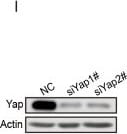
Western Blot: YAP1 Antibody - BSA Free [NB110-58358] -
Western Blot: YAP1 Antibody - BSA Free [NB110-58358] - Yap deficiency suppresses cell proliferation in vivo & in vitro. (A-F) The Ki67 positive ratio of lens epithelial cells decreased in Yap-deficient mice at different stages (arrowheads indicate Ki67 positive cells). (G) The relative number of Ki67 positive lens epithelial cells (number of Ki67 positive lens epithelial cells / lens epithelium area). The data are shown as mean ± S.E.M. (Student’s t-test, *P<0.05, **P<0.01, n=10). (H-I) Knockdown efficiency of Yap in alpha TN4 cell using siRNA. (J-K) Cell viability & growth assay revealed that proliferation was downregulated in Yap knockdown alpha TN4 cells. The data are shown as mean ± S.E.M. (Two-way RM ANOVA, **P<0.01, n=5). Scale bars: 50 μm. Image collected & cropped by CiteAb from the following publication (https://pubmed.ncbi.nlm.nih.gov/31011480), licensed under a CC-BY license. Not internally tested by Novus Biologicals.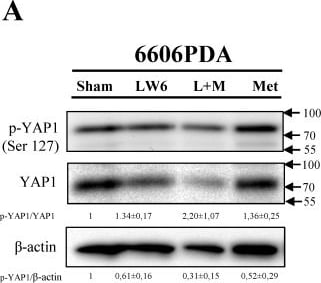
Western Blot: YAP1 Antibody - BSA Free [NB110-58358] -
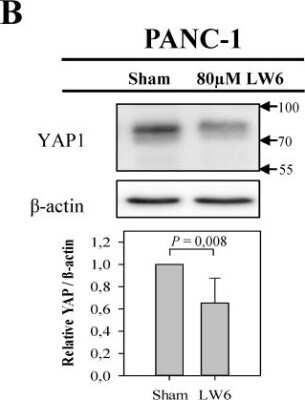
Western Blot: YAP1 Antibody - BSA Free [NB110-58358] - Synergistic effect of LW6 & metformin on YAP1. 80 µM LW6, 20 mM metformin (Met) & the combinational treatment metformin plus LW6 increased phosphorylation of YPA1 at serine 127 & decreased cellular YAP1 concentration after treating cells for 24 hours (A). Moreover, this combinational therapy attenuated the nuclear localization of YAP1 compared to Sham treated cells (B). In addition, lysophosphatidic acid (LPA) & the phosphorylation deficient mutant YAP1-S127A stimulate cell migration of 6606PDA cells (C & D). n = 2 per group for A, n = 3 per group for B, n = 7 per group for C, n = 9 per group for D. Bar = 5µm. Arrows point to nuclei. Image collected & cropped by CiteAb from the following publication (https://pubmed.ncbi.nlm.nih.gov/31897243), licensed under a CC-BY license. Not internally tested by Novus Biologicals.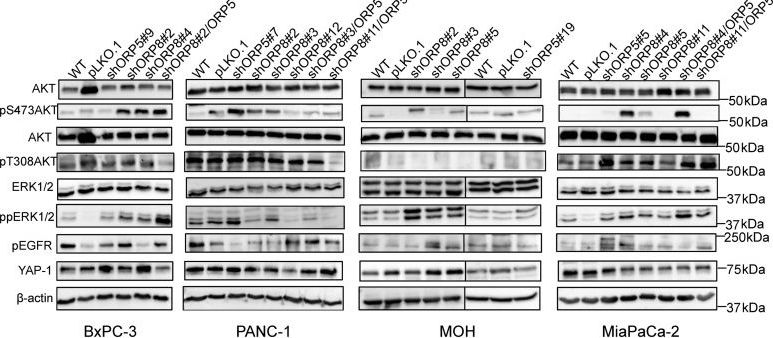
Western Blot: YAP1 Antibody - BSA Free [NB110-58358] -
Western Blot: YAP1 Antibody - BSA Free [NB110-58358] - Consequences of ORP5 & ORP8 knockdown on downstream MAPK & PI3K/AKT signaling.Protein from BxPC-3, PANC-1, MiaPaCa-2, & MOH parental, single & double ORP knockdowns as well as cells transfected with empty vector control (pLKO.1) were harvested, & 20 μg was subjected to SDS–PAGE & used for Western blotting. EGFR, MAPK, & PI3K signaling were assayed as pEGFR, ppERK, & pAKT levels, respectively. Amplification of YAP-1 was also evaluated. Total ERK, total AKT, & beta -actin levels were used as loading controls. Image collected & cropped by CiteAb from the following publication (https://pubmed.ncbi.nlm.nih.gov/31451509), licensed under a CC-BY license. Not internally tested by Novus Biologicals.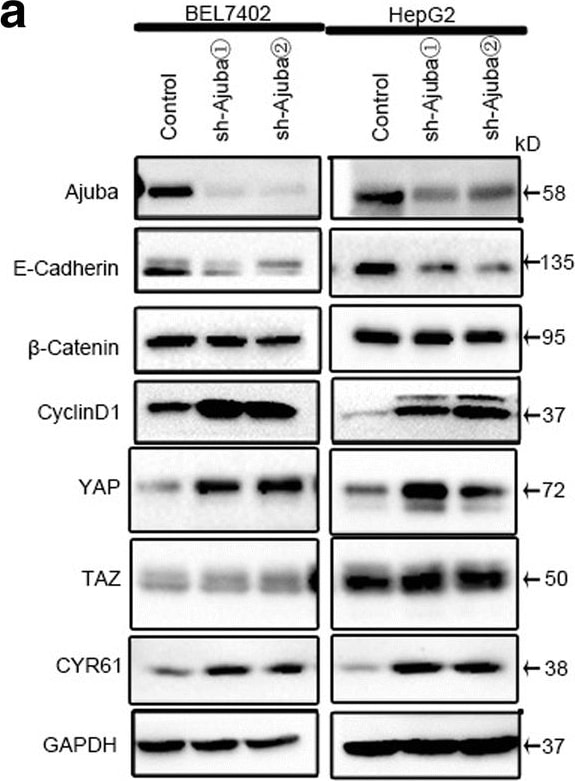
Western Blot: YAP1 Antibody - BSA Free [NB110-58358] -
Western Blot: YAP1 Antibody - BSA Free [NB110-58358] - Ajuba depletion induces beta -catenin translocation & Cyclin D1 expression in HCC cell lines. a Immunoblotting with specific antibodies against Ajuba, E-cadherin, beta -catenin, Cyclin D1, YAP, TAZ & CYR61 in Ajuba-depleted BEL7402 & HepG2 cells. GAPDH was used as a loading control. The ratios of expression E-Cadherin to their corresponding GAPDH are represented. b Ajuba-depleted HCC cells were fixed for immunofluorescence & stained for beta -catenin protein (green) & DAPI (blue). Representative merged images are also shown for fluorescence signals. Scale bar = 25 μm. c Correlation of Ajuba expression with OS in HCC. Low expression of Ajuba was associated with worse OS compared to high expression of Ajuba. Kaplan-Meier curves & log-rank test were used to evaluate OS. P < 0.05 was considered significant. d, e Representative images & quantification of migration & invasion of Ajuba-depleted (d) or Ajuba-overexpressing (e) HCC cells. Scale bar = 200 μm. HCC, hepatocellular carcinoma. f Expression in response to the overexpression of constructs of Ajuba-Myc was examined by IB, the ratios of expression Ajuba to their corresponding GAPDH are represented. Data are presented as Mean ± SEM from three independent experiments (*p < 0.05, **p < 0.01, ***p < 0.001) Image collected & cropped by CiteAb from the following publication (https://pubmed.ncbi.nlm.nih.gov/30041665), licensed under a CC-BY license. Not internally tested by Novus Biologicals.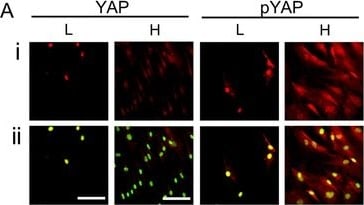
Immunocytochemistry/ Immunofluorescence: YAP1 Antibody - BSA Free [NB110-58358] -
Immunocytochemistry/ Immunofluorescence: YAP1 Antibody - BSA Free [NB110-58358] - YAP & TAZ expression at high density & during chondrogenic differentiation of human synovial MSCs. (A) YAP & pYAP expression in human synovial membrane-derived (hSM-)MSCs in monolayer at low (L) & high (H) density detected by immunofluorescence staining, shown without (i) & with sytox green nuclear counterstain (ii). (B) YAP & pYAP expression in hSM-MSCs in monolayer at low (L) & high (H) density detected by western blotting with beta -actin as loading control. (C, D) Expression of YAP & TAZ (C) & their target genes CTGF & CYR61 (D) in hSM-MSCs immediately prior to (0 h) or 24 h after plating in micromass culture, determined by quantitative RT-PCR. Data was normalised to GAPDH expression, & is shown as mean ± standard deviation (SD) (three donors) relative to pre-seeding (0 h) control. *P <0.05; **P <0.01; ***P <0.001. (E) Expression of YAP & TAZ in hSM-MSCs after 6 days of treatment with 10 ng/ml TGF-beta 1 or vehicle only in micromass culture to induce chondrogenic differentiation, determined by quantitative RT-PCR. Data was normalised to GAPDH expression, & is shown as mean ± SD (five donors) relative to vehicle-treated control. *P <0.05. (F) Detection of YAP by western blotting during chondrogenic differentiation induced by TGF-beta 1 with detection of beta -actin as loading control. MSC, mesenchymal stromal/stem cell; pYAP, phosphorylated YAP; RT-PCR, reverse transcription PCR; TAZ, transcriptional co-activator with PDZ-binding motif; TGF, transforming growth factor; YAP, Yes-associated protein. Image collected & cropped by CiteAb from the following publication (https://pubmed.ncbi.nlm.nih.gov/26025096), licensed under a CC-BY license. Not internally tested by Novus Biologicals.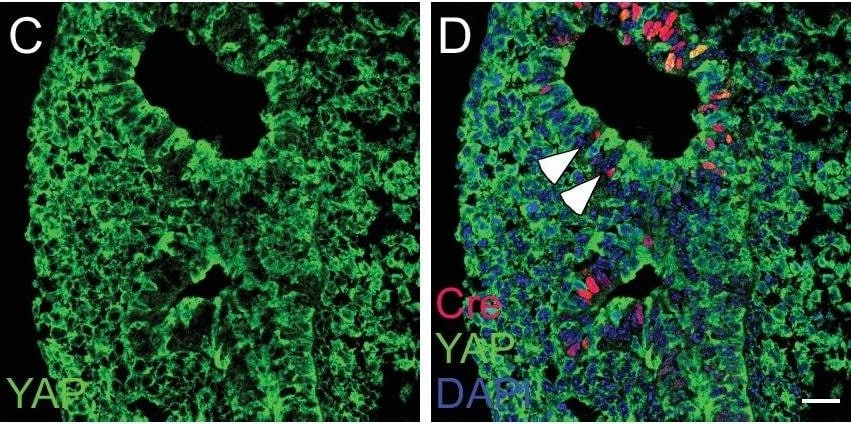
Immunocytochemistry/ Immunofluorescence: YAP1 Antibody - BSA Free [NB110-58358] -
Immunocytochemistry/ Immunofluorescence: YAP1 Antibody - BSA Free [NB110-58358] - Expression of spcCre is associated with loss of YAP in SOX9+ distal airways.(A–D) Immunostaining of lung sections collected from Yapf/f; spcCre/+ mice at 13.5 days post coitus (dpc). SOX2 expression marks the proximal airway, while the distal airway is distinguished by SOX9 expression (not shown). High levels of spcCre expression were largely confined to the distal airway, where spcCre expression in a given epithelial cell was correlated with loss of YAP immunoreactivity (e.g. arrowheads in D). (E–H) Immunostaining of lung sections collected from Yapf/f; spcCre/+ mice at 14.5 dpc. Only distal airways are shown. YAP was lost mainly in distal airways in Yapf/f; spcCre/+ mice while sporadic loss of YAP was found in the proximal airway. Loss of YAP was most apparent in the more distal part (arrow in H) of the distal airway, while residual YAP could be found in the more proximal part of the distal airway. Together, these results suggest that lung cyst formation in distal airways of Yapf/f; spcCre/+ mice is due to loss of YAP in the distal airway. Scale bar = 25 μm for A–D; E–H.DOI:http://dx.doi.org/10.7554/eLife.21130.012 Image collected & cropped by CiteAb from the following publication (https://pubmed.ncbi.nlm.nih.gov/28323616), licensed under a CC-BY license. Not internally tested by Novus Biologicals.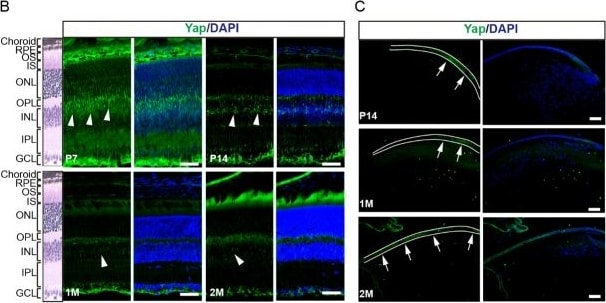
Immunocytochemistry/ Immunofluorescence: YAP1 Antibody - BSA Free [NB110-58358] -
Immunocytochemistry/ Immunofluorescence: YAP1 Antibody - BSA Free [NB110-58358] - The expression patterns of Yap & GFAP-Cre recombinase in postnatal mouse eyes. (A) Schematic of a transverse section of mouse eye. (B-C) Immunostaining with anti-Yap antibody (green) on frozen eye sections at different ages. Nuclei were counterstained with DAPI (blue). Yap staining was detected in scattered cells within the INL (arrowheads) & GCL of the retina & the lens epithelium (arrows). (D) Cre recombinase (red) was expressed in the lens epithelium & INL, GCL of retina in frozen eye sections of Tomatof/+; GFAP-Cre mice at P14. Nuclei were counterstained with DAPI (blue). LE, lens epithelium; TZ, transitional zone; RPE, retinal pigment epithelium; OS, outer segment; IS, inner segment; ONL, outer nuclear layer; OPL, outer plexiform layer; INL, inner nuclear layer; IPL, inner plexiform layer; GCL, ganglion cell layer. Scale bars: 25 μm (B-C), 100 μm (D). Image collected & cropped by CiteAb from the following publication (https://pubmed.ncbi.nlm.nih.gov/31011480), licensed under a CC-BY license. Not internally tested by Novus Biologicals.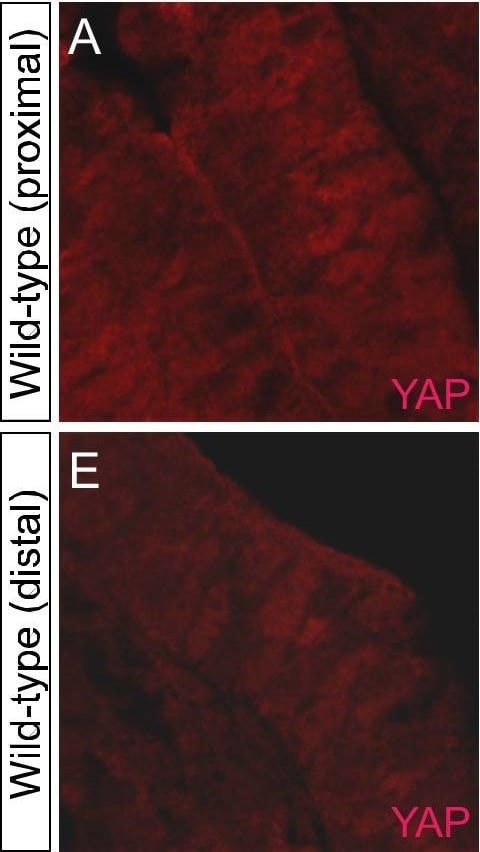
Immunocytochemistry/ Immunofluorescence: YAP1 Antibody - BSA Free [NB110-58358] -
Immunocytochemistry/ Immunofluorescence: YAP1 Antibody - BSA Free [NB110-58358] - YAP & phospho-YAP are detected in both the proximal & distal airways during lung development.(A–H) Immunostaining of lung sections collected from wild-type mice at 13.5 days post coitus (dpc). The proximal airway is marked by SOX2 expression, while the distal airway is distinguished by SOX9 expression (not shown). Nuclear YAP can be frequently found in both SOX2+ & SOX9+ domains. Similarly, phospho-YAP at S112 (pYAP) could be detected in both the proximal & distal airways. pYAP levels were, in general, higher in the proximal than distal epithelium but pYAP levels varied significantly from cell to cell in both the proximal & distal airways. Representative cells with higher levels of pYAP (arrowhead) are indicated in (B,F). In many cells, low levels of pYAP were associated with the presence of nuclear YAP. This is consistent with a model in which pYAP is sequestered by 14-3-3 proteins in the cytoplasm & degraded but also indicate a dynamic shuttling & distribution of YAP along the entire airway epithelium. Similar results were obtained for lungs collected at 12.5 dpc. Scale bar = 7.5 μm for A–H.DOI:http://dx.doi.org/10.7554/eLife.21130.005 Image collected & cropped by CiteAb from the following publication (https://pubmed.ncbi.nlm.nih.gov/28323616), licensed under a CC-BY license. Not internally tested by Novus Biologicals.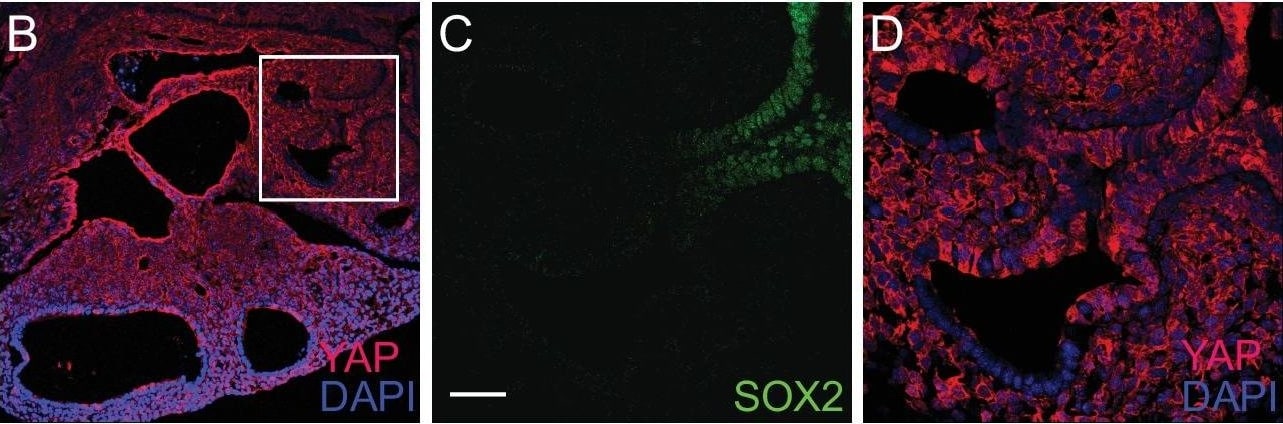
Immunocytochemistry/ Immunofluorescence: YAP1 Antibody - BSA Free [NB110-58358] -
Immunocytochemistry/ Immunofluorescence: YAP1 Antibody - BSA Free [NB110-58358] - Expression of Nkx2.1Cre is associated with loss of YAP in the upper lobes.(A–D) Immunostaining of lung sections collected from Yapf/f; Nkx2.1Cre/+ mice at 14.5 days post coitus (dpc). SOX2 expression marks the proximal airway, while the distal airway is distinguished by SOX9 expression (not shown). YAP was lost mainly in the upper lobe in Yapf/f; Nkx2.1Cre/+ lung. Loss of YAP was more apparent in the distal airway, while loss of YAP was sporadic in the proximal airway. Lung cyst formation was primarily observed in the distal airway. The boxed region in (B) indicates areas shown in (C,D). Scale bar = 250 μm for A,B; 250 μm for C,D. Sox2 expression was present in sporadic Yap-deficient cells in the transition zone induced by Sox9Cre, spcCre or Nkx2.1Cre. This suggests that Sox2 expression is not controlled by YAP.DOI:http://dx.doi.org/10.7554/eLife.21130.013 Image collected & cropped by CiteAb from the following publication (https://pubmed.ncbi.nlm.nih.gov/28323616), licensed under a CC-BY license. Not internally tested by Novus Biologicals.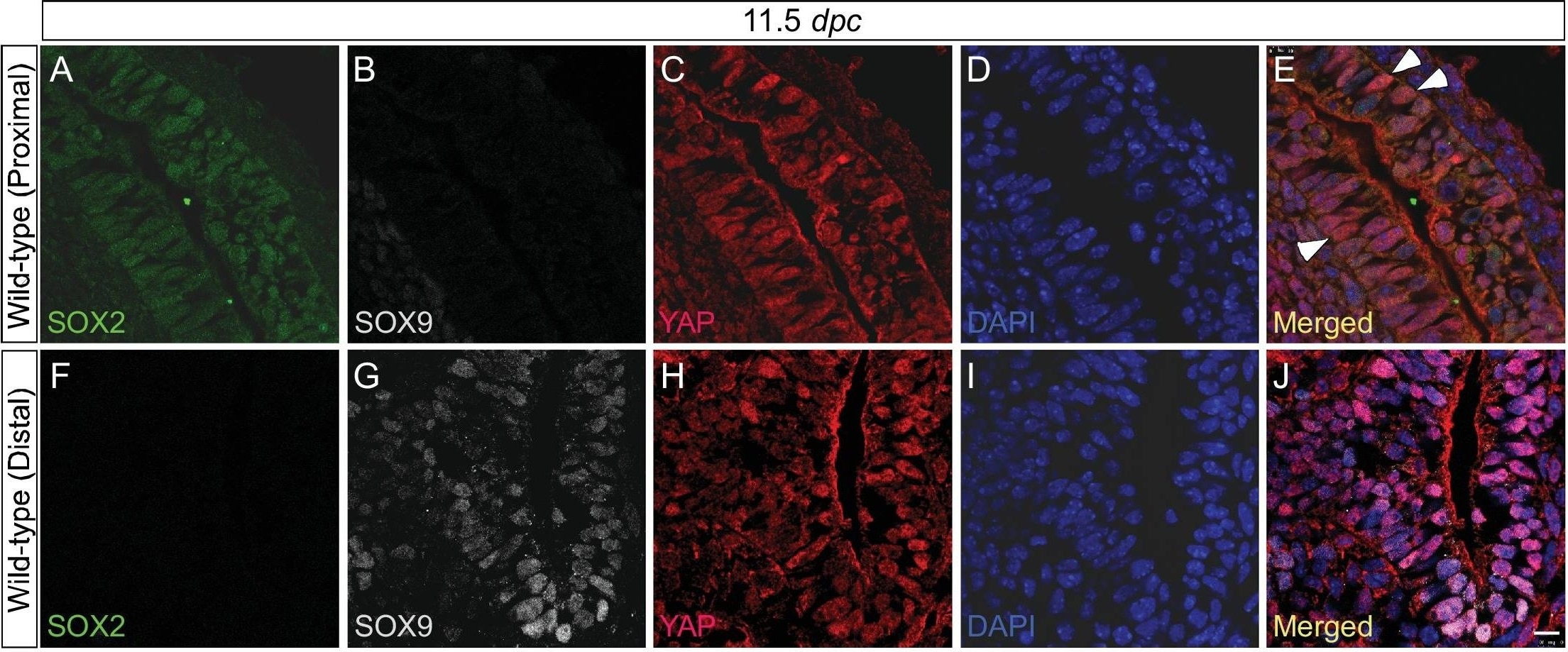
Immunocytochemistry/ Immunofluorescence: YAP1 Antibody - BSA Free [NB110-58358] -
Immunocytochemistry/ Immunofluorescence: YAP1 Antibody - BSA Free [NB110-58358] - Active nuclear YAP is distributed throughout the mouse lung epithelium during development.(A–P) Immunostaining of lung sections collected from wild-type mice at 11.5 & 12.5 days post coitus (dpc). The boxed region in (L) indicates areas shown in (N–P). The proximal airway is marked by SOX2 expression, while the distal airway is distinguished by SOX9 expression. Nuclear YAP can be frequently found in both SOX2+ & SOX9+ domains & is not restricted to the junction (the ‘transition zone’) between SOX2+ & SOX9+ domains. Representative cells with nuclear YAP (arrowhead) are indicated in (E,P). YAP immunoreactivity is completely absent in the epithelium (but present in the mesenchyme) of Yapf/f; ShhCre/+ mice (M), demonstrating the specificity of YAP antibodies used in this study. Immunofluorescence & immunohistochemistry yielded the same results (data not shown for immunohistochemistry). (Q–R) Whole-mount immunostaining of wild-type & Yap mutant lungs at 11.5 dpc. Distinct domains of SOX2 were discerned in the absence of YAP. Scale bar = 10 μm for A–J; 25 μm for K, L; 10 μm for N–P; 50 μm for Q, R.DOI:http://dx.doi.org/10.7554/eLife.21130.004 Image collected & cropped by CiteAb from the following publication (https://pubmed.ncbi.nlm.nih.gov/28323616), licensed under a CC-BY license. Not internally tested by Novus Biologicals.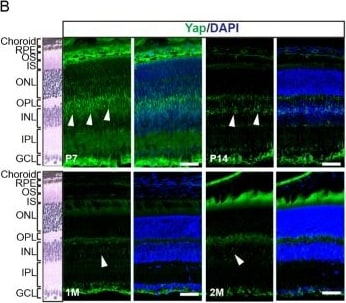
Immunocytochemistry/ Immunofluorescence: YAP1 Antibody - BSA Free [NB110-58358] -
Immunocytochemistry/ Immunofluorescence: YAP1 Antibody - BSA Free [NB110-58358] - The expression patterns of Yap & GFAP-Cre recombinase in postnatal mouse eyes. (A) Schematic of a transverse section of mouse eye. (B-C) Immunostaining with anti-Yap antibody (green) on frozen eye sections at different ages. Nuclei were counterstained with DAPI (blue). Yap staining was detected in scattered cells within the INL (arrowheads) & GCL of the retina & the lens epithelium (arrows). (D) Cre recombinase (red) was expressed in the lens epithelium & INL, GCL of retina in frozen eye sections of Tomatof/+; GFAP-Cre mice at P14. Nuclei were counterstained with DAPI (blue). LE, lens epithelium; TZ, transitional zone; RPE, retinal pigment epithelium; OS, outer segment; IS, inner segment; ONL, outer nuclear layer; OPL, outer plexiform layer; INL, inner nuclear layer; IPL, inner plexiform layer; GCL, ganglion cell layer. Scale bars: 25 μm (B-C), 100 μm (D). Image collected & cropped by CiteAb from the following publication (https://pubmed.ncbi.nlm.nih.gov/31011480), licensed under a CC-BY license. Not internally tested by Novus Biologicals.![YAP1 Antibody - BSA Free Immunohistochemistry: Rabbit Polyclonal YAP1 Antibody [NB110-58358]](https://resources.rndsystems.com/images/products/antibody/nb110-58358_rabbit-polyclonal-yap1-antibody-immunohistochemistry-31102025135310.jpg "Immunohistochemistry: Rabbit Polyclonal YAP1 Antibody [NB110-58358]")
Immunohistochemistry: Rabbit Polyclonal YAP1 Antibody [NB110-58358]
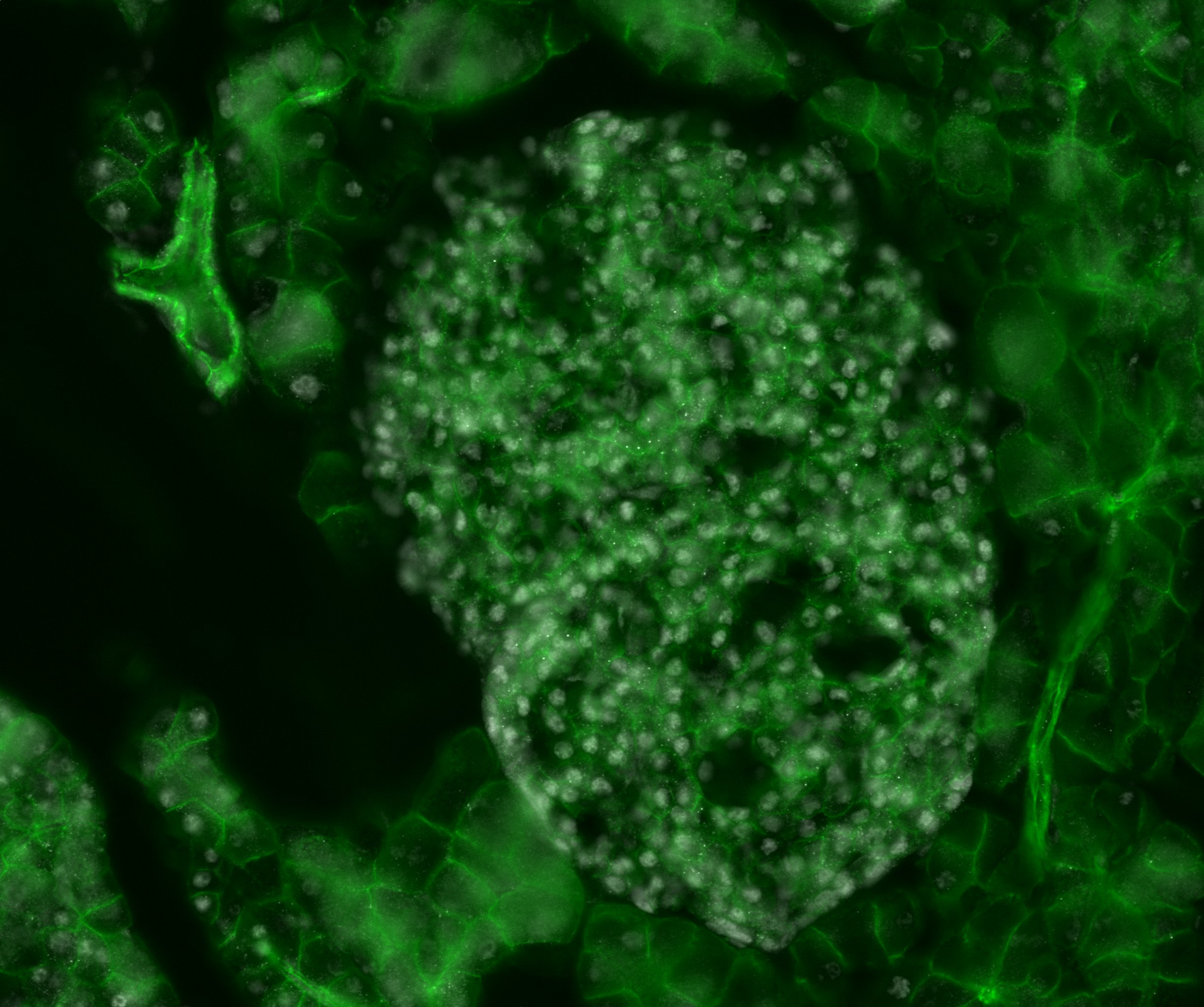
Murine pancreas cryosections stained with Yap1 (white) and CD324 (green). Image from a verified customer review.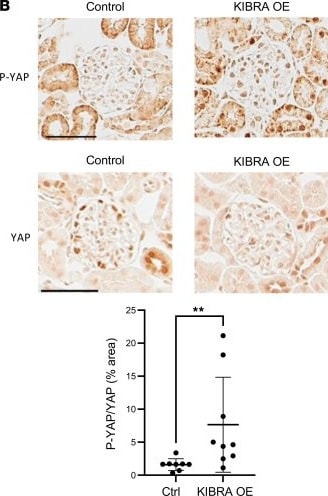
Immunohistochemistry: YAP1 Antibody - BSA Free [NB110-58358] -
LATS and YAP phosphorylation in ADR-treated KIBRA-OE mice.Adriamcyin-treated KIBRA-OE mice show (A) a nonsignificant increase in p-LATS/LATS expression compared with control mice (n = 9 control, 9 KIBRA-OE mice) and (B) significantly increased p-YAP/YAP expression compared with control mice (n = 8 control, 9 KIBRA-OE mice). Original magnification, ×40. Scale bars: 50 μm. **P < 0.01 by 2-tailed Mann-Whitney test. NS, not significant. Image collected and cropped by CiteAb from the following open publication (https://pubmed.ncbi.nlm.nih.gov/36853804), licensed under a CC-BY license. Not internally tested by Novus Biologicals.Applications for YAP1 Antibody - BSA Free
Application
Recommended Usage
Immunoblotting
reported in scientific literature (PMID 28406163)
Immunohistochemistry
1:50-1:200
Immunohistochemistry-Frozen
reported in scientific literature (PMID 28581498)
Immunohistochemistry-Paraffin
1:50-1:200
Immunoprecipitation
2-10 ug
Knockdown Validated
reported in scientific literature (PMID 28406163)
Simple Western
1:12.5
Western Blot
1:1000
Application Notes
In Simple Western only 10 - 15 uL of the recommended dilution is used per data point.
See Simple Western Antibody Database for Simple Western validation: Tested in HeLa lysate 0.1 mg/mL, separated by Size, antibody dilution of 1:12.5, apparent MW was 74 kDa. Separated by Size-Wes, Sally Sue/Peggy Sue.
See Simple Western Antibody Database for Simple Western validation: Tested in HeLa lysate 0.1 mg/mL, separated by Size, antibody dilution of 1:12.5, apparent MW was 74 kDa. Separated by Size-Wes, Sally Sue/Peggy Sue.
Reviewed Applications
Read 3 reviews rated 4 using NB110-58358 in the following applications:
Formulation, Preparation, and Storage
Purification
Immunogen affinity purified
Formulation
PBS
Format
BSA Free
Preservative
0.02% Sodium Azide
Concentration
1.0 mg/ml
Shipping
The product is shipped with polar packs. Upon receipt, store it immediately at the temperature recommended below.
Stability & Storage
Aliquot and store at -20C or -80C. Avoid freeze-thaw cycles.
Background: YAP1
YAP plays a role in the development and progression of multiple cancers as a transcriptional regulator of the Hippo signaling pathway. YAP1 encodes a nuclear effector of the Hippo signaling pathway which is involved in development, growth, repair, and homeostasis to play a pivotal role in controlling cell growth and organ size and has emerged as a key player in tumor suppression (2,3). Deregulation of the Hippo pathway causes tumor formation and malignancy, with YAP being a key oncogenic driver in liver carcinogenesis (2) and may function as a potential target for cancer treatment (3).
References
1. Rueda, E. M., Hall, B. M., Hill, M. C., Swinton, P. G., Tong, X., Martin, J. F., & Poche, R. A. (2019). The Hippo Pathway Blocks Mammalian Retinal Muller Glial Cell Reprogramming. Cell Rep, 27(6), 1637-1649.e1636. doi:10.1016/j.celrep.2019.04.047
2. Liu, A. M., Xu, M. Z., Chen, J., Poon, R. T., & Luk, J. M. (2010). Targeting YAP and Hippo signaling pathway in liver cancer. Expert Opin Ther Targets, 14(8), 855-868. doi:10.1517/14728222.2010.499361
3.Ye, S., & Eisinger-Mathason, T. S. (2016). Targeting the Hippo pathway: Clinical implications and therapeutics. Pharmacol Res, 103, 270-278. doi:10.1016/j.phrs.2015.11.025
Long Name
Yes-associated Protein 1
Alternate Names
YAP2, YAP65, YKI, Yorkie Homolog
Gene Symbol
YAP1
Additional YAP1 Products
Product Documents for YAP1 Antibody - BSA Free
Certificate of Analysis
To download a Certificate of Analysis, please enter a lot or batch number in the search box below.
Product Specific Notices for YAP1 Antibody - BSA Free
This product is for research use only and is not approved for use in humans or in clinical diagnosis. Primary Antibodies are guaranteed for 1 year from date of receipt.
Related Research Areas
Citations for YAP1 Antibody - BSA Free
 Powered by Bioz
Customer Reviews for YAP1 Antibody - BSA Free (3)
4 out of 5
3 Customer Ratings
Have you used YAP1 Antibody - BSA Free?
Submit a review and receive an Amazon gift card!
$25/€18/£15/$25CAN/¥2500 for a review with an image
$10/€7/£6/$10CAN/¥1110 for a review without an image
Submit a review
Customer Images
Showing
1
-
3 of
3 reviews
Showing All
Filter By:
-
Verified Customer | Posted 10/16/2025Murine pancreas cryosections stained with Yap1 (white) and CD324 (green)

-
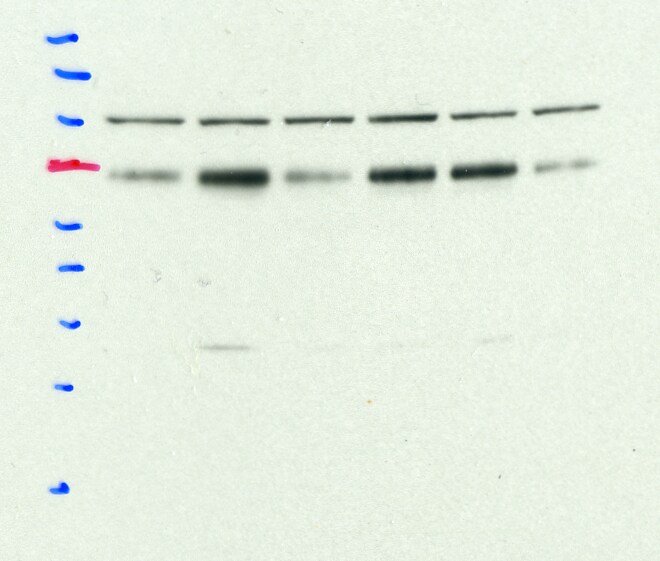
Application: Western BlotSample Tested: Human prostate cancer cell line (PC3)Species: HumanVerified Customer | Posted 02/04/2019Expression of YAP1 in PC3 human prostate cancer cell line
-
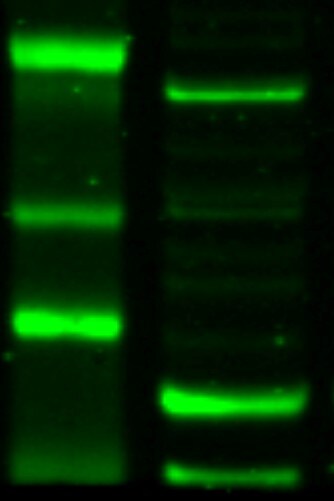
Application: Western BlotSample Tested: Protein LysateSpecies: ZebrafishVerified Customer | Posted 01/24/2018Lane 1: Ladder (38, 49, 62 and 98Kda); Lane 2: 30 ug YAP1. Bands seen at approximately 38Kda, 43Kda and 70Kda (predicted at 70kDa). This image was submitted by customer review.Lysate prepared with RIPA buffer. Reducing agent was used. 70 deg C for 10 min. Ran on 4-12% bis tris gel at 200v for 40 min.Primary antibody was used at a dilution of 1:1000 and incubated overnight at 4C. Secondary antibody was RDyde 800 CW Goat anti-Rabbit IgG diluted 1:5000 incubated overnight at 4C. Detection method was Licor Odyssey detection.
There are no reviews that match your criteria.
Protocols
View specific protocols for YAP1 Antibody - BSA Free (NB110-58358):
Immunocytochemistry Protocol
Culture cells to appropriate density in 35 mm culture dishes or 6-well plates.
1. Remove culture medium and wash the cells briefly in PBS. Add 10% formalin to the dish and fix at room temperature for 10 minutes.
2. Remove the formalin and wash the cells in PBS.
3. Permeablize the cells with 0.1% Triton X100 or other suitable detergent for 10 min.
4. Remove the permeablization buffer and wash three times for 10 minutes each in PBS. Be sure to not let the specimen dry out.
5. To block nonspecific antibody binding, incubate in 10% normal goat serum from 1 hour to overnight at room temperature.
6. Add primary antibody at appropriate dilution and incubate overnight at 4C.
7. Remove primary antibody and replace with PBS. Wash three times for 10 minutes each.
8. Add secondary antibody at appropriate dilution. Incubate for 1 hour at room temperature.
9. Remove secondary antibody and replace with PBS. Wash three times for 10 minutes each.
10. Counter stain DNA with DAPi if required.
Culture cells to appropriate density in 35 mm culture dishes or 6-well plates.
1. Remove culture medium and wash the cells briefly in PBS. Add 10% formalin to the dish and fix at room temperature for 10 minutes.
2. Remove the formalin and wash the cells in PBS.
3. Permeablize the cells with 0.1% Triton X100 or other suitable detergent for 10 min.
4. Remove the permeablization buffer and wash three times for 10 minutes each in PBS. Be sure to not let the specimen dry out.
5. To block nonspecific antibody binding, incubate in 10% normal goat serum from 1 hour to overnight at room temperature.
6. Add primary antibody at appropriate dilution and incubate overnight at 4C.
7. Remove primary antibody and replace with PBS. Wash three times for 10 minutes each.
8. Add secondary antibody at appropriate dilution. Incubate for 1 hour at room temperature.
9. Remove secondary antibody and replace with PBS. Wash three times for 10 minutes each.
10. Counter stain DNA with DAPi if required.
Immunohistochemistry-Paraffin Embedded Sections
Antigen Unmasking:
Bring slides to a boil in 10 mM sodium citrate buffer (pH 6.0) then maintain at a sub-boiling temperature for 10 minutes. Cool slides on bench-top for 30 minutes (keep slides in the sodium citrate buffer at all times).
Staining:
1. Wash sections in deionized water three times for 5 minutes each.
2. Wash sections in PBS for 5 minutes.
3. Block each section with 100-400 ul blocking solution (1% BSA in PBS) for 1 hour at room temperature.
4. Remove blocking solution and add 100-400 ul diluted primary antibody. Incubate overnight at 4 C.
5. Remove antibody solution and wash sections in wash buffer three times for 5 minutes each.
6. Add 100-400 ul HRP polymer conjugated secondary antibody. Incubate 30 minutes at room temperature.
7. Wash sections three times in wash buffer for 5 minutes each.
8. Add 100-400 ul DAB substrate to each section and monitor staining closely.
9. As soon as the sections develop, immerse slides in deionized water.
10. Counterstain sections in hematoxylin.
11. Wash sections in deionized water two times for 5 minutes each.
12. Dehydrate sections.
13. Mount coverslips.
Antigen Unmasking:
Bring slides to a boil in 10 mM sodium citrate buffer (pH 6.0) then maintain at a sub-boiling temperature for 10 minutes. Cool slides on bench-top for 30 minutes (keep slides in the sodium citrate buffer at all times).
Staining:
1. Wash sections in deionized water three times for 5 minutes each.
2. Wash sections in PBS for 5 minutes.
3. Block each section with 100-400 ul blocking solution (1% BSA in PBS) for 1 hour at room temperature.
4. Remove blocking solution and add 100-400 ul diluted primary antibody. Incubate overnight at 4 C.
5. Remove antibody solution and wash sections in wash buffer three times for 5 minutes each.
6. Add 100-400 ul HRP polymer conjugated secondary antibody. Incubate 30 minutes at room temperature.
7. Wash sections three times in wash buffer for 5 minutes each.
8. Add 100-400 ul DAB substrate to each section and monitor staining closely.
9. As soon as the sections develop, immerse slides in deionized water.
10. Counterstain sections in hematoxylin.
11. Wash sections in deionized water two times for 5 minutes each.
12. Dehydrate sections.
13. Mount coverslips.
Western Blot Protocol
1. Perform SDS-PAGE on samples to be analyzed, loading 10-25 ug of total protein per lane.
2. Transfer proteins to PVDF membrane according to the instructions provided by the manufacturer of the membrane and transfer apparatus.
3. Stain the membrane with Ponceau S (or similar product) to assess transfer success, and mark molecular weight standards where appropriate.
4. Rinse the blot TBS -0.05% Tween 20 (TBST).
5. Block the membrane in 5% Non-fat milk in TBST (blocking buffer) for at least 1 hour.
6. Wash the membrane in TBST three times for 10 minutes each.
7. Dilute primary antibody in blocking buffer and incubate overnight at 4C with gentle rocking.
8. Wash the membrane in TBST three times for 10 minutes each.
9. Incubate the membrane in diluted HRP conjugated secondary antibody in blocking buffer (as per manufacturer's instructions) for 1 hour at room temperature.
10. Wash the blot in TBST three times for 10 minutes each (this step can be repeated as required to reduce background).
11. Apply the detection reagent of choice in accordance with the manufacturer's instructions.
1. Perform SDS-PAGE on samples to be analyzed, loading 10-25 ug of total protein per lane.
2. Transfer proteins to PVDF membrane according to the instructions provided by the manufacturer of the membrane and transfer apparatus.
3. Stain the membrane with Ponceau S (or similar product) to assess transfer success, and mark molecular weight standards where appropriate.
4. Rinse the blot TBS -0.05% Tween 20 (TBST).
5. Block the membrane in 5% Non-fat milk in TBST (blocking buffer) for at least 1 hour.
6. Wash the membrane in TBST three times for 10 minutes each.
7. Dilute primary antibody in blocking buffer and incubate overnight at 4C with gentle rocking.
8. Wash the membrane in TBST three times for 10 minutes each.
9. Incubate the membrane in diluted HRP conjugated secondary antibody in blocking buffer (as per manufacturer's instructions) for 1 hour at room temperature.
10. Wash the blot in TBST three times for 10 minutes each (this step can be repeated as required to reduce background).
11. Apply the detection reagent of choice in accordance with the manufacturer's instructions.
Find general support by application which include: protocols, troubleshooting, illustrated assays, videos and webinars.
- Antigen Retrieval Protocol (PIER)
- Antigen Retrieval for Frozen Sections Protocol
- Appropriate Fixation of IHC/ICC Samples
- Cellular Response to Hypoxia Protocols
- ChIP Protocol Video
- Chromatin Immunoprecipitation (ChIP) Protocol
- Chromatin Immunoprecipitation Protocol
- Chromogenic IHC Staining of Formalin-Fixed Paraffin-Embedded (FFPE) Tissue Protocol
- Chromogenic Immunohistochemistry Staining of Frozen Tissue
- ClariTSA™ Fluorophore Kits
- Detection & Visualization of Antibody Binding
- Fluorescent IHC Staining of Frozen Tissue Protocol
- Graphic Protocol for Heat-induced Epitope Retrieval
- Graphic Protocol for the Preparation and Fluorescent IHC Staining of Frozen Tissue Sections
- Graphic Protocol for the Preparation and Fluorescent IHC Staining of Paraffin-embedded Tissue Sections
- Graphic Protocol for the Preparation of Gelatin-coated Slides for Histological Tissue Sections
- ICC Cell Smear Protocol for Suspension Cells
- ICC Immunocytochemistry Protocol Videos
- ICC for Adherent Cells
- IHC Sample Preparation (Frozen sections vs Paraffin)
- Immunocytochemistry (ICC) Protocol
- Immunocytochemistry Troubleshooting
- Immunofluorescence of Organoids Embedded in Cultrex Basement Membrane Extract
- Immunofluorescent IHC Staining of Formalin-Fixed Paraffin-Embedded (FFPE) Tissue Protocol
- Immunohistochemistry (IHC) and Immunocytochemistry (ICC) Protocols
- Immunohistochemistry Frozen Troubleshooting
- Immunohistochemistry Paraffin Troubleshooting
- Immunoprecipitation Protocol
- Preparing Samples for IHC/ICC Experiments
- Preventing Non-Specific Staining (Non-Specific Binding)
- Primary Antibody Selection & Optimization
- Protocol for Heat-Induced Epitope Retrieval (HIER)
- Protocol for Making a 4% Formaldehyde Solution in PBS
- Protocol for VisUCyte™ HRP Polymer Detection Reagent
- Protocol for the Fluorescent ICC Staining of Cell Smears - Graphic
- Protocol for the Fluorescent ICC Staining of Cultured Cells on Coverslips - Graphic
- Protocol for the Preparation & Fixation of Cells on Coverslips
- Protocol for the Preparation and Chromogenic IHC Staining of Frozen Tissue Sections
- Protocol for the Preparation and Chromogenic IHC Staining of Frozen Tissue Sections - Graphic
- Protocol for the Preparation and Chromogenic IHC Staining of Paraffin-embedded Tissue Sections
- Protocol for the Preparation and Chromogenic IHC Staining of Paraffin-embedded Tissue Sections - Graphic
- Protocol for the Preparation and Fluorescent ICC Staining of Cells on Coverslips
- Protocol for the Preparation and Fluorescent ICC Staining of Non-adherent Cells
- Protocol for the Preparation and Fluorescent ICC Staining of Stem Cells on Coverslips
- Protocol for the Preparation and Fluorescent IHC Staining of Frozen Tissue Sections
- Protocol for the Preparation and Fluorescent IHC Staining of Paraffin-embedded Tissue Sections
- Protocol for the Preparation of Gelatin-coated Slides for Histological Tissue Sections
- Protocol for the Preparation of a Cell Smear for Non-adherent Cell ICC - Graphic
- R&D Systems Quality Control Western Blot Protocol
- TUNEL and Active Caspase-3 Detection by IHC/ICC Protocol
- The Importance of IHC/ICC Controls
- Troubleshooting Guide: Immunohistochemistry
- Troubleshooting Guide: Western Blot Figures
- Western Blot Conditions
- Western Blot Protocol
- Western Blot Protocol for Cell Lysates
- Western Blot Troubleshooting
- Western Blot Troubleshooting Guide
- View all Protocols, Troubleshooting, Illustrated assays and Webinars
FAQs for YAP1 Antibody - BSA Free
Showing
1
-
2 of
2 FAQs
Showing All
-
Q: I am trying to find a good antibody for YAP1 to use in a ChIP. The one that has been published and seems to work in ChIP was produced by Marius Sudol's lab. Is the YAP antibody NB110-58358 the one Marius Sudol sent you or did you produce it using his antigen?
A: You are correct. This antibody is from Sudol's lab, and yes it was produced directly by him.
-
Q:
Our customer purchased NB110-58358 for IHC-P. The sample would be mouse skin. Now they face the problem of choosing which protocol of antigen retrieval is the best one to work with NB110-58358, since there are several listed on //www.novusbio.com/support/support-by-application/antigen-retrieval/proto…. Would you please help suggest?
A: To answer your customer's question, we do not have any protocol specific to NB110-58358 but as a general guideline we usually recommend using Citrate buffer (10mM Citric Acid, 0.05% Tween 20, pH 6.0) for antigen retrieving. 20 minutes incubation is usually sufficient in our experience.
-
Q: I am trying to find a good antibody for YAP1 to use in a ChIP. The one that has been published and seems to work in ChIP was produced by Marius Sudol's lab. Is the YAP antibody NB110-58358 the one Marius Sudol sent you or did you produce it using his antigen?
A: You are correct. This antibody is from Sudol's lab, and yes it was produced directly by him.
-
Q:
Our customer purchased NB110-58358 for IHC-P. The sample would be mouse skin. Now they face the problem of choosing which protocol of antigen retrieval is the best one to work with NB110-58358, since there are several listed on //www.novusbio.com/support/support-by-application/antigen-retrieval/proto…. Would you please help suggest?
A: To answer your customer's question, we do not have any protocol specific to NB110-58358 but as a general guideline we usually recommend using Citrate buffer (10mM Citric Acid, 0.05% Tween 20, pH 6.0) for antigen retrieving. 20 minutes incubation is usually sufficient in our experience.
Loading...