
CCR5 Antibody - BSA Free
Novus Biologicals | Catalog # NBP2-31374

![Western Blot: CCR5 Antibody [NBP2-31374]](https://resources.rndsystems.com/images/products/CCR5-Antibody-Western-Blot-NBP2-31374-img0003.jpg "Western Blot: CCR5 Antibody [NBP2-31374]")
Scientific images may be resized, cropped, or adjusted for brightness or contrast for presentation purposes. These updates are limited to presentation and do not affect the underlying scientific interpretation of the data. Where available, additional source data may be provided upon request.
Key Product Details
Validated by
Species Reactivity
Validated:
Cited:
Predicted:
Applications
Validated:
Cited:
Label
Antibody Source
Format
Product Specifications
Immunogen
Reactivity Notes
Localization
Clonality
Host
Isotype
Scientific Data Images for CCR5 Antibody - BSA Free
Western Blot: CCR5 Antibody [NBP2-31374]
Western Blot: CCR5 Antibody [NBP2-31374] - Image of anti-CCR5 antibody. Whole cell protein from Daudi (1), K562 (2) and THP-1 (3) cell lines were separated by SDS-PAGE and protein transfered to PVDF. The membrane was probed with anti-CCR5 antibody at 2 ug/mL and detected with an anti-rabbit-HRP secondary antibody and chemiluminescence. CCR5 is shown at 40 kDa.![Immunohistochemistry-Paraffin: CCR5 Antibody [NBP2-31374]](https://resources.rndsystems.com/images/products/CCR5-Antibody-Immunohistochemistry-Paraffin-NBP2-31374-img0007.jpg "Immunohistochemistry-Paraffin: CCR5 Antibody [NBP2-31374]")
![Western Blot: CCR5 Antibody [NBP2-31374]](https://resources.rndsystems.com/images/products/CCR5-Antibody-Western-Blot-NBP2-31374-img0001.jpg "Western Blot: CCR5 Antibody [NBP2-31374]")
Western Blot: CCR5 Antibody [NBP2-31374]
Western Blot: CCR5 Antibody [NBP2-31374] - Detection of CCR5 partial recombinant protein by using CCR5 antibody at a concentration of 0.5 ug/mL.![Immunohistochemistry-Paraffin: CCR5 Antibody [NBP2-31374]](https://resources.rndsystems.com/images/products/CCR5-Antibody-Immunohistochemistry-Paraffin-NBP2-31374-img0002.jpg "Immunohistochemistry-Paraffin: CCR5 Antibody [NBP2-31374]")
Immunohistochemistry-Paraffin: CCR5 Antibody [NBP2-31374]
Immunohistochemistry-Paraffin: CCR5 Antibody [NBP2-31374] - Analysis of CCR5 protein in a section of malignant stromal tumor of small bowel from human using CCR5 antibody at a concentration of 5 ug/mL.![Immunohistochemistry-Paraffin: CCR5 Antibody [NBP2-31374]](https://resources.rndsystems.com/images/products/CCR5-Antibody-Immunohistochemistry-Paraffin-NBP2-31374-img0005.jpg "Immunohistochemistry-Paraffin: CCR5 Antibody [NBP2-31374]")
Immunohistochemistry-Paraffin: CCR5 Antibody [NBP2-31374]
Immunohistochemistry-Paraffin: CCR5 Antibody [NBP2-31374] - Staining in a Rhesus macaque brain. IHC-P image submitted by a verified customer review.![Immunohistochemistry-Paraffin: CCR5 Antibody [NBP2-31374]](https://resources.rndsystems.com/images/products/CCR5-Antibody-Immunohistochemistry-Paraffin-NBP2-31374-img0006.jpg "Immunohistochemistry-Paraffin: CCR5 Antibody [NBP2-31374]")
Immunohistochemistry-Paraffin: CCR5 Antibody [NBP2-31374]
Immunohistochemistry-Paraffin: CCR5 Antibody [NBP2-31374] - Human skin section. IHC-P image submitted by a verified customer review.![Simple Western: CCR5 Antibody [NBP2-31374]](https://resources.rndsystems.com/images/products/CCR5-Antibody-Simple-Western-NBP2-31374-img0004.jpg "Simple Western: CCR5 Antibody [NBP2-31374]")
Simple Western: CCR5 Antibody [NBP2-31374]
Simple Western: CCR5 Antibody [NBP2-31374] - Lane view shows a specific band for CCR5 in 0.5 mg/mL of MCF-7 lysate. This experiment was performed under reducing conditions using the 12-230 kDa separation system.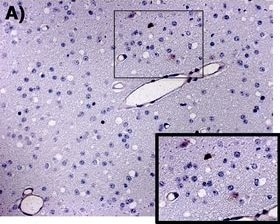
Immunohistochemistry: CCR5 Antibody [NBP2-31374] -
Immunohistochemistry: CCR5 Antibody [NBP2-31374] - Detection of CCR5 & virus on brain tissue. CCR5 expression was analyzed using Immunohistochemistry on the layer III of frontal cortex from macaques that were a Uninfected & untreated controls, b Meth-only treated, c SIV-only infected, & d SIV-infected & Meth-treated. e SIV-infected & Meth-treated. Pictures were at 16× magnification. Sites of interest (rectangles) were further magnified. f Brain viral load (Student’s t test) Image collected & cropped by CiteAb from the following publication (https://pubmed.ncbi.nlm.nih.gov/27107567), licensed under a CC-BY license. Not internally tested by Novus Biologicals.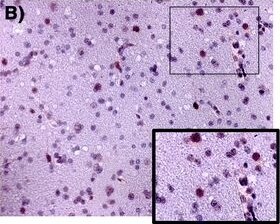
Immunohistochemistry: CCR5 Antibody [NBP2-31374] -
Immunohistochemistry: CCR5 Antibody [NBP2-31374] - Detection of CCR5 & virus on brain tissue. CCR5 expression was analyzed using Immunohistochemistry on the layer III of frontal cortex from macaques that were a Uninfected & untreated controls, b Meth-only treated, c SIV-only infected, & d SIV-infected & Meth-treated. e SIV-infected & Meth-treated. Pictures were at 16× magnification. Sites of interest (rectangles) were further magnified. f Brain viral load (Student’s t test) Image collected & cropped by CiteAb from the following publication (https://pubmed.ncbi.nlm.nih.gov/27107567), licensed under a CC-BY license. Not internally tested by Novus Biologicals.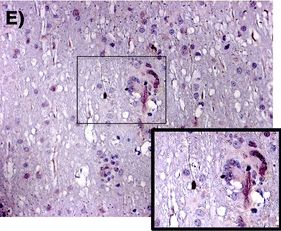
Immunohistochemistry: CCR5 Antibody [NBP2-31374] -
Immunohistochemistry: CCR5 Antibody [NBP2-31374] - Detection of CCR5 & virus on brain tissue. CCR5 expression was analyzed using Immunohistochemistry on the layer III of frontal cortex from macaques that were a Uninfected & untreated controls, b Meth-only treated, c SIV-only infected, & d SIV-infected & Meth-treated. e SIV-infected & Meth-treated. Pictures were at 16× magnification. Sites of interest (rectangles) were further magnified. f Brain viral load (Student’s t test) Image collected & cropped by CiteAb from the following publication (https://pubmed.ncbi.nlm.nih.gov/27107567), licensed under a CC-BY license. Not internally tested by Novus Biologicals.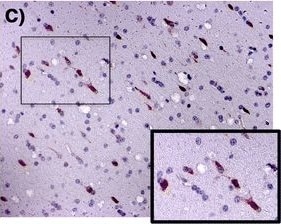
Immunohistochemistry: CCR5 Antibody [NBP2-31374] -
Immunohistochemistry: CCR5 Antibody [NBP2-31374] - Detection of CCR5 & virus on brain tissue. CCR5 expression was analyzed using Immunohistochemistry on the layer III of frontal cortex from macaques that were a Uninfected & untreated controls, b Meth-only treated, c SIV-only infected, & d SIV-infected & Meth-treated. e SIV-infected & Meth-treated. Pictures were at 16× magnification. Sites of interest (rectangles) were further magnified. f Brain viral load (Student’s t test) Image collected & cropped by CiteAb from the following publication (https://pubmed.ncbi.nlm.nih.gov/27107567), licensed under a CC-BY license. Not internally tested by Novus Biologicals.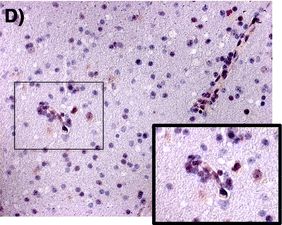
Immunohistochemistry: CCR5 Antibody [NBP2-31374] -
Immunohistochemistry: CCR5 Antibody [NBP2-31374] - Detection of CCR5 & virus on brain tissue. CCR5 expression was analyzed using Immunohistochemistry on the layer III of frontal cortex from macaques that were a Uninfected & untreated controls, b Meth-only treated, c SIV-only infected, & d SIV-infected & Meth-treated. e SIV-infected & Meth-treated. Pictures were at 16× magnification. Sites of interest (rectangles) were further magnified. f Brain viral load (Student’s t test) Image collected & cropped by CiteAb from the following publication (https://pubmed.ncbi.nlm.nih.gov/27107567), licensed under a CC-BY license. Not internally tested by Novus Biologicals.Applications for CCR5 Antibody - BSA Free
Immunohistochemistry
Immunohistochemistry-Paraffin
Simple Western
Western Blot
See Simple Western Antibody Database for Simple Western validation: Tested in MCF-7 lysate 0.5 mg/mL, separated by Size, antibody dilution of 1:50, apparent MW was 41 kDa.
Reviewed Applications
Read 2 reviews rated 4.5 using NBP2-31374 in the following applications:
Formulation, Preparation, and Storage
Purification
Formulation
Format
Preservative
Concentration
Shipping
Stability & Storage
Background: CCR5
Additional CCR5 Products
Product Documents for CCR5 Antibody - BSA Free
Certificate of Analysis
To download a Certificate of Analysis, please enter a lot or batch number in the search box below.
Product Specific Notices for CCR5 Antibody - BSA Free
This product is for research use only and is not approved for use in humans or in clinical diagnosis. Primary Antibodies are guaranteed for 1 year from date of receipt.
Citations for CCR5 Antibody - BSA Free
 Powered by Bioz
Customer Reviews for CCR5 Antibody - BSA Free (2)
Have you used CCR5 Antibody - BSA Free?
Submit a review and receive an Amazon gift card!
$25/€18/£15/$25CAN/¥2500 for a review with an image
$10/€7/£6/$10CAN/¥1110 for a review without an image
Submit a review
Customer Images
-
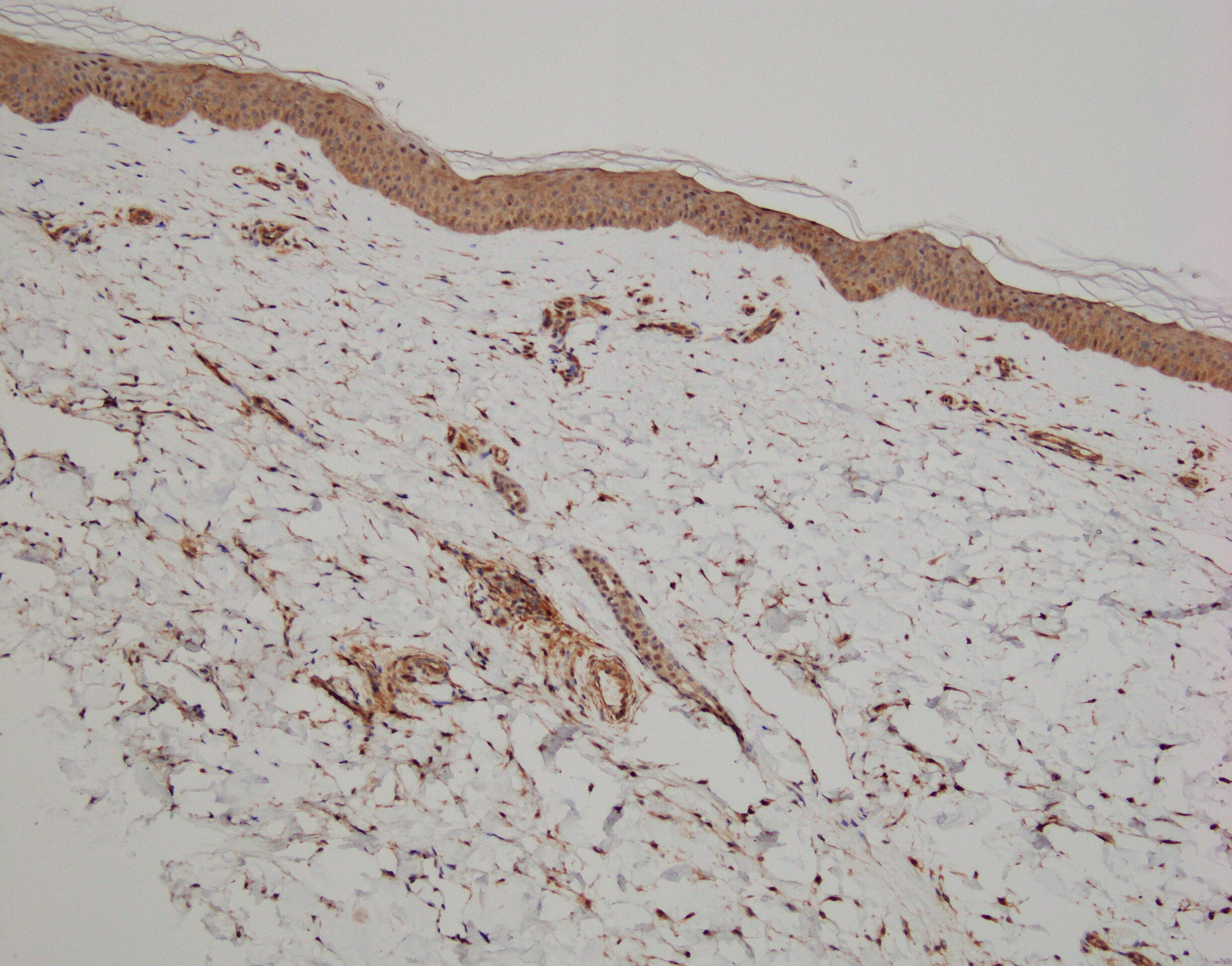
Application: Immunohistochemistry-ParaffinSample Tested: human skinSpecies: HumanVerified Customer | Posted 02/28/2020NBP2-31374 was react with lymphocytes and endothelium. Keratinocytes were also stainedworking concentration: 5ug/mL (x200), incubation for 60min HIER: Bond ER2 Detection: Bond polymer refine kit (without post-primary)

-
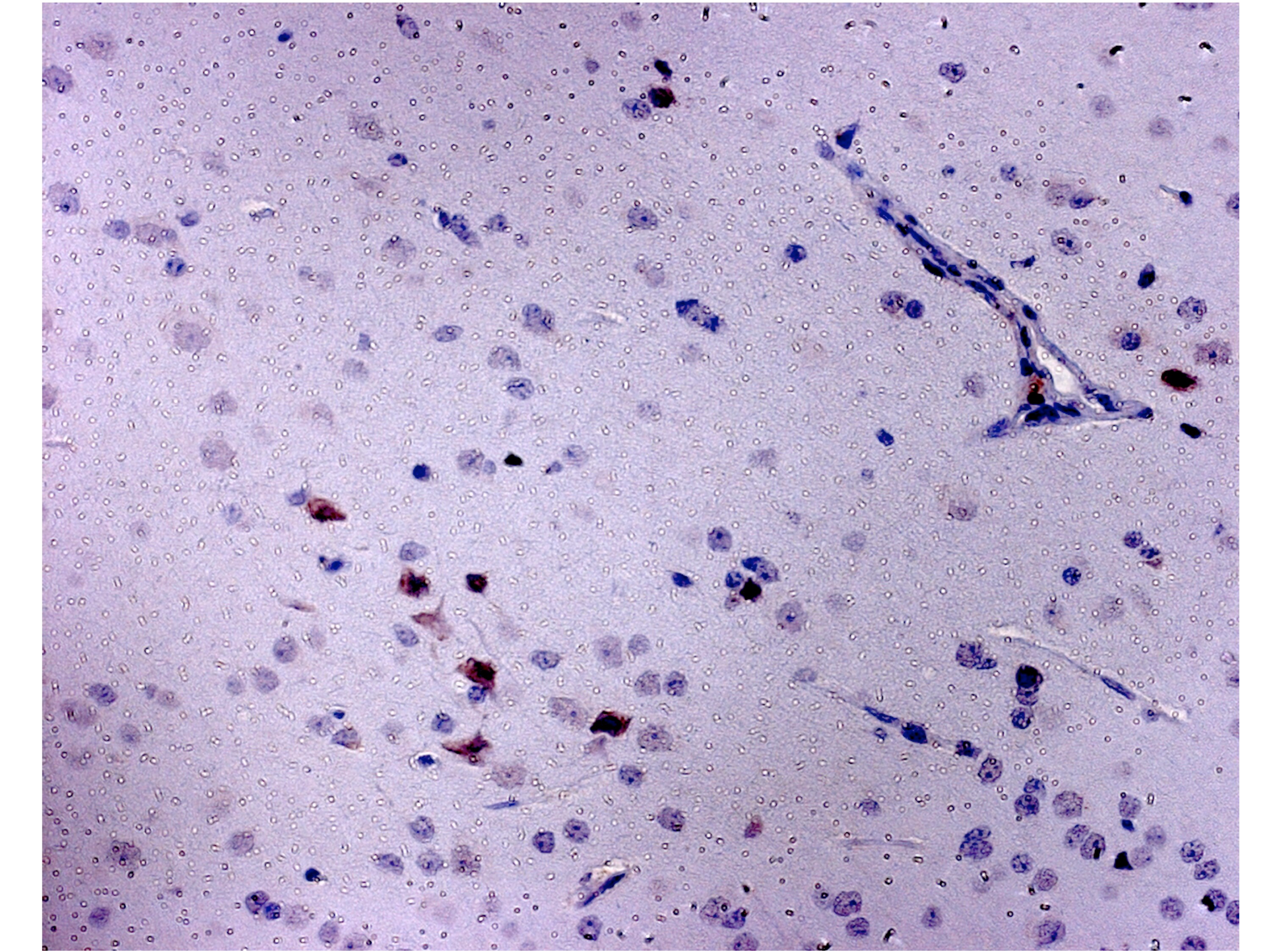
Application: Immunohistochemistry-ParaffinSample Tested: BrainSpecies: OtherVerified Customer | Posted 06/01/2015Rhesus macaque brain, using Citrate Buffer
There are no reviews that match your criteria.
Protocols
View specific protocols for CCR5 Antibody - BSA Free (NBP2-31374):
1. Deparaffinize the tissue sections by immersing the slides in Xylene with two changes for 10 min each. Sections should not get dried at any stage from this point.
2. Rehydrate the tissue sections by immersing the slides in decreasing grades of ethanol as follows:
a. Immerse in 100% ethanol with 2 changes for 5 minutes each
b. Immerse in 95% ethanol with 2 changes for 5 minutes each
c. Immerse in 90% ethanol for 5 minutes
d. Immerse in 70% ethanol for 5 minutes
e. Immerse in 50% ethanol for 5 minutes
f. Immerse in distilled water for 5 minutes
3. Antigen Retrieval (Microwave Method):
a. Immerse the slides in a microwave compatible tray containing 10 mM Sodium Citrate buffer (pH 6.0) with 0.05% Tween 20.
b. Boil the slides and maintain the sub-boiling temperature for 5 minutes in the microwave. Thereafter, take out the tray very carefully and cool it at room temperature (RT) for about 30 minutes.
c. Wash the slides 3 times, 3 minutes each by immersing them in TBST (Tris Buffered Saline having 0.05% Tween 20).
4. Quenching of Endogenous Peroxidase:
a. Incubate the slides in 3% hydrogen peroxide prepared in methanol for 15 minutes (at RT, in dark conditions).
b. Wash the slides in TBST 3 times, 3 minutes each.
5. Protein Blocking:
a. Incubate the sections with background sniper solution at RT for 15 minutes (Biocare Medicals, USA).
b. Wash the sections 3 times, 3 min each by immersing the slides in TBST.
6. Primary Antibody:
a. Dilute the primary antibody at 5ug/ml concentration using PBS as a diluent.
b. Incubate the sections with diluted primary antibody for 90 minutes at RT in a humidified chamber.
c. Thereafter, wash the slides 4 times, 5 minutes each with TBST.
7. Probe (Secondary Reagent):
a. Incubate with MACH 1 Mouse probe for 15 minutes at RT.
b. Incubate for 30 min at room temperature with HRP-Polymer (Biocare Medical, USA).
c. Wash the slides with TBST 4 times, 5 minutes each
8. Chromogen:
a. Mix 32ul of DAB Chromogen with 1 ml of DAB substrate buffer (Biocare Medical, USA).
b. Apply 200ul DAB mixture/section and incubate at RT in dark conditions (few seconds - 5 minutes).
c. As soon as an appropriate color develops, rinse the slides with deionized water (2-3 brief rinses).
9. Counter stain:
a. Counter stain with Hematoxylin for 30 seconds (Vector Labs, USA).
b. Wash in deionized water for 1-2 minutes to clear the extra stain.
c. Incubate the slides in bluing solution or Scott's water twice for 2 minutes each time.
10. Dehydrate the sections in increasing grades of alcohols:
a. 50% alcohol for 1 minute
b. 70% for 1 minute
c. 90% for 1 minute
d. 95% for 1 minute
e. 100% for 1 minute
f. Xylene with 2 changes for 2 minutes each
11. Mount with DPX mount and cover-slip glass (Fisher Scientific, USA), carefully not allowing any air bubbles to enter.
NOTE:- This protocol is provided as a reference tool only. Depending upon the type of tissues /tissue processing and reagents employed, the end user will need to optimize the final conditions for achieving an expected staining.
Western Blot Protocol
1. Perform SDS-PAGE on samples to be analyzed, loading 25 ug of total protein per lane.
2. Transfer proteins to membrane according to the instructions provided by the manufacturer of the membrane and transfer apparatus.
3. Stain according to standard Ponceau S procedure (or similar product) to assess transfer success, and mark molecular weight standards where appropriate.
4. Rinse the blot.
5. Block the membrane using standard blocking buffer for at least 1 hour.
6. Wash the membrane in wash buffer three times for 10 minutes each.
7. Dilute anti-CCR2 primary antibody in blocking buffer and incubate 1 hour at room temperature.
8. Wash the membrane in wash buffer three times for 10 minutes each.
9. Apply the diluted HRP conjugated secondary antibody in blocking buffer (as per manufacturers instructions) and incubate 1 hour at room temperature.
10. Wash the blot in wash buffer three times for 10 minutes each (this step can be repeated as required to reduce background).
11. Apply the detection reagent of choice in accordance with the manufacturers instructions.
Note: Tween-20 can be added to the blocking or antibody dilution buffer at a final concentration of 0.05-0.2%.
Find general support by application which include: protocols, troubleshooting, illustrated assays, videos and webinars.
- Antigen Retrieval Protocol (PIER)
- Antigen Retrieval for Frozen Sections Protocol
- Appropriate Fixation of IHC/ICC Samples
- Cellular Response to Hypoxia Protocols
- Chromogenic IHC Staining of Formalin-Fixed Paraffin-Embedded (FFPE) Tissue Protocol
- Chromogenic Immunohistochemistry Staining of Frozen Tissue
- ClariTSA™ Fluorophore Kits
- Detection & Visualization of Antibody Binding
- Fluorescent IHC Staining of Frozen Tissue Protocol
- Graphic Protocol for Heat-induced Epitope Retrieval
- Graphic Protocol for the Preparation and Fluorescent IHC Staining of Frozen Tissue Sections
- Graphic Protocol for the Preparation and Fluorescent IHC Staining of Paraffin-embedded Tissue Sections
- Graphic Protocol for the Preparation of Gelatin-coated Slides for Histological Tissue Sections
- IHC Sample Preparation (Frozen sections vs Paraffin)
- Immunofluorescent IHC Staining of Formalin-Fixed Paraffin-Embedded (FFPE) Tissue Protocol
- Immunohistochemistry (IHC) and Immunocytochemistry (ICC) Protocols
- Immunohistochemistry Frozen Troubleshooting
- Immunohistochemistry Paraffin Troubleshooting
- Preparing Samples for IHC/ICC Experiments
- Preventing Non-Specific Staining (Non-Specific Binding)
- Primary Antibody Selection & Optimization
- Protocol for Heat-Induced Epitope Retrieval (HIER)
- Protocol for Making a 4% Formaldehyde Solution in PBS
- Protocol for VisUCyte™ HRP Polymer Detection Reagent
- Protocol for the Preparation & Fixation of Cells on Coverslips
- Protocol for the Preparation and Chromogenic IHC Staining of Frozen Tissue Sections
- Protocol for the Preparation and Chromogenic IHC Staining of Frozen Tissue Sections - Graphic
- Protocol for the Preparation and Chromogenic IHC Staining of Paraffin-embedded Tissue Sections
- Protocol for the Preparation and Chromogenic IHC Staining of Paraffin-embedded Tissue Sections - Graphic
- Protocol for the Preparation and Fluorescent IHC Staining of Frozen Tissue Sections
- Protocol for the Preparation and Fluorescent IHC Staining of Paraffin-embedded Tissue Sections
- Protocol for the Preparation of Gelatin-coated Slides for Histological Tissue Sections
- R&D Systems Quality Control Western Blot Protocol
- TUNEL and Active Caspase-3 Detection by IHC/ICC Protocol
- The Importance of IHC/ICC Controls
- Troubleshooting Guide: Immunohistochemistry
- Troubleshooting Guide: Western Blot Figures
- Western Blot Conditions
- Western Blot Protocol
- Western Blot Protocol for Cell Lysates
- Western Blot Troubleshooting
- Western Blot Troubleshooting Guide
- View all Protocols, Troubleshooting, Illustrated assays and Webinars
Associated Pathways
