CD3 Antibody (N26-R)
Novus Biologicals | Catalog # NBP1-79054

![Immunohistochemistry-Paraffin: CD3 Antibody (N26-R) [NBP1-79054]](https://resources.rndsystems.com/images/products/CD3-Antibody-N26-R-Immunohistochemistry-Paraffin-NBP1-79054-img0003.jpg "Immunohistochemistry-Paraffin: CD3 Antibody (N26-R) [NBP1-79054]")
Scientific images may be resized, cropped, or adjusted for brightness or contrast for presentation purposes. These updates are limited to presentation and do not affect the underlying scientific interpretation of the data. Where available, additional source data may be provided upon request.
Loading...
Key Product Details
Species Reactivity
Validated:
Human
Cited:
Human, Mouse
Applications
Validated:
Immunohistochemistry, Immunohistochemistry-Paraffin, Immunocytochemistry/ Immunofluorescence
Cited:
Immunohistochemistry-Paraffin, Immunocytochemistry/ Immunofluorescence
Label
Unconjugated
Antibody Source
Recombinant Monoclonal Rabbit IgG Clone # N26-R
Loading...
Product Specifications
Immunogen
This CD3 antibody was developed against a peptide derived from cytoplasmic, C-terminal region of human CD3-epsilon chain. Antibody recognizes the epitope between Lys156 - Glu178.
Epitope
Lys156 - Glu178
Clonality
Monoclonal
Host
Rabbit
Isotype
IgG
Theoretical MW
23.1 kDa.
Disclaimer note: The observed molecular weight of the protein may vary from the listed predicted molecular weight due to post translational modifications, post translation cleavages, relative charges, and other experimental factors.
Disclaimer note: The observed molecular weight of the protein may vary from the listed predicted molecular weight due to post translational modifications, post translation cleavages, relative charges, and other experimental factors.
Description
This antibody is immunoaffinity purified with immunogenic peptide as a ligand.
Scientific Data Images for CD3 Antibody (N26-R)
Immunohistochemistry-Paraffin: CD3 Antibody (N26-R) [NBP1-79054]
Immunohistochemistry-Paraffin: CD3 Antibody (N26-R) [NBP1-79054] - CD3 positivity in T-lymphocytes of the normal lymph node, stained with anti-CD3 antibody. FFPE human tissue (4 um section) stained.Applications for CD3 Antibody (N26-R)
Application
Recommended Usage
Immunohistochemistry
1:100 -1:200
Immunohistochemistry-Paraffin
1:100 - 1:200
Application Notes
Use in Immunocytochemistry/immunofluorescence reported in scientific literature (PMID: 24695686).
Formulation, Preparation, and Storage
Purification
Immunogen affinity purified
Formulation
20mM Tris-HCl (pH 8.0) and 20mg/ml BSA
Preservative
0.05% Sodium Azide
Concentration
Please see the vial label for concentration. If unlisted please contact technical services.
Shipping
The product is shipped with polar packs. Upon receipt, store it immediately at the temperature recommended below.
Stability & Storage
Store at 4C. Do not freeze.
Background: CD3
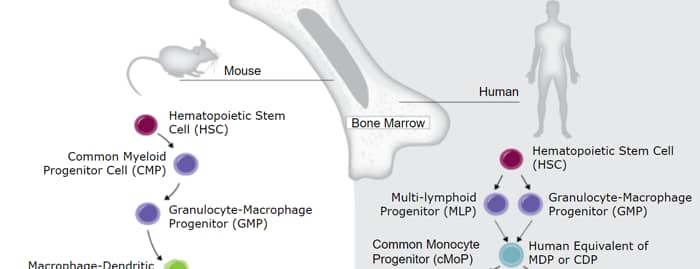
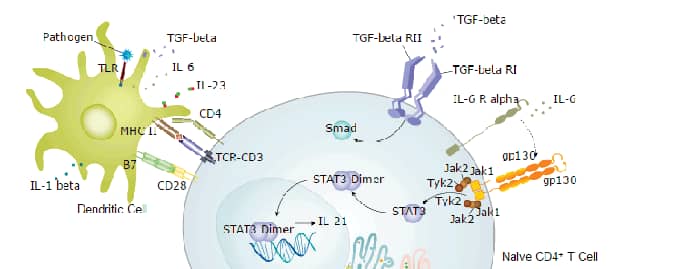
CD3 proteins are expressed on the surface of thymocytes during thymocyte development, proliferation, and maturation to T-cells (4, 6, 7). During T-cell development CD4-CD8- double negative (DN) cells differentiate to CD4+CD8+ double positive (DP) cells before progressing to single positive (SP) CD4+ helper T-cells or CD8+ cytotoxic T-cells (4, 6, 7). As CD3 plays an important role in thymocyte development, it is understandable that CD3 defects and mutations in CD3 protein chains cause severe combined immunodeficiencies (SCIDs) (8). Additionally, a subset of CD3+ T-cells that co-express CD20 are described in a variety of diseases including rheumatoid arthritis, multiple sclerosis, CD20+ T-cell leukemia/lymphoma, and HIV (9). Clinical trials and animal models have shown that anti-CD3 monoclonal antibodies are a promising treatment modality for inflammatory disorders and autoimmune diseases, such as type I diabetes (10).
References
1. Chetty, R., & Gatter, K. (1994). CD3: structure, function, and role of immunostaining in clinical practice. The Journal of pathology. https://doi.org/10.1002/path.1711730404
2. Mariuzza, R. A., Agnihotri, P., & Orban, J. (2020). The structural basis of T-cell receptor (TCR) activation: An enduring enigma. The Journal of biological chemistry. https://doi.org/10.1074/jbc.REV119.009411
3. Kuhns, M. S., Davis, M. M., & Garcia, K. C. (2006). Deconstructing the form and function of the TCR/CD3 complex. Immunity. https://doi.org/10.1016/j.immuni.2006.01.006
4. Clevers, H., Alarcon, B., Wileman, T., & Terhorst, C. (1988). The T cell receptor/CD3 complex: a dynamic protein ensemble. Annual review of immunology. https://doi.org/10.1146/annurev.iy.06.040188.003213
5. Uniprot: CD3-delta (P04234), CD3-epsilon (P07766), CD3-gamma (P09693), CD3-zeta (P20963)
6. D'Acquisto, F., & Crompton, T. (2011). CD3+CD4-CD8- (double negative) T cells: saviours or villains of the immune response?. Biochemical pharmacology. https://doi.org/10.1016/j.bcp.2011.05.019
7. Dave V. P. (2009). Hierarchical role of CD3 chains in thymocyte development. Immunological reviews. https://doi.org/10.1111/j.1600-065X.2009.00835.x
8. Fischer, A., de Saint Basile, G., & Le Deist, F. (2005). CD3 deficiencies. Current opinion in allergy and clinical immunology. https://doi.org/10.1097/01.all.0000191886.12645.79
9. Chen, Q., Yuan, S., Sun, H., & Peng, L. (2019). CD3+CD20+ T cells and their roles in human diseases. Human immunology. https://doi.org/10.1016/j.humimm.2019.01.001
10. Kuhn, C., & Weiner, H. L. (2016). Therapeutic anti-CD3 monoclonal antibodies: from bench to bedside. Immunotherapy. https://doi.org/10.2217/imt-2016-0049
Alternate Names
CD_antigen: CD3e, CD3 antigen, delta subunit, CD3d antigen, CD3d antigen, delta polypeptide (TiT3 complex), CD3d molecule, delta (CD3-TCR complex), CD3-DELTA, CD3e, CD3e antigen, CD3e antigen, epsilon polypeptide (TiT3 complex), CD3e molecule, epsilon (CD3-TCR complex), CD3-epsilon, CD3G, CD3g antigen, CD3g antigen, gamma polypeptide (TiT3 complex), CD3g molecule, epsilon (CD3-TCR complex), CD3g molecule, gamma (CD3-TCR complex), CD3-GAMMA, FLJ17620, FLJ17664, FLJ18683, FLJ79544, FLJ94613, IMD18, MGC138597, T3DOKT3, delta chain, T3E, T-cell antigen receptor complex, epsilon subunit of T3, T-cell receptor T3 delta chain, T-cell surface antigen T3/Leu-4 epsilon chain, T-cell surface glycoprotein CD3 delta chain, T-cell surface glycoprotein CD3 epsilon chain, TCRE
Gene Symbol
CD3E
UniProt
Additional CD3 Products
Product Documents for CD3 Antibody (N26-R)
Certificate of Analysis
To download a Certificate of Analysis, please enter a lot or batch number in the search box below.
Product Specific Notices for CD3 Antibody (N26-R)
This antibody is immunoaffinity purified with immunogenic peptide as a ligand.
This product is for research use only and is not approved for use in humans or in clinical diagnosis. Primary Antibodies are guaranteed for 1 year from date of receipt.
Related Research Areas
Citations for CD3 Antibody (N26-R)
 Powered by Bioz
Customer Reviews for CD3 Antibody (N26-R)
There are currently no reviews for this product. Be the first to review CD3 Antibody (N26-R) and earn rewards!
Have you used CD3 Antibody (N26-R)?
Submit a review and receive an Amazon gift card!
$25/€18/£15/$25CAN/¥2500 for a review with an image
$10/€7/£6/$10CAN/¥1110 for a review without an image
Submit a review
Protocols
View specific protocols for CD3 Antibody (N26-R) (NBP1-79054):
IHC-P Protocol (NBP1-79054):
1. Deparaffinize the section in 3 changes of xylene, 5 minutes each.
2. Wash the section in 96%, 80% and 70% benzyl alcohol for 5 minutes each.
3. Rinse in distilled water.
4. Block the endogenous peroxidase by incubating the tissue in 3% hydrogen peroxide (H2O2) for 10 minutes.
5. Wash in distilled water.
6. For antigen retrieval: immerse the slide in Tris-EDTA buffer, pH 9.0, 0.05% Tween- 20*, and incubate in
microwave (850W) for 20 minutes. (Alternatively adjust to your own protocol, keeping the required pH)
7. Remove the staining to room temperature and let the slide to cool for 15 minutes.
8. Rinse in distilled water.
9. Wash in 0.05 M Tris-HCl, pH 7.6 buffer supplemented with 0.2% of Tween-20 (buffer A) for 5 minutes.
10. Incubate the section with primary antibody diluted in buffer A at the dilution 1:100 - 200 for 1 hour in the closed
wet chamber.
11. Wash twice 5 minutes with buffer A.
12. Apply the secondary antibody (the protocol depends on the supplier), and proceed to standard
immunohistochemistry protocol (HRP - Peroxide - DAB).
13. Wash twice 5 minutes with buffer A.
14. Apply the chromogen (DAB), 10 minutes.
15. Wash in water - 10 minutes.
16. Stain in hematoxylin for 5 minutes.
17. Wash in water - 10 minutes.
18. Dehydrate the section in 2 changes of 96% benzyl alcohol for 5 minutes each.
19. Wash the section in 2 changes of xylene for 2 minutes each.
20. Mount the slide for observation.
1. Deparaffinize the section in 3 changes of xylene, 5 minutes each.
2. Wash the section in 96%, 80% and 70% benzyl alcohol for 5 minutes each.
3. Rinse in distilled water.
4. Block the endogenous peroxidase by incubating the tissue in 3% hydrogen peroxide (H2O2) for 10 minutes.
5. Wash in distilled water.
6. For antigen retrieval: immerse the slide in Tris-EDTA buffer, pH 9.0, 0.05% Tween- 20*, and incubate in
microwave (850W) for 20 minutes. (Alternatively adjust to your own protocol, keeping the required pH)
7. Remove the staining to room temperature and let the slide to cool for 15 minutes.
8. Rinse in distilled water.
9. Wash in 0.05 M Tris-HCl, pH 7.6 buffer supplemented with 0.2% of Tween-20 (buffer A) for 5 minutes.
10. Incubate the section with primary antibody diluted in buffer A at the dilution 1:100 - 200 for 1 hour in the closed
wet chamber.
11. Wash twice 5 minutes with buffer A.
12. Apply the secondary antibody (the protocol depends on the supplier), and proceed to standard
immunohistochemistry protocol (HRP - Peroxide - DAB).
13. Wash twice 5 minutes with buffer A.
14. Apply the chromogen (DAB), 10 minutes.
15. Wash in water - 10 minutes.
16. Stain in hematoxylin for 5 minutes.
17. Wash in water - 10 minutes.
18. Dehydrate the section in 2 changes of 96% benzyl alcohol for 5 minutes each.
19. Wash the section in 2 changes of xylene for 2 minutes each.
20. Mount the slide for observation.
Find general support by application which include: protocols, troubleshooting, illustrated assays, videos and webinars.
- Antigen Retrieval Protocol (PIER)
- Antigen Retrieval for Frozen Sections Protocol
- Appropriate Fixation of IHC/ICC Samples
- Cellular Response to Hypoxia Protocols
- Chromogenic IHC Staining of Formalin-Fixed Paraffin-Embedded (FFPE) Tissue Protocol
- Chromogenic Immunohistochemistry Staining of Frozen Tissue
- ClariTSA™ Fluorophore Kits
- Detection & Visualization of Antibody Binding
- Fluorescent IHC Staining of Frozen Tissue Protocol
- Graphic Protocol for Heat-induced Epitope Retrieval
- Graphic Protocol for the Preparation and Fluorescent IHC Staining of Frozen Tissue Sections
- Graphic Protocol for the Preparation and Fluorescent IHC Staining of Paraffin-embedded Tissue Sections
- Graphic Protocol for the Preparation of Gelatin-coated Slides for Histological Tissue Sections
- ICC Cell Smear Protocol for Suspension Cells
- ICC Immunocytochemistry Protocol Videos
- ICC for Adherent Cells
- IHC Sample Preparation (Frozen sections vs Paraffin)
- Immunocytochemistry (ICC) Protocol
- Immunocytochemistry Troubleshooting
- Immunofluorescence of Organoids Embedded in Cultrex Basement Membrane Extract
- Immunofluorescent IHC Staining of Formalin-Fixed Paraffin-Embedded (FFPE) Tissue Protocol
- Immunohistochemistry (IHC) and Immunocytochemistry (ICC) Protocols
- Immunohistochemistry Frozen Troubleshooting
- Immunohistochemistry Paraffin Troubleshooting
- Preparing Samples for IHC/ICC Experiments
- Preventing Non-Specific Staining (Non-Specific Binding)
- Primary Antibody Selection & Optimization
- Protocol for Heat-Induced Epitope Retrieval (HIER)
- Protocol for Making a 4% Formaldehyde Solution in PBS
- Protocol for VisUCyte™ HRP Polymer Detection Reagent
- Protocol for the Fluorescent ICC Staining of Cell Smears - Graphic
- Protocol for the Fluorescent ICC Staining of Cultured Cells on Coverslips - Graphic
- Protocol for the Preparation & Fixation of Cells on Coverslips
- Protocol for the Preparation and Chromogenic IHC Staining of Frozen Tissue Sections
- Protocol for the Preparation and Chromogenic IHC Staining of Frozen Tissue Sections - Graphic
- Protocol for the Preparation and Chromogenic IHC Staining of Paraffin-embedded Tissue Sections
- Protocol for the Preparation and Chromogenic IHC Staining of Paraffin-embedded Tissue Sections - Graphic
- Protocol for the Preparation and Fluorescent ICC Staining of Cells on Coverslips
- Protocol for the Preparation and Fluorescent ICC Staining of Non-adherent Cells
- Protocol for the Preparation and Fluorescent ICC Staining of Stem Cells on Coverslips
- Protocol for the Preparation and Fluorescent IHC Staining of Frozen Tissue Sections
- Protocol for the Preparation and Fluorescent IHC Staining of Paraffin-embedded Tissue Sections
- Protocol for the Preparation of Gelatin-coated Slides for Histological Tissue Sections
- Protocol for the Preparation of a Cell Smear for Non-adherent Cell ICC - Graphic
- TUNEL and Active Caspase-3 Detection by IHC/ICC Protocol
- The Importance of IHC/ICC Controls
- Troubleshooting Guide: Immunohistochemistry
- View all Protocols, Troubleshooting, Illustrated assays and Webinars