
CTLA-4 Antibody (L4P2F5*F10) - BSA Free
Novus Biologicals | Catalog # NBP2-50286

![Western Blot: CTLA-4 Antibody (L4P2F5*F10)BSA Free [NBP2-50286]](https://resources.rndsystems.com/images/products/CTLA-4-Antibody-L4P2F5-F10-Western-Blot-NBP2-50286-img0001.jpg "Western Blot: CTLA-4 Antibody (L4P2F5*F10)BSA Free [NBP2-50286]")
Scientific images may be resized, cropped, or adjusted for brightness or contrast for presentation purposes. These updates are limited to presentation and do not affect the underlying scientific interpretation of the data. Where available, additional source data may be provided upon request.
Key Product Details
Species Reactivity
Human, Mouse, Rat, Bovine
Applications
Immunohistochemistry, Immunohistochemistry-Paraffin, Western Blot, ELISA
Label
Unconjugated
Antibody Source
Monoclonal Mouse IgG1 kappa Clone # L4P2F5*F10
Format
BSA Free
Loading...
Product Specifications
Immunogen
Ovalbumin-conjugated synthetic peptide CENAPNRARM
Clonality
Monoclonal
Host
Mouse
Isotype
IgG1 kappa
Description
The clone number is listed as L4P2F5*F10 in the scientific literature.
Scientific Data Images for CTLA-4 Antibody (L4P2F5*F10) - BSA Free
Western Blot: CTLA-4 Antibody (L4P2F5*F10)BSA Free [NBP2-50286]
Western Blot: CTLA-4 Antibody (L4P2F5*F10) [NBP2-50286] - Analysis of CTLA-4 in Jurkat cell lysates. Two products are detected, slightly larger than anticipated-possibly due to glycosylation.![Immunohistochemistry-Paraffin: CTLA-4 Antibody (L4P2F5*F10) - BSA Free [NBP2-50286]](https://resources.rndsystems.com/images/products/CTLA-4-Antibody-L4P2F5-F10-Immunohistochemistry-NBP2-50286-img0002.jpg "Immunohistochemistry-Paraffin: CTLA-4 Antibody (L4P2F5*F10) - BSA Free [NBP2-50286]")
Immunohistochemistry-Paraffin: CTLA-4 Antibody (L4P2F5*F10) - BSA Free [NBP2-50286]
Immunohistochemistry-Paraffin: CTLA-4 Antibody (L4P2F5*F10) [NBP2-50286] - Human lymph node cross section. Cytoplasmic staining is shown as expected (CTLA4 is expressed in T-cells). B. Positive cytoplasmic staining was also detected in human breast cancer sections.![ELISA: CTLA-4 Antibody (L4P2F5*F10) - BSA Free [NBP2-50286]](https://resources.rndsystems.com/images/products/CTLA-4-Antibody-L4P2F5-F10-ELISA-NBP2-50286-img0003.jpg "ELISA: CTLA-4 Antibody (L4P2F5*F10) - BSA Free [NBP2-50286]")
ELISA: CTLA-4 Antibody (L4P2F5*F10) - BSA Free [NBP2-50286]
ELISA: CTLA-4 Antibody (L4P2F5*F10) [NBP2-50286] - Detection of soluble CTLA4 in mouse serum by indirect ELISA.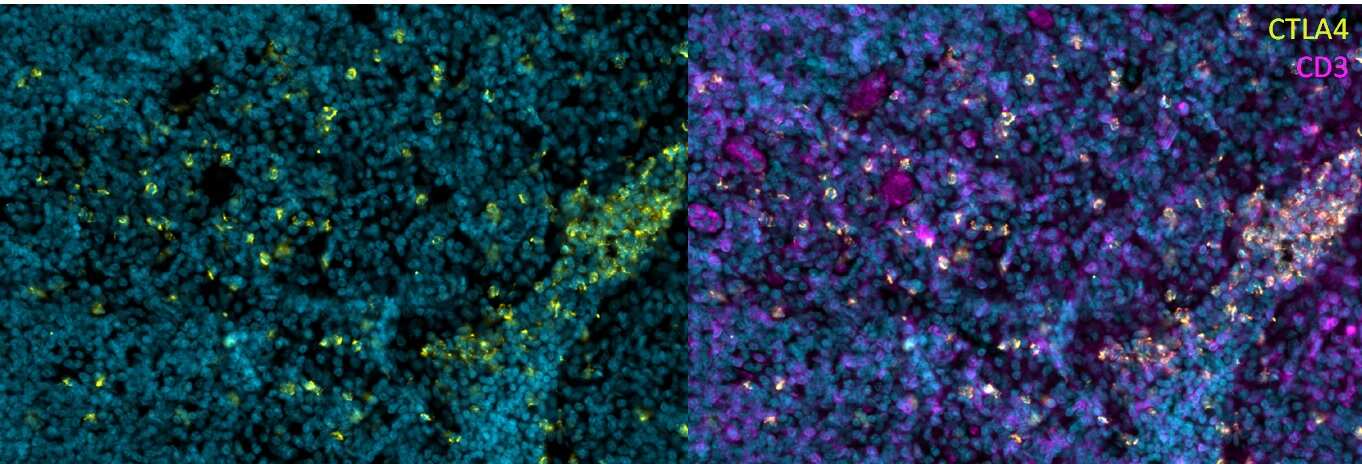
Immunohistochemistry-Paraffin: Mouse Monoclonal CTLA-4 Antibody (L4P2F5*F10) [NBP2-50286] -
Immunohistochemistry-Paraffin: Mouse Monoclonal CTLA-4 Antibody (L4P2F5*F10) [NBP2-50286] - CTLA-4 was stained in human tonsil FFPE tissue. HIER antigen retrieval at pH 9 for 20min. Antibody was used in concentrations between 1:50-100. AF750 conjugated version of antibody was used (Catalog # NBP2-50286AF750). Image from a verified customer review.Applications for CTLA-4 Antibody (L4P2F5*F10) - BSA Free
Application
Recommended Usage
ELISA
1:100 - 1:2000
Immunohistochemistry
1:10 - 1:500
Western Blot
1:100 - 1:2000
Application Notes
Positive control(s): IHC- formalin-fixed, paraffin-embedded multi tumour tissue microarray; WB - Jurkat cell lysates.
Formulation, Preparation, and Storage
Purification
Protein A purified
Formulation
PBS
Format
BSA Free
Preservative
0.02% Sodium Azide
Concentration
1 mg/ml
Shipping
The product is shipped with polar packs. Upon receipt, store it immediately at the temperature recommended below.
Stability & Storage
Store at 4C short term. Aliquot and store at -20C long term. Avoid freeze-thaw cycles.
Background: CTLA-4
Similar to programmed cell death protein 1 (PD-1), CTLA-4 is an inhibitory immune checkpoint protein (3,5). Checkpoint blockade immunotherapy using drugs or antibodies to target CTLA-4 is one of the main approaches for cancer treatment (5). A number of drugs targeting CTLA-4, or a combination of CTLA-4/PD-1, have been approved for treatment of various cancers like melanoma, renal cell carcinoma, and colorectal cancer (5). While blocking CTLA-4 in the tumor microenvironment is a promising cancer therapeutic, the absence of CTLA-4 under normal conditions can have deleterious effects. Studies have found that patients with CTLA-4 deficiency or mutations have clinical features associated with autoimmunity and immune dysregulation (4). Treatment options for CTLA-4 deficiency includes immunoglobulin-replacement therapy, corticosteroids, CTLA-4-immunoglobulin (Ig) fusion protein, and, in life-threatening cases, hematopoietic stem cell transplantation (4,6). Additionally, engaging CD80/CD86 with CTLA-4-Ig is a common immunosuppressive treatment for rheumatoid arthritis and kidney transplant recipients (6).
References
1. Romo-Tena, J., Gomez-Martin, D., & Alcocer-Varela, J. (2013). CTLA-4 and autoimmunity: new insights into the dual regulator of tolerance. Autoimmunity reviews, 12(12), 1171-1176. https://doi.org/10.1016/j.autrev.2013.07.002
2. Hosseini, A., Gharibi, T., Marofi, F., Babaloo, Z., & Baradaran, B. (2020). CTLA-4: From mechanism to autoimmune therapy. International immunopharmacology, 80, 106221. https://doi.org/10.1016/j.intimp.2020.106221
3. Rowshanravan, B., Halliday, N., & Sansom, D. M. (2018). CTLA-4: a moving target in immunotherapy. Blood, 131(1), 58-67. https://doi.org/10.1182/blood-2017-06-741033
4. Verma, N., Burns, S. O., Walker, L., & Sansom, D. M. (2017). Immune deficiency and autoimmunity in patients with CTLA-4 (CD152) mutations. Clinical and experimental immunology, 190(1), 1-7. https://doi.org/10.1111/cei.12997
5. Rotte A. (2019). Combination of CTLA-4 and PD-1 blockers for treatment of cancer. Journal of experimental & clinical cancer research : CR, 38(1), 255. https://doi.org/10.1186/s13046-019-1259-z
6. Bluestone, J. A., St Clair, E. W., & Turka, L. A. (2006). CTLA4Ig: bridging the basic immunology with clinical application. Immunity, 24(3), 233-238. https://doi.org/10.1016/j.immuni.2006.03.001
Long Name
Cytotoxic T-lymphocyte-associated Molecule 4
Alternate Names
CD152, CTLA4
Gene Symbol
CTLA4
Additional CTLA-4 Products
Product Documents for CTLA-4 Antibody (L4P2F5*F10) - BSA Free
Certificate of Analysis
To download a Certificate of Analysis, please enter a lot or batch number in the search box below.
Product Specific Notices for CTLA-4 Antibody (L4P2F5*F10) - BSA Free
This product is for research use only and is not approved for use in humans or in clinical diagnosis. Primary Antibodies are guaranteed for 1 year from date of receipt.
Customer Reviews for CTLA-4 Antibody (L4P2F5*F10) - BSA Free
There are currently no reviews for this product. Be the first to review CTLA-4 Antibody (L4P2F5*F10) - BSA Free and earn rewards!
Have you used CTLA-4 Antibody (L4P2F5*F10) - BSA Free?
Submit a review and receive an Amazon gift card!
$25/€18/£15/$25CAN/¥2500 for a review with an image
$10/€7/£6/$10CAN/¥1110 for a review without an image
Submit a review
Protocols
Find general support by application which include: protocols, troubleshooting, illustrated assays, videos and webinars.
- Antigen Retrieval Protocol (PIER)
- Antigen Retrieval for Frozen Sections Protocol
- Appropriate Fixation of IHC/ICC Samples
- Cellular Response to Hypoxia Protocols
- Chromogenic IHC Staining of Formalin-Fixed Paraffin-Embedded (FFPE) Tissue Protocol
- Chromogenic Immunohistochemistry Staining of Frozen Tissue
- ClariTSA™ Fluorophore Kits
- Detection & Visualization of Antibody Binding
- ELISA Sample Preparation & Collection Guide
- ELISA Troubleshooting Guide
- Fluorescent IHC Staining of Frozen Tissue Protocol
- Graphic Protocol for Heat-induced Epitope Retrieval
- Graphic Protocol for the Preparation and Fluorescent IHC Staining of Frozen Tissue Sections
- Graphic Protocol for the Preparation and Fluorescent IHC Staining of Paraffin-embedded Tissue Sections
- Graphic Protocol for the Preparation of Gelatin-coated Slides for Histological Tissue Sections
- How to Run an R&D Systems DuoSet ELISA
- How to Run an R&D Systems Quantikine ELISA
- How to Run an R&D Systems Quantikine™ QuicKit™ ELISA
- IHC Sample Preparation (Frozen sections vs Paraffin)
- Immunofluorescent IHC Staining of Formalin-Fixed Paraffin-Embedded (FFPE) Tissue Protocol
- Immunohistochemistry (IHC) and Immunocytochemistry (ICC) Protocols
- Immunohistochemistry Frozen Troubleshooting
- Immunohistochemistry Paraffin Troubleshooting
- Preparing Samples for IHC/ICC Experiments
- Preventing Non-Specific Staining (Non-Specific Binding)
- Primary Antibody Selection & Optimization
- Protocol for Heat-Induced Epitope Retrieval (HIER)
- Protocol for Making a 4% Formaldehyde Solution in PBS
- Protocol for VisUCyte™ HRP Polymer Detection Reagent
- Protocol for the Preparation & Fixation of Cells on Coverslips
- Protocol for the Preparation and Chromogenic IHC Staining of Frozen Tissue Sections
- Protocol for the Preparation and Chromogenic IHC Staining of Frozen Tissue Sections - Graphic
- Protocol for the Preparation and Chromogenic IHC Staining of Paraffin-embedded Tissue Sections
- Protocol for the Preparation and Chromogenic IHC Staining of Paraffin-embedded Tissue Sections - Graphic
- Protocol for the Preparation and Fluorescent IHC Staining of Frozen Tissue Sections
- Protocol for the Preparation and Fluorescent IHC Staining of Paraffin-embedded Tissue Sections
- Protocol for the Preparation of Gelatin-coated Slides for Histological Tissue Sections
- Quantikine HS ELISA Kit Assay Principle, Alkaline Phosphatase
- Quantikine HS ELISA Kit Principle, Streptavidin-HRP Polymer
- R&D Systems Quality Control Western Blot Protocol
- Sandwich ELISA (Colorimetric) – Biotin/Streptavidin Detection Protocol
- Sandwich ELISA (Colorimetric) – Direct Detection Protocol
- TUNEL and Active Caspase-3 Detection by IHC/ICC Protocol
- The Importance of IHC/ICC Controls
- Troubleshooting Guide: ELISA
- Troubleshooting Guide: Immunohistochemistry
- Troubleshooting Guide: Western Blot Figures
- Western Blot Conditions
- Western Blot Protocol
- Western Blot Protocol for Cell Lysates
- Western Blot Troubleshooting
- Western Blot Troubleshooting Guide
- View all Protocols, Troubleshooting, Illustrated assays and Webinars
Loading...