EpCAM/TROP1 Antibody (EGP40/1110) - (ECD)
Novus Biologicals | Catalog # NBP2-44635

![Immunohistochemistry-Paraffin: EpCAM/TROP1 Antibody (EGP40/1110) - (ECD) [NBP2-44635]](https://resources.rndsystems.com/images/products/EpCAM-TROP1-Antibody-EGP40-1110-ECD-Immunohistochemistry-Paraffin-NBP2-44635-img0009.jpg "Immunohistochemistry-Paraffin: EpCAM/TROP1 Antibody (EGP40/1110) - (ECD) [NBP2-44635]")
Scientific images may be resized, cropped, or adjusted for brightness or contrast for presentation purposes. These updates are limited to presentation and do not affect the underlying scientific interpretation of the data. Where available, additional source data may be provided upon request.
Key Product Details
Species Reactivity
Validated:
Human, Canine, Feline, Rhesus Macaque
Cited:
Rat
Applications
Validated:
Immunohistochemistry, Immunohistochemistry-Paraffin, Western Blot, Immunocytochemistry/ Immunofluorescence, Protein Array
Cited:
Flow Cytometry, Immunocytochemistry/ Immunofluorescence
Label
Unconjugated
Antibody Source
Monoclonal Mouse IgG2b Kappa Clone # EGP40/1110
Loading...
Product Specifications
Immunogen
Recombinant fragment from cytoplasmic domain (around aa 289-314) of human EpCAM/TROP1 (exact sequence is proprietary) (Uniprot: P16422 )
Reactivity Notes
Rhesus Macaque reactivity reported from a verified customer review.
Localization
Cell surface
Marker
Epithelial Marker
Specificity
EGP40 is a 40-43kDa transmembrane epithelial glycoprotein, also identified as epithelial specific antigen (ESA), or epithelial cellular adhesion molecule (Ep-CAM). It is expressed on baso-lateral cell surface in most simple epithelia and a vast majority of carcinomas. This antibody has been used to distinguish adenocarcinoma from pleural mesothelioma and hepatocellular carcinoma. This antibody is also useful in distinguishing serous carcinomas of the ovary from mesothelioma.
Clonality
Monoclonal
Host
Mouse
Isotype
IgG2b Kappa
Description
200ug/ml of antibody purified from Bioreactor Concentrate by Protein A or G. Prepared in 10 mM PBS with 0.05% BSA & 0.05% azide.
Antibody with azide - store at 2 to 8C.
Antibody with azide - store at 2 to 8C.
Scientific Data Images for EpCAM/TROP1 Antibody (EGP40/1110) - (ECD)
Immunohistochemistry-Paraffin: EpCAM/TROP1 Antibody (EGP40/1110) - (ECD) [NBP2-44635]
Immunohistochemistry-Paraffin: EpCAM/TROP1 Antibody (EGP40/1110) - (ECD) [NBP2-44635] - Formalin-fixed, paraffin-embedded feline (cat) small intestine stained with EpCAM/TROP1 Antibody (EGP40/1110) - (ECD).![Immunohistochemistry-Paraffin: EpCAM/TROP1 Antibody (EGP40/1110) - (ECD) [NBP2-44635]](https://resources.rndsystems.com/images/products/EpCAM-TROP1-Antibody-EGP40-1110-ECD-Immunohistochemistry-Paraffin-NBP2-44635-img0001.jpg "Immunohistochemistry-Paraffin: EpCAM/TROP1 Antibody (EGP40/1110) - (ECD) [NBP2-44635]")
Immunohistochemistry-Paraffin: EpCAM/TROP1 Antibody (EGP40/1110) - (ECD) [NBP2-44635]
Immunohistochemistry-Paraffin: EpCAM/TROP1 Antibody (EGP40/1110) - (ECD) [NBP2-44635] - Human Ovarian Carcinoma stained with Ep-CAM Monoclonal Antibody (EGP40/1110).![Immunohistochemistry-Paraffin: EpCAM/TROP1 Antibody (EGP40/1110) - (ECD) [NBP2-44635]](https://resources.rndsystems.com/images/products/EpCAM-TROP1-Antibody-EGP40-1110-ECD-Immunohistochemistry-Paraffin-NBP2-44635-img0002.jpg "Immunohistochemistry-Paraffin: EpCAM/TROP1 Antibody (EGP40/1110) - (ECD) [NBP2-44635]")
Immunohistochemistry-Paraffin: EpCAM/TROP1 Antibody (EGP40/1110) - (ECD) [NBP2-44635]
Immunohistochemistry-Paraffin: EpCAM/TROP1 Antibody (EGP40/1110) - (ECD) [NBP2-44635] - Rat Colon stained with Ep-CAM Monoclonal Antibody (EGP40/1110).![Immunohistochemistry-Paraffin: EpCAM/TROP1 Antibody (EGP40/1110) - (ECD) [NBP2-44635]](https://resources.rndsystems.com/images/products/EpCAM-TROP1-Antibody-EGP40-1110-ECD-Immunohistochemistry-Paraffin-NBP2-44635-img0003.jpg "Immunohistochemistry-Paraffin: EpCAM/TROP1 Antibody (EGP40/1110) - (ECD) [NBP2-44635]")
Immunohistochemistry-Paraffin: EpCAM/TROP1 Antibody (EGP40/1110) - (ECD) [NBP2-44635]
Immunohistochemistry-Paraffin: EpCAM/TROP1 Antibody (EGP40/1110) - (ECD) [NBP2-44635] - Rat Lung stained with Ep-CAM Monoclonal Antibody (EGP40/1110).![Immunohistochemistry-Paraffin: EpCAM/TROP1 Antibody (EGP40/1110) - (ECD) [NBP2-44635]](https://resources.rndsystems.com/images/products/EpCAM-TROP1-Antibody-EGP40-1110-ECD-Immunohistochemistry-Paraffin-NBP2-44635-img0006.jpg "Immunohistochemistry-Paraffin: EpCAM/TROP1 Antibody (EGP40/1110) - (ECD) [NBP2-44635]")
Immunohistochemistry-Paraffin: EpCAM/TROP1 Antibody (EGP40/1110) - (ECD) [NBP2-44635]
Immunohistochemistry-Paraffin: EpCAM/TROP1 Antibody (EGP40/1110) - (ECD) [NBP2-44635] - Formalin-fixed, paraffin-embedded Mouse Colon stained with EpCAM Mouse Monoclonal Antibody (EGP40/1110).![Immunohistochemistry-Paraffin: EpCAM/TROP1 Antibody (EGP40/1110) - (ECD) [NBP2-44635]](https://resources.rndsystems.com/images/products/EpCAM-TROP1-Antibody-EGP40-1110-ECD-Immunohistochemistry-Paraffin-NBP2-44635-img0004.jpg "Immunohistochemistry-Paraffin: EpCAM/TROP1 Antibody (EGP40/1110) - (ECD) [NBP2-44635]")
Immunohistochemistry-Paraffin: EpCAM/TROP1 Antibody (EGP40/1110) - (ECD) [NBP2-44635]
Immunohistochemistry-Paraffin: EpCAM/TROP1 Antibody (EGP40/1110) - (ECD) [NBP2-44635] - Rat Oviduct stained with Ep-CAM Monoclonal Antibody (EGP40/1110).![Immunohistochemistry-Paraffin: EpCAM/TROP1 Antibody (EGP40/1110) - (ECD) [NBP2-44635]](https://resources.rndsystems.com/images/products/EpCAM-TROP1-Antibody-EGP40-1110-ECD-Immunohistochemistry-Paraffin-NBP2-44635-img0008.jpg "Immunohistochemistry-Paraffin: EpCAM/TROP1 Antibody (EGP40/1110) - (ECD) [NBP2-44635]")
Immunohistochemistry-Paraffin: EpCAM/TROP1 Antibody (EGP40/1110) - (ECD) [NBP2-44635]
Immunohistochemistry-Paraffin: EpCAM/TROP1 Antibody (EGP40/1110) - (ECD) [NBP2-44635] - Formalin-fixed, paraffin-embedded canine (dog) colon stained with EpCAM/TROP1 Antibody (EGP40/1110) - (ECD).![Protein Array: EpCAM/TROP1 Antibody (EGP40/1110) - (ECD) [NBP2-44635]](https://resources.rndsystems.com/images/products/EpCAM-TROP1-Antibody-EGP40-1110-ECD-Protein-Array-NBP2-44635-img0007.jpg "Protein Array: EpCAM/TROP1 Antibody (EGP40/1110) - (ECD) [NBP2-44635]")
Protein Array: EpCAM/TROP1 Antibody (EGP40/1110) - (ECD) [NBP2-44635]
Protein Array: EpCAM/TROP1 Antibody (EGP40/1110) - (ECD) [NBP2-44635] - Analysis of Protein Array containing >19,000 full-length human proteins using EpCAM/TROP1 Antibody (EGP40/1110)Z- and S- Score: The Z-score represents the strength of a signal that a monoclonal antibody (MAb) (in combination with a fluorescently-tagged anti-IgG secondary antibody) produces when binding to a particular protein on the HuProt(TM) array. Z-scores are described in units of standard deviations (SD's) above the mean value of all signals generated on that array. If targets on HuProt(TM) are arranged in descending order of the Z-score, the S-score is the difference (also in units of SD's) between the Z-score. S-score therefore represents the relative target specificity of a MAb to its intended target. A MAb is considered to specific to its intended target, if the MAb has an S-score of at least 2.5.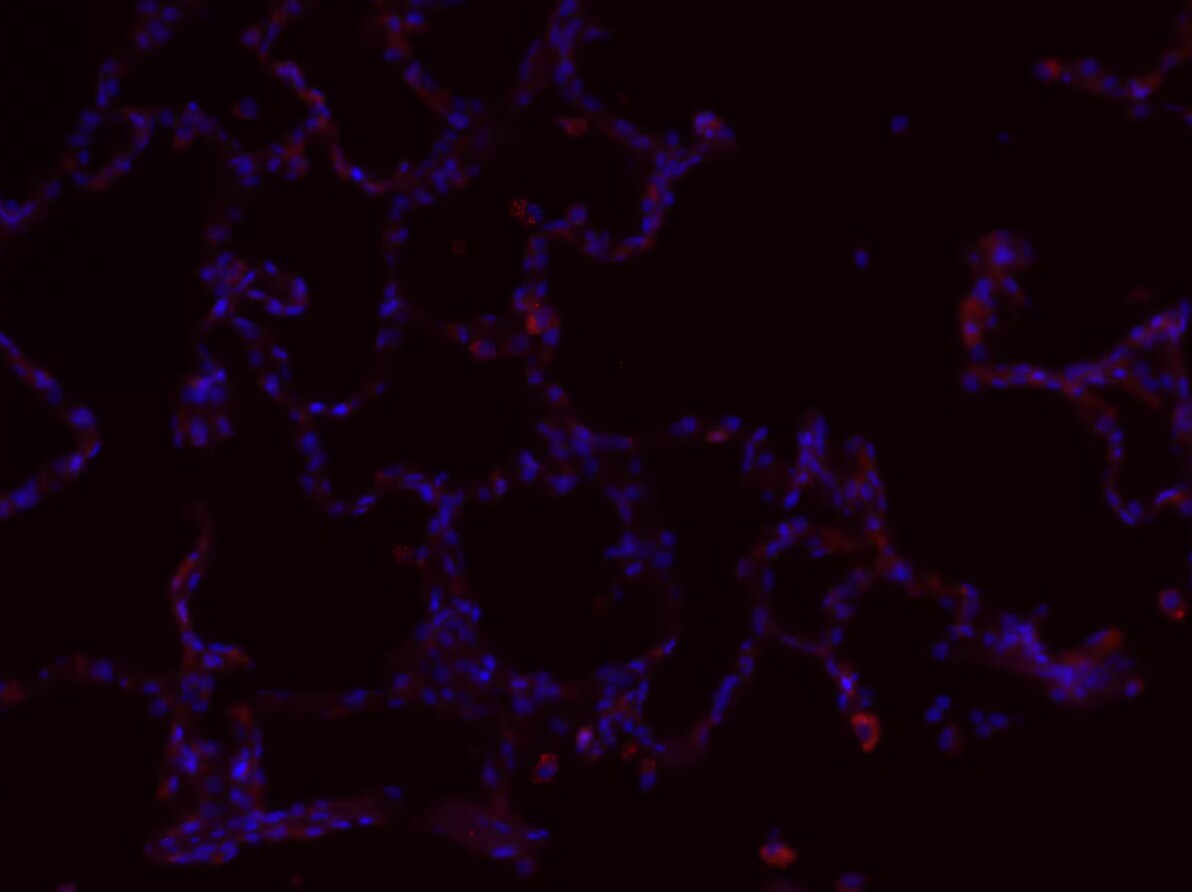
Immunohistochemistry: Mouse Monoclonal EpCAM/TROP1 Antibody (EGP40/1110) - (ECD) [NBP2-44635]
Immunohistochemistry: Mouse Monoclonal EpCAM/TROP1 Antibody (EGP40/1110) - (ECD) [NBP2-44635] - EpCAM/TROP1 signal in lung alveoli. Analysis in postfixed macaque lung tissue at a 1:100 concentration. Image from a verified customer review.Applications for EpCAM/TROP1 Antibody (EGP40/1110) - (ECD)
Application
Recommended Usage
Immunohistochemistry-Paraffin
1-2 ug/ml
Western Blot
0.5 - 1.0 ug/ml
Application Notes
Use in Immunocytochemistry/Immunofluorescence reported in scientific literature (PMID: 33000764).
Immunohistochemistry (Formalin-fixed): 1-2ug/ml for 30 min at RT. Staining of formalin-fixed tissues requires heating tissue sections in 10mM Tris with 1mM EDTA, pH 9.0, for 45 min at 95C followed by cooling at RT for 20 minutes.
Optimal dilution for a specific application should be determined.
Immunohistochemistry (Formalin-fixed): 1-2ug/ml for 30 min at RT. Staining of formalin-fixed tissues requires heating tissue sections in 10mM Tris with 1mM EDTA, pH 9.0, for 45 min at 95C followed by cooling at RT for 20 minutes.
Optimal dilution for a specific application should be determined.
Reviewed Applications
Read 1 review rated 3 using NBP2-44635 in the following applications:
Formulation, Preparation, and Storage
Purification
Protein A or G purified
Formulation
10 mM PBS with 0.05% BSA
Preservative
0.05% Sodium Azide
Concentration
0.2 mg/ml
Shipping
The product is shipped with polar packs. Upon receipt, store it immediately at the temperature recommended below.
Stability & Storage
Store at 4C.
Background: EpCAM/TROP1
EpCAM functions as an intracellular signaling molecule and contributes to regulation of epithelial-to-mesenchymal (EMT) transition (4,5). EpCAM is cleaved during the process of regulated intramembrane proteolysis (RIP) (4,5). Initial cleavage occurs at the membrane via a disintegrin and metalloprotease 17 (ADAM17) which releases EpCAM's extracellular domain (EpEx) (4,5). A secondary cleavage is mediated by presenilin 2 (PSEN2) which releases EpCAM's cytoplasmic trail (EpICD) (4,5). EpICD translocates to the nucleus where it associates with beta-catenin, FHL-2, and LEF-1 and induces transcription of genes related to EMT and tumor growth (4,5). EpCAM has also been shown to regulate structure and functionality of the apical junction complex of cells through direct interaction with claudin-7 and association with E-cadherin (2,5). Loss of EpCAM disrupts adherins junction and tight junction structure and function (2).
References
1. Mohtar MA, Syafruddin SE, Nasir SN, Low TY. Revisiting the Roles of Pro-Metastatic EpCAM in Cancer. Biomolecules. 2020; 10(2):255. https://doi.org/10.3390/biom10020255
2. Huang L, Yang Y, Yang F, et al. Functions of EpCAM in physiological processes and diseases (Review). Int J Mol Med. 2018; 42(4):1771-1785. https://doi.org/10.3892/ijmm.2018.3764
3. Brown TC, Sankpal NV, Gillanders WE. Functional Implications of the Dynamic Regulation of EpCAM during Epithelial-to-Mesenchymal Transition. Biomolecules. 2021; 11(7):956. https://doi.org/10.3390/biom11070956
4. Uniprot (P16422)
5. Schnell U, Cirulli V, Giepmans BN. EpCAM: structure and function in health and disease. Biochim Biophys Acta. 2013; 1828(8):1989-2001. https://doi.org/10.1016/j.bbamem.2013.04.018
Long Name
Epithelial Cell Adhesion Molecule
Alternate Names
17-1A, CD326, GA733-2, gp40, KS1/4, M4S1, TACSTD1, TROP1
Gene Symbol
EPCAM
UniProt
Additional EpCAM/TROP1 Products
Product Documents for EpCAM/TROP1 Antibody (EGP40/1110) - (ECD)
Certificate of Analysis
To download a Certificate of Analysis, please enter a lot or batch number in the search box below.
Product Specific Notices for EpCAM/TROP1 Antibody (EGP40/1110) - (ECD)
This product is for research use only and is not approved for use in humans or in clinical diagnosis. Primary Antibodies are guaranteed for 1 year from date of receipt.
Citations for EpCAM/TROP1 Antibody (EGP40/1110) - (ECD)
 Powered by Bioz
Customer Reviews for EpCAM/TROP1 Antibody (EGP40/1110) - (ECD) (1)
3 out of 5
1 Customer Rating
Have you used EpCAM/TROP1 Antibody (EGP40/1110) - (ECD)?
Submit a review and receive an Amazon gift card!
$25/€18/£15/$25CAN/¥2500 for a review with an image
$10/€7/£6/$10CAN/¥1110 for a review without an image
Submit a review
Customer Images
Showing
1
-
1 of
1 review
Showing All
Filter By:
-
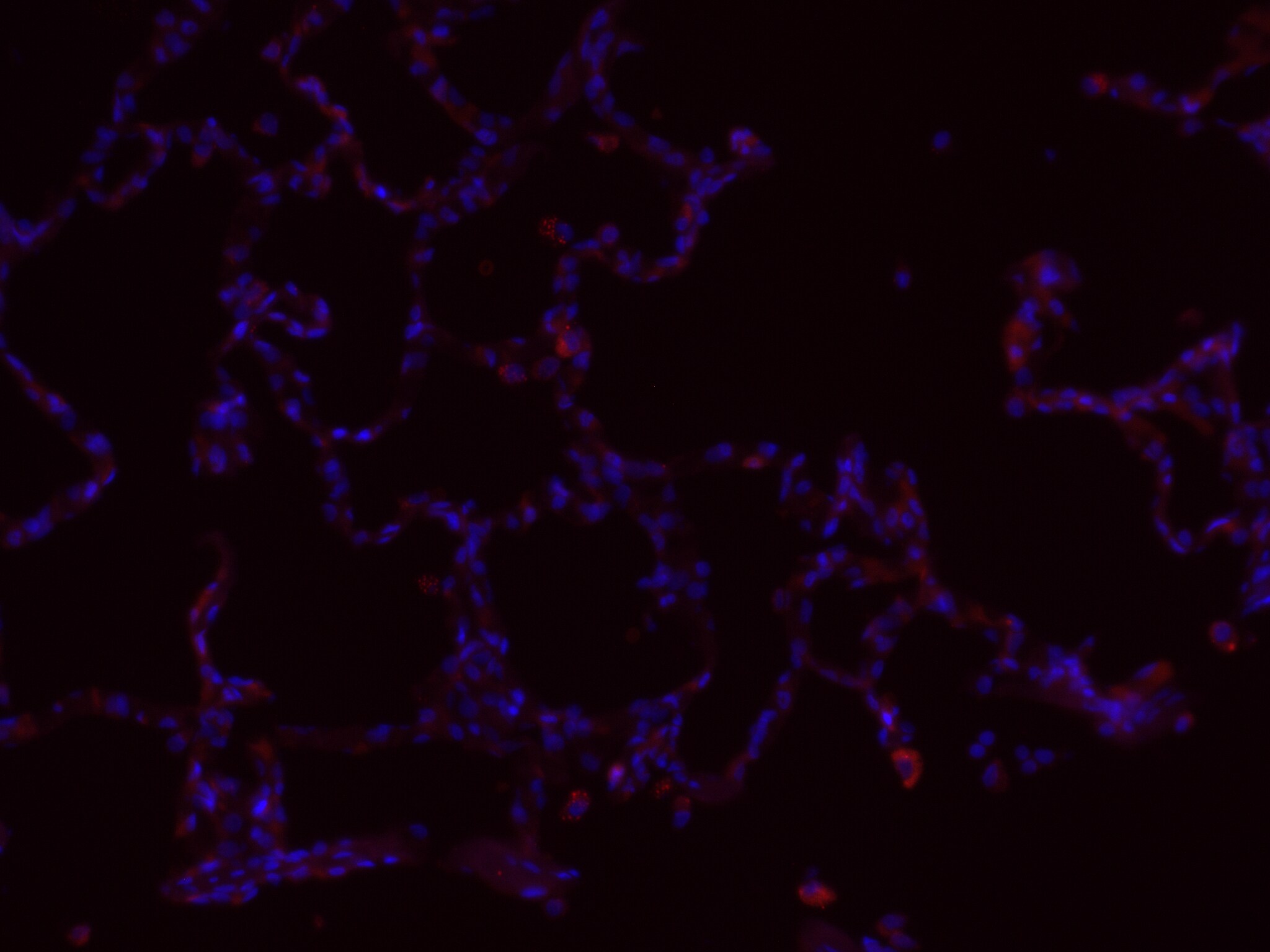
Application: ImmunofluorescenceSample Tested: Lung tissueSpecies: Rhesus MacaqueVerified Customer | Posted 11/11/2024Signal in lung alveoliUsed in postfixed macaque lung tissue at a 1:100 concentration
 Bio-Techne ResponseThis review reflects a new species or application tested on a primary antibody.
There are no reviews that match your criteria.
Protocols
Find general support by application which include: protocols, troubleshooting, illustrated assays, videos and webinars.
- Antigen Retrieval Protocol (PIER)
- Antigen Retrieval for Frozen Sections Protocol
- Appropriate Fixation of IHC/ICC Samples
- Cellular Response to Hypoxia Protocols
- Chromogenic IHC Staining of Formalin-Fixed Paraffin-Embedded (FFPE) Tissue Protocol
- Chromogenic Immunohistochemistry Staining of Frozen Tissue
- ClariTSA™ Fluorophore Kits
- Detection & Visualization of Antibody Binding
- Fluorescent IHC Staining of Frozen Tissue Protocol
- Graphic Protocol for Heat-induced Epitope Retrieval
- Graphic Protocol for the Preparation and Fluorescent IHC Staining of Frozen Tissue Sections
- Graphic Protocol for the Preparation and Fluorescent IHC Staining of Paraffin-embedded Tissue Sections
- Graphic Protocol for the Preparation of Gelatin-coated Slides for Histological Tissue Sections
- ICC Cell Smear Protocol for Suspension Cells
- ICC Immunocytochemistry Protocol Videos
- ICC for Adherent Cells
- IHC Sample Preparation (Frozen sections vs Paraffin)
- Immunocytochemistry (ICC) Protocol
- Immunocytochemistry Troubleshooting
- Immunofluorescence of Organoids Embedded in Cultrex Basement Membrane Extract
- Immunofluorescent IHC Staining of Formalin-Fixed Paraffin-Embedded (FFPE) Tissue Protocol
- Immunohistochemistry (IHC) and Immunocytochemistry (ICC) Protocols
- Immunohistochemistry Frozen Troubleshooting
- Immunohistochemistry Paraffin Troubleshooting
- Preparing Samples for IHC/ICC Experiments
- Preventing Non-Specific Staining (Non-Specific Binding)
- Primary Antibody Selection & Optimization
- Protocol for Heat-Induced Epitope Retrieval (HIER)
- Protocol for Making a 4% Formaldehyde Solution in PBS
- Protocol for VisUCyte™ HRP Polymer Detection Reagent
- Protocol for the Fluorescent ICC Staining of Cell Smears - Graphic
- Protocol for the Fluorescent ICC Staining of Cultured Cells on Coverslips - Graphic
- Protocol for the Preparation & Fixation of Cells on Coverslips
- Protocol for the Preparation and Chromogenic IHC Staining of Frozen Tissue Sections
- Protocol for the Preparation and Chromogenic IHC Staining of Frozen Tissue Sections - Graphic
- Protocol for the Preparation and Chromogenic IHC Staining of Paraffin-embedded Tissue Sections
- Protocol for the Preparation and Chromogenic IHC Staining of Paraffin-embedded Tissue Sections - Graphic
- Protocol for the Preparation and Fluorescent ICC Staining of Cells on Coverslips
- Protocol for the Preparation and Fluorescent ICC Staining of Non-adherent Cells
- Protocol for the Preparation and Fluorescent ICC Staining of Stem Cells on Coverslips
- Protocol for the Preparation and Fluorescent IHC Staining of Frozen Tissue Sections
- Protocol for the Preparation and Fluorescent IHC Staining of Paraffin-embedded Tissue Sections
- Protocol for the Preparation of Gelatin-coated Slides for Histological Tissue Sections
- Protocol for the Preparation of a Cell Smear for Non-adherent Cell ICC - Graphic
- R&D Systems Quality Control Western Blot Protocol
- TUNEL and Active Caspase-3 Detection by IHC/ICC Protocol
- The Importance of IHC/ICC Controls
- Troubleshooting Guide: Immunohistochemistry
- Troubleshooting Guide: Western Blot Figures
- Western Blot Conditions
- Western Blot Protocol
- Western Blot Protocol for Cell Lysates
- Western Blot Troubleshooting
- Western Blot Troubleshooting Guide
- View all Protocols, Troubleshooting, Illustrated assays and Webinars
FAQs for EpCAM/TROP1 Antibody (EGP40/1110) - (ECD)
Showing
1
-
1 of
1 FAQ
Showing All
-
Q: I'm looking for EpCAM antibody for rat. Do you have any antibody which can use FACS?
A:
We unfortunately do not have any EpCAM antibodies validated in FACS for detection of the rat protein. I am sorry for any inconvenience. I do have three products to EpCAM that can detect the rat protein. These products have been validated to detect the native rat protein, so they may work for FACS however they have not yet been tested in that particular application. If you would like to try them in your experiment you would qualify for our Innovator's Reward Program. This program was designed to help scientists with the cost of their antibodies in return for valuable information. If you decide to test an antibody in a previously untested species or application we will issue you a credit for the purchase price of the antibody in exchange for a review of your experiment using our product.