
Histone H2AX [p Ser139] Antibody - BSA Free
Novus Biologicals | Catalog # NB100-384

Scientific images may be resized, cropped, or adjusted for brightness or contrast for presentation purposes. These updates are limited to presentation and do not affect the underlying scientific interpretation of the data. Where available, additional source data may be provided upon request.
Key Product Details
Validated by
Knockout/Knockdown, Biological Validation
Species Reactivity
Validated:
Human, Mouse, Rat, Canine
Cited:
Human, Mouse, Rat, Canine, Insect - Drosophila melanogaster
Applications
Validated:
Knockout Validated, Multiplex Immunofluorescence, Immunohistochemistry, Immunohistochemistry-Paraffin, Immunohistochemistry-Frozen, Western Blot, Flow Cytometry, Immunocytochemistry/ Immunofluorescence, Simple Western, Chromatin Immunoprecipitation (ChIP), COMET
Cited:
Immunohistochemistry, Immunohistochemistry-Paraffin, Immunohistochemistry-Frozen, Western Blot, Flow Cytometry, Immunocytochemistry/ Immunofluorescence, Simple Western, Chromatin Immunoprecipitation (ChIP), Chemotaxis, IF/IHC
Label
Unconjugated
Antibody Source
Polyclonal Rabbit IgG
Format
BSA Free
Loading...
Product Specifications
Immunogen
This Histone H2AX [p Ser139] Antibody was developed against to a region surrounding phosphorylated serine 139 of human histone H2AX [Swiss-Prot entry P16104] (GeneID 3014).
Reactivity Notes
Rat reactivity reported in scientific literature (PMID: 27102221), Canine reactivity reported in scientific literature (PMID: 23365434).
Modification
p Ser139
Localization
Nucleous, chromosome.
Marker
DNA Double-strand break marker
Specificity
The epitope maps to a region surrounding phosphorylated serine 139 of human histone H2AX.
Clonality
Polyclonal
Host
Rabbit
Isotype
IgG
Theoretical MW
15 kDa.
Disclaimer note: The observed molecular weight of the protein may vary from the listed predicted molecular weight due to post translational modifications, post translation cleavages, relative charges, and other experimental factors.
Disclaimer note: The observed molecular weight of the protein may vary from the listed predicted molecular weight due to post translational modifications, post translation cleavages, relative charges, and other experimental factors.
Scientific Data Images for Histone H2AX [p Ser139] Antibody - BSA Free
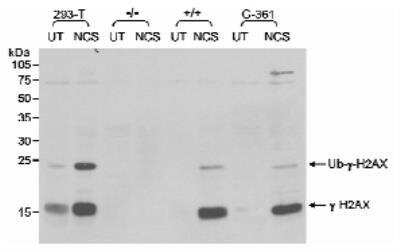
Knockout Validation of Histone H2AX Antibody in Human and Mouse Cells in Western Blot
Detection of Human and Mouse Histone H2AX [p Ser139] by Western Blot. Samples: Nuclear extract (50 ug) from human HEK293, human melanoma (G361), mouse wildtype embryonic fibroblasts (+/+) or mouse H2AX knockout embryonic fibroblasts (-/-). Antibody: Affinity purified rabbit Histone H2AX [p Ser139] antibody NB100-384 used at 0.1 ug/ml. Detection: Chemiluminescence with 30 second exposure. (NCS, neocarzinostatin - 200 ng/ml, 30 min). Bands appear at an observed molecular weight of ~15 kDa.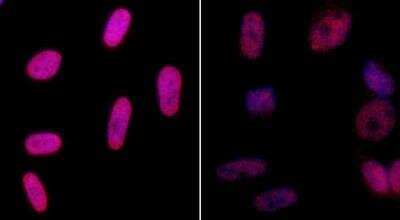
Immunocytochemistry/Immunofluorescence Staining of Histone H2AX in Treated and Untreated HeLa Cells
Samples: Neocarzinostatin treated asynchronous HeLa cells (left) and untreated asynchronous HeLa cells (right). Antibody: Affinity purified rabbit Histone H2AX [p Ser139] used at a dilution of 1:5,000 (0.2ug/ml). Detection: Red fluorescent Anti-rabbit IgG-DyLight 594 used at a dilution of 1:100.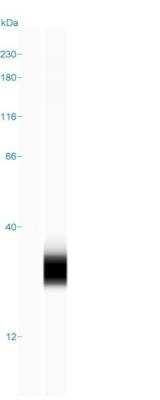
Simple Western Analysis of Histone H2AX in Jurkat Cell Lysate
Simple Western lane view shows a specific band for Histone H2AX [p Ser139] in 0.2 mg/ml of Jurkat lysate(s). This experiment was performed under reducing conditions using the 12 - 230 kDa separation system.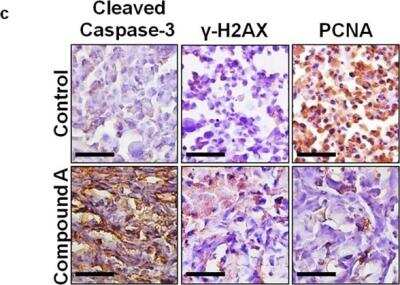
Immunohistochemical Staining of Histone H2AX in Human Kidney Tissue
gamma-H2AX-[p-Ser139]-Antibody-Immunocytochemistry-Immunofluorescence-NB100-384-img0022.jpg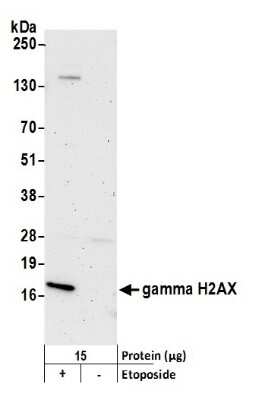
Western Blot Detection of Histone H2AX in EPE Treated HeLa Cells
Samples: Nuclear extract from HeLa cells treated with 100 uM EPE for 4 hours (+) or mock treated (-). Antibody: Affinity purified rabbit Histone H2AX [p Ser139] antibody used at 0.1 ug/ml. Detection: Chemiluminescence with an exposure time of 3 minutes. Band appears at an observed molecular weight of ~17 kDa.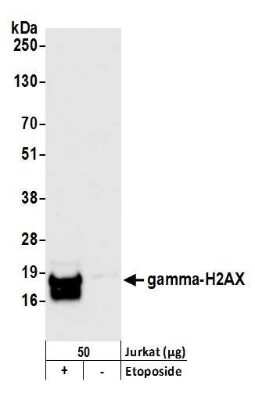
Western Blot Detection of Histone H2AX in EPE Treated Jurkat Cells
Detection of human Histone H2AX [p Ser139] by western blot. Samples: Whole cell lysate (50 ug) from Jurkat cells treated with 100 uM EPE for 4 hours (+) or mock treated (-). Antibody: Affinity purified rabbit Histone H2AX [p Ser139] antibody NB100-384 used for WB at 0.1 ug/ml. Detection: Chemiluminescence with an exposure time of 3 seconds. Band appears at an observed molecular weight of ~18 kDa.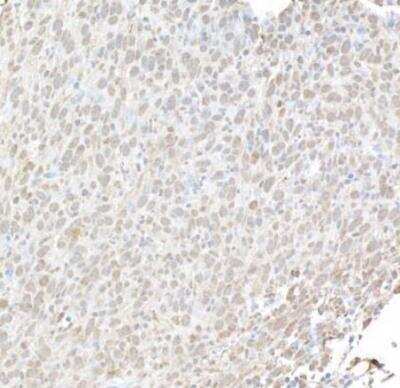
Immunohistochemical Analysis of Histone H2AX in Paraffin Embedded Mouse CT26 Colon Carcinoma
FFPE section of mouse CT26 colon carcinoma. Antibody: Affinity purified rabbi Histone H2AX [p Ser139] antibody used at a dilution of 1:1,000 (1 ug/ml). Detection: DAB.
Flow Cytometry of EPE Treated Jurkat Cells Stained with Histone H2AX Antibody
Analysis of Histone H2AX [p Ser139] in EPE Treated Jurkat Cells. Cells were treated for 3 hrs in 5ug/ml etoposide, fixed in 1.5% PFA, and permeabilized in 90% Methanol. 1 million cells were stained with 0.5 ug anti-KLH or anti-H2AX NB100-384 and secondary FITC-conjugated goat anti-rabbit (in a 150ul reaction). Black- etosposide treated, anti-KLH; Red- untreated, anti-Histone H2AX [p Ser139]; Blue- etoposide treated, anti-Histone H2AX [p Ser139].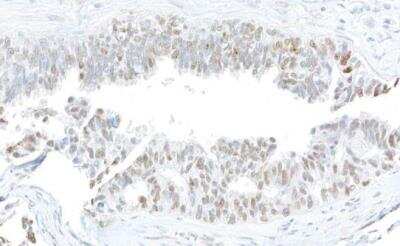
Immunohistochemical Detection of Histone H2AX in Paraffin Embedded Human Ovarian Carcinoma
FFPE section of human ovarian carcinoma. Antibody: Affinity purified rabbit Histone H2AX [p Ser139] antibody used at a dilution of 1:5,000 (0.2 ug/ml). Detection: DAB.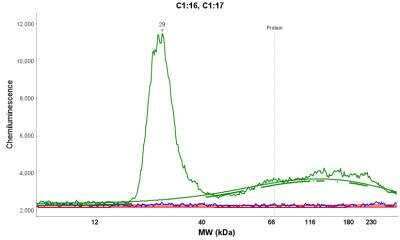
Simple Western Analysis of Histone H2AX in Jurkat Cell Lysate
Electropherogram image(s) of corresponding Simple Western lane view. Histone H2AX [p Ser139] antibody was used at 5 ug/ml dilution on Jurkat lysate(s).![Histone H2AX [p Ser139] Antibody](https://resources.rndsystems.com/images/products/antibody/nb100-384_rabbit-polyclonal-histone-h2ax-p-ser139-antibody-immunohistochemistry-16102023102936..png "Immunohistochemistry: Rabbit Polyclonal Histone H2AX [p Ser139] Antibody -")
Immunohistochemistry: Rabbit Polyclonal Histone H2AX [p Ser139] Antibody -
Immunohistochemistry: Rabbit Polyclonal Histone H2AX [p Ser139] Antibody - Histone H2AX Antibody on mouse cancer tissue. H2AX (Gray) and H2BGFP(Green). Primary antibody dilution: 1:1000 in a 10um slice.![Histone H2AX [p Ser139] Antibody](https://resources.rndsystems.com/images/products/nb100-384_rabbit-polyclonal-histone-h2ax-p-ser139-antibody-271220231285618.jpg "Western Blot: Histone H2AX [p Ser139] Antibody [NB100-384] -")
Western Blot: Histone H2AX [p Ser139] Antibody [NB100-384] -
mTORC1/2 activity prevents Cisplatin-induced cell death in MCF-10A cells. (A) Western blot displaying effects on mTOR signaling during a dose escalation of PP242 treatment in MCF-10A cells; (B) Western blot displaying effects of mTOR signaling on a dose escalation of cisplatin treatment in MCF-10A cells; (C) Western blot displaying effects on mTOR signaling and cell death during non-treated, Cisplatin, PP242, and Cisplatin + PP242-treated MCF-10A cells.![Histone H2AX [p Ser139] Antibody](https://resources.rndsystems.com/images/products/nb100-384_rabbit-polyclonal-histone-h2ax-p-ser139-antibody-310202415371991.jpg "Western Blot: Histone H2AX [p Ser139] Antibody [NB100-384] -")
Western Blot: Histone H2AX [p Ser139] Antibody [NB100-384] -
Western Blot: Histone H2AX [p Ser139] Antibody [NB100-384] - ATM & NF-kappa B activation are downregulated in Ercc1-/ delta mice heterozygous for Atm. (A) Livers were collected at 12 weeks of age from WT, Ercc1-/ delta & Ercc1-/ delta Atm+/- mic (n=3 per genotype) & lysates analyzed by western blot for activation of ATM & its downstream effectors. (B) Same liver lysates were used to measure phosphorylation of p65 & I kappa B alpha. (C) Western blot analysis of livers from 16-week-old WT, Ercc1-/ delta & Ercc1-/ delta Atm+/-mice (n=3 per genotype) probed for activation of ATM. GAPDH was used as a loading control. (D) Same liver lysates used to measure activation of NF-kappa B. (E) Fourteen-week-old livers from Ercc1-/ delta & Ercc1-/ delta p65+/- mice (n=3 per genotype) were analyzed by western blot for activation of ATM (F) & NF-kappa B. Image collected & cropped by CiteAb from the following publication (https://pubmed.ncbi.nlm.nih.gov/32201398), licensed under a CC-BY license. Not internally tested by Novus Biologicals.![Histone H2AX [p Ser139] Antibody](https://resources.rndsystems.com/images/products/nb100-384_rabbit-polyclonal-histone-h2ax-p-ser139-antibody-3102024153972.jpg "Immunocytochemistry/ Immunofluorescence: Histone H2AX [p Ser139] Antibody [NB100-384] -")
Immunocytochemistry/ Immunofluorescence: Histone H2AX [p Ser139] Antibody [NB100-384] -
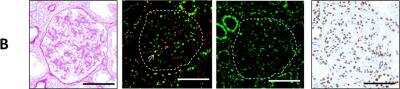
Immunocytochemistry/ Immunofluorescence: Histone H2AX [p Ser139] Antibody [NB100-384] - Immunostaining of gamma H2AX, WT1 & 5mC in patients with IgA nephropathy & controls. Examples of PAS staining & immunostaining with gamma H2AX (green) & WT1 (red), pATM & 5mC in glomeruli of IgA nephropathy & controls. (A) A control kidney sample of 44-year-old female, (B) 65-year-old male of IgA nephropathy without podocytopathic features & (C) 55-year-old male of IgA nephropathy with podocytopathic features. Arrows indicate gamma H2AX & WT1 double-positive cells. Scale bars: 50 μm. Image collected & cropped by CiteAb from the following publication (https://pubmed.ncbi.nlm.nih.gov/31937846), licensed under a CC-BY license. Not internally tested by Novus Biologicals.![Histone H2AX [p Ser139] Antibody](https://resources.rndsystems.com/images/products/nb100-384_rabbit-polyclonal-histone-h2ax-p-ser139-antibody-310202415384166.jpg "Immunocytochemistry/ Immunofluorescence: Histone H2AX [p Ser139] Antibody [NB100-384] -")
Immunocytochemistry/ Immunofluorescence: Histone H2AX [p Ser139] Antibody [NB100-384] -
Immunocytochemistry/ Immunofluorescence: Histone H2AX [p Ser139] Antibody [NB100-384] - UHRF1 deficiency resulted in impaired meiotic recombination & defective pachynema.a Double immunofluorescence of SYCP3 (green) & DMC1 (red) in testicular spread preparations. b, c The number of DMC1 foci in zygotene stage (b) & pachytene stage (c). d Immunostaining for SYCP3 (red) & gamma H2AX (green). e The percentage of abnormal gamma H2AX foci in the pachytene stage. f Immunostaining for SYCP3 (red) & MLH1 (green). g The number of MLH1 foci in pachynema. h Immunostaining for SYCP3 (red) & H1t (green). i The percentage of spermatocytes with H1T staining. ***p ≤ 0.001; *p ≤ 0.05. Scale bar, 5 μm in a, d, f, h. Image collected & cropped by CiteAb from the following publication (https://pubmed.ncbi.nlm.nih.gov/32081844), licensed under a CC-BY license. Not internally tested by Novus Biologicals.![Histone H2AX [p Ser139] Antibody](https://resources.rndsystems.com/images/products/nb100-384_rabbit-polyclonal-histone-h2ax-p-ser139-antibody-310202415304284.jpg "Western Blot: Histone H2AX [p Ser139] Antibody [NB100-384] -")
Western Blot: Histone H2AX [p Ser139] Antibody [NB100-384] -
Western Blot: Histone H2AX [p Ser139] Antibody [NB100-384] - mTORC1/2 activity prevents Cisplatin-induced cell death in MCF-10A cells. (A) Western blot displaying effects on mTOR signaling during a dose escalation of PP242 treatment in MCF-10A cells; (B) Western blot displaying effects of mTOR signaling on a dose escalation of cisplatin treatment in MCF-10A cells; (C) Western blot displaying effects on mTOR signaling & cell death during non-treated, Cisplatin, PP242, & Cisplatin + PP242-treated MCF-10A cells. Image collected & cropped by CiteAb from the following publication (https://pubmed.ncbi.nlm.nih.gov/31771139), licensed under a CC-BY license. Not internally tested by Novus Biologicals.![Histone H2AX [p Ser139] Antibody](https://resources.rndsystems.com/images/products/nb100-384_rabbit-polyclonal-histone-h2ax-p-ser139-antibody-310202415371942.jpg "Immunocytochemistry/ Immunofluorescence: Histone H2AX [p Ser139] Antibody [NB100-384] -")
Immunocytochemistry/ Immunofluorescence: Histone H2AX [p Ser139] Antibody [NB100-384] -
Immunocytochemistry/ Immunofluorescence: Histone H2AX [p Ser139] Antibody [NB100-384] - Immunostaining of gamma H2AX, WT1 & 5mC in patients with IgA nephropathy & controls. Examples of PAS staining & immunostaining with gamma H2AX (green) & WT1 (red), pATM & 5mC in glomeruli of IgA nephropathy & controls. (A) A control kidney sample of 44-year-old female, (B) 65-year-old male of IgA nephropathy without podocytopathic features & (C) 55-year-old male of IgA nephropathy with podocytopathic features. Arrows indicate gamma H2AX & WT1 double-positive cells. Scale bars: 50 μm. Image collected & cropped by CiteAb from the following publication (https://pubmed.ncbi.nlm.nih.gov/31937846), licensed under a CC-BY license. Not internally tested by Novus Biologicals.![Histone H2AX [p Ser139] Antibody](https://resources.rndsystems.com/images/products/nb100-384_rabbit-polyclonal-histone-h2ax-p-ser139-antibody-31020241534358.jpg "Immunocytochemistry/ Immunofluorescence: Histone H2AX [p Ser139] Antibody [NB100-384] -")
Immunocytochemistry/ Immunofluorescence: Histone H2AX [p Ser139] Antibody [NB100-384] -
Immunocytochemistry/ Immunofluorescence: Histone H2AX [p Ser139] Antibody [NB100-384] - Immunostaining of gamma H2AX, WT1 & 5mC in patients with IgA nephropathy & controls. Examples of PAS staining & immunostaining with gamma H2AX (green) & WT1 (red), pATM & 5mC in glomeruli of IgA nephropathy & controls. (A) A control kidney sample of 44-year-old female, (B) 65-year-old male of IgA nephropathy without podocytopathic features & (C) 55-year-old male of IgA nephropathy with podocytopathic features. Arrows indicate gamma H2AX & WT1 double-positive cells. Scale bars: 50 μm. Image collected & cropped by CiteAb from the following publication (https://pubmed.ncbi.nlm.nih.gov/31937846), licensed under a CC-BY license. Not internally tested by Novus Biologicals.![Histone H2AX [p Ser139] Antibody](https://resources.rndsystems.com/images/products/nb100-384_rabbit-polyclonal-histone-h2ax-p-ser139-antibody-3102024153565.jpg "Western Blot: Histone H2AX [p Ser139] Antibody [NB100-384] -")
Western Blot: Histone H2AX [p Ser139] Antibody [NB100-384] -
Western Blot: Histone H2AX [p Ser139] Antibody [NB100-384] - ATM & NF-kappa B activation are downregulated in Ercc1-/ delta mice heterozygous for Atm. (A) Livers were collected at 12 weeks of age from WT, Ercc1-/ delta & Ercc1-/ delta Atm+/- mic (n=3 per genotype) & lysates analyzed by western blot for activation of ATM & its downstream effectors. (B) Same liver lysates were used to measure phosphorylation of p65 & I kappa B alpha. (C) Western blot analysis of livers from 16-week-old WT, Ercc1-/ delta & Ercc1-/ delta Atm+/-mice (n=3 per genotype) probed for activation of ATM. GAPDH was used as a loading control. (D) Same liver lysates used to measure activation of NF-kappa B. (E) Fourteen-week-old livers from Ercc1-/ delta & Ercc1-/ delta p65+/- mice (n=3 per genotype) were analyzed by western blot for activation of ATM (F) & NF-kappa B. Image collected & cropped by CiteAb from the following publication (https://pubmed.ncbi.nlm.nih.gov/32201398), licensed under a CC-BY license. Not internally tested by Novus Biologicals.![Histone H2AX [p Ser139] Antibody](https://resources.rndsystems.com/images/products/nb100-384_rabbit-polyclonal-histone-h2ax-p-ser139-antibody-310202415525231.jpg "Western Blot: Histone H2AX [p Ser139] Antibody [NB100-384] -")
Western Blot: Histone H2AX [p Ser139] Antibody [NB100-384] -
Western Blot: Histone H2AX [p Ser139] Antibody [NB100-384] - Pharmacologic inhibition of ATM rescues oxidative stress-induced senescence by suppressing ATM- & NEMO-mediated NF-kappa B activation. (A) Representative images of primary WT & Ercc1-/- MEFs were induced to undergo senescence by serial passaging at 20% oxygen. At passage 5, MEFs were grown in the presence or absence of KU-55933 (10 μM) for 72 hrs. Senescence was determined by SA-beta gal staining. Images were obtained at the magnification of 10x. (B) Quantitation of the percent SA-beta gal positive cells. Graph represents the mean +/- s.e.m. of three independent experiments. Student’s t-test, ***p <0.001, ****p <0.0001. (C) Passage 5 Ercc1-/- MEFs treated with vehicle or KU-55933 (10 μM) for 72 hours were collected & levels of p21 & p16INK4a were determined by western blotting. (D) Passage 5 Ercc1-/- MEFs were treated with KU-55933 (10 μM) for 72 hours & whole cell lysate (CL) & nuclear extracts (NE) were analyzed by immunoblotting for expression of proteins involved in the DNA damage response. (E) Whole cell lysate (CL) & nuclear extract (NE) were extracted from Ercc1-/- MEFs treated with 10 μM of KU-55933 for analysis of nuclear NEMO & p65. GAPDH was used as a loading control of total proteins & LaminA/C as a loading control of nuclear protein. (F) Passage 5 WT & Ercc1-/- MEFs transfected with a NF-kappa B-luciferase reporter construct were cultured in the presence or absence of KU-55933 (10 μM) & were collected for luciferase assays after 72 hours. (G) qRT-PCR analysis of mRNA expression in passage 5 WT & Ercc1-/- MEFs treated with or without of KU-55933 (10 μM) for 72 hrs. P values were determined using a Student’s t-test. *p<0.05, **p<0.01, ***p <0.001. Image collected & cropped by CiteAb from the following publication (https://pubmed.ncbi.nlm.nih.gov/32201398), licensed under a CC-BY license. Not internally tested by Novus Biologicals.![Histone H2AX [p Ser139] Antibody](https://resources.rndsystems.com/images/products/nb100-384_rabbit-polyclonal-histone-h2ax-p-ser139-antibody-310202416572.jpg "Immunohistochemistry: Histone H2AX [p Ser139] Antibody [NB100-384] -")
Immunohistochemistry: Histone H2AX [p Ser139] Antibody [NB100-384] -
Immunohistochemistry: Histone H2AX [p Ser139] Antibody [NB100-384] - Orally administered lemongrass & white tea extract reduce tumor size in lymphoma xenograft model in immunocompromised miceImmunocompromised mice were subcutaneously injected with cancerous cells & tumors were allowed to establish. Treatments occurred every other day & the studied compound or the equivalent vehicle control administered orally for three weeks. (A, B) The tumors were photographed before & after extraction from the animals. (C) Tumor volume & mass were measured two times per week. (D) Immunohistochemistry analysis of sectioned tumor tissues from the lymphoma study. Each section was subjected to the specified antibody followed by a biotinylated secondary antibody. Detection was done using a DAB Peroxidase HRP Substrate Kit (brown) followed by Hematoxylin counterstaining (purple). Images were obtained using inverted bright field microscopy. Sectioning results are representative of three individual tumors. Scale bar is 50 microns. Statistical analysis using One-Way ANOVA. *p < 0.05 vs tumor volume of the control. Image collected & cropped by CiteAb from the following publication (https://www.oncotarget.com/lookup/doi/10.18632/oncotarget.22502), licensed under a CC-BY license. Not internally tested by Novus Biologicals.![Histone H2AX [p Ser139] Antibody](https://resources.rndsystems.com/images/products/nb100-384_rabbit-polyclonal-histone-h2ax-p-ser139-antibody-310202415533820.jpg "Western Blot: Histone H2AX [p Ser139] Antibody [NB100-384] -")
Western Blot: Histone H2AX [p Ser139] Antibody [NB100-384] -
Western Blot: Histone H2AX [p Ser139] Antibody [NB100-384] - CPT induces transcription- & proteasome-dependent apoptosis in quiescent WI38 hTERT cells. (A & B) Serum-starved cells were treated with DMSO or FLV (1 μM) for 1 h before the addition of DMSO or CPT (25 μM) for 16 & 24 h. (A) Percentages of cells that remained attached to culture flasks (means ± SD of quadruplicates). (B) Cell survival was analyzed by a CellTiter-Blue assay (means ± SD of triplicates). (C–G) Western blot of the indicated proteins in serum-starved cells treated for 1 h with DMSO or with FLV (1 μM) (C), lactacystin (10 μM) (D), veliparib (5 μM) or olaparib (10 μM) (E), ATMi (10 μM) (F) or DNA-PKi (10 μM) (G) before the addition of DMSO (‘-’, 24 h in panels C & F) or CPT (25 μM) for the indicated times. Data shown are representatives from two to three experiments. PARPCL: cleaved PARP. H2AX & alpha Tubulin were the loading controls. Image collected & cropped by CiteAb from the following publication (https://pubmed.ncbi.nlm.nih.gov/26578593), licensed under a CC-BY license. Not internally tested by Novus Biologicals.![Histone H2AX [p Ser139] Antibody](https://resources.rndsystems.com/images/products/nb100-384_rabbit-polyclonal-histone-h2ax-p-ser139-antibody-310202415541922.jpg "Western Blot: Histone H2AX [p Ser139] Antibody [NB100-384] -")
Western Blot: Histone H2AX [p Ser139] Antibody [NB100-384] -
Western Blot: Histone H2AX [p Ser139] Antibody [NB100-384] - Inhibition of DNA-PK prevents monoubiquitination of H2AX & H2A in CPT-treated quiescent WI38 hTERT cells. (A–E) Serum-starved cells were treated with DMSO or DNA-PKi (10 μM) for 1 h before the addition of DMSO (untreated) or CPT (25 μM) for 1 h. (A) Western blot of gamma H2AX. +Ub1 indicates gamma H2AX monoubiquitinated. The top panel shows quantification of Ub1-gamma H2AX normalized to alpha Tubulin (means ± SEM, n = 4). **P < 0.01. (B & C) Cells were pre-extracted with CSK buffer before co-staining for Ub-H2A (red) & 53BP1 phosphorylated on S1778 (p53BP1) (green). (B) Representative pictures. Images were merged to determine colocalization (yellow). The large Ub-H2AX focus at the periphery of the nuclei of untreated & CPT-treated cells may marks the inactive X chromosome as reported (91). (C) Percentages of nuclei with at least 5 Ub-H2A foci (means ± SEM, n = 3, 100 nuclei were analyzed for each treatment in each experiment). ***P < 0.001. (D & E) Cells were co-stained for ubiquitinated proteins (FK2, red) & gamma H2AX (green). (D) Representative pictures. Images were merged to determine colocalization (yellow). (E) Number of FK2 foci per nucleus from one representative experiment (76–111 nuclei were analyzed for each treatment) out of three. ****P < 0.0001. In the microscopic images, nuclear contours, identified by DAPI staining (blue in the merge images at bottom), are indicated by dashed lines. Bars: 10 μm. Image collected & cropped by CiteAb from the following publication (https://pubmed.ncbi.nlm.nih.gov/26578593), licensed under a CC-BY license. Not internally tested by Novus Biologicals.![Histone H2AX [p Ser139] Antibody](https://resources.rndsystems.com/images/products/nb100-384_rabbit-polyclonal-histone-h2ax-p-ser139-antibody-310202415525243.jpg "Immunocytochemistry/ Immunofluorescence: Histone H2AX [p Ser139] Antibody [NB100-384] -")
Immunocytochemistry/ Immunofluorescence: Histone H2AX [p Ser139] Antibody [NB100-384] -
Immunocytochemistry/ Immunofluorescence: Histone H2AX [p Ser139] Antibody [NB100-384] - The production of DSBs depends on Top1 degradation in CPT-treated quiescent cells. (A–C) Serum-starved WI38 hTERT cells were co-transfected with siRNAs against cullin 3 & cullin 4B or against a control sequence & then treated with DMSO (−CPT) or 25 μM CPT (+CPT) for 1 h. (A & B) Western blotting of the indicated proteins. alpha Tubulin: loading control. (C) Number of gamma H2AX foci per nucleus from one representative experiment (246–348 nuclei were analyzed for each treatment) out of three. ***P < 0.001. (D & E) Serum-starved WI38 hTERT cells were treated with DMSO or MG132 (50 μM) for 1 h before exposure to 0.8 Gy IR. One hour post-irradiation, cells were co-stained for gamma H2AX (green) & 53BP1 (red). (D) Representative pictures. (E) Number of gamma H2AX foci per nucleus from one representative experiment (162–180 nuclei were analyzed for each treatment) out of three. Ns: not significant. (F & G) U2OS EV28 cells were treated with DMSO or MG132 (10 μM) for 1 h before the addition of ethanol (untreated) or 300 nM 4-hydroxitamoxifen (4OHT) for 4 h to express AsiSI in the nucleus (42). (F) Representative pictures of cells co-stained for gamma H2AX (green) & 53BP1 (red). (G) ChIP analysis using an anti-gamma H2AX antibody (black) or a non-immune antibody (IgG, gray). Enrichment was assessed by QPCR amplification using primers proximal to two AsiSI sites located inside two genes (Gene I: SFRS6, Gene II: CCD47) & primers distal to an AsiSI site (Control). Enrichment was normalized to the maximum recovery for each experiment (means ± SEM, n = 3). Ns: not significant; *P < 0.05. In the microscopic images, nuclear contours, identified by DAPI staining (not shown), are indicated by dashed lines. Bars: 10 μm. Image collected & cropped by CiteAb from the following publication (https://pubmed.ncbi.nlm.nih.gov/26578593), licensed under a CC-BY license. Not internally tested by Novus Biologicals.![Histone H2AX [p Ser139] Antibody](https://resources.rndsystems.com/images/products/nb100-384_rabbit-polyclonal-histone-h2ax-p-ser139-antibody-31020241682137.jpg "Immunocytochemistry/ Immunofluorescence: Histone H2AX [p Ser139] Antibody [NB100-384] -")
Immunocytochemistry/ Immunofluorescence: Histone H2AX [p Ser139] Antibody [NB100-384] -
Immunocytochemistry/ Immunofluorescence: Histone H2AX [p Ser139] Antibody [NB100-384] - Inhibition of DNA-PK prevents monoubiquitination of H2AX & H2A in CPT-treated quiescent WI38 hTERT cells. (A–E) Serum-starved cells were treated with DMSO or DNA-PKi (10 μM) for 1 h before the addition of DMSO (untreated) or CPT (25 μM) for 1 h. (A) Western blot of gamma H2AX. +Ub1 indicates gamma H2AX monoubiquitinated. The top panel shows quantification of Ub1-gamma H2AX normalized to alpha Tubulin (means ± SEM, n = 4). **P < 0.01. (B & C) Cells were pre-extracted with CSK buffer before co-staining for Ub-H2A (red) & 53BP1 phosphorylated on S1778 (p53BP1) (green). (B) Representative pictures. Images were merged to determine colocalization (yellow). The large Ub-H2AX focus at the periphery of the nuclei of untreated & CPT-treated cells may marks the inactive X chromosome as reported (91). (C) Percentages of nuclei with at least 5 Ub-H2A foci (means ± SEM, n = 3, 100 nuclei were analyzed for each treatment in each experiment). ***P < 0.001. (D & E) Cells were co-stained for ubiquitinated proteins (FK2, red) & gamma H2AX (green). (D) Representative pictures. Images were merged to determine colocalization (yellow). (E) Number of FK2 foci per nucleus from one representative experiment (76–111 nuclei were analyzed for each treatment) out of three. ****P < 0.0001. In the microscopic images, nuclear contours, identified by DAPI staining (blue in the merge images at bottom), are indicated by dashed lines. Bars: 10 μm. Image collected & cropped by CiteAb from the following publication (https://pubmed.ncbi.nlm.nih.gov/26578593), licensed under a CC-BY license. Not internally tested by Novus Biologicals.![Histone H2AX [p Ser139] Antibody](https://resources.rndsystems.com/images/products/nb100-384_rabbit-polyclonal-histone-h2ax-p-ser139-antibody-3102024165718.jpg "Western Blot: Histone H2AX [p Ser139] Antibody [NB100-384] -")
Western Blot: Histone H2AX [p Ser139] Antibody [NB100-384] -
Western Blot: Histone H2AX [p Ser139] Antibody [NB100-384] - DDR & NF-kappa B are activated concomitantly in senescent MEFs & aged tissues. (A) Immunoblot detection of p-p65 & total p65 in liver tissue from 16-week-old WT (n=3) & Ercc1-/ delta (n=3) mice. (B) Immunoblot detection of phosphorylation of ATM & downstream targets gamma H2AX & p21 in liver from 16-week-old WT & Ercc1-/ delta mice. (C) Immunoblot detection of phosphorylation of NF-kappa B & I kappa B alpha in liver lysates from 3, 12 & 24 month-old WT mice. n=3 mice per group. (D) Immunoblot detection of p-ATM, ATM & p21 in the same liver lysates. (E) Immunoblot detection of DDR effectors in nuclear extracts from passage 5 WT & Ercc1-/- MEFs, grown at 20% oxygen. (F) Level of NF-kappa B activation is higher in Ercc1-/- MEFs compared to WT MEFs at passage 5, as measured by Immunoblot detection of p-p65 & total p65 in WT & Ercc1-/- MEFs at passage 5 after culturing in 20% oxygen. (G) Representative images of immunofluorescent detection of p65 & NEMO in passage 4 WT & Ercc1-/- MEFs grown at 20% oxygen. Blue: DAPI staining; Green: p65 (top panel) or NEMO (bottom panel). Images were taken at the magnification of 60x. Image collected & cropped by CiteAb from the following publication (https://pubmed.ncbi.nlm.nih.gov/32201398), licensed under a CC-BY license. Not internally tested by Novus Biologicals.![Histone H2AX [p Ser139] Antibody](https://resources.rndsystems.com/images/products/nb100-384_rabbit-polyclonal-histone-h2ax-p-ser139-antibody-31020241682193.jpg "Western Blot: Histone H2AX [p Ser139] Antibody [NB100-384] -")
Western Blot: Histone H2AX [p Ser139] Antibody [NB100-384] -
Western Blot: Histone H2AX [p Ser139] Antibody [NB100-384] - DDR & NF-kappa B are activated concomitantly in senescent MEFs & aged tissues. (A) Immunoblot detection of p-p65 & total p65 in liver tissue from 16-week-old WT (n=3) & Ercc1-/ delta (n=3) mice. (B) Immunoblot detection of phosphorylation of ATM & downstream targets gamma H2AX & p21 in liver from 16-week-old WT & Ercc1-/ delta mice. (C) Immunoblot detection of phosphorylation of NF-kappa B & I kappa B alpha in liver lysates from 3, 12 & 24 month-old WT mice. n=3 mice per group. (D) Immunoblot detection of p-ATM, ATM & p21 in the same liver lysates. (E) Immunoblot detection of DDR effectors in nuclear extracts from passage 5 WT & Ercc1-/- MEFs, grown at 20% oxygen. (F) Level of NF-kappa B activation is higher in Ercc1-/- MEFs compared to WT MEFs at passage 5, as measured by Immunoblot detection of p-p65 & total p65 in WT & Ercc1-/- MEFs at passage 5 after culturing in 20% oxygen. (G) Representative images of immunofluorescent detection of p65 & NEMO in passage 4 WT & Ercc1-/- MEFs grown at 20% oxygen. Blue: DAPI staining; Green: p65 (top panel) or NEMO (bottom panel). Images were taken at the magnification of 60x. Image collected & cropped by CiteAb from the following publication (https://pubmed.ncbi.nlm.nih.gov/32201398), licensed under a CC-BY license. Not internally tested by Novus Biologicals.![Histone H2AX [p Ser139] Antibody](https://resources.rndsystems.com/images/products/nb100-384_rabbit-polyclonal-histone-h2ax-p-ser139-antibody-310202415541946.jpg "Western Blot: Histone H2AX [p Ser139] Antibody [NB100-384] -")
Western Blot: Histone H2AX [p Ser139] Antibody [NB100-384] -
Western Blot: Histone H2AX [p Ser139] Antibody [NB100-384] - Induction of ubiquitin/proteasome-dependent DSBs in CPT-treated quiescent WI38 hTERT cells. (A–F) Serum-starved cells were treated with DMSO (1 h) or with MG132 (50 μM, 1 h), lactacystin (10 μM, 1 h), bortezomib (1 μM, 4 h), G5 (1.5 μM, 0.5 h) or Pyr-41 (9 μM, 0.5 h) before the addition of DMSO (untreated) or 25 μM CPT for 1 h & then co-stained for gamma H2AX (green) & 53BP1 (red) or analyzed by Western blot. ‘-’ in panels C & F means cells treated with DMSO. (A & D) Representative pictures. Nuclear contours, identified by DAPI staining (not shown), are indicated by dashed lines. Bars: 10 μm. (B & E) Number of gamma H2AX foci per nucleus from two independent experiments (147–153 nuclei were analyzed for each treatment). ****P < 0.0001. (C & F) Western blot of gamma H2AX. alpha Tubulin: loading control. Dashed lines indicate that intervening wells have been spliced out. The top panels show quantification of gamma H2AX normalized to alpha Tubulin (means ± SEM, n = 4 in panel C, n = 3 in panel F). ***P < 0.001; **P < 0.01. (G & H) Detection of DSBs by neutral Comet assays in serum-starved cells treated with DMSO or MG132 (25 μM) for 1 h before the addition of DMSO (untreated) or CPT for 1 h (7.5 μM for experiments (Exp) I & II; 5 & 7.5 μM for Exp III). (G) Representative pictures of nuclei from Exp I. (H) Quantification of neutral Comet tail moments for three independent experiments (95–133 nuclei were analyzed for each treatment in each experiment). ***P < 0.001; ****P < 0.0001. The untreated & CPT data from Exp I are from the same experiment as that of Supplementary Figure S3D. Image collected & cropped by CiteAb from the following publication (https://pubmed.ncbi.nlm.nih.gov/26578593), licensed under a CC-BY license. Not internally tested by Novus Biologicals.![Histone H2AX [p Ser139] Antibody](https://resources.rndsystems.com/images/products/nb100-384_rabbit-polyclonal-histone-h2ax-p-ser139-antibody-31020241612653.jpg "Western Blot: Histone H2AX [p Ser139] Antibody [NB100-384] -")
Western Blot: Histone H2AX [p Ser139] Antibody [NB100-384] -
Western Blot: Histone H2AX [p Ser139] Antibody [NB100-384] - Curcumin Analogs Induce Apoptosis in Cancerous Cells by Several Pathways. (a) E6-1 (Jurkat), dominant negative FADD (dnFADD) Jurkat, & overexpressing BCL-2 Jurkat were treated for 48 hours then stained for Annexin V & PI (b) E6-1 cells were plated & treated with or without the broad spectrum caspase inhibitor ZVAD(oMe)-FMK for 48 hours. Cells were stained for Annexin V & PI. Results were obtained using image-based cytometry with the Y-axis representative of percent of cells positive for Annexin V (green), PI (red), Annexin V & PI (yellow), or negative for both Annexin V & PI (blue). Values are expressed as a mean ± SD from three independent experiments. (c) E6-1 cells were treated for 24 hours with or without the broad spectrum caspase inhibitor ZVAD(oMe)-FMK & the studied compounds, lysed & subjected to Western blot analysis. (d) NHF & NCM460 cells were treated for 48 hours & 72 hours respectively, lysed & subjected to Western blot analysis. Bands were visualized with a chemiluminescence reagent. Images are representative of three independent experiments. Statistical calculations were performed using Two-Way ANOVA multiple comparison. *p < 0.05 vs % viable of Control (DMSO); #p < 0.05 vs % viable cells for groups without Z-VAD(oMe)FMK. Image collected & cropped by CiteAb from the following publication (https://pubmed.ncbi.nlm.nih.gov/28439094), licensed under a CC-BY license. Not internally tested by Novus Biologicals.![Histone H2AX [p Ser139] Antibody](https://resources.rndsystems.com/images/products/nb100-384_rabbit-polyclonal-histone-h2ax-p-ser139-antibody-31020241683932.jpg "Western Blot: Histone H2AX [p Ser139] Antibody [NB100-384] -")
Western Blot: Histone H2AX [p Ser139] Antibody [NB100-384] -
Western Blot: Histone H2AX [p Ser139] Antibody [NB100-384] - Curcumin Analogs Induce Apoptosis in Cancerous Cells by Several Pathways. (a) E6-1 (Jurkat), dominant negative FADD (dnFADD) Jurkat, & overexpressing BCL-2 Jurkat were treated for 48 hours then stained for Annexin V & PI (b) E6-1 cells were plated & treated with or without the broad spectrum caspase inhibitor ZVAD(oMe)-FMK for 48 hours. Cells were stained for Annexin V & PI. Results were obtained using image-based cytometry with the Y-axis representative of percent of cells positive for Annexin V (green), PI (red), Annexin V & PI (yellow), or negative for both Annexin V & PI (blue). Values are expressed as a mean ± SD from three independent experiments. (c) E6-1 cells were treated for 24 hours with or without the broad spectrum caspase inhibitor ZVAD(oMe)-FMK & the studied compounds, lysed & subjected to Western blot analysis. (d) NHF & NCM460 cells were treated for 48 hours & 72 hours respectively, lysed & subjected to Western blot analysis. Bands were visualized with a chemiluminescence reagent. Images are representative of three independent experiments. Statistical calculations were performed using Two-Way ANOVA multiple comparison. *p < 0.05 vs % viable of Control (DMSO); #p < 0.05 vs % viable cells for groups without Z-VAD(oMe)FMK. Image collected & cropped by CiteAb from the following publication (https://pubmed.ncbi.nlm.nih.gov/28439094), licensed under a CC-BY license. Not internally tested by Novus Biologicals.Applications for Histone H2AX [p Ser139] Antibody - BSA Free
Application
Recommended Usage
Flow Cytometry
5 ug per 1 million cells
Immunocytochemistry/ Immunofluorescence
1:500 to 1:5000
Immunohistochemistry
1:2000 - 1:10000
Immunohistochemistry-Frozen
1:1000 - 1:5000
Immunohistochemistry-Paraffin
1:2000 - 1:10000
Simple Western
5 ug/mL
Western Blot
1:10000-1:25000
Application Notes
For IHC, epitope retrieval with citrate buffer pH6.0 is recommended for FFPE tissue sections. Formaldehyde fixation is recommended. Permeabilization with Triton-X 100 is recommended for formaldehydefixed cells. Immunoprecipitation is not recommended.
In Simple Western only 10 - 15 uL of the recommended dilution is used per data point.
See Simple Western Antibody Database for Simple Western validation: Tested in Jurkat lysate, separated by Size, antibody dilution of 5 ug/mL, apparent MW was 29 kDa. Separated by Size-Wes, Sally Sue/Peggy Sue. Use in chromatin immunoprecipitation reported in scientific literature (PMID: 30049290).
In Simple Western only 10 - 15 uL of the recommended dilution is used per data point.
See Simple Western Antibody Database for Simple Western validation: Tested in Jurkat lysate, separated by Size, antibody dilution of 5 ug/mL, apparent MW was 29 kDa. Separated by Size-Wes, Sally Sue/Peggy Sue. Use in chromatin immunoprecipitation reported in scientific literature (PMID: 30049290).
Reviewed Applications
Read 2 reviews rated 5 using NB100-384 in the following applications:
Flow Cytometry Panel Builder
Bio-Techne Knows Flow Cytometry
Save time and reduce costly mistakes by quickly finding compatible reagents using the Panel Builder Tool.
Advanced Features
- Spectra Viewer - Custom analysis of spectra from multiple fluorochromes
- Spillover Popups - Visualize the spectra of individual fluorochromes
- Antigen Density Selector - Match fluorochrome brightness with antigen density

Formulation, Preparation, and Storage
Purification
Immunogen affinity purified
Formulation
Tris-Citrate/Phosphate (pH 7.0 - 8.0)
Format
BSA Free
Preservative
0.09% Sodium Azide
Concentration
1.0 mg/ml
Shipping
The product is shipped with polar packs. Upon receipt, store it immediately at the temperature recommended below.
Stability & Storage
Store at 4C. Do not freeze.
Background: Histone H2AX
References
1. Palla, V. V., Karaolanis, G., Katafigiotis, I., Anastasiou, I., Patapis, P., Dimitroulis, D., & Perrea, D. (2017). gamma-H2AX: Can it be established as a classical cancer prognostic factor?. Tumour biology : the journal of the International Society for Oncodevelopmental Biology and Medicine. https://doi.org/10.1177/1010428317695931
2. Kuo, L. J., & Yang, L. X. (2008). Gamma-H2AX - a novel biomarker for DNA double-strand breaks. In vivo (Athens, Greece).
3. Kinner, A., Wu, W., Staudt, C., & Iliakis, G. (2008). Gamma-H2AX in recognition and signaling of DNA double-strand breaks in the context of chromatin. Nucleic acids research. https://doi.org/10.1093/nar/gkn550
4. Redon, C. E., Weyemi, U., Parekh, P. R., Huang, D., Burrell, A. S., & Bonner, W. M. (2012). gamma-H2AX and other histone post-translational modifications in the clinic. Biochimica et biophysica acta. https://doi.org/10.1016/j.bbagrm.2012.02.021
5. H2AX: Uniprot (P16104)
Additional Histone H2AX Products
Product Documents for Histone H2AX [p Ser139] Antibody - BSA Free
Certificate of Analysis
To download a Certificate of Analysis, please enter a lot or batch number in the search box below.
Product Specific Notices for Histone H2AX [p Ser139] Antibody - BSA Free
Licensed to Novus Biologicals LLC under U.S. Patent Nos. 6,362,317 and 6,884,873.
This product is for research use only and is not approved for use in humans or in clinical diagnosis. Primary Antibodies are guaranteed for 1 year from date of receipt.
Related Research Areas
Citations for Histone H2AX [p Ser139] Antibody - BSA Free
 Powered by Bioz
Customer Reviews for Histone H2AX [p Ser139] Antibody - BSA Free (2)
5 out of 5
2 Customer Ratings
Have you used Histone H2AX [p Ser139] Antibody - BSA Free?
Submit a review and receive an Amazon gift card!
$25/€18/£15/$25CAN/¥2500 for a review with an image
$10/€7/£6/$10CAN/¥1110 for a review without an image
Submit a review
Customer Images
![Histone H2AX [p Ser139] Antibody - BSA Free NB100-384](https://resources.rndsystems.com/images/reviews/review_nb100-384_62456.jpg)
Showing
1
-
2 of
2 reviews
Showing All
Filter By:
-
Application: ImmunohistochemistrySample Tested: Cancer CellsSpecies: MouseVerified Customer | Posted 10/05/2023H2AX (Gray) H2BGFP(Green) Primary antibody dilution: 1:1000 in a 10um slice.
![Histone H2AX [p Ser139] Antibody - BSA Free NB100-384](data:image/png;base64,R0lGODlhAQABAAD/ACwAAAAAAQABAAACADs=)
-
Application: ImmunofluorescenceSample Tested:Species: HumanVerified Customer | Posted 10/04/2013
There are no reviews that match your criteria.
Protocols
Find general support by application which include: protocols, troubleshooting, illustrated assays, videos and webinars.
- 7-Amino Actinomycin D (7-AAD) Cell Viability Flow Cytometry Protocol
- Antigen Retrieval Protocol (PIER)
- Antigen Retrieval for Frozen Sections Protocol
- Appropriate Fixation of IHC/ICC Samples
- Cellular Response to Hypoxia Protocols
- ChIP Protocol Video
- Chromatin Immunoprecipitation (ChIP) Protocol
- Chromatin Immunoprecipitation Protocol
- Chromogenic IHC Staining of Formalin-Fixed Paraffin-Embedded (FFPE) Tissue Protocol
- Chromogenic Immunohistochemistry Staining of Frozen Tissue
- ClariTSA™ Fluorophore Kits
- Detection & Visualization of Antibody Binding
- Extracellular Membrane Flow Cytometry Protocol
- Flow Cytometry Protocol for Cell Surface Markers
- Flow Cytometry Protocol for Staining Membrane Associated Proteins
- Flow Cytometry Staining Protocols
- Flow Cytometry Troubleshooting Guide
- Fluorescent IHC Staining of Frozen Tissue Protocol
- Graphic Protocol for Heat-induced Epitope Retrieval
- Graphic Protocol for the Preparation and Fluorescent IHC Staining of Frozen Tissue Sections
- Graphic Protocol for the Preparation and Fluorescent IHC Staining of Paraffin-embedded Tissue Sections
- Graphic Protocol for the Preparation of Gelatin-coated Slides for Histological Tissue Sections
- ICC Cell Smear Protocol for Suspension Cells
- ICC Immunocytochemistry Protocol Videos
- ICC for Adherent Cells
- IHC Sample Preparation (Frozen sections vs Paraffin)
- Immunocytochemistry (ICC) Protocol
- Immunocytochemistry Troubleshooting
- Immunofluorescence of Organoids Embedded in Cultrex Basement Membrane Extract
- Immunofluorescent IHC Staining of Formalin-Fixed Paraffin-Embedded (FFPE) Tissue Protocol
- Immunohistochemistry (IHC) and Immunocytochemistry (ICC) Protocols
- Immunohistochemistry Frozen Troubleshooting
- Immunohistochemistry Paraffin Troubleshooting
- Intracellular Flow Cytometry Protocol Using Alcohol (Methanol)
- Intracellular Flow Cytometry Protocol Using Detergents
- Intracellular Nuclear Staining Flow Cytometry Protocol Using Detergents
- Intracellular Staining Flow Cytometry Protocol Using Alcohol Permeabilization
- Intracellular Staining Flow Cytometry Protocol Using Detergents to Permeabilize Cells
- Preparing Samples for IHC/ICC Experiments
- Preventing Non-Specific Staining (Non-Specific Binding)
- Primary Antibody Selection & Optimization
- Propidium Iodide Cell Viability Flow Cytometry Protocol
- Protocol for Heat-Induced Epitope Retrieval (HIER)
- Protocol for Liperfluo
- Protocol for Making a 4% Formaldehyde Solution in PBS
- Protocol for VisUCyte™ HRP Polymer Detection Reagent
- Protocol for the Characterization of Human Th22 Cells
- Protocol for the Characterization of Human Th9 Cells
- Protocol for the Fluorescent ICC Staining of Cell Smears - Graphic
- Protocol for the Fluorescent ICC Staining of Cultured Cells on Coverslips - Graphic
- Protocol for the Preparation & Fixation of Cells on Coverslips
- Protocol for the Preparation and Chromogenic IHC Staining of Frozen Tissue Sections
- Protocol for the Preparation and Chromogenic IHC Staining of Frozen Tissue Sections - Graphic
- Protocol for the Preparation and Chromogenic IHC Staining of Paraffin-embedded Tissue Sections
- Protocol for the Preparation and Chromogenic IHC Staining of Paraffin-embedded Tissue Sections - Graphic
- Protocol for the Preparation and Fluorescent ICC Staining of Cells on Coverslips
- Protocol for the Preparation and Fluorescent ICC Staining of Non-adherent Cells
- Protocol for the Preparation and Fluorescent ICC Staining of Stem Cells on Coverslips
- Protocol for the Preparation and Fluorescent IHC Staining of Frozen Tissue Sections
- Protocol for the Preparation and Fluorescent IHC Staining of Paraffin-embedded Tissue Sections
- Protocol for the Preparation of Gelatin-coated Slides for Histological Tissue Sections
- Protocol for the Preparation of a Cell Smear for Non-adherent Cell ICC - Graphic
- Protocol: Annexin V and PI Staining by Flow Cytometry
- Protocol: Annexin V and PI Staining for Apoptosis by Flow Cytometry
- R&D Systems Quality Control Western Blot Protocol
- TUNEL and Active Caspase-3 Detection by IHC/ICC Protocol
- The Importance of IHC/ICC Controls
- Troubleshooting Guide: Fluorokine Flow Cytometry Kits
- Troubleshooting Guide: Immunohistochemistry
- Troubleshooting Guide: Western Blot Figures
- Western Blot Conditions
- Western Blot Protocol
- Western Blot Protocol for Cell Lysates
- Western Blot Troubleshooting
- Western Blot Troubleshooting Guide
- View all Protocols, Troubleshooting, Illustrated assays and Webinars
FAQs for Histone H2AX [p Ser139] Antibody - BSA Free
Showing
1
-
1 of
1 FAQ
Showing All
-
Q: Can we apply antibody gamma H2AX [p Ser139] Antibody (NB100-384) (0.1 ml) for drosophila?
A:
NB100-384 has been validated for use in human and mouse, it has not been tested nor validated for use in Drosophila. If you would be interested in testing this novel species, please take a look at our Innovators Reward Program.
Loading...