
Human TRAIL R2, also called DR5 and TRICK 2 is a type 1, TNF R family, membrane protein which is a receptor for TRAIL (APO2 ligand). In the new TNF superfamily nomenclature, TRAIL R2 is referred to as TNFRSF10B. TRAIL R2 cDNA encodes a 440 amino acid residue precursor protein containing extracellular cysteine-rich domains, a transmembrane domain and a cytoplasmic death domain. Among TNF receptor family proteins, TRAIL R2 is most closely related to TRAIL R1/DR4, sharing 55% amino acid sequence identity. Binding of trimeric TRAIL to TRAIL R2 induces apoptosis. The induction of apoptosis likely requires oligomerization of the receptor. The human TRAIL R2/Fc chimera neutralizes the ability of TRAIL to induce apoptosis. Besides TRAIL R2, an additional TRAIL R1/DR4, which tranduces apoptosis signaling, and two TRAIL decoy receptors, which antagonize TRAIL-induced apoptosis, have been reported.
Human TRAIL R2/TNFRSF10B Antibody
R&D Systems | Catalog # AF631


Scientific images may be resized, cropped, or adjusted for brightness or contrast for presentation purposes. These updates are limited to presentation and do not affect the underlying scientific interpretation of the data. Where available, additional source data may be provided upon request.
Key Product Details
Species Reactivity
Validated:
Cited:
Applications
Validated:
Cited:
Label
Antibody Source
Product Specifications
Immunogen
Ala54-Glu182
Accession # Q6FH58
Specificity
Clonality
Host
Isotype
Endotoxin Level
Scientific Data Images for Human TRAIL R2/TNFRSF10B Antibody
Detection of Human TRAIL R2/TNFRSF10B by Western Blot.
Western blot shows lysates of HepG2 human hepatocellular carcinoma cell line. PVDF membrane was probed with 1 µg/mL of Human TRAIL R2/TNFRSF10B Antigen Affinity-purified Polyclonal Antibody (Catalog # AF631) followed by HRP-conjugated Anti-Goat IgG Secondary Antibody (HAF019). A specific band was detected for TRAIL R2/TNFRSF10B at approximately 45 kDa (as indicated). This experiment was conducted under reducing conditions and using Immunoblot Buffer Group 8.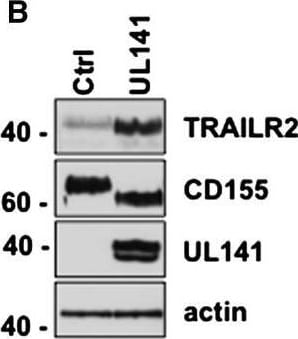
Detection of Human TRAIL R2/TNFRSF10B by Western Blot
UL141 Blockade of Both TRAIL DR and CD155 Contributes to NK Cell Inhibition(A) RAd control or UL141 transduced A549 cells were analyzed for expression of TRAIL-R2, CD155 and CD112 at the time of NK cell addition by flow cytometry.(B) Western blot of RAd-transduced A549 cells.(C) Expression of TRAIL by IFN alpha activated (blue) or unactivated (red) human NK cells assessed by flow cytometry.(D) IFN alpha -activated NK cells were purified from human peripheral blood and added to A549 lung epithelial cells transduced with either control adenovirus vector (Rad-Cntrl) or Rad-UL141 (effector to target [E:T] ratio of 2). Blocking alpha DNAM-1 antibody or blocking soluble TRAIL-R2 (10 μg/ml) was added to cultures where indicated (+), and control mIgG or sCD30 was added as a control to the other cultures. Apoptosis of A549 cells was assessed 4 hr later. Shown are two representative experiments of more than six performed.(E) Summary of NK killing data from eight separate experiments and four different donors. †Data are mean ± SEM from n = 1 to 3 wells. ∗Bonferroni post test shows significance at p < 0.05.See also Figure S5. Image collected and cropped by CiteAb from the following open publication (https://pubmed.ncbi.nlm.nih.gov/23498957), licensed under a CC-BY license. Not internally tested by R&D Systems.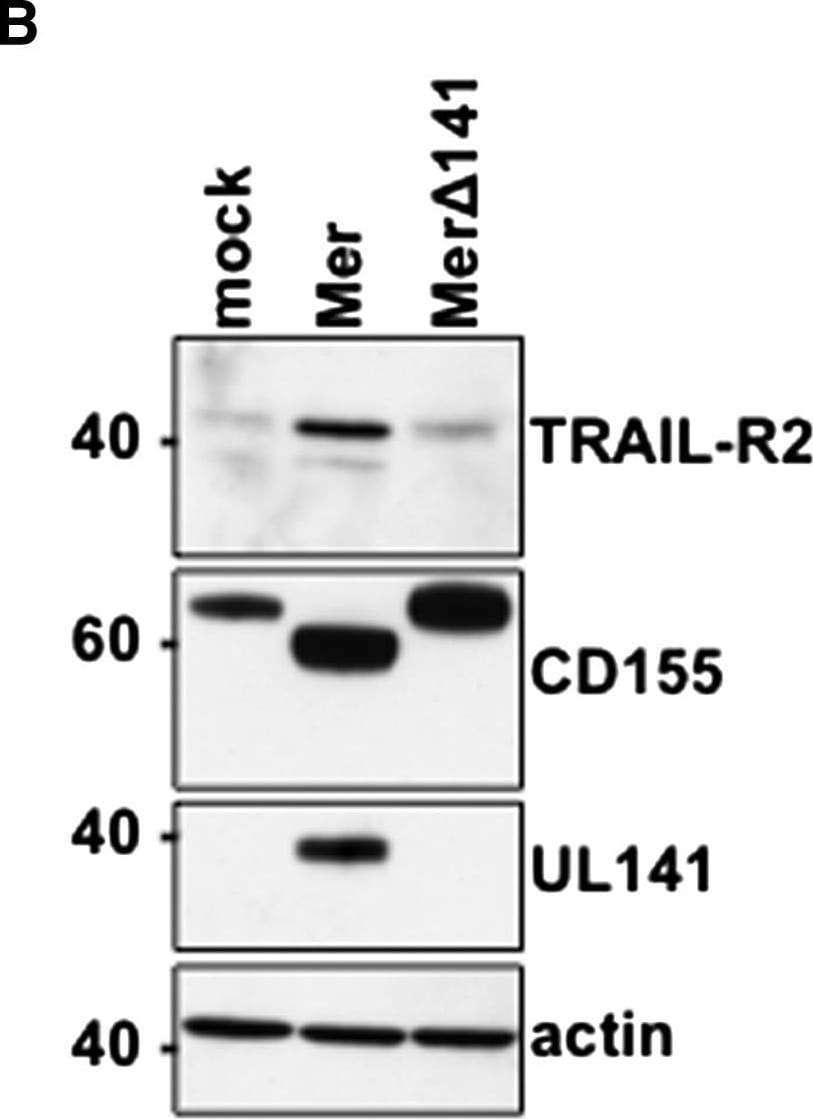
Detection of Human TRAIL R2/TNFRSF10B by Western Blot
TRAIL-R2 Expression in HCMV-Infected Cells Human foreskin fibroblasts (HFFs) were infected (72 hr, MOI = 20) with HCMV Merlin (Mer) or Merlin delta UL141 (Mer delta 141) and analyzed for TRAIL-R2 expression by (A) flow cytometry and (B) Western blot. IgG(–), isotype control antibody staining. Results are representative of six to ten performed experiments. See also Figure S2. Image collected and cropped by CiteAb from the following open publication (https://pubmed.ncbi.nlm.nih.gov/23498957), licensed under a CC-BY license. Not internally tested by R&D Systems.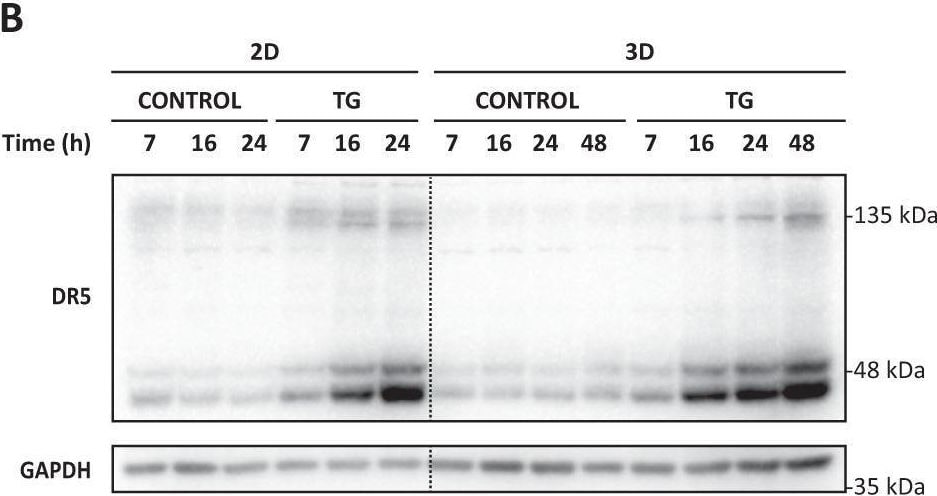
Detection of TRAIL R2/TNFRSF10B by Western Blot
PERK pathway activation upon ER stress in bidimensional cultures and multicellular tumor spheroids.HCT116 cells, in conventional 2D cultures or spheroids (3D) (10-days), were treated with TG (100 nM) for the indicated times. Activation of the PERK signaling pathway (A) and TRAIL-R2/DR5 protein levels (B) were assessed in whole-cell extracts by western blotting. alpha -tubulin or GAPDH were used as protein-loading controls. Image collected and cropped by CiteAb from the following open publication (https://pubmed.ncbi.nlm.nih.gov/35115486), licensed under a CC-BY license. Not internally tested by R&D Systems.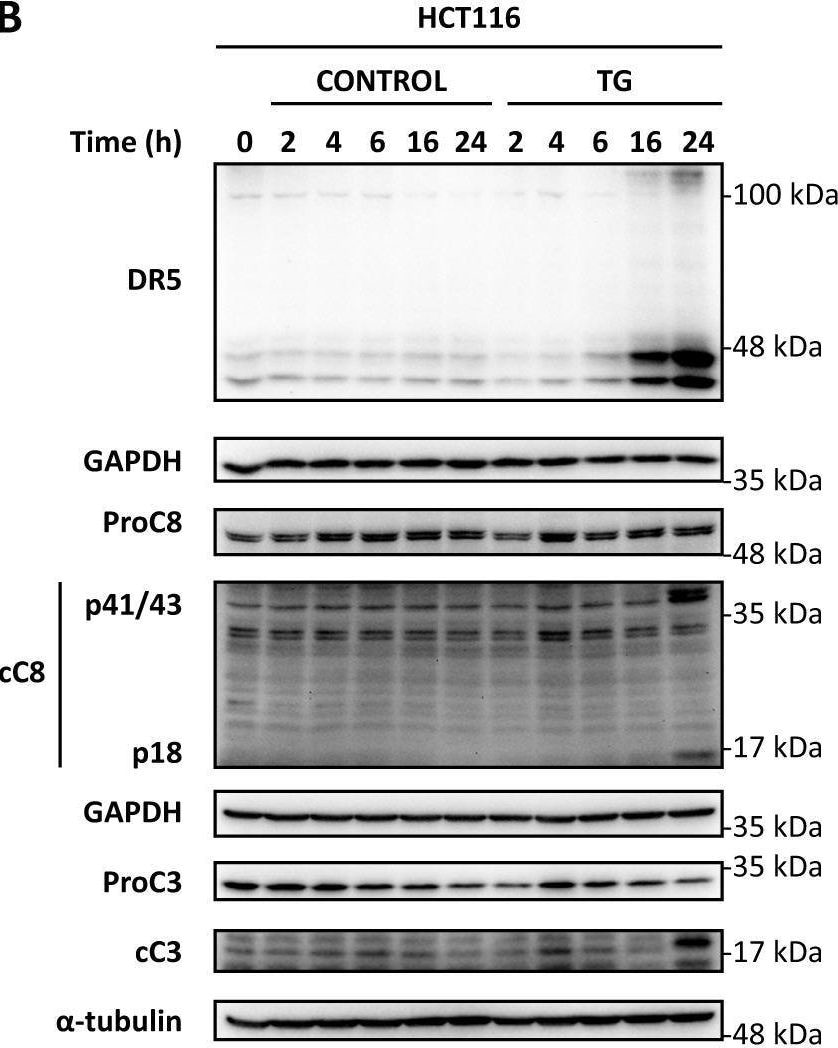
Detection of TRAIL R2/TNFRSF10B by Western Blot
cFLIP levels and caspase-8 activation upon ER stress in tumor cells.HCT116 cells were treated with TG (100 nM) for the indicated times. cFLIP and CHOP levels (A) as well as TRAIL-R2/DR5 upregulation, caspase-8 and caspase-3 processing (B) were determined in whole-cell extracts by western blotting. Levels of both cFLIP isoforms were quantified with Image LabTM 6.0 software using GAPDH as protein-loading control and graphed relative to time 0 levels. Blots are representative of three independent experiments. In A, two different exposures of the western blot are shown to follow the levels of the short isoform of cFLIP. C HCT116 cells were treated with TG (100 nM) for the indicated times and mRNA relative levels of cFLIPL (upper panel) and cFLIPS (lower panel) were examined by RT-qPCR as described in materials and methods and referred to time 0 h levels (ns = not statistically significant. Unpaired t test with Welch’s correction). Image collected and cropped by CiteAb from the following open publication (https://pubmed.ncbi.nlm.nih.gov/35115486), licensed under a CC-BY license. Not internally tested by R&D Systems.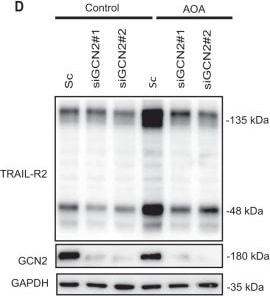
Detection of Human TRAIL R2/TNFRSF10B by Western Blot
GCN2-dependent activation of the extrinsic pathway of apoptosis in tumor cells treated with AOA.A Apoptosis in HCT116 cells cultured for 48 h in complete medium with or without AOA in the presence or absence of non-essential amino acids (NEAA). B, C HCT116 cells were transfected either with a scrambled oligonucleotide (Sc) or with two different siRNAs targeting GCN2 (siGCN2#1 or #2). 48 hours after transfection, cells were either incubated for 16 h in the presence of absence of AOA to assess phosphorylated eIF2 alpha, eIF2 alpha and CHOP levels by Western blotting (B), or during 24 h to measure apoptosis (C). D HCT116 cells were transfected and treated as described in B. TRAIL-R2 and GCN2 levels were assessed by Western blotting. GAPDH was used as protein-loading control. E HCT116 cells stably expressing scrambled, caspase-8, or TRAIL-R2 targeting shRNA, were cultured in the presence or absence of AOA, and apoptosis was measured at 24 or 48 h. Caspase 8 and TRAIL-R2 knockdown were determined by Western blotting. In A, C and E, data are presented as mean ± SD from at least three independent experiments. *P < 0.05; ***P < 0.001; ****P < 0.0001; two-way ANOVA test. Tukey’s multiple comparison test. Image collected and cropped by CiteAb from the following open publication (https://pubmed.ncbi.nlm.nih.gov/36302756), licensed under a CC-BY license. Not internally tested by R&D Systems.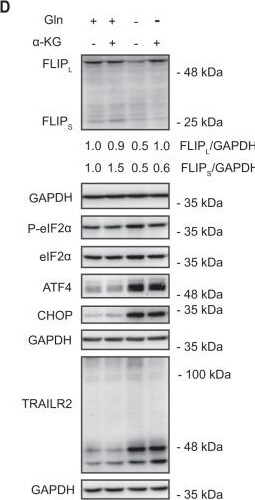
Detection of Human TRAIL R2/TNFRSF10B by Western Blot
Role of FLIP in cell death induced by glutamine deprivation.A HCT116 (left panel) or MDA-MB468 (right panel) cells were cultured in the presence or absence of glutamine for the indicated times. Tubulin and GAPDH were used as protein-loading controls. Following these treatments, FLIPL and FLIPS levels were assessed by Western blotting. B Apoptosis was assessed in pBabe or FLIPL overexpressing HCT116 cells cultured in the presence or absence of glutamine for 48 h (left panel). Procaspase-8 levels, caspase-8 activation (cC8) and FLIPL overexpression were determined by Western-blotting after 30 h of glutamine starvation (right panel). C Apoptosis was assessed in pBabe or FLIPL-overexpressing MDA-MB468 cells cultured in the presence or absence of glutamine for 48 h. FLIPL overexpression was detected by Western blotting. In B and C data are presented as mean ± SD from at least three independent experiments. **P < 0.01; ***P < 0.001; two-way ANOVA test. Tukey’s multiple comparison test. D HCT116 cells were cultured in the presence or absence of glutamine for 16 h, with or without dimethyl alpha -ketoglutarate (5 mM). FLIP levels, ISR activation and TRAIL-R2 upregulation were assessed by Western blotting. In E apoptosis was assessed in HCT116 cells cultured in the presence or absence of glutamine for 48 hours, with or without dimethyl alpha -ketoglutarate. Data are presented as mean ± SD from at least three independent experiments. **P < 0.01; ***P < 0.001; two-way ANOVA test. Tukey’s multiple comparison test. Image collected and cropped by CiteAb from the following open publication (https://pubmed.ncbi.nlm.nih.gov/36302756), licensed under a CC-BY license. Not internally tested by R&D Systems.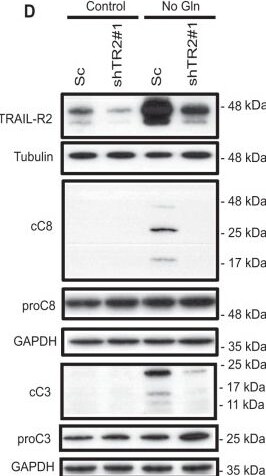
Detection of Human TRAIL R2/TNFRSF10B by Western Blot
Role of TRAIL-R2 in apoptosis induced by glutamine deprivation in tumor cells.A (HCT116) or B (MDA-MB468) cells stably expressing a scrambled (shSc) or a TRAIL-R2 targeting shRNA (shTRAIL-R2#1) were cultured with or without glutamine and apoptosis was assessed at the indicated times (HCT116) or 48 h (MDA-MB468). TRAIL-R2 knockdown was determined by Western blotting. Tubulin and GAPDH were used as protein-loading controls. Data are presented as mean ± SD from at least three independent experiments. **P < 0.01; ****P < 0.0001; two-way ANOVA test. Tukey’s multiple comparison test. C Procaspase-8 levels and caspase-8 activation (cC8) in HCT116 cells incubated in the presence or absence of glutamine for the indicated times. D Scrambled (Sc) or shTRAIL-R2#1 HCT116 cells were cultured in the presence or absence of glutamine for 24 h. Following this incubation, TRAIL-R2 levels, caspase-8 and caspase-3 activation, as well as procaspase-8 or procaspase-3 levels were assessed by Western blotting. Image collected and cropped by CiteAb from the following open publication (https://pubmed.ncbi.nlm.nih.gov/36302756), licensed under a CC-BY license. Not internally tested by R&D Systems.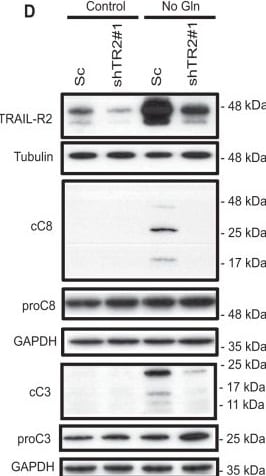
Detection of Human TRAIL R2/TNFRSF10B by Western Blot
Role of TRAIL-R2 in apoptosis induced by glutamine deprivation in tumor cells.A (HCT116) or B (MDA-MB468) cells stably expressing a scrambled (shSc) or a TRAIL-R2 targeting shRNA (shTRAIL-R2#1) were cultured with or without glutamine and apoptosis was assessed at the indicated times (HCT116) or 48 h (MDA-MB468). TRAIL-R2 knockdown was determined by Western blotting. Tubulin and GAPDH were used as protein-loading controls. Data are presented as mean ± SD from at least three independent experiments. **P < 0.01; ****P < 0.0001; two-way ANOVA test. Tukey’s multiple comparison test. C Procaspase-8 levels and caspase-8 activation (cC8) in HCT116 cells incubated in the presence or absence of glutamine for the indicated times. D Scrambled (Sc) or shTRAIL-R2#1 HCT116 cells were cultured in the presence or absence of glutamine for 24 h. Following this incubation, TRAIL-R2 levels, caspase-8 and caspase-3 activation, as well as procaspase-8 or procaspase-3 levels were assessed by Western blotting. Image collected and cropped by CiteAb from the following open publication (https://pubmed.ncbi.nlm.nih.gov/36302756), licensed under a CC-BY license. Not internally tested by R&D Systems.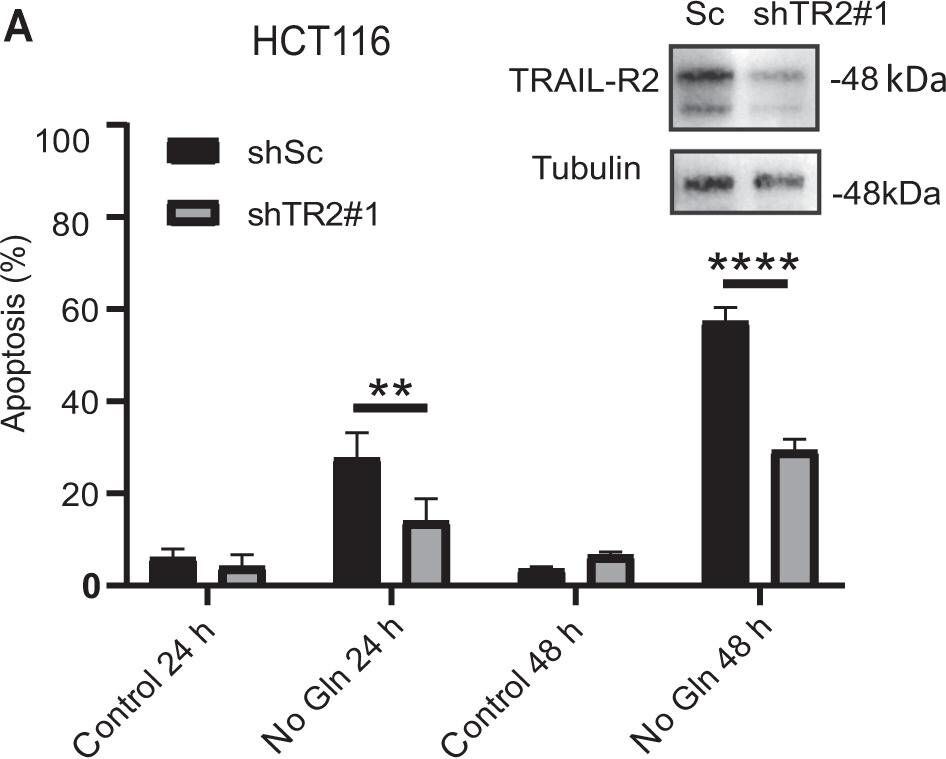
Detection of Human TRAIL R2/TNFRSF10B by Western Blot
Role of TRAIL-R2 in apoptosis induced by glutamine deprivation in tumor cells.A (HCT116) or B (MDA-MB468) cells stably expressing a scrambled (shSc) or a TRAIL-R2 targeting shRNA (shTRAIL-R2#1) were cultured with or without glutamine and apoptosis was assessed at the indicated times (HCT116) or 48 h (MDA-MB468). TRAIL-R2 knockdown was determined by Western blotting. Tubulin and GAPDH were used as protein-loading controls. Data are presented as mean ± SD from at least three independent experiments. **P < 0.01; ****P < 0.0001; two-way ANOVA test. Tukey’s multiple comparison test. C Procaspase-8 levels and caspase-8 activation (cC8) in HCT116 cells incubated in the presence or absence of glutamine for the indicated times. D Scrambled (Sc) or shTRAIL-R2#1 HCT116 cells were cultured in the presence or absence of glutamine for 24 h. Following this incubation, TRAIL-R2 levels, caspase-8 and caspase-3 activation, as well as procaspase-8 or procaspase-3 levels were assessed by Western blotting. Image collected and cropped by CiteAb from the following open publication (https://pubmed.ncbi.nlm.nih.gov/36302756), licensed under a CC-BY license. Not internally tested by R&D Systems.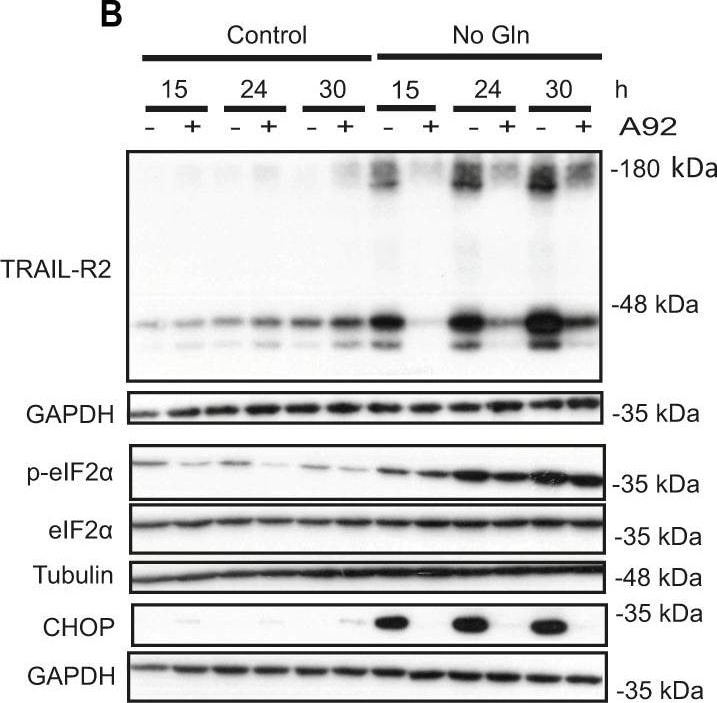
Detection of Human TRAIL R2/TNFRSF10B by Western Blot
GCN2-dependent TRAIL-R2 upregulation upon glutamine deprivation in tumor cells.A HCT116 cells were cultured in the presence or absence of glutamine for the indicated times and TRAIL-R2 mRNA levels were measured by RT-qPCR (left panel). TRAIL-R2 and TRAIL-R1 protein levels were assessed by Western blotting (middle panel). GAPDH was used as protein-loading control. Cell surface TRAIL-R2 levels (right panel) were also analyzed in HCT116 and MDA-MB468 cell lines after 24 h of glutamine deprivation in the presence of 20 µM Q-VD-OPh, as described in Materials and Methods (MFI: geometric mean fluorescent intensity). B HCT116 cells were incubated for the indicated times in medium with or without glutamine, in the presence or absence of 1 µM A92. Western blotting was performed to determine TRAIL-R2, p-eIF2 alpha, eIF2 alpha and CHOP levels. C HCT116 cells stably expressing either a scrambled (Sc) or a GCN2 targeting sequence (shGCN2), were incubated for 17 h in the presence or absence of glutamine. Following this incubation, TRAIL-R2 mRNA levels were measured by RT-qPCR (left panel) and GCN2, CHOP and TRAIL-R2 protein levels were assessed by Western blotting (right panel). Image collected and cropped by CiteAb from the following open publication (https://pubmed.ncbi.nlm.nih.gov/36302756), licensed under a CC-BY license. Not internally tested by R&D Systems.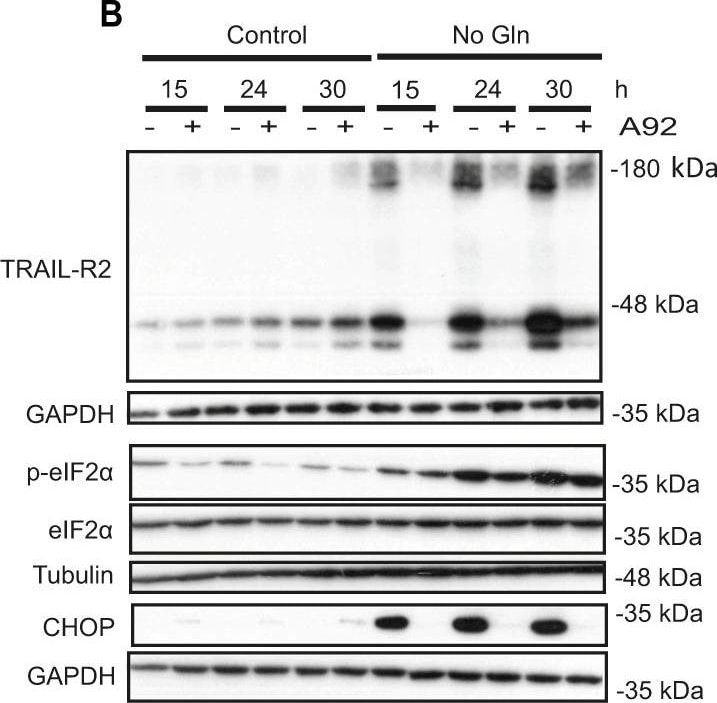
Detection of Human TRAIL R2/TNFRSF10B by Western Blot
GCN2-dependent TRAIL-R2 upregulation upon glutamine deprivation in tumor cells.A HCT116 cells were cultured in the presence or absence of glutamine for the indicated times and TRAIL-R2 mRNA levels were measured by RT-qPCR (left panel). TRAIL-R2 and TRAIL-R1 protein levels were assessed by Western blotting (middle panel). GAPDH was used as protein-loading control. Cell surface TRAIL-R2 levels (right panel) were also analyzed in HCT116 and MDA-MB468 cell lines after 24 h of glutamine deprivation in the presence of 20 µM Q-VD-OPh, as described in Materials and Methods (MFI: geometric mean fluorescent intensity). B HCT116 cells were incubated for the indicated times in medium with or without glutamine, in the presence or absence of 1 µM A92. Western blotting was performed to determine TRAIL-R2, p-eIF2 alpha, eIF2 alpha and CHOP levels. C HCT116 cells stably expressing either a scrambled (Sc) or a GCN2 targeting sequence (shGCN2), were incubated for 17 h in the presence or absence of glutamine. Following this incubation, TRAIL-R2 mRNA levels were measured by RT-qPCR (left panel) and GCN2, CHOP and TRAIL-R2 protein levels were assessed by Western blotting (right panel). Image collected and cropped by CiteAb from the following open publication (https://pubmed.ncbi.nlm.nih.gov/36302756), licensed under a CC-BY license. Not internally tested by R&D Systems.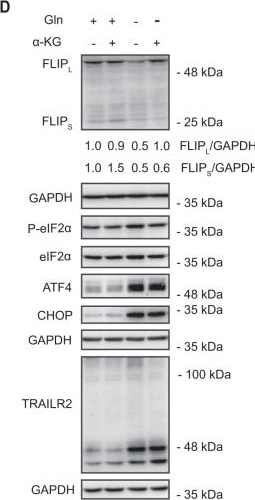
Detection of Human TRAIL R2/TNFRSF10B by Western Blot
Role of FLIP in cell death induced by glutamine deprivation.A HCT116 (left panel) or MDA-MB468 (right panel) cells were cultured in the presence or absence of glutamine for the indicated times. Tubulin and GAPDH were used as protein-loading controls. Following these treatments, FLIPL and FLIPS levels were assessed by Western blotting. B Apoptosis was assessed in pBabe or FLIPL overexpressing HCT116 cells cultured in the presence or absence of glutamine for 48 h (left panel). Procaspase-8 levels, caspase-8 activation (cC8) and FLIPL overexpression were determined by Western-blotting after 30 h of glutamine starvation (right panel). C Apoptosis was assessed in pBabe or FLIPL-overexpressing MDA-MB468 cells cultured in the presence or absence of glutamine for 48 h. FLIPL overexpression was detected by Western blotting. In B and C data are presented as mean ± SD from at least three independent experiments. **P < 0.01; ***P < 0.001; two-way ANOVA test. Tukey’s multiple comparison test. D HCT116 cells were cultured in the presence or absence of glutamine for 16 h, with or without dimethyl alpha -ketoglutarate (5 mM). FLIP levels, ISR activation and TRAIL-R2 upregulation were assessed by Western blotting. In E apoptosis was assessed in HCT116 cells cultured in the presence or absence of glutamine for 48 hours, with or without dimethyl alpha -ketoglutarate. Data are presented as mean ± SD from at least three independent experiments. **P < 0.01; ***P < 0.001; two-way ANOVA test. Tukey’s multiple comparison test. Image collected and cropped by CiteAb from the following open publication (https://pubmed.ncbi.nlm.nih.gov/36302756), licensed under a CC-BY license. Not internally tested by R&D Systems.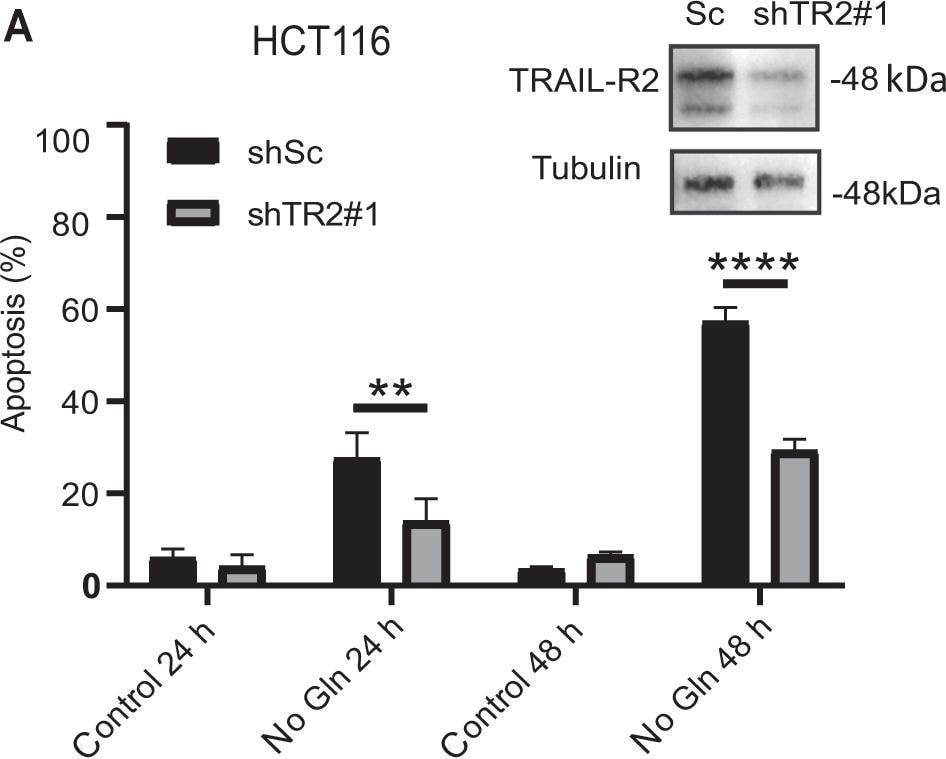
Detection of Human TRAIL R2/TNFRSF10B by Western Blot
Role of TRAIL-R2 in apoptosis induced by glutamine deprivation in tumor cells.A (HCT116) or B (MDA-MB468) cells stably expressing a scrambled (shSc) or a TRAIL-R2 targeting shRNA (shTRAIL-R2#1) were cultured with or without glutamine and apoptosis was assessed at the indicated times (HCT116) or 48 h (MDA-MB468). TRAIL-R2 knockdown was determined by Western blotting. Tubulin and GAPDH were used as protein-loading controls. Data are presented as mean ± SD from at least three independent experiments. **P < 0.01; ****P < 0.0001; two-way ANOVA test. Tukey’s multiple comparison test. C Procaspase-8 levels and caspase-8 activation (cC8) in HCT116 cells incubated in the presence or absence of glutamine for the indicated times. D Scrambled (Sc) or shTRAIL-R2#1 HCT116 cells were cultured in the presence or absence of glutamine for 24 h. Following this incubation, TRAIL-R2 levels, caspase-8 and caspase-3 activation, as well as procaspase-8 or procaspase-3 levels were assessed by Western blotting. Image collected and cropped by CiteAb from the following open publication (https://pubmed.ncbi.nlm.nih.gov/36302756), licensed under a CC-BY license. Not internally tested by R&D Systems.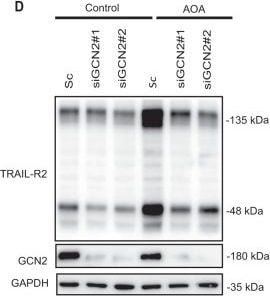
Detection of Human TRAIL R2/TNFRSF10B by Western Blot
GCN2-dependent activation of the extrinsic pathway of apoptosis in tumor cells treated with AOA.A Apoptosis in HCT116 cells cultured for 48 h in complete medium with or without AOA in the presence or absence of non-essential amino acids (NEAA). B, C HCT116 cells were transfected either with a scrambled oligonucleotide (Sc) or with two different siRNAs targeting GCN2 (siGCN2#1 or #2). 48 hours after transfection, cells were either incubated for 16 h in the presence of absence of AOA to assess phosphorylated eIF2 alpha, eIF2 alpha and CHOP levels by Western blotting (B), or during 24 h to measure apoptosis (C). D HCT116 cells were transfected and treated as described in B. TRAIL-R2 and GCN2 levels were assessed by Western blotting. GAPDH was used as protein-loading control. E HCT116 cells stably expressing scrambled, caspase-8, or TRAIL-R2 targeting shRNA, were cultured in the presence or absence of AOA, and apoptosis was measured at 24 or 48 h. Caspase 8 and TRAIL-R2 knockdown were determined by Western blotting. In A, C and E, data are presented as mean ± SD from at least three independent experiments. *P < 0.05; ***P < 0.001; ****P < 0.0001; two-way ANOVA test. Tukey’s multiple comparison test. Image collected and cropped by CiteAb from the following open publication (https://pubmed.ncbi.nlm.nih.gov/36302756), licensed under a CC-BY license. Not internally tested by R&D Systems.Applications for Human TRAIL R2/TNFRSF10B Antibody
Agonist Activity
Western Blot
Sample: HepG2 human hepatocellular carcinoma cell line
Formulation, Preparation, and Storage
Purification
Reconstitution
Reconstitute at 0.2 mg/mL in sterile PBS. For liquid material, refer to CoA for concentration.
Formulation
Shipping
Stability & Storage
- 12 months from date of receipt, -20 to -70 °C as supplied.
- 1 month, 2 to 8 °C under sterile conditions after reconstitution.
- 6 months, -20 to -70 °C under sterile conditions after reconstitution.
Calculators
Background: TRAIL R2/TNFRSF10B
References
- Chaudhary, P.M. et al. (1997) Immunity 7:821.
- Walczak, H. et al. (1997) EMBO J. 16:5386.
- Golstein, P. (1997) Curr. Biol. 7:R750.
Long Name
Alternate Names
Gene Symbol
UniProt
Additional TRAIL R2/TNFRSF10B Products
Product Documents for Human TRAIL R2/TNFRSF10B Antibody
Certificate of Analysis
To download a Certificate of Analysis, please enter a lot or batch number in the search box below.
Note: Certificate of Analysis not available for kit components.
Product Specific Notices for Human TRAIL R2/TNFRSF10B Antibody
For research use only
Citations for Human TRAIL R2/TNFRSF10B Antibody
 Powered by Bioz
Customer Reviews for Human TRAIL R2/TNFRSF10B Antibody
There are currently no reviews for this product. Be the first to review Human TRAIL R2/TNFRSF10B Antibody and earn rewards!
Have you used Human TRAIL R2/TNFRSF10B Antibody?
Submit a review and receive an Amazon gift card!
$25/€18/£15/$25CAN/¥2500 for a review with an image
$10/€7/£6/$10CAN/¥1110 for a review without an image
Submit a review
Protocols
Find general support by application which include: protocols, troubleshooting, illustrated assays, videos and webinars.
- Cellular Response to Hypoxia Protocols
- R&D Systems Quality Control Western Blot Protocol
- Troubleshooting Guide: Western Blot Figures
- Western Blot Conditions
- Western Blot Protocol
- Western Blot Protocol for Cell Lysates
- Western Blot Troubleshooting
- Western Blot Troubleshooting Guide
- View all Protocols, Troubleshooting, Illustrated assays and Webinars
Associated Pathways

