
Moesin Antibody (4B8) - Azide and BSA Free
Novus Biologicals | Catalog # H00004478-M13

![Immunocytochemistry/ Immunofluorescence: Moesin Antibody (4B8) [H00004478-M13]](https://resources.rndsystems.com/images/products/Moesin-Antibody-4B8-Immunocytochemistry-Immunofluorescence-H00004478-M13-img0001.jpg "Immunocytochemistry/ Immunofluorescence: Moesin Antibody (4B8) [H00004478-M13]")
Scientific images may be resized, cropped, or adjusted for brightness or contrast for presentation purposes. These updates are limited to presentation and do not affect the underlying scientific interpretation of the data. Where available, additional source data may be provided upon request.
Key Product Details
Species Reactivity
Applications
Label
Antibody Source
Format
Product Specifications
Immunogen
Specificity
Clonality
Host
Isotype
Description
Scientific Data Images for Moesin Antibody (4B8) - Azide and BSA Free
Immunocytochemistry/ Immunofluorescence: Moesin Antibody (4B8) [H00004478-M13]
Immunocytochemistry/Immunofluorescence: Moesin Antibody (4B8) [H00004478-M13] - Analysis of monoclonal antibody to MSN on HeLa cell. Antibody concentration 15 ug/ml![Immunohistochemistry-Paraffin: Moesin Antibody (4B8) [H00004478-M13]](https://resources.rndsystems.com/images/products/Moesin-Antibody-4B8-Immunohistochemistry-Paraffin-H00004478-M13-img0002.jpg "Immunohistochemistry-Paraffin: Moesin Antibody (4B8) [H00004478-M13]")
Immunohistochemistry-Paraffin: Moesin Antibody (4B8) [H00004478-M13]
Immunohistochemistry-Paraffin: Moesin Antibody (4B8) [H00004478-M13] - Analysis of monoclonal antibody to MSN on formalin-fixed paraffin-embedded human tonsil. Antibody concentration 3 ug/ml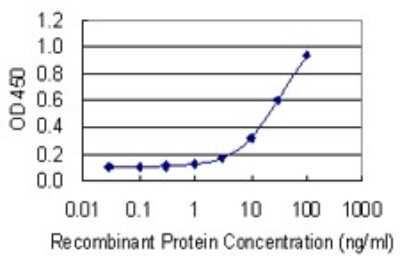
Applications for Moesin Antibody (4B8) - Azide and BSA Free
Western Blot
Formulation, Preparation, and Storage
Purification
Formulation
Format
Preservative
Concentration
Shipping
Stability & Storage
Background: Moesin
Alternate Names
Entrez Gene IDs
Gene Symbol
UniProt
Additional Moesin Products
Product Documents for Moesin Antibody (4B8) - Azide and BSA Free
Certificate of Analysis
To download a Certificate of Analysis, please enter a lot or batch number in the search box below.
Product Specific Notices for Moesin Antibody (4B8) - Azide and BSA Free
This product is produced by and distributed for Abnova, a company based in Taiwan.
This product is for research use only and is not approved for use in humans or in clinical diagnosis. Primary Antibodies are guaranteed for 1 year from date of receipt.
Customer Reviews for Moesin Antibody (4B8) - Azide and BSA Free
There are currently no reviews for this product. Be the first to review Moesin Antibody (4B8) - Azide and BSA Free and earn rewards!
Have you used Moesin Antibody (4B8) - Azide and BSA Free?
Submit a review and receive an Amazon gift card!
$25/€18/£15/$25CAN/¥2500 for a review with an image
$10/€7/£6/$10CAN/¥1110 for a review without an image
Submit a review
Protocols
Find general support by application which include: protocols, troubleshooting, illustrated assays, videos and webinars.
- Antigen Retrieval Protocol (PIER)
- Antigen Retrieval for Frozen Sections Protocol
- Appropriate Fixation of IHC/ICC Samples
- Cellular Response to Hypoxia Protocols
- Chromogenic IHC Staining of Formalin-Fixed Paraffin-Embedded (FFPE) Tissue Protocol
- Chromogenic Immunohistochemistry Staining of Frozen Tissue
- ClariTSA™ Fluorophore Kits
- Detection & Visualization of Antibody Binding
- ELISA Sample Preparation & Collection Guide
- ELISA Troubleshooting Guide
- Fluorescent IHC Staining of Frozen Tissue Protocol
- Graphic Protocol for Heat-induced Epitope Retrieval
- Graphic Protocol for the Preparation and Fluorescent IHC Staining of Frozen Tissue Sections
- Graphic Protocol for the Preparation and Fluorescent IHC Staining of Paraffin-embedded Tissue Sections
- Graphic Protocol for the Preparation of Gelatin-coated Slides for Histological Tissue Sections
- How to Run an R&D Systems DuoSet ELISA
- How to Run an R&D Systems Quantikine ELISA
- How to Run an R&D Systems Quantikine™ QuicKit™ ELISA
- ICC Cell Smear Protocol for Suspension Cells
- ICC Immunocytochemistry Protocol Videos
- ICC for Adherent Cells
- IHC Sample Preparation (Frozen sections vs Paraffin)
- Immunocytochemistry (ICC) Protocol
- Immunocytochemistry Troubleshooting
- Immunofluorescence of Organoids Embedded in Cultrex Basement Membrane Extract
- Immunofluorescent IHC Staining of Formalin-Fixed Paraffin-Embedded (FFPE) Tissue Protocol
- Immunohistochemistry (IHC) and Immunocytochemistry (ICC) Protocols
- Immunohistochemistry Frozen Troubleshooting
- Immunohistochemistry Paraffin Troubleshooting
- Preparing Samples for IHC/ICC Experiments
- Preventing Non-Specific Staining (Non-Specific Binding)
- Primary Antibody Selection & Optimization
- Protocol for Heat-Induced Epitope Retrieval (HIER)
- Protocol for Making a 4% Formaldehyde Solution in PBS
- Protocol for VisUCyte™ HRP Polymer Detection Reagent
- Protocol for the Fluorescent ICC Staining of Cell Smears - Graphic
- Protocol for the Fluorescent ICC Staining of Cultured Cells on Coverslips - Graphic
- Protocol for the Preparation & Fixation of Cells on Coverslips
- Protocol for the Preparation and Chromogenic IHC Staining of Frozen Tissue Sections
- Protocol for the Preparation and Chromogenic IHC Staining of Frozen Tissue Sections - Graphic
- Protocol for the Preparation and Chromogenic IHC Staining of Paraffin-embedded Tissue Sections
- Protocol for the Preparation and Chromogenic IHC Staining of Paraffin-embedded Tissue Sections - Graphic
- Protocol for the Preparation and Fluorescent ICC Staining of Cells on Coverslips
- Protocol for the Preparation and Fluorescent ICC Staining of Non-adherent Cells
- Protocol for the Preparation and Fluorescent ICC Staining of Stem Cells on Coverslips
- Protocol for the Preparation and Fluorescent IHC Staining of Frozen Tissue Sections
- Protocol for the Preparation and Fluorescent IHC Staining of Paraffin-embedded Tissue Sections
- Protocol for the Preparation of Gelatin-coated Slides for Histological Tissue Sections
- Protocol for the Preparation of a Cell Smear for Non-adherent Cell ICC - Graphic
- Quantikine HS ELISA Kit Assay Principle, Alkaline Phosphatase
- Quantikine HS ELISA Kit Principle, Streptavidin-HRP Polymer
- R&D Systems Quality Control Western Blot Protocol
- Sandwich ELISA (Colorimetric) – Biotin/Streptavidin Detection Protocol
- Sandwich ELISA (Colorimetric) – Direct Detection Protocol
- TUNEL and Active Caspase-3 Detection by IHC/ICC Protocol
- The Importance of IHC/ICC Controls
- Troubleshooting Guide: ELISA
- Troubleshooting Guide: Immunohistochemistry
- Troubleshooting Guide: Western Blot Figures
- Western Blot Conditions
- Western Blot Protocol
- Western Blot Protocol for Cell Lysates
- Western Blot Troubleshooting
- Western Blot Troubleshooting Guide
- View all Protocols, Troubleshooting, Illustrated assays and Webinars
FAQs for Moesin Antibody (4B8) - Azide and BSA Free
-
Q: I am looking to use shRNA to inhibit Moesin expression. I have had people advise me that my initial MOI should be low as 'less is more' and 'a little goes a long way' in terms of siRNA. I was wondering if you could elaborate on this for me and explain why my initial MOI should be low.
A: The reason for a low MOI is most likely because RNAi is a very strong and efficient technique. Wikipedia does a good job of explaining RNA interference. However, I would imagine that in a cell, there will be at most 1-2 copies of the gene mRNA present at any given time, unless you're dealing with a highly expressed protein such as Actin, where I would imagine silencing Actin would be lethal to the cell. I can imagine a few reasons to not use too much siRNA. First, it is expensive, so you don't want to waste it. Second, using too much would cause there to be a lot of non-translatable RNA present in the cell, which could trigger an immune response, as the presence of uncapped RNAs can indicate presence of a virus and one of the TLRs may respond to this.