
BAFF (B-cell activating factor), also known as BLyS, TALL-1, THANK, and TNFSF13B, is a TNF superfamily ligand that plays a critical role in the development and survival of B lineage cells. It can be expressed as a homotrimer or as a heteromer in association with the related protein APRIL. It is produced by many hematopoietic cell types, and a soluble form can be released by activated neutrophils. Both BAFF and APRIL signal through the receptors BCMA and TACI, and BAFF additionally signals through BAFF R. Mice that overexpress BAFF exhibit elevated B cell numbers, increased formation and size of germinal centers, and symptoms of autoimmunity. In addition, BAFF costimulates T cell activation, promotes a Th1 biased immune response, and promotes the expansion of Treg cells.
Mouse BAFF/BLyS/TNFSF13B Quantikine ELISA Kit
R&D Systems | Catalog # MBLYS0


Key Product Details
Assay Length
Sample Type & Volume Required Per Well
Sensitivity
Assay Range
Product Summary for Mouse BAFF/BLyS/TNFSF13B Quantikine ELISA Kit
Product Specifications
Assay Type
Format
Measurement
Detection Method
Conjugate
Species
Specificity
Cross-reactivity
Interference
Precision
Intra-Assay Precision (Precision within an assay) Three samples of known concentration were tested on one plate to assess intra-assay precision.
Inter-Assay Precision (Precision between assays) Three samples of known concentration were tested in separate assays to assess inter-assay precision.
Cell Culture Supernates, EDTA Plasma, Heparin Plasma, Serum
| Intra-Assay Precision | Inter-Assay Precision | |||||
|---|---|---|---|---|---|---|
| Sample | 1 | 2 | 3 | 1 | 2 | 3 |
| n | 20 | 20 | 20 | 50 | 64 | 56 |
| Mean (pg/mL) | 125 | 288 | 1315 | 127 | 325 | 1262 |
| Standard Deviation | 3.6 | 7.0 | 30.3 | 16.0 | 27.0 | 136 |
| CV% | 2.9 | 2.4 | 2.3 | 12.6 | 8.3 | 10.8 |
Recovery for Mouse BAFF/BLyS/TNFSF13B Quantikine ELISA Kit
The recovery of mouse BAFF/BLyS spiked to three levels throughout the range of the assay was evaluated.
| Sample Type | Average % Recovery | Range % |
|---|---|---|
| Cell Culture Supernates (n=6) | 103 | 90-108 |
| EDTA Plasma (n=6) | 96 | 85-103 |
| Heparin Plasma (n=6) | 94 | 85-100 |
| Serum (n=6) | 98 | 86-115 |
Linearity
To assess the linearity of the assay, samples containing mouse BAFF/BLyS in each matrix were diluted with Calibrator Diluent and assayed.

Scientific Data Images for Mouse BAFF/BLyS/TNFSF13B Quantikine ELISA Kit
Mouse BAFF/BLyS/TNFSF13B ELISA Standard Curve

Detection of Mouse BAFF/BLyS/TNFSF13B by ELISA
OTULIN Deficiency in Myeloid Cells Leads to Neutrophil Infiltration, Multi-organ Inflammation, Hyper-Immunoglobulinemia, and Autoimmunity(A and B) Micrographs of H&E and Masson’s trichome stained sections of livers and spleens from 4- to 9-months-old LysMCre-Otulinflox mice reveal (A) infiltration in and fibrosis (right, arrowheads) of liver parenchyma and (B) distorted spleen architecture with germinal center activation (left, arrowheads) and fibrosis (right, arrowheads) in LysMCre-OtulinLacZ/flox mice. Scale bars, 200 μm. Micrographs are representative of five mice of each genotype from two independent experiments.(C and D) Flow cytometry analysis of total cellular infiltrate (CD45.1+ and CD45.2+) in peritoneal lavage (PL), spleen, liver, and kidney of LysMCre-Otulinflox mice presented as (C) representative dot plots of neutrophils with percent of cells in gate indicated and (D) total cell number of neutrophils, macrophages, and CD8+ T cells.(E) Concentrations of immunoglobulins in serum from 4- to 9-months-old LysMCre-Otulinflox mice.(F) ELISA analysis of serum autoantibody reactivity to ENA, dsDNA, and Smith antigen from 3- to 9-months-old LysMCre-Otulinflox mice.(G) ELISA analysis of serum B cell activating factor (BAFF) concentration from 3- to 9-months-old LysMCre-Otulinflox mice.(E–G) Data are mean of two technical replicas.(D–F) Data are presented as mean ± SEM, and n represents number of mice.See also Figure S5. Image collected and cropped by CiteAb from the following publication (https://pubmed.ncbi.nlm.nih.gov/27523608), licensed under a CC-BY license. Not internally tested by R&D Systems.Preparation and Storage
Shipping
Stability & Storage
Background: BAFF/BLyS/TNFSF13B
Long Name
Alternate Names
Gene Symbol
Additional BAFF/BLyS/TNFSF13B Products
Product Documents for Mouse BAFF/BLyS/TNFSF13B Quantikine ELISA Kit
Certificate of Analysis
To download a Certificate of Analysis, please enter a lot or batch number in the search box below.
Note: Certificate of Analysis not available for kit components.
Product Specific Notices for Mouse BAFF/BLyS/TNFSF13B Quantikine ELISA Kit
For research use only
⚠ WARNING: This product can expose you to chemicals including N,N-Dimethylforamide, which is known to the State of California to cause cancer. For more information, go to www.P65Warnings.ca.gov.Citations for Mouse BAFF/BLyS/TNFSF13B Quantikine ELISA Kit
 Powered by Bioz
Customer Reviews for Mouse BAFF/BLyS/TNFSF13B Quantikine ELISA Kit
There are currently no reviews for this product. Be the first to review Mouse BAFF/BLyS/TNFSF13B Quantikine ELISA Kit and earn rewards!
Have you used Mouse BAFF/BLyS/TNFSF13B Quantikine ELISA Kit?
Submit a review and receive an Amazon gift card!
$25/€18/£15/$25CAN/¥2500 for a review with an image
$10/€7/£6/$10CAN/¥1110 for a review without an image
Submit a review
Protocols
View specific protocols for Mouse BAFF/BLyS/TNFSF13B Quantikine ELISA Kit (MBLYS0):
- Prepare all reagents, standard dilutions, and samples as directed in the product insert.
- Remove excess microplate strips from the plate frame, return them to the foil pouch containing the desiccant pack, and reseal.
- Add 80 µL of Assay Diluent to each well.
- Add 40 µL of Standard, Control, or sample to each well. Cover with a plate sealer, and incubate at room temperature for 2 hours on a horizontal orbital microplate shaker.
- Aspirate each well and wash, repeating the process 4 times for a total of 5 washes.
- Add 120 µL of Conjugate to each well. Cover with a new plate sealer, and incubate at room temperature for 2 hours on the shaker.
- Aspirate and wash 5 times.
- Add 120 µL Substrate Solution to each well. Incubate at room temperature for 30 minutes on the benchtop. PROTECT FROM LIGHT.
- Add 120 µL of Stop Solution to each well. Read at 450 nm within 30 minutes. Set wavelength correction to 540 nm or 570 nm.
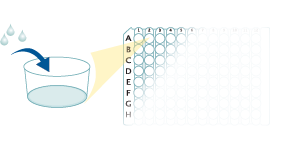
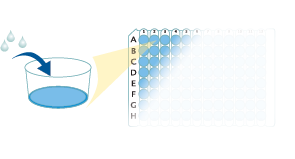
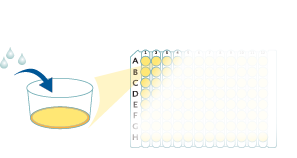
Find general support by application which include: protocols, troubleshooting, illustrated assays, videos and webinars.
- ELISA Sample Preparation & Collection Guide
- ELISA Troubleshooting Guide
- How to Run an R&D Systems DuoSet ELISA
- How to Run an R&D Systems Quantikine ELISA
- How to Run an R&D Systems Quantikine™ QuicKit™ ELISA
- Quantikine HS ELISA Kit Assay Principle, Alkaline Phosphatase
- Quantikine HS ELISA Kit Principle, Streptavidin-HRP Polymer
- Sandwich ELISA (Colorimetric) – Biotin/Streptavidin Detection Protocol
- Sandwich ELISA (Colorimetric) – Direct Detection Protocol
- Troubleshooting Guide: ELISA
- View all Protocols, Troubleshooting, Illustrated assays and Webinars
Associated Pathways
