
MTH1 Antibody - BSA Free
Novus Biologicals | Catalog # NB100-109

![Western Blot: MTH1 AntibodyBSA Free [NB100-109]](https://resources.rndsystems.com/images/products/MTH1-Antibody-Western-Blot-NB100-109-img0011.jpg "Western Blot: MTH1 AntibodyBSA Free [NB100-109]")
![Knockout Validated: MTH1 Antibody - BSA Free [NB100-109]](https://resources.rndsystems.com/images/products/MTH1-Antibody-Knockout-Validated-NB100-109-img0010.jpg "Western Blot: MTH1 Antibody - BSA Free [NB100-109]")
Scientific images may be resized, cropped, or adjusted for brightness or contrast for presentation purposes. These updates are limited to presentation and do not affect the underlying scientific interpretation of the data. Where available, additional source data may be provided upon request.
Key Product Details
Validated by
Species Reactivity
Validated:
Cited:
Applications
Validated:
Cited:
Label
Antibody Source
Format
Product Specifications
Immunogen
Reactivity Notes
Clonality
Host
Isotype
Theoretical MW
Disclaimer note: The observed molecular weight of the protein may vary from the listed predicted molecular weight due to post translational modifications, post translation cleavages, relative charges, and other experimental factors.
Scientific Data Images for MTH1 Antibody - BSA Free
Western Blot: MTH1 Antibody - BSA Free [NB100-109]
Western Blot: MTH1 Antibody [NB100-109] - Western blot shows lysates of HEK293T human embryonic kidney parental cell line and MTH1 knockout (KO) HEK293T cell line. PVDF membrane was probed with 1:500 of Rabbit Anti-Human MTH1 Polyclonal Antibody (Catalog # NB100-109) followed by HRP-conjugated Anti-Rabbit IgG Secondary Antibody (Catalog #HAF008). Specific band was detected for MTH1 at approximately 18 kDa (as indicated) in the parental HEK293T cell line, but is not detectable in the knockout HEK293T cell line. This experiment was conducted under reducing conditions.![Simple Western: MTH1 AntibodyBSA Free [NB100-109]](https://resources.rndsystems.com/images/products/MTH1-Antibody-Simple-Western-NB100-109-img0007.jpg "Simple Western: MTH1 AntibodyBSA Free [NB100-109]")
Simple Western: MTH1 AntibodyBSA Free [NB100-109]
Simple Western: MTH1 Antibody [NB100-109] - Simple Western lane view shows a specific band for MTH1 in 0.5 mg/ml of A431 lysate. This experiment was performed under reducing conditions using the 12-230 kDa separation system.![Western Blot: MTH1 AntibodyBSA Free [NB100-109]](https://resources.rndsystems.com/images/products/MTH1-Antibody-Western-Blot-NB100-109-img0018.jpg "Western Blot: MTH1 AntibodyBSA Free [NB100-109]")
Western Blot: MTH1 AntibodyBSA Free [NB100-109]
MTH1-Antibody-Western-Blot-NB100-109-img0018.jpg![Immunocytochemistry/ Immunofluorescence: MTH1 Antibody - BSA Free [NB100-109]](https://resources.rndsystems.com/images/products/MTH1-Antibody-Immunocytochemistry-Immunofluorescence-NB100-109-img0009.jpg "Immunocytochemistry/ Immunofluorescence: MTH1 Antibody - BSA Free [NB100-109]")
Immunocytochemistry/ Immunofluorescence: MTH1 Antibody - BSA Free [NB100-109]
Immunocytochemistry/Immunofluorescence: MTH1 Antibody [NB100-109] - HeLa cells were fixed for 10 minutes using 10% formalin and then permeabilized for 5 minutes using 1X PBS + 0.05% Triton-X100. The cells were incubated with anti-MTH1 at 2 ug/ml overnight at 4C and detected with an anti-rabbit Dylight 488 (Green) at a 1:500 dilution. Nuclei were counterstained with DAPI (Blue). Cells were imaged using a 40X objective.![Western Blot: MTH1 AntibodyBSA Free [NB100-109]](https://resources.rndsystems.com/images/products/MTH1-Antibody-Western-Blot-NB100-109-img0012.jpg "Western Blot: MTH1 AntibodyBSA Free [NB100-109]")
Western Blot: MTH1 AntibodyBSA Free [NB100-109]
MTH1-Antibody-Western-Blot-NB100-109-img0012.jpg![Western Blot: MTH1 AntibodyBSA Free [NB100-109]](https://resources.rndsystems.com/images/products/MTH1-Antibody-Western-Blot-NB100-109-img0004.jpg "Western Blot: MTH1 AntibodyBSA Free [NB100-109]")
Western Blot: MTH1 AntibodyBSA Free [NB100-109]
Western Blot: MTH1 Antibody [NB100-109] - MTH1 antibody was tested in the labeled lanes.![Western Blot: MTH1 AntibodyBSA Free [NB100-109]](https://resources.rndsystems.com/images/products/MTH1-Antibody-Western-Blot-NB100-109-img0001.jpg "Western Blot: MTH1 AntibodyBSA Free [NB100-109]")
Western Blot: MTH1 AntibodyBSA Free [NB100-109]
Western Blot: MTH1 Antibody [NB100-109] - Analysis of MTH1 in 1. Ntera2, 2. MCF7 cell lysate, 3. A431 cell lysate and 4. COS7 cell lysate.![Immunocytochemistry/ Immunofluorescence: MTH1 Antibody - BSA Free [NB100-109]](https://resources.rndsystems.com/images/products/MTH1-Antibody-Immunocytochemistry-Immunofluorescence-NB100-109-img0008.jpg "Immunocytochemistry/ Immunofluorescence: MTH1 Antibody - BSA Free [NB100-109]")
Immunocytochemistry/ Immunofluorescence: MTH1 Antibody - BSA Free [NB100-109]
Immunocytochemistry/Immunofluorescence: MTH1 Antibody [NB100-109] - A431 cells were fixed for 10 minutes using 10% formalin and then permeabilized for 5 minutes using 1X TBS + 0.5% Triton-X100. The cells were incubated with anti-MTH1 (NB100-109) at a 1:200 dilution overnight at 4C and detected with an anti-rabbit Dylight 488 (Green) at a 1:500 dilution. Alpha tubulin was used as a co-stain at a 1:1000 dilution and detected with an anti-mouse Dylight 550 (Red) at a 1:500 dilution. Nuclei were counterstained with DAPI (Blue). Cells were imaged using a 40X objective.![Knockdown Validated: MTH1 Antibody - BSA Free [NB100-109]](https://resources.rndsystems.com/images/products/MTH1-Antibody-Knockdown-Validated-NB100-109-img0013.jpg "Western Blot: MTH1 Antibody - BSA Free [NB100-109]")
![Knockdown Validated: MTH1 Antibody - BSA Free [NB100-109]](https://resources.rndsystems.com/images/products/MTH1-Antibody-Knockdown-Validated-NB100-109-img0017.jpg "Western Blot: MTH1 Antibody - BSA Free [NB100-109]")
Western Blot: MTH1 Antibody - BSA Free [NB100-109] -
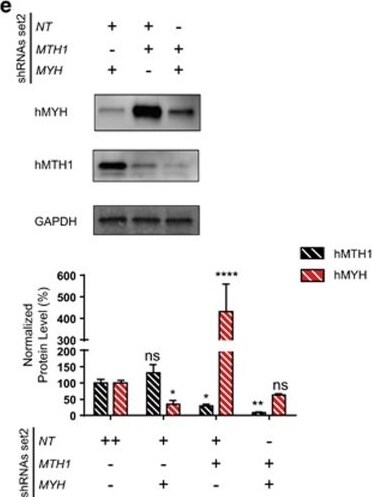
Simultaneous suppression of MTH1 & MYH was efficiently achieved using a two-vector system. (a) Steps of cell line establishment are illustrated here. Top 15% of cells expressing GFP & RFP670 were sorted to improve the knockdown efficiency. Expression levels of MYH & MTH1 were analyzed after 96 h of treatment with Dox in shRNA set1 (b) & shRNA set2 (c) using qRT–PCR analysis. Data were normalized to NT-shRNA expressing cells & presented as mean±s.e.m. from three independent experiments in triplicate. To investigate the knockdown efficiency at protein level, western blot analysis was performed after 96 h of Dox treatment of cells with shRNA set1 (d) & shRNA set2 (e). Data were double normalized with GAPDH & NT-shRNA control samples & expressed as percentage. The graphs represent mean±s.e.m. from three independent experiments. P-values were calculated using one-way analysis of variance (ANOVA). *P<0.05, **P<0.01, ***P<0.001, ****P⩽0.0001, NS, not significant. Image collected & cropped by CiteAb from the following publication (https://pubmed.ncbi.nlm.nih.gov/27918552), licensed under a CC-BY license. Not internally tested by Novus Biologicals.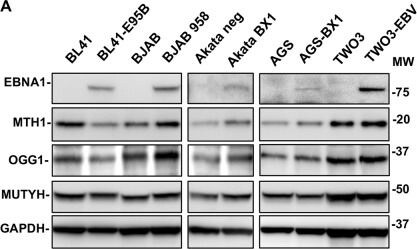
Western Blot: MTH1 Antibody - BSA Free [NB100-109] -
EBNA1 promotes the upregulation of oxidative DNA damage repair pathways in EBV converted cell lines & EBV positive BLs. a Representative western blots illustrating the expression of MTH1, OGG1, & MUTYH in pairs of EBV-negative & -positive cell lines. GAPDH was used as loading control. b Densitometry quantification of the specific bands. The intensity of the specific band in EBV positive cells relative the EBV-negative parental is shown. Mean ± SE of four independent experiments. c Representative western blots illustrating the expression of EBNA1, MTH1, OGG1, & MUTYH in the Mutu cell lines. d Densitometry quantification of expression in the EBV positive cell lines relative to the EBV-negative Mutu-30. Mean ± SE of four independent experiments Image collected & cropped by CiteAb from the following publication (https://pubmed.ncbi.nlm.nih.gov/31511648), licensed under a CC-BY license. Not internally tested by Novus Biologicals.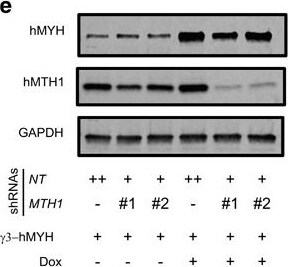
Western Blot: MTH1 Antibody - BSA Free [NB100-109] -
Cell death & G1 arrest in hMTH1-depleted cells were rescued by hMYH overexpression. DNA content of cells without (a) or with (b) gamma 3-hMYH overexpression at 96 h of Dox treatment is shown in histograms & their corresponding cell cycle distribution are displayed in stacked bar charts in (c, d). The gamma 3-hMYH overexpression was validated after 96 h of Dox treatment by western blotting. One representative membrane is displayed in e. The results are presented as mean±s.e.m. from at least two independent experiments in duplicate. P-values were calculated using one-way analysis of variance (ANOVA). *P<0.05, **P<0.01, NS, not significant. Image collected & cropped by CiteAb from the following publication (https://pubmed.ncbi.nlm.nih.gov/27918552), licensed under a CC-BY license. Not internally tested by Novus Biologicals.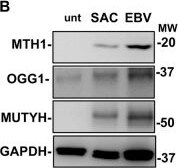
Western Blot: MTH1 Antibody - BSA Free [NB100-109] -
The antioxidant pathways are activated during EBV infection & are required for growth transformation. Freshly isolated B-lymphocytes infected with the transforming B95-8 strain of EBV were cultured for up to 2 weeks in the presence or absence of MTH1 inhibitors. Protein expression was monitored by western blots, cell proliferation & activation of the DDR were assessed by 3H-Thy incorporation & staining for gamma H2AX, respectively. a representative western blots illustrating the parallel increase of MTH1 & EBNA1 expression following EBV infection & mean ± SE of the intensity of the MTH1 specific band in five independent experiments. b Representative western blots illustrating the expression of MTH1, MUTYH & OGG1 in ex vivo untreated B-cell & freshly EBV infected & SAC induced B blasts cultured for comparable times & showing similar levels of cell proliferation. c Quantification of the specific bands. Relative expression is the ration between the intensity in the treated cells versus freshly harvested cells. The mean ± SE of three to four independent experiments is shown. d Inhibition of MTH1 prevents the establishment of EBV transformed lymphoblastoid cell lines. 3H-Thy incorporation was measured after culture of freshly EBV infected B-lymphocytes in the presence of the indicated amounts of MTH1 inhibitors. Depending on the condition of the cultures harvesting was done after ten to fifteen days. e Inhibition of MTH1 strongly enhances the induction of DNA damage in freshly EBV infected cells. DNA damage was detected by gamma H2AX staining. f Mean ± SE of the % gamma H2AX positive cells in three independent experiments. *P < 0.05; **P < 0.01 Image collected & cropped by CiteAb from the following publication (https://pubmed.ncbi.nlm.nih.gov/31511648), licensed under a CC-BY license. Not internally tested by Novus Biologicals.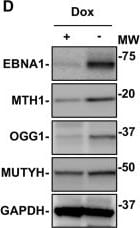
Western Blot: MTH1 Antibody - BSA Free [NB100-109] -
EBNA1 expression is associated with upregulation of MTH1 & oxidative damage repair pathways. The expression of MTH1, OGG1, & MUTYH was investigated by western blots & qPCR in BJAB-tTAE1 cells upon addition & withdrawal of doxycycline. a Representative western blots illustrating the correlation between the reversible down- & upregulation of MTH1 & EBNA1 in BJAB-tTAE1 cells upon addition & withdrawal of doxycycline. GAPDH was used as loading control. b Densitometry quantification of MTH1 & EBNA1 expression in BJAB-tTAE1 cells. The mean intensity of the MTH1 & EBNA1 specific bands relative to GAPDH in three independent experiments is shown in the figure. c Regression analysis of the relationship between expression levels of MTH1 & EBNA1. The data from three independent experiments were used for the plot. d Representative western blots illustrating the expression of MTH1, MUTYH, & OGG1 in BJAB-tTAE1 cells cultured for two weeks in the presence or absence of doxycycline. e Fold change is the ratio between the intensity of the specific band in cells cultured without or with doxycycline. The mean ± SD of four independent experiments is shown. f qPCR analysis of the levels of MTH1, OGG1, & MUTYH transcripts in BJAB-tTAE1 cells cultured for 2 weeks in the presence or absence of doxycycline. The mean ± SE of the fold change in six independent experiments each performed in triplicate is shown Image collected & cropped by CiteAb from the following publication (https://pubmed.ncbi.nlm.nih.gov/31511648), licensed under a CC-BY license. Not internally tested by Novus Biologicals.
Western Blot: MTH1 Antibody - BSA Free [NB100-109] -
EBNA1 promotes the upregulation of oxidative DNA damage repair pathways in EBV converted cell lines & EBV positive BLs. a Representative western blots illustrating the expression of MTH1, OGG1, & MUTYH in pairs of EBV-negative & -positive cell lines. GAPDH was used as loading control. b Densitometry quantification of the specific bands. The intensity of the specific band in EBV positive cells relative the EBV-negative parental is shown. Mean ± SE of four independent experiments. c Representative western blots illustrating the expression of EBNA1, MTH1, OGG1, & MUTYH in the Mutu cell lines. d Densitometry quantification of expression in the EBV positive cell lines relative to the EBV-negative Mutu-30. Mean ± SE of four independent experiments Image collected & cropped by CiteAb from the following publication (https://pubmed.ncbi.nlm.nih.gov/31511648), licensed under a CC-BY license. Not internally tested by Novus Biologicals.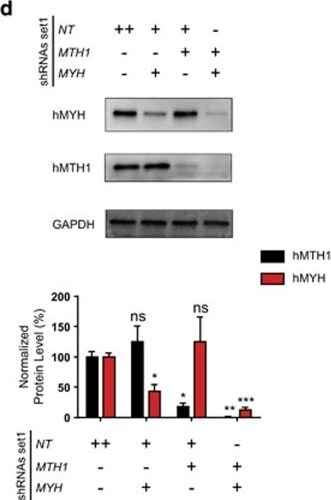
Western Blot: MTH1 Antibody - BSA Free [NB100-109] -
Simultaneous suppression of MTH1 & MYH was efficiently achieved using a two-vector system. (a) Steps of cell line establishment are illustrated here. Top 15% of cells expressing GFP & RFP670 were sorted to improve the knockdown efficiency. Expression levels of MYH & MTH1 were analyzed after 96 h of treatment with Dox in shRNA set1 (b) & shRNA set2 (c) using qRT–PCR analysis. Data were normalized to NT-shRNA expressing cells & presented as mean±s.e.m. from three independent experiments in triplicate. To investigate the knockdown efficiency at protein level, western blot analysis was performed after 96 h of Dox treatment of cells with shRNA set1 (d) & shRNA set2 (e). Data were double normalized with GAPDH & NT-shRNA control samples & expressed as percentage. The graphs represent mean±s.e.m. from three independent experiments. P-values were calculated using one-way analysis of variance (ANOVA). *P<0.05, **P<0.01, ***P<0.001, ****P⩽0.0001, NS, not significant. Image collected & cropped by CiteAb from the following publication (https://pubmed.ncbi.nlm.nih.gov/27918552), licensed under a CC-BY license. Not internally tested by Novus Biologicals.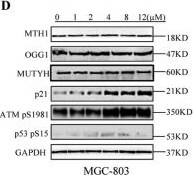
Western Blot: MTH1 Antibody - BSA Free [NB100-109] -
Western Blot: MTH1 Antibody - BSA Free [NB100-109] - Compound MI-743 causes intracellular 8-oxo-dG accumulation & DNA damage.a MGC-803, HGC-27 & GES-1 cells were treated with DMSO or 5 µM MI-743 for 48 h. Intracellular 8-oxo-dG was stained with Cy3-conjugated avidin. DNA was counterstained with 4,6-diamidino-2-phenylindole (DAPI). Images were acquired at ×100 magnification by a Nikon Eclipse TE 2000-S fluorescence microscope. At least three independent experiments were performed for each group. b MGC-803, HGC-27 & GES-1 cells were treated with DMSO or 10 µM MI-743 for 48 h & run in alkaline comet assay. Pictures were originally captured at ×40 magnification. H2O2 was used as positive control. c Tail moment was calculated by CometScore software. Three individual experiments were performed for each group. d–f Western blot analysis of the protein levels of MTH1, MUTYH, OGG1, p21, ATMpS1981 & p53pS15 in MGC-803, HGC-27 & GES-1 cells, treated with increasing concentrations of MI-743 (0, 1, 2, 4, 8 & 12 µM). g, h Densitometry shows relative protein expression normalized for GAPDH. Data are representative of three independent experiments. i–k Western Blot analysis of the protein levels of MTH1, MUTYH, OGG1, p21, ATMpS1981 & p53pS15 of protein lysates, isolated from MGC-803, HGC-27 & GES-1 cells, which were treated with 12 µM MI-743 for 0, 12, 24, 36 & 48 h. l, m Densitometry shows relative protein expression normalized for GAPDH. Data are presented as means ± SD. Three individual experiments were performed for each group. *P < 0.05, **P < 0.01, ***P < 0.001 as compared with the controls Image collected & cropped by CiteAb from the following publication (https://pubmed.ncbi.nlm.nih.gov/31164636), licensed under a CC-BY license. Not internally tested by Novus Biologicals.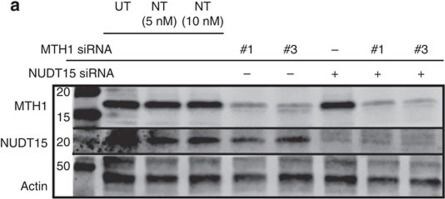
Western Blot: MTH1 Antibody - BSA Free [NB100-109] -
Western Blot: MTH1 Antibody - BSA Free [NB100-109] - Effect of NUDT15 knockdown on clonogenic survival, DNA damage responses & 8-oxo-dG levels in DNA.(a) Western blot showing knockdown of MTH1 or NUDT15 in U2OS cells 96 h after transfection. (b) U2OS cells depleted of MTH1, NUDT15 or both by siRNA were seeded for clonogenic survival. Colonies were stained after 10 days with methylene blue & colonies were counted by eye; (n=2). (c) Representative immunostainings. After NUDT15, MTH1 or combination of both RPA foci, 53BP1 foci & DAPI (4,6-diamidino-2-phenylindole) were visualized using immunofluorescence. (d) Quantification of 53BP1- & RPA-positive cells (>5 foci per cell) from c; (n=2). (e) Quantification of the tail moment after MTH1 & NUDT15 knockdown; (n=2). (f) Representative pictures of comets formed after MTH1 or NUDT15 depletion by siRNA. Lysed cells were treated with OGG1 or buffer control. UT, untransfected; NT, non-targeting siRNA control. Data shown as average±s.d. Image collected & cropped by CiteAb from the following publication (https://www.nature.com/articles/ncomms8871), licensed under a CC-BY license. Not internally tested by Novus Biologicals.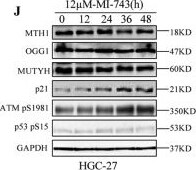
Western Blot: MTH1 Antibody - BSA Free [NB100-109] -
Western Blot: MTH1 Antibody - BSA Free [NB100-109] - Compound MI-743 causes intracellular 8-oxo-dG accumulation & DNA damage.a MGC-803, HGC-27 & GES-1 cells were treated with DMSO or 5 µM MI-743 for 48 h. Intracellular 8-oxo-dG was stained with Cy3-conjugated avidin. DNA was counterstained with 4,6-diamidino-2-phenylindole (DAPI). Images were acquired at ×100 magnification by a Nikon Eclipse TE 2000-S fluorescence microscope. At least three independent experiments were performed for each group. b MGC-803, HGC-27 & GES-1 cells were treated with DMSO or 10 µM MI-743 for 48 h & run in alkaline comet assay. Pictures were originally captured at ×40 magnification. H2O2 was used as positive control. c Tail moment was calculated by CometScore software. Three individual experiments were performed for each group. d–f Western blot analysis of the protein levels of MTH1, MUTYH, OGG1, p21, ATMpS1981 & p53pS15 in MGC-803, HGC-27 & GES-1 cells, treated with increasing concentrations of MI-743 (0, 1, 2, 4, 8 & 12 µM). g, h Densitometry shows relative protein expression normalized for GAPDH. Data are representative of three independent experiments. i–k Western Blot analysis of the protein levels of MTH1, MUTYH, OGG1, p21, ATMpS1981 & p53pS15 of protein lysates, isolated from MGC-803, HGC-27 & GES-1 cells, which were treated with 12 µM MI-743 for 0, 12, 24, 36 & 48 h. l, m Densitometry shows relative protein expression normalized for GAPDH. Data are presented as means ± SD. Three individual experiments were performed for each group. *P < 0.05, **P < 0.01, ***P < 0.001 as compared with the controls Image collected & cropped by CiteAb from the following publication (https://pubmed.ncbi.nlm.nih.gov/31164636), licensed under a CC-BY license. Not internally tested by Novus Biologicals.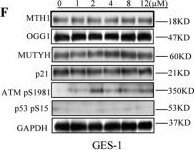
Western Blot: MTH1 Antibody - BSA Free [NB100-109] -
Western Blot: MTH1 Antibody - BSA Free [NB100-109] - Compound MI-743 causes intracellular 8-oxo-dG accumulation & DNA damage.a MGC-803, HGC-27 & GES-1 cells were treated with DMSO or 5 µM MI-743 for 48 h. Intracellular 8-oxo-dG was stained with Cy3-conjugated avidin. DNA was counterstained with 4,6-diamidino-2-phenylindole (DAPI). Images were acquired at ×100 magnification by a Nikon Eclipse TE 2000-S fluorescence microscope. At least three independent experiments were performed for each group. b MGC-803, HGC-27 & GES-1 cells were treated with DMSO or 10 µM MI-743 for 48 h & run in alkaline comet assay. Pictures were originally captured at ×40 magnification. H2O2 was used as positive control. c Tail moment was calculated by CometScore software. Three individual experiments were performed for each group. d–f Western blot analysis of the protein levels of MTH1, MUTYH, OGG1, p21, ATMpS1981 & p53pS15 in MGC-803, HGC-27 & GES-1 cells, treated with increasing concentrations of MI-743 (0, 1, 2, 4, 8 & 12 µM). g, h Densitometry shows relative protein expression normalized for GAPDH. Data are representative of three independent experiments. i–k Western Blot analysis of the protein levels of MTH1, MUTYH, OGG1, p21, ATMpS1981 & p53pS15 of protein lysates, isolated from MGC-803, HGC-27 & GES-1 cells, which were treated with 12 µM MI-743 for 0, 12, 24, 36 & 48 h. l, m Densitometry shows relative protein expression normalized for GAPDH. Data are presented as means ± SD. Three individual experiments were performed for each group. *P < 0.05, **P < 0.01, ***P < 0.001 as compared with the controls Image collected & cropped by CiteAb from the following publication (https://pubmed.ncbi.nlm.nih.gov/31164636), licensed under a CC-BY license. Not internally tested by Novus Biologicals.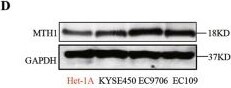
Western Blot: MTH1 Antibody - BSA Free [NB100-109] -
Western Blot: MTH1 Antibody - BSA Free [NB100-109] - Characteristic expression of MTH1 in human gastric cancer tissues & ten digestive tract cancer cell lines.a The total RNA from fresh human gastric cancer tissues was isolated by RNApure Tissue&Cell Kit. The mRNA level of MTH1 in human gastric cancer (Increased, n = 21, Decreased, n = 6 & Unchanged, n = 8) & adjacent normal tissues (Con, n = 35) was determined by RT-PCR. The protein levels of MTH1 in human gastric (GC) & adjacent normal (GN) tissue sections were determined by immuohistochemistry (IHC) staining. The integral optical densities (IOD) were analyzed by Image-Pro Plus 6.0 software. b Representative IHC pictures of GC & GN. Scale bars, 50 μm. c IODs of GC & GN. n = 10 for each group. The cells from esophageal cancer cell lines: KYSE-450, EC109 & EC9706 (d, e), liver cancer cell lines: SMMC-7721, HepG2 & ZIP177 (f, g), gastric cancer cell lines: MGC-803, HGC-27, SGC-7901 & MKN45 (h, i), as well as the corresponding normal cell lines: Het-1A (d, e), L02 (f, g) & GES-1 (h, i) were cultured & lysed. The MTH1 protein levels were determined by Western Blot. GAPDH was used as a loading control. At least three independent experiments were performed for each group. j The cells indicated above were lysed & the total mRNA was extracted. The mRNA level of MTH1 was determined by RT-PCR. GAPDH was used as a control. At least three independent experiments were performed for each group. Data are presented as means ± SD. The symbol *, ** or *** stands for P < 0.05, P < 0.01 or P < 0.001 compared with the controls or normal cell groups Image collected & cropped by CiteAb from the following publication (https://pubmed.ncbi.nlm.nih.gov/31164636), licensed under a CC-BY license. Not internally tested by Novus Biologicals.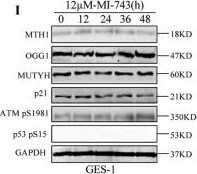
Western Blot: MTH1 Antibody - BSA Free [NB100-109] -
Western Blot: MTH1 Antibody - BSA Free [NB100-109] - Compound MI-743 causes intracellular 8-oxo-dG accumulation & DNA damage.a MGC-803, HGC-27 & GES-1 cells were treated with DMSO or 5 µM MI-743 for 48 h. Intracellular 8-oxo-dG was stained with Cy3-conjugated avidin. DNA was counterstained with 4,6-diamidino-2-phenylindole (DAPI). Images were acquired at ×100 magnification by a Nikon Eclipse TE 2000-S fluorescence microscope. At least three independent experiments were performed for each group. b MGC-803, HGC-27 & GES-1 cells were treated with DMSO or 10 µM MI-743 for 48 h & run in alkaline comet assay. Pictures were originally captured at ×40 magnification. H2O2 was used as positive control. c Tail moment was calculated by CometScore software. Three individual experiments were performed for each group. d–f Western blot analysis of the protein levels of MTH1, MUTYH, OGG1, p21, ATMpS1981 & p53pS15 in MGC-803, HGC-27 & GES-1 cells, treated with increasing concentrations of MI-743 (0, 1, 2, 4, 8 & 12 µM). g, h Densitometry shows relative protein expression normalized for GAPDH. Data are representative of three independent experiments. i–k Western Blot analysis of the protein levels of MTH1, MUTYH, OGG1, p21, ATMpS1981 & p53pS15 of protein lysates, isolated from MGC-803, HGC-27 & GES-1 cells, which were treated with 12 µM MI-743 for 0, 12, 24, 36 & 48 h. l, m Densitometry shows relative protein expression normalized for GAPDH. Data are presented as means ± SD. Three individual experiments were performed for each group. *P < 0.05, **P < 0.01, ***P < 0.001 as compared with the controls Image collected & cropped by CiteAb from the following publication (https://pubmed.ncbi.nlm.nih.gov/31164636), licensed under a CC-BY license. Not internally tested by Novus Biologicals.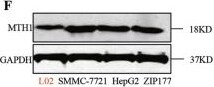
Western Blot: MTH1 Antibody - BSA Free [NB100-109] -
Western Blot: MTH1 Antibody - BSA Free [NB100-109] - Characteristic expression of MTH1 in human gastric cancer tissues & ten digestive tract cancer cell lines.a The total RNA from fresh human gastric cancer tissues was isolated by RNApure Tissue&Cell Kit. The mRNA level of MTH1 in human gastric cancer (Increased, n = 21, Decreased, n = 6 & Unchanged, n = 8) & adjacent normal tissues (Con, n = 35) was determined by RT-PCR. The protein levels of MTH1 in human gastric (GC) & adjacent normal (GN) tissue sections were determined by immuohistochemistry (IHC) staining. The integral optical densities (IOD) were analyzed by Image-Pro Plus 6.0 software. b Representative IHC pictures of GC & GN. Scale bars, 50 μm. c IODs of GC & GN. n = 10 for each group. The cells from esophageal cancer cell lines: KYSE-450, EC109 & EC9706 (d, e), liver cancer cell lines: SMMC-7721, HepG2 & ZIP177 (f, g), gastric cancer cell lines: MGC-803, HGC-27, SGC-7901 & MKN45 (h, i), as well as the corresponding normal cell lines: Het-1A (d, e), L02 (f, g) & GES-1 (h, i) were cultured & lysed. The MTH1 protein levels were determined by Western Blot. GAPDH was used as a loading control. At least three independent experiments were performed for each group. j The cells indicated above were lysed & the total mRNA was extracted. The mRNA level of MTH1 was determined by RT-PCR. GAPDH was used as a control. At least three independent experiments were performed for each group. Data are presented as means ± SD. The symbol *, ** or *** stands for P < 0.05, P < 0.01 or P < 0.001 compared with the controls or normal cell groups Image collected & cropped by CiteAb from the following publication (https://pubmed.ncbi.nlm.nih.gov/31164636), licensed under a CC-BY license. Not internally tested by Novus Biologicals.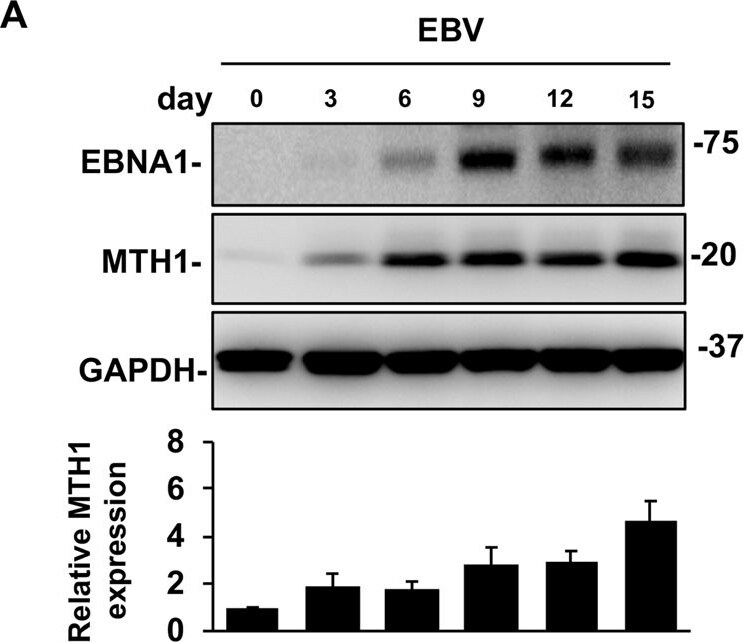
Western Blot: MTH1 Antibody - BSA Free [NB100-109] -
Western Blot: MTH1 Antibody - BSA Free [NB100-109] - The antioxidant pathways are activated during EBV infection & are required for growth transformation. Freshly isolated B-lymphocytes infected with the transforming B95-8 strain of EBV were cultured for up to 2 weeks in the presence or absence of MTH1 inhibitors. Protein expression was monitored by western blots, cell proliferation & activation of the DDR were assessed by 3H-Thy incorporation & staining for gamma H2AX, respectively. a representative western blots illustrating the parallel increase of MTH1 & EBNA1 expression following EBV infection & mean ± SE of the intensity of the MTH1 specific band in five independent experiments. b Representative western blots illustrating the expression of MTH1, MUTYH & OGG1 in ex vivo untreated B-cell & freshly EBV infected & SAC induced B blasts cultured for comparable times & showing similar levels of cell proliferation. c Quantification of the specific bands. Relative expression is the ration between the intensity in the treated cells versus freshly harvested cells. The mean ± SE of three to four independent experiments is shown. d Inhibition of MTH1 prevents the establishment of EBV transformed lymphoblastoid cell lines. 3H-Thy incorporation was measured after culture of freshly EBV infected B-lymphocytes in the presence of the indicated amounts of MTH1 inhibitors. Depending on the condition of the cultures harvesting was done after ten to fifteen days. e Inhibition of MTH1 strongly enhances the induction of DNA damage in freshly EBV infected cells. DNA damage was detected by gamma H2AX staining. f Mean ± SE of the % gamma H2AX positive cells in three independent experiments. *P < 0.05; **P < 0.01 Image collected & cropped by CiteAb from the following publication (https://pubmed.ncbi.nlm.nih.gov/31511648), licensed under a CC-BY license. Not internally tested by Novus Biologicals.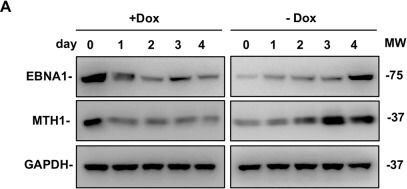
Western Blot: MTH1 Antibody - BSA Free [NB100-109] -
Western Blot: MTH1 Antibody - BSA Free [NB100-109] - EBNA1 expression is associated with upregulation of MTH1 & oxidative damage repair pathways. The expression of MTH1, OGG1, & MUTYH was investigated by western blots & qPCR in BJAB-tTAE1 cells upon addition & withdrawal of doxycycline. a Representative western blots illustrating the correlation between the reversible down- & upregulation of MTH1 & EBNA1 in BJAB-tTAE1 cells upon addition & withdrawal of doxycycline. GAPDH was used as loading control. b Densitometry quantification of MTH1 & EBNA1 expression in BJAB-tTAE1 cells. The mean intensity of the MTH1 & EBNA1 specific bands relative to GAPDH in three independent experiments is shown in the figure. c Regression analysis of the relationship between expression levels of MTH1 & EBNA1. The data from three independent experiments were used for the plot. d Representative western blots illustrating the expression of MTH1, MUTYH, & OGG1 in BJAB-tTAE1 cells cultured for two weeks in the presence or absence of doxycycline. e Fold change is the ratio between the intensity of the specific band in cells cultured without or with doxycycline. The mean ± SD of four independent experiments is shown. f qPCR analysis of the levels of MTH1, OGG1, & MUTYH transcripts in BJAB-tTAE1 cells cultured for 2 weeks in the presence or absence of doxycycline. The mean ± SE of the fold change in six independent experiments each performed in triplicate is shown Image collected & cropped by CiteAb from the following publication (https://pubmed.ncbi.nlm.nih.gov/31511648), licensed under a CC-BY license. Not internally tested by Novus Biologicals.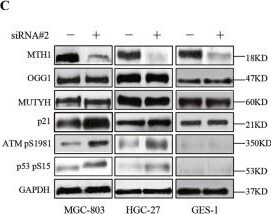
Western Blot: MTH1 Antibody - BSA Free [NB100-109] -
Western Blot: MTH1 Antibody - BSA Free [NB100-109] - MTH1 suppression reduces the two gastric cancer cell survival.MGC-803, HGC-27 & GES-1 cells were treated by MTH1 specific siRNA#1 & #2 for 72 h. Non-targeting siRNA(NT) treatment was used as control. a Levels of MTH1 protein then were determined by western blot. b The colony formations were recorded after the cells were treated with MTH1 siRNA#1 & #2 for 7 days. c Western Blot analysis of the protein levels of MTH1, MUTYH, OGG1, p21, ATMpS1981 & p53pS15, after the cells were treated with siRNA#2. f–h Densitometry shows relative protein expression normalized by GAPDH. d The Alkaline comets assay was performed after the cells were transfected with MTH1 siRNA#2 for 72 h. Pictures were originally captured at ×40 magnification by fluorescence microscope. Non-targeting siRNA(NT) or H2O2 treatment was used as a negative or a positive control, respectively. e Tail moment was calculated by CometScore software. Three individual experiments were performed for each group. i Relative cell viability was determined by MTT assay, after the cells were treated with MTH1 siRNA#1 & #2 with or without MI-743 combined with 100uM H2O2. Data are presented as means ± SD. Three individual experiments were performed for each group. The symbols * & #, ** & ## or ***and ### stand for P < 0.05, P < 0.01 or P < 0.001 compared with the controls Image collected & cropped by CiteAb from the following publication (https://pubmed.ncbi.nlm.nih.gov/31164636), licensed under a CC-BY license. Not internally tested by Novus Biologicals.
Western Blot: MTH1 Antibody - BSA Free [NB100-109] -
Western Blot: MTH1 Antibody - BSA Free [NB100-109] - Characteristic expression of MTH1 in human gastric cancer tissues & ten digestive tract cancer cell lines.a The total RNA from fresh human gastric cancer tissues was isolated by RNApure Tissue&Cell Kit. The mRNA level of MTH1 in human gastric cancer (Increased, n = 21, Decreased, n = 6 & Unchanged, n = 8) & adjacent normal tissues (Con, n = 35) was determined by RT-PCR. The protein levels of MTH1 in human gastric (GC) & adjacent normal (GN) tissue sections were determined by immuohistochemistry (IHC) staining. The integral optical densities (IOD) were analyzed by Image-Pro Plus 6.0 software. b Representative IHC pictures of GC & GN. Scale bars, 50 μm. c IODs of GC & GN. n = 10 for each group. The cells from esophageal cancer cell lines: KYSE-450, EC109 & EC9706 (d, e), liver cancer cell lines: SMMC-7721, HepG2 & ZIP177 (f, g), gastric cancer cell lines: MGC-803, HGC-27, SGC-7901 & MKN45 (h, i), as well as the corresponding normal cell lines: Het-1A (d, e), L02 (f, g) & GES-1 (h, i) were cultured & lysed. The MTH1 protein levels were determined by Western Blot. GAPDH was used as a loading control. At least three independent experiments were performed for each group. j The cells indicated above were lysed & the total mRNA was extracted. The mRNA level of MTH1 was determined by RT-PCR. GAPDH was used as a control. At least three independent experiments were performed for each group. Data are presented as means ± SD. The symbol *, ** or *** stands for P < 0.05, P < 0.01 or P < 0.001 compared with the controls or normal cell groups Image collected & cropped by CiteAb from the following publication (https://pubmed.ncbi.nlm.nih.gov/31164636), licensed under a CC-BY license. Not internally tested by Novus Biologicals.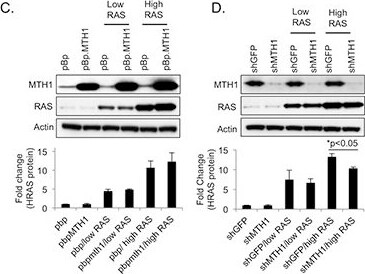
Western Blot: MTH1 Antibody - BSA Free [NB100-109] -
Western Blot: MTH1 Antibody - BSA Free [NB100-109] - Generation of MTH1/HRASV12 BEAS2B cell lines used in this study(A). MTH1 levels are elevated in nonsmall cell lung tumors relative to adjacent normal tissue. Samples are part of a tissue array obtained from US Biomax. Tissue sections were photographed at 200X. MTH1 expression is seen as brown staining. (B). Schematic showing how cell lines for this study were generated. (C). Western blotting confirming high or low levels of HRASV12 expression in MTH1-overexpressing (pBp.MTH1) & control (pBp) BEAS2B cells. Actin is shown as a loading control. Samples were harvested & lysed approximately 19 days following transduction. Quantitation of HRAS fold-changes (pBp values set to 1) among the samples is shown below the immunoblot images. Fold changes were calculated using loading-normalized signal intensities determined from three independently run blots. (D). Western blotting confirming high & low levels of HRASV12 expression in MTH1-suppressed (shMTH1) & control (shGFP) BEAS2B cells. Actin is shown as a loading control. Samples were harvested & lysed approximately 19 days following transduction. Quantitation of HRAS fold-changes (shGFP values set to 1) among the samples is shown below the immunoblot images & was calculated using loading-normalized signal intensities determined from three independently run blots. Image collected & cropped by CiteAb from the following publication (https://www.oncotarget.com/lookup/doi/10.18632/oncotarget.3447), licensed under a CC-BY license. Not internally tested by Novus Biologicals.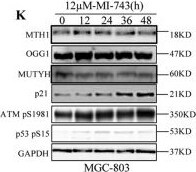
Western Blot: MTH1 Antibody - BSA Free [NB100-109] -
Western Blot: MTH1 Antibody - BSA Free [NB100-109] - Compound MI-743 causes intracellular 8-oxo-dG accumulation & DNA damage.a MGC-803, HGC-27 & GES-1 cells were treated with DMSO or 5 µM MI-743 for 48 h. Intracellular 8-oxo-dG was stained with Cy3-conjugated avidin. DNA was counterstained with 4,6-diamidino-2-phenylindole (DAPI). Images were acquired at ×100 magnification by a Nikon Eclipse TE 2000-S fluorescence microscope. At least three independent experiments were performed for each group. b MGC-803, HGC-27 & GES-1 cells were treated with DMSO or 10 µM MI-743 for 48 h & run in alkaline comet assay. Pictures were originally captured at ×40 magnification. H2O2 was used as positive control. c Tail moment was calculated by CometScore software. Three individual experiments were performed for each group. d–f Western blot analysis of the protein levels of MTH1, MUTYH, OGG1, p21, ATMpS1981 & p53pS15 in MGC-803, HGC-27 & GES-1 cells, treated with increasing concentrations of MI-743 (0, 1, 2, 4, 8 & 12 µM). g, h Densitometry shows relative protein expression normalized for GAPDH. Data are representative of three independent experiments. i–k Western Blot analysis of the protein levels of MTH1, MUTYH, OGG1, p21, ATMpS1981 & p53pS15 of protein lysates, isolated from MGC-803, HGC-27 & GES-1 cells, which were treated with 12 µM MI-743 for 0, 12, 24, 36 & 48 h. l, m Densitometry shows relative protein expression normalized for GAPDH. Data are presented as means ± SD. Three individual experiments were performed for each group. *P < 0.05, **P < 0.01, ***P < 0.001 as compared with the controls Image collected & cropped by CiteAb from the following publication (https://pubmed.ncbi.nlm.nih.gov/31164636), licensed under a CC-BY license. Not internally tested by Novus Biologicals.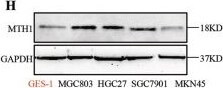
Western Blot: MTH1 Antibody - BSA Free [NB100-109] -
Western Blot: MTH1 Antibody - BSA Free [NB100-109] - Characteristic expression of MTH1 in human gastric cancer tissues & ten digestive tract cancer cell lines.a The total RNA from fresh human gastric cancer tissues was isolated by RNApure Tissue&Cell Kit. The mRNA level of MTH1 in human gastric cancer (Increased, n = 21, Decreased, n = 6 & Unchanged, n = 8) & adjacent normal tissues (Con, n = 35) was determined by RT-PCR. The protein levels of MTH1 in human gastric (GC) & adjacent normal (GN) tissue sections were determined by immuohistochemistry (IHC) staining. The integral optical densities (IOD) were analyzed by Image-Pro Plus 6.0 software. b Representative IHC pictures of GC & GN. Scale bars, 50 μm. c IODs of GC & GN. n = 10 for each group. The cells from esophageal cancer cell lines: KYSE-450, EC109 & EC9706 (d, e), liver cancer cell lines: SMMC-7721, HepG2 & ZIP177 (f, g), gastric cancer cell lines: MGC-803, HGC-27, SGC-7901 & MKN45 (h, i), as well as the corresponding normal cell lines: Het-1A (d, e), L02 (f, g) & GES-1 (h, i) were cultured & lysed. The MTH1 protein levels were determined by Western Blot. GAPDH was used as a loading control. At least three independent experiments were performed for each group. j The cells indicated above were lysed & the total mRNA was extracted. The mRNA level of MTH1 was determined by RT-PCR. GAPDH was used as a control. At least three independent experiments were performed for each group. Data are presented as means ± SD. The symbol *, ** or *** stands for P < 0.05, P < 0.01 or P < 0.001 compared with the controls or normal cell groups Image collected & cropped by CiteAb from the following publication (https://pubmed.ncbi.nlm.nih.gov/31164636), licensed under a CC-BY license. Not internally tested by Novus Biologicals.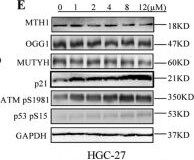
Western Blot: MTH1 Antibody - BSA Free [NB100-109] -
Western Blot: MTH1 Antibody - BSA Free [NB100-109] - Compound MI-743 causes intracellular 8-oxo-dG accumulation & DNA damage.a MGC-803, HGC-27 & GES-1 cells were treated with DMSO or 5 µM MI-743 for 48 h. Intracellular 8-oxo-dG was stained with Cy3-conjugated avidin. DNA was counterstained with 4,6-diamidino-2-phenylindole (DAPI). Images were acquired at ×100 magnification by a Nikon Eclipse TE 2000-S fluorescence microscope. At least three independent experiments were performed for each group. b MGC-803, HGC-27 & GES-1 cells were treated with DMSO or 10 µM MI-743 for 48 h & run in alkaline comet assay. Pictures were originally captured at ×40 magnification. H2O2 was used as positive control. c Tail moment was calculated by CometScore software. Three individual experiments were performed for each group. d–f Western blot analysis of the protein levels of MTH1, MUTYH, OGG1, p21, ATMpS1981 & p53pS15 in MGC-803, HGC-27 & GES-1 cells, treated with increasing concentrations of MI-743 (0, 1, 2, 4, 8 & 12 µM). g, h Densitometry shows relative protein expression normalized for GAPDH. Data are representative of three independent experiments. i–k Western Blot analysis of the protein levels of MTH1, MUTYH, OGG1, p21, ATMpS1981 & p53pS15 of protein lysates, isolated from MGC-803, HGC-27 & GES-1 cells, which were treated with 12 µM MI-743 for 0, 12, 24, 36 & 48 h. l, m Densitometry shows relative protein expression normalized for GAPDH. Data are presented as means ± SD. Three individual experiments were performed for each group. *P < 0.05, **P < 0.01, ***P < 0.001 as compared with the controls Image collected & cropped by CiteAb from the following publication (https://pubmed.ncbi.nlm.nih.gov/31164636), licensed under a CC-BY license. Not internally tested by Novus Biologicals.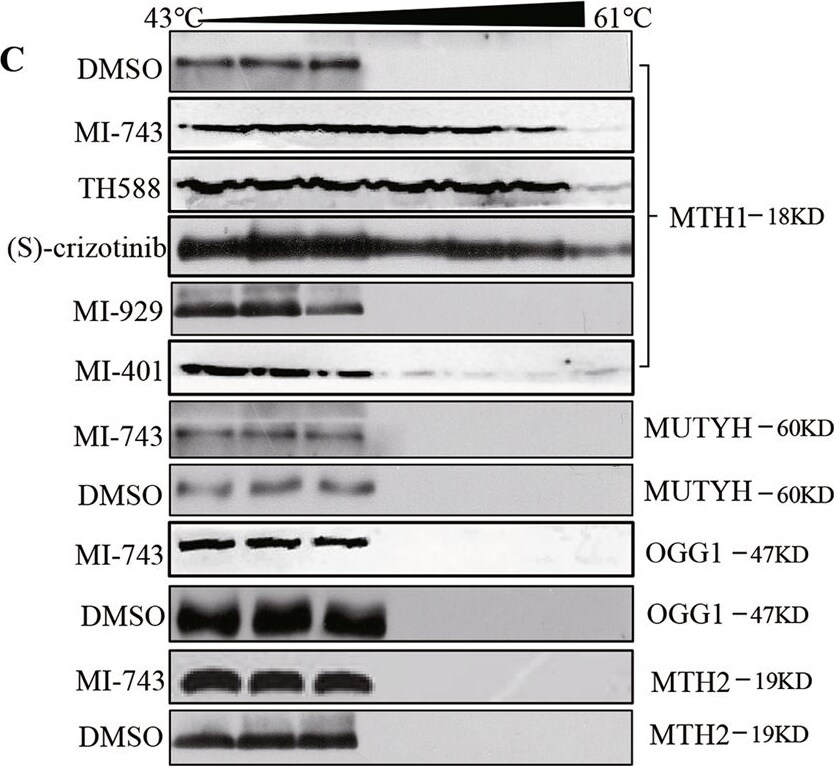
Western Blot: MTH1 Antibody - BSA Free [NB100-109] -
Western Blot: MTH1 Antibody - BSA Free [NB100-109] - Screening of MTH1 inhibitors in vitro, MD simulations & binding free energy calculation of compound MI-743 & MTH1.a The structures, IC50 values & (b) percentage of MTH1 inhibition rate of the potential inhibitors MI-743, MI-401 & negative compound MI-929. c MGC-803 cells were treated with 50 µM compounds MI-743, MI-401, (S)-crizotinib or MI-929, respectively, collected & heated for 10 min from 43 to 61 °C. The cells were lysed & the protein levels of MTH1, OGG1, MUTYH or MTH2 were determined by western Blot. At least three independent experiments were performed for each group. Data are presented as means ± SD. d Predicted binding mode of compound MI-743 in MTH1 binding pocket (PDB code: 4N1U). Compound MI-743 is shown as green stick. The residues of MTH1 associated with MI-743 are shown in white. Hydrogen bonds are shown in magenta dash lines & the corresponding distances are given in Å. The RMSD value plots of the protein (MTH1) (e) & ligand (MI-743) (f) in the mutation & wild-type complex systems after 30 ns MD simulations. Binding models of compound MI-743 in MTH1 D119A (g), D120A (h), N33A (i) & W117A (j) mutations. k MM/PBSA binding free energy, estimated with the MTH1 wild-type & mutant systems obtained from the last 5 ns stable MD trajectory. l Flow diagram for the principle of detecting MTH1 activity. Since MTH1 can convert dGTP to dGMP & pyrophosphate, & the latter of which can be hydrolyzed to inorganic pyrophosphate by inorganic pyrophosphatase, the formed inorganic pyrophosphate can react with malachite green & ammonium molybdate to produce the green associated complex, the absorbance of which can be measured at 630 nm by PerkinElmer Envision microplate reader, indicating the activity of MTH1 Image collected & cropped by CiteAb from the following publication (https://pubmed.ncbi.nlm.nih.gov/31164636), licensed under a CC-BY license. Not internally tested by Novus Biologicals.Applications for MTH1 Antibody - BSA Free
Immunoblotting
Immunocytochemistry/ Immunofluorescence
Immunohistochemistry
Immunohistochemistry-Frozen
Immunohistochemistry-Paraffin
Simple Western
Single Cell Western
Western Blot
In Simple Western only 10 - 15 uL of the recommended dilution is used per data point.
See Simple Western Antibody Database for Simple Western validation: Tested in A431 lysate 0.5 mg/mL, separated by Size, antibody dilution of 1:50, apparent MW was 24 kDa. Separated by Size-Wes, Sally Sue/Peggy Sue.
The observed molecular weight of the protein may vary from the listed predicted molecular weight due to post translational modifications, post translation cleavages, relative charges, and other experimental factors.
Formulation, Preparation, and Storage
Purification
Formulation
Format
Preservative
Concentration
Shipping
Stability & Storage
Background: MTH1
Long Name
Alternate Names
Gene Symbol
UniProt
Additional MTH1 Products
Product Documents for MTH1 Antibody - BSA Free
Certificate of Analysis
To download a Certificate of Analysis, please enter a lot or batch number in the search box below.
Product Specific Notices for MTH1 Antibody - BSA Free
This product is for research use only and is not approved for use in humans or in clinical diagnosis. Primary Antibodies are guaranteed for 1 year from date of receipt.
Citations for MTH1 Antibody - BSA Free
 Powered by Bioz
Customer Reviews for MTH1 Antibody - BSA Free
There are currently no reviews for this product. Be the first to review MTH1 Antibody - BSA Free and earn rewards!
Have you used MTH1 Antibody - BSA Free?
Submit a review and receive an Amazon gift card!
$25/€18/£15/$25CAN/¥2500 for a review with an image
$10/€7/£6/$10CAN/¥1110 for a review without an image
Submit a review
Protocols
View specific protocols for MTH1 Antibody - BSA Free (NB100-109):
Culture cells to appropriate density in 35 mm culture dishes or 6-well plates.
1. Remove culture medium and wash the cells briefly in PBS. Add 10% formalin to the dish and fix at room temperature for 10 minutes.
2. Remove the formalin and wash the cells in PBS.
3. Permeablize the cells with 0.1% Triton X100 or other suitable detergent for 10 min.
4. Remove the permeablization buffer and wash three times for 10 minutes each in PBS. Be sure to not let the specimen dry out.
5. To block nonspecific antibody binding, incubate in 10% normal goat serum from 1 hour to overnight at room temperature.
6. Add primary antibody at appropriate dilution and incubate overnight at 4C.
7. Remove primary antibody and replace with PBS. Wash three times for 10 minutes each.
8. Add secondary antibody at appropriate dilution. Incubate for 1 hour at room temperature.
9. Remove secondary antibody and replace with PBS. Wash three times for 10 minutes each.
10. Counter stain DNA with DAPi if required.
Antigen Unmasking:
Bring slides to a boil in 10 mM sodium citrate buffer (pH 6.0) then maintain at a sub-boiling temperature for 10 minutes. Cool slides on bench-top for 30 minutes (keep slides in the sodium citrate buffer at all times).
Staining:
1. Wash sections in deionized water three times for 5 minutes each.
2. Wash sections in PBS for 5 minutes.
3. Block each section with 100-400 ul blocking solution (1% BSA in PBS) for 1 hour at room temperature.
4. Remove blocking solution and add 100-400 ul diluted primary antibody. Incubate overnight at 4 C.
5. Remove antibody solution and wash sections in wash buffer three times for 5 minutes each.
6. Add 100-400 ul HRP polymer conjugated secondary antibody. Incubate 30 minutes at room temperature.
7. Wash sections three times in wash buffer for 5 minutes each.
8. Add 100-400 ul DAB substrate to each section and monitor staining closely.
9. As soon as the sections develop, immerse slides in deionized water.
10. Counterstain sections in hematoxylin.
11. Wash sections in deionized water two times for 5 minutes each.
12. Dehydrate sections.
13. Mount coverslips.
1. Perform SDS-PAGE on samples to be analyzed, loading 10-25 ug of total protein per lane.
2. Transfer proteins to PVDF membrane according to the instructions provided by the manufacturer of the membrane and transfer apparatus.
3. Stain the membrane with Ponceau S (or similar product) to assess transfer success, and mark molecular weight standards where appropriate.
4. Rinse the blot TBS -0.05% Tween 20 (TBST).
5. Block the membrane in 5% Non-fat milk in TBST (blocking buffer) for at least 1 hour.
6. Wash the membrane in TBST three times for 10 minutes each.
7. Dilute primary antibody in blocking buffer and incubate overnight at 4C with gentle rocking.
8. Wash the membrane in TBST three times for 10 minutes each.
9. Incubate the membrane in diluted HRP conjugated secondary antibody in blocking buffer (as per manufacturer's instructions) for 1 hour at room temperature.
10. Wash the blot in TBST three times for 10 minutes each (this step can be repeated as required to reduce background).
11. Apply the detection reagent of choice in accordance with the manufacturer's instructions.
Find general support by application which include: protocols, troubleshooting, illustrated assays, videos and webinars.
- Antigen Retrieval Protocol (PIER)
- Antigen Retrieval for Frozen Sections Protocol
- Appropriate Fixation of IHC/ICC Samples
- Cellular Response to Hypoxia Protocols
- Chromogenic IHC Staining of Formalin-Fixed Paraffin-Embedded (FFPE) Tissue Protocol
- Chromogenic Immunohistochemistry Staining of Frozen Tissue
- ClariTSA™ Fluorophore Kits
- Detection & Visualization of Antibody Binding
- Fluorescent IHC Staining of Frozen Tissue Protocol
- Graphic Protocol for Heat-induced Epitope Retrieval
- Graphic Protocol for the Preparation and Fluorescent IHC Staining of Frozen Tissue Sections
- Graphic Protocol for the Preparation and Fluorescent IHC Staining of Paraffin-embedded Tissue Sections
- Graphic Protocol for the Preparation of Gelatin-coated Slides for Histological Tissue Sections
- ICC Cell Smear Protocol for Suspension Cells
- ICC Immunocytochemistry Protocol Videos
- ICC for Adherent Cells
- IHC Sample Preparation (Frozen sections vs Paraffin)
- Immunocytochemistry (ICC) Protocol
- Immunocytochemistry Troubleshooting
- Immunofluorescence of Organoids Embedded in Cultrex Basement Membrane Extract
- Immunofluorescent IHC Staining of Formalin-Fixed Paraffin-Embedded (FFPE) Tissue Protocol
- Immunohistochemistry (IHC) and Immunocytochemistry (ICC) Protocols
- Immunohistochemistry Frozen Troubleshooting
- Immunohistochemistry Paraffin Troubleshooting
- Preparing Samples for IHC/ICC Experiments
- Preventing Non-Specific Staining (Non-Specific Binding)
- Primary Antibody Selection & Optimization
- Protocol for Heat-Induced Epitope Retrieval (HIER)
- Protocol for Making a 4% Formaldehyde Solution in PBS
- Protocol for VisUCyte™ HRP Polymer Detection Reagent
- Protocol for the Fluorescent ICC Staining of Cell Smears - Graphic
- Protocol for the Fluorescent ICC Staining of Cultured Cells on Coverslips - Graphic
- Protocol for the Preparation & Fixation of Cells on Coverslips
- Protocol for the Preparation and Chromogenic IHC Staining of Frozen Tissue Sections
- Protocol for the Preparation and Chromogenic IHC Staining of Frozen Tissue Sections - Graphic
- Protocol for the Preparation and Chromogenic IHC Staining of Paraffin-embedded Tissue Sections
- Protocol for the Preparation and Chromogenic IHC Staining of Paraffin-embedded Tissue Sections - Graphic
- Protocol for the Preparation and Fluorescent ICC Staining of Cells on Coverslips
- Protocol for the Preparation and Fluorescent ICC Staining of Non-adherent Cells
- Protocol for the Preparation and Fluorescent ICC Staining of Stem Cells on Coverslips
- Protocol for the Preparation and Fluorescent IHC Staining of Frozen Tissue Sections
- Protocol for the Preparation and Fluorescent IHC Staining of Paraffin-embedded Tissue Sections
- Protocol for the Preparation of Gelatin-coated Slides for Histological Tissue Sections
- Protocol for the Preparation of a Cell Smear for Non-adherent Cell ICC - Graphic
- R&D Systems Quality Control Western Blot Protocol
- TUNEL and Active Caspase-3 Detection by IHC/ICC Protocol
- The Importance of IHC/ICC Controls
- Troubleshooting Guide: Immunohistochemistry
- Troubleshooting Guide: Western Blot Figures
- Western Blot Conditions
- Western Blot Protocol
- Western Blot Protocol for Cell Lysates
- Western Blot Troubleshooting
- Western Blot Troubleshooting Guide
- View all Protocols, Troubleshooting, Illustrated assays and Webinars