
CD31, also known as PECAM-1 (platelet-endothelial cell adhesion molecule-1), is a 130 kDa type I transmembrane glycoprotein adhesion molecule in the immunoglobulin superfamily (1, 2). Expression is restricted to the vascular system, especially endothelial cells, platelets, monocytes, neutrophils and lymphocyte subsets. CD31 is concentrated at cell-cell junctions and is required for transendothelial migration (TEM) (1‑3). The extracellular domain (ECD) of CD31 has ten potential N-glycosylation sites and six C2-type Ig-like domains, the first of which is critical for adhesion and extravasation (3, 4). The cytoplasmic domain contains immunoregulatory tyrosine-based inhibitory and switch motifs (ITIM, ITSM) that mediate both inhibition and activation via phosphotyrosine-mediated engagement of SH2-containing signaling molecules (1, 5). Metalloproteinase-mediated ectodomain shedding occurs during apoptosis (6) but increased serum CD31 ectodomain in HIV and active multiple sclerosis occurs independent of apoptosis (7, 8). In humans, expression of six isoforms with exon deletions in the cytoplasmic domain is tissue‑ and stage-specific, but full-length CD31 is predominant. A form lacking the ITSM predominates in mouse (9). Porcine CD31 ECD shows 74%, 73%, 70%, 63% and 62% amino acid (aa) identity with bovine, canine, human, mouse and rat CD31, respectively. CD31 participates with other adhesion molecules for most functions but is the critical molecule for TEM. Homotypic CD31 adhesion in trans combined with cycling of CD31 to and from surface-connected endothelial cell vesicles leads leukocytes across endothelial tight junctions (3, 10). Homotypic adhesion and signaling functions also strongly suppress mitochondria-dependent apoptosis (11). In platelets, PECAM-1 is necessary for limiting thrombus formation (12) and promoting integrin-mediated clot retraction and platelet spreading (13), but mechanisms for these phenomena are unclear. CD31-/- mice are deficient in chemokine-mediated chemotaxis (14).
Porcine CD31/PECAM-1 Antibody (377537)
R&D Systems | Catalog # MAB33871

Scientific images may be resized, cropped, or adjusted for brightness or contrast for presentation purposes. These updates are limited to presentation and do not affect the underlying scientific interpretation of the data. Where available, additional source data may be provided upon request.
Key Product Details
Species Reactivity
Validated:
Cited:
Applications
Validated:
Cited:
Label
Antibody Source
Product Specifications
Immunogen
Gln28-Lys602 (predicted)
Accession # Q95242
Specificity
Clonality
Host
Isotype
Scientific Data Images for Porcine CD31/PECAM-1 Antibody (377537)
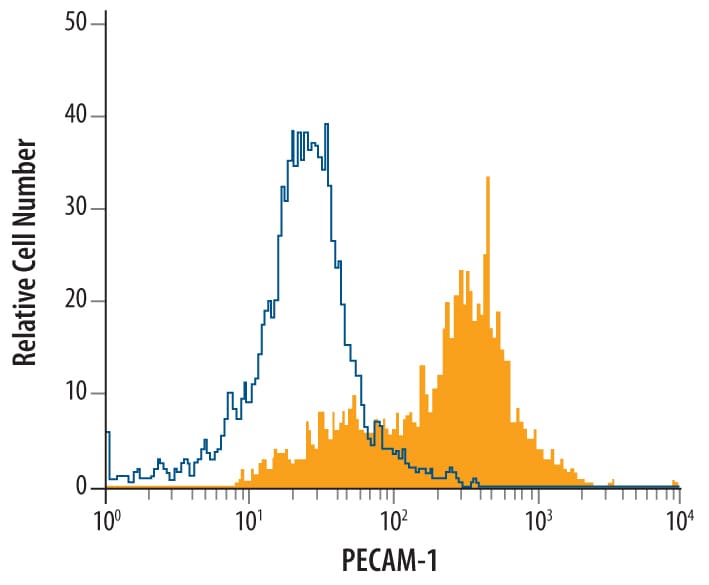
Detection of CD31/PECAM‑1 in Porcine PBMCs by Flow Cytometry.
Porcine peripheral blood mononuclear cells were stained with Rat Anti-Porcine CD31/PECAM-1 Monoclonal Antibody (Catalog # MAB33871, filled histogram) or isotype control antibody (Catalog # MAB005, open histogram), followed by Phycoerythrin-conjugated Anti-Rat IgG F(ab')2Secondary Antibody (Catalog # F0105B).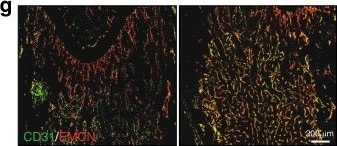
Detection of CD31/PECAM-1 by Immunohistochemistry
The numbers of mononuclear TRAP+ cells, type H vessels, and osteoblasts were increased in the SKO mice. a Representative images of TRAP staining of the distal femurs of 3-month-old WT and SKO mice. b–d Quantitative analysis of the TRAP staining in a. The number and size of TRAP+ cells were normalized to the bone area. Mon-Nuc: mononuclear TRAP+ cells, Multi-Nuc: multinuclear TRAP+ cells. n = 5, ***P < 0.001. Error bar represents the standard error of the mean. e Representative images of immunohistological staining of osteocalcin in the distal femurs of the 3-month-old WT and SKO mice. f Quantitative analysis of the osteocalcin staining in e. n = 5, *P < 0.05. Error bar represents the standard error of the mean. g Cofluorescence staining of CD31 (green) and endomucin (EMCN) (red) in mouse femurs. h Quantitative analysis of the ratio of CD31 and EMCN double-positive fluorescence intensity in g. n = 5, *P < 0.05. Error bar represents the standard error of the mean. ELISAs of OCN (i) and CTX (j) in the serum of the WT and SKO mice. The mice were sacrificed at 3 months of age. n = 5, *P < 0.05 Image collected and cropped by CiteAb from the following open publication (https://pubmed.ncbi.nlm.nih.gov/34719673), licensed under a CC-BY license. Not internally tested by R&D Systems.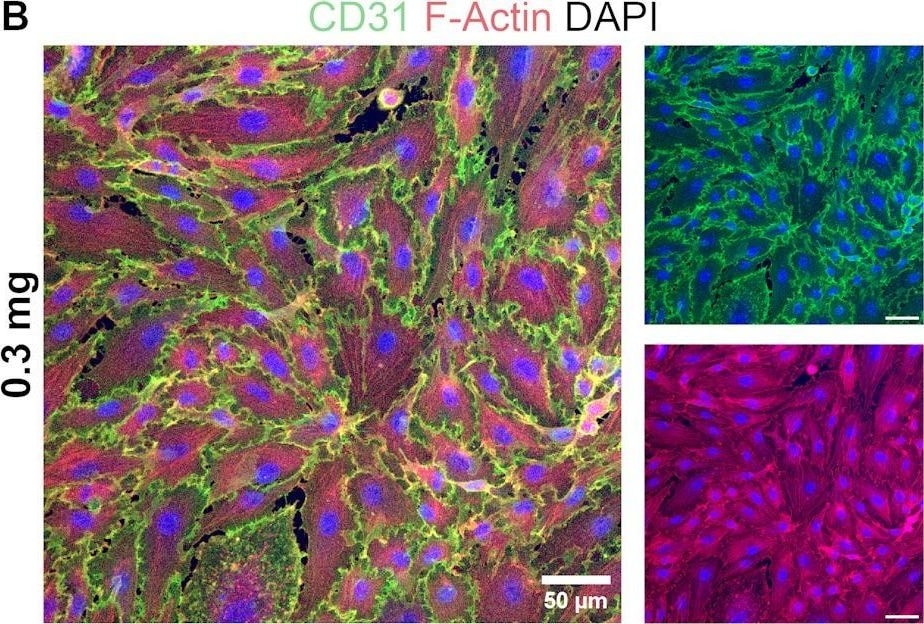
Detection of CD31/PECAM-1 by Immunohistochemistry
Staining of endothelial junctions on porcine arterial endothelial cells (PAECs) after incubation with various alteplase microdoses. (A–F) Representative images of PAECs grown in chamber slides until confluent, treated for 10 min with alteplase microdoses ranging from 0.3 to 7.5 mg and stained by immunofluorescence. CD31 is stained in green, F-actin in red and nuclei are stained in blue (DAPI). Arrows indicate disrupted cell junctions and asterisks indicate areas where cells detached. Images were acquired with a Zeiss LSM980 confocal microscope at 20 × magnification. Scale bar 50 µm. Image collected and cropped by CiteAb from the following open publication (https://www.nature.com/articles/s41598-025-03060-1), licensed under a CC-BY license. Not internally tested by R&D Systems.Applications for Porcine CD31/PECAM-1 Antibody (377537)
CyTOF-ready
Flow Cytometry
Sample: Porcine peripheral blood mononuclear cells
Western Blot
Sample: Recombinant Porcine CD31/PECAM‑1 (Catalog # 3387-PC)
Reviewed Applications
Read 1 review rated 5 using MAB33871 in the following applications:
Flow Cytometry Panel Builder
Bio-Techne Knows Flow Cytometry
Save time and reduce costly mistakes by quickly finding compatible reagents using the Panel Builder Tool.
Advanced Features
- Spectra Viewer - Custom analysis of spectra from multiple fluorochromes
- Spillover Popups - Visualize the spectra of individual fluorochromes
- Antigen Density Selector - Match fluorochrome brightness with antigen density

Formulation, Preparation, and Storage
Purification
Reconstitution
Reconstitute at 0.5 mg/mL in sterile PBS. For liquid material, refer to CoA for concentration.
Formulation
Shipping
Stability & Storage
- 12 months from date of receipt, -20 to -70 °C as supplied.
- 1 month, 2 to 8 °C under sterile conditions after reconstitution.
- 6 months, -20 to -70 °C under sterile conditions after reconstitution.
Calculators
Background: CD31/PECAM-1
References
- Ilan, N. and J.A. Madri (2003) Curr Opin. Cell Biol. 15:515.
- Nasu, K. et al. (1999) Transplantation 68:861.
- Liao, F. et al. (1997) J. Exp. Med. 185:1349.
- Nakada, M.T. et al. (2000) J. Immunol. 164:452.
- Chemnitz, J.M. et al. (2004) J. Immunol. 173:945.
- Ilan, N. et al. (2001) FASEB J. 15:362.
- Eugenin, E.A. et al. (2006)J. Leukoc. Biol. 79:444.
- Losy, J. et al. (1999) 99:169.
- Wang, Y. et al. (2003) Am. J. Physiol. Heart Circ. Physiol. 284:H1008.
- Mamdouh, Z. et al. (2003) Nature 421:748.
- Gao, C. et al. (2003) Blood 102:169.
- Falati, S. et al. (2006) Blood 107:535.
- Wee, J. L. and D.E. Jackson (2005) Blood 106:3816.
- Wu, Y. et al. (2005) J. Immunol. 175:3484.
Long Name
Alternate Names
Gene Symbol
UniProt
Additional CD31/PECAM-1 Products
Product Documents for Porcine CD31/PECAM-1 Antibody (377537)
Certificate of Analysis
To download a Certificate of Analysis, please enter a lot or batch number in the search box below.
Note: Certificate of Analysis not available for kit components.
Product Specific Notices for Porcine CD31/PECAM-1 Antibody (377537)
For research use only
Related Research Areas
Citations for Porcine CD31/PECAM-1 Antibody (377537)
 Powered by Bioz
Customer Reviews for Porcine CD31/PECAM-1 Antibody (377537) (1)
Have you used Porcine CD31/PECAM-1 Antibody (377537)?
Submit a review and receive an Amazon gift card!
$25/€18/£15/$25CAN/¥2500 for a review with an image
$10/€7/£6/$10CAN/¥1110 for a review without an image
Submit a review
Customer Images
-
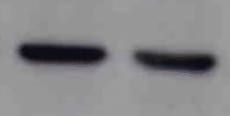
Application: Western BlotSample Tested: Endothelial cellsSpecies: PorcineVerified Customer | Posted 11/24/2021

There are no reviews that match your criteria.
Protocols
Find general support by application which include: protocols, troubleshooting, illustrated assays, videos and webinars.
- 7-Amino Actinomycin D (7-AAD) Cell Viability Flow Cytometry Protocol
- Cellular Response to Hypoxia Protocols
- Extracellular Membrane Flow Cytometry Protocol
- Flow Cytometry Protocol for Cell Surface Markers
- Flow Cytometry Protocol for Staining Membrane Associated Proteins
- Flow Cytometry Staining Protocols
- Flow Cytometry Troubleshooting Guide
- Intracellular Flow Cytometry Protocol Using Alcohol (Methanol)
- Intracellular Flow Cytometry Protocol Using Detergents
- Intracellular Nuclear Staining Flow Cytometry Protocol Using Detergents
- Intracellular Staining Flow Cytometry Protocol Using Alcohol Permeabilization
- Intracellular Staining Flow Cytometry Protocol Using Detergents to Permeabilize Cells
- Propidium Iodide Cell Viability Flow Cytometry Protocol
- Protocol for Liperfluo
- Protocol for the Characterization of Human Th22 Cells
- Protocol for the Characterization of Human Th9 Cells
- Protocol: Annexin V and PI Staining by Flow Cytometry
- Protocol: Annexin V and PI Staining for Apoptosis by Flow Cytometry
- R&D Systems Quality Control Western Blot Protocol
- Troubleshooting Guide: Fluorokine Flow Cytometry Kits
- Troubleshooting Guide: Western Blot Figures
- Western Blot Conditions
- Western Blot Protocol
- Western Blot Protocol for Cell Lysates
- Western Blot Troubleshooting
- Western Blot Troubleshooting Guide
- View all Protocols, Troubleshooting, Illustrated assays and Webinars