
Cytokine Multiplex Assay Kits allow researchers to simultaneously detect the levels of multiple cytokines in a single sample. This is particularly useful for identifying the wide array of changes that can be associated with different pathological conditions. For multianalyte cytokine detection, we offer membrane-based Proteome Profiler Cytokine Antibody Arrays, bead-based Luminex® Assays, and Simple Plex automated ELISAs. For our antibody arrays, we offer human, mouse, or rat XL Cytokine Antibody Arrays that detect 105, 111, or 79 analytes respectively, including interleukins, interferons, chemokines, and members of the tumor necrosis factor superfamily. Our standard Luminex Assays for human, mouse, rat, porcine, and non-human primate (NHP) may also be used to detect many of these same analytes. With a menu of more than 490 analytes to select from, multiplexing with our Luminex assays provides the ability to simultaneously assess up to 50 analytes using magnetic microparticles. Experience consistent biomarker detection and ultra-sensitive results in less than 90 minutes with Ella, our automated benchtop ELISA. Simple Plex offers an extensive selection of over 250 fully validated assays essential to complete your cytokine research. Whether you want a stocked panel, ready to ship in just 2 days, a custom panel with up to 8 assays specific to your research, or a single assay cartridge for up to 72 samples ran simultaneously, Simple Plex has the solution to your research needs.
Rat Luminex® Discovery Assay
R&D Systems | Catalog # LXSARM

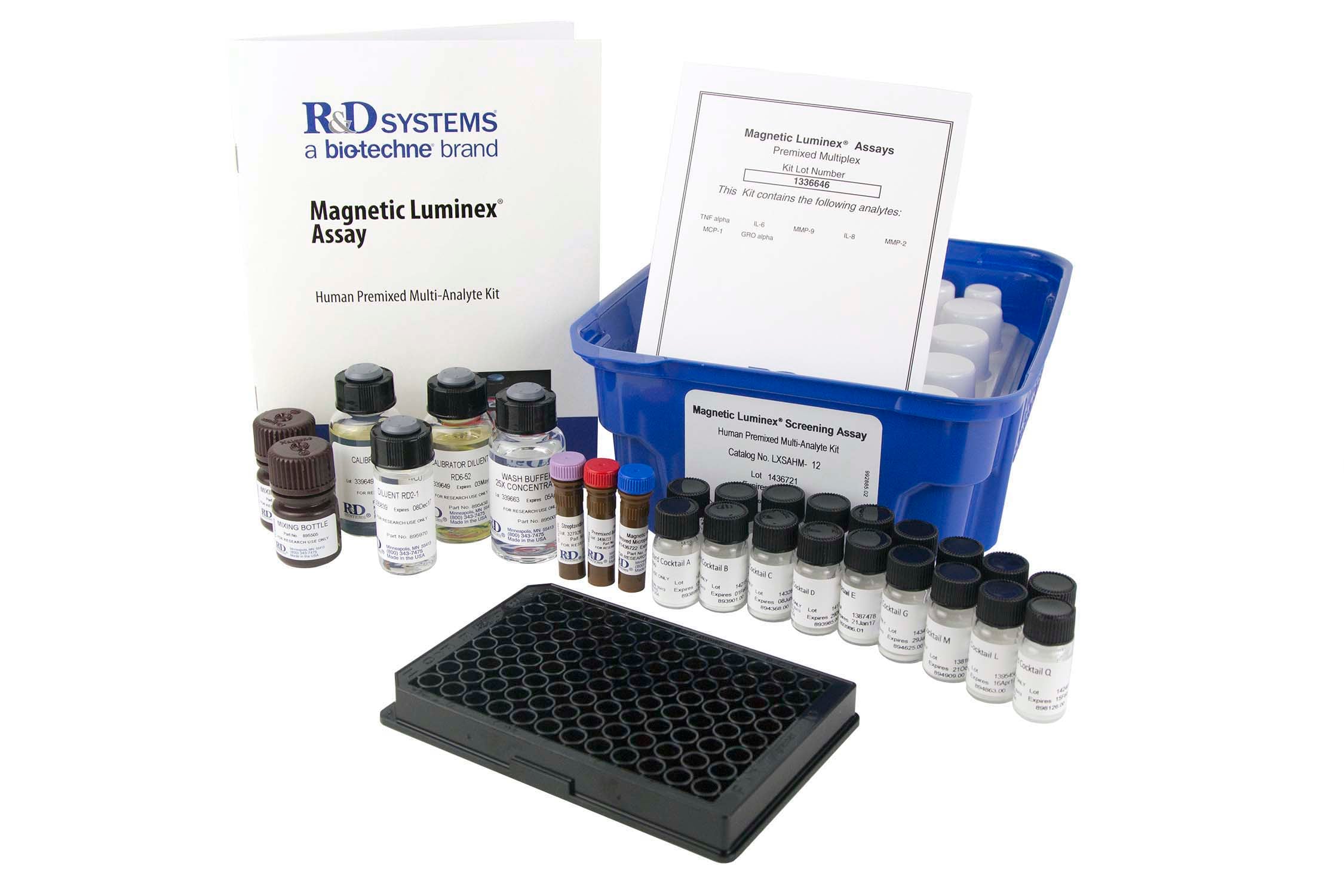
Luminex Discovery Assays
Rat Luminex® Discovery Assay is designed for detecting 18 rat analytes in serum, plasma, or tissue culture supernatants simultaneously. The Luminex Discovery Assays provide extensive flexibility for multiplexing. These assays are fully customizable, offering a selection of analytes to suit individual research needs.
Explore customization options and build your panel with the Luminex Assay Customization Tool.
Key Product Details
Assay Type
Format
Species
Analytes Detected
Build Your Assay
Make Selections Below to Configure Your Custom Luminex® Assay
Product Features
Magnetic Luminex Assays are the most flexible bead-based multiplex assays that we offer. They allow up to 50 user-defined target analytes to be simultaneously profiled using cell culture supernates, serum, or plasma samples.
- Simultaneously profile your selection of analytes in one sample.
- Choose from a wide menu of analytes, including many unique analytes
- Requires a small sample volume (<50 µL)
- Run your assay in just 3-4 hours
- Mass-calibrated standards for consistent results with every new lot of material
- Enough reagents for one 96-well plate
- Quick turn-around time: Kits are typically shipped within 5-10 days of ordering*
*Please allow additional time for international orders.
Performance Validation
R&D Systems Luminex Assays are validated for use with cell culture supernatants, plasma and serum. All Luminex assays are tested for sensitivity, intra-assay precision, inter-assay precision and to ensure assay linearity for validated sample types. Antibody pairs are selected and tested to confirm the parallel detection of natural and recombinant standard protein and to ensure the accurate determination of target analytes within biological samples. Assays for each target analyte are screened against all target analytes to confirm low antibody cross-reactivity.
Kit Contents
- Premixed cocktail of antibody-coated Magnetic beads
- Premixed cocktail of biotinylated detection antibody
- Standard Cocktail(s)
- Bead Diluent
- Biotin Antibody Diluent
- Calibrator Diluent
- Wash Buffer
- Streptavidin-PE
- One flat-bottom 96-well Microplate
- Foil Plate Sealers (4)
- Mixing Bottle
- Standard Value Card**
**A standard curve must be generated each time an assay is run, utilizing values from the Certificate of Analysis provided with each Luminex Assay.
Which Luminex Assay is Right for Me?
Assays for the Luminex platform are offered as High Performance Assays or Discovery Assays.
High Performance Assays are optimized and validated as complete panels with a focused set of analytes. You can choose from Fixed Panels, Premixed options, or Configurable User Mix formats depending on your needs.
Discovery Assays deliver maximum flexibility, enabling the creation of fully customized panels tailored to your research needs. With universal reagents validated for compatibility across all analytes in the menu, they support endless customization possibilities.
Additional Information About Luminex Assays
All R&D Systems Luminex Assays are designed for use with any Luminex instrument including MAGPIX, Luminex 200, FLEXMAP 3D, and the INTELLIFLEX.
Luminex assays use color-coded, magnetic microparticles coated with analyte-specific antibodies to enable multiplex quantitation. During the assay, standards and samples are added to the wells, where target analytes bind to the capture antibodies. A biotinylated detection antibody cocktail is then introduced, followed by a Streptavidin-PE conjugate that generates a fluorescent signal proportional to the amount of analyte present.
Each microparticle is identified by a unique signature and the signal intensity is measured using a Luminex instrument. These assays are designed to deliver reliable and reproducible results with validated antibody pairs and optimized protocols. They are well suited for applications that require sensitivity, accuracy, and confidence in your data while enabling efficient multiplexing to measure multiple targets simultaneously.
Preparation and Storage
Shipping
Stability & Storage
• Avoid freezing microparticles.
• Protect microparticles from light.
Background: Multiplex Cytokine Assay Kits
Additional Multiplex Cytokine Assay Kits Products
Product Documents for Rat Luminex® Discovery Assay
Certificate of Analysis
To download a Certificate of Analysis, please enter a lot or batch number in the search box below.
Note: Certificate of Analysis not available for kit components.
Product Specific Notices for Rat Luminex® Discovery Assay
Luminex® is a registered trademark of Luminex Corporation.
For research use only
Citations for Rat Luminex® Discovery Assay
 Powered by Bioz
Customer Reviews for Rat Luminex® Discovery Assay (2)
Have you used Rat Luminex® Discovery Assay?
Submit a review and receive an Amazon gift card!
$25/€18/£15/$25CAN/¥2500 for a review with an image
$10/€7/£6/$10CAN/¥1110 for a review without an image
Submit a review
Customer Images
-
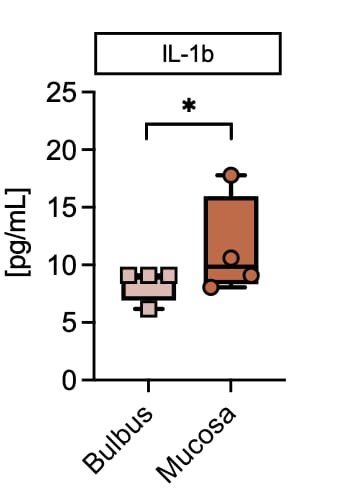
Sample Tested: Olfactory enshathing cells and Schwann cellsVerified Customer | Posted 08/02/2023

-
Sample Tested: Recombinant proteinVerified Customer | Posted 11/20/2021in vitro work with rat recombinant protein
There are no reviews that match your criteria.
FAQs for Rat Luminex® Discovery Assay
-
Q: Are QC controls available for both the Luminex Discovery and High Performance Assays?
A: Controls are not offered for Luminex Discovery Assays, but may be formulated by the end user. A general guide may be available upon request. Controls are available for select Luminex High Performance Assays and can be found under the supplemental products tab on the product webpage. Some High Performance Luminex kits include controls and the controls will be listed in the materials provided section on the product datasheet. When included in the kit, controls are not sold separately.
-
Q: At what frequency should Calibration and Verification tests be performed?
A: It is recommended that a Calibration test be performed within one week prior to running an assay. A Verification test should be performed prior to data acquisition on the day of running an assay.
-
Q: Does the Luminex Rat Magnetic Assay detect soluble form or membrane-bound analyte?
A: The sample types typically validated by R&D Systems for Luminex assays contain soluble form of proteins, and therefore it is expected that the soluble form of proteins are detected. It is possible there are assays that also detect the membrane form of respective target proteins, however, R&D Systems does not generally evaluate our assays against samples known to contain membrane-bound proteins.
-
Q: Is the reconstituted standard a concentrate?
A: For Discovery Assays, each standard cocktail is a concentrate upon reconstitution with the volume specified on the Certificate of Analysis (CoA). After creating Standard 1 following the table in the product insert, the Standard 1 value is the concentration listed on the CoA.
-
Q: What is the reason for the recommendation to use 35 µL sample volume, instead of the default 50 µL volume, for Luminex multiplex containing > 25 analytes, when assayed on Luminex MAGPIX® analyzer?
A: R&D Systems recommend 35 µL sample volume for > 25 analytes to control the number of beads in the sample load when using Luminex MAGPIX® analyzer. Luminex MAGPIX® analyzer is a non-flow-based reader which utilizes a magnet to hold the magnetic microparticles in a monolayer in a chamber where the beads are imaged and then processed by the software to generate data. Since MAGPIX® system pushes the entire Sample Load Volume into the chamber, multiplex assay containing > 25 analytes may overload the chamber capacity with 50 µL sample load default setting. The captured images can have too many beads in them to give accurate results, and some of the analytes/regions may present lower than desired bead counts.
-
Q: Why does the Luminex Assay Customization Tool provide the option to split based on dilution?
A: The feature to split based on dilution enables investigators to configure premix Luminex panels based on sample type (cell culture supernates, serum, and plasma). This keeps analytes requiring the same dilution factor within a single panel, while separating analytes requiring different dilutions. The recommended dilution factor for each analyte may be different for each sample type, and the suggested sample dilutions are built into the Luminex Customization Tool. Note that the suggested dilution factors are based on samples from healthy volunteers.
-
Q: Are QC controls available for both the Luminex Discovery and High Performance Assays?
A: Controls are not offered for Luminex Discovery Assays, but may be formulated by the end user. A general guide may be available upon request. Controls are available for select Luminex High Performance Assays and can be found under the supplemental products tab on the product webpage. Some High Performance Luminex kits include controls and the controls will be listed in the materials provided section on the product datasheet. When included in the kit, controls are not sold separately.
-
Q: At what frequency should Calibration and Verification tests be performed?
A: It is recommended that a Calibration test be performed within one week prior to running an assay. A Verification test should be performed prior to data acquisition on the day of running an assay.
-
Q: Does the Luminex Rat Magnetic Assay detect soluble form or membrane-bound analyte?
A: The sample types typically validated by R&D Systems for Luminex assays contain soluble form of proteins, and therefore it is expected that the soluble form of proteins are detected. It is possible there are assays that also detect the membrane form of respective target proteins, however, R&D Systems does not generally evaluate our assays against samples known to contain membrane-bound proteins.
-
Q: Is the reconstituted standard a concentrate?
A: For Discovery Assays, each standard cocktail is a concentrate upon reconstitution with the volume specified on the Certificate of Analysis (CoA). After creating Standard 1 following the table in the product insert, the Standard 1 value is the concentration listed on the CoA.
-
Q: What is the reason for the recommendation to use 35 µL sample volume, instead of the default 50 µL volume, for Luminex multiplex containing > 25 analytes, when assayed on Luminex MAGPIX® analyzer?
A: R&D Systems recommend 35 µL sample volume for > 25 analytes to control the number of beads in the sample load when using Luminex MAGPIX® analyzer. Luminex MAGPIX® analyzer is a non-flow-based reader which utilizes a magnet to hold the magnetic microparticles in a monolayer in a chamber where the beads are imaged and then processed by the software to generate data. Since MAGPIX® system pushes the entire Sample Load Volume into the chamber, multiplex assay containing > 25 analytes may overload the chamber capacity with 50 µL sample load default setting. The captured images can have too many beads in them to give accurate results, and some of the analytes/regions may present lower than desired bead counts.
-
Q: Why does the Luminex Assay Customization Tool provide the option to split based on dilution?
A: The feature to split based on dilution enables investigators to configure premix Luminex panels based on sample type (cell culture supernates, serum, and plasma). This keeps analytes requiring the same dilution factor within a single panel, while separating analytes requiring different dilutions. The recommended dilution factor for each analyte may be different for each sample type, and the suggested sample dilutions are built into the Luminex Customization Tool. Note that the suggested dilution factors are based on samples from healthy volunteers.
-
Q: Are QC controls available for both the Luminex Discovery and High Performance Assays?
A: Controls are not offered for Luminex Discovery Assays, but may be formulated by the end user. A general guide may be available upon request. Controls are available for select Luminex High Performance Assays and can be found under the supplemental products tab on the product webpage. Some High Performance Luminex kits include controls and the controls will be listed in the materials provided section on the product datasheet. When included in the kit, controls are not sold separately.
-
Q: At what frequency should Calibration and Verification tests be performed?
A: It is recommended that a Calibration test be performed within one week prior to running an assay. A Verification test should be performed prior to data acquisition on the day of running an assay.
-
Q: Does the Luminex Rat Magnetic Assay detect soluble form or membrane-bound analyte?
A: The sample types typically validated by R&D Systems for Luminex assays contain soluble form of proteins, and therefore it is expected that the soluble form of proteins are detected. It is possible there are assays that also detect the membrane form of respective target proteins, however, R&D Systems does not generally evaluate our assays against samples known to contain membrane-bound proteins.
-
Q: Is the reconstituted standard a concentrate?
A: For Discovery Assays, each standard cocktail is a concentrate upon reconstitution with the volume specified on the Certificate of Analysis (CoA). After creating Standard 1 following the table in the product insert, the Standard 1 value is the concentration listed on the CoA.
-
Q: What is the reason for the recommendation to use 35 µL sample volume, instead of the default 50 µL volume, for Luminex multiplex containing > 25 analytes, when assayed on Luminex MAGPIX® analyzer?
A: R&D Systems recommend 35 µL sample volume for > 25 analytes to control the number of beads in the sample load when using Luminex MAGPIX® analyzer. Luminex MAGPIX® analyzer is a non-flow-based reader which utilizes a magnet to hold the magnetic microparticles in a monolayer in a chamber where the beads are imaged and then processed by the software to generate data. Since MAGPIX® system pushes the entire Sample Load Volume into the chamber, multiplex assay containing > 25 analytes may overload the chamber capacity with 50 µL sample load default setting. The captured images can have too many beads in them to give accurate results, and some of the analytes/regions may present lower than desired bead counts.
-
Q: Why does the Luminex Assay Customization Tool provide the option to split based on dilution?
A: The feature to split based on dilution enables investigators to configure premix Luminex panels based on sample type (cell culture supernates, serum, and plasma). This keeps analytes requiring the same dilution factor within a single panel, while separating analytes requiring different dilutions. The recommended dilution factor for each analyte may be different for each sample type, and the suggested sample dilutions are built into the Luminex Customization Tool. Note that the suggested dilution factors are based on samples from healthy volunteers.
-
Q: Are QC controls available for both the Luminex Discovery and High Performance Assays?
A: Controls are not offered for Luminex Discovery Assays, but may be formulated by the end user. A general guide may be available upon request. Controls are available for select Luminex High Performance Assays and can be found under the supplemental products tab on the product webpage. Some High Performance Luminex kits include controls and the controls will be listed in the materials provided section on the product datasheet. When included in the kit, controls are not sold separately.
-
Q: At what frequency should Calibration and Verification tests be performed?
A: It is recommended that a Calibration test be performed within one week prior to running an assay. A Verification test should be performed prior to data acquisition on the day of running an assay.
-
Q: Does the Luminex Rat Magnetic Assay detect soluble form or membrane-bound analyte?
A: The sample types typically validated by R&D Systems for Luminex assays contain soluble form of proteins, and therefore it is expected that the soluble form of proteins are detected. It is possible there are assays that also detect the membrane form of respective target proteins, however, R&D Systems does not generally evaluate our assays against samples known to contain membrane-bound proteins.
-
Q: Is the reconstituted standard a concentrate?
A: For Discovery Assays, each standard cocktail is a concentrate upon reconstitution with the volume specified on the Certificate of Analysis (CoA). After creating Standard 1 following the table in the product insert, the Standard 1 value is the concentration listed on the CoA.
-
Q: What is the reason for the recommendation to use 35 µL sample volume, instead of the default 50 µL volume, for Luminex multiplex containing > 25 analytes, when assayed on Luminex MAGPIX® analyzer?
A: R&D Systems recommend 35 µL sample volume for > 25 analytes to control the number of beads in the sample load when using Luminex MAGPIX® analyzer. Luminex MAGPIX® analyzer is a non-flow-based reader which utilizes a magnet to hold the magnetic microparticles in a monolayer in a chamber where the beads are imaged and then processed by the software to generate data. Since MAGPIX® system pushes the entire Sample Load Volume into the chamber, multiplex assay containing > 25 analytes may overload the chamber capacity with 50 µL sample load default setting. The captured images can have too many beads in them to give accurate results, and some of the analytes/regions may present lower than desired bead counts.
-
Q: Why does the Luminex Assay Customization Tool provide the option to split based on dilution?
A: The feature to split based on dilution enables investigators to configure premix Luminex panels based on sample type (cell culture supernates, serum, and plasma). This keeps analytes requiring the same dilution factor within a single panel, while separating analytes requiring different dilutions. The recommended dilution factor for each analyte may be different for each sample type, and the suggested sample dilutions are built into the Luminex Customization Tool. Note that the suggested dilution factors are based on samples from healthy volunteers.
-
Q: Are QC controls available for both the Luminex Discovery and High Performance Assays?
A: Controls are not offered for Luminex Discovery Assays, but may be formulated by the end user. A general guide may be available upon request. Controls are available for select Luminex High Performance Assays and can be found under the supplemental products tab on the product webpage. Some High Performance Luminex kits include controls and the controls will be listed in the materials provided section on the product datasheet. When included in the kit, controls are not sold separately.
-
Q: At what frequency should Calibration and Verification tests be performed?
A: It is recommended that a Calibration test be performed within one week prior to running an assay. A Verification test should be performed prior to data acquisition on the day of running an assay.
-
Q: Does the Luminex Rat Magnetic Assay detect soluble form or membrane-bound analyte?
A: The sample types typically validated by R&D Systems for Luminex assays contain soluble form of proteins, and therefore it is expected that the soluble form of proteins are detected. It is possible there are assays that also detect the membrane form of respective target proteins, however, R&D Systems does not generally evaluate our assays against samples known to contain membrane-bound proteins.
-
Q: Is the reconstituted standard a concentrate?
A: For Discovery Assays, each standard cocktail is a concentrate upon reconstitution with the volume specified on the Certificate of Analysis (CoA). After creating Standard 1 following the table in the product insert, the Standard 1 value is the concentration listed on the CoA.
-
Q: What is the reason for the recommendation to use 35 µL sample volume, instead of the default 50 µL volume, for Luminex multiplex containing > 25 analytes, when assayed on Luminex MAGPIX® analyzer?
A: R&D Systems recommend 35 µL sample volume for > 25 analytes to control the number of beads in the sample load when using Luminex MAGPIX® analyzer. Luminex MAGPIX® analyzer is a non-flow-based reader which utilizes a magnet to hold the magnetic microparticles in a monolayer in a chamber where the beads are imaged and then processed by the software to generate data. Since MAGPIX® system pushes the entire Sample Load Volume into the chamber, multiplex assay containing > 25 analytes may overload the chamber capacity with 50 µL sample load default setting. The captured images can have too many beads in them to give accurate results, and some of the analytes/regions may present lower than desired bead counts.
-
Q: Why does the Luminex Assay Customization Tool provide the option to split based on dilution?
A: The feature to split based on dilution enables investigators to configure premix Luminex panels based on sample type (cell culture supernates, serum, and plasma). This keeps analytes requiring the same dilution factor within a single panel, while separating analytes requiring different dilutions. The recommended dilution factor for each analyte may be different for each sample type, and the suggested sample dilutions are built into the Luminex Customization Tool. Note that the suggested dilution factors are based on samples from healthy volunteers.
-
Q: Are QC controls available for both the Luminex Discovery and High Performance Assays?
A: Controls are not offered for Luminex Discovery Assays, but may be formulated by the end user. A general guide may be available upon request. Controls are available for select Luminex High Performance Assays and can be found under the supplemental products tab on the product webpage. Some High Performance Luminex kits include controls and the controls will be listed in the materials provided section on the product datasheet. When included in the kit, controls are not sold separately.
-
Q: At what frequency should Calibration and Verification tests be performed?
A: It is recommended that a Calibration test be performed within one week prior to running an assay. A Verification test should be performed prior to data acquisition on the day of running an assay.
-
Q: Does the Luminex Rat Magnetic Assay detect soluble form or membrane-bound analyte?
A: The sample types typically validated by R&D Systems for Luminex assays contain soluble form of proteins, and therefore it is expected that the soluble form of proteins are detected. It is possible there are assays that also detect the membrane form of respective target proteins, however, R&D Systems does not generally evaluate our assays against samples known to contain membrane-bound proteins.
-
Q: Is the reconstituted standard a concentrate?
A: For Discovery Assays, each standard cocktail is a concentrate upon reconstitution with the volume specified on the Certificate of Analysis (CoA). After creating Standard 1 following the table in the product insert, the Standard 1 value is the concentration listed on the CoA.
-
Q: What is the reason for the recommendation to use 35 µL sample volume, instead of the default 50 µL volume, for Luminex multiplex containing > 25 analytes, when assayed on Luminex MAGPIX® analyzer?
A: R&D Systems recommend 35 µL sample volume for > 25 analytes to control the number of beads in the sample load when using Luminex MAGPIX® analyzer. Luminex MAGPIX® analyzer is a non-flow-based reader which utilizes a magnet to hold the magnetic microparticles in a monolayer in a chamber where the beads are imaged and then processed by the software to generate data. Since MAGPIX® system pushes the entire Sample Load Volume into the chamber, multiplex assay containing > 25 analytes may overload the chamber capacity with 50 µL sample load default setting. The captured images can have too many beads in them to give accurate results, and some of the analytes/regions may present lower than desired bead counts.
-
Q: Why does the Luminex Assay Customization Tool provide the option to split based on dilution?
A: The feature to split based on dilution enables investigators to configure premix Luminex panels based on sample type (cell culture supernates, serum, and plasma). This keeps analytes requiring the same dilution factor within a single panel, while separating analytes requiring different dilutions. The recommended dilution factor for each analyte may be different for each sample type, and the suggested sample dilutions are built into the Luminex Customization Tool. Note that the suggested dilution factors are based on samples from healthy volunteers.