Recombinant Human IL-2 Protein

R&D Systems | Catalog # 202-IL

GMP Version Available: BT-002-GMP
GMP
R&D Systems
Loading...

Key Product Details

  • R&D Systems E. coli-derived Recombinant Human IL-2 Protein (202-IL)
  • Quality control testing to verify active proteins with lot specific assays by in-house scientists
  • All R&D Systems proteins are covered with a 100% guarantee

Source

E. coli

Accession Number

Applications

Bioactivity
Loading...

Product Specifications

Source

E. coli-derived human IL-2 protein
Ala21-Thr153, with an N-terminal Met

Purity

>97%, by SDS-PAGE under reducing conditions and visualized by silver stain.

Endotoxin Level

<0.10 EU per 1 μg of the protein by the LAL method.

N-terminal Sequence Analysis

Met

Predicted Molecular Mass

15 kDa

SDS-PAGE

13 kDa, under reducing conditions.

Activity

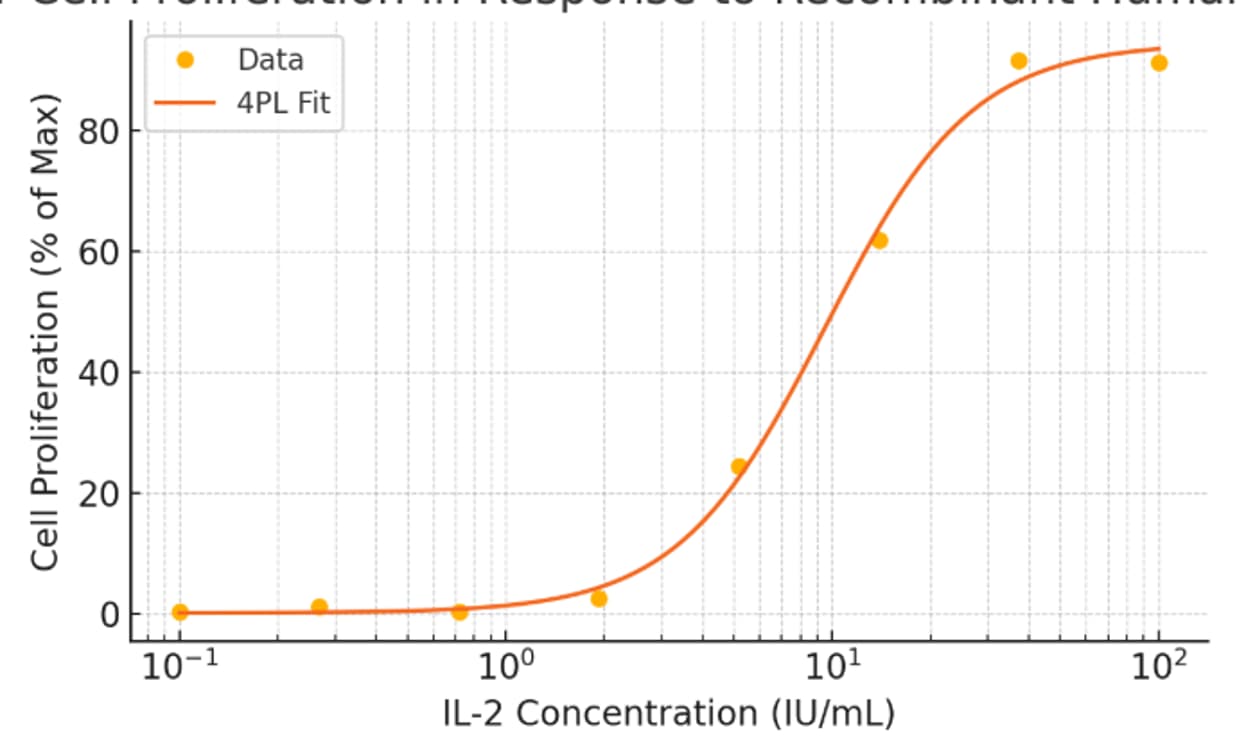
Measured in a cell proliferation assay using CTLL‑2 mouse cytotoxic T cells. Gearing, A.J.H. and C.B. Bird (1987) in Lymphokines and Interferons, A Practical Approach. Clemens, M.J. et al. (eds): IRL Press. 295.
The ED50 for this effect is 0.0500-0.250 ng/mL.

Reviewed Applications

Read 3 reviews rated 4.7 using 202-IL in the following applications:

Scientific Data Images for Recombinant Human IL-2 Protein

Recombinant Human IL-2 Protein Bioactivity Comparison

As an alternative, please consider our next generation Recombinant Human IL-2 (BT-002). It has equivalent bioactivity to Recombinant Human IL-2 (Catalog # 202-IL). It combines R&D Systems quality with scalability that allows for a solid supply chain. Both Recombinant Human IL-2 proteins are measured in a cell proliferation assay using CTLL 2 mouse cytotoxic T cells.

Formulation, Preparation, and Storage

Carrier Free
What does CF mean?

CF stands for Carrier Free (CF). We typically add Bovine Serum Albumin (BSA) as a carrier protein to our recombinant proteins. Adding a carrier protein enhances protein stability, increases shelf-life, and allows the recombinant protein to be stored at a more dilute concentration. The carrier free version does not contain BSA.

What formulation is right for me?

In general, we advise purchasing the recombinant protein with BSA for use in cell or tissue culture, or as an ELISA standard. In contrast, the carrier free protein is recommended for applications, in which the presence of BSA could interfere.

Carrier: 202-IL
Formulation Lyophilized from a 0.2 μm filtered solution in Acetonitrile and TFA with BSA as a carrier protein.
Reconstitution Reconstitute at 100 μg/mL in sterile 100 mM Acetic Acid containing at least 0.1% human or bovine serum albumin.  Alternatively, reconstitute at 100 μg/mL in sterile deionized water and use within 24 hours, store at 2 to 8 °C.
Shipping The product is shipped at ambient temperature. Upon receipt, store it immediately at the temperature recommended below.
Stability & Storage Use a manual defrost freezer and avoid repeated freeze-thaw cycles.
  • 12 months from date of receipt, -20 to -70 °C as supplied.
  • 1 month, 2 to 8 °C under sterile conditions after reconstitution.
  • 3 months, -20 to -70 °C under sterile conditions after reconstitution.
Carrier Free: 202-IL/CF
Formulation Lyophilized from a 0.2 μm filtered solution in Acetonitrile and TFA.
Reconstitution Reconstitute at 100 μg/mL in sterile 100 mM Acetic Acid.  Alternatively, reconstitute at 100 μg/mL in sterile deionized water and use within 24 hours, store at 2 to 8 °C.
Shipping The product is shipped with polar packs. Upon receipt, store it immediately at the temperature recommended below.
Stability & Storage Use a manual defrost freezer and avoid repeated freeze-thaw cycles.
  • 12 months from date of receipt, -20 to -70 °C as supplied.
  • 1 month, 2 to 8 °C under sterile conditions after reconstitution.
  • 3 months, -20 to -70 °C under sterile conditions after reconstitution.

Calculators

The reconstitution calculator allows you to quickly calculate the volume of a reagent to reconstitute your vial. Simply enter the mass of reagent and the target concentration and the calculator will determine the rest.

=
÷

Background: IL-2

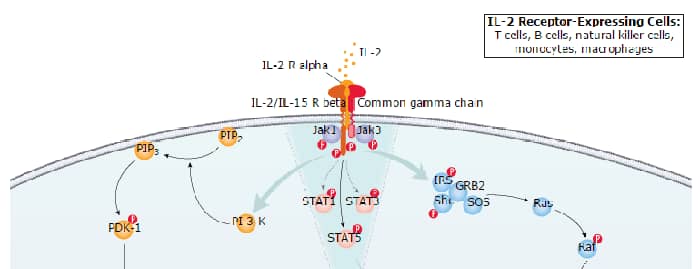
Recombinant IL-2 is widely used in cell culture for the expansion of T cells. IL-2 is expressed by CD4+ and CD8+ T cells, gamma delta T cells, B cells, dendritic cells, and eosinophils (1-3). Mature human IL-2 shares 56% and 66% amino acid (aa) sequence identity with mouse and rat IL-2, respectively. Human and mouse IL-2 exhibit cross-species activity (4). The receptor for IL-2 consists of three subunits that are present on the cell surface in varying preformed complexes (5-7). The 55 kDa IL-2 R alpha is specific for IL-2 and binds with low affinity. The 75 kDa IL-2 R beta, which is also a component of the IL-15 receptor, binds IL-2 with intermediate affinity. The 64 kDa common gamma chain gamma c/IL-2 R gamma, which is shared with the receptors for IL-4, -7, -9, -15, and -21, does not independently interact with IL-2. Upon ligand binding, signal transduction is performed by both IL-2 R beta and gamma c.

IL-2 is best known for its autocrine and paracrine activity on T cells. It drives resting T cells to proliferate and induces IL-2 and IL-2 R alpha synthesis (1, 2). It contributes to T cell homeostasis by promoting the Fas-induced death of naïve CD4+ T cells but not activated CD4+ memory lymphocytes (8). IL-2 plays a central role in the expansion and maintenance of regulatory T cells, although it inhibits the development of Th17 polarized cells (9-11). Thus, IL-2 may be a key cytokine in the natural suppression of autoimmunity (12, 13).

IL-2 expression and concentration can have either immunostimulatory effects at high doses or immunosuppressive effects at low doses due to its preferential binding to different receptor subunits expressed by various immune cell types. This has led to the generation of recombinant IL-2 variants aimed at modifying IL-2 receptor binding for increased antitumor efficacy (14, 15). These variants are typically used in combination with immune checkpoint inhibitors instead of as a monotherapy (14). IL-2 can be genetically engineered to express in NK cells for CAR T cell therapies, and in combination with other cytokines like IL-15, can increase cell viability and proliferation (16). In addition to adoptive cell transfer and checkpoint blockade inhibitors, cancer vaccines that boost immune responses have been combined with IL-2 treatment with promising results in recent studies (15).

In cell culture, IL-2 is a frequently used cytokine for the proliferation, differentiation, and increased antibody secretion of B cells as they transform into plasma cells in vitro (17). IL-2 is also a classically used cytokine for the expansion of NK cells, early differentiated T cells and effector memory Treg cells for adoptive cell transfer cancer immunotherapy (16, 18). GMP IL-2 is a commonly used supplement for the expansion of these cell types for cellular therapies.

References

  1. Ma, A. et al. (2006) Annu. Rev. Immunol. 24:657.
  2. Gaffen, S.L. and K.D. Liu (2004) Cytokine 28:109.
  3. Taniguchi, T. et al. (1983) Nature 302:305.
  4. Mosmann, T.R. et al. (1987) J. Immunol. 138:1813.
  5. Liparoto, S.F. et al. (2002) Biochemistry 41:2543.
  6. Wang, X. et al. (2005) Science 310:1159.
  7. Bodnar, A. et al. (2008) Immunol. Lett. 116:117.
  8. Jaleco, S. et al. (2003) J. Immunol. 171:61.
  9. Malek, T.R. (2003) J. Leukoc. Biol. 74:961.
  10. Laurence, A. et al. (2007) Immunity 26:371.
  11. Kryczek, I. et al. (2007) J. Immunol. 178:6730.
  12. Afzali, B. et al. (2007) Clin. Exp. Immunol. 148:32.
  13. Fehervari, Z.et al. (2006) Trends Immunol. 27:109.
  14. Xue, D. et al. (2021) Antibody Therapeutics. 4(2): 123-133.
  15. Wolfarth, A.A. et al. (2022) Immune Netw. 22(1): e5.
  16. Koehl, U. et al. (2015) Oncoimmunology. 5(4).
  17. Marsman, C. et al. (2022) Front. In Immunol. 13(815449).
  18. Chamucero-Millares, J.A. et al. (2021) Cellular Immunology. 360(104257).

Long Name

Interleukin 2

Alternate Names

Aldesleukin, IL2, Proleukin, TCGF

Entrez Gene IDs

3558 (Human); 16183 (Mouse); 116562 (Rat); 396868 (Porcine); 280822 (Bovine); 403989 (Canine); 100034204 (Equine); 751114 (Feline); 100302458 (Rabbit)

Gene Symbol

IL2

UniProt

Additional IL-2 Products

Product Documents for Recombinant Human IL-2 Protein

Certificate of Analysis

To download a Certificate of Analysis, please enter a lot or batch number in the search box below.

Note: Certificate of Analysis not available for kit components.

Product Specific Notices for Recombinant Human IL-2 Protein

For research use only

Citations for Recombinant Human IL-2 Protein

Customer Reviews for Recombinant Human IL-2 Protein (3)

4.7 out of 5
3 Customer Ratings
5 Stars
67%
4 Stars
33%
3 Stars
0%
2 Stars
0%
1 Stars
0%

Have you used Recombinant Human IL-2 Protein?

Submit a review and receive an Amazon gift card!

$25/€18/£15/$25CAN/¥2500 Yen for a review with an image

$10/€7/£6/$10CAN/¥1110 Yen for a review without an image

Submit a review
Amazon Gift Card

Customer Images


Showing  1 - 3 of 3 reviews Showing All
Filter By:
  • Recombinant Human IL-2 Protein
    Name: Anonymous
    Application: Cell Proliferation
    Verified Customer | Posted 08/27/2025
  • Recombinant Human IL-2 Protein
    Name: Anonymous
    Application: Cell Proliferation
    Verified Customer | Posted 06/03/2025
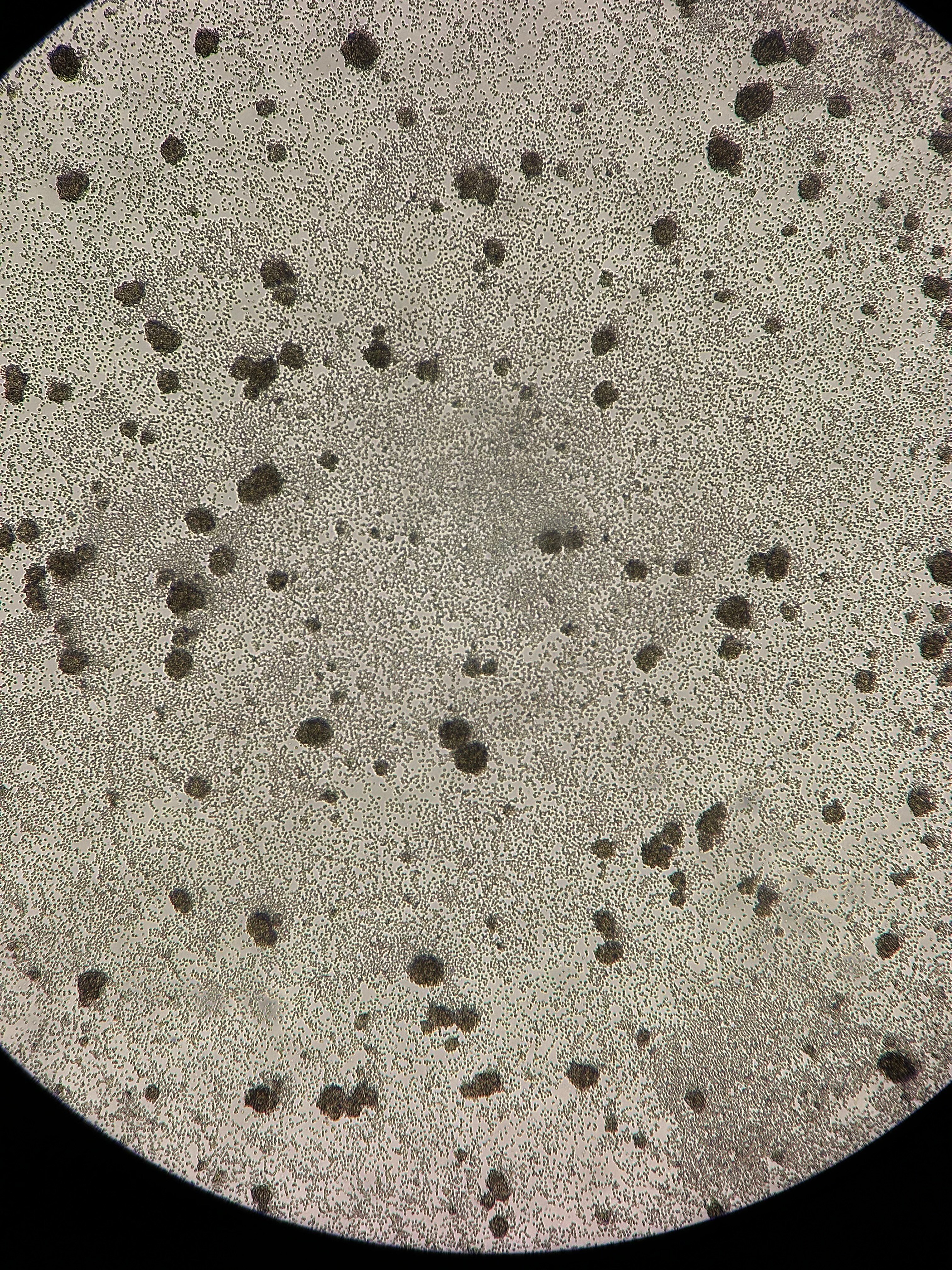
    It promotes strong, dose-dependent proliferation of activated T cells!
    Recombinant Human IL-2 Protein 202-IL
  • Recombinant Human IL-2 Protein
    Name: Anonymous
    Application: Stem/Immune cell maintenance or differentiation
    Verified Customer | Posted 02/28/2023

There are no reviews that match your criteria.

Showing  1 - 3 of 3 reviews Showing All

FAQs for Recombinant Human IL-2 Protein

Showing  1 - 3 of 3 FAQs Showing All
  • Q: Can Recombinant Human IL-2 Protein (Catalog # 202-IL) be reconstituted in PBS or water?

    A: Recombinant Human IL-2 Protein (202-IL and 202-IL/CF) needs to be reconstituted to 100 μg/mL in sterile 100 mM Acetic Acid. Stability testing has been evaluated on the protein with these reconstitution conditions; we can guarantee performance under these reconstitution conditions. When the protein is diluted with the cell culture media or buffers to the working concentration, the concentration of the acid should be buffered or negligible.

  • Q: we bought the rHIL-2 protein ref 202-IL-500 and it says that the reconstitution has to be done in acetic acid, but I need to use the protein in PBS, is that possible to reconstitute it directly in PBS instead? would it be stable?

    A: It will not be soluble in PBS alone so 100 mM acetic acid is required for it to go into solution. Then you can dilute into PBS only and that should not affect your experimentation.

  • Q: Why do some of R&D Systems proteins require reconstitution in an acidic buffer? Will this buffer hurt the cells?

    A: Proteins should always be reconstituted and stored with the buffer recommended on the datasheet. Some proteins are extremely hydrophobic at neutral pH. If the suggested buffer is not used to reconstitute these proteins, they do not go fully into solution and much of the material may cling to the sides of the vial. When the protein is used for an assay, it can be diluted to working concentration with media or another suitable buffer which will neutralize the small amount of acid and make it safe to use with live cells.

  • Q: Can Recombinant Human IL-2 Protein (Catalog # 202-IL) be reconstituted in PBS or water?

    A: Recombinant Human IL-2 Protein (202-IL and 202-IL/CF) needs to be reconstituted to 100 μg/mL in sterile 100 mM Acetic Acid. Stability testing has been evaluated on the protein with these reconstitution conditions; we can guarantee performance under these reconstitution conditions. When the protein is diluted with the cell culture media or buffers to the working concentration, the concentration of the acid should be buffered or negligible.

  • Q: we bought the rHIL-2 protein ref 202-IL-500 and it says that the reconstitution has to be done in acetic acid, but I need to use the protein in PBS, is that possible to reconstitute it directly in PBS instead? would it be stable?

    A: It will not be soluble in PBS alone so 100 mM acetic acid is required for it to go into solution. Then you can dilute into PBS only and that should not affect your experimentation.

  • Q: Why do some of R&D Systems proteins require reconstitution in an acidic buffer? Will this buffer hurt the cells?

    A: Proteins should always be reconstituted and stored with the buffer recommended on the datasheet. Some proteins are extremely hydrophobic at neutral pH. If the suggested buffer is not used to reconstitute these proteins, they do not go fully into solution and much of the material may cling to the sides of the vial. When the protein is used for an assay, it can be diluted to working concentration with media or another suitable buffer which will neutralize the small amount of acid and make it safe to use with live cells.

  • Q: Can Recombinant Human IL-2 Protein (Catalog # 202-IL) be reconstituted in PBS or water?

    A: Recombinant Human IL-2 Protein (202-IL and 202-IL/CF) needs to be reconstituted to 100 μg/mL in sterile 100 mM Acetic Acid. Stability testing has been evaluated on the protein with these reconstitution conditions; we can guarantee performance under these reconstitution conditions. When the protein is diluted with the cell culture media or buffers to the working concentration, the concentration of the acid should be buffered or negligible.

  • Q: we bought the rHIL-2 protein ref 202-IL-500 and it says that the reconstitution has to be done in acetic acid, but I need to use the protein in PBS, is that possible to reconstitute it directly in PBS instead? would it be stable?

    A: It will not be soluble in PBS alone so 100 mM acetic acid is required for it to go into solution. Then you can dilute into PBS only and that should not affect your experimentation.

  • Q: Why do some of R&D Systems proteins require reconstitution in an acidic buffer? Will this buffer hurt the cells?

    A: Proteins should always be reconstituted and stored with the buffer recommended on the datasheet. Some proteins are extremely hydrophobic at neutral pH. If the suggested buffer is not used to reconstitute these proteins, they do not go fully into solution and much of the material may cling to the sides of the vial. When the protein is used for an assay, it can be diluted to working concentration with media or another suitable buffer which will neutralize the small amount of acid and make it safe to use with live cells.

Showing  1 - 3 of 3 FAQs Showing All
View all FAQs for Proteins and Enzymes