
BMP-4 is a TGF-beta superfamily ligand that is widely expressed from early embryogenesis through adulthood. It plays an important role in mesenchyme formation, epidermal determination, suppression of neural induction, the development of multiple organs, and tissue repair (1-5). The mouse BMP-4 precursor contains a 273 amino acid (aa) propeptide and a 116 aa mature protein (6). The propeptide is cleaved intracellularly by furin or proprotein convertase 6, enabling the 15 kDa mature BMP-4 monomer to form an active disulfide linked homodimer or heterodimer with BMP-7 (7-9). Mature mouse and human BMP-4 share 98% aa sequence identity. Mouse BMP-4 shares 85% aa sequence identity with mouse BMP-2 and 35%-54% with other mouse BMPs. Compared to BMP-4 homodimers, BMP-4/BMP-7 heterodimers exhibit a greater potency in inducing osteogenic differentiation (9). In Xenopus, the heterodimers can also induce the formation of mesoderm, whereas BMP-4 homodimers only provide ventralizing signals for existing mesoderm (10). BMP-4 signals through tetrameric complexes composed of type I (primarily Activin RIA or BMPR-IA) and type II (primarily Activin RIIA or BMPR-II) receptors (11, 12). The bioavailability of BMP-4 is regulated by its interaction with multiple proteins and glycosaminoglycans (13-15).
Recombinant Mouse BMP-4 Protein
R&D Systems | Catalog # 5020-BP


Key Product Details
- R&D Systems CHO-derived Recombinant Mouse BMP-4 Protein (5020-BP)
- Quality control testing to verify active proteins with lot specific assays by in-house scientists
- All R&D Systems proteins are covered with a 100% guarantee
Source
Accession Number
Structure / Form
Applications
Product Specifications
Source
Ser293-Arg408
Purity
Endotoxin Level
N-terminal Sequence Analysis
Predicted Molecular Mass
SDS-PAGE
Activity
The ED50 for this effect is 5-40 ng/mL.
Reviewed Applications
Read 2 reviews rated 4.5 using 5020-BP in the following applications:
Formulation, Preparation, and Storage
Carrier Free
What does CF mean?CF stands for Carrier Free (CF). We typically add Bovine Serum Albumin (BSA) as a carrier protein to our recombinant proteins. Adding a carrier protein enhances protein stability, increases shelf-life, and allows the recombinant protein to be stored at a more dilute concentration. The carrier free version does not contain BSA.
What formulation is right for me?In general, we advise purchasing the recombinant protein with BSA for use in cell or tissue culture, or as an ELISA standard. In contrast, the carrier free protein is recommended for applications, in which the presence of BSA could interfere.
Carrier: 5020-BP
| Formulation | Lyophilized from a 0.2 μm filtered solution in Acetonitrile and TFA with BSA as a carrier protein. |
| Reconstitution | Reconstitute at 100 μg/mL in sterile 4 mM HCl containing at least 0.1% human or bovine serum albumin. |
| Shipping | The product is shipped at ambient temperature. Upon receipt, store it immediately at the temperature recommended below. |
| Stability & Storage | Use a manual defrost freezer and avoid repeated freeze-thaw cycles.
|
Carrier Free: 5020-BP/CF
| Formulation | Lyophilized from a 0.2 μm filtered solution in Acetonitrile and TFA. |
| Reconstitution | Reconstitute at 100 μg/mL in 4 mM HCl. |
| Shipping | The product is shipped at ambient temperature. Upon receipt, store it immediately at the temperature recommended below. |
| Stability & Storage | Use a manual defrost freezer and avoid repeated freeze-thaw cycles.
|
Calculators
Background: BMP-4
References
- Zhang, P. et al. (2008) Blood 111:1933.
- Gambaro, K. et al. (2006) Cell Death Differ. 13:1075.
- Simic, P. and S. Vukicevic (2005) Cytokine Growth Factor Rev. 16:299.
- Sadlon, T.J. et al. (2004) Stem Cells 22:457.
- Frank, D.B. et al. (2005) Circ. Res. 97:496.
- Oida, S. et al. (1995) DNA Seq. 5:273.
- Cui, Y. et al. (1998) EMBO J. 17:4735.
- Cui, Y. et al. (2001) Genes Dev. 15:2797.
- Aono, A. et al. (1995) Biochem. Biophys. Res. Commun. 210:670.
- Nishimatsu, S. and G.H. Thomsen (1998) Mech. Dev. 74:75.
- Chen, D. et al. (2004) Growth Factors 22:233.
- Lavery, K. et al. (2008) J. Biol. Chem. April 24 epub.
- Rosen, V. (2006) Ann. N.Y. Acad. Sci. 1068:19.
- Jones, C.M. and J.C. Smith (1998) Dev. Biol. 194:12.
- Takada, T. et al. (2003) J. Biol. Chem. 278:43229.
Long Name
Alternate Names
Gene Symbol
UniProt
Additional BMP-4 Products
Product Documents for Recombinant Mouse BMP-4 Protein
Certificate of Analysis
To download a Certificate of Analysis, please enter a lot or batch number in the search box below.
Note: Certificate of Analysis not available for kit components.
Product Specific Notices for Recombinant Mouse BMP-4 Protein
For research use only
Citations for Recombinant Mouse BMP-4 Protein
 Powered by Bioz
Customer Reviews for Recombinant Mouse BMP-4 Protein (2)
Have you used Recombinant Mouse BMP-4 Protein?
Submit a review and receive an Amazon gift card!
$25/€18/£15/$25CAN/¥2500 for a review with an image
$10/€7/£6/$10CAN/¥1110 for a review without an image
Submit a review
Customer Images
-
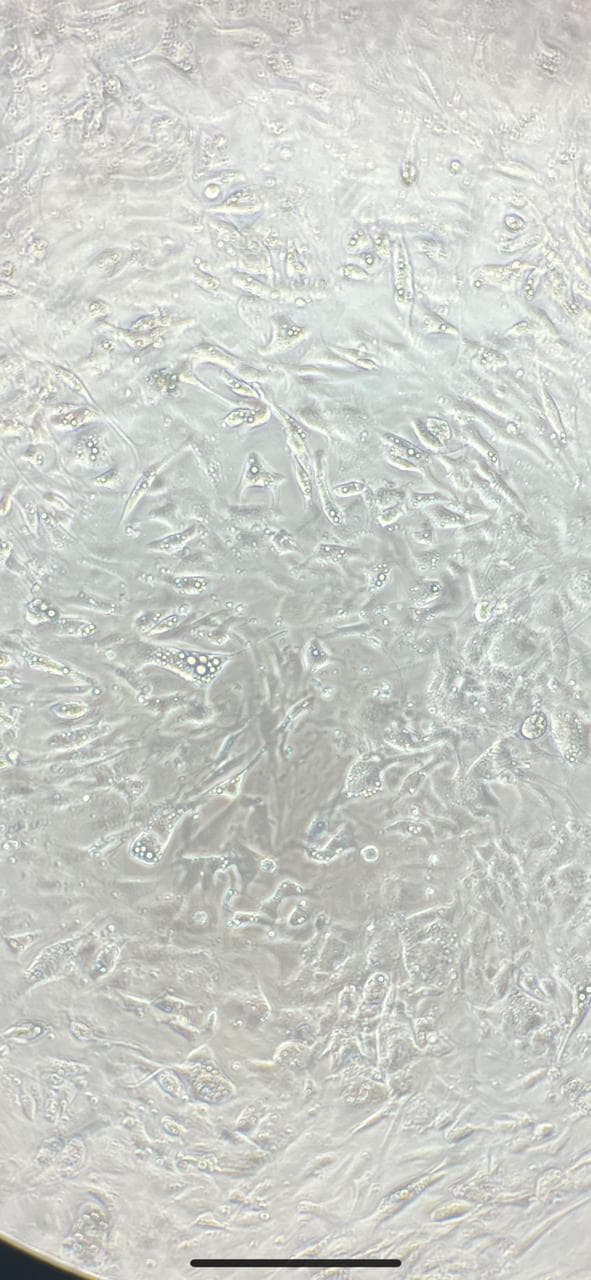
Application: In vitro bioactivity in cell cultureVerified Customer | Posted 10/11/2022BMP-4 was used to initiate the signaling for pre-adipocytes differentiation into adipocytes. Pre-adipocytes were isolated from subcutaneous fat tissue of 8-10 weeks old male C57BL/6J. The picture shows lipid accumulation in pre-adipocytes after 48 h treatment with BMP4 and 72 h treatment with a differentiation cocktail

-
Application: Cardiac RegenerationVerified Customer | Posted 05/17/2016
There are no reviews that match your criteria.


