
TGN46 Antibody - BSA Free
Novus Biologicals | Catalog # NBP1-49643

![Knockout Validated: TGN46 Antibody - BSA Free [NBP1-49643]](https://resources.rndsystems.com/images/products/TGN46-Antibody-Knockout-Validated-NBP1-49643-img0017.jpg "Western Blot: TGN46 Antibody - BSA Free [NBP1-49643]")
Scientific images may be resized, cropped, or adjusted for brightness or contrast for presentation purposes. These updates are limited to presentation and do not affect the underlying scientific interpretation of the data. Where available, additional source data may be provided upon request.
Key Product Details
Validated by
Species Reactivity
Validated:
Cited:
Applications
Validated:
Cited:
Label
Antibody Source
Format
Product Specifications
Immunogen
Reactivity Notes
Localization
Marker
Clonality
Host
Isotype
Scientific Data Images for TGN46 Antibody - BSA Free
Western Blot: TGN46 Antibody - BSA Free [NBP1-49643]
Western Blot: TGN46 Antibody [NBP1-49643] - Western blot shows lysates of HeLa human cervical epithelial carcinoma parental cell line and TGN46 knockout (KO) HeLa cell line. PVDF membrane was probed with 1:1000 of Rabbit Anti-Human TGN46 Polyclonal Antibody (NBP1-49643) followed by HRP-conjugated Anti-Rabbit IgG Secondary Antibody (HAF008). Specific band was detected for TGN46 at approximately 100 kDa (as indicated) in the parental HeLa cell line, but is not detectable in the knockout HeLa cell line. This experiment was conducted under reducing conditions.![Immunocytochemistry/ Immunofluorescence: TGN46 Antibody - BSA Free [NBP1-49643]](https://resources.rndsystems.com/images/products/TGN46-Antibody-Immunocytochemistry-Immunofluorescence-NBP1-49643-img0021.jpg "Immunocytochemistry/ Immunofluorescence: TGN46 Antibody - BSA Free [NBP1-49643]")
Immunocytochemistry/ Immunofluorescence: TGN46 Antibody - BSA Free [NBP1-49643]
TGN46-Antibody-Immunocytochemistry-Immunofluorescence-NBP1-49643-img0021.jpg![Immunocytochemistry/ Immunofluorescence: TGN46 Antibody - BSA Free [NBP1-49643]](https://resources.rndsystems.com/images/products/TGN46-Antibody-Immunocytochemistry-Immunofluorescence-NBP1-49643-img0022.jpg "Immunocytochemistry/ Immunofluorescence: TGN46 Antibody - BSA Free [NBP1-49643]")
Immunocytochemistry/ Immunofluorescence: TGN46 Antibody - BSA Free [NBP1-49643]
TGN46-Antibody-Immunocytochemistry-Immunofluorescence-NBP1-49643-img0022.jpg![Immunohistochemistry: TGN46 Antibody - BSA Free [NBP1-49643]](https://resources.rndsystems.com/images/products/TGN46-Antibody-Immunohistochemistry-NBP1-49643-img0006.jpg "Immunohistochemistry: TGN46 Antibody - BSA Free [NBP1-49643]")
Immunohistochemistry: TGN46 Antibody - BSA Free [NBP1-49643]
Immunohistochemistry: TGN46 Antibody [NBP1-49643] - Analysis of TGOLN2 in human renal cell carcinoma.![Immunocytochemistry/ Immunofluorescence: TGN46 Antibody - BSA Free [NBP1-49643]](https://resources.rndsystems.com/images/products/TGN46-Antibody-Immunocytochemistry-Immunofluorescence-NBP1-49643-img0023.jpg "Immunocytochemistry/ Immunofluorescence: TGN46 Antibody - BSA Free [NBP1-49643]")
Immunocytochemistry/ Immunofluorescence: TGN46 Antibody - BSA Free [NBP1-49643]
Immunocytochemistry/Immunofluorescence: TGN46 Antibody [NBP1-49643] - HeLa cells were fixed in 4% paraformaldehyde for 10 minutes and permeabilized in 0.05% Triton X-100 in PBS for 5 minutes. The cells were incubated with TGN46 Antibody conjugated to Alexa Fluor 488 (NBP1-49643AF488) at 2 ug/ml for 1 hour at room temperature. Nuclei were counterstained with DAPI (Blue). Cells were imaged using a 100X objective and digitally deconvolved.![Flow Cytometry: TGN46 Antibody - BSA Free [NBP1-49643]](https://resources.rndsystems.com/images/products/TGN46-Antibody-Flow-Cytometry-NBP1-49643-img0018.jpg "Flow Cytometry: TGN46 Antibody - BSA Free [NBP1-49643]")
Flow Cytometry: TGN46 Antibody - BSA Free [NBP1-49643]
Flow Cytometry: TGN46 Antibody [NBP1-49643] - An intracellular stain was performed on HepG2 cells with NBP1-49643C (blue) and a matched isotype control (orange). Cells were fixed with 4% PFA and then permeabilized with 0.1% saponin. Cells were incubated in an antibody dilution of 2.5 ug/mL for 30 minutes at room temperature. Both antibodies were conjugated to DyLight 650.![Western Blot: TGN46 AntibodyBSA Free [NBP1-49643]](https://resources.rndsystems.com/images/products/TGN46-Antibody-Western-Blot-NBP1-49643-img0009.jpg "Western Blot: TGN46 AntibodyBSA Free [NBP1-49643]")
Western Blot: TGN46 AntibodyBSA Free [NBP1-49643]
Western Blot: TGN46 Antibody [NBP1-49643] - Analysis of extracts from HeLa cells using TGN46 antibody (NBP1-49643, 1:100).![Immunocytochemistry/ Immunofluorescence: TGN46 Antibody - BSA Free [NBP1-49643]](https://resources.rndsystems.com/images/products/TGN46-Antibody-Immunocytochemistry-Immunofluorescence-NBP1-49643-img0024.jpg "Immunocytochemistry/ Immunofluorescence: TGN46 Antibody - BSA Free [NBP1-49643]")
Immunocytochemistry/ Immunofluorescence: TGN46 Antibody - BSA Free [NBP1-49643]
Immunocytochemistry/Immunofluorescence: TGN46 Antibody [NBP1-49643] - HepG2 cells were fixed in 4% paraformaldehyde for 10 minutes and permeabilized in 0.05% Triton X-100 in PBS for 5 minutes. The cells were incubated with TGN46 Antibody conjugated to Alexa Fluor 488 (NBP1-49643AF488) at 5 ug/ml for 1 hour at room temperature. Nuclei were counterstained with DAPI (Blue). Cells were imaged using a 40X objective.![Immunocytochemistry/ Immunofluorescence: TGN46 Antibody - BSA Free [NBP1-49643]](https://resources.rndsystems.com/images/products/TGN46-Antibody-Immunocytochemistry-Immunofluorescence-NBP1-49643-img0008.jpg "Immunocytochemistry/ Immunofluorescence: TGN46 Antibody - BSA Free [NBP1-49643]")
Immunocytochemistry/ Immunofluorescence: TGN46 Antibody - BSA Free [NBP1-49643]
Immunocytochemistry/Immunofluorescence: TGN46 Antibody [NBP1-49643] - Analysis of A549 cells using TGN46 antibody (NBP1-49643, 1:5). An Alexa Fluor 488-conjugated Goat to rabbit IgG was used as secondary antibody (green). Actin filaments were labeled with Alexa Fluor 568 phalloidin (red). DAPI was used to stain the cell nuclei (blue).![Immunocytochemistry/ Immunofluorescence: TGN46 Antibody - BSA Free [NBP1-49643]](https://resources.rndsystems.com/images/products/TGN46-Antibody-Immunocytochemistry-Immunofluorescence-NBP1-49643-img0016.jpg "Immunocytochemistry/ Immunofluorescence: TGN46 Antibody - BSA Free [NBP1-49643]")
Immunocytochemistry/ Immunofluorescence: TGN46 Antibody - BSA Free [NBP1-49643]
Immunocytochemistry/Immunofluorescence: TGN46 Antibody [NBP1-49643] - T98G glioblastoma cells probed for Golgi (Alexa Fluor 488 conjugated TGN-46 antibody, Green), tubulin (Alexa Fluor 594, Red), and nucleus (DAPI, blue). Image from the Alexa Fluor 488 version of this antibody. Image from verified customer review.![Immunocytochemistry/ Immunofluorescence: TGN46 Antibody - BSA Free [NBP1-49643]](https://resources.rndsystems.com/images/products/TGN46-Antibody-Immunocytochemistry-Immunofluorescence-NBP1-49643-img0019.jpg "Immunocytochemistry/ Immunofluorescence: TGN46 Antibody - BSA Free [NBP1-49643]")
Immunocytochemistry/ Immunofluorescence: TGN46 Antibody - BSA Free [NBP1-49643]
Immunocytochemistry/Immunofluorescence: TGN46 Antibody [NBP1-49643] - HeLa cells were fixed in 4% paraformaldehyde for 10 min and permeabilized in 0.05% Triton X-100 in PBS for 5 minutes. The cells were incubated with anti- at 2 ug/ml for 60 minutes at room temperature and detected with an anti-rabbit Dylight 488 (Green) at a 1:1000 dilution for 60 minutes. Nuclei were counterstained with DAPI (Blue). Cells were imaged using a 100X objective.![Flow (Intracellular): TGN46 Antibody - BSA Free [NBP1-49643]](https://resources.rndsystems.com/images/products/TGN46-Antibody-Flow-Intracellular-NBP1-49643-img0013.jpg "Flow (Intracellular): TGN46 Antibody - BSA Free [NBP1-49643]")
Flow (Intracellular): TGN46 Antibody - BSA Free [NBP1-49643]
Flow (Intracellular): TGN46 Antibody [NBP1-49643] - An intracellular stain was performed on U-937 cells with NBP1-49643 (blue) and a matched isotype control (orange). Cells were fixed with 4% PFA and then permeabilized with 0.1% saponin. Cells were incubated in an antibody dilution of 1 ug/mL for 30 minutes at room temperature, followed by rabbit IgG APC-conjugated secondary antibody (F0111, R&D Systems).![Flow (Intracellular): TGN46 Antibody - BSA Free [NBP1-49643]](https://resources.rndsystems.com/images/products/TGN46-Antibody-Flow-Intracellular-NBP1-49643-img0014.jpg "Flow (Intracellular): TGN46 Antibody - BSA Free [NBP1-49643]")
Flow (Intracellular): TGN46 Antibody - BSA Free [NBP1-49643]
Flow (Intracellular): TGN46 Antibody [NBP1-49643] - An intracellular stain was performed on HepG2 cells with TGN46 Antibody NBP1-49643AF488 (blue) and a matched isotype control (orange). Cells were fixed with 4% PFA and then permeabilized with 0.1% saponin. Cells were incubated in an antibody dilution of 10 ug/mL for 30 minutes at room temperature. Both antibodies were conjugated to Alexa Fluor 488.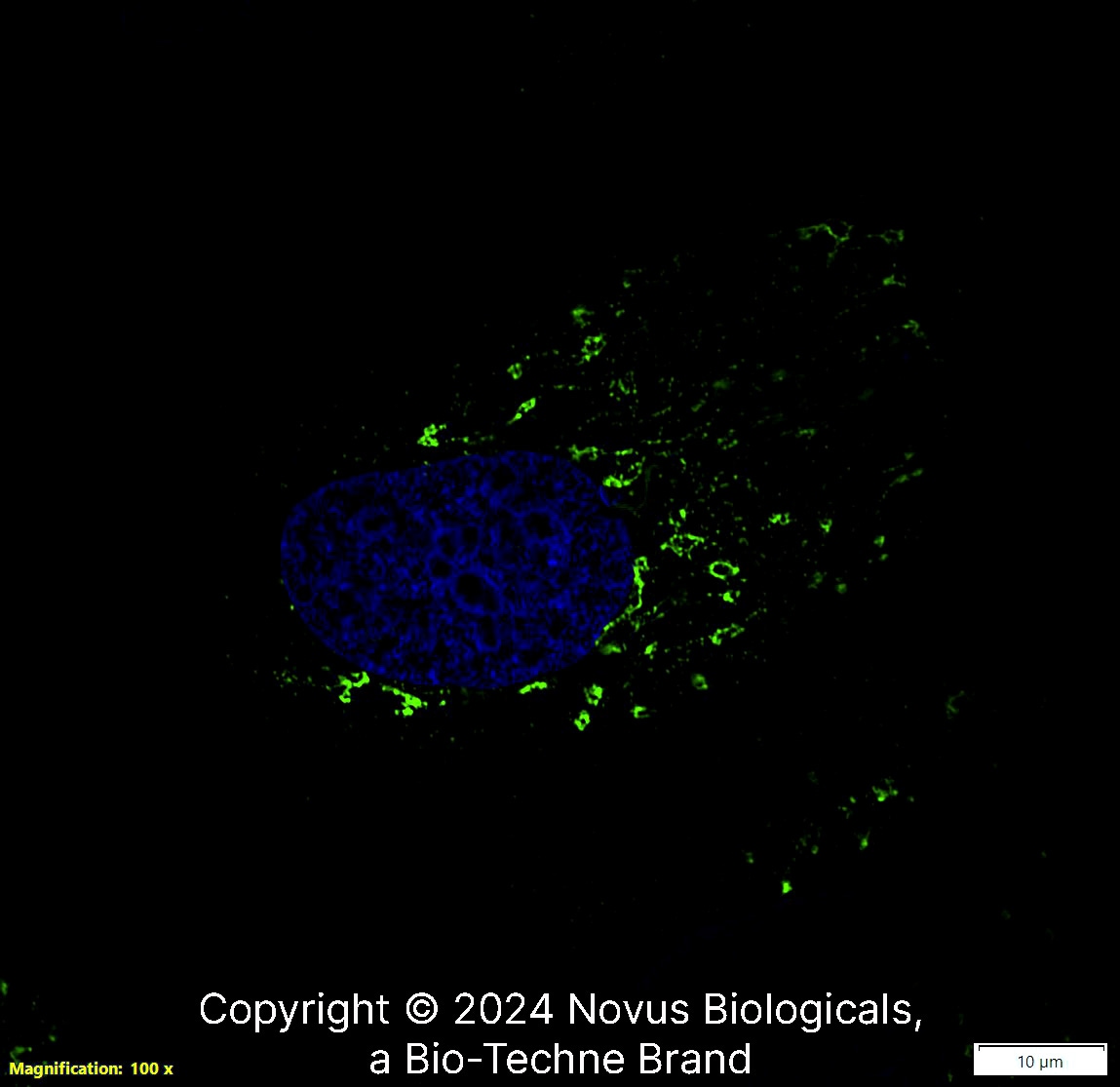
TGN46 in Caco-2 Human Cell Line.
TGN46 was detected in immersion fixed Caco-2 human colorectal adenocarcinoma cell line using Rabbit anti-TGN46 Affinity Purified Polyclonal Antibody conjugated to Alexa Fluor® 488 (Catalog # NBP1-49643AF488) (green) at 2 µg/mL overnight at 4C. Cells were counterstained with DAPI (blue). Cells were imaged using a 100X objective and digitally deconvolved.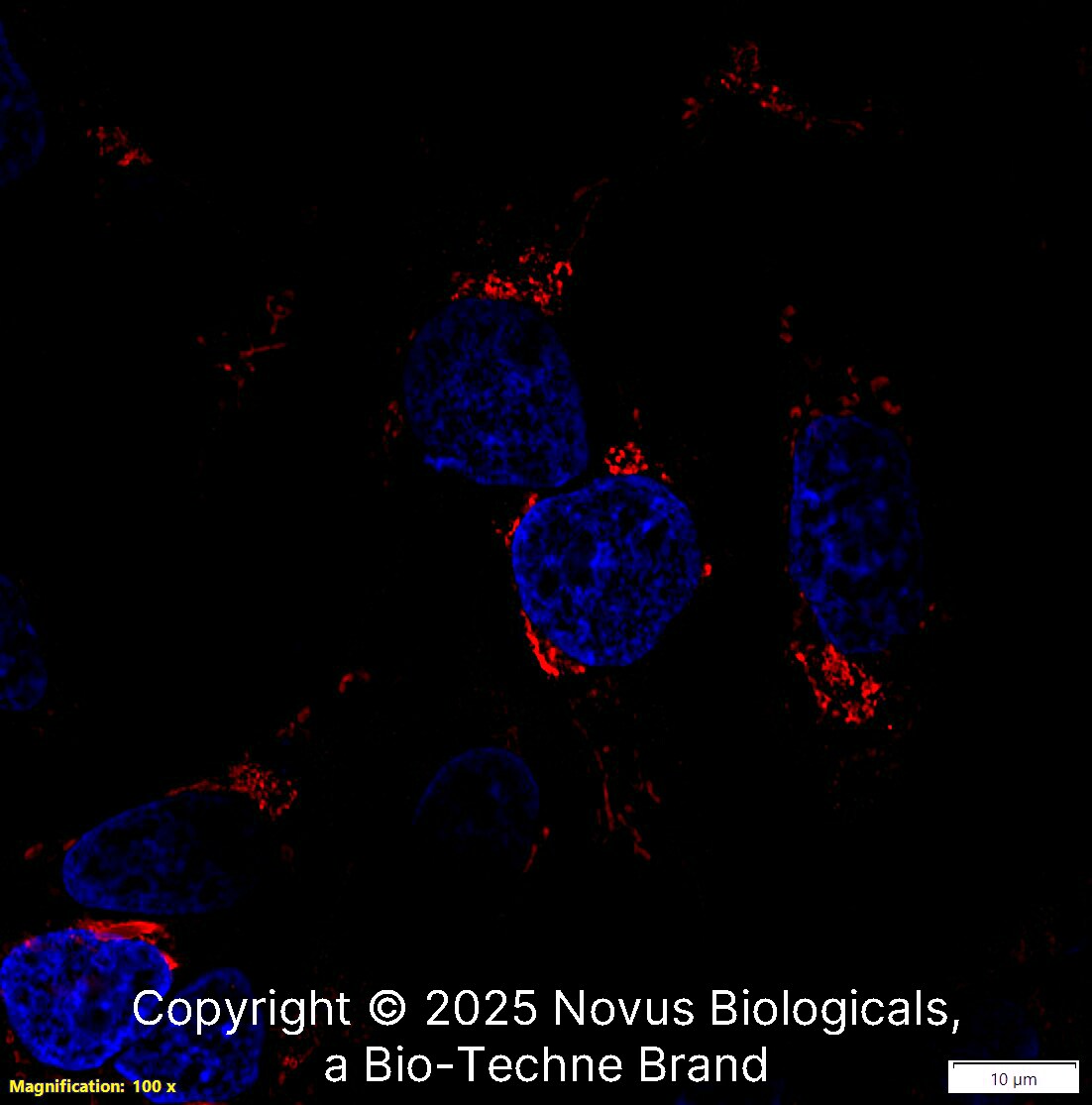
TGN46 in HepG2 Human Cell Line.
TGN46 was detected in immersion fixed HepG2 human hepatocellular carcinoma cell line using Rabbit anti-TGN46 Affinity Purified Polyclonal Antibody conjugated to Biotin (Catalog # NBP1-49643B) at 2 µg/mL overnight at 4C. Cells were stained using Streptavidin conjugated to DyLight 550 (red) and counterstained with DAPI (blue). Cells were imaged using a 100X objective and digitally deconvolved.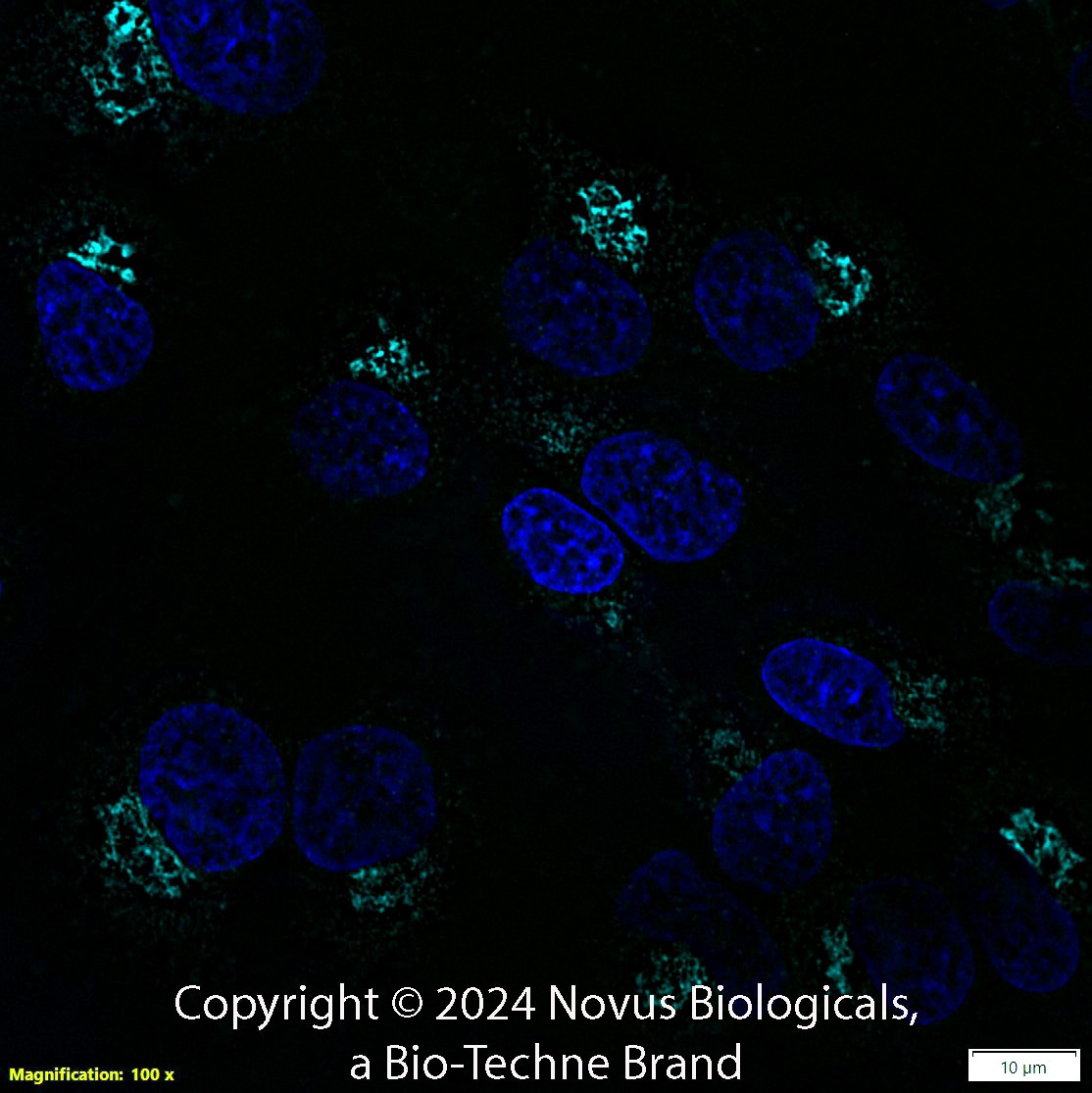
TGN46 in HepG2 Human Cell Line -
TGN46 was detected in immersion fixed HepG2 human hepatocellular carcinoma cell line using Rabbit anti-TGN46 Affinity Purified Polyclonal Antibody conjugated to Alexa Fluor® 647 (Catalog # NBP1-49643AF647) (light blue) at 2 µg/mL overnight at 4C. Cells were counterstained with DAPI (dark blue). Cells were imaged using a 100X objective and digitally deconvolved.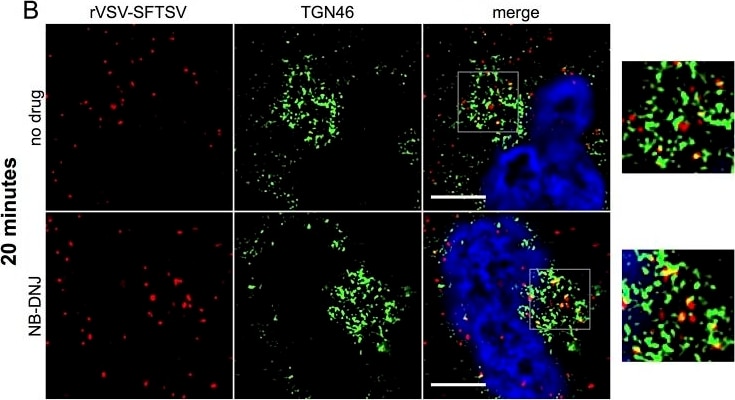
Immunocytochemistry/ Immunofluorescence: TGN46 Antibody - BSA Free [NBP1-49643] -
Immunofluorescence microscopy of incoming virus particles, 20 minutes.(A, B) A549 cells were plated onto glass coverslips and the following day replaced with media containing NB-DNJ (200μM) or left untreated. Forty-eight hours later, cells were chilled to 4C on ice, then rVSV-SFTSV was bound by centrifugation (1200xg, 30’, 4C). Following centrifugation, media was replaced with pre-warmed media (37C) and the cells placed in a 37C incubator for 20 minutes before fixation in 2% paraformaldehyde for 10 minutes. Cells were then immunostained for viral antigen (anti-VSV M, red), cellular markers (green), and nuclei stained with DAPI (blue). Images are representative from at least 3 independent experiments. (A) A549 cells co-stained for rVSV-SFTSV (red) and early endosome marker EEA1 (green). (B) A549 cells co-stained for rVSV-SFTSV (red) and trans-Golgi marker TGN46 (green). Boxes indicate zoomed-in regions. Scale bar represents 5μm. Image collected and cropped by CiteAb from the following open publication (https://pubmed.ncbi.nlm.nih.gov/28388693), licensed under a CC-BY license. Not internally tested by Novus Biologicals.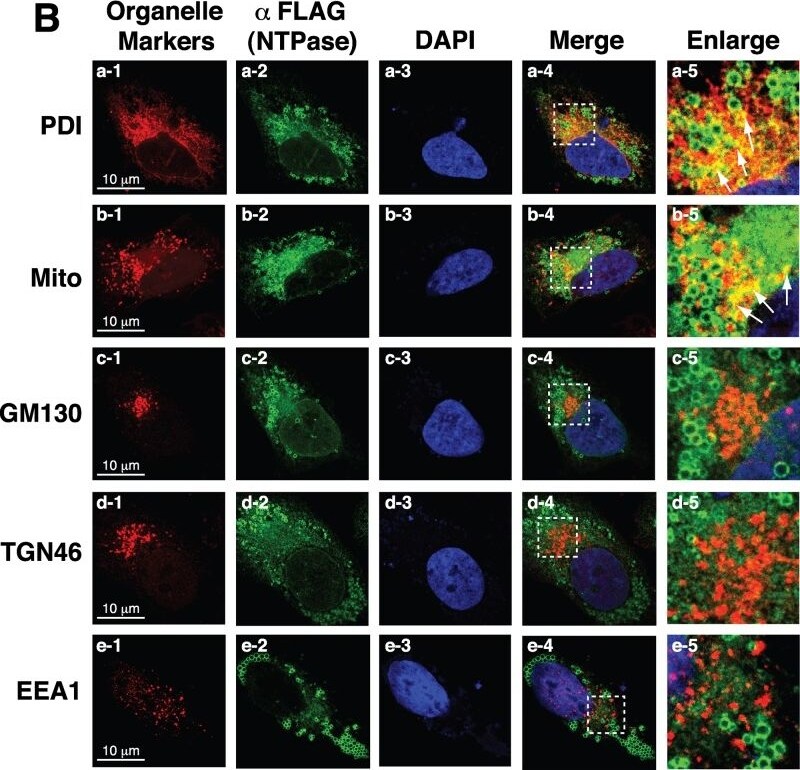
Immunocytochemistry/ Immunofluorescence: TGN46 Antibody - BSA Free [NBP1-49643] -
Nonvesicular fraction of GII-NTPase significantly localizes to the ER or mitochondria in cells. (A) The expression plasmid encoding F-NTPase was transfected into A7 cells. After 24 h of transfection, cells were fixed and dual labeled with an anti-FLAG antibody (green) and a rabbit polyclonal anti-NTPase antibody (red). Colocalization of signals recognized by the anti-FLAG and the anti-NTPase antibodies was detected as yellow color. Scale bar, 50 μm. (B) A7 cells expressing F-NTPase were fixed and dual stained with an anti-FLAG antibody (green) and a set of antibodies or a fluorescent dye (MitoTracker [Mito]) specific for organelle markers (red). Colocalization of F-NTPase with the signals of organelle-specific markers are shown in yellow (arrows). The dashed boxes in each merged image were enlarged and are shown at the right. As noted, the nonvesicular areas of F-NTPase colocalize with the signals of PDI (an ER marker) or Mito (a mitochondrial probe) but not those of GM130 (a cis-Golgi marker), TGN46 (a trans-Golgi marker), and EEA1 (an endosomal marker). Scale bars, 10 μm. Image collected and cropped by CiteAb from the following open publication (https://pubmed.ncbi.nlm.nih.gov/29212938), licensed under a CC-BY license. Not internally tested by Novus Biologicals.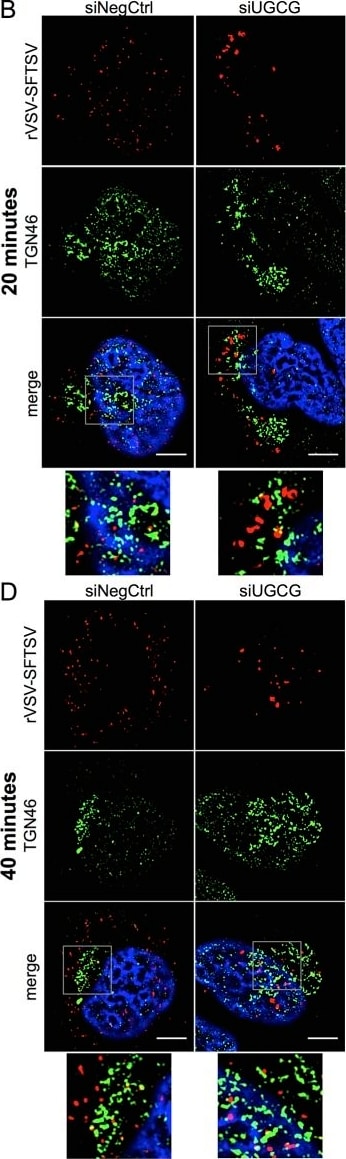
Immunocytochemistry/ Immunofluorescence: TGN46 Antibody - BSA Free [NBP1-49643] -
Immunofluorescence microscopy of rVSV-SFTSV particles following UGCG knockdown.(A-D) U-2 OS cells were transfected with siRNAs targeting UGCG (siUGCG) or a non-targeting control (siNegCtrl) and plated onto glass coverslips. At 72 hours post-transfection cells were chilled to 4C on ice and rVSV-SFTSV was bound by centrifugation (1200xg, 30’, 4C). Following centrifugation, media was replaced with pre-warmed media (37C) and the cells placed in a 37C incubator for 20 or 40 minutes before fixation in 1% paraformaldehyde for 15 minutes. Cells were then immunostained for viral antigen (anti-VSV M, red), cellular markers (green), and nuclei stained with DAPI (blue). Images are representative from at least 3 independent experiments. (A,B) U-2 OS cells fixed after 20 minutes were co-stained for rVSV-SFTSV (red) and EEA1 (A) or TGN46 (B) (green). (C,D) U-2 OS cells fixed after 40 minutes and stained as above. Boxes indicate zoomed-in regions. Scale bar represents 5μm. Image collected and cropped by CiteAb from the following open publication (https://pubmed.ncbi.nlm.nih.gov/28388693), licensed under a CC-BY license. Not internally tested by Novus Biologicals.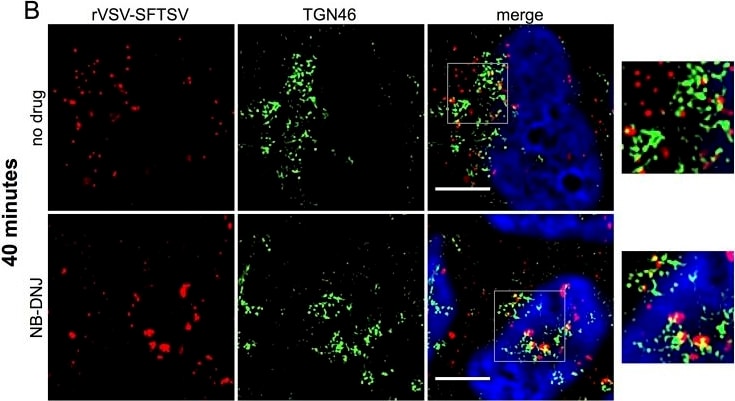
Immunocytochemistry/ Immunofluorescence: TGN46 Antibody - BSA Free [NBP1-49643] -
Immunofluorescence microscopy and quantification of incoming virus particles.(A, B) A549 cells prepared as described in Fig 8 were fixed 40 minutes post-warming and co-stained for rVSV-SFTSV (red) and the early endosome marker EEA1 (green) (A) or TGN46 (B). Cells were treated with NB-DNJ (bottom panels) or left untreated (top panels). Boxes indicate zoomed-in regions. Scale bar represents 5μm. (C, D) Quantitative image analysis was performed to measure the volume of discrete VSV M-stained puncta within z-stack images in untreated and NB-DNJ treated cells at both 20 and 40 minutes post-warming. Puncta were counted for at least 6 independent z-stacks per sample for both rVSV-SFTSV (C) and VSV (D) infected cells. (**** p<0.0001 using Welch’s one-tailed t-test). Image collected and cropped by CiteAb from the following open publication (https://pubmed.ncbi.nlm.nih.gov/28388693), licensed under a CC-BY license. Not internally tested by Novus Biologicals.Applications for TGN46 Antibody - BSA Free
Immunoblotting
Immunocytochemistry/ Immunofluorescence
Immunohistochemistry
Immunohistochemistry-Paraffin
Western Blot
Reviewed Applications
Read 2 reviews rated 5 using NBP1-49643 in the following applications:
Flow Cytometry Panel Builder
Bio-Techne Knows Flow Cytometry
Save time and reduce costly mistakes by quickly finding compatible reagents using the Panel Builder Tool.
Advanced Features
- Spectra Viewer - Custom analysis of spectra from multiple fluorochromes
- Spillover Popups - Visualize the spectra of individual fluorochromes
- Antigen Density Selector - Match fluorochrome brightness with antigen density

Formulation, Preparation, and Storage
Purification
Formulation
Format
Preservative
Concentration
Shipping
Stability & Storage
Background: TGN46
Alternate Names
Entrez Gene IDs
Gene Symbol
UniProt
Additional TGN46 Products
Product Documents for TGN46 Antibody - BSA Free
Certificate of Analysis
To download a Certificate of Analysis, please enter a lot or batch number in the search box below.
Product Specific Notices for TGN46 Antibody - BSA Free
Manufactured by Genomic Antibody Technology™. GAT FAQs
This product is for research use only and is not approved for use in humans or in clinical diagnosis. Primary Antibodies are guaranteed for 1 year from date of receipt.
Citations for TGN46 Antibody - BSA Free
 Powered by Bioz
Customer Reviews for TGN46 Antibody - BSA Free (2)
Have you used TGN46 Antibody - BSA Free?
Submit a review and receive an Amazon gift card!
$25/€18/£15/$25CAN/¥2500 for a review with an image
$10/€7/£6/$10CAN/¥1110 for a review without an image
Submit a review
Customer Images
-(01-ml)_NBP1-49643_8236.bmp)
-(01-ml)_NBP1-49643_8231.jpg)
-
Application: ImmunocytochemistrySample Tested:Species: HumanVerified Customer | Posted 06/12/2014IF Confocal analysis of A549 cells using TGN46 antibody (NBP1-49643, 1:5).

-
Application: Western BlotSample Tested:Species: HumanVerified Customer | Posted 06/12/2014Western blot analysis of extracts from HeLa cells using TGN46 antibody (NBP1-49643, 1:100).
There are no reviews that match your criteria.
Protocols
View specific protocols for TGN46 Antibody - BSA Free (NBP1-49643):
Immunocytochemistry Protocol
1. Remove culture medium and wash the cells briefly in PBS. Add 10% formalin to the dish and fix at room temperature for 10 minutes.
2. Remove the formalin and wash the cells in PBS.
3. Permeablize the cells with 0.1% Triton X100 or other suitable detergent for 10 min.
4. Remove the permeablization buffer and wash three times for 10 minutes each in PBS. Be sure to not let the specimen dry out.
5. To block nonspecific antibody binding, incubate in 10% normal goat serum from 1 hour to overnight at room temperature.
6. Add primary antibody at appropriate dilution and incubate overnight at 4C.
7. Remove primary antibody and replace with PBS. Wash three times for 10 minutes each.
8. Add secondary antibody at appropriate dilution. Incubate for 1 hour at room temperature.
9. Remove secondary antibody and replace with PBS. Wash three times for 10 minutes each.
10. Counter stain DNA with DAPi if required.
Immunohistochemistry-Paraffin Embedded Sections
Antigen Unmasking:
Bring slides to a boil in 10 mM sodium citrate buffer (pH 6.0) then maintain at a sub-boiling temperature for 10 minutes. Cool slides on bench-top for 30 minutes.
Staining:
1. Wash sections in deionized water three times for 5 minutes each.
2. Wash sections in wash buffer for 5 minutes.
3. Block each section with 100-400 ul blocking solution for 1 hour at room temperature.
4. Remove blocking solution and add 100-400 ul diluted primary antibody. Incubate overnight at 4C.
5. Remove antibody solution and wash sections in wash buffer three times for 5 minutes each.
6. Add 100-400 ul biotinylated diluted secondary antibody. Incubate 30 minutes at room temperature.
7. Remove secondary antibody solution and wash sections three times with wash buffer for 5 minutes each.
8. Add 100-400 ul Streptavidin-HRP reagent to each section and incubate for 30 minutes at room temperature.
9. Wash sections three times in wash buffer for 5 minutes each.
10. Add 100-400 ul DAB substrate to each section and monitor staining closely.
11. As soon as the sections develop, immerse slides in deionized water.
12. Counterstain sections in hematoxylin.
13. Wash sections in deionized water two times for 5 minutes each.
14. Dehydrate sections.
15. Mount coverslips.
Find general support by application which include: protocols, troubleshooting, illustrated assays, videos and webinars.
- 7-Amino Actinomycin D (7-AAD) Cell Viability Flow Cytometry Protocol
- Antigen Retrieval Protocol (PIER)
- Antigen Retrieval for Frozen Sections Protocol
- Appropriate Fixation of IHC/ICC Samples
- Cellular Response to Hypoxia Protocols
- Chromogenic IHC Staining of Formalin-Fixed Paraffin-Embedded (FFPE) Tissue Protocol
- Chromogenic Immunohistochemistry Staining of Frozen Tissue
- ClariTSA™ Fluorophore Kits
- Detection & Visualization of Antibody Binding
- Extracellular Membrane Flow Cytometry Protocol
- Flow Cytometry Protocol for Cell Surface Markers
- Flow Cytometry Protocol for Staining Membrane Associated Proteins
- Flow Cytometry Staining Protocols
- Flow Cytometry Troubleshooting Guide
- Fluorescent IHC Staining of Frozen Tissue Protocol
- Graphic Protocol for Heat-induced Epitope Retrieval
- Graphic Protocol for the Preparation and Fluorescent IHC Staining of Frozen Tissue Sections
- Graphic Protocol for the Preparation and Fluorescent IHC Staining of Paraffin-embedded Tissue Sections
- Graphic Protocol for the Preparation of Gelatin-coated Slides for Histological Tissue Sections
- ICC Cell Smear Protocol for Suspension Cells
- ICC Immunocytochemistry Protocol Videos
- ICC for Adherent Cells
- IHC Sample Preparation (Frozen sections vs Paraffin)
- Immunocytochemistry (ICC) Protocol
- Immunocytochemistry Troubleshooting
- Immunofluorescence of Organoids Embedded in Cultrex Basement Membrane Extract
- Immunofluorescent IHC Staining of Formalin-Fixed Paraffin-Embedded (FFPE) Tissue Protocol
- Immunohistochemistry (IHC) and Immunocytochemistry (ICC) Protocols
- Immunohistochemistry Frozen Troubleshooting
- Immunohistochemistry Paraffin Troubleshooting
- Intracellular Flow Cytometry Protocol Using Alcohol (Methanol)
- Intracellular Flow Cytometry Protocol Using Detergents
- Intracellular Nuclear Staining Flow Cytometry Protocol Using Detergents
- Intracellular Staining Flow Cytometry Protocol Using Alcohol Permeabilization
- Intracellular Staining Flow Cytometry Protocol Using Detergents to Permeabilize Cells
- Preparing Samples for IHC/ICC Experiments
- Preventing Non-Specific Staining (Non-Specific Binding)
- Primary Antibody Selection & Optimization
- Propidium Iodide Cell Viability Flow Cytometry Protocol
- Protocol for Heat-Induced Epitope Retrieval (HIER)
- Protocol for Liperfluo
- Protocol for Making a 4% Formaldehyde Solution in PBS
- Protocol for VisUCyte™ HRP Polymer Detection Reagent
- Protocol for the Characterization of Human Th22 Cells
- Protocol for the Characterization of Human Th9 Cells
- Protocol for the Fluorescent ICC Staining of Cell Smears - Graphic
- Protocol for the Fluorescent ICC Staining of Cultured Cells on Coverslips - Graphic
- Protocol for the Preparation & Fixation of Cells on Coverslips
- Protocol for the Preparation and Chromogenic IHC Staining of Frozen Tissue Sections
- Protocol for the Preparation and Chromogenic IHC Staining of Frozen Tissue Sections - Graphic
- Protocol for the Preparation and Chromogenic IHC Staining of Paraffin-embedded Tissue Sections
- Protocol for the Preparation and Chromogenic IHC Staining of Paraffin-embedded Tissue Sections - Graphic
- Protocol for the Preparation and Fluorescent ICC Staining of Cells on Coverslips
- Protocol for the Preparation and Fluorescent ICC Staining of Non-adherent Cells
- Protocol for the Preparation and Fluorescent ICC Staining of Stem Cells on Coverslips
- Protocol for the Preparation and Fluorescent IHC Staining of Frozen Tissue Sections
- Protocol for the Preparation and Fluorescent IHC Staining of Paraffin-embedded Tissue Sections
- Protocol for the Preparation of Gelatin-coated Slides for Histological Tissue Sections
- Protocol for the Preparation of a Cell Smear for Non-adherent Cell ICC - Graphic
- Protocol: Annexin V and PI Staining by Flow Cytometry
- Protocol: Annexin V and PI Staining for Apoptosis by Flow Cytometry
- R&D Systems Quality Control Western Blot Protocol
- TUNEL and Active Caspase-3 Detection by IHC/ICC Protocol
- The Importance of IHC/ICC Controls
- Troubleshooting Guide: Fluorokine Flow Cytometry Kits
- Troubleshooting Guide: Immunohistochemistry
- Troubleshooting Guide: Western Blot Figures
- Western Blot Conditions
- Western Blot Protocol
- Western Blot Protocol for Cell Lysates
- Western Blot Troubleshooting
- Western Blot Troubleshooting Guide
- View all Protocols, Troubleshooting, Illustrated assays and Webinars