
Calreticulin Antibody - BSA Free
Novus Biologicals | Catalog # NB600-101

![Knockdown Validated: Calreticulin Antibody - BSA Free [NB600-101]](https://resources.rndsystems.com/images/products/Calreticulin-Antibody-Knockdown-Validated-NB600-101-img0011.jpg "Western Blot: Calreticulin Antibody - BSA Free [NB600-101]")
Scientific images may be resized, cropped, or adjusted for brightness or contrast for presentation purposes. These updates are limited to presentation and do not affect the underlying scientific interpretation of the data. Where available, additional source data may be provided upon request.
Key Product Details
Validated by
Knockout/Knockdown
Species Reactivity
Validated:
Human, Mouse, Rat, Bovine, Hamster, Primate
Cited:
Human, Mouse, Rat, Bovine, Hamster, Primate
Applications
Validated:
Immunohistochemistry, Immunohistochemistry-Paraffin, Western Blot, Block/Neutralize, Flow Cytometry, Immunocytochemistry/ Immunofluorescence, Simple Western, Immunoprecipitation, Dot Blot, Protein Array, Knockdown Validated, Electron Microscopy
Cited:
Western Blot, Block/Neutralize, Flow Cytometry, Immunocytochemistry/ Immunofluorescence, Immunoprecipitation, Cytometric Bead Assay Standard, Protein Array, IF/IHC, Electron Microscopy
Label
Unconjugated
Antibody Source
Polyclonal Rabbit IgG
Format
BSA Free
Loading...
Product Specifications
Immunogen
Calreticulin Antibody was developed against a fusion protein to mouse Calreticulin [Uniprot: P14211]
Reactivity Notes
Other species not tested.
Localization
Calreticulin staining is localized to the ER in most cell types and under most conditions.
Marker
Endoplasmic Reticulum Marker
Clonality
Polyclonal
Host
Rabbit
Isotype
IgG
Theoretical MW
48 kDa.
Disclaimer note: The observed molecular weight of the protein may vary from the listed predicted molecular weight due to post translational modifications, post translation cleavages, relative charges, and other experimental factors.
Disclaimer note: The observed molecular weight of the protein may vary from the listed predicted molecular weight due to post translational modifications, post translation cleavages, relative charges, and other experimental factors.
Scientific Data Images for Calreticulin Antibody - BSA Free
Western Blot: Calreticulin Antibody - BSA Free [NB600-101]
Western Blot: Calreticulin Antibody [NB600-101] - Western blot shows lysates of HeLa human cervical epithelial carcinoma parental cell line and Calreticulin knockout (KO) HeLa cell line. PVDF membrane was probed with 1:1500 of Rabbit Anti-Human Calreticulin Polyclonal Antibody (Catalog # NB600-101) followed by HRP-conjugated Anti-Rabbit IgG Secondary Antibody (Catalog #HAF008). Specific band was detected for Calreticulin at approximately 55 kDa (as indicated) in the parental HeLa cell line, but is not detectable in the knockout HeLa cell line. This experiment was conducted under reducing conditions.![Western Blot: Calreticulin AntibodyBSA Free [NB600-101]](https://resources.rndsystems.com/images/products/Calreticulin-Antibody-Western-Blot-NB600-101-img0006.jpg "Western Blot: Calreticulin AntibodyBSA Free [NB600-101]")
Western Blot: Calreticulin AntibodyBSA Free [NB600-101]
Western Blot: Calreticulin Antibody [NB600-101] - Human kidney lysate.![Immunocytochemistry/ Immunofluorescence: Calreticulin Antibody - BSA Free [NB600-101]](https://resources.rndsystems.com/images/products/Calreticulin-Antibody-Immunocytochemistry-Immunofluorescence-NB600-101-img0005.jpg "Immunocytochemistry/ Immunofluorescence: Calreticulin Antibody - BSA Free [NB600-101]")
Immunocytochemistry/ Immunofluorescence: Calreticulin Antibody - BSA Free [NB600-101]
Immunocytochemistry/Immunofluorescence: Calreticulin Antibody [NB600-101] - Immunofluorescence staining of Calreticulin in HCT15 colon cancer cells using NB600-101. Secondary antibody was conjugated with Alexa Fluor 488. Photo courtesy of Dr. Birkenkamp Demtroeder, Arhus University Hospital.![Immunohistochemistry-Paraffin: Calreticulin Antibody - BSA Free [NB600-101]](https://resources.rndsystems.com/images/products/Calreticulin-Antibody-Immunohistochemistry-Paraffin-NB600-101-img0010.jpg "Immunohistochemistry-Paraffin: Calreticulin Antibody - BSA Free [NB600-101]")
Immunohistochemistry-Paraffin: Calreticulin Antibody - BSA Free [NB600-101]
Immunohistochemistry-Paraffin: Calreticulin Antibody [NB600-101] - Analysis of a FFPE tissue section of human thyroid gland using 1:50 dilution of Calreticulin antibody. The signal was developed using HRP-DAB based detection method which followed counterstaining of the nuclei with hematoxylin. This representative section shows a strong positivity of Calreticulin in the follicular epithelial cells, wherein the signal was found to be very intense in the perinuclear region of the cells which correlates well with Endoplasmic reticulum localization of this protein. The para-follicular cells, endothelial cells of blood vessels (not the RBCs though) and the loose connective tissue in the section showed a weak cytoplasmic staining. Some staining was observed in the follicles/colloids also which is potentially the secreted form of Calreticulin.![Immunocytochemistry/ Immunofluorescence: Calreticulin Antibody - BSA Free [NB600-101]](https://resources.rndsystems.com/images/products/Calreticulin-Antibody-Immunocytochemistry-Immunofluorescence-NB600-101-img0007.jpg "Immunocytochemistry/ Immunofluorescence: Calreticulin Antibody - BSA Free [NB600-101]")
Immunocytochemistry/ Immunofluorescence: Calreticulin Antibody - BSA Free [NB600-101]
Immunocytochemistry/Immunofluorescence: Calreticulin Antibody [NB600-101] - The Calreticulin antibody NB600-101 was tested in HeLa cells at a 1:250 dilution against DyLight 488 (Green). Alpha-tubulin and nuclei were counterstained against DyLight 550 (Red) and DAPI (Blue), respectively.![Immunohistochemistry-Paraffin: Calreticulin Antibody - BSA Free [NB600-101]](https://resources.rndsystems.com/images/products/Calreticulin-Antibody-Immunohistochemistry-Paraffin-NB600-101-img0009.jpg "Immunohistochemistry-Paraffin: Calreticulin Antibody - BSA Free [NB600-101]")
Immunohistochemistry-Paraffin: Calreticulin Antibody - BSA Free [NB600-101]
Immunohistochemistry-Paraffin: Calreticulin Antibody [NB600-101] - Analysis of a FFPE tissue section of human thyroid gland using 1:50 dilution of Calreticulin antibody. The signal was developed using HRP-DAB based detection method which followed counterstaining of the nuclei with hematoxylin. This representative section shows a strong positivity of Calreticulin in the follicular epithelial cells, wherein the signal was found to be very intense in the perinuclear region of the cells which correlates well with Endoplasmic reticulum localization of this protein. The para-follicular cells, endothelial cells and the loose connective tissue in the section showed a weak cytoplasmic staining. Some staining was observed in the follicles/colloids also which is potentially the secreted form of Calreticulin.![Simple Western: Calreticulin AntibodyBSA Free [NB600-101]](https://resources.rndsystems.com/images/products/Calreticulin-Antibody-Simple-Western-NB600-101-img0008.jpg "Simple Western: Calreticulin AntibodyBSA Free [NB600-101]")
Simple Western: Calreticulin AntibodyBSA Free [NB600-101]
Simple Western: Calreticulin Antibody [NB600-101] - Lane view shows a specific band for Calreticulin in 0.5 mg/ml of HeLa lysate. This experiment was performed under reducing conditions using the 12-230 kDa separation system.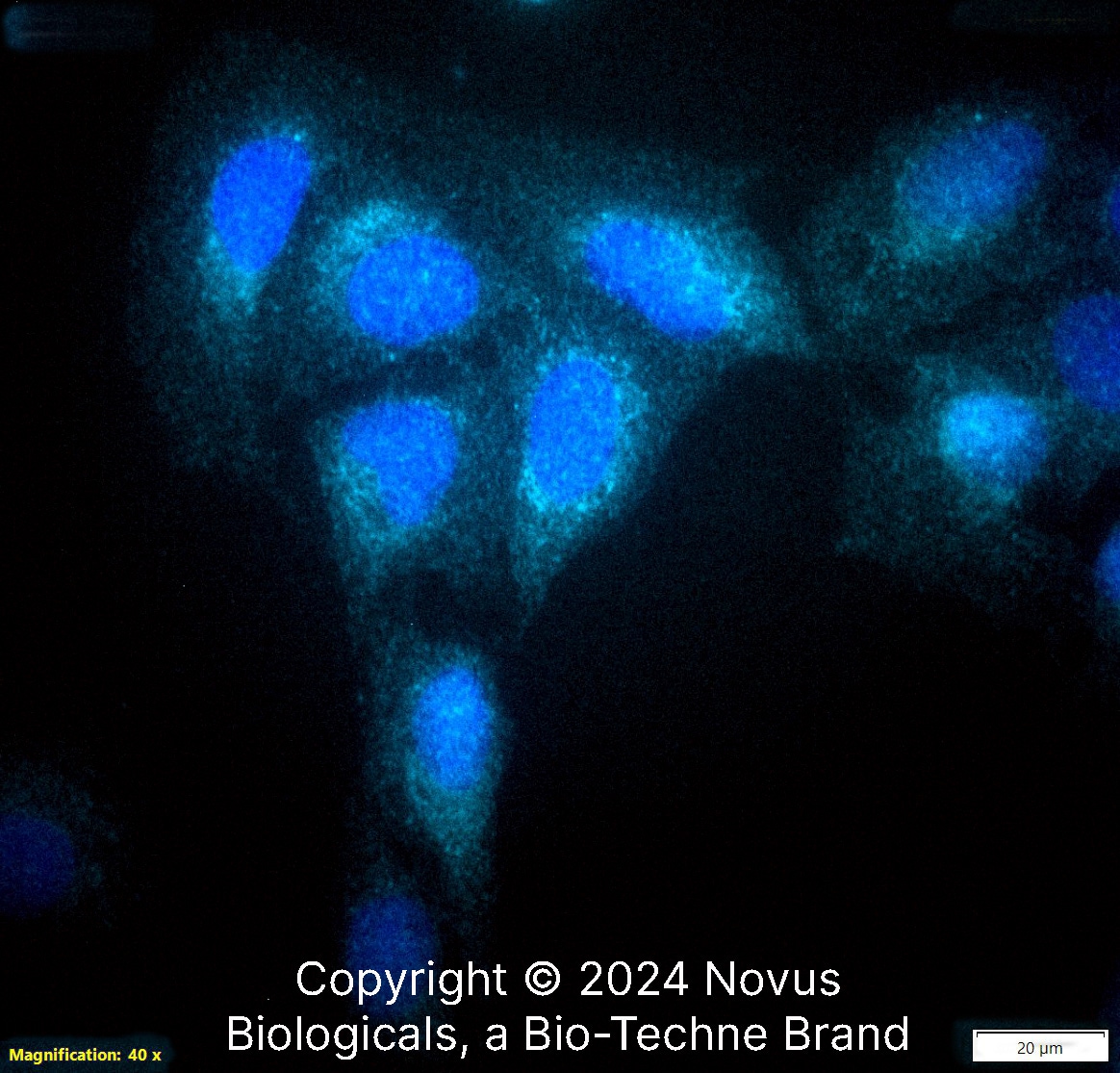
Calreticulin in U-2 OS Human Cell Line.
Calreticulin was detected in immersion fixed U-2 OS human osteosarcoma cell line using Rabbit anti-Calreticulin Affinity Purified Polyclonal Antibody conjugated to Alexa Fluor® 647 (Catalog # NB600-101AF647) (light blue) at 10 µg/mL overnight at 4C. Cells were counterstained with DAPI (blue). Cells were imaged using a 40X objective.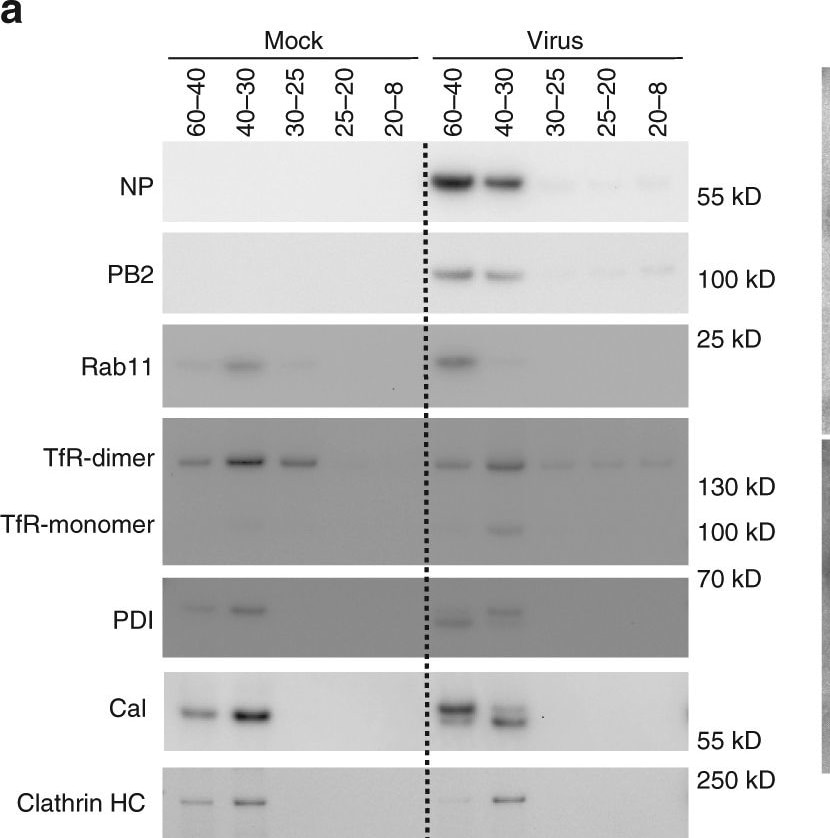
Western Blot: Calreticulin Antibody - BSA Free [NB600-101] -
Characterization of purified ICVs. A549 cells were infected with the WSN virus and submitted to subcellular fractionation at 14 hpi. a Western-blot analysis of subcellular fractions of mock-infected (left panel) and IAV-infected (right panel) A549 cells, upon sucrose gradient ultracentrifugation. The same amount of total protein was analyzed for each fraction. TfR: transferrin receptor; PDI: protein disulfide isomerase; Cal: calreticulin; Clathrin HC: Clathrin Heavy Chain. For gel source data, Supplementary Fig. 17. b TEM analysis of an aliquot of fraction 60–40% from IAV-infected cells, upon fixation and negative staining. Black arrows: ICVs. White arrows: vRNPs. Scale bar: large panel 200 nm, small pannel 100 nm Image collected and cropped by CiteAb from the following open publication (https://pubmed.ncbi.nlm.nih.gov/29123131), licensed under a CC-BY license. Not internally tested by Novus Biologicals.Applications for Calreticulin Antibody - BSA Free
Application
Recommended Usage
Flow Cytometry
reported in scientific literature (PMID 19171874)
Immunocytochemistry/ Immunofluorescence
1:50-1:250
Immunohistochemistry
1:50 - 1:200
Immunohistochemistry-Paraffin
1:50 -1:200
Immunoprecipitation
reported in scientific literature (PMID 15161937)
Knockdown Validated
1:1500
Protein Array
reported in scientific literature (PMID 17897946)
Simple Western
1:50
Western Blot
1:1000
Application Notes
In Western blot, a band is observed at ~55 kDa. The observed molecular weight of the protein may vary from the listed predicted molecular weight due to post translational modifications, post translation cleavages, relative charges, and other experimental factors. In Simple Western only 10 - 15 uL of the recommended dilution is used per data point.
See Simple Western Antibody Database for Simple Western validation: Tested in HeLa lysate 0.5 mg/mL, separated by Size, antibody dilution of 1:50, apparent MW was 64 kDa. Separated by Size-Wes, Sally Sue/Peggy Sue.
See Simple Western Antibody Database for Simple Western validation: Tested in HeLa lysate 0.5 mg/mL, separated by Size, antibody dilution of 1:50, apparent MW was 64 kDa. Separated by Size-Wes, Sally Sue/Peggy Sue.
Flow Cytometry Panel Builder
Bio-Techne Knows Flow Cytometry
Save time and reduce costly mistakes by quickly finding compatible reagents using the Panel Builder Tool.
Advanced Features
- Spectra Viewer - Custom analysis of spectra from multiple fluorochromes
- Spillover Popups - Visualize the spectra of individual fluorochromes
- Antigen Density Selector - Match fluorochrome brightness with antigen density

Formulation, Preparation, and Storage
Purification
Immunogen affinity purified
Formulation
PBS
Format
BSA Free
Preservative
0.02% Sodium Azide
Concentration
1.0 mg/ml
Shipping
The product is shipped with polar packs. Upon receipt, store it immediately at the temperature recommended below.
Stability & Storage
Aliquot and store at -20C or -80C. Avoid freeze-thaw cycles.
Background: Calreticulin
Given its role in multiple biological processes, it makes sense that calreticulin is implicated in both healthy and disease states. Studies have found that calreticulin mutations were present in patients with myeloproliferative neoplasms (MFN) and essential thrombocythaemia (ET) (4). Calreticulin expression is typically upregulated in most cancer lines, however it is downregulated in some tissues including cervical carcinomas, prostate cancer, and human colon adenocarcinoma (3). High expression of calreticulin on cancer cells is related to tumor cell phagocytosis and is often correlated with, and counteracted by, elevated CD47 expression to prevent cancer cell phagocytosis (3). Calreticulin mutations can serve as a major diagnostic biomarker for MFN and ET and additionally the calreticulin gene may be a potential target for cancer therapeutics (3,4).
References
1. Michalak, M., Groenendyk, J., Szabo, E., Gold, L. I., & Opas, M. (2009). Calreticulin, a multi-process calcium-buffering chaperone of the endoplasmic reticulum. The Biochemical Journal. https://doi.org/10.1042/BJ20081847
2. Fucikova, J., Spisek, R., Kroemer, G., & Galluzzi, L. (2021). Calreticulin and cancer. Cell Research. https://doi.org/10.1038/s41422-020-0383-9
3. Sun, J., Mu, H., Dai, K., & Yi, L. (2017). Calreticulin: a potential anti-cancer therapeutic target. Die Pharmazie. https://doi.org/10.1691/ph.2017.7031
4. Prins, D., Gonzalez Arias, C., Klampfl, T., Grinfeld, J., & Green, A. R. (2020). Mutant Calreticulin in the Myeloproliferative Neoplasms. HemaSphere. https://doi.org/10.1097/HS9.0000000000000333
Alternate Names
Autoantigen Ro, CALR, Calregulin, cC1qR, CRT, SSA, Vasostatin
Gene Symbol
CALR
UniProt
Additional Calreticulin Products
Product Documents for Calreticulin Antibody - BSA Free
Certificate of Analysis
To download a Certificate of Analysis, please enter a lot or batch number in the search box below.
Product Specific Notices for Calreticulin Antibody - BSA Free
This product is for research use only and is not approved for use in humans or in clinical diagnosis. Primary Antibodies are guaranteed for 1 year from date of receipt.
Related Research Areas
Citations for Calreticulin Antibody - BSA Free
 Powered by Bioz
Customer Reviews for Calreticulin Antibody - BSA Free
There are currently no reviews for this product. Be the first to review Calreticulin Antibody - BSA Free and earn rewards!
Have you used Calreticulin Antibody - BSA Free?
Submit a review and receive an Amazon gift card!
$25/€18/£15/$25CAN/¥2500 for a review with an image
$10/€7/£6/$10CAN/¥1110 for a review without an image
Submit a review
Protocols
View specific protocols for Calreticulin Antibody - BSA Free (NB600-101):
Immunofluorescence Procedure
1) Cell cultures were treated using an HIER [heat-induced epitope retrieval] protocol.
2) Calreticulin polyclonal antibody [NB 600-101] was diluted 1:50 with a DAKO antibody diluent
3) Cultures and primary antibody were incubated at RT for 30 minutes.
4) Cultures were incubated with an Alexa green fluorescent secondary, as per manufacturer'??s protocol.
5) Cultures were observed on a Zeiss Axioconvert microscope and with DigiPix software.
**NOTE: COS7 and HCT29 cell cultures were used as positive controls for this antibody.
Immunohistochemistry Procedure
1) Paraffin-embedded sections were treated using an HIER [heat-induced epitope retrieval] protocol.
2) NB 600-101 was diluted 1:50 with a DAKO antibody diluent
3) Sections and primary antibody were incubated at RT for 30 minutes.
4) Sections were incubated with a DAKO secondary, as per manufacturer'??s protocol.
5) Sections were then stained with DAB and H&E.
6) Sections were mounted with Faramount solution.
7) Result of staining was strong.
**NOTE: normal colon mucosa and adenocarcinoma tissues were used as positive controls for this antibody.
Western Blot Procedure
1) Scrape cells* off culture dishes and centrifuge.
2) Dissolve cell pellet in decanoyl-N-methyl glucamide (MEGA-10)** and clarify by centrifugation.
3) Mix 30 mg of protein*** with sample buffer containing mercaptoethanol and SDS and run on a 10% SDS gel. The protein was electroblotted on to nitrocellulose.
4) Block nitrocellulose with 5% powdered milk in PBS for 1 hour.
5) Wash the blot with PBS.
6) Add the antibody at a concentration of 1:1000 in 5% powdered milk/PBS and incubate for 1 hour.
7) Wash 3 x 5 minutes with PBS.
8) Add peroxidase-labelled anti-rabbit second antibody in PBS at a concentration of 1:3000 and shake for 1 hour.
9) Wash extensively with PBS.
10) Develop with ECL reagents (Amersham). For this experiment, the film was exposed to the blot for 10 seconds. ****
i. The cells used were the H4IIE rat hepatoma cell line and the NBL-1 bovine renal epithelial cell line.
ii. The detergent used is not critical. MEGA-10 has the advantage of not interfering with the Bradford protein reagent.
iii. Whole cells were used in this experiment. If 30mg of a cell membrane fraction were used a more intense band would be seen.
iv. In this experiment, the antibody was used at 1:1000, but since whole cell protein was used and only 10 seconds development was required it could presumably be used at a lower concentration for many applications.
Find general support by application which include: protocols, troubleshooting, illustrated assays, videos and webinars.
- 7-Amino Actinomycin D (7-AAD) Cell Viability Flow Cytometry Protocol
- Antigen Retrieval Protocol (PIER)
- Antigen Retrieval for Frozen Sections Protocol
- Appropriate Fixation of IHC/ICC Samples
- Cellular Response to Hypoxia Protocols
- Chromogenic IHC Staining of Formalin-Fixed Paraffin-Embedded (FFPE) Tissue Protocol
- Chromogenic Immunohistochemistry Staining of Frozen Tissue
- ClariTSA™ Fluorophore Kits
- Detection & Visualization of Antibody Binding
- Extracellular Membrane Flow Cytometry Protocol
- Flow Cytometry Protocol for Cell Surface Markers
- Flow Cytometry Protocol for Staining Membrane Associated Proteins
- Flow Cytometry Staining Protocols
- Flow Cytometry Troubleshooting Guide
- Fluorescent IHC Staining of Frozen Tissue Protocol
- Graphic Protocol for Heat-induced Epitope Retrieval
- Graphic Protocol for the Preparation and Fluorescent IHC Staining of Frozen Tissue Sections
- Graphic Protocol for the Preparation and Fluorescent IHC Staining of Paraffin-embedded Tissue Sections
- Graphic Protocol for the Preparation of Gelatin-coated Slides for Histological Tissue Sections
- ICC Cell Smear Protocol for Suspension Cells
- ICC Immunocytochemistry Protocol Videos
- ICC for Adherent Cells
- IHC Sample Preparation (Frozen sections vs Paraffin)
- Immunocytochemistry (ICC) Protocol
- Immunocytochemistry Troubleshooting
- Immunofluorescence of Organoids Embedded in Cultrex Basement Membrane Extract
- Immunofluorescent IHC Staining of Formalin-Fixed Paraffin-Embedded (FFPE) Tissue Protocol
- Immunohistochemistry (IHC) and Immunocytochemistry (ICC) Protocols
- Immunohistochemistry Frozen Troubleshooting
- Immunohistochemistry Paraffin Troubleshooting
- Immunoprecipitation Protocol
- Intracellular Flow Cytometry Protocol Using Alcohol (Methanol)
- Intracellular Flow Cytometry Protocol Using Detergents
- Intracellular Nuclear Staining Flow Cytometry Protocol Using Detergents
- Intracellular Staining Flow Cytometry Protocol Using Alcohol Permeabilization
- Intracellular Staining Flow Cytometry Protocol Using Detergents to Permeabilize Cells
- Preparing Samples for IHC/ICC Experiments
- Preventing Non-Specific Staining (Non-Specific Binding)
- Primary Antibody Selection & Optimization
- Propidium Iodide Cell Viability Flow Cytometry Protocol
- Protocol for Heat-Induced Epitope Retrieval (HIER)
- Protocol for Liperfluo
- Protocol for Making a 4% Formaldehyde Solution in PBS
- Protocol for VisUCyte™ HRP Polymer Detection Reagent
- Protocol for the Characterization of Human Th22 Cells
- Protocol for the Characterization of Human Th9 Cells
- Protocol for the Fluorescent ICC Staining of Cell Smears - Graphic
- Protocol for the Fluorescent ICC Staining of Cultured Cells on Coverslips - Graphic
- Protocol for the Preparation & Fixation of Cells on Coverslips
- Protocol for the Preparation and Chromogenic IHC Staining of Frozen Tissue Sections
- Protocol for the Preparation and Chromogenic IHC Staining of Frozen Tissue Sections - Graphic
- Protocol for the Preparation and Chromogenic IHC Staining of Paraffin-embedded Tissue Sections
- Protocol for the Preparation and Chromogenic IHC Staining of Paraffin-embedded Tissue Sections - Graphic
- Protocol for the Preparation and Fluorescent ICC Staining of Cells on Coverslips
- Protocol for the Preparation and Fluorescent ICC Staining of Non-adherent Cells
- Protocol for the Preparation and Fluorescent ICC Staining of Stem Cells on Coverslips
- Protocol for the Preparation and Fluorescent IHC Staining of Frozen Tissue Sections
- Protocol for the Preparation and Fluorescent IHC Staining of Paraffin-embedded Tissue Sections
- Protocol for the Preparation of Gelatin-coated Slides for Histological Tissue Sections
- Protocol for the Preparation of a Cell Smear for Non-adherent Cell ICC - Graphic
- Protocol: Annexin V and PI Staining by Flow Cytometry
- Protocol: Annexin V and PI Staining for Apoptosis by Flow Cytometry
- R&D Systems Quality Control Western Blot Protocol
- TUNEL and Active Caspase-3 Detection by IHC/ICC Protocol
- The Importance of IHC/ICC Controls
- Troubleshooting Guide: Fluorokine Flow Cytometry Kits
- Troubleshooting Guide: Immunohistochemistry
- Troubleshooting Guide: Western Blot Figures
- Western Blot Conditions
- Western Blot Protocol
- Western Blot Protocol for Cell Lysates
- Western Blot Troubleshooting
- Western Blot Troubleshooting Guide
- View all Protocols, Troubleshooting, Illustrated assays and Webinars
FAQs for Calreticulin Antibody - BSA Free
Showing
1
-
3 的
3 FAQs
Showing All
-
Q: I would like to know how the NB600-101 Calreticulin Antibody was used in the neutralization/blocking application. Do you have protocol details for a particular cell type etc?
A: NB600-101 was validated for B/N via a publication. We do not have a specific protocol available; however, I do have the link to that publication that your customer may find helpful. NCBI site
-
Q: Is this antibody (NB600-101) suitable for immunolabeling in Tokuyasu criosections?
A: This product has not been tested in Tokuyasu Cryosections but is validated in IHC/ICC/IF. We do assume it should work for you.
-
Q: We are looking to buy an anti-calreticulin antibody that would work for WB and IP. Your reference NB 600-101 wouls correspond, but we need it to work on proteins with altered C terminus. Could you please let us know whether the immunizing peptide for this antibody is located N-terminal to AA #364?
A: Yes, our product NB600-101 was raised against an immunogen that falls between amino acids 150-350 of the mouse Calreticulin protein.
-
Q: I would like to know how the NB600-101 Calreticulin Antibody was used in the neutralization/blocking application. Do you have protocol details for a particular cell type etc?
A: NB600-101 was validated for B/N via a publication. We do not have a specific protocol available; however, I do have the link to that publication that your customer may find helpful. NCBI site
-
Q: Is this antibody (NB600-101) suitable for immunolabeling in Tokuyasu criosections?
A: This product has not been tested in Tokuyasu Cryosections but is validated in IHC/ICC/IF. We do assume it should work for you.
-
Q: We are looking to buy an anti-calreticulin antibody that would work for WB and IP. Your reference NB 600-101 wouls correspond, but we need it to work on proteins with altered C terminus. Could you please let us know whether the immunizing peptide for this antibody is located N-terminal to AA #364?
A: Yes, our product NB600-101 was raised against an immunogen that falls between amino acids 150-350 of the mouse Calreticulin protein.
-
Q: I would like to know how the NB600-101 Calreticulin Antibody was used in the neutralization/blocking application. Do you have protocol details for a particular cell type etc?
A: NB600-101 was validated for B/N via a publication. We do not have a specific protocol available; however, I do have the link to that publication that your customer may find helpful. NCBI site
-
Q: Is this antibody (NB600-101) suitable for immunolabeling in Tokuyasu criosections?
A: This product has not been tested in Tokuyasu Cryosections but is validated in IHC/ICC/IF. We do assume it should work for you.
-
Q: We are looking to buy an anti-calreticulin antibody that would work for WB and IP. Your reference NB 600-101 wouls correspond, but we need it to work on proteins with altered C terminus. Could you please let us know whether the immunizing peptide for this antibody is located N-terminal to AA #364?
A: Yes, our product NB600-101 was raised against an immunogen that falls between amino acids 150-350 of the mouse Calreticulin protein.
Loading...