ER beta/NR3A2 Antibody (14C8) - Azide and BSA Free
Novus Biologicals | Catalog # NB200-305

![Western Blot: ER beta/NR3A2 Antibody (14C8) [NB200-305]](https://resources.rndsystems.com/images/products/ER-beta-NR3A2-Antibody-14C8-Western-Blot-NB200-305-img0009.jpg "Western Blot: ER beta/NR3A2 Antibody (14C8) [NB200-305]")
Scientific images may be resized, cropped, or adjusted for brightness or contrast for presentation purposes. These updates are limited to presentation and do not affect the underlying scientific interpretation of the data. Where available, additional source data may be provided upon request.
Key Product Details
Species Reactivity
Validated:
Cited:
Applications
Validated:
Cited:
Label
Antibody Source
Format
Product Specifications
Immunogen
Reactivity Notes
Specificity
Clonality
Host
Isotype
Theoretical MW
Disclaimer note: The observed molecular weight of the protein may vary from the listed predicted molecular weight due to post translational modifications, post translation cleavages, relative charges, and other experimental factors.
Scientific Data Images for ER beta/NR3A2 Antibody (14C8) - Azide and BSA Free
Western Blot: ER beta/NR3A2 Antibody (14C8) [NB200-305]
Western Blot: ER beta/NR3A2 Antibody (14C8) [NB200-305] - Non-transfected (-) and transfected (+) 293T whole cell extracts (30 ug) were separated by 7.5% SDS-PAGE, and the membrane was blotted with Estrogen Receptor beta antibody [14C8] diluted at 1:5000. The HRP-conjugated anti-mouse IgG antibody (NBP2-19382) was used to detect the primary antibody![Immunohistochemistry-Paraffin: ER beta/NR3A2 Antibody (14C8) [NB200-305]](https://resources.rndsystems.com/images/products/ER-beta-NR3A2-Antibody-14C8-Immunohistochemistry-Paraffin-NB200-305-img0007.jpg "Immunohistochemistry-Paraffin: ER beta/NR3A2 Antibody (14C8) [NB200-305]")
Immunohistochemistry-Paraffin: ER beta/NR3A2 Antibody (14C8) [NB200-305]
Immunohistochemistry-Paraffin: ER beta/NR3A2 Antibody (14C8) [NB200-305] - Human breast carcinoma. Estrogen Receptor beta stained by Estrogen Receptor beta antibody [14C8] diluted at 1:200. Antigen Retrieval: Citrate buffer, pH 6.0, 15 min![Immunohistochemistry-Paraffin: ER beta/NR3A2 Antibody (14C8) [NB200-305]](https://resources.rndsystems.com/images/products/Estrogen-Receptor-beta-Antibody-14C8-Immunohistochemistry-Paraffin-NB200-305-img0003.jpg "Immunohistochemistry-Paraffin: ER beta/NR3A2 Antibody (14C8) [NB200-305]")
Immunohistochemistry-Paraffin: ER beta/NR3A2 Antibody (14C8) [NB200-305]
Immunohistochemistry-Paraffin: Estrogen Receptor beta Antibody (14C8) [NB200-305] - Infiltrating lobular carcinoma of the breast.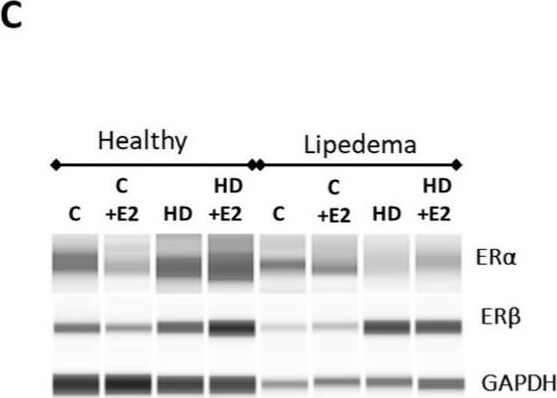
Western Blot: ER beta/NR3A2 Antibody (14C8) - Azide and BSA Free [NB200-305] -
Expression of estrogen receptors in ASCs. (A). qRT-PCR shows a significant increase in ER gene expression in HD-treated healthy and lipedema ASCs (n = 3). (B). Quantification of Western Blot gels shows increased ER protein expression in HD-treated healthy and lipedema ASCs (n = 3). (C). Capillary Western blot (Jess) assay showing ER alpha, ER beta, and GADPH protein expression in an assembled gel-like image view. Values are means +/- SEM. * p < 0.05; ** p < 0.01. Image collected and cropped by CiteAb from the following open publication (https://www.mdpi.com/2227-9059/12/5/1042), licensed under a CC-BY license. Not internally tested by Novus Biologicals.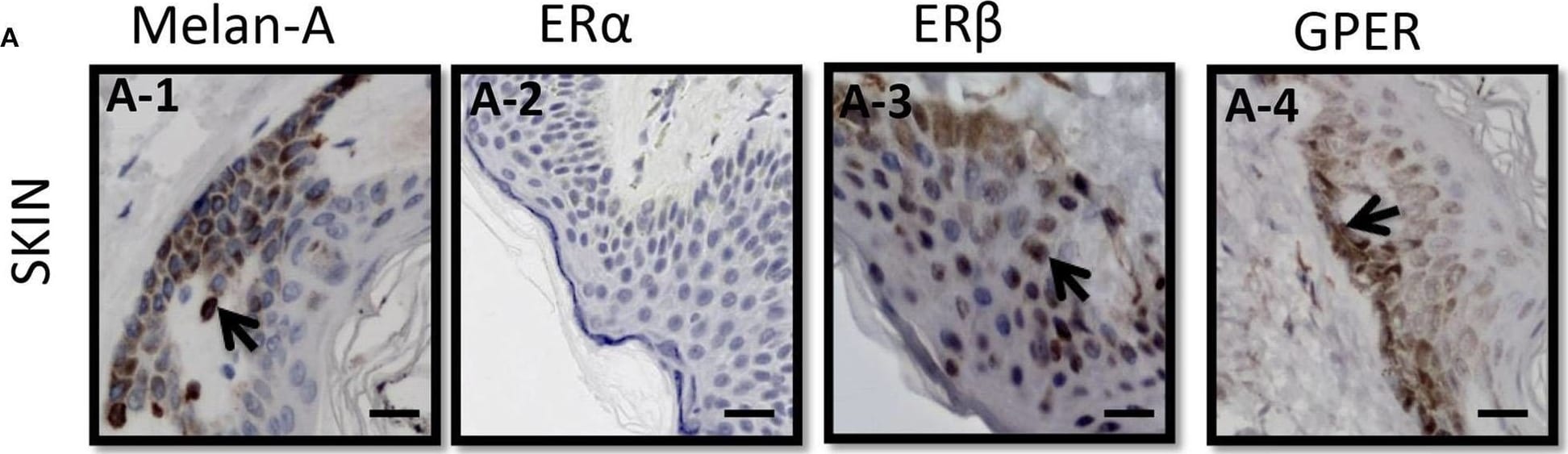
Immunohistochemistry: ER beta/NR3A2 Antibody (14C8) - Azide and BSA Free [NB200-305] -
ERs expressions and the survival rates in melanoma patients. (A) Immunoshitochemical staining of Melanin (A–1), ER alpha (A–2), ER beta (A–3), and GPER (A–4) in skin (upper panel) (A–1–A–4) and (B) melanoma (lower panel) (B–1–B–4), where normal human skin serves as control. Arrows indicates the positive signals. Kaplan–Meier survival curves of the expression of ER alpha (C,F), ER beta (D,G), and GPER(E,H) in all patients from the Human Protein Atlas (C–E) and TCGA (F–H). Scale bar is 100 μm. Image collected and cropped by CiteAb from the following open publication (https://pubmed.ncbi.nlm.nih.gov/31696058), licensed under a CC-BY license. Not internally tested by Novus Biologicals.Applications for ER beta/NR3A2 Antibody (14C8) - Azide and BSA Free
Flow Cytometry
Immunocytochemistry/ Immunofluorescence
Immunohistochemistry
Immunohistochemistry-Paraffin
Simple Western
Western Blot
See Simple Western Antibody Database for Simple Western validation: Tested in Blood, separated by Size, antibody dilution of 1:25
Flow Cytometry Panel Builder
Bio-Techne Knows Flow Cytometry
Save time and reduce costly mistakes by quickly finding compatible reagents using the Panel Builder Tool.
Advanced Features
- Spectra Viewer - Custom analysis of spectra from multiple fluorochromes
- Spillover Popups - Visualize the spectra of individual fluorochromes
- Antigen Density Selector - Match fluorochrome brightness with antigen density

Formulation, Preparation, and Storage
Purification
Formulation
Format
Preservative
Concentration
Shipping
Stability & Storage
Background: ER beta/NR3A2
Long Name
Alternate Names
Entrez Gene IDs
Gene Symbol
UniProt
Additional ER beta/NR3A2 Products
Product Documents for ER beta/NR3A2 Antibody (14C8) - Azide and BSA Free
Certificate of Analysis
To download a Certificate of Analysis, please enter a lot or batch number in the search box below.
Product Specific Notices for ER beta/NR3A2 Antibody (14C8) - Azide and BSA Free
This product is for research use only and is not approved for use in humans or in clinical diagnosis. Primary Antibodies are guaranteed for 1 year from date of receipt.
Related Research Areas
Citations for ER beta/NR3A2 Antibody (14C8) - Azide and BSA Free
 Powered by Bioz
Customer Reviews for ER beta/NR3A2 Antibody (14C8) - Azide and BSA Free
There are currently no reviews for this product. Be the first to review ER beta/NR3A2 Antibody (14C8) - Azide and BSA Free and earn rewards!
Have you used ER beta/NR3A2 Antibody (14C8) - Azide and BSA Free?
Submit a review and receive an Amazon gift card!
$25/€18/£15/$25CAN/¥2500 for a review with an image
$10/€7/£6/$10CAN/¥1110 for a review without an image
Submit a review
Protocols
View specific protocols for ER beta/NR3A2 Antibody (14C8) - Azide and BSA Free (NB200-305):
Immunohistochemistry Procedure
1. Cut 4-5 micron sections and mount onto Superfrost plus slides.
2. Dewax in xylene and rehydrate through graded alcohols.
3. Block with 3% H2O2 in methanol for 10 minutes.
4. Wash in running tap water for 5 minutes then block non-specific binding sites with normal horse serum.
5. To unmask the antigen, heat-mediated retrieval is required using either a microwave or pressure cooker. For microwave-mediated retrieval immerse sections in 1 mM citrate buffer, pH 6, and microwaved at full power (600W) for 27 minutes (NB The exact time will depend on both the power and age of the microwave). Alternatively, sections can be pressure cooked for 4 minutes, immersed in 1 mM citrate buffer, pH 6. Allow sections to cool for 20-30 minutes and wash in running tap water for 5 minutes.
6. Incubation sections with 5ug/ml primary antibody at 4C overnight. Incubation time and temperature are critical.
7. Incubate with appropriate biotinylated secondary antibody for 30 minutes at room temperature, followed by streptavidin ABC kit (DAKO) according to the manufacturer's instructions.
8. Prepare 3,3'-diaminobenzidine substrate and apply for 5-10 minutes.
9. Counterstain with haematoxylin,dehydrate and coverslip.
Using this protocol, we detect consistent, strong ERb staining in epithelial cell nuclei. Occasional weak to moderate staining is seen in surrounding stromal and endothelial cell nuclei. Sporadic light cytoplasmic staining is sometimes observed. We have also successfully detected ERb in colon and ovarian tumours using the same antibody.
Find general support by application which include: protocols, troubleshooting, illustrated assays, videos and webinars.
- 7-Amino Actinomycin D (7-AAD) Cell Viability Flow Cytometry Protocol
- Antigen Retrieval Protocol (PIER)
- Antigen Retrieval for Frozen Sections Protocol
- Appropriate Fixation of IHC/ICC Samples
- Cellular Response to Hypoxia Protocols
- ChIP Protocol Video
- Chromatin Immunoprecipitation (ChIP) Protocol
- Chromatin Immunoprecipitation Protocol
- Chromogenic IHC Staining of Formalin-Fixed Paraffin-Embedded (FFPE) Tissue Protocol
- Chromogenic Immunohistochemistry Staining of Frozen Tissue
- ClariTSA™ Fluorophore Kits
- Detection & Visualization of Antibody Binding
- Extracellular Membrane Flow Cytometry Protocol
- Flow Cytometry Protocol for Cell Surface Markers
- Flow Cytometry Protocol for Staining Membrane Associated Proteins
- Flow Cytometry Staining Protocols
- Flow Cytometry Troubleshooting Guide
- Fluorescent IHC Staining of Frozen Tissue Protocol
- Graphic Protocol for Heat-induced Epitope Retrieval
- Graphic Protocol for the Preparation and Fluorescent IHC Staining of Frozen Tissue Sections
- Graphic Protocol for the Preparation and Fluorescent IHC Staining of Paraffin-embedded Tissue Sections
- Graphic Protocol for the Preparation of Gelatin-coated Slides for Histological Tissue Sections
- ICC Cell Smear Protocol for Suspension Cells
- ICC Immunocytochemistry Protocol Videos
- ICC for Adherent Cells
- IHC Sample Preparation (Frozen sections vs Paraffin)
- Immunocytochemistry (ICC) Protocol
- Immunocytochemistry Troubleshooting
- Immunofluorescence of Organoids Embedded in Cultrex Basement Membrane Extract
- Immunofluorescent IHC Staining of Formalin-Fixed Paraffin-Embedded (FFPE) Tissue Protocol
- Immunohistochemistry (IHC) and Immunocytochemistry (ICC) Protocols
- Immunohistochemistry Frozen Troubleshooting
- Immunohistochemistry Paraffin Troubleshooting
- Immunoprecipitation Protocol
- Intracellular Flow Cytometry Protocol Using Alcohol (Methanol)
- Intracellular Flow Cytometry Protocol Using Detergents
- Intracellular Nuclear Staining Flow Cytometry Protocol Using Detergents
- Intracellular Staining Flow Cytometry Protocol Using Alcohol Permeabilization
- Intracellular Staining Flow Cytometry Protocol Using Detergents to Permeabilize Cells
- Preparing Samples for IHC/ICC Experiments
- Preventing Non-Specific Staining (Non-Specific Binding)
- Primary Antibody Selection & Optimization
- Propidium Iodide Cell Viability Flow Cytometry Protocol
- Protocol for Heat-Induced Epitope Retrieval (HIER)
- Protocol for Liperfluo
- Protocol for Making a 4% Formaldehyde Solution in PBS
- Protocol for VisUCyte™ HRP Polymer Detection Reagent
- Protocol for the Characterization of Human Th22 Cells
- Protocol for the Characterization of Human Th9 Cells
- Protocol for the Fluorescent ICC Staining of Cell Smears - Graphic
- Protocol for the Fluorescent ICC Staining of Cultured Cells on Coverslips - Graphic
- Protocol for the Preparation & Fixation of Cells on Coverslips
- Protocol for the Preparation and Chromogenic IHC Staining of Frozen Tissue Sections
- Protocol for the Preparation and Chromogenic IHC Staining of Frozen Tissue Sections - Graphic
- Protocol for the Preparation and Chromogenic IHC Staining of Paraffin-embedded Tissue Sections
- Protocol for the Preparation and Chromogenic IHC Staining of Paraffin-embedded Tissue Sections - Graphic
- Protocol for the Preparation and Fluorescent ICC Staining of Cells on Coverslips
- Protocol for the Preparation and Fluorescent ICC Staining of Non-adherent Cells
- Protocol for the Preparation and Fluorescent ICC Staining of Stem Cells on Coverslips
- Protocol for the Preparation and Fluorescent IHC Staining of Frozen Tissue Sections
- Protocol for the Preparation and Fluorescent IHC Staining of Paraffin-embedded Tissue Sections
- Protocol for the Preparation of Gelatin-coated Slides for Histological Tissue Sections
- Protocol for the Preparation of a Cell Smear for Non-adherent Cell ICC - Graphic
- Protocol: Annexin V and PI Staining by Flow Cytometry
- Protocol: Annexin V and PI Staining for Apoptosis by Flow Cytometry
- R&D Systems Quality Control Western Blot Protocol
- TUNEL and Active Caspase-3 Detection by IHC/ICC Protocol
- The Importance of IHC/ICC Controls
- Troubleshooting Guide: Fluorokine Flow Cytometry Kits
- Troubleshooting Guide: Immunohistochemistry
- Troubleshooting Guide: Western Blot Figures
- Western Blot Conditions
- Western Blot Protocol
- Western Blot Protocol for Cell Lysates
- Western Blot Troubleshooting
- Western Blot Troubleshooting Guide
- View all Protocols, Troubleshooting, Illustrated assays and Webinars
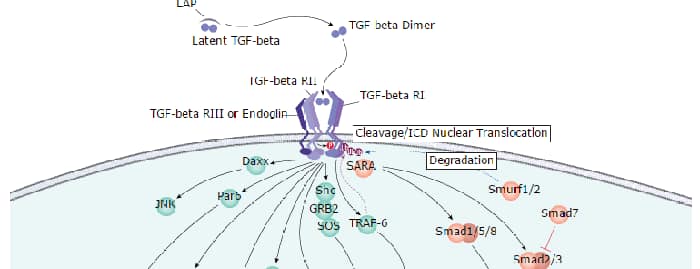
Associated Pathways