
Caspase-1 Antibody (14F468) - BSA Free
Novus Biologicals | Catalog # NB100-56565

Scientific images may be resized, cropped, or adjusted for brightness or contrast for presentation purposes. These updates are limited to presentation and do not affect the underlying scientific interpretation of the data. Where available, additional source data may be provided upon request.
Key Product Details
Validated by
Biological Validation
Species Reactivity
Validated:
Human, Mouse, Rat
Cited:
Human, Mouse, Rat
Applications
Validated:
Immunohistochemistry, Immunohistochemistry-Paraffin, Immunohistochemistry-Frozen, Western Blot, Immunocytochemistry/ Immunofluorescence, Simple Western
Cited:
Immunohistochemistry-Paraffin, Immunohistochemistry-Frozen, Western Blot, ELISA, Immunocytochemistry/ Immunofluorescence, IF/IHC
Label
Unconjugated
Antibody Source
Monoclonal Mouse IgG1 kappa Clone # 14F468
Format
BSA Free
Loading...
Product Specifications
Immunogen
Caspase-1 Antibody (14F468) was developed against two synthetic peptides from the human Caspase-1 protein (amino acids 371-390 and 31-45) [UniProt P29466].
Reactivity Notes
Immunogen's sequence similarity with other species: Porcine/Pig (85%), Equine/Horse (80%), Canine (70%). Rat reactivity reported in scientific literature (PMID: 22133203).
Localization
Cytoplasm, Nucleus
Specificity
Caspase-1 Antibody (14F468) will recognize full-length Caspase-1 and cleaved Caspase-1 forms that retain amino acids 371-390 of the Caspase-1 protein.
Clonality
Monoclonal
Host
Mouse
Isotype
IgG1 kappa
Theoretical MW
45.2 kDa.
Disclaimer note: The observed molecular weight of the protein may vary from the listed predicted molecular weight due to post translational modifications, post translation cleavages, relative charges, and other experimental factors.
Disclaimer note: The observed molecular weight of the protein may vary from the listed predicted molecular weight due to post translational modifications, post translation cleavages, relative charges, and other experimental factors.
Scientific Data Images for Caspase-1 Antibody (14F468) - BSA Free
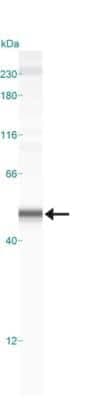
Detection of Caspase-1 in HeLa Cell Lysate by Simple Western
Simple Western lane view shows a specific band for Caspase 1 in 1.0 mg/ml of HeLa lysate. This experiment was performed under reducing conditions using the 12-230 kDa separation system.
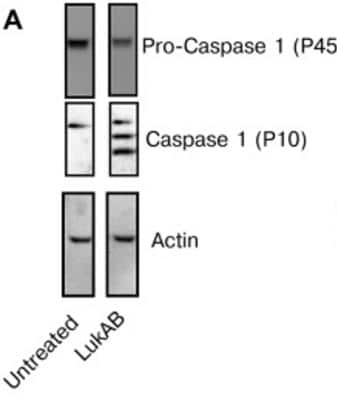
Detection of Caspase-1 in LukAB Intoxicated THP1 Cells by Western Blot
Caspase-1-Antibody-14F468-Western-Blot-NB100-56565-img0017.jpg
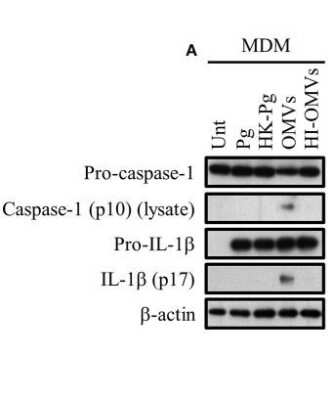
Western Blot Analysis of Caspase-1 in Infected Human MDMs
Caspase-1-Antibody-14F468-Western-Blot-NB100-56565-img0016.jpg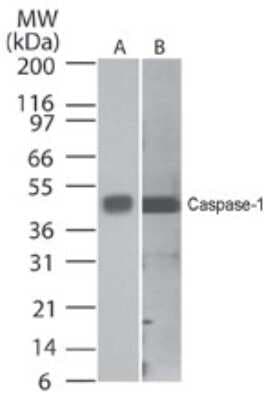
Western Blot Detection of Caspase-1 in Human and Mouse Cell Lysates
Analysis of Caspase-1 using a Caspase-1 monoclonal antibody. Human HeLa (A) and mouse NIH3T3 lysate probed with Caspase-1 antibody at 0.5 ug/ml and 2 ug/ml, respectively.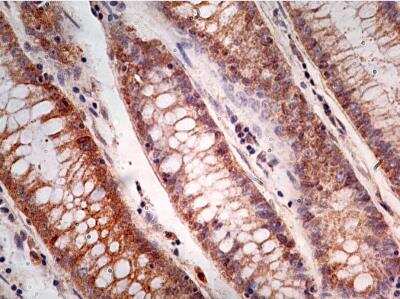
Immunohistological Staining of Caspase-1 in Paraffin Embedded Adenocarcinoma of the Rectum
Adenocarcinoma of the rectum stained with Caspase-1 antibody (5 ug/ml), peroxidase-conjugate and DAB chromogen. Staining of formalin-fixed tissues is enhanced by boiling tissue sections in 10 mM sodium citrate buffer, pH 6.0 for 10-20 min followed by cooling at RT for 20 min.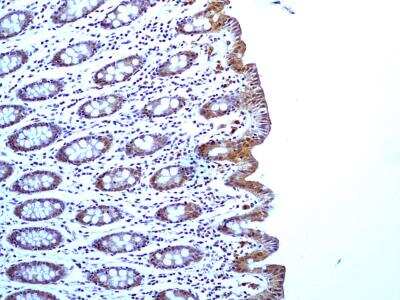
Immunohistological Staining of Caspase-1 in Paraffin Embedded Human Colon
Detection of Caspase-1 protein in a section of normal human colon using 5 ug/ml concentration of Caspase 1 antibody (clone 14F468). Distinct cytoplasmic staining along with some nuclear positivity was observed in crypts/mucosa, and staining was found to be more intense in the absorptive columnar epithelial cells. [10X Magnification]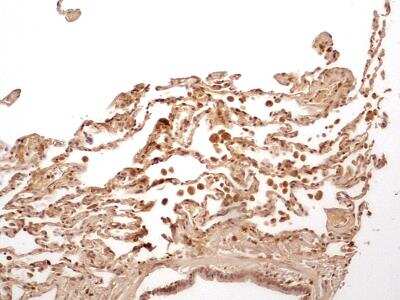
Immunohistological Staining of Caspase-1 in Paraffin Embedded Human Lung
Normal lung from human using 5 ug/ml concentration of Caspase 1 antibody (clone 14F468). In this representative lung section, different type of cells including pseudostratified columnar epithelium of bronchiole and the simple squamous epithelium of alveoli may be seen to develop immunoreactivity for Caspase 1. [10X Magnification]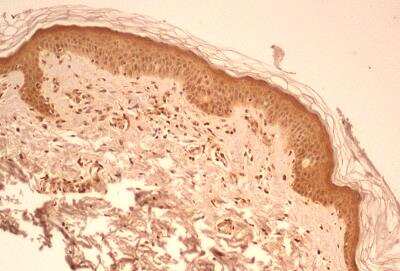
Immunohistological Staining of Caspase-1 in Paraffin Embedded Human Skin
Normal skin from human using 5 ug/ml concentration of Caspase 1 antibody (clone 14F468). Strong cytoplasmic/nuclear staining developed in all the epidermal cells, blood vessels and some cells of the dermal connective tissues layer. [10X Magnification]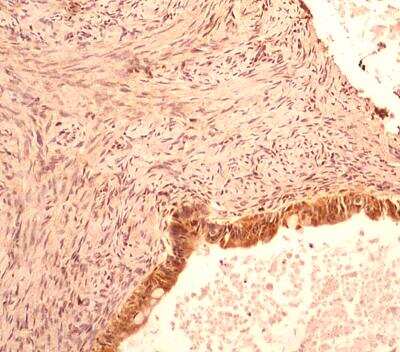
Immunohistological Staining of Caspase-1 in Paraffin Embedded Human Ovarian Cancer
Detection of Caspase-1 in a section of human ovarian cancer using 5 ug/ml concentration of Caspase 1 antibody (clone 14F468).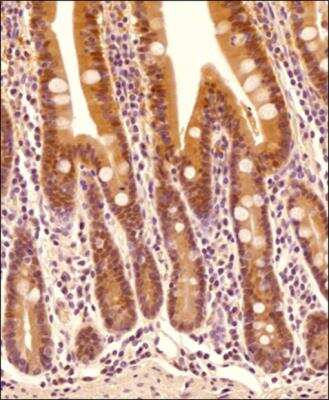
Immunohistological Staining of Caspase-1 in Paraffin Embedded Human Intestine
Tissue section of human intestine using Caspase-1 antibody (clone 14F468) at 5ug/ml concentration (1:200 dilution). The primary antibody binding to Caspase 1 in cells was detected using HRP conjugated anti-Mouse secondary antibody with DAB reagent, and the sections were further counterstained with hematoxylin for labeling cellular nuclei. This Caspase 1 antibody generated a diffused but specific cytoplasmic staining in columnar epithelia cells of villi, and a few cells depicted nuclear staining also. Only a subset of connective tissue cells in lamina propria depicted positivity (cytoplasmic) for this protein.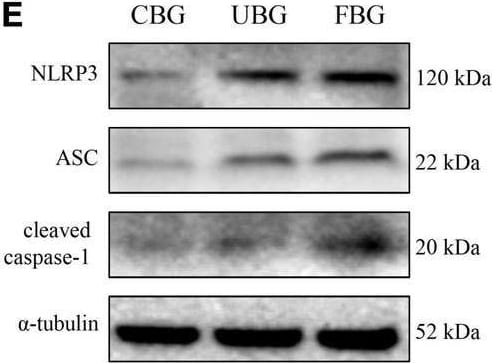
Western Blot: Caspase-1 Antibody (14F468) - BSA Free [NB100-56565] -
Western Blot: Caspase-1 Antibody (14F468) - BSA Free [NB100-56565] - Glucose fluctuations promoted the activation of NLRP3 inflammasome. (A) Immunofluorescence staining of NLRP3-ASC interaction in rat hearts. The heart sections were labeled with anti-NLRP3 (red), anti-ASC (green), & DAPI (blue) (n = 3 per group). (B–D) The mRNA levels of NLRP3, IL-1 beta & IL-18 in rat hearts of the three groups (n = 4 per group). (E–H) The protein expressions of NLRP3, ASC & cleaved caspase-1 in rat hearts of the three groups (n = 4 per group). Image collected & cropped by CiteAb from the following publication (https://pubmed.ncbi.nlm.nih.gov/35592403), licensed under a CC-BY license. Not internally tested by Novus Biologicals.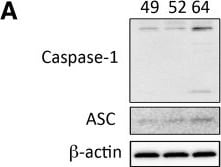
Western Blot: Caspase-1 Antibody (14F468) - BSA Free [NB100-56565] -
Western Blot: Caspase-1 Antibody (14F468) - BSA Free [NB100-56565] - Caspase-1 expression increases with age in human fibroblasts: a Immunoblot analysis of caspase-1 & ASC in human fibroblasts obtained from a donor at the ages of 49, 52 & 64 y/o. b Immunocytochemistry image of human fibroblasts stained for caspase-1 (green) & Phalloidin (red) from a donor at three different ages (49, 52 & 64 y/o). Bar graph: 100 μm Image collected & cropped by CiteAb from the following publication (https://pubmed.ncbi.nlm.nih.gov/30473634), licensed under a CC-BY license. Not internally tested by Novus Biologicals.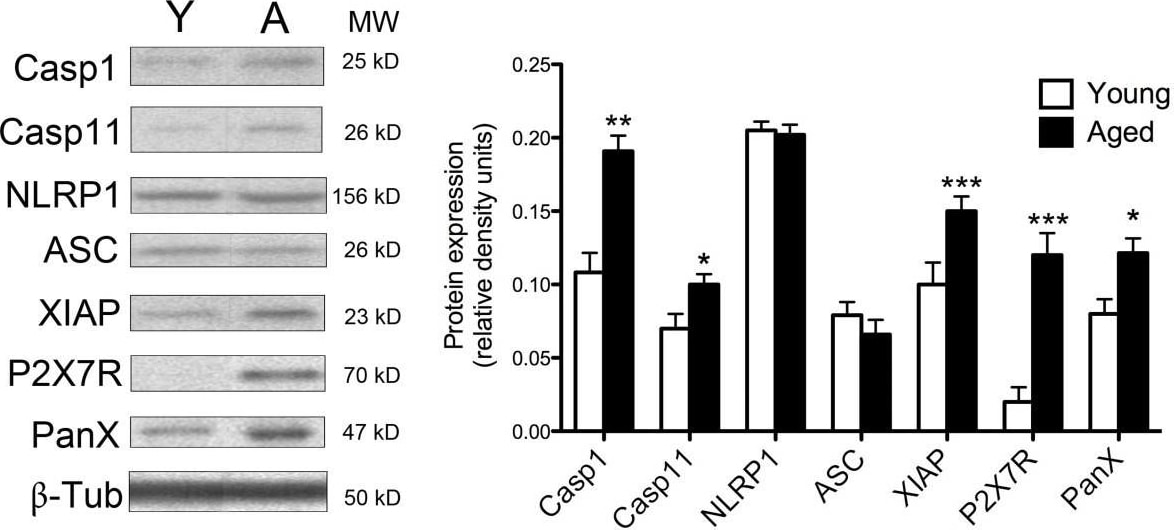
Western Blot: Caspase-1 Antibody (14F468) - BSA Free [NB100-56565] -
Western Blot: Caspase-1 Antibody (14F468) - BSA Free [NB100-56565] - Aging alters expression of NLRP1 inflammasome components. Representative immunoblots & densitometric analysis of immunoblots for caspase-1 (Casp1), caspase-11 (Casp11), NLRP1, ASC, cleaved XIAP, P2X7 receptor (P2X7R) & pannexin-1 (PanX1) in brain lysates of young (Y) & aged (A) animals. Protein levels of cleaved caspase-1 & -11 are higher in aged animals compared to young. Protein levels of NLRP1 & ASC did not change with age whereas P2X7 receptor, the pannexin-1 protein & the cleaved fragment of XIAP are higher in aged animals than in young animals. beta -Tubulin was used as an internal standard & control for protein loading. Data are presented as mean +/- SEM. *p < 0.05, **p < 0.01, ***p < 0.005 compared with young. n = 6 per group. Image collected & cropped by CiteAb from the following publication (https://pubmed.ncbi.nlm.nih.gov/22133203), licensed under a CC-BY license. Not internally tested by Novus Biologicals.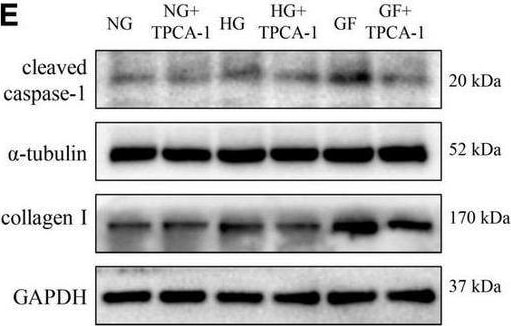
Western Blot: Caspase-1 Antibody (14F468) - BSA Free [NB100-56565] -
Western Blot: Caspase-1 Antibody (14F468) - BSA Free [NB100-56565] - Role of NF-kappa B in glucose fluctuation-induced inflammasome-related myocardial fibrosis. (A) Immunofluorescence staining of NF-kappa B/p65 nucleation (n = 3 per group). (B,C) The phosphorylation level of NF-kappa B/p65 in rat hearts of the three groups (n = 4 per group). (D) Immunofluorescence staining of intracellular NLRP3–ASC interaction in the GF & GF + TPCA-1 groups. The NRCFs were labeled with anti-NLRP3 (red), anti-ASC (green), & DAPI (blue) (n = 3 per group). (E–G) After application of TPCA-1 (0.5 μM), the protein expressions of cleaved caspase-1 & collagen I were measured by western blot (n = 3 per group). Image collected & cropped by CiteAb from the following publication (https://pubmed.ncbi.nlm.nih.gov/35592403), licensed under a CC-BY license. Not internally tested by Novus Biologicals.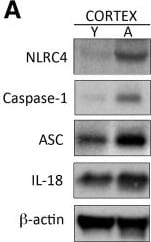
Western Blot: Caspase-1 Antibody (14F468) - BSA Free [NB100-56565] -
Western Blot: Caspase-1 Antibody (14F468) - BSA Free [NB100-56565] - Inflammasome proteins are elevated in the cytosolic fraction of aged mice: a Representative image of immunoblot analyses of inflammasome proteins in the cytosolic fraction of the cortex of young (Y) & aged (A) mice. Quantification of immunoblot analysis of NLRC4 (b), caspase-1 (c), ASC (d), IL-18 (e) in the cortex. a Representative image of immunoblot analyses of inflammasome proteins in the cytosolic fraction of the hippocampus of young (Y) & aged (A) mice. Quantification of immunoblot analysis of NLRC4 (g), caspase-1 (h), caspase-11 (i), ASC (j), IL-1 beta (k) in the hippocampus. Data presented as mean+/-SEM. N = 5 per group. *p < 0.05 Image collected & cropped by CiteAb from the following publication (https://pubmed.ncbi.nlm.nih.gov/30473634), licensed under a CC-BY license. Not internally tested by Novus Biologicals.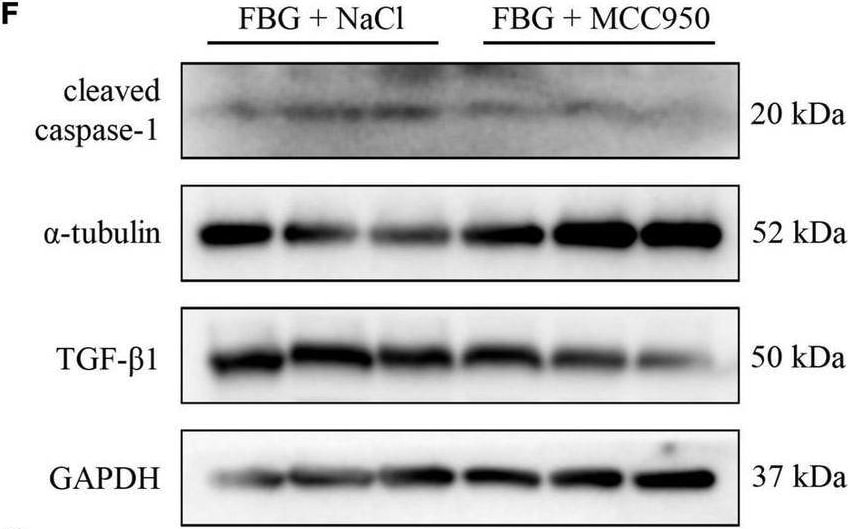
Western Blot: Caspase-1 Antibody (14F468) - BSA Free [NB100-56565] -
Western Blot: Caspase-1 Antibody (14F468) - BSA Free [NB100-56565] - NLRP3 inhibition with MCC950 reversed myocardial fibrosis induced by glucose fluctuations. (A) Representative images of hematoxylin & eosin (HE) staining for myocardial tissue in the FBG + NaCl & FBG + MCC950 groups (n = 3 per group). (B–C) Representative images of myocardial fibrosis & fibrosis area (%) in the FBG + NaCl & FBG + MCC950 groups (n = 4 per group). (D–K) The protein expressions of NLRP3, cleaved caspase-1, TGF-beta 1, collagen I & collagen III in the FBG + NaCl & FBG + MCC950 groups (n = 6 per group). Image collected & cropped by CiteAb from the following publication (https://pubmed.ncbi.nlm.nih.gov/35592403), licensed under a CC-BY license. Not internally tested by Novus Biologicals.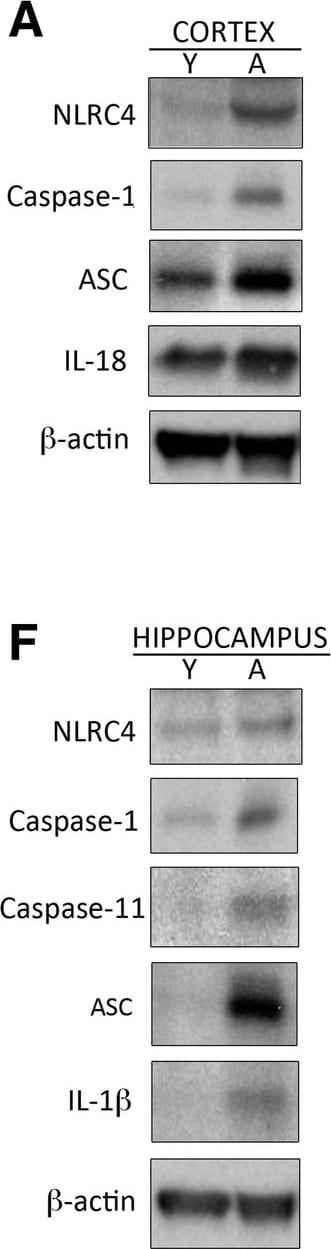
Western Blot: Caspase-1 Antibody (14F468) - BSA Free [NB100-56565] -
Western Blot: Caspase-1 Antibody (14F468) - BSA Free [NB100-56565] - Inflammasome proteins are elevated in the cytosolic fraction of aged mice: a Representative image of immunoblot analyses of inflammasome proteins in the cytosolic fraction of the cortex of young (Y) & aged (A) mice. Quantification of immunoblot analysis of NLRC4 (b), caspase-1 (c), ASC (d), IL-18 (e) in the cortex. a Representative image of immunoblot analyses of inflammasome proteins in the cytosolic fraction of the hippocampus of young (Y) & aged (A) mice. Quantification of immunoblot analysis of NLRC4 (g), caspase-1 (h), caspase-11 (i), ASC (j), IL-1 beta (k) in the hippocampus. Data presented as mean+/-SEM. N = 5 per group. *p < 0.05 Image collected & cropped by CiteAb from the following publication (https://pubmed.ncbi.nlm.nih.gov/30473634), licensed under a CC-BY license. Not internally tested by Novus Biologicals.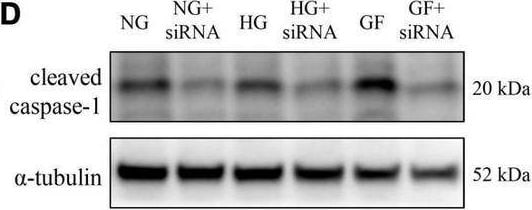
Western Blot: Caspase-1 Antibody (14F468) - BSA Free [NB100-56565] -
Western Blot: Caspase-1 Antibody (14F468) - BSA Free [NB100-56565] - Role of inflammasome in glucose fluctuation-induced myocardial fibrosis. (A) Immunofluorescence staining of intracellular NLRP3–ASC interaction examined by confocal microscopy. The NRCFs were labeled with anti-NLRP3 (red), anti-ASC (green), & DAPI (blue) (n = 3 per group). (B–G) After siRNA targeting NLRP3 transfection, the protein expressions of NLRP3, cleaved caspase-1 & collagen I were measured by western blot (n = 3 per group). (H) Representative images of immunofluorescence staining of intracellular alpha -SMA in the NG, HG, GF, & GF + siRNA groups (n = 3 per group). Image collected & cropped by CiteAb from the following publication (https://pubmed.ncbi.nlm.nih.gov/35592403), licensed under a CC-BY license. Not internally tested by Novus Biologicals.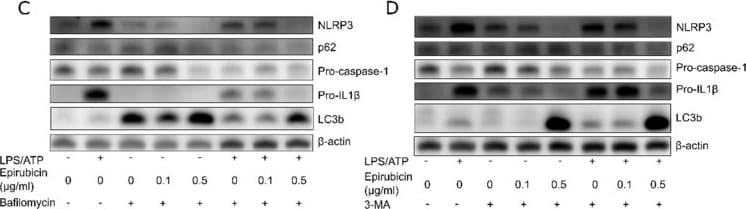
Western Blot: Caspase-1 Antibody (14F468) - BSA Free [NB100-56565] -
Western Blot: Caspase-1 Antibody (14F468) - BSA Free [NB100-56565] - Epirubicin suppresses the NLRP3 inflammasome in presence of autophagy inhibitors. (A) LPS/ATP-induced IL-1 beta secretion from PM in the absence or presence of bafilomycin & 3-MA is shown. Means ± SEM from 10 (IL-1 beta ) independent experiments are shown. (B) Representative immunoblot of LC3b after epirubicin & LPS/ATP treatments. (C,D) Representative immunoblots of inflammasome & autophagy components after inhibition with (C) bafilomycin or (D) 3-MA in PM whole cell lysates. Cells were treated with indicated concentrations of epirubicin treatment over 24 h, followed by LPS (10 ng/mL) in the absence or presence of bafilomycin (300 nM) or 3-MA (10 mM) for 3 h & NLRP3 activation by ATP (1 mM, 1 h). Whole cell lysates were subjected to SDS-PAGE (10% gel) & processed for immunoblot analysis with specific antibodies. Here, beta -actin served as loading control. Statistical tests: one-sample t-test (A) ** p < 0.01, *** p < 0.001. Image collected & cropped by CiteAb from the following publication (https://pubmed.ncbi.nlm.nih.gov/31905600), licensed under a CC-BY license. Not internally tested by Novus Biologicals.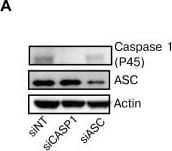
Western Blot: Caspase-1 Antibody (14F468) - BSA Free [NB100-56565] -
Western Blot: Caspase-1 Antibody (14F468) - BSA Free [NB100-56565] - Genetic or pharmacologic disruption of Caspase 1 blocks LukAB-induced cytokine secretion but not cell death.(A) THP1 cells were transfected with siRNA against Caspase 1, ASC or a non-targeting sequence. Cell lysates were collected & analyzed by immunoblot to confirm knockdown of pro-Caspase 1 & ASC. (B) THP1 siRNA cells were incubated with propidium iodide & intoxicated with 50 ng/mL LukAB for 1 hour then analyzed by flow cytometry. (C & D) THP1 siRNA cells were either primed with LTA (500ng/mL) (C) or untreated (D) then intoxicated with LukAB (50ng/mL) for 1 hr before culture supernatants were analyzed for release of IL-1 beta (C) or IL-18 (D). (E & F) Primary CD14+ human monocytes were incubated with the indicated concentration of z-YVAD-FMK or VX-765 for 30 minutes. Primary monocytes were incubated in the presence of propidium iodide (E) then intoxicated with LukAB (50ng/mL) & analyzed by flow cytometry. (F) Primary monocytes were intoxicated with LukAB (50ng/mL) & culture supernatants were analyzed for release of IL-18. Propidium iodide staining & IL-18 secretion are reported as a fraction of measurement in primary cells not treated with inhibitor. Bars represent the mean ± standard error of the mean for at least two independent experiments, each performed in triplicate. Asterisks indicate significance at a p-value of ≤ 0.05 by Tukey’s multiple comparisons post-test for 1-way or 2-way ANOVA, as appropriate. Image collected & cropped by CiteAb from the following publication (https://dx.plos.org/10.1371/journal.ppat.1004970), licensed under a CC-BY license. Not internally tested by Novus Biologicals.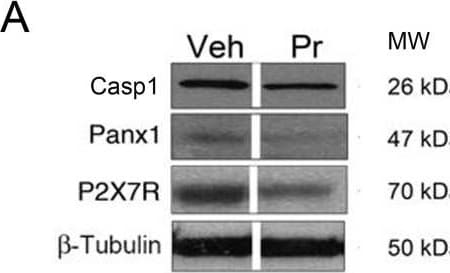
Western Blot: Caspase-1 Antibody (14F468) - BSA Free [NB100-56565] -
Western Blot: Caspase-1 Antibody (14F468) - BSA Free [NB100-56565] - Probenecid reduces protein expression of NLRP1 inflammasome & ameliorates spatial learning deficits in aged rats. (A) Representative immunoblots of cleaved caspase-1, pannexin1 & P2X7R in hippocampal lysates of vehicle (Veh)-treated & probenecid (Pr)-treated 18-month-old rats. beta -tubulin was used as an internal control. (B) Densitometric analysis of immunoblots from brain lysates of cleaved caspase-1 (Casp1), P2X7 receptor (P2X7R), & pannexin1 (PanX1). (C-D) Aged animals underwent behavioral testing following either probenecid or vehicle treatment. (C) In a hippocampal-dependent spatial learning task via Morris water maze, latency to platform was measured on days 1-3 & 8-10. Probenecid-treatment improved latency to platform measured on the final day of testing (D) Mean path length was determined on day 10 of testing & probenecid-treated rats demonstrated significantly shorter mean path lengths than vehicle-treated controls. Drug treatment was administered twice daily for 3 days (days 7-9). Data are presented as mean +/- SEM *p < 0.05, **p < 0.005 compared to vehicle. N = 6-8/per group. Image collected & cropped by CiteAb from the following publication (https://pubmed.ncbi.nlm.nih.gov/22133203), licensed under a CC-BY license. Not internally tested by Novus Biologicals.Applications for Caspase-1 Antibody (14F468) - BSA Free
Application
Recommended Usage
Immunohistochemistry
1:100 - 1:500
Immunohistochemistry-Frozen
reported in scientific literature (PMID 30930743)
Immunohistochemistry-Paraffin
1:10-1:500
Simple Western
1:50
Western Blot
0.5-2 ug/ml
Application Notes
Staining of formalin-fixed tissues is enhanced by boiling tissue sections in 10 mM sodium citrate buffer, pH 6.0 for 10-20 min followed by cooling at RT for 20 min.
In Simple Western only 10 - 15 uL of the recommended dilution is used per data point.
See Simple Western Antibody Database for Simple Western validation: Tested in HeLa lysate 1.0 mg/mL, separated by Size, antibody dilution of 1:50, apparent MW was 51 kDa. Separated by Size-Wes, Sally Sue/Peggy Sue.
In Simple Western only 10 - 15 uL of the recommended dilution is used per data point.
See Simple Western Antibody Database for Simple Western validation: Tested in HeLa lysate 1.0 mg/mL, separated by Size, antibody dilution of 1:50, apparent MW was 51 kDa. Separated by Size-Wes, Sally Sue/Peggy Sue.
Formulation, Preparation, and Storage
Purification
Protein G purified
Formulation
PBS
Format
BSA Free
Preservative
0.02% Sodium Azide
Concentration
1.0 mg/ml
Shipping
The product is shipped with polar packs. Upon receipt, store it immediately at the temperature recommended below.
Stability & Storage
Store at 4C short term. Aliquot and store at -20C long term. Avoid freeze-thaw cycles.
Background: Caspase-1
Given the role of IL-1beta in inflammation, it makes sense that many diseases and pathologies have been associated with dysregulation of caspase-1 activation and the inflammasome (3, 4). The inflammasome is a multiprotein complex comprised of Nod-like receptor (NLR) family members and the adapter ASC (apoptosis-associated speck-like protein containing a CARD) which are crucial for capase-1 activation (3-5). For instance, the neuronal apoptosis inhibitory protein (NAIP)/NLRC4 inflammasome has been associated with colorectal cancer, breast cancer, and glioma pathogenesis (5). Caspase-1 activation and mutations in the inflammasome have also been linked to Chron's disease and Alzheimer's disease (4). In addition to immune and inflammatory related disorder, the inflammasome has been linked to metabolic and obesity related disorders including diabetes and cardiovascular disease (6). Finally, caspase-1 deficient mice exhibit enhanced epithelial cell proliferation in the colon, increased tumor formation, and reduced apoptosis (1). A more thorough understanding of the inflammasome-caspase-1 signaling pathway will be important for understanding disease pathology and potential therapeutic development.
Alternative names for caspase-1 includes CASP1, CASP1 nirs variant 1, EC 3.4.22.36, ICE, IL-1 beta-converting enzyme, IL1BC, IL1BCE, IL1B-converstase, interleukin-1 beta convertase, and p45.
References
1. Shalini, S., Dorstyn, L., Dawar, S., & Kumar, S. (2015). Old, new and emerging functions of caspases. Cell death and differentiation. https://doi.org/10.1038/cdd.2014.216
2. Chang, H. Y., & Yang, X. (2000). Proteases for cell suicide: functions and regulation of caspases. Microbiology and molecular biology reviews: MMBR. https://doi.org/10.1128/mmbr.64.4.821-846.2000
3. Vanaja, S. K., Rathinam, V. A., & Fitzgerald, K. A. (2015). Mechanisms of inflammasome activation: recent advances and novel insights. Trends in cell biology. https://doi.org/10.1016/j.tcb.2014.12.009
4. Franchi, L., Eigenbrod, T., Munoz-Planillo, R., & Nunez, G. (2009). The inflammasome: a caspase-1-activation platform that regulates immune responses and disease pathogenesis. Nature immunology. https://doi.org/10.1038/ni.1703
5. Kay, C., Wang, R., Kirkby, M., & Man, S. M. (2020). Molecular mechanisms activating the NAIP-NLRC4 inflammasome: Implications in infectious disease, autoinflammation, and cancer. Immunological reviews. https://doi.org/10.1111/imr.12906
6. Pham, D., Park, P. (2020). Recent insights on modulation of inflammasomes by adipokines: a critical event for the pathogenesis of obesity and metabolism-associated diseases. Archives of Pharmacal Research. https://doi.org/10.1007/s12272-020-01274-7
Alternate Names
CASP1, Caspase1, ICE
Gene Symbol
CASP1
UniProt
Additional Caspase-1 Products
Product Documents for Caspase-1 Antibody (14F468) - BSA Free
Certificate of Analysis
To download a Certificate of Analysis, please enter a lot or batch number in the search box below.
Product Specific Notices for Caspase-1 Antibody (14F468) - BSA Free
This product is for research use only and is not approved for use in humans or in clinical diagnosis. Primary Antibodies are guaranteed for 1 year from date of receipt.
Related Research Areas
Citations for Caspase-1 Antibody (14F468) - BSA Free
 Powered by Bioz
Customer Reviews for Caspase-1 Antibody (14F468) - BSA Free
There are currently no reviews for this product. Be the first to review Caspase-1 Antibody (14F468) - BSA Free and earn rewards!
Have you used Caspase-1 Antibody (14F468) - BSA Free?
Submit a review and receive an Amazon gift card!
$25/€18/£15/$25CAN/¥2500 for a review with an image
$10/€7/£6/$10CAN/¥1110 for a review without an image
Submit a review
Protocols
View specific protocols for Caspase-1 Antibody (14F468) - BSA Free (NB100-56565):
Immunohistochemistry-Paraffin Embedded Sections
Antigen Unmasking:
Bring slides to a boil in 10 mM sodium citrate buffer (pH 6.0) then maintain at a sub-boiling temperature for 10 minutes. Cool slides on bench-top for 30 minutes (keep slides in the sodium citrate buffer all the time).
Staining:
1. Wash sections in deionized water three times for 5 minutes each.
2. Wash sections in PBS for 5 minutes.
3. Block each section with 100-400 ul blocking solution (1% BSA in PBS) for 1 hour at room temperature.
4. Remove blocking solution and add 100-400 ul diluted primary antibody. Incubate overnight at 4 C.
5. Remove antibody solution and wash sections in wash buffer three times for 5 minutes each.
6. Add 100-400 ul HRP polymer conjugated secondary antibody. Incubate 30 minutes at room temperature.
7. Wash sections three times in wash buffer for 5 minutes each.
8. Add 100-400 ul DAB substrate to each section and monitor staining closely.
9. As soon as the sections develop, immerse slides in deionized water.
10. Counterstain sections in hematoxylin.
11. Wash sections in deionized water two times for 5 minutes each.
12. Dehydrate sections.
13. Mount coverslips.
Antigen Unmasking:
Bring slides to a boil in 10 mM sodium citrate buffer (pH 6.0) then maintain at a sub-boiling temperature for 10 minutes. Cool slides on bench-top for 30 minutes (keep slides in the sodium citrate buffer all the time).
Staining:
1. Wash sections in deionized water three times for 5 minutes each.
2. Wash sections in PBS for 5 minutes.
3. Block each section with 100-400 ul blocking solution (1% BSA in PBS) for 1 hour at room temperature.
4. Remove blocking solution and add 100-400 ul diluted primary antibody. Incubate overnight at 4 C.
5. Remove antibody solution and wash sections in wash buffer three times for 5 minutes each.
6. Add 100-400 ul HRP polymer conjugated secondary antibody. Incubate 30 minutes at room temperature.
7. Wash sections three times in wash buffer for 5 minutes each.
8. Add 100-400 ul DAB substrate to each section and monitor staining closely.
9. As soon as the sections develop, immerse slides in deionized water.
10. Counterstain sections in hematoxylin.
11. Wash sections in deionized water two times for 5 minutes each.
12. Dehydrate sections.
13. Mount coverslips.
Western Blot Protocol
1. Perform SDS-PAGE on samples to be analyzed, loading 10-25 ug of total protein per lane.
2. Transfer proteins to PVDF membrane according to the instructions provided by the manufacturer of the membrane and transfer apparatus.
3. Stain the membrane with Ponceau S (or similar product) to assess transfer success, and mark molecular weight standards where appropriate.
4. Rinse the blot TBS -0.05% Tween 20 (TBST).
5. Block the membrane in 5% Non-fat milk in TBST (blocking buffer) for at least 1 hour.
6. Wash the membrane in TBST three times for 10 minutes each.
7. Dilute primary antibody in 1% Non-fat milk in TBST and incubate overnight at 4C with gentle rocking.
8. Wash the membrane in TBST three times for 10 minutes each.
9. Incubate the membrane in diluted HRP conjugated secondary antibody in blocking buffer (as per manufacturer's instructions) for 1 hour at room temperature.
10. Wash the blot in TBST three times for 10 minutes each (this step can be repeated as required to reduce background).
11. Apply the detection reagent of choice in accordance with the manufacturers inst
1. Perform SDS-PAGE on samples to be analyzed, loading 10-25 ug of total protein per lane.
2. Transfer proteins to PVDF membrane according to the instructions provided by the manufacturer of the membrane and transfer apparatus.
3. Stain the membrane with Ponceau S (or similar product) to assess transfer success, and mark molecular weight standards where appropriate.
4. Rinse the blot TBS -0.05% Tween 20 (TBST).
5. Block the membrane in 5% Non-fat milk in TBST (blocking buffer) for at least 1 hour.
6. Wash the membrane in TBST three times for 10 minutes each.
7. Dilute primary antibody in 1% Non-fat milk in TBST and incubate overnight at 4C with gentle rocking.
8. Wash the membrane in TBST three times for 10 minutes each.
9. Incubate the membrane in diluted HRP conjugated secondary antibody in blocking buffer (as per manufacturer's instructions) for 1 hour at room temperature.
10. Wash the blot in TBST three times for 10 minutes each (this step can be repeated as required to reduce background).
11. Apply the detection reagent of choice in accordance with the manufacturers inst
Find general support by application which include: protocols, troubleshooting, illustrated assays, videos and webinars.
- Antigen Retrieval Protocol (PIER)
- Antigen Retrieval for Frozen Sections Protocol
- Appropriate Fixation of IHC/ICC Samples
- Cellular Response to Hypoxia Protocols
- Chromogenic IHC Staining of Formalin-Fixed Paraffin-Embedded (FFPE) Tissue Protocol
- Chromogenic Immunohistochemistry Staining of Frozen Tissue
- ClariTSA™ Fluorophore Kits
- Detection & Visualization of Antibody Binding
- Fluorescent IHC Staining of Frozen Tissue Protocol
- Graphic Protocol for Heat-induced Epitope Retrieval
- Graphic Protocol for the Preparation and Fluorescent IHC Staining of Frozen Tissue Sections
- Graphic Protocol for the Preparation and Fluorescent IHC Staining of Paraffin-embedded Tissue Sections
- Graphic Protocol for the Preparation of Gelatin-coated Slides for Histological Tissue Sections
- ICC Cell Smear Protocol for Suspension Cells
- ICC Immunocytochemistry Protocol Videos
- ICC for Adherent Cells
- IHC Sample Preparation (Frozen sections vs Paraffin)
- Immunocytochemistry (ICC) Protocol
- Immunocytochemistry Troubleshooting
- Immunofluorescence of Organoids Embedded in Cultrex Basement Membrane Extract
- Immunofluorescent IHC Staining of Formalin-Fixed Paraffin-Embedded (FFPE) Tissue Protocol
- Immunohistochemistry (IHC) and Immunocytochemistry (ICC) Protocols
- Immunohistochemistry Frozen Troubleshooting
- Immunohistochemistry Paraffin Troubleshooting
- Preparing Samples for IHC/ICC Experiments
- Preventing Non-Specific Staining (Non-Specific Binding)
- Primary Antibody Selection & Optimization
- Protocol for Heat-Induced Epitope Retrieval (HIER)
- Protocol for Making a 4% Formaldehyde Solution in PBS
- Protocol for VisUCyte™ HRP Polymer Detection Reagent
- Protocol for the Fluorescent ICC Staining of Cell Smears - Graphic
- Protocol for the Fluorescent ICC Staining of Cultured Cells on Coverslips - Graphic
- Protocol for the Preparation & Fixation of Cells on Coverslips
- Protocol for the Preparation and Chromogenic IHC Staining of Frozen Tissue Sections
- Protocol for the Preparation and Chromogenic IHC Staining of Frozen Tissue Sections - Graphic
- Protocol for the Preparation and Chromogenic IHC Staining of Paraffin-embedded Tissue Sections
- Protocol for the Preparation and Chromogenic IHC Staining of Paraffin-embedded Tissue Sections - Graphic
- Protocol for the Preparation and Fluorescent ICC Staining of Cells on Coverslips
- Protocol for the Preparation and Fluorescent ICC Staining of Non-adherent Cells
- Protocol for the Preparation and Fluorescent ICC Staining of Stem Cells on Coverslips
- Protocol for the Preparation and Fluorescent IHC Staining of Frozen Tissue Sections
- Protocol for the Preparation and Fluorescent IHC Staining of Paraffin-embedded Tissue Sections
- Protocol for the Preparation of Gelatin-coated Slides for Histological Tissue Sections
- Protocol for the Preparation of a Cell Smear for Non-adherent Cell ICC - Graphic
- R&D Systems Quality Control Western Blot Protocol
- TUNEL and Active Caspase-3 Detection by IHC/ICC Protocol
- The Importance of IHC/ICC Controls
- Troubleshooting Guide: Immunohistochemistry
- Troubleshooting Guide: Western Blot Figures
- Western Blot Conditions
- Western Blot Protocol
- Western Blot Protocol for Cell Lysates
- Western Blot Troubleshooting
- Western Blot Troubleshooting Guide
- View all Protocols, Troubleshooting, Illustrated assays and Webinars
FAQs for Caspase-1 Antibody (14F468) - BSA Free
Showing
1
-
2 of
2 FAQs
Showing All
-
Q: We are interested in your items, NB100-56565 and NB100-56564 and I would like to use them for recognizing the cleaved form of Caspase-1. Would you please let me know if NB100-56565 and NB100-56564 recognize the Caspase-1 p10 or p20? If so, could you please provide me any supporting data of them?
A:
For NB100-56565 & NB100-56564 it will recognize the full length form and the p10 as the immunogen. A synthetic peptide corresponding to amino acids 371-390 RKVRFSFEQPDGRAQMPTTE of human caspase-1 was used as immunogen. The p10 subunit is aa 307-404. If you need an antibody to the p20 subunit, I would recommend NBP1-45433. This will bind to the the region around aa 132. The p20 subunit is aa 120-297.
-
Q: We have purchased "NB100-56565 Caspase-1 Antibody (14F468)" for our experiments. It is mentioned in product data sheet that it can detect the cleave forms of Caspase-1 as well. Can you kindly tell me the expected size of cleaved subforms on WB, so that I could be sure about my results?
A: The antibody will recognize full-length Caspase-1 and cleaved caspase-1 forms that retain amino acids 371-390 of the Caspase-1 protein. In short this antibody can recognize any protein species, after processed by protease in vivo, that contains the region of a.a. 371 - 390.
-
Q: We are interested in your items, NB100-56565 and NB100-56564 and I would like to use them for recognizing the cleaved form of Caspase-1. Would you please let me know if NB100-56565 and NB100-56564 recognize the Caspase-1 p10 or p20? If so, could you please provide me any supporting data of them?
A:
For NB100-56565 & NB100-56564 it will recognize the full length form and the p10 as the immunogen. A synthetic peptide corresponding to amino acids 371-390 RKVRFSFEQPDGRAQMPTTE of human caspase-1 was used as immunogen. The p10 subunit is aa 307-404. If you need an antibody to the p20 subunit, I would recommend NBP1-45433. This will bind to the the region around aa 132. The p20 subunit is aa 120-297.
-
Q: We have purchased "NB100-56565 Caspase-1 Antibody (14F468)" for our experiments. It is mentioned in product data sheet that it can detect the cleave forms of Caspase-1 as well. Can you kindly tell me the expected size of cleaved subforms on WB, so that I could be sure about my results?
A: The antibody will recognize full-length Caspase-1 and cleaved caspase-1 forms that retain amino acids 371-390 of the Caspase-1 protein. In short this antibody can recognize any protein species, after processed by protease in vivo, that contains the region of a.a. 371 - 390.
Loading...
Associated Pathways

