
IRE1 alpha [p Ser724] Antibody - BSA Free
Novus Biologicals | Catalog # NB100-2323

Scientific images may be resized, cropped, or adjusted for brightness or contrast for presentation purposes. These updates are limited to presentation and do not affect the underlying scientific interpretation of the data. Where available, additional source data may be provided upon request.
Key Product Details
Validated by
Knockout/Knockdown, Biological Validation
Species Reactivity
Validated:
Human, Mouse, Rat, Porcine, Drosophila, Goat, Golden Syrian Hamster, Mammal, Monkey, Primate, Rabbit
Cited:
Human, Mouse, Rat, Porcine, Goat, Golden Syrian Hamster, Insect - Drosophila, Mammal, Primate, Rabbit
Applications
Validated:
Immunohistochemistry, Immunohistochemistry-Paraffin, Immunohistochemistry-Frozen, Western Blot, Immunoblotting, ELISA, Immunocytochemistry/ Immunofluorescence, Simple Western, Immunoprecipitation, Chromatin Immunoprecipitation (ChIP), In vitro assay, Knockdown Validated
Cited:
Knockout Validated, Immunohistochemistry, Immunohistochemistry-Paraffin, Immunohistochemistry-Frozen, Western Blot, ELISA, Flow Cytometry, Immunocytochemistry/ Immunofluorescence, Immunoprecipitation, IF/IHC, Knockdown Validated
Label
Unconjugated
Antibody Source
Polyclonal Rabbit IgG
Format
BSA Free
Loading...
Product Specifications
Immunogen
This IRE1 alpha [p Ser724] antibody was raised against a synthetic peptide surrounding the phosphorylated serine 724 of the human IRE1 alpha protein. [Swiss-Prot #O75460]
Reactivity Notes
Use in Porcine reported in scientific literature (PMID:35492579).Drosophila reactivity reported in scientific literature (PMID: 31641108). Goat reactivity reported in scientific literature (PMID: 29046053). Use in Golden Syrian Hamster reported in scientific literature (PMID:31167774).
Modification
p Ser724
Localization
Endoplasmic reticulum
Specificity
NB100-2323 IRE1 alpha [p Ser724] Antibody detects IRE-1 alpha when phosphorylated at Ser724 residue.
Clonality
Polyclonal
Host
Rabbit
Isotype
IgG
Theoretical MW
110 kDa.
Disclaimer note: The observed molecular weight of the protein may vary from the listed predicted molecular weight due to post translational modifications, post translation cleavages, relative charges, and other experimental factors.
Disclaimer note: The observed molecular weight of the protein may vary from the listed predicted molecular weight due to post translational modifications, post translation cleavages, relative charges, and other experimental factors.
Description
When detecting phospho-IRE1 Alpha (Ser-724) using NB100-2323, it is recommended to normalize its band intensity/immunoreactivity with total-IRE1 alpha. NB100-2324 and NB110-59971 can be used for the detection of endogenous total IRE1 alpha.
Scientific Data Images for IRE1 alpha [p Ser724] Antibody - BSA Free
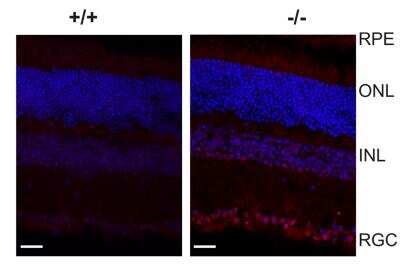
Immunohistochemical Staining of IRE1 alpha in Frozen Mouse Retina
IRE1-alpha-[p-Ser724]-Antibody-Immunohistochemistry-NB100-2323-img0031.jpg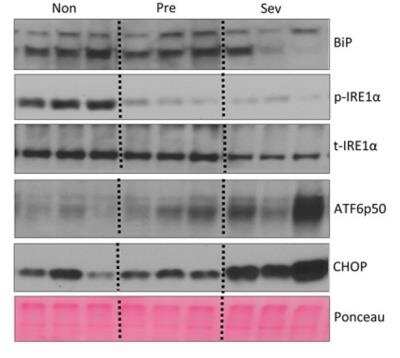
Western Blot Analysis of IRE1 alpha in Three Groups of Mouse Liver
IRE1-alpha-[p-Ser724]-Antibody-Western-Blot-NB100-2323-img0027.jpg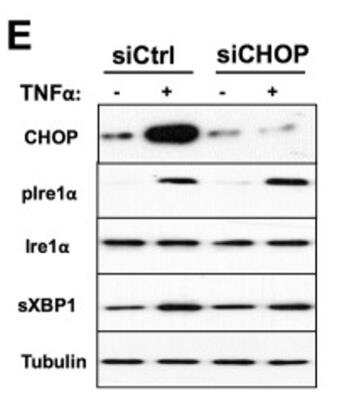
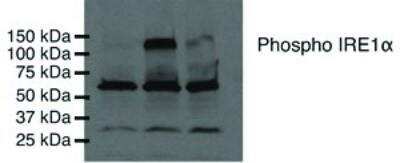
Western Blot Detection of IRE1 alpha in COS-7 Cells Using HRP Conjugated Antibody
Analysis using HRP conjugate of NB100-2323. Detection of phosphorylated IRE-1 alpha using NB100-2323. Lane 1: COS-7 untransfected Lane 2: COS-7 expressing wild-type IRE1 alpha Lane 3: COS-7 expressing kinase-dead IRE1 alpha. Theoretical molecular weight: 110 kDa.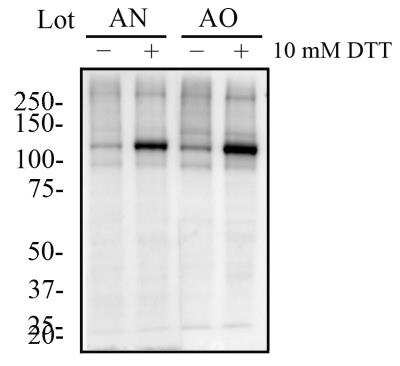
Western Blot Analysis of IRE1 alpha in DTT Treated and Untreated HeLa Cells
Analysis of anti-IRE1 alpha (pSer724) using Lot AN and AO of NB100-2323. HeLa cells were treated (+) or untreated (-) with 10 mM DTT for 60 min to activate the UPR. Total protein was separated on a 7.5% gel by SDS-PAGE, transferred to PVDF membrane and blocked in 5% BSA in TBST. The membrane was probed with 2.0 ug/ml antibody in 5% BSA, and detected with an anti-rabbit HRP secondary antibody using chemiluminescence. Theoretical molecular weight: 110 kDa.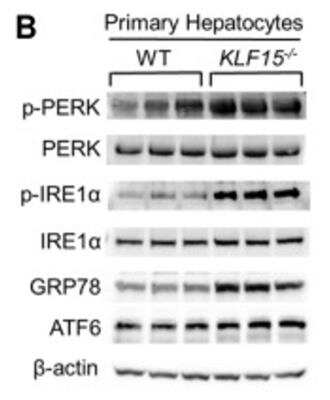
Detection of IRE1 alpha in WT and KLF15-/- Mouse Hepatocytes by Western Blot
IRE1-alpha-[p-Ser724]-Antibody-Western-Blot-NB100-2323-img0030.jpg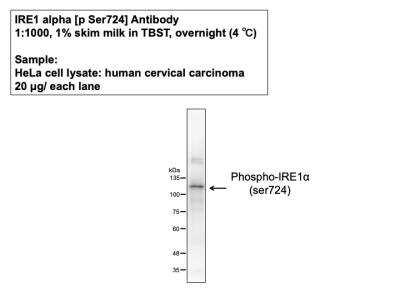
Western Blot Detection of IRE1 alpha in HeLa Cell Lysate
HeLa cell lysate, 20 ug. Antibody at 1:1000, 1% skim milk in TBST, overnight incubation at 4C. WB image submitted by a verified customer review.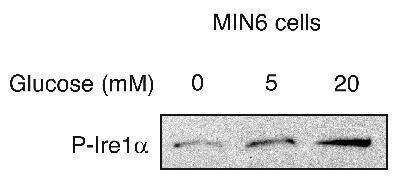
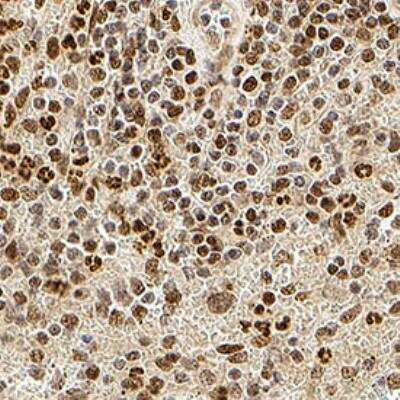
Immunohistochemical Staining of IRE1 alpha in Paraffin Embedded Human Spleen
IRE1 (pS724) was detected in immersion fixed paraffin-embedded sections of human spleen using Rabbit Anti-Human IRE1 (pS724) polyclonal Antibody (Catalog # NB100-2323) at 1:300 for 1 hour at room temperature followed by incubation with the Anti-Rabbit IgG VisUCyte™ HRP Polymer Antibody (Catalog # VC003). Tissue was stained using DAB (brown) and counterstained with hematoxylin (blue). Specific staining was localized to the perinuclear cytoplasm in splenocytes.![IRE1 alpha [p Ser724] Antibody - BSA Free](https://resources.rndsystems.com/images/products/nb100-2323_rabbit-polyclonal-ire1-alpha-p-ser724-antibody-271220231253385.jpg "Western Blot: IRE1 alpha [p Ser724] Antibody - BSA Free [NB100-2323] -")
Western Blot: IRE1 alpha [p Ser724] Antibody - BSA Free [NB100-2323] -
Hepatic ER Stress.Representative hepatic western blots of BiP, phosphorylated (Ser51), total EIF2 alpha and phosphorylated:total EIF2 alpha, phosphorylated (Ser724), total IRE1 alpha and phosphorylated:total IRE1 alpha, and CHOP (n = 9). Diets not sharing a common letter differ significantly from one another (P≤.05).![IRE1 alpha [p Ser724] Antibody - BSA Free](https://resources.rndsystems.com/images/products/nb100-2323_rabbit-polyclonal-ire1-alpha-p-ser724-antibody-271220231253365.jpg "Western Blot: IRE1 alpha [p Ser724] Antibody - BSA Free [NB100-2323] -")
Western Blot: IRE1 alpha [p Ser724] Antibody - BSA Free [NB100-2323] -
Morphine suppressed 6-OHDA-induced ER stress through activation of UPR. (A,B) Morphine induced UPR in SH-SY5Y cells. Protein levels of GRP78, p-IRE1 alpha, IRE1 alpha, p-PERK, PERK, ATF6, CHOP and Tubulin in SH-SY5Y cells were analyzed (A) and quantified (B) by western blot. ∗P < 0.05, ∗∗P < 0.01, ∗∗∗P < 0.001 vs. control.![IRE1 alpha [p Ser724] Antibody - BSA Free](https://resources.rndsystems.com/images/products/nb100-2323_rabbit-polyclonal-ire1-alpha-p-ser724-antibody-271220231261936.jpg "Western Blot: IRE1 alpha [p Ser724] Antibody - BSA Free [NB100-2323] -")
Western Blot: IRE1 alpha [p Ser724] Antibody - BSA Free [NB100-2323] -
Effect of cancer on ER stress markers.Bip1, IRE-1, ATF-6 p50 and CHOP expression in the liver of non—cachectic ApcMin/+ mice (N = 6 per group), compared to healthy C57BL/6 mice. Dotted line on the western blot indicates two different sections of the same gel. Values are expressed as Mean ± SE. * denotes significantly different from the healthy C57BL/6 mice as analyzed by a pre—planned t—test. p < 0.05.![IRE1 alpha [p Ser724] Antibody - BSA Free](https://resources.rndsystems.com/images/products/nb100-2323_rabbit-polyclonal-ire1-alpha-p-ser724-antibody-310202415175222.jpg "Western Blot: IRE1 alpha [p Ser724] Antibody - BSA Free [NB100-2323] -")
Western Blot: IRE1 alpha [p Ser724] Antibody - BSA Free [NB100-2323] -
Western Blot: IRE1 alpha [p Ser724] Antibody - BSA Free [NB100-2323] - ABT-263 induces ER stress & activation of the unfolded protein response.a Western blot of ER stress molecules in uveal melanoma cells treated with ABT-263 5 μM for 24 h & 48 h. HSP90 is used as a loading control. Representative western blots are shown. b XBP1 splicing in uveal melanoma cells exposed to ABT-263 5 μM for 15 h. *P-value < 0.05, **P-value < 0.01. c Kinetic analysis of ER stress proteins in Mel270 cells treated with ABT-263 5 μM in the absence or presence of qVD-OPh 20 μM. HSP90 is used as a loading control. Representative western blots are shown. Image collected & cropped by CiteAb from the following publication (https://pubmed.ncbi.nlm.nih.gov/32337074), licensed under a CC-BY license. Not internally tested by Novus Biologicals.![IRE1 alpha [p Ser724] Antibody - BSA Free](https://resources.rndsystems.com/images/products/nb100-2323_rabbit-polyclonal-ire1-alpha-p-ser724-antibody-310202415384120.jpg "Western Blot: IRE1 alpha [p Ser724] Antibody - BSA Free [NB100-2323] -")
Western Blot: IRE1 alpha [p Ser724] Antibody - BSA Free [NB100-2323] -
Western Blot: IRE1 alpha [p Ser724] Antibody - BSA Free [NB100-2323] - Effect of cancer on ER stress markers.Bip1, IRE-1, ATF-6 p50 & CHOP expression in the liver of non—cachectic ApcMin/+ mice (N = 6 per group), compared to healthy C57BL/6 mice. Dotted line on the western blot indicates two different sections of the same gel. Values are expressed as Mean ± SE. * denotes significantly different from the healthy C57BL/6 mice as analyzed by a pre—planned t—test. p < 0.05. Image collected & cropped by CiteAb from the following publication (https://dx.plos.org/10.1371/journal.pone.0119888), licensed under a CC-BY license. Not internally tested by Novus Biologicals.![IRE1 alpha [p Ser724] Antibody - BSA Free](https://resources.rndsystems.com/images/products/nb100-2323_rabbit-polyclonal-ire1-alpha-p-ser724-antibody-31020241536371.jpg "Western Blot: IRE1 alpha [p Ser724] Antibody - BSA Free [NB100-2323] -")
Western Blot: IRE1 alpha [p Ser724] Antibody - BSA Free [NB100-2323] -
Western Blot: IRE1 alpha [p Ser724] Antibody - BSA Free [NB100-2323] - ER stress is induced by acidosis activated OGR1-mediated signalling. Caco-2 cells subjected to different pH medium, following 4–6 h incubation in pH 7.6 serum free medium.(B) After 24 h pH shift, total protein was isolated & WB was performed. The results representative of 3 independent experiments. Image collected & cropped by CiteAb from the following publication (https://pubmed.ncbi.nlm.nih.gov/31996710), licensed under a CC-BY license. Not internally tested by Novus Biologicals.![IRE1 alpha [p Ser724] Antibody - BSA Free](https://resources.rndsystems.com/images/products/nb100-2323_rabbit-polyclonal-ire1-alpha-p-ser724-antibody-310202415175214.jpg "Western Blot: IRE1 alpha [p Ser724] Antibody - BSA Free [NB100-2323] -")
Western Blot: IRE1 alpha [p Ser724] Antibody - BSA Free [NB100-2323] -
Western Blot: IRE1 alpha [p Ser724] Antibody - BSA Free [NB100-2323] - Expression of ER stress markers in mouse & human skeletal muscle(a) TA muscle lysates from high fat fed mice were used to determine the expression of ER stress markers by Western blot analysis (n=6). (b-g) Western blot analysis was done to measure proteins involved in ER stress in vastus lateralis muscle from lean, obese, or diabetic subjects (n=6-13). Data are the means ± S.E.M. * indicates p<0.05 & ** indicates p<0.01 vs. chow or lean controls, using Student’s t-test (a) & One way ANOVA. Image collected & cropped by CiteAb from the following publication (https://www.nature.com/articles/ncomms2851), licensed under a CC-BY license. Not internally tested by Novus Biologicals.![IRE1 alpha [p Ser724] Antibody - BSA Free](https://resources.rndsystems.com/images/products/nb100-2323_rabbit-polyclonal-ire1-alpha-p-ser724-antibody-310202415291930.jpg "Western Blot: IRE1 alpha [p Ser724] Antibody - BSA Free [NB100-2323] -")
Western Blot: IRE1 alpha [p Ser724] Antibody - BSA Free [NB100-2323] -
Western Blot: IRE1 alpha [p Ser724] Antibody - BSA Free [NB100-2323] - The inositol-requiring enzyme 1 alpha (IRE1 alpha )/ X-box-binding-protein 1 spliced isoform (XBP1s) arm of unfolded protein response (UPR) is induced by angiotensin II in VSMCs. (A–C) The rat aortic VSMCs infected with adenovirus encoding GRP78 or control GFP (100 moi) for 48 h were stimulated with 100 nM AngII (AII) for 1–6 h & immunoblotting was performed as indicated. (A) Representative blots from 4 independent experiments. (B) Signal intensity was used to calculate the expression ratio of XBP1s to GAPDH. (C) Signal intensity was used to calculate the IRE1 alpha Ser724 phosphorylation ratio to the total IRE1 alpha. The bars in the graphs show the mean ± SD from 4 independent experiments. * indicates p < 0.05. Image collected & cropped by CiteAb from the following publication (https://pubmed.ncbi.nlm.nih.gov/32679678), licensed under a CC-BY license. Not internally tested by Novus Biologicals.![IRE1 alpha [p Ser724] Antibody - BSA Free](https://resources.rndsystems.com/images/products/nb100-2323_rabbit-polyclonal-ire1-alpha-p-ser724-antibody-310202415171313.jpg "Western Blot: IRE1 alpha [p Ser724] Antibody - BSA Free [NB100-2323] -")
Western Blot: IRE1 alpha [p Ser724] Antibody - BSA Free [NB100-2323] -
Western Blot: IRE1 alpha [p Ser724] Antibody - BSA Free [NB100-2323] - Morphine suppressed 6-OHDA-induced ER stress through activation of UPR. (A,B) Morphine induced UPR in SH-SY5Y cells. Protein levels of GRP78, p-IRE1 alpha, IRE1 alpha, p-PERK, PERK, ATF6, CHOP & Tubulin in SH-SY5Y cells were analyzed (A) & quantified (B) by western blot. ∗P < 0.05, ∗∗P < 0.01, ∗∗∗P < 0.001 vs. control. (C,D) Protein levels of GRP78, CHOP & Actin in SH-SY5Y cells were analyzed (C) & quantified (D) by western blot in the indicated groups. ∗P < 0.05, ∗∗P < 0.01 vs. control & #P < 0.05, ##P < 0.01 vs. 6-OHDA-treated group. All data are expressed as mean ± SEM. Image collected & cropped by CiteAb from the following publication (http://journal.frontiersin.org/article/10.3389/fnmol.2018.00120/full), licensed under a CC-BY license. Not internally tested by Novus Biologicals.![IRE1 alpha [p Ser724] Antibody - BSA Free](https://resources.rndsystems.com/images/products/nb100-2323_rabbit-polyclonal-ire1-alpha-p-ser724-antibody-310202415284519.jpg "Western Blot: IRE1 alpha [p Ser724] Antibody - BSA Free [NB100-2323] -")
Western Blot: IRE1 alpha [p Ser724] Antibody - BSA Free [NB100-2323] -
Western Blot: IRE1 alpha [p Ser724] Antibody - BSA Free [NB100-2323] - Hepatic ER Stress.Representative hepatic western blots of BiP, phosphorylated (Ser51), total EIF2 alpha & phosphorylated:total EIF2 alpha, phosphorylated (Ser724), total IRE1 alpha & phosphorylated:total IRE1 alpha, & CHOP (n = 9). Diets not sharing a common letter differ significantly from one another (P≤.05). Image collected & cropped by CiteAb from the following publication (https://dx.plos.org/10.1371/journal.pone.0167979), licensed under a CC-BY license. Not internally tested by Novus Biologicals.![IRE1 alpha [p Ser724] Antibody - BSA Free](https://resources.rndsystems.com/images/products/nb100-2323_rabbit-polyclonal-ire1-alpha-p-ser724-antibody-31020241535662.jpg "Western Blot: IRE1 alpha [p Ser724] Antibody - BSA Free [NB100-2323] -")
Western Blot: IRE1 alpha [p Ser724] Antibody - BSA Free [NB100-2323] -
Western Blot: IRE1 alpha [p Ser724] Antibody - BSA Free [NB100-2323] - Effect of Insig-1 overexpression on nSREBP-1c & proteins related to ER stress pathway in INS-1 cells. INS-1 & INS-1-Insig-1 cells were stimulated with 11.2 mM & 25.0 mM glucose for 0, 24 & 72 h. A) nSREBP-1c & p-IRE1 alpha pathway of ER stress related proteins were detected by Western blot. GAPDH was used as control for protein loading. Equal amount of proteins (50 μg) were loaded. B) Relative protein expression compared to GAPDH, data are the means ± SE of three independent experiments; *, P < 0.05, **, P < 0.01 VS INS-1 cells at the same time point. Image collected & cropped by CiteAb from the following publication (https://pubmed.ncbi.nlm.nih.gov/21843373), licensed under a CC-BY license. Not internally tested by Novus Biologicals.![IRE1 alpha [p Ser724] Antibody - BSA Free](https://resources.rndsystems.com/images/products/nb100-2323_rabbit-polyclonal-ire1-alpha-p-ser724-antibody-310202415175288.jpg "Western Blot: IRE1 alpha [p Ser724] Antibody - BSA Free [NB100-2323] -")
Western Blot: IRE1 alpha [p Ser724] Antibody - BSA Free [NB100-2323] -
Western Blot: IRE1 alpha [p Ser724] Antibody - BSA Free [NB100-2323] - cCK-18 is formed following activation of the UPR. A. Immunoblots for phospho-IRE1 (p-IRE1), total IRE1 (IRE1), & cleaved cytokeratin 18 (cCK-18) showing time-dependent increase of cCK-18 in A549 cells exposed to 0.5 μM of thapsigargin (TG, +) for various lengths of time. Immunoblots showing an increase in total & phospho-IRE1 confirm thapsigargin activates the UPR in A549 cells compared to vehicle controls (−). B. Immunoblots for cCK-18 showing time-dependent appearance of cCK-18 in annexin V– or V+ A549 cells exposed to 0.5 μM of thapsigargin for various lengths of time. Image collected & cropped by CiteAb from the following publication (https://pubmed.ncbi.nlm.nih.gov/23167970), licensed under a CC-BY license. Not internally tested by Novus Biologicals.![IRE1 alpha [p Ser724] Antibody - BSA Free](https://resources.rndsystems.com/images/products/nb100-2323_rabbit-polyclonal-ire1-alpha-p-ser724-antibody-310202415175287.jpg "Western Blot: IRE1 alpha [p Ser724] Antibody - BSA Free [NB100-2323] -")
Western Blot: IRE1 alpha [p Ser724] Antibody - BSA Free [NB100-2323] -
Western Blot: IRE1 alpha [p Ser724] Antibody - BSA Free [NB100-2323] - Protein expression of downstream markers of ER stress in islets from lean, obese & high-fat-diet-fed fZDF rats. Protein lysates from islets isolated from three age-matched fZDF rats (obese), HF-fZDF (HFD) rats & their heterozygous lean littermates (lean) were separated by SDS-PAGE & analysed by western blotting. As controls, lysates from the islets isolated from Wistar rats or MIN6 cells treated with 1 μM thapsigargin for 2 h or sorbitol for 1 h were run alongside. Proteins were detected using antisera against (a) Calreticulin, HYOU1, GRP78, p-IRE1 alpha, p-eIF2 alpha & CHOP & as protein loading control rpS6 & (b) p-JNK & total JNK1/2 as loading control. Western blots were quantified using Image-J software. Image collected & cropped by CiteAb from the following publication (https://www.nature.com/articles/nutd201335), licensed under a CC-BY license. Not internally tested by Novus Biologicals.![IRE1 alpha [p Ser724] Antibody - BSA Free](https://resources.rndsystems.com/images/products/nb100-2323_rabbit-polyclonal-ire1-alpha-p-ser724-antibody-31020241529334.jpg "Western Blot: IRE1 alpha [p Ser724] Antibody - BSA Free [NB100-2323] -")
Western Blot: IRE1 alpha [p Ser724] Antibody - BSA Free [NB100-2323] -
Western Blot: IRE1 alpha [p Ser724] Antibody - BSA Free [NB100-2323] - CETP inhibition reduces endoplasmic reticulum stress. HAECs transfected with CETP or control scrambled siRNA. (A) Western blot analysis of PERK (n = 3, * p < 0.01) & qPCR analysis of ATF6 mRNA. (B) Phosphorylated & total IRE (n = 3, ns). (C) Representative microscopic images of HAECs stained with GADD153, n = 5, & (D) Grp78/BIP, & DAPI. Scale bar, 10 μm. Mean ± SEM, n = 5, * p < 0.05. HAECs, human aortic endothelial cells. CETP, cholesteryl ester transfer protein. NS, non-silenced. siCETP, silenced CETP. PERK, protein kinase RNA-like ER kinase. ATF6, Activating transcription factor 6. IRE, inhibitor resistant esterase. BIP, binding immunoglobulin protein. GADD153, growth arrest- & DNA damage-inducible gene 153. Image collected & cropped by CiteAb from the following publication (https://pubmed.ncbi.nlm.nih.gov/33430172), licensed under a CC-BY license. Not internally tested by Novus Biologicals.![IRE1 alpha [p Ser724] Antibody - BSA Free](https://resources.rndsystems.com/images/products/nb100-2323_rabbit-polyclonal-ire1-alpha-p-ser724-antibody-310202415371925.jpg "Western Blot: IRE1 alpha [p Ser724] Antibody - BSA Free [NB100-2323] -")
Western Blot: IRE1 alpha [p Ser724] Antibody - BSA Free [NB100-2323] -
Western Blot: IRE1 alpha [p Ser724] Antibody - BSA Free [NB100-2323] - Activation of UPR signaling pathways after UIRI. a & b The expression of p-PERK & t-PERK in kidneys of UIRI mice were evaluated with western blot analysis & quantified. c UIRI induces the activation of ATF6 as demonstrated by enhanced expression of cleaved ATF6 (cATF6). GAPDH was used as an internal control. d Fold-change expression of cATF6 in kidneys of UIRI mouse as compared with that of sham group mouse. e & f The expression of p-IRE1 & t-IRE1 in mice kidneys were evaluated with western blotting & quantified. Data are expressed as means ± SEM, n = 3 ~ 6 in each group. *P < 0.05, **P < 0.01, & ***P < 0.001, as compared with sham group Image collected & cropped by CiteAb from the following publication (https://pubmed.ncbi.nlm.nih.gov/35765067), licensed under a CC-BY license. Not internally tested by Novus Biologicals.![IRE1 alpha [p Ser724] Antibody - BSA Free](https://resources.rndsystems.com/images/products/nb100-2323_rabbit-polyclonal-ire1-alpha-p-ser724-antibody-310202415392557.jpg "Western Blot: IRE1 alpha [p Ser724] Antibody - BSA Free [NB100-2323] -")
Western Blot: IRE1 alpha [p Ser724] Antibody - BSA Free [NB100-2323] -
Western Blot: IRE1 alpha [p Ser724] Antibody - BSA Free [NB100-2323] - Apoptosis mediated by Arl6ip5 interference is regulated by Chop. (a) Immunoblotting was used to detect the protein level for p-IRE1 alpha, IRE1, Chop, Arl6ip5 & beta -actin in the UAMS-32 cell with NC-siRNA or Arl6ip5-siRNA treatment for 72 h. Representative results were shown from three independent experiments. (b–e) UAMS-32 cells first received NC-siRNA or Chop-siRNA for 24 h, then the medium was changed & further received NC-siRNA or Arl6ip5-siRNA for 72 h. Q-PCR was used to analyze the mRNA levels of Chop (b), GADD34 (c) & Trib3 (d). The apoptotic cells were stained with Annexin-V & the proportion were calculated (e). n=4. In all panels, error bars represent the mean±S.E.M. **P<0.01, *P<0.05 based on ANOVA Image collected & cropped by CiteAb from the following publication (https://www.nature.com/articles/cddis2014427), licensed under a CC-BY license. Not internally tested by Novus Biologicals.![IRE1 alpha [p Ser724] Antibody - BSA Free](https://resources.rndsystems.com/images/products/nb100-2323_rabbit-polyclonal-ire1-alpha-p-ser724-antibody-310202415304295.jpg "Western Blot: IRE1 alpha [p Ser724] Antibody - BSA Free [NB100-2323] -")
Western Blot: IRE1 alpha [p Ser724] Antibody - BSA Free [NB100-2323] -
Western Blot: IRE1 alpha [p Ser724] Antibody - BSA Free [NB100-2323] - Downregulation of gamma -taxilin & alpha NAC, & ER stress responses in mouse brain slice cultured under hypoxic conditions. (a) Immunohistochemistry shows downregulation of gamma -taxilin & alpha NAC expression in brain slices cultured for 48 h under hypoxic conditions. Scale bar, 20 μm. (b) Western blot shows downregulation of gamma -taxilin & alpha NAC, phosphorylation of PERK & IRE1 alpha & induction of CHOP in mouse brain slices cultured for 48 h under normoxic (−) or hypoxic conditions (+) Image collected & cropped by CiteAb from the following publication (https://pubmed.ncbi.nlm.nih.gov/25880086), licensed under a CC-BY license. Not internally tested by Novus Biologicals.![IRE1 alpha [p Ser724] Antibody - BSA Free](https://resources.rndsystems.com/images/products/nb100-2323_rabbit-polyclonal-ire1-alpha-p-ser724-antibody-310202415334944.jpg "Western Blot: IRE1 alpha [p Ser724] Antibody - BSA Free [NB100-2323] -")
Western Blot: IRE1 alpha [p Ser724] Antibody - BSA Free [NB100-2323] -
Western Blot: IRE1 alpha [p Ser724] Antibody - BSA Free [NB100-2323] - Differential ER stress response pathways initiated by gamma -taxilin or alpha NAC depletion. Proteins involved in UPR sensor (PERK, IRE1 alpha ), eIF2 alpha, JNK, Bcl-2, & Bcl-2-related protein (Puma, Bim, Bak, & Bax) signaling pathways were analyzed by Western blotting of HeLa S3 cells that were depleted of gamma -taxilin or alpha NAC by RNA intereference for 72 & 96 h. Upper panels, taxilin & NAC proteins; middle panels, UPR proteins; lower panels; apoptotic proteins; & bottom panel, beta -actin Image collected & cropped by CiteAb from the following publication (https://pubmed.ncbi.nlm.nih.gov/25880086), licensed under a CC-BY license. Not internally tested by Novus Biologicals.![IRE1 alpha [p Ser724] Antibody - BSA Free](https://resources.rndsystems.com/images/products/nb100-2323_rabbit-polyclonal-ire1-alpha-p-ser724-antibody-310202415384182.jpg "Western Blot: IRE1 alpha [p Ser724] Antibody - BSA Free [NB100-2323] -")
Western Blot: IRE1 alpha [p Ser724] Antibody - BSA Free [NB100-2323] -
Western Blot: IRE1 alpha [p Ser724] Antibody - BSA Free [NB100-2323] - Expression of ER stress markers in mouse & human skeletal muscle(a) TA muscle lysates from high fat fed mice were used to determine the expression of ER stress markers by Western blot analysis (n=6). (b-g) Western blot analysis was done to measure proteins involved in ER stress in vastus lateralis muscle from lean, obese, or diabetic subjects (n=6-13). Data are the means ± S.E.M. * indicates p<0.05 & ** indicates p<0.01 vs. chow or lean controls, using Student’s t-test (a) & One way ANOVA. Image collected & cropped by CiteAb from the following publication (https://www.nature.com/articles/ncomms2851), licensed under a CC-BY license. Not internally tested by Novus Biologicals.![IRE1 alpha [p Ser724] Antibody - BSA Free](https://resources.rndsystems.com/images/products/nb100-2323_rabbit-polyclonal-ire1-alpha-p-ser724-antibody-31020241529194.jpg "Western Blot: IRE1 alpha [p Ser724] Antibody - BSA Free [NB100-2323] -")
Western Blot: IRE1 alpha [p Ser724] Antibody - BSA Free [NB100-2323] -
Western Blot: IRE1 alpha [p Ser724] Antibody - BSA Free [NB100-2323] - ER stress is induced by acidosis activated OGR1-mediated signalling. Caco-2 cells subjected to different pH medium, following 4–6 h incubation in pH 7.6 serum free medium. (F) A specific small molecule OGR1 inhibitor (10 µM) was tested & the cells subjected to low pH for 24 h, following 4–6 h incubation in pH 7.6 serum free medium. After 24 h pH shift, total protein was isolated & WB performed. Results representative of two independent experiments. Image collected & cropped by CiteAb from the following publication (https://pubmed.ncbi.nlm.nih.gov/31996710), licensed under a CC-BY license. Not internally tested by Novus Biologicals.![IRE1 alpha [p Ser724] Antibody - BSA Free](https://resources.rndsystems.com/images/products/nb100-2323_rabbit-polyclonal-ire1-alpha-p-ser724-antibody-31020241537195.jpg "Western Blot: IRE1 alpha [p Ser724] Antibody - BSA Free [NB100-2323] -")
Western Blot: IRE1 alpha [p Ser724] Antibody - BSA Free [NB100-2323] -
Western Blot: IRE1 alpha [p Ser724] Antibody - BSA Free [NB100-2323] - The UPR is activated in type II AECs isolated from IPF lungs. Phosphorylated IRE-1 alpha (panel A) & spliced XBP-1 (panel B) were present in increased amounts in AECs from 3 different IPF lungs, but not in the 3 control subjects (* P < 0.05, **P = 0.0495 by Wilcoxon rank sum test). # indicates amplicon of unspliced XBP1 digested with Pst1. Image collected & cropped by CiteAb from the following publication (https://pubmed.ncbi.nlm.nih.gov/23167970), licensed under a CC-BY license. Not internally tested by Novus Biologicals.![IRE1 alpha [p Ser724] Antibody - BSA Free](https://resources.rndsystems.com/images/products/nb100-2323_rabbit-polyclonal-ire1-alpha-p-ser724-antibody-310202415535198.jpg "Western Blot: IRE1 alpha [p Ser724] Antibody - BSA Free [NB100-2323] -")
Western Blot: IRE1 alpha [p Ser724] Antibody - BSA Free [NB100-2323] -
Western Blot: IRE1 alpha [p Ser724] Antibody - BSA Free [NB100-2323] - ER stress is induced by OGR1 via IRE1 alpha /JNK signalling. (A) Caco-2 cells were subjected to different pH medium, with or without an OGR1 inhibitor (10 µM), following 4–6 h in pH 7.6 serum free medium. After 24 h pH shift, total protein was isolated & Western blot performed. Results are representative of two independent experiments. (B) Caco-2 cells were subjected to different pH medium After 24 h pH shift, total protein was isolated & Western blot performed. Results are representative of two independent experiments. (C) Caco-2 cells were subjected to different pH medium with or without a JNK inhibitor (10 µM) following 4–6 h in pH 7.6 serum free medium. After 24 h pH shift, total protein was isolated & Western blot performed. Results are representative of two independent experiments. (D) Caco-2 cells were starved & subjected to an acidic pH with or without a JNK inhibitor as described in (C). After 24 h pH shift, total RNA was isolated & mRNA expression was investigated by qPCR. Statistical analysis was performed using one-way ANOVA followed by Tukey’s post-test. Data are presented as means ± SE of three independent experiments (***p < 0.001). (E) Caco-2 cells were starved & subjected to different pH medium following 4–6 h in pH 7.6 serum free medium. After 24 h pH shift, total protein was isolated & co-IP using IRE1 alpha antibody & JNK antibody was performed, followed by immunoblotting. Results are representative of two independent experiments. pH conditions: High pH 7.5–7.8; Normal pH 7.2–7.4; Low pH 6.6–6.8. Image collected & cropped by CiteAb from the following publication (https://pubmed.ncbi.nlm.nih.gov/31996710), licensed under a CC-BY license. Not internally tested by Novus Biologicals.![IRE1 alpha [p Ser724] Antibody - BSA Free](https://resources.rndsystems.com/images/products/nb100-2323_rabbit-polyclonal-ire1-alpha-p-ser724-antibody-310202415535172.jpg "Western Blot: IRE1 alpha [p Ser724] Antibody - BSA Free [NB100-2323] -")
Western Blot: IRE1 alpha [p Ser724] Antibody - BSA Free [NB100-2323] -
Western Blot: IRE1 alpha [p Ser724] Antibody - BSA Free [NB100-2323] - Downregulation of gamma -taxilin & alpha NAC & ER stress responses in hypoxic cells. (a) Phase-contrast micrographs of SK-N-SH cells cultures in hypoxic conditions for 0–48 h. Floating cells were evident by 37 h after the beginning of hypoxic treatment. (b) FACS (fluorescence-activated cell sorting) analysis of apoptosis in hypoxic SK-N-SH cells. Bars in the FACS profiles (left panel) indicate the fraction locations of annexin-positive cells. Bar graph indicates the relative numbers of annexin-positive cells (right panel). Bar graph data are shown as means±S.D. (n=3). *Significantly different from controls (0 h) (P<0.001, Tukey–Kramer test). (c) DAPI (4',6-diamidino-2-phenylindole) staining shows fragmented nuclei of apoptotic SK-N-SH cells after hypoxic treatment. Scale bar, 10 μm. (d) Downregulation of gamma -taxilin & alpha NAC & induction of ER stress responses in hypoxic SK-N-SH cells. Western blot analysis was performed 0 to 48 h after hypoxic treatment of cells. Upper panels, taxilin & NAC proteins; middle panels, UPR proteins; lower panels, apoptotic proteins; & bottom panels, cleaved caspase-9 & beta -actin proteins. (e) MG-132 treatment restore the gamma -taxilin & alpha NAC protein level in hypoxic (16 h) HeLa S3 cells. MG-132 (−), DMSO; MG-132 (+), 20 μM. (f) Caspase inhibition does not affect the hypoxia-induced downregulation of gamma -taxilin & alpha NAC in HeLa S3 cells. (g) Colocalization of gamma -taxilin & alpha NAC in normoxic (0 h) & hypoxic (8 h) HeLa S3 cells. Note that the colocalization fraction increases with the appearance of apoptotic phenotypes. Scale bars, 10 μm Image collected & cropped by CiteAb from the following publication (https://pubmed.ncbi.nlm.nih.gov/25880086), licensed under a CC-BY license. Not internally tested by Novus Biologicals.![IRE1 alpha [p Ser724] Antibody - BSA Free](https://resources.rndsystems.com/images/products/nb100-2323_rabbit-polyclonal-ire1-alpha-p-ser724-antibody-31020241682191.jpg "Western Blot: IRE1 alpha [p Ser724] Antibody - BSA Free [NB100-2323] -")
Western Blot: IRE1 alpha [p Ser724] Antibody - BSA Free [NB100-2323] -
Western Blot: IRE1 alpha [p Ser724] Antibody - BSA Free [NB100-2323] - gamma -Taxilin ablation causes ER stress responses & apoptosis in normoxic cells. (a) Knockdown of gamma -taxilin expression by small interfering RNA (siRNA) in HeLa S3 cells. Two different siRNA constructs are equally effective. HeLa S3 cells were treated with solvent alone (Mock), control siRNA (Co), or gamma -taxilin siRNA ( gamma -tax-1 or -2) for 96 h. (b) Induction of apoptosis by gamma -taxilin ablation in HeLa S3 cells. gamma -Taxilin ablation causes apoptosis in HeLa S3 cells, but Mock or Co treatment did not. Bar graph shows fractions of annexin-positive cells (means±S.D., n=3). *Significantly different from Mock- or Co treatment (P <0.001, Tukey–Kramer test). (c) Confocal microscopy demonstrates coincidence of gamma -taxilin depletion & apoptotic nuclei in HeLa S3 cells treated with gamma -taxilin siRNA. Scale bar, 10 μm. (d) gamma -Taxilin depletion triggers ER stress responses in HeLa S3 cells. Upper panels, taxilin & NAC proteins; middle panels, UPR proteins; & lower panel, beta -actin. (e) gamma -Taxilin ablation induces accumulation of ubiquitinated proteins in HeLa S3 cells. Cell lysates were analyzed on 7.5% SDS-PAGE, followed by immunoblotting with antibodies specific for anti-mono- & polyubiquitinated conjugates (upper panel) & beta -actin (lower panel) Image collected & cropped by CiteAb from the following publication (https://pubmed.ncbi.nlm.nih.gov/25880086), licensed under a CC-BY license. Not internally tested by Novus Biologicals.![IRE1 alpha [p Ser724] Antibody - BSA Free](https://resources.rndsystems.com/images/products/nb100-2323_rabbit-polyclonal-ire1-alpha-p-ser724-antibody-31020241682134.jpg "Western Blot: IRE1 alpha [p Ser724] Antibody - BSA Free [NB100-2323] -")
Western Blot: IRE1 alpha [p Ser724] Antibody - BSA Free [NB100-2323] -
Western Blot: IRE1 alpha [p Ser724] Antibody - BSA Free [NB100-2323] - Localization of the WT & mutant Wrn proteins in different subcellular fractions.(A) Example of western blots showing the presence of the Wrn WT protein in the nuclear fraction & the presence of the Wrn delta hel mutant protein mainly in the cytosolic fraction. Fractionations were performed on WT, Wrn delta hel/ delta hel, & Wrn-/- MEFs. Topoisomerase I & beta -tubulin are nuclear & cytoplasmic markers, respectively. As expected the molecular weight of the Wrn delta hel mutant protein was lower than the Wrn WT protein. No band was detected in Wrn-/- MEFs fractions with the anti-Wrn polyclonal antibody. (B) Example of western blots showing only the presence of the Wrn delta hel mutant protein in total ER & the peroxisomal fractions. Fractionations were performed on WT, Wrn delta hel/ delta hel, & Wrn-/- liver tissues. Catalase & calreticulin are used as peroxisomal & ER specific markers. This experiment was repeated three times. (C) Protein levels of GRP78, phosphorylated IRE alpha, & beta -actin (top panels) & of total IRE alpha, & beta -actin (bottom panels) in the spleen of three animals of each genotype. (D) Ratio of GRP78 signal over beta -actin signal from western blots. (E) Ratio of IRE alpha over beta -actin signal from western blots. (F) Ratio of phosphorylated IRE alpha signal over beta -actin signal from western blots. Experiments were performed in triplicates. Bars in all histograms represent SEM. Tukey post ANOVA test P-values are shown (*P < 0.05 & **P < 0.01). Image collected & cropped by CiteAb from the following publication (https://pubmed.ncbi.nlm.nih.gov/26447695), licensed under a CC-BY license. Not internally tested by Novus Biologicals.![IRE1 alpha [p Ser724] Antibody - BSA Free](https://resources.rndsystems.com/images/products/nb100-2323_rabbit-polyclonal-ire1-alpha-p-ser724-antibody-310202415525219.jpg "Western Blot: IRE1 alpha [p Ser724] Antibody - BSA Free [NB100-2323] -")
Western Blot: IRE1 alpha [p Ser724] Antibody - BSA Free [NB100-2323] -
Western Blot: IRE1 alpha [p Ser724] Antibody - BSA Free [NB100-2323] - IER3IP1 suppression decreases the UPR activation(A) mRNA levels of IRE1 alpha, Perk & Atf6 in IER3IP1 KD cells. 4 days after infection with IER3IP1 shRNA lentivirus, mRNA levels of IRE1 alpha, Perk & Atf6 in IER3IP1 KD cells were determined by qRT-PCR. *P<0.05, **P<0.01 compared to control group. Values are mean ± SEM. (B) Effect of IER3IP1 suppression on the IRE1 alpha arm of the UPR. 4 days after IER3IP1 KD in MIN6 cells, phosphorylation of IRE1 alpha, Bip, sXBP-1 & uXBP-were determined by Western blot. The loaded proteins in the two “- or +” lines were the same but from the different plates. (C) mRNA levels of downstream targets of sXBP-1 in IER3IP1 KD cells. 4 days after IER3IP1 KD in MIN6 cells, mRNA levels of downstream targets of sXBP-1, Erdj4, p58IPK, EDEM & Sec61a, were determined by qRT-PCR. Values are mean ± SEM. (D) Effect of IER3IP1 suppression on the Perk arm of the UPR. 4 days after IER3IP1 KD in MIN6 cells, phosphorylation of Perk & eIF2a, & ATF4 were determined by Western blot. The loaded proteins in the two “- or +” lines were the same but from the different plates. (E) IER3IP1 KD decreases UPR activation induced by ER stress in MIN6. 4 days after IER3IP1 KD, MIN6 cells were treated with 10 μg/ml tunicamycin (TC) or 1 μM thapsigargin (TG) for 6 hours. Then the expression levels of Chop, sXBP-1, uXBP-1 & IER3IP1 were determined by Western blot. Image collected & cropped by CiteAb from the following publication (https://pubmed.ncbi.nlm.nih.gov/28915629), licensed under a CC-BY license. Not internally tested by Novus Biologicals.![IRE1 alpha [p Ser724] Antibody - BSA Free](https://resources.rndsystems.com/images/products/nb100-2323_rabbit-polyclonal-ire1-alpha-p-ser724-antibody-31020241553727.jpg "Western Blot: IRE1 alpha [p Ser724] Antibody - BSA Free [NB100-2323] -")
Western Blot: IRE1 alpha [p Ser724] Antibody - BSA Free [NB100-2323] -
Western Blot: IRE1 alpha [p Ser724] Antibody - BSA Free [NB100-2323] - ATG5 & ATG7 influenced on autophagy, apoptosis & cell cycle through PERK/Nrf2 signaling. a The ER stress proteins were analysed by western blotting in Ad-GFP, Ad-ATG5 + Ad-ATG7,Ad-ATG5 + Ad-ATG7 + siPERK,Ad-ATG5 + Ad-ATG7 + siNrf2 & Ad-ATG5+ Ad-ATG7 + siPERK+siNrf2 induced chondrocytes. b The levels of ER stress proteins were normalized to beta -actin. c Determination of autophagy & apoptosis proteins expression by western blotting in Ad-GFP, Ad-ATG5 + Ad-ATG7, Ad-ATG5 + Ad-ATG7 + siPERK,Ad-ATG5 + Ad-ATG7 + siNrf2 & Ad-ATG5+ Ad-ATG7 + siPERK+ siNrf2 induced chondrocytes. dThe levels of related proteins were normalized to beta -actin. e FCM analysis was used to calculate the percentage of apoptotic cells at the time point of 24 h. The apoptosis rate were increased when combined treatment with silencing of PERK or Nrf2. Experiments were repeated 3 times, Representative images are shown. f Analysis of cell apoptosis. Data come from 3 independent experiments. g FCM analysis indicated that the S phase percentage were decreased compared to that of the control groups when combine infected with silencing of PERK or Nrf2 in C28I2 cells. Experiments were repeated 3 times, Representative images are shown. h Percentage of cells at each phase in different groups. *P < 0.05, **P < 0.01 compared with the controls. Values are means ± SD n = 3). (1:Ad-GFP, 2:Ad-ATG5 + Ad-ATG7, 3:Ad-ATG5 + Ad-ATG7 + siPERK, 4:Ad-ATG5 + Ad-ATG7 + siNrf2, 5:Ad-ATG5 + Ad-ATG7 + siPERK+ siNrf2) Image collected & cropped by CiteAb from the following publication (https://pubmed.ncbi.nlm.nih.gov/31060556), licensed under a CC-BY license. Not internally tested by Novus Biologicals.![IRE1 alpha [p Ser724] Antibody - BSA Free](https://resources.rndsystems.com/images/products/nb100-2323_rabbit-polyclonal-ire1-alpha-p-ser724-antibody-310202415541960.jpg "Western Blot: IRE1 alpha [p Ser724] Antibody - BSA Free [NB100-2323] -")
Western Blot: IRE1 alpha [p Ser724] Antibody - BSA Free [NB100-2323] -
Western Blot: IRE1 alpha [p Ser724] Antibody - BSA Free [NB100-2323] - ER stress is induced by OGR1 via IRE1 alpha /JNK signalling. (A) Caco-2 cells were subjected to different pH medium, with or without an OGR1 inhibitor (10 µM), following 4–6 h in pH 7.6 serum free medium. After 24 h pH shift, total protein was isolated & Western blot performed. Results are representative of two independent experiments. (B) Caco-2 cells were subjected to different pH medium After 24 h pH shift, total protein was isolated & Western blot performed. Results are representative of two independent experiments. (C) Caco-2 cells were subjected to different pH medium with or without a JNK inhibitor (10 µM) following 4–6 h in pH 7.6 serum free medium. After 24 h pH shift, total protein was isolated & Western blot performed. Results are representative of two independent experiments. (D) Caco-2 cells were starved & subjected to an acidic pH with or without a JNK inhibitor as described in (C). After 24 h pH shift, total RNA was isolated & mRNA expression was investigated by qPCR. Statistical analysis was performed using one-way ANOVA followed by Tukey’s post-test. Data are presented as means ± SE of three independent experiments (***p < 0.001). (E) Caco-2 cells were starved & subjected to different pH medium following 4–6 h in pH 7.6 serum free medium. After 24 h pH shift, total protein was isolated & co-IP using IRE1 alpha antibody & JNK antibody was performed, followed by immunoblotting. Results are representative of two independent experiments. pH conditions: High pH 7.5–7.8; Normal pH 7.2–7.4; Low pH 6.6–6.8. Image collected & cropped by CiteAb from the following publication (https://pubmed.ncbi.nlm.nih.gov/31996710), licensed under a CC-BY license. Not internally tested by Novus Biologicals.![IRE1 alpha [p Ser724] Antibody - BSA Free](https://resources.rndsystems.com/images/products/nb100-2323_rabbit-polyclonal-ire1-alpha-p-ser724-antibody-31020241553725.jpg "Western Blot: IRE1 alpha [p Ser724] Antibody - BSA Free [NB100-2323] -")
Western Blot: IRE1 alpha [p Ser724] Antibody - BSA Free [NB100-2323] -
Western Blot: IRE1 alpha [p Ser724] Antibody - BSA Free [NB100-2323] - Thapsigargin treatment induces calpain activation & autophagy. (A) Control & shCAPNS1 cells were treated with 100 nM thapsigargin for 10, 20 & 30 min & the lysates subjected to western blot analysis to quantify the precursor & active form of CAPN1. The ratio between active CAPN1 & tubulin is reported below each lane. (B) Time course measurement of intracellular calcium concentration. The plot indicates the ratio of mean Indo Violet/Indo Blue emission values of each cell population at individual time points (minutes). The ratio corresponds to the relative calcium concentration of control & shCAPNS1 U2OS cells before & after addition of thapsigargin (100 nm final). Moving average was used as smoothing method. (C) shCAPNS1 cells were treated with 100 nM thapsigargin for 30, 60 & 120 min & the lysates subjected to western blot analysis to detect LC3, p62, pIRE, CAPNS1 & tubulin. (D) Levels of p62 & LC3 normalized to tubulin levels. Image collected & cropped by CiteAb from the following publication (https://journals.biologists.com/bio/article/doi/10.1242/bio.022806/2566…), licensed under a CC-BY license. Not internally tested by Novus Biologicals.![IRE1 alpha [p Ser724] Antibody - BSA Free](https://resources.rndsystems.com/images/products/nb100-2323_rabbit-polyclonal-ire1-alpha-p-ser724-antibody-31020241554530.jpg "Western Blot: IRE1 alpha [p Ser724] Antibody - BSA Free [NB100-2323] -")
Western Blot: IRE1 alpha [p Ser724] Antibody - BSA Free [NB100-2323] -
Western Blot: IRE1 alpha [p Ser724] Antibody - BSA Free [NB100-2323] - Abnormal Paneth cells show ER stress.(A, B) Representative transmission electron microscopy images of Paneth cells at the base of ileal crypts in (A) ICR & (B) SAMP1/YitFc mice. Scale bars indicate 2 μm. (C, D) Quantitative analysis of (C) granule number & (D) ER lumen diameter in Paneth cells (n = 3/each week for SAMP1/YitFc mice). For the measurements, three Paneth cells were randomly selected from each mouse. (E) SDS–PAGE Western blot analysis of ER stress markers, pIRE1 alpha, ATF4, cleaved-ATF6, & GRP78 in ileal crypts (n = 4/each group). Total-IRE1 alpha & HPRT1 was used as loading control. (F) Relative expression level of ER stress markers calculated from the band intensity. Error bars represent mean ± SEM. (C, D, F) Statistical significance was evaluated by t test in (C, D), & one-way ANOVA followed by Tukey’s post hoc test in (F). P < 0.05 was considered statistically significant. *P < 0.05, †P < 0.01, §P < 0.001. E, ER; G, granules; N, nucleus; n.s., not significant. Image collected & cropped by CiteAb from the following publication (https://pubmed.ncbi.nlm.nih.gov/32345659), licensed under a CC-BY license. Not internally tested by Novus Biologicals.![IRE1 alpha [p Ser724] Antibody - BSA Free](https://resources.rndsystems.com/images/products/nb100-2323_rabbit-polyclonal-ire1-alpha-p-ser724-antibody-3102024155527.jpg "Western Blot: IRE1 alpha [p Ser724] Antibody - BSA Free [NB100-2323] -")
Western Blot: IRE1 alpha [p Ser724] Antibody - BSA Free [NB100-2323] -
Western Blot: IRE1 alpha [p Ser724] Antibody - BSA Free [NB100-2323] - Hypoxia-induced downregulation of gamma -taxilin & alpha NAC & the subsequent ER responses are GSK-3 beta -dependent. (a) GSK-3 beta activation in hypoxia. Western blot analysis shows downregulation of phosphorylated (Ser 9) GSK-3 beta (phospho-GSK-3 beta ) in hypoxic (0–48 h) SK-N-SH & hypoxic (0–24 h) HeLa S3 cells. (b) Inhibition of GSK-3 beta activation by lithium chloride (LiCl, 100 mM) or CHIR-99021 (CHIR, 15 or 30 μM) maintained gamma -taxilin & alpha NAC protein levels in hypoxic SK-N-SH & HeLa S3 cells. (c) GSK-3 beta inhibition suppresses the expression of ER stress response proteins that are induced in hypoxic SK-N-SH cells. (d) GSK-3 beta RNA interference almost completely blocked the protein expression & restored the expression of gamma -taxilin & alpha NAC proteins in hypoxic HeLa S3 cells Image collected & cropped by CiteAb from the following publication (https://pubmed.ncbi.nlm.nih.gov/25880086), licensed under a CC-BY license. Not internally tested by Novus Biologicals.Applications for IRE1 alpha [p Ser724] Antibody - BSA Free
Application
Recommended Usage
ELISA
1:100 - 1:2000
Immunocytochemistry/ Immunofluorescence
1:10 - 1:500
Immunohistochemistry
1:10 - 1:500
Immunohistochemistry-Frozen
1:10 - 1:500
Immunohistochemistry-Paraffin
1:10 - 1:500
Immunoprecipitation
1:10 - 1:500
Western Blot
1:500 - 1:1000
Application Notes
This IRE1 pS724 antibody is useful for WB, ELISA, and IHC-P sections (PMID: 19264902). Use in IHC-Frozen reported in scientific literature (PMID: 24823368). Use in ICC reported in scientific literature (PMID: 26762342). Use in immunoblotting reported in scientific literature (PMID: 24089213). Use In vitro assay reported in scientific literature (PMID: 24327956). Use in chromatin immunoprecipitation reported in scientific literature (PMID: 25225294). Knockdown Validated reported in scientific literature (PMID: 31159306). See Simple Western Antibody Database for Simple Western validation: Tested in lungs; separated by size; antibody dilution of 1:50.
Reviewed Applications
Read 9 reviews rated 4.4 using NB100-2323 in the following applications:
Formulation, Preparation, and Storage
Purification
Immunogen affinity purified
Formulation
PBS
Format
BSA Free
Preservative
0.02% Sodium Azide
Concentration
1.0 mg/ml
Shipping
The product is shipped with polar packs. Upon receipt, store it immediately at the temperature recommended below.
Stability & Storage
Aliquot and store at -20C or -80C. Avoid freeze-thaw cycles.
Background: IRE1 alpha
Transcriptional activation of UPR-responsive genes are regulated by the ATF6 and IRE1-XBP1 pathways, which are often regulated by HIFs and contribute to cell survival under ER hypoxic stress (3). UPR signaling can a) inhibit protein translation to restore cell function, b) activate signaling to increase production of molecular chaperones for protein folding, and c) initiate ubiquitination signaling that leads to degradation of misfolded proteins in ER.
IRE1 alpha acts as the sensor of unfolded proteins in the ER. IRE1 alpha not only promotes cell survival but can initiate apoptosis when accumulation of unfolded proteins in the ER causes stress. IRE1 alpha is essential for viability under stress conditions that cause unfolded proteins to accumulate in the ER. IRE1 alpha is a transmembrane protein that has both serine-threonine kinase and endoribonuclease activities and has a theoretical molecular weight of 110 kDa. When detecting phospho-IRE1 alpha, it is recommended to normalize its band intensity with total IRE1 alpha.
References
1. Zheng, W., Xie, W., Yin, D., Luo, R., Liu, M., & Guo, F. (2019). ATG5 and ATG7 induced autophagy interplays with UPR via PERK signaling. Cell Commun Signal, 17(1), 42. doi:10.1186/s12964-019-0353-3
2. Cho, Y. M., Kim, D. H., Lee, K. H., Jeong, S. W., & Kwon, O. J. (2018). The IRE1alpha-XBP1s pathway promotes insulin-stimulated glucose uptake in adipocytes by increasing PPARgamma activity. Exp Mol Med, 50(8), 102. doi:10.1038/s12276-018-0131-0
3. Xia, Z., Wu, S., Wei, X., Liao, Y., Yi, P., Liu, Y.,... Liu, J. (2019). Hypoxic ER stress suppresses beta-catenin expression and promotes cooperation between the transcription factors XBP1 and HIF1alpha for cell survival. J Biol Chem, 294(37), 13811-13821. doi:10.1074/jbc.RA119.008353
Long Name
Serine/threonine-protein kinase/endoribonuclease IRE1
Alternate Names
ERN1, hIRE1p, IRE1, Ire1-alpha, ire1 alpha p Ser724, ire1 alpha phosphorylation, phospho ire1 alpha, phospho-ire1 alpha, phospho-ire1a, p-ire1 alpha
Gene Symbol
ERN1
Additional IRE1 alpha Products
Product Documents for IRE1 alpha [p Ser724] Antibody - BSA Free
Certificate of Analysis
To download a Certificate of Analysis, please enter a lot or batch number in the search box below.
Product Specific Notices for IRE1 alpha [p Ser724] Antibody - BSA Free
Take a look at IRE1 alpha Antibody Sampler Pack [NBP2-50067] if you want to try 25ug aliquots of phospho-IRE1 alpha (Ser724) Antibody [NB100-2323SS] and total IRE1 alpha Antibody [NB100-2324SS] before purchasing 100ug full vials.
This product is for research use only and is not approved for use in humans or in clinical diagnosis. Primary Antibodies are guaranteed for 1 year from date of receipt.
Citations for IRE1 alpha [p Ser724] Antibody - BSA Free
 Powered by Bioz
Customer Reviews for IRE1 alpha [p Ser724] Antibody - BSA Free (9)
4.4 out of 5
9 Customer Ratings
Have you used IRE1 alpha [p Ser724] Antibody - BSA Free?
Submit a review and receive an Amazon gift card!
$25/€18/£15/$25CAN/¥2500 for a review with an image
$10/€7/£6/$10CAN/¥1110 for a review without an image
Submit a review
Customer Images
![IRE1 alpha [p Ser724] Antibody - BSA Free NB100-2323](https://resources.rndsystems.com/images/reviews/review_nb100-2323_55481_0_0.jpg)
![IRE1 alpha [p Ser724] Antibody - BSA Free NB100-2323](https://resources.rndsystems.com/images/reviews/review_nb100-2323_53906_0_0.jpg)
![IRE1 alpha [p Ser724] Antibody - BSA Free NB100-2323](https://resources.rndsystems.com/images/reviews/review_nb100-2323_53636_1_0.jpg)
![IRE1 alpha [p Ser724] Antibody - BSA Free NB100-2323](https://resources.rndsystems.com/images/reviews/review_nb100-2323_50011_0_0_0.jpg)
![IRE1 alpha [p Ser724] Antibody - BSA Free NB100-2323](https://resources.rndsystems.com/images/reviews/review_nb100-2323_44691_0.jpg)
![IRE1 alpha [p Ser724] Antibody - BSA Free NB100-2323](https://resources.rndsystems.com/images/reviews/review_nb100-2323_31466_0.png)
![IRE1 alpha [p Ser724] Antibody - BSA Free NB100-2323](https://resources.rndsystems.com/images/reviews/review_nb100-2323_30821.png)
Showing
1
-
5 of
9 reviews
Showing All
Filter By:
-
Application: Western BlotSample Tested: hela cellSpecies: HumanVerified Customer | Posted 03/19/2021IRE1 alpha [p Ser724] Antibody 1:1000, 1% skim milk in TBST, overnight (4 ℃ Sample: HeLa cell lysate: human cervical carcinoma 20 μg/ each laneReduced Denaturing (8% gel) Milk as blocking agent for 1 h; Concentration: 5 %; Temperature: 25°C 1st Ab Incubation time: 16 h; Temperature: 4°C; Diluent: 1% skim milk in TBST
![IRE1 alpha [p Ser724] Antibody - BSA Free NB100-2323](data:image/png;base64,R0lGODlhAQABAAD/ACwAAAAAAQABAAACADs=)
-
Application: Western BlotSample Tested: Placental tissueSpecies: RatVerified Customer | Posted 10/05/2020Rat placenta: Expected 110 kD Observed band at molecular weight ~110 kDRat placenta lysates, reduced and denatured. 100 ug total protein resolved on 7.5% SDS-acrylamide gel. Transfer onto 0.22 um nitrocellulose membrane. Block with 50% Rockland blocking solution. Incubate membrane overnight at 4C with 1:500 dilution of pIRE1a antibody. Washes with PBS-0.1% tween 20. Incubate for one hour at room temp with 1:10 000 LiCor IRDye 800CW donkey anti-rabbit IgG. Images taken with Odyssey V3.0.
-
Application: Western BlotSample Tested: LiverSpecies: MouseVerified Customer | Posted 09/25/2020
-
Application: Western BlotSample Tested: macrophage whole cell lysateSpecies: MouseVerified Customer | Posted 10/22/20191:1000 dilution
-
Application: ImmunocytochemistrySample Tested: mouse vascular smooth muscle cellSpecies: MouseVerified Customer | Posted 11/19/20180.1 µM Thapsigargin for 2 hours Fixation: 4%PFA/PBS for 10 minutes RT Permeabilization: 50 µg/ml digitonin PBS for 10 minutes RT, Blocking: 0.1% gelatin/PBS for 30minutes RT primary antibody for 1 hour RT secondary anti rabbit IgG Alexa 488 1:200 against p-IRE1 (ser724) for 1 hour RT
-
Application: Western BlotSample Tested: Mouse skeletal muscleSpecies: MouseVerified Customer | Posted 04/03/2017C57BL/6 Mice
-
Application: Western BlotSample Tested: Whole cell lysates: Hamster, Mouse, Human, MonkeySpecies: MouseVerified Customer | Posted 03/15/2017Arrow indicates phospho-IRE1a. Asterisk, a nonspecific protein.6132 Pro cells (mouse fibrosarcoma) were treated with or without 10 mM DTT for 3 hr and total lysates were prepared. The membrane blot was incubated with 5 ul of primary antibody (IRE1 alpha [p Ser724]) in 10 ml of blocker (2% BSA in TBS containing 0.05% Tween20) for 2hr at RT, followed by incubation with HRP-conjugated secondary antibody (anti-rabbit IgG H+L, from Pierce) for 1hr. The signal was visualized using chemilluminedcent substrate (Pico, from Pierce).
-
Application: Western BlotSample Tested: See PMID 22951927Species: MouseVerified Customer | Posted 12/12/2014
-
Application: Western BlotSample Tested: Mouse lens tissue, Sample Amount: 40ugSpecies: MouseVerified Customer | Posted 05/27/2009
There are no reviews that match your criteria.
Protocols
Find general support by application which include: protocols, troubleshooting, illustrated assays, videos and webinars.
- Antigen Retrieval Protocol (PIER)
- Antigen Retrieval for Frozen Sections Protocol
- Appropriate Fixation of IHC/ICC Samples
- Cellular Response to Hypoxia Protocols
- ChIP Protocol Video
- Chromatin Immunoprecipitation (ChIP) Protocol
- Chromatin Immunoprecipitation Protocol
- Chromogenic IHC Staining of Formalin-Fixed Paraffin-Embedded (FFPE) Tissue Protocol
- Chromogenic Immunohistochemistry Staining of Frozen Tissue
- ClariTSA™ Fluorophore Kits
- Detection & Visualization of Antibody Binding
- ELISA Sample Preparation & Collection Guide
- ELISA Troubleshooting Guide
- Fluorescent IHC Staining of Frozen Tissue Protocol
- Graphic Protocol for Heat-induced Epitope Retrieval
- Graphic Protocol for the Preparation and Fluorescent IHC Staining of Frozen Tissue Sections
- Graphic Protocol for the Preparation and Fluorescent IHC Staining of Paraffin-embedded Tissue Sections
- Graphic Protocol for the Preparation of Gelatin-coated Slides for Histological Tissue Sections
- How to Run an R&D Systems DuoSet ELISA
- How to Run an R&D Systems Quantikine ELISA
- How to Run an R&D Systems Quantikine™ QuicKit™ ELISA
- ICC Cell Smear Protocol for Suspension Cells
- ICC Immunocytochemistry Protocol Videos
- ICC for Adherent Cells
- IHC Sample Preparation (Frozen sections vs Paraffin)
- Immunocytochemistry (ICC) Protocol
- Immunocytochemistry Troubleshooting
- Immunofluorescence of Organoids Embedded in Cultrex Basement Membrane Extract
- Immunofluorescent IHC Staining of Formalin-Fixed Paraffin-Embedded (FFPE) Tissue Protocol
- Immunohistochemistry (IHC) and Immunocytochemistry (ICC) Protocols
- Immunohistochemistry Frozen Troubleshooting
- Immunohistochemistry Paraffin Troubleshooting
- Immunoprecipitation Protocol
- Preparing Samples for IHC/ICC Experiments
- Preventing Non-Specific Staining (Non-Specific Binding)
- Primary Antibody Selection & Optimization
- Protocol for Heat-Induced Epitope Retrieval (HIER)
- Protocol for Making a 4% Formaldehyde Solution in PBS
- Protocol for VisUCyte™ HRP Polymer Detection Reagent
- Protocol for the Fluorescent ICC Staining of Cell Smears - Graphic
- Protocol for the Fluorescent ICC Staining of Cultured Cells on Coverslips - Graphic
- Protocol for the Preparation & Fixation of Cells on Coverslips
- Protocol for the Preparation and Chromogenic IHC Staining of Frozen Tissue Sections
- Protocol for the Preparation and Chromogenic IHC Staining of Frozen Tissue Sections - Graphic
- Protocol for the Preparation and Chromogenic IHC Staining of Paraffin-embedded Tissue Sections
- Protocol for the Preparation and Chromogenic IHC Staining of Paraffin-embedded Tissue Sections - Graphic
- Protocol for the Preparation and Fluorescent ICC Staining of Cells on Coverslips
- Protocol for the Preparation and Fluorescent ICC Staining of Non-adherent Cells
- Protocol for the Preparation and Fluorescent ICC Staining of Stem Cells on Coverslips
- Protocol for the Preparation and Fluorescent IHC Staining of Frozen Tissue Sections
- Protocol for the Preparation and Fluorescent IHC Staining of Paraffin-embedded Tissue Sections
- Protocol for the Preparation of Gelatin-coated Slides for Histological Tissue Sections
- Protocol for the Preparation of a Cell Smear for Non-adherent Cell ICC - Graphic
- Quantikine HS ELISA Kit Assay Principle, Alkaline Phosphatase
- Quantikine HS ELISA Kit Principle, Streptavidin-HRP Polymer
- R&D Systems Quality Control Western Blot Protocol
- Sandwich ELISA (Colorimetric) – Biotin/Streptavidin Detection Protocol
- Sandwich ELISA (Colorimetric) – Direct Detection Protocol
- TUNEL and Active Caspase-3 Detection by IHC/ICC Protocol
- The Importance of IHC/ICC Controls
- Troubleshooting Guide: ELISA
- Troubleshooting Guide: Immunohistochemistry
- Troubleshooting Guide: Western Blot Figures
- Western Blot Conditions
- Western Blot Protocol
- Western Blot Protocol for Cell Lysates
- Western Blot Troubleshooting
- Western Blot Troubleshooting Guide
- View all Protocols, Troubleshooting, Illustrated assays and Webinars
FAQs for IRE1 alpha [p Ser724] Antibody - BSA Free
Showing
1
-
4 of
4 FAQs
Showing All
-
Q: Can this antibody detect non-phosphorylated IRE1a?
A: NB100-2323 is phospho-specific. In all of our testing done with this antibody, we have only detected the phosphorylated IRE1a protein. There has not been any observed cross reactivity with the non-phosphorylated protein.
-
Q: Can you please tell me the immunogen sequence of this antibody?
A: The immunogen of NB100-2323 is a synthetic peptide from an amino acids sequence surrounding the phosphorylated serine 724 of the human IRE1 alpha protein (Swiss-Prot #O75460). Unfortunately, I cannot provide any additional detail, as that is proprietary information.
-
Q: I wish to use this antibody for cultured cardiomyocytes /Immunofluorescence. I am wondering if this antibody works for Immunocytochemistry/Immunofluorescence for cultured cells? Specifically, we wish to compare IRE1 phosphorylation under stress condition to non-stress condition. Because the nature of IRE1 phosphorylation is part of stress response pathway. I am wondering if the immunofluorescence with your antibody is sensitive enough to distinguish p-IRE1 signal under stress condition to the endogenous stress (no stress inducer treatment) in the cell?
A:
IRE1 p Ser724 antibody (NB100-2323) antibody has been validated in Immunocytochemistry/Immunofluorescence (ICC/IF) and we guarantee it 100% for the applications and species listed on our datasheet. As long as your cultured cardiomyocytes express the protein target that is phosphorylated at Ser 724 amino acid residue, our antibody will detect it. You may learn more about our guaranteee policy here
-
Q: What is the size of the western blot band?
A: The weight observed in our in-house testing is typically 100-110kDa
-
Q: Can this antibody detect non-phosphorylated IRE1a?
A: NB100-2323 is phospho-specific. In all of our testing done with this antibody, we have only detected the phosphorylated IRE1a protein. There has not been any observed cross reactivity with the non-phosphorylated protein.
-
Q: Can you please tell me the immunogen sequence of this antibody?
A: The immunogen of NB100-2323 is a synthetic peptide from an amino acids sequence surrounding the phosphorylated serine 724 of the human IRE1 alpha protein (Swiss-Prot #O75460). Unfortunately, I cannot provide any additional detail, as that is proprietary information.
-
Q: I wish to use this antibody for cultured cardiomyocytes /Immunofluorescence. I am wondering if this antibody works for Immunocytochemistry/Immunofluorescence for cultured cells? Specifically, we wish to compare IRE1 phosphorylation under stress condition to non-stress condition. Because the nature of IRE1 phosphorylation is part of stress response pathway. I am wondering if the immunofluorescence with your antibody is sensitive enough to distinguish p-IRE1 signal under stress condition to the endogenous stress (no stress inducer treatment) in the cell?
A:
IRE1 p Ser724 antibody (NB100-2323) antibody has been validated in Immunocytochemistry/Immunofluorescence (ICC/IF) and we guarantee it 100% for the applications and species listed on our datasheet. As long as your cultured cardiomyocytes express the protein target that is phosphorylated at Ser 724 amino acid residue, our antibody will detect it. You may learn more about our guaranteee policy here
-
Q: What is the size of the western blot band?
A: The weight observed in our in-house testing is typically 100-110kDa
-
Q: Can this antibody detect non-phosphorylated IRE1a?
A: NB100-2323 is phospho-specific. In all of our testing done with this antibody, we have only detected the phosphorylated IRE1a protein. There has not been any observed cross reactivity with the non-phosphorylated protein.
-
Q: Can you please tell me the immunogen sequence of this antibody?
A: The immunogen of NB100-2323 is a synthetic peptide from an amino acids sequence surrounding the phosphorylated serine 724 of the human IRE1 alpha protein (Swiss-Prot #O75460). Unfortunately, I cannot provide any additional detail, as that is proprietary information.
-
Q: I wish to use this antibody for cultured cardiomyocytes /Immunofluorescence. I am wondering if this antibody works for Immunocytochemistry/Immunofluorescence for cultured cells? Specifically, we wish to compare IRE1 phosphorylation under stress condition to non-stress condition. Because the nature of IRE1 phosphorylation is part of stress response pathway. I am wondering if the immunofluorescence with your antibody is sensitive enough to distinguish p-IRE1 signal under stress condition to the endogenous stress (no stress inducer treatment) in the cell?
A:
IRE1 p Ser724 antibody (NB100-2323) antibody has been validated in Immunocytochemistry/Immunofluorescence (ICC/IF) and we guarantee it 100% for the applications and species listed on our datasheet. As long as your cultured cardiomyocytes express the protein target that is phosphorylated at Ser 724 amino acid residue, our antibody will detect it. You may learn more about our guaranteee policy here
-
Q: What is the size of the western blot band?
A: The weight observed in our in-house testing is typically 100-110kDa
-
Q: Can this antibody detect non-phosphorylated IRE1a?
A: NB100-2323 is phospho-specific. In all of our testing done with this antibody, we have only detected the phosphorylated IRE1a protein. There has not been any observed cross reactivity with the non-phosphorylated protein.
-
Q: Can you please tell me the immunogen sequence of this antibody?
A: The immunogen of NB100-2323 is a synthetic peptide from an amino acids sequence surrounding the phosphorylated serine 724 of the human IRE1 alpha protein (Swiss-Prot #O75460). Unfortunately, I cannot provide any additional detail, as that is proprietary information.
-
Q: I wish to use this antibody for cultured cardiomyocytes /Immunofluorescence. I am wondering if this antibody works for Immunocytochemistry/Immunofluorescence for cultured cells? Specifically, we wish to compare IRE1 phosphorylation under stress condition to non-stress condition. Because the nature of IRE1 phosphorylation is part of stress response pathway. I am wondering if the immunofluorescence with your antibody is sensitive enough to distinguish p-IRE1 signal under stress condition to the endogenous stress (no stress inducer treatment) in the cell?
A:
IRE1 p Ser724 antibody (NB100-2323) antibody has been validated in Immunocytochemistry/Immunofluorescence (ICC/IF) and we guarantee it 100% for the applications and species listed on our datasheet. As long as your cultured cardiomyocytes express the protein target that is phosphorylated at Ser 724 amino acid residue, our antibody will detect it. You may learn more about our guaranteee policy here
-
Q: What is the size of the western blot band?
A: The weight observed in our in-house testing is typically 100-110kDa
Loading...