TGF- beta 1 (transforming growth factor beta 1) and the closely related TGF-beta 2 and -3 are members of the large TGF-beta superfamily. TGF- beta proteins are highly pleiotropic cytokines that regulate processes such as immune function, proliferation and epithelial-mesenchymal transition (1-3). Human TGF-beta 1 cDNA encodes a 390 amino acid (aa) precursor that contains a 29 aa signal peptide and a 361 aa proprotein (4). A furin-like convertase processes the proprotein within the trans-Golgi to generate an N‑terminal 249 aa latency-associated peptide (LAP) and a C-terminal 112 aa mature TGF-beta 1 (4-6). Disulfide-linked homodimers of LAP and TGF-beta 1 remain non‑covalently associated after secretion, forming the small latent TGF-beta 1 complex (4-8). Purified LAP is also capable of associating with active TGF-beta with high affinity, and can neutralize TGF-beta activity (9). Covalent linkage of LAP to one of three latent TGF-beta binding proteins (LTBPs) creates a large latent complex that may interact with the extracellular matrix (5-7). TGF-beta activation from latency is controlled both spatially and temporally, by multiple pathways that include actions of proteases such as plasmin and MMP9, and/or by thrombospondin 1 or selected integrins (5, 8). The LAP portion of human TGF-beta 1 shares 91%, 92%, 85%, 86% and 88% aa identity with porcine, canine, mouse, rat and equine TGF-beta 1 LAP, respectively, while the mature human TGF-beta 1 portion shares 100% aa identity with procine, canine and bovine TGF-beta 1, and 99% aa identity with mouse, rat and equine TGF-beta 1. Although different isoforms of TGF-beta are naturally associated with their own distinct LAPs, the TGF-beta 1 LAP is capable of complexing with, and inactivating, all other human TGF-beta isoforms and those of most other species (9). Mutations within the LAP are associated with Camurati-Engelmann disease, a rare sclerosing bone dysplasia characterized by inappropriate presence of active TGF-beta 1 (10).
Recombinant Human Latent TGF-beta 1 Protein
R&D Systems | Catalog # 299-LT
Soon to be discontinued. New Cat# will be 299-LTB

Discontinued Product
299-LT has been discontinued.
An alternative/replacement product is available:
299-LTB. View all TGF-beta 1 products.
Key Product Details
Source
CHO
Accession Number
Applications
Bioactivity
Loading...
Product Specifications
Source
Chinese Hamster Ovary cell line, CHO-derived human TGF-beta 1 protein
Leu30-Ser390
Leu30-Ser390
Purity
>97%, by SDS-PAGE under reducing conditions and visualized by silver stain.
Endotoxin Level
<0.10 EU per 1 μg of the protein by the LAL method.
N-terminal Sequence Analysis
Leu30 (LAP) & Ala279 (Mature)
Predicted Molecular Mass
28.5 kDa (LAP) & 12.8 kDa (Mature), Monomer
SDS-PAGE
36-42 kDa & 11 kDa, reducing conditions
80-95 kDa & 24 kDa, non-reducing conditions
80-95 kDa & 24 kDa, non-reducing conditions
Activity
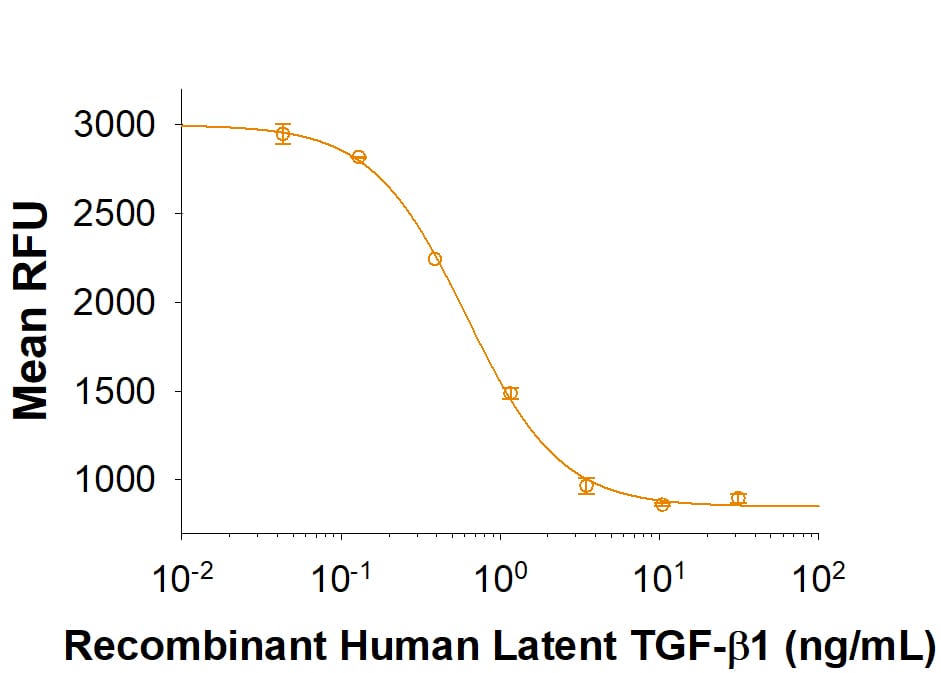
Measured by its ability to inhibit the IL-4-dependent proliferation of HT‑2 mouse T cells. Tsang, M. et al. (1995) Cytokine 7:389.
The ED50 for this effect is 10-70 ng/mL before acid activation and 0.15‑0.9 ng/mL after acid activation.
The ED50 for this effect is 10-70 ng/mL before acid activation and 0.15‑0.9 ng/mL after acid activation.
Reviewed Applications
Read 3 reviews rated 5 using 299-LT in the following applications:
Scientific Data Images for Recombinant Human Latent TGF-beta 1 Protein
Recombinant Human Latent TGF-beta 1 Protein Bioactivity
Recombinant Human Latent TGF-beta beta 1 (Catalog # 299-LT) after acid activation inhibits Recombinant Mouse IL-4 (Catalog # 404-ML) induced cell proliferation in the HT-2 mouse T cell line. The ED50 for this effect is 0.15-0.9 ng/mL after acid activation.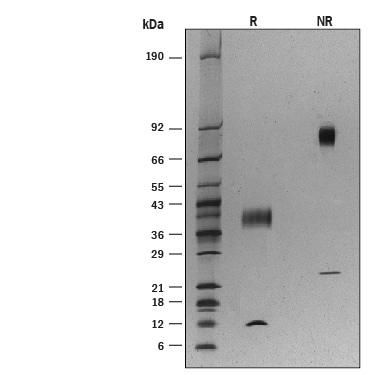
Recombinant Human Latent TGF-beta 1 Protein SDS-PAGE
1 μg/lane of Recombinant Human Latent TGF‑ beta 1 was resolved with SDS-PAGE under reducing (R) and non-reducing (NR) conditions and visualized by silverstaining, showing bands at 11, 36-42 kDa (R) and 24, 80-95 kDa (NR).Formulation, Preparation, and Storage
299-LT
| Formulation | Supplied as a 0.2 μm filtered solution in PBS and Glycerol with BSA as a carrier protein. |
| Shipping | The product is shipped with dry ice or equivalent. Upon receipt, store it immediately at the temperature recommended below. |
| Stability & Storage | Use a manual defrost freezer and avoid repeated freeze-thaw cycles.
|
Background: TGF-beta 1
References
- Dunker, N. and K. Krieglstein (2000) Eur. J. Biochem. 267:6982.
- Wahl, S.M. (2006) Immunol. Rev. 213:213.
- Chang, H. et al. (2002) Endocr. Rev. 23:787.
- Derynck, R. et al. (1985) Nature 316:701.
- Dabovic, B. and D.B. Rifkin (2008) “TGF-beta Bioavailability” in The TGF-beta Family. Derynck, R. and K. Miyazono (eds): Cold Spring Harbor Laboratory Press, p. 179.
- Brunner, A.M. et al. (1989) J. Biol. Chem. 264:13660.
- Miyazono, K. et al. (1991) EMBO J. 10:1091.
- Oklu, R. and R. Hesketh (2000) Biochem. J. 352:601.
- Miller, D.M. et al. (1992) Mol. Endocrinol. 6:694.
- Janssens, K. et al. (2003) J. Biol. Chem. 278:7718.
Long Name
Transforming Growth Factor beta 1
Alternate Names
TGF beta1, TGFB, TGFB1, TGFbeta 1
Gene Symbol
TGFB1
UniProt
Additional TGF-beta 1 Products
Product Documents for Recombinant Human Latent TGF-beta 1 Protein
Certificate of Analysis
To download a Certificate of Analysis, please enter a lot or batch number in the search box below.
Note: Certificate of Analysis not available for kit components.
Product Specific Notices for Recombinant Human Latent TGF-beta 1 Protein
For research use only
Related Research Areas
Citations for Recombinant Human Latent TGF-beta 1 Protein
 Powered by Bioz
Customer Reviews for Recombinant Human Latent TGF-beta 1 Protein (3)
5 out of 5
3 Customer Ratings
Have you used Recombinant Human Latent TGF-beta 1 Protein?
Submit a review and receive an Amazon gift card!
$25/€18/£15/$25CAN/¥2500 for a review with an image
$10/€7/£6/$10CAN/¥1110 for a review without an image
Submit a review
Customer Images
Showing
1
-
3 of
3 reviews
Showing All
Filter By:
-
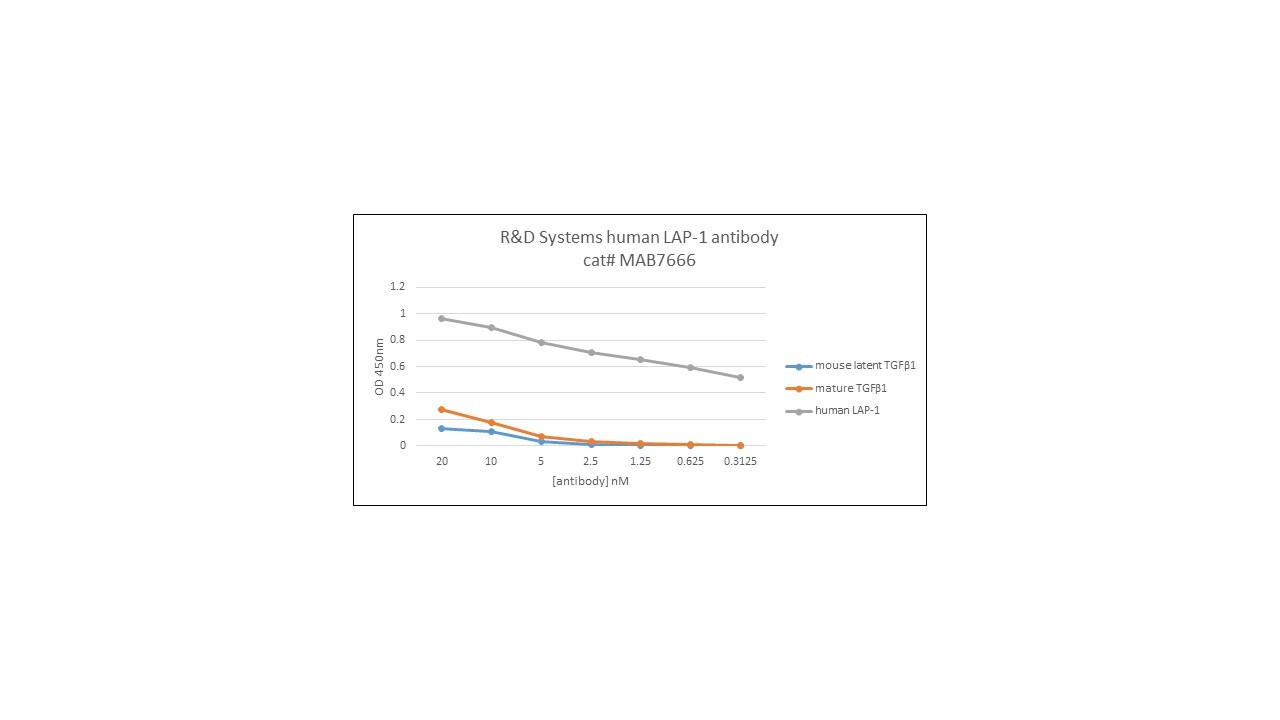
Application: Immunoassay StandardVerified Customer | Posted 03/29/2019coated a 96 well plate with 0.5mg/mL of rh LAP-1 to confirm specificity of antibody BAM2462 to LAP-1 and not mature TGF beta 1 or mouse latent TGF beta (from a competitor)

-
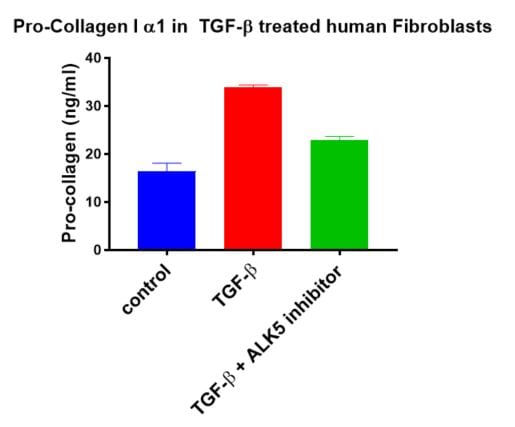
Application: In vitro bioactivity in cell cultureVerified Customer | Posted 11/21/2018
-
Application: Media additive for protein or antibody productionVerified Customer | Posted 01/13/2016
There are no reviews that match your criteria.
Loading...
Associated Pathways


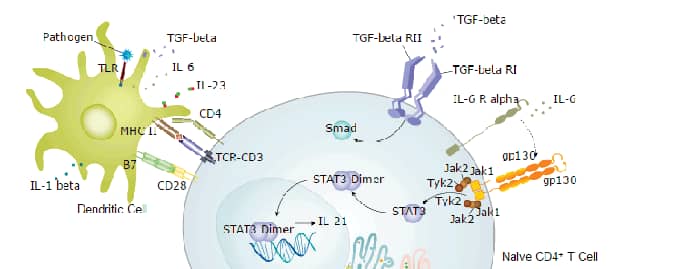
IL-21 Signaling Pathways and their Primary Biological Effects in Different Immune Cell Types
 Mesenchymal Stem Cell Differentiation Pathways & Lineage-specific Markers
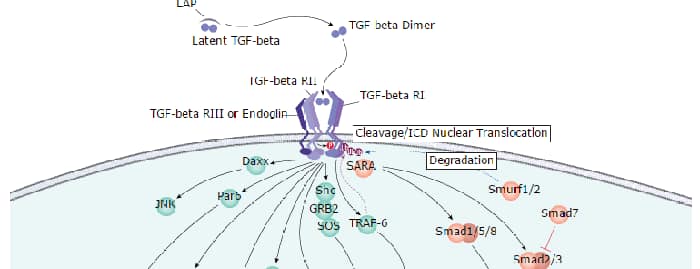
 TGF-beta Signaling Pathways
 Th17 Differentiation Pathway