Smad3 [p Ser423, p Ser425] Antibody - BSA Free
Novus Biologicals | Catalog # NBP1-77836

![Western Blot: Smad3 [p Ser423, p Ser425] Antibody [NBP1-77836]](https://resources.rndsystems.com/images/products/Smad3-[p-Ser423--p-Ser425]-Antibody-Western-Blot-NBP1-77836-img0005.jpg "Western Blot: Smad3 [p Ser423, p Ser425] Antibody [NBP1-77836]")
Key Product Details
Validated by
Species Reactivity
Validated:
Cited:
Applications
Validated:
Cited:
Label
Antibody Source
Format
Product Specifications
Immunogen
Reactivity Notes
Modification
Specificity
Clonality
Host
Isotype
Description
Store vial at -20C prior to opening. Aliquot contents and freeze at -20C or below for extended storage. Avoid cycles of freezing and thawing. Centrifuge product if not completely clear after standing at room temperature. This product is stable for several weeks at 4C as an undiluted liquid. Dilute only prior to immediate use.
Scientific Data Images for Smad3 [p Ser423, p Ser425] Antibody - BSA Free
Western Blot: Smad3 [p Ser423, p Ser425] Antibody [NBP1-77836]
Western Blot: Smad3 [p Ser423, p Ser425] Antibody [NBP1-77836] - Shows detection of endogenous Smad3 in stimulated cell lysates. Lysates were prepared from control cells (- lanes), or cells stimulated with 2 ng/ml TGF (+lanes) for 1 hour. This reagent recognizes phosphorylated Smad3 and has negligible reactivity against non-phosphorylated Smad3 protein. Personal Communication. YIgG Zhang, NIH, CCR, Bethesda, MD.![Immunocytochemistry/ Immunofluorescence: Smad3 [p Ser423, p Ser425] Antibody [NBP1-77836]](https://resources.rndsystems.com/images/products/Smad3-[p-Ser423--p-Ser425]-Antibody-Immunocytochemistry-Immunofluorescence-NBP1-77836-img0007.jpg "Immunocytochemistry/ Immunofluorescence: Smad3 [p Ser423, p Ser425] Antibody [NBP1-77836]")
![Immunohistochemistry: Smad3 [p Ser423, p Ser425] Antibody [NBP1-77836]](https://resources.rndsystems.com/images/products/Smad3-[p-Ser423--p-Ser425]-Antibody-Immunohistochemistry-NBP1-77836-img0006.jpg "Immunohistochemistry: Smad3 [p Ser423, p Ser425] Antibody [NBP1-77836]")
Immunohistochemistry: Smad3 [p Ser423, p Ser425] Antibody [NBP1-77836]
Immunohistochemistry: Smad3 [p Ser423, p Ser425] Antibody [NBP1-77836] - Used at 2.5 ug/ml to detect signal in a variety of tissues including multi-human, multi-brain and multi-cancer slides. This image shows strong nuclear staining in the majority of epidermal keratinocytes at 40X. Tissue was formalin-fixed and paraffin embedded. The image shows localization of the antibody as the precipitated red signal, with a hematoxylin purple nuclear counterstain. Personal Communication, Tina Roush, LifeSpanBiosciences, Seattle, WA.![Smad3 [p Ser423, p Ser425] Antibody](https://resources.rndsystems.com/images/products/nbp1-77836_rabbit-polyclonal-smad3-p-ser423-p-ser425-antibody-24520231052432.jpg "Smad3 [p Ser423, p Ser425] Antibody")
Smad3 [p Ser423, p Ser425] Antibody
Western Blot of Rabbit anti-SMAD3 pS423 pS425 antibody. Marker: Opal Pre-stained ladder![Smad3 [p Ser423, p Ser425] Antibody - BSA Free](https://resources.rndsystems.com/images/products/nbp1-77836_rabbit-polyclonal-smad3-p-ser423-p-ser425-antibody-western-blot-13220261525548.jpg "Western Blot: Smad3 [p Ser423, p Ser425] Antibody - BSA Free [NBP1-77836] -")
Western Blot: Smad3 [p Ser423, p Ser425] Antibody - BSA Free [NBP1-77836] -
Mechanistic studies (I): Roflumilast prevents TGF beta 1-induced phospho-SMAD3 by the increase of PPM1A, the inhibition of reactive oxygen species (ROS) and phospho-ERK1/2-Protein Kinase A axis. Human keratinocytes were incubated for 30 min with vehicle or roflumilast (Rof, 100 nM) (A-F), the SMAD3 inhibitor (SIS3, 10uM) (A), the anti-oxidant N-acetyl-L-cysteine (NAC, 1 mM) (B, E), the PPM1A inhibitor sanguinarine (San, 3 uM) (D), the proteasome inhibitor MG132 (MG132, 5 uM) (E), the PKA inhibitor (KT5720, 2uM) (C), the ERK1/2 inhibitor (PD98059, 10uM) (F) or combinations as indicated. Next, keratinocytes were stimulated with TGF beta 1 (10 ng/ml) for 30 min and p-SMAD3 and PPM1A proteins were analysed by Western blotting. Data are shown from densitometry as the ratio of target protein compared to beta -actin of three independent experiments per condition. Results of the densitometry are presented as scatter dot blot with median and interquartile range values. P-values are based on Kruskal-Wallis test followed by the Dunn’s post-hoc test Image collected and cropped by CiteAb from the following open publication (https://pubmed.ncbi.nlm.nih.gov/39223490), licensed under a CC-BY license. Not internally tested by Novus Biologicals.![Smad3 [p Ser423, p Ser425] Antibody - BSA Free](https://resources.rndsystems.com/images/products/nbp1-77836_rabbit-polyclonal-smad3-p-ser423-p-ser425-antibody-western-blot-132202615252424.jpg "Western Blot: Smad3 [p Ser423, p Ser425] Antibody - BSA Free [NBP1-77836] -")
Western Blot: Smad3 [p Ser423, p Ser425] Antibody - BSA Free [NBP1-77836] -
Activin A facilitates TGF beta 1-induced type II receptor expression without altering TGF beta 1 receptor sensitivity in MC. a TGF beta 1 for 30 min increased TRII expression and Smad3 activation in whole cell lysate, and both were prevented by 24 h pretreatment with follistatin (n = 6). b There was no change in TRII transcript after 24 h of follistatin with or without TGF beta 1 for 30 min. c Pretreatment with an actA neutralizing antibody for 24 h inhibited acute (30 min) TGF beta 1-induced Smad3 activation and TRII upregulation (n = 6–7). These were similarly inhibited by downregulation of the actA type I receptor ALK4 with siRNA (d) (n = 3). e Pretreatment with actA (20 ng/ml) for 24 h did not affect acute TGF beta 1-induced Smad3 activation (n = 6). *, **, ****P < 0.05, 0.01, 0.0001; one-way ANOVA with Tukey’s multiple comparisons post hoc test Image collected and cropped by CiteAb from the following open publication (https://pubmed.ncbi.nlm.nih.gov/36717814), licensed under a CC-BY license. Not internally tested by Novus Biologicals.![Smad3 [p Ser423, p Ser425] Antibody - BSA Free](https://resources.rndsystems.com/images/products/nbp1-77836_rabbit-polyclonal-smad3-p-ser423-p-ser425-antibody-western-blot-1322026159382.jpg "Western Blot: Smad3 [p Ser423, p Ser425] Antibody - BSA Free [NBP1-77836] -")
Western Blot: Smad3 [p Ser423, p Ser425] Antibody - BSA Free [NBP1-77836] -
Mechanistic studies (I): Roflumilast prevents TGF beta 1-induced phospho-SMAD3 by the increase of PPM1A, the inhibition of reactive oxygen species (ROS) and phospho-ERK1/2-Protein Kinase A axis. Human keratinocytes were incubated for 30 min with vehicle or roflumilast (Rof, 100 nM) (A-F), the SMAD3 inhibitor (SIS3, 10uM) (A), the anti-oxidant N-acetyl-L-cysteine (NAC, 1 mM) (B, E), the PPM1A inhibitor sanguinarine (San, 3 uM) (D), the proteasome inhibitor MG132 (MG132, 5 uM) (E), the PKA inhibitor (KT5720, 2uM) (C), the ERK1/2 inhibitor (PD98059, 10uM) (F) or combinations as indicated. Next, keratinocytes were stimulated with TGF beta 1 (10 ng/ml) for 30 min and p-SMAD3 and PPM1A proteins were analysed by Western blotting. Data are shown from densitometry as the ratio of target protein compared to beta -actin of three independent experiments per condition. Results of the densitometry are presented as scatter dot blot with median and interquartile range values. P-values are based on Kruskal-Wallis test followed by the Dunn’s post-hoc test Image collected and cropped by CiteAb from the following open publication (https://pubmed.ncbi.nlm.nih.gov/39223490), licensed under a CC-BY license. Not internally tested by Novus Biologicals.![Smad3 [p Ser423, p Ser425] Antibody - BSA Free](https://resources.rndsystems.com/images/products/nbp1-77836_rabbit-polyclonal-smad3-p-ser423-p-ser425-antibody-western-blot-132202615101316.jpg "Western Blot: Smad3 [p Ser423, p Ser425] Antibody - BSA Free [NBP1-77836] -")
Western Blot: Smad3 [p Ser423, p Ser425] Antibody - BSA Free [NBP1-77836] -
Mechanistic studies (I): Roflumilast prevents TGF beta 1-induced phospho-SMAD3 by the increase of PPM1A, the inhibition of reactive oxygen species (ROS) and phospho-ERK1/2-Protein Kinase A axis. Human keratinocytes were incubated for 30 min with vehicle or roflumilast (Rof, 100 nM) (A-F), the SMAD3 inhibitor (SIS3, 10uM) (A), the anti-oxidant N-acetyl-L-cysteine (NAC, 1 mM) (B, E), the PPM1A inhibitor sanguinarine (San, 3 uM) (D), the proteasome inhibitor MG132 (MG132, 5 uM) (E), the PKA inhibitor (KT5720, 2uM) (C), the ERK1/2 inhibitor (PD98059, 10uM) (F) or combinations as indicated. Next, keratinocytes were stimulated with TGF beta 1 (10 ng/ml) for 30 min and p-SMAD3 and PPM1A proteins were analysed by Western blotting. Data are shown from densitometry as the ratio of target protein compared to beta -actin of three independent experiments per condition. Results of the densitometry are presented as scatter dot blot with median and interquartile range values. P-values are based on Kruskal-Wallis test followed by the Dunn’s post-hoc test Image collected and cropped by CiteAb from the following open publication (https://pubmed.ncbi.nlm.nih.gov/39223490), licensed under a CC-BY license. Not internally tested by Novus Biologicals.![Smad3 [p Ser423, p Ser425] Antibody - BSA Free](https://resources.rndsystems.com/images/products/nbp1-77836_rabbit-polyclonal-smad3-p-ser423-p-ser425-antibody-western-blot-132202615104521.jpg "Western Blot: Smad3 [p Ser423, p Ser425] Antibody - BSA Free [NBP1-77836] -")
Western Blot: Smad3 [p Ser423, p Ser425] Antibody - BSA Free [NBP1-77836] -
Activin A facilitates TGF beta 1-induced type II receptor expression without altering TGF beta 1 receptor sensitivity in MC. a TGF beta 1 for 30 min increased TRII expression and Smad3 activation in whole cell lysate, and both were prevented by 24 h pretreatment with follistatin (n = 6). b There was no change in TRII transcript after 24 h of follistatin with or without TGF beta 1 for 30 min. c Pretreatment with an actA neutralizing antibody for 24 h inhibited acute (30 min) TGF beta 1-induced Smad3 activation and TRII upregulation (n = 6–7). These were similarly inhibited by downregulation of the actA type I receptor ALK4 with siRNA (d) (n = 3). e Pretreatment with actA (20 ng/ml) for 24 h did not affect acute TGF beta 1-induced Smad3 activation (n = 6). *, **, ****P < 0.05, 0.01, 0.0001; one-way ANOVA with Tukey’s multiple comparisons post hoc test Image collected and cropped by CiteAb from the following open publication (https://pubmed.ncbi.nlm.nih.gov/36717814), licensed under a CC-BY license. Not internally tested by Novus Biologicals.![Smad3 [p Ser423, p Ser425] Antibody - BSA Free](https://resources.rndsystems.com/images/products/nbp1-77836_rabbit-polyclonal-smad3-p-ser423-p-ser425-antibody-western-blot-13220261533214.jpg "Western Blot: Smad3 [p Ser423, p Ser425] Antibody - BSA Free [NBP1-77836] -")
Western Blot: Smad3 [p Ser423, p Ser425] Antibody - BSA Free [NBP1-77836] -
Specific activin A inhibition attenuates TGF beta 1-induced Smad3 activation and profibrotic responses in MC. a ELISA demonstrates that TGF beta 1 (24 h) increases actA and actB secretion (n = 3) to 19.5 ng/ml and 2.5 ng/ml, representing an 8.9- and 1.06-fold induction respectively. b TGF beta 1 increases actA in whole cell lysate by 1.8-fold (n = 3). c ActA (20 ng/ml) upregulates FN (n = 3–4), CTGF (n = 4) and alpha SMA (n = 6) at 48 h. d TGF beta 1 and actA both increase Smad3 transcriptional activity; no synergistic effect is seen (n = 6–12). e An actA neutralizing antibody attenuates TGF beta 1-induced FN (n = 5–6), alpha SMA (n = 5), CTGF (n = 5–6), and Smad3 activation (n = 10–12). f ActA neutralization decreases TGF beta 1-induced Smad3 transcriptional activity at 24 h (n = 9–15), but this is not decreased by actB neutralization (n = 6) (g). h MC were stimulated with TGF beta 1 or actA for 1 h, then treated with their type I receptor inhibitor SB431542 (50 uM). Restimulation with the same ligand shows that cells become refractory to TGF beta 1, but not actA (n = 4). *, **, ***, ****P < 0.05, 0.01, 0.001, 0.0001; one-way ANOVA with Tukey’s multiple comparisons post hoc test Image collected and cropped by CiteAb from the following open publication (https://pubmed.ncbi.nlm.nih.gov/36717814), licensed under a CC-BY license. Not internally tested by Novus Biologicals.![Smad3 [p Ser423, p Ser425] Antibody - BSA Free](https://resources.rndsystems.com/images/products/nbp1-77836_rabbit-polyclonal-smad3-p-ser423-p-ser425-antibody-western-blot-132202615976.jpg "Western Blot: Smad3 [p Ser423, p Ser425] Antibody - BSA Free [NBP1-77836] -")
Western Blot: Smad3 [p Ser423, p Ser425] Antibody - BSA Free [NBP1-77836] -
Mechanistic studies (I): Roflumilast prevents TGF beta 1-induced phospho-SMAD3 by the increase of PPM1A, the inhibition of reactive oxygen species (ROS) and phospho-ERK1/2-Protein Kinase A axis. Human keratinocytes were incubated for 30 min with vehicle or roflumilast (Rof, 100 nM) (A-F), the SMAD3 inhibitor (SIS3, 10uM) (A), the anti-oxidant N-acetyl-L-cysteine (NAC, 1 mM) (B, E), the PPM1A inhibitor sanguinarine (San, 3 uM) (D), the proteasome inhibitor MG132 (MG132, 5 uM) (E), the PKA inhibitor (KT5720, 2uM) (C), the ERK1/2 inhibitor (PD98059, 10uM) (F) or combinations as indicated. Next, keratinocytes were stimulated with TGF beta 1 (10 ng/ml) for 30 min and p-SMAD3 and PPM1A proteins were analysed by Western blotting. Data are shown from densitometry as the ratio of target protein compared to beta -actin of three independent experiments per condition. Results of the densitometry are presented as scatter dot blot with median and interquartile range values. P-values are based on Kruskal-Wallis test followed by the Dunn’s post-hoc test Image collected and cropped by CiteAb from the following open publication (https://pubmed.ncbi.nlm.nih.gov/39223490), licensed under a CC-BY license. Not internally tested by Novus Biologicals.![Smad3 [p Ser423, p Ser425] Antibody - BSA Free](https://resources.rndsystems.com/images/products/nbp1-77836_rabbit-polyclonal-smad3-p-ser423-p-ser425-antibody-western-blot-13220261525248.jpg "Western Blot: Smad3 [p Ser423, p Ser425] Antibody - BSA Free [NBP1-77836] -")
Western Blot: Smad3 [p Ser423, p Ser425] Antibody - BSA Free [NBP1-77836] -
Activin A neutralization inhibits renal fibrosis in TGF beta 1-overexpressing mice. a TGF beta 1 transcript is increased in mice genetically engineered to overexpress TGF beta 1 (HH) compared with wild-type mice (WT) (n = 6–7, *p ≤ 0.05). b Serum actA is elevated in wild-type and HH mice after UUO. This is decreased by treatment with a neutralizing actA antibody (anti-actA) in HH mice. c Renal actA is increased after UUO, with a greater induction in HH mice. Both are attenuated by actA neutralization. Boxed areas are shown at higher magnification immediately below. ActA increases are seen particularly in tubular epithelial cells. d Renal alpha SMA, fibronectin (FN), pSmad3 and MRTF-A are increased after UUO and this is augmented in HH kidneys. Expression of all is attenuated by actA neutralization in both WT and HH kidneys. (n = 6–9) *, **, ***, ****P < 0.05, 0.01, 0.001, 0.0001; one-way ANOVA with Tukey’s multiple comparisons post hoc test where there are > 2 groups; t-test for 2 groups Image collected and cropped by CiteAb from the following open publication (https://pubmed.ncbi.nlm.nih.gov/36717814), licensed under a CC-BY license. Not internally tested by Novus Biologicals.![Smad3 [p Ser423, p Ser425] Antibody - BSA Free](https://resources.rndsystems.com/images/products/nbp1-77836_rabbit-polyclonal-smad3-p-ser423-p-ser425-antibody-western-blot-13220261528525.jpg "Western Blot: Smad3 [p Ser423, p Ser425] Antibody - BSA Free [NBP1-77836] -")
Western Blot: Smad3 [p Ser423, p Ser425] Antibody - BSA Free [NBP1-77836] -
Mechanistic studies (I): Roflumilast prevents TGF beta 1-induced phospho-SMAD3 by the increase of PPM1A, the inhibition of reactive oxygen species (ROS) and phospho-ERK1/2-Protein Kinase A axis. Human keratinocytes were incubated for 30 min with vehicle or roflumilast (Rof, 100 nM) (A-F), the SMAD3 inhibitor (SIS3, 10uM) (A), the anti-oxidant N-acetyl-L-cysteine (NAC, 1 mM) (B, E), the PPM1A inhibitor sanguinarine (San, 3 uM) (D), the proteasome inhibitor MG132 (MG132, 5 uM) (E), the PKA inhibitor (KT5720, 2uM) (C), the ERK1/2 inhibitor (PD98059, 10uM) (F) or combinations as indicated. Next, keratinocytes were stimulated with TGF beta 1 (10 ng/ml) for 30 min and p-SMAD3 and PPM1A proteins were analysed by Western blotting. Data are shown from densitometry as the ratio of target protein compared to beta -actin of three independent experiments per condition. Results of the densitometry are presented as scatter dot blot with median and interquartile range values. P-values are based on Kruskal-Wallis test followed by the Dunn’s post-hoc test Image collected and cropped by CiteAb from the following open publication (https://pubmed.ncbi.nlm.nih.gov/39223490), licensed under a CC-BY license. Not internally tested by Novus Biologicals.![Smad3 [p Ser423, p Ser425] Antibody - BSA Free](https://resources.rndsystems.com/images/products/nbp1-77836_rabbit-polyclonal-smad3-p-ser423-p-ser425-antibody-western-blot-132202615335811.jpg "Western Blot: Smad3 [p Ser423, p Ser425] Antibody - BSA Free [NBP1-77836] -")
Western Blot: Smad3 [p Ser423, p Ser425] Antibody - BSA Free [NBP1-77836] -
Specific activin A inhibition attenuates TGF beta 1-induced Smad3 activation and profibrotic responses in MC. a ELISA demonstrates that TGF beta 1 (24 h) increases actA and actB secretion (n = 3) to 19.5 ng/ml and 2.5 ng/ml, representing an 8.9- and 1.06-fold induction respectively. b TGF beta 1 increases actA in whole cell lysate by 1.8-fold (n = 3). c ActA (20 ng/ml) upregulates FN (n = 3–4), CTGF (n = 4) and alpha SMA (n = 6) at 48 h. d TGF beta 1 and actA both increase Smad3 transcriptional activity; no synergistic effect is seen (n = 6–12). e An actA neutralizing antibody attenuates TGF beta 1-induced FN (n = 5–6), alpha SMA (n = 5), CTGF (n = 5–6), and Smad3 activation (n = 10–12). f ActA neutralization decreases TGF beta 1-induced Smad3 transcriptional activity at 24 h (n = 9–15), but this is not decreased by actB neutralization (n = 6) (g). h MC were stimulated with TGF beta 1 or actA for 1 h, then treated with their type I receptor inhibitor SB431542 (50 uM). Restimulation with the same ligand shows that cells become refractory to TGF beta 1, but not actA (n = 4). *, **, ***, ****P < 0.05, 0.01, 0.001, 0.0001; one-way ANOVA with Tukey’s multiple comparisons post hoc test Image collected and cropped by CiteAb from the following open publication (https://pubmed.ncbi.nlm.nih.gov/36717814), licensed under a CC-BY license. Not internally tested by Novus Biologicals.![Smad3 [p Ser423, p Ser425] Antibody - BSA Free](https://resources.rndsystems.com/images/products/nbp1-77836_rabbit-polyclonal-smad3-p-ser423-p-ser425-antibody-western-blot-1322026154357.jpg "Western Blot: Smad3 [p Ser423, p Ser425] Antibody - BSA Free [NBP1-77836] -")
Western Blot: Smad3 [p Ser423, p Ser425] Antibody - BSA Free [NBP1-77836] -
Activin inhibition attenuates TGF beta 1-induced fibrotic responses and Smad3 activation in MC. Activin inhibition with follistatin (FST) decreases TGF beta 1-induced: a FN, alpha SMA and CTGF upregulation at 48 h (n = 5), b Smad3 phosphorylation (pSmad3) at 24 h (n = 5), c Smad3 nuclear translocation as assessed using eGFP-Smad3 (n = 3; 25–30 cells quantified per treatment group) at 24 h, and d Smad3 transcriptional activity at 24 h (n = 8). e Time course experiments show increases in pSmad3 occur earlier (30–60 min) with TGF beta 1 (n = 4) compared with actA (n = 4) or actB (n = 3) (18–48 h). *, **, ***, ****P < 0.05, 0.01, 0.001, 0.0001; one-way ANOVA with Tukey’s multiple comparisons post hoc test Image collected and cropped by CiteAb from the following open publication (https://pubmed.ncbi.nlm.nih.gov/36717814), licensed under a CC-BY license. Not internally tested by Novus Biologicals.![Smad3 [p Ser423, p Ser425] Antibody - BSA Free](https://resources.rndsystems.com/images/products/nbp1-77836_rabbit-polyclonal-smad3-p-ser423-p-ser425-antibody-western-blot-13220261895122.jpg "Western Blot: Smad3 [p Ser423, p Ser425] Antibody - BSA Free [NBP1-77836] -")
Western Blot: Smad3 [p Ser423, p Ser425] Antibody - BSA Free [NBP1-77836] -
Impact of PAD4 deficiency on TGF‐ beta signalling. (A) Activation of the canonical and non‐canonical pathway by TGF‐ beta was examined by Western blot. TGF‐ beta stimulation (10 ng/ml) for 2 h significantly increased protein levels of pSMAD2 and pSMAD3 in CFs independently on PAD4 deficiency. TGF‐ beta failed to activate STAT3 and Akt in PAD4−/− CFs. n = 6–8. Preincubation of WT CFs with the PAD4 inhibitor Cl‐amidine for 18 h abrogated TGF‐ beta ‐induced activation of Akt (B) and subsequent GSK‐3 beta phosphorylation (C). n = 3. (D) No TGF‐ beta ‐triggered phosphorylation of GSK‐3 beta was detected in PAD4−/− CFs. n = 3. *p < 0.05, **p < 0.01, ***p < 0.001 vs. control cells for A; #p < 0.05 for B and C Image collected and cropped by CiteAb from the following open publication (https://pubmed.ncbi.nlm.nih.gov/34523218), licensed under a CC-BY license. Not internally tested by Novus Biologicals.![Smad3 [p Ser423, p Ser425] Antibody - BSA Free](https://resources.rndsystems.com/images/products/nbp1-77836_rabbit-polyclonal-smad3-p-ser423-p-ser425-antibody-western-blot-132202618165118.jpg "Western Blot: Smad3 [p Ser423, p Ser425] Antibody - BSA Free [NBP1-77836] -")
Western Blot: Smad3 [p Ser423, p Ser425] Antibody - BSA Free [NBP1-77836] -
Activin A facilitates TGF beta 1-induced type II receptor expression without altering TGF beta 1 receptor sensitivity in MC. a TGF beta 1 for 30 min increased TRII expression and Smad3 activation in whole cell lysate, and both were prevented by 24 h pretreatment with follistatin (n = 6). b There was no change in TRII transcript after 24 h of follistatin with or without TGF beta 1 for 30 min. c Pretreatment with an actA neutralizing antibody for 24 h inhibited acute (30 min) TGF beta 1-induced Smad3 activation and TRII upregulation (n = 6–7). These were similarly inhibited by downregulation of the actA type I receptor ALK4 with siRNA (d) (n = 3). e Pretreatment with actA (20 ng/ml) for 24 h did not affect acute TGF beta 1-induced Smad3 activation (n = 6). *, **, ****P < 0.05, 0.01, 0.0001; one-way ANOVA with Tukey’s multiple comparisons post hoc test Image collected and cropped by CiteAb from the following open publication (https://pubmed.ncbi.nlm.nih.gov/36717814), licensed under a CC-BY license. Not internally tested by Novus Biologicals.Applications for Smad3 [p Ser423, p Ser425] Antibody - BSA Free
ELISA
Flow Cytometry
Immunohistochemistry
Immunohistochemistry-Paraffin
Single Cell Western
Western Blot
Reviewed Applications
Read 1 review rated 3 using NBP1-77836 in the following applications:
Flow Cytometry Panel Builder
Bio-Techne Knows Flow Cytometry
Save time and reduce costly mistakes by quickly finding compatible reagents using the Panel Builder Tool.
Advanced Features
- Spectra Viewer - Custom analysis of spectra from multiple fluorochromes
- Spillover Popups - Visualize the spectra of individual fluorochromes
- Antigen Density Selector - Match fluorochrome brightness with antigen density

Formulation, Preparation, and Storage
Purification
Formulation
Format
Preservative
Concentration
Shipping
Stability & Storage
Background: Smad3
Long Name
Alternate Names
Gene Symbol
UniProt
Additional Smad3 Products
Product Documents for Smad3 [p Ser423, p Ser425] Antibody - BSA Free
Certificate of Analysis
To download a Certificate of Analysis, please enter a lot or batch number in the search box below.
Product Specific Notices for Smad3 [p Ser423, p Ser425] Antibody - BSA Free
This product is for research use only and is not approved for use in humans or in clinical diagnosis. Primary Antibodies are guaranteed for 1 year from date of receipt.
Related Research Areas
Citations for Smad3 [p Ser423, p Ser425] Antibody - BSA Free
 Powered by Bioz
Customer Reviews for Smad3 [p Ser423, p Ser425] Antibody - BSA Free (1)
Have you used Smad3 [p Ser423, p Ser425] Antibody - BSA Free?
Submit a review and receive an Amazon gift card!
$25/€18/£15/$25CAN/¥2500 for a review with an image
$10/€7/£6/$10CAN/¥1110 for a review without an image
Submit a review
Customer Images
![Smad3 [p Ser423, p Ser425] Antibody - BSA Free NBP1-77836](https://resources.rndsystems.com/images/reviews/review_nbp1-77836_35416_0.png)
-
Application: Immunohistochemistry-FrozenSample Tested: RetinaSpecies: FelineVerified Customer | Posted 08/15/2017Green-NBP1-77836 at 1:500 dilution, Blue-DAPI.
![Smad3 [p Ser423, p Ser425] Antibody - BSA Free NBP1-77836](data:image/png;base64,R0lGODlhAQABAAD/ACwAAAAAAQABAAACADs=)
There are no reviews that match your criteria.
Protocols
Find general support by application which include: protocols, troubleshooting, illustrated assays, videos and webinars.
- 7-Amino Actinomycin D (7-AAD) Cell Viability Flow Cytometry Protocol
- Antigen Retrieval Protocol (PIER)
- Antigen Retrieval for Frozen Sections Protocol
- Appropriate Fixation of IHC/ICC Samples
- Cellular Response to Hypoxia Protocols
- Chromogenic IHC Staining of Formalin-Fixed Paraffin-Embedded (FFPE) Tissue Protocol
- Chromogenic Immunohistochemistry Staining of Frozen Tissue
- ClariTSA™ Fluorophore Kits
- Detection & Visualization of Antibody Binding
- ELISA Sample Preparation & Collection Guide
- ELISA Troubleshooting Guide
- Extracellular Membrane Flow Cytometry Protocol
- Flow Cytometry Protocol for Cell Surface Markers
- Flow Cytometry Protocol for Staining Membrane Associated Proteins
- Flow Cytometry Staining Protocols
- Flow Cytometry Troubleshooting Guide
- Fluorescent IHC Staining of Frozen Tissue Protocol
- Graphic Protocol for Heat-induced Epitope Retrieval
- Graphic Protocol for the Preparation and Fluorescent IHC Staining of Frozen Tissue Sections
- Graphic Protocol for the Preparation and Fluorescent IHC Staining of Paraffin-embedded Tissue Sections
- Graphic Protocol for the Preparation of Gelatin-coated Slides for Histological Tissue Sections
- How to Run an R&D Systems DuoSet ELISA
- How to Run an R&D Systems Quantikine ELISA
- How to Run an R&D Systems Quantikine™ QuicKit™ ELISA
- ICC Cell Smear Protocol for Suspension Cells
- ICC Immunocytochemistry Protocol Videos
- ICC for Adherent Cells
- IHC Sample Preparation (Frozen sections vs Paraffin)
- Immunocytochemistry (ICC) Protocol
- Immunocytochemistry Troubleshooting
- Immunofluorescence of Organoids Embedded in Cultrex Basement Membrane Extract
- Immunofluorescent IHC Staining of Formalin-Fixed Paraffin-Embedded (FFPE) Tissue Protocol
- Immunohistochemistry (IHC) and Immunocytochemistry (ICC) Protocols
- Immunohistochemistry Frozen Troubleshooting
- Immunohistochemistry Paraffin Troubleshooting
- Intracellular Flow Cytometry Protocol Using Alcohol (Methanol)
- Intracellular Flow Cytometry Protocol Using Detergents
- Intracellular Nuclear Staining Flow Cytometry Protocol Using Detergents
- Intracellular Staining Flow Cytometry Protocol Using Alcohol Permeabilization
- Intracellular Staining Flow Cytometry Protocol Using Detergents to Permeabilize Cells
- Preparing Samples for IHC/ICC Experiments
- Preventing Non-Specific Staining (Non-Specific Binding)
- Primary Antibody Selection & Optimization
- Propidium Iodide Cell Viability Flow Cytometry Protocol
- Protocol for Heat-Induced Epitope Retrieval (HIER)
- Protocol for Liperfluo
- Protocol for Making a 4% Formaldehyde Solution in PBS
- Protocol for VisUCyte™ HRP Polymer Detection Reagent
- Protocol for the Characterization of Human Th22 Cells
- Protocol for the Characterization of Human Th9 Cells
- Protocol for the Fluorescent ICC Staining of Cell Smears - Graphic
- Protocol for the Fluorescent ICC Staining of Cultured Cells on Coverslips - Graphic
- Protocol for the Preparation & Fixation of Cells on Coverslips
- Protocol for the Preparation and Chromogenic IHC Staining of Frozen Tissue Sections
- Protocol for the Preparation and Chromogenic IHC Staining of Frozen Tissue Sections - Graphic
- Protocol for the Preparation and Chromogenic IHC Staining of Paraffin-embedded Tissue Sections
- Protocol for the Preparation and Chromogenic IHC Staining of Paraffin-embedded Tissue Sections - Graphic
- Protocol for the Preparation and Fluorescent ICC Staining of Cells on Coverslips
- Protocol for the Preparation and Fluorescent ICC Staining of Non-adherent Cells
- Protocol for the Preparation and Fluorescent ICC Staining of Stem Cells on Coverslips
- Protocol for the Preparation and Fluorescent IHC Staining of Frozen Tissue Sections
- Protocol for the Preparation and Fluorescent IHC Staining of Paraffin-embedded Tissue Sections
- Protocol for the Preparation of Gelatin-coated Slides for Histological Tissue Sections
- Protocol for the Preparation of a Cell Smear for Non-adherent Cell ICC - Graphic
- Protocol: Annexin V and PI Staining by Flow Cytometry
- Protocol: Annexin V and PI Staining for Apoptosis by Flow Cytometry
- Quantikine HS ELISA Kit Assay Principle, Alkaline Phosphatase
- Quantikine HS ELISA Kit Principle, Streptavidin-HRP Polymer
- R&D Systems Quality Control Western Blot Protocol
- Sandwich ELISA (Colorimetric) – Biotin/Streptavidin Detection Protocol
- Sandwich ELISA (Colorimetric) – Direct Detection Protocol
- TUNEL and Active Caspase-3 Detection by IHC/ICC Protocol
- The Importance of IHC/ICC Controls
- Troubleshooting Guide: ELISA
- Troubleshooting Guide: Fluorokine Flow Cytometry Kits
- Troubleshooting Guide: Immunohistochemistry
- Troubleshooting Guide: Western Blot Figures
- Western Blot Conditions
- Western Blot Protocol
- Western Blot Protocol for Cell Lysates
- Western Blot Troubleshooting
- Western Blot Troubleshooting Guide
- View all Protocols, Troubleshooting, Illustrated assays and Webinars
FAQs for Smad3 [p Ser423, p Ser425] Antibody - BSA Free
-
Q: I was wondering if you can recommend any primary polyclonal Smad3 antibody (reactivity: human) for gel supershifts?
A: We do provide a wide range of Smad3 antibodies, but unfortunately none of them have been tested for gel shift assay, so we can't guarantee they will work for an application never tested before.
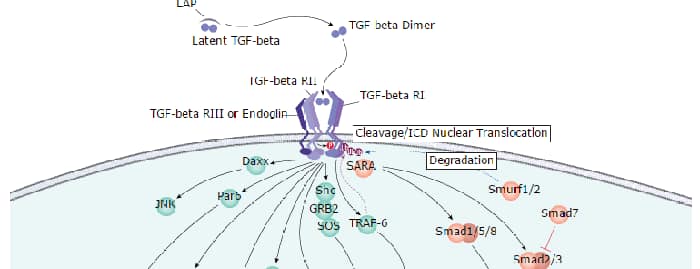
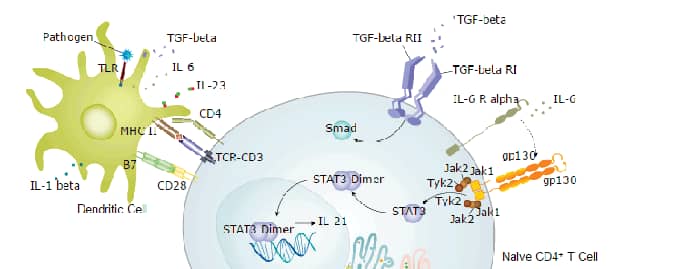
Associated Pathways