
SMN Antibody (2B1) - BSA Free
Novus Biologicals | Catalog # NB100-1936

![Immunohistochemistry: SMN Antibody (2B1) [NB100-1936]](https://resources.rndsystems.com/images/products/SMN-Antibody-2B1-Immunohistochemistry-NB100-1936-img0007.jpg "Immunohistochemistry: SMN Antibody (2B1) [NB100-1936]")
Scientific images may be resized, cropped, or adjusted for brightness or contrast for presentation purposes. These updates are limited to presentation and do not affect the underlying scientific interpretation of the data. Where available, additional source data may be provided upon request.
Key Product Details
Species Reactivity
Validated:
Cited:
Applications
Validated:
Cited:
Label
Antibody Source
Format
Product Specifications
Immunogen
Reactivity Notes
Localization
Clonality
Host
Isotype
Scientific Data Images for SMN Antibody (2B1) - BSA Free
Immunohistochemistry: SMN Antibody (2B1) [NB100-1936]
SMN-Antibody-2B1-Immunohistochemistry-NB100-1936-img0007.jpg![Western Blot: SMN Antibody (2B1) [NB100-1936]](https://resources.rndsystems.com/images/products/SMN-Antibody-2B1-Western-Blot-NB100-1936-img0003.jpg "Western Blot: SMN Antibody (2B1) [NB100-1936]")
Western Blot: SMN Antibody (2B1) [NB100-1936]
Western Blot: SMN Antibody (2B1) [NB100-1936] - Analysis of SMN expression in 1) HeLa, 2) NTera2, 3) HepG2, 4) MCF7, 5) NIH 3T3, 6) PC12, and 7) COS7 whole cell lysates.![Immunocytochemistry/ Immunofluorescence: SMN Antibody (2B1) [NB100-1936]](https://resources.rndsystems.com/images/products/SMN-Antibody-2B1-Immunocytochemistry-Immunofluorescence-NB100-1936-img0011.jpg "Immunocytochemistry/ Immunofluorescence: SMN Antibody (2B1) [NB100-1936]")
Immunocytochemistry/ Immunofluorescence: SMN Antibody (2B1) [NB100-1936]
Immunocytochemistry/Immunofluorescence: SMN Antibody (2B1) [NB100-1936] - HeLa cells were fixed in 4% paraformaldehyde for 10 minutes and permeabilized in 0.5% Triton X-100 in PBS for 5 minutes. The cells were incubated with anti- NB100-1936 at 2 ug/ml overnight at 4C and detected with an anti-mouse Dylight 488 (Green) at a 1:1000 dilution for 60 minutes. Nuclei were counterstained with DAPI (Blue). Cells were imaged using a 100X objective and digitally deconvolved.![Immunocytochemistry/ Immunofluorescence: SMN Antibody (2B1) [NB100-1936]](https://resources.rndsystems.com/images/products/SMN-Antibody-2B1-Immunocytochemistry-Immunofluorescence-NB100-1936-img0010.jpg "Immunocytochemistry/ Immunofluorescence: SMN Antibody (2B1) [NB100-1936]")
Immunocytochemistry/ Immunofluorescence: SMN Antibody (2B1) [NB100-1936]
SMN-Antibody-2B1-Immunocytochemistry-Immunofluorescence-NB100-1936-img0010.jpg![Immunocytochemistry/ Immunofluorescence: SMN Antibody (2B1) [NB100-1936]](https://resources.rndsystems.com/images/products/SMN-Antibody-2B1-Immunocytochemistry-Immunofluorescence-NB100-1936-img0012.jpg "Immunocytochemistry/ Immunofluorescence: SMN Antibody (2B1) [NB100-1936]")
Immunocytochemistry/ Immunofluorescence: SMN Antibody (2B1) [NB100-1936]
Immunocytochemistry/Immunofluorescence: SMN Antibody (2B1) [NB100-1936] - HeLa cells were fixed in 4% paraformaldehyde for 10 minutes and permeabilized in 0.05% Triton X-100 in PBS for 5 minutes. The cells were incubated with SMN Antibody [2B1] conjugated to Alexa Fluor 488 (NB100-1936AF488) at 5 ug/ml for 1 hour at room temperature. Nuclei were counterstained with DAPI (Blue). Cells were imaged using a 100X objective and digitally deconvolved.![Flow Cytometry: SMN Antibody (2B1) [NB100-1936]](https://resources.rndsystems.com/images/products/SMN-Antibody-2B1-Flow-Cytometry-NB100-1936-img0009.jpg "Flow Cytometry: SMN Antibody (2B1) [NB100-1936]")
Flow Cytometry: SMN Antibody (2B1) [NB100-1936]
Flow Cytometry: SMN Antibody (2B1) [NB100-1936] - An intracellular stain was performed on Neuro2a cells with SMN Antibody (2B1) NB100-1936 (blue) and a matched isotype control (orange). Cells were fixed with 4% PFA and then permeabilized with 0.1% saponin. Cells were incubated in an antibody dilution of 1.0 ug/mL for 30 minutes at room temperature, followed by Mouse IgG (H+L) Cross-Adsorbed Secondary Antibody, Dylight 550 (35503, Thermo Fisher).![Immunocytochemistry/ Immunofluorescence: SMN Antibody (2B1) [NB100-1936]](https://resources.rndsystems.com/images/products/SMN-Antibody-2B1-Immunocytochemistry-Immunofluorescence-NB100-1936-img0004.jpg "Immunocytochemistry/ Immunofluorescence: SMN Antibody (2B1) [NB100-1936]")
Immunocytochemistry/ Immunofluorescence: SMN Antibody (2B1) [NB100-1936]
Immunocytochemistry/Immunofluorescence: SMN Antibody (2B1) [NB100-1936] - The SMN antibody was tested at a 1:250 dilution in HeLa cells against DyLight 488 (Green). Actin nuclei were counterstained against Phalloidin 568 (Red) and DAPI (Blue), respectively.![Immunohistochemistry: SMN Antibody (2B1) [NB100-1936]](https://resources.rndsystems.com/images/products/SMN-Antibody-2B1-Immunohistochemistry-NB100-1936-img0001.jpg "Immunohistochemistry: SMN Antibody (2B1) [NB100-1936]")
Immunohistochemistry: SMN Antibody (2B1) [NB100-1936]
Immunohistochemistry: SMN Antibody (2B1) [NB100-1936] - Analysis of SMN on mouse brain using NB100-1936.![Flow Cytometry: SMN Antibody (2B1) [NB100-1936]](https://resources.rndsystems.com/images/products/SMN-Antibody-2B1-Flow-Cytometry-NB100-1936-img0008.jpg "Flow Cytometry: SMN Antibody (2B1) [NB100-1936]")
Flow Cytometry: SMN Antibody (2B1) [NB100-1936]
Flow Cytometry: SMN Antibody (2B1) [NB100-1936] - An intracellular stain was performed on Ntera2 cells with SMN Antibody (2B1) NB100-1936 (blue) and a matched isotype control (orange). Cells were fixed with 4% PFA and then permeabilized with 0.1% saponin. Cells were incubated in an antibody dilution of 1.0 ug/mL for 30 minutes at room temperature, followed by Mouse IgG (H+L) Cross-Adsorbed Secondary Antibody, Dylight 550 (35503, Thermo Fisher).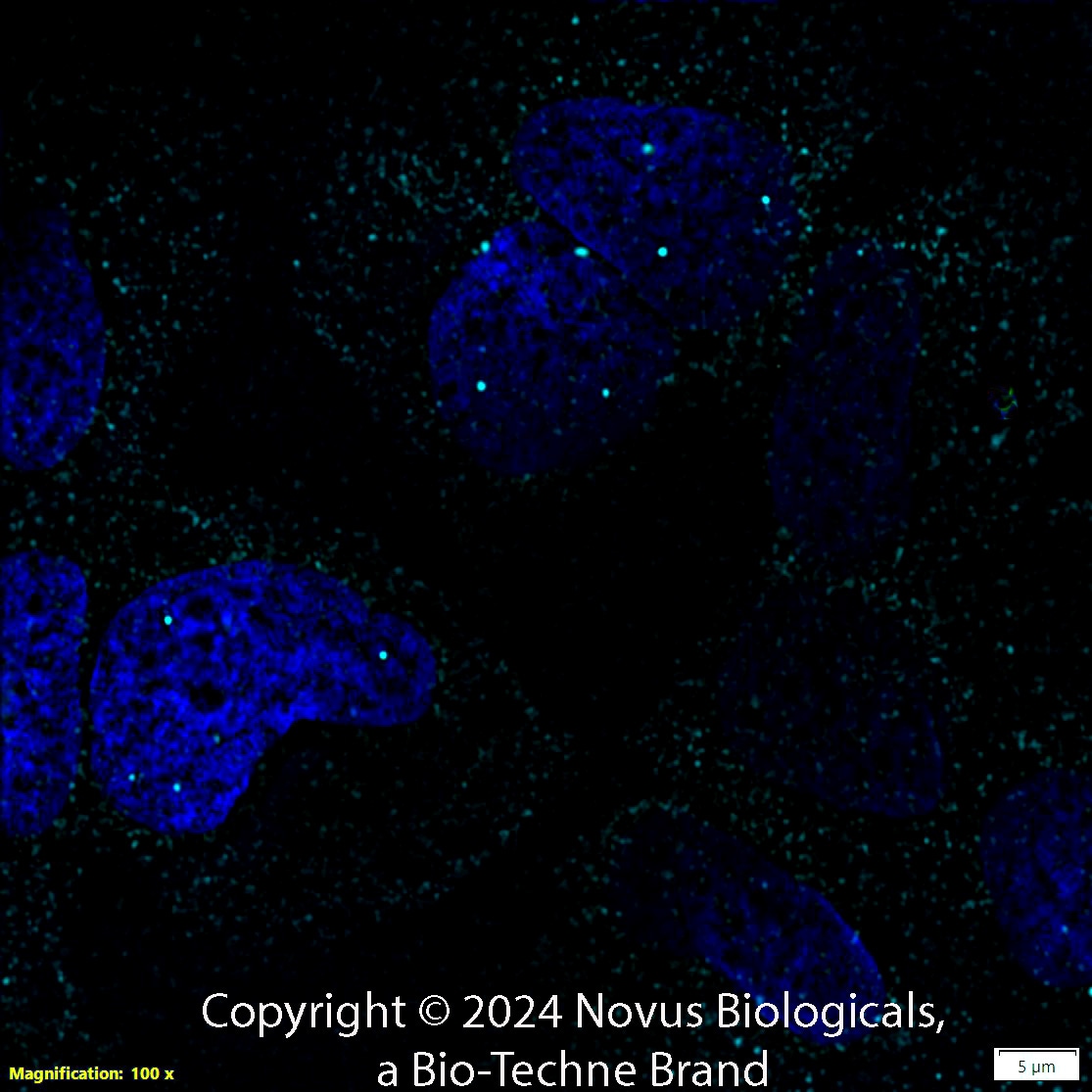
SMN (2B1) in U-2 OS Human Cell Line -
SMN (2B1) was detected in immersion fixed U-2 OS human osteosarcoma cell line using Mouse anti-SMN (2B1) Protein G Purified Monoclonal Antibody conjugated to Alexa Fluor® 647 (Catalog # NB100-1936AF647) (light blue) at 5 µg/mL overnight at 4C. Cells were counterstained with DAPI (dark blue). Cells were imaged using a 100X objective and digitally deconvolved.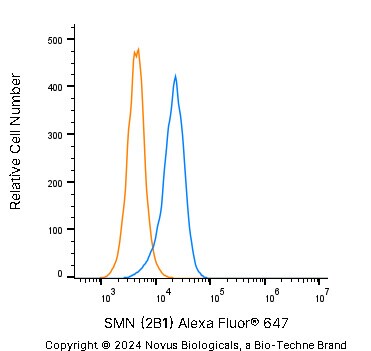
Detection of SMN (2B1) in A431 Human Cell Line by Flow Cytometry.
An intracellular stain was performed on A431 human skin carcinoma cell line using Mouse anti- SMN (2B1) Protein-G purified Monoclonal Antibody conjugated to Alexa Fluor® 647 (Catalog # NB100-1936AF647, blue histogram) or matched control antibody (orange histogram) at 2.5 µg/mL for 30 minutes at RT.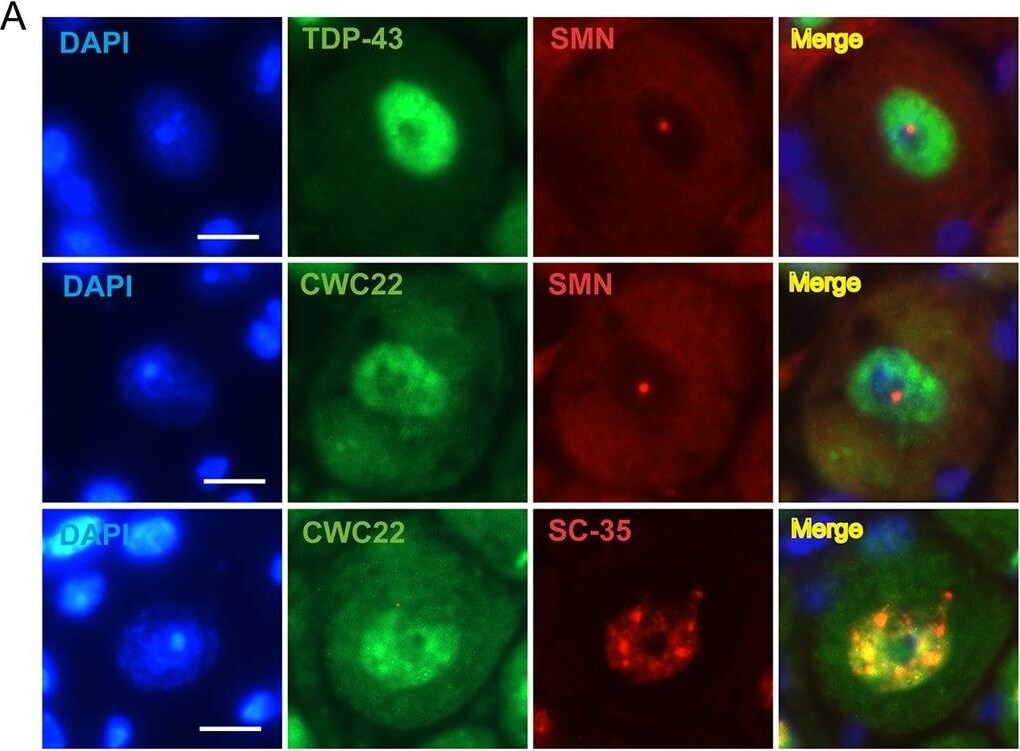
Immunocytochemistry/ Immunofluorescence: SMN Antibody (2B1) [NB100-1936] -
Immunocytochemistry/ Immunofluorescence: SMN Antibody (2B1) [NB100-1936] - CWC22 is colocalized with nuclear speckles & upregulated in diabetic DRG sensory neurons. (A) Subcellular distribution of TDP-43 & CWC22 in control DRG sensory neurons. TDP-43 was stained diffusely in the nucleus, excluding SMN foci in sensory neurons. CWC22 consistently colocalized with a marker protein SC35 of nuclear speckles in sensory neurons. No obvious differences in the subcellular localization of CWC22 were identified in diabetic neurons (not shown) compared with controls. Scale bar: 10 μm. (B) qRT-PCR analysis of Cwc22 mRNA expression in diabetic & control mice. Cwc22 expression was upregulated ∼2.5-fold in diabetic DRGs. *P<0.05, unpaired two-tailed Student's t-test. Data represented as mean±s.e.m. See Cheng et al. (2015) for microarray data indicating rises in Cwc22 expression as reported separately. Image collected & cropped by CiteAb from the following publication (https://journals.biologists.com/dmm/article/10/3/215/2257/Diabetic-poly…), licensed under a CC-BY license. Not internally tested by Novus Biologicals.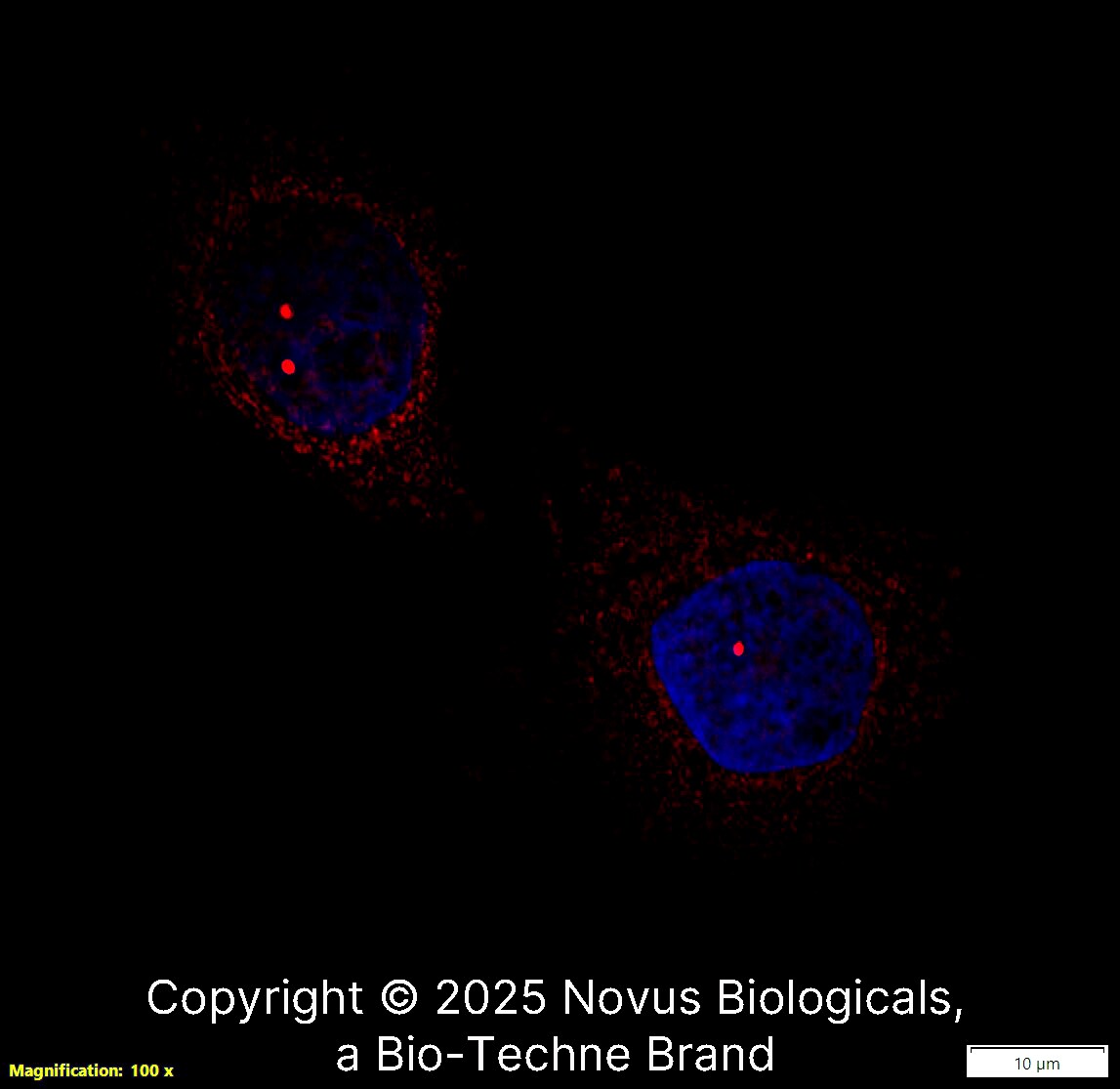
SMN (2B1) in A431 Human Cell Line.
SMN (2B1) was detected in immersion fixed A431 human skin carcinoma cell line using Mouse anti-SMN (2B1) Protein G Purified Monoclonal Antibody conjugated to Biotin (Catalog # NB100-1936B) at 5 µg/mL overnight at 4C. Cells were stained using Streptavidin conjugated to DyLight 550 (red) and counterstained with DAPI (blue). Cells were imaged using a 100X objective and digitally deconvolved.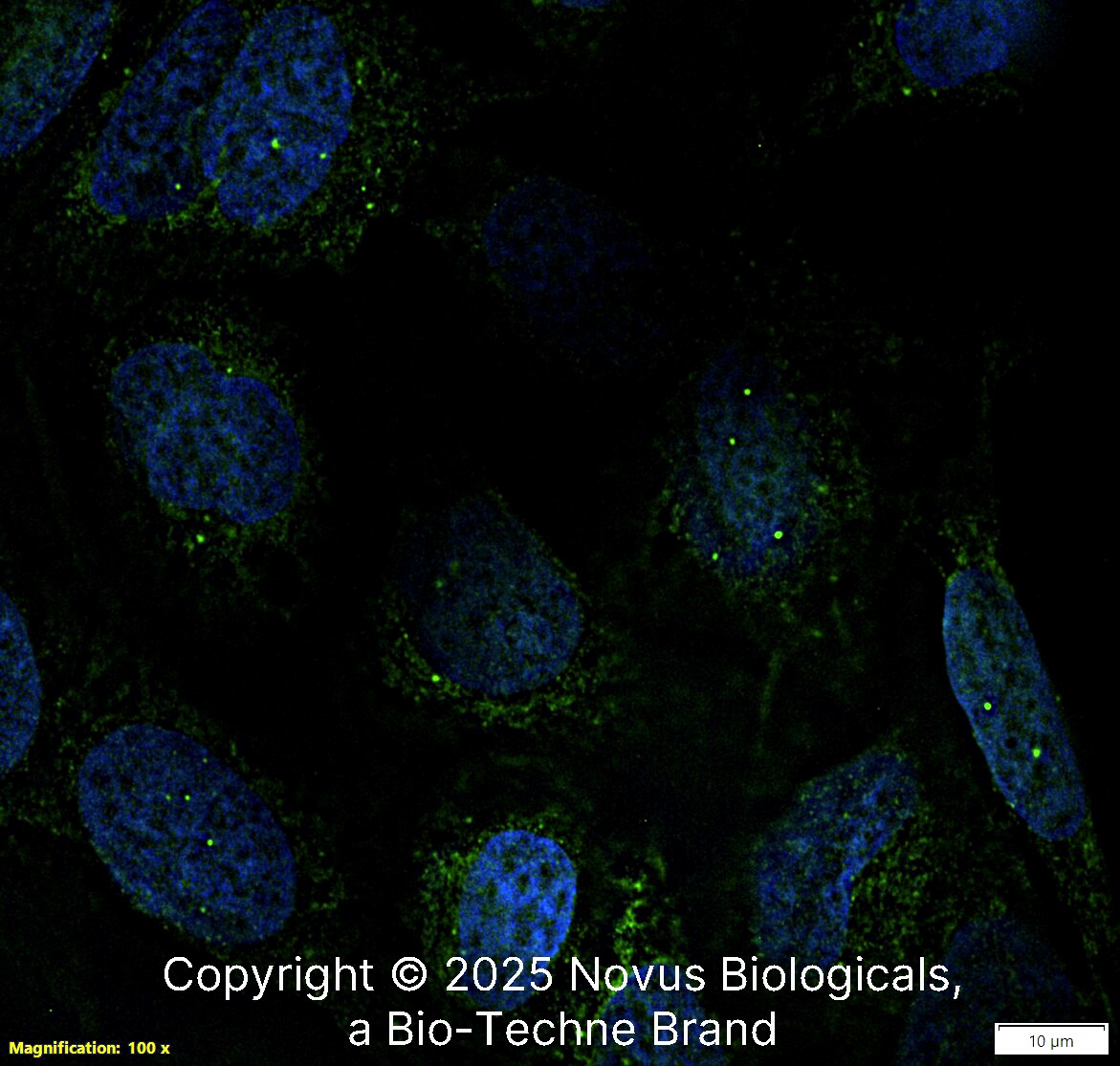
SMN (2B1) in U-2 OS Human Cell Line.
SMN (2B1) was detected in immersion fixed U-2 OS human osteosarcoma cell line using Mouse anti-SMN (2B1) Protein G Purified Monoclonal Antibody conjugated to DyLight 488 (Catalog # NB100-1936G) (green) at 5 µg/mL overnight at 4C. Cells were counterstained with DAPI (blue). Cells were imaged using a 100X objective and digitally deconvolved.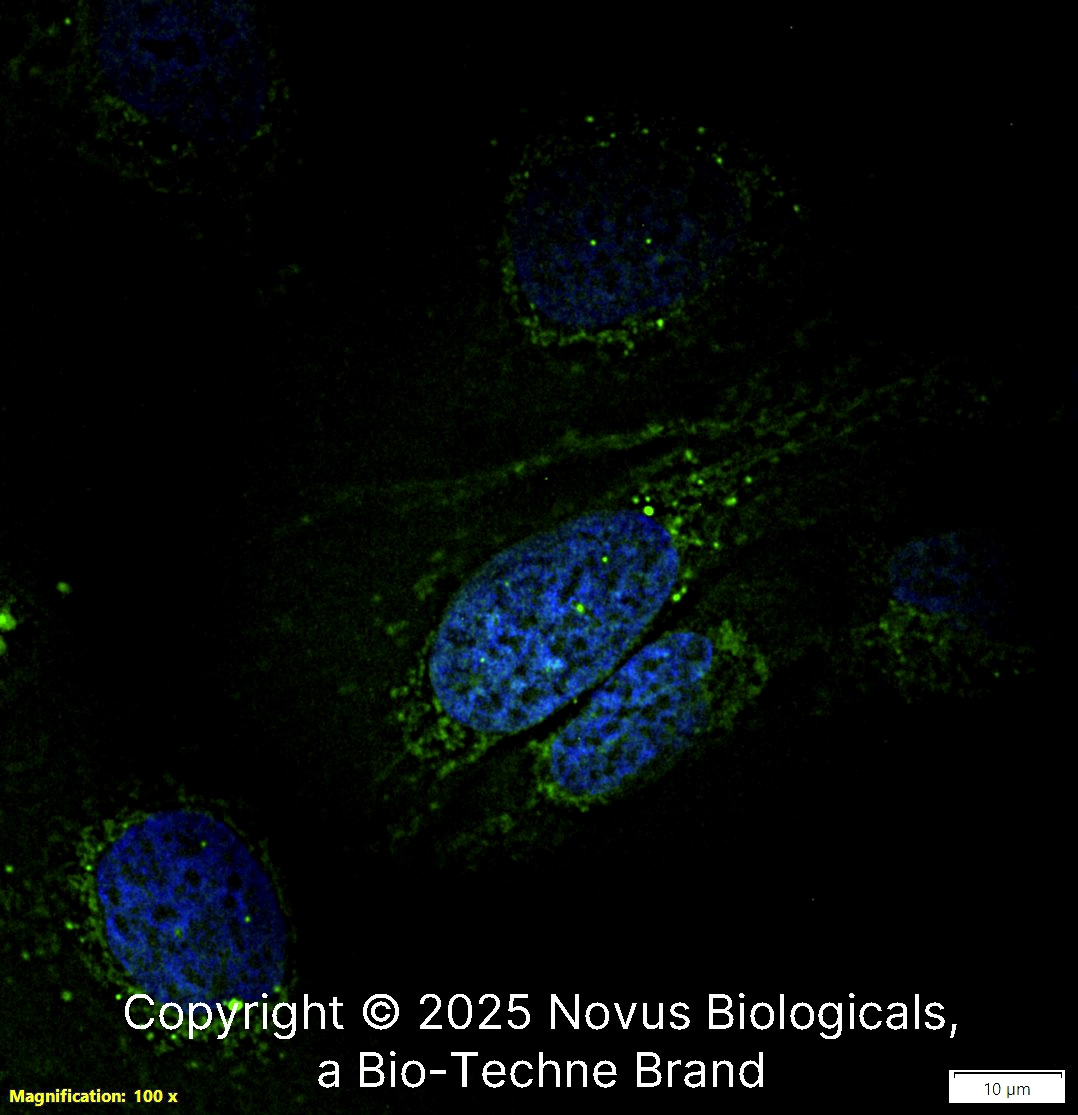
SMN (2B1) in U-2 OS Human Cell Line.
SMN (2B1) was detected in immersion fixed U-2 OS human osteosarcoma cell line using Mouse anti-SMN (2B1) Protein G Purified Monoclonal Antibody conjugated to FITC (Catalog # NB100-1936F) (green) at 5 µg/mL overnight at 4C. Cells were counterstained with DAPI (blue). Cells were imaged using a 100X objective and digitally deconvolved.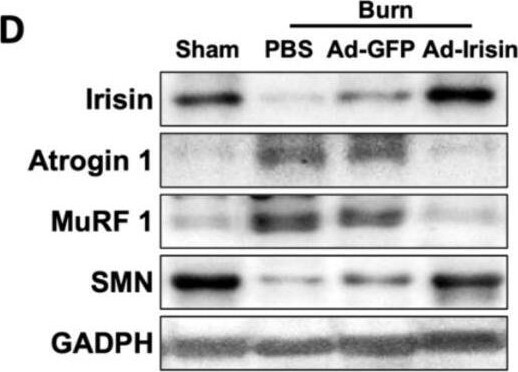
Western Blot: SMN Antibody (2B1) - BSA Free [NB100-1936] -
Spinal irisin gene delivery attenuated burn injury-induced atrophy markers and reduced irisin and SMN expression in ipsilateral gastrocnemius muscle. (A) Immunofluorescence staining of atrogin-1 and MuRF in ipsilateral gastrocnemius muscle in the fourth week after burn injury. DAPI counterstain was used to locate the nucleus. (B,C) Representative bar graphs illustrating averaged optical intensity of atrogin-1 and MuRF. Error bars represent standard deviations (SDs). ** p < 0.01, *** p < 0.001, unpaired t-test. (D) Immunoblot of ipsilateral gastrocnemius muscle tissue in the fourth week after burn injury. (E–H) Representative bar graphs illustrating normalized expression ratio of irisin, atrogin-1, MuRF, and SMN, with GAPDH as an internal control. Error bars represent SDs. * p < 0.05, ** p < 0.01, unpaired t-test. Image collected and cropped by CiteAb from the following open publication (https://pubmed.ncbi.nlm.nih.gov/36555538), licensed under a CC-BY license. Not internally tested by Novus Biologicals.Applications for SMN Antibody (2B1) - BSA Free
ELISA
Flow Cytometry
Immunocytochemistry/ Immunofluorescence
Immunohistochemistry-Paraffin
Immunoprecipitation
Western Blot
Flow Cytometry Panel Builder
Bio-Techne Knows Flow Cytometry
Save time and reduce costly mistakes by quickly finding compatible reagents using the Panel Builder Tool.
Advanced Features
- Spectra Viewer - Custom analysis of spectra from multiple fluorochromes
- Spillover Popups - Visualize the spectra of individual fluorochromes
- Antigen Density Selector - Match fluorochrome brightness with antigen density

Formulation, Preparation, and Storage
Purification
Formulation
Format
Preservative
Concentration
Shipping
Stability & Storage
Background: SMN
Alternate Names
Gene Symbol
UniProt
Additional SMN Products
Product Documents for SMN Antibody (2B1) - BSA Free
Certificate of Analysis
To download a Certificate of Analysis, please enter a lot or batch number in the search box below.
Product Specific Notices for SMN Antibody (2B1) - BSA Free
This product is for research use only and is not approved for use in humans or in clinical diagnosis. Primary Antibodies are guaranteed for 1 year from date of receipt.
Citations for SMN Antibody (2B1) - BSA Free
 Powered by Bioz
Customer Reviews for SMN Antibody (2B1) - BSA Free
There are currently no reviews for this product. Be the first to review SMN Antibody (2B1) - BSA Free and earn rewards!
Have you used SMN Antibody (2B1) - BSA Free?
Submit a review and receive an Amazon gift card!
$25/€18/£15/$25CAN/¥2500 for a review with an image
$10/€7/£6/$10CAN/¥1110 for a review without an image
Submit a review
Protocols
Find general support by application which include: protocols, troubleshooting, illustrated assays, videos and webinars.
- 7-Amino Actinomycin D (7-AAD) Cell Viability Flow Cytometry Protocol
- Antigen Retrieval Protocol (PIER)
- Antigen Retrieval for Frozen Sections Protocol
- Appropriate Fixation of IHC/ICC Samples
- Cellular Response to Hypoxia Protocols
- Chromogenic IHC Staining of Formalin-Fixed Paraffin-Embedded (FFPE) Tissue Protocol
- Chromogenic Immunohistochemistry Staining of Frozen Tissue
- ClariTSA™ Fluorophore Kits
- Detection & Visualization of Antibody Binding
- ELISA Sample Preparation & Collection Guide
- ELISA Troubleshooting Guide
- Extracellular Membrane Flow Cytometry Protocol
- Flow Cytometry Protocol for Cell Surface Markers
- Flow Cytometry Protocol for Staining Membrane Associated Proteins
- Flow Cytometry Staining Protocols
- Flow Cytometry Troubleshooting Guide
- Fluorescent IHC Staining of Frozen Tissue Protocol
- Graphic Protocol for Heat-induced Epitope Retrieval
- Graphic Protocol for the Preparation and Fluorescent IHC Staining of Frozen Tissue Sections
- Graphic Protocol for the Preparation and Fluorescent IHC Staining of Paraffin-embedded Tissue Sections
- Graphic Protocol for the Preparation of Gelatin-coated Slides for Histological Tissue Sections
- How to Run an R&D Systems DuoSet ELISA
- How to Run an R&D Systems Quantikine ELISA
- How to Run an R&D Systems Quantikine™ QuicKit™ ELISA
- ICC Cell Smear Protocol for Suspension Cells
- ICC Immunocytochemistry Protocol Videos
- ICC for Adherent Cells
- IHC Sample Preparation (Frozen sections vs Paraffin)
- Immunocytochemistry (ICC) Protocol
- Immunocytochemistry Troubleshooting
- Immunofluorescence of Organoids Embedded in Cultrex Basement Membrane Extract
- Immunofluorescent IHC Staining of Formalin-Fixed Paraffin-Embedded (FFPE) Tissue Protocol
- Immunohistochemistry (IHC) and Immunocytochemistry (ICC) Protocols
- Immunohistochemistry Frozen Troubleshooting
- Immunohistochemistry Paraffin Troubleshooting
- Immunoprecipitation Protocol
- Intracellular Flow Cytometry Protocol Using Alcohol (Methanol)
- Intracellular Flow Cytometry Protocol Using Detergents
- Intracellular Nuclear Staining Flow Cytometry Protocol Using Detergents
- Intracellular Staining Flow Cytometry Protocol Using Alcohol Permeabilization
- Intracellular Staining Flow Cytometry Protocol Using Detergents to Permeabilize Cells
- Preparing Samples for IHC/ICC Experiments
- Preventing Non-Specific Staining (Non-Specific Binding)
- Primary Antibody Selection & Optimization
- Propidium Iodide Cell Viability Flow Cytometry Protocol
- Protocol for Heat-Induced Epitope Retrieval (HIER)
- Protocol for Liperfluo
- Protocol for Making a 4% Formaldehyde Solution in PBS
- Protocol for VisUCyte™ HRP Polymer Detection Reagent
- Protocol for the Characterization of Human Th22 Cells
- Protocol for the Characterization of Human Th9 Cells
- Protocol for the Fluorescent ICC Staining of Cell Smears - Graphic
- Protocol for the Fluorescent ICC Staining of Cultured Cells on Coverslips - Graphic
- Protocol for the Preparation & Fixation of Cells on Coverslips
- Protocol for the Preparation and Chromogenic IHC Staining of Frozen Tissue Sections
- Protocol for the Preparation and Chromogenic IHC Staining of Frozen Tissue Sections - Graphic
- Protocol for the Preparation and Chromogenic IHC Staining of Paraffin-embedded Tissue Sections
- Protocol for the Preparation and Chromogenic IHC Staining of Paraffin-embedded Tissue Sections - Graphic
- Protocol for the Preparation and Fluorescent ICC Staining of Cells on Coverslips
- Protocol for the Preparation and Fluorescent ICC Staining of Non-adherent Cells
- Protocol for the Preparation and Fluorescent ICC Staining of Stem Cells on Coverslips
- Protocol for the Preparation and Fluorescent IHC Staining of Frozen Tissue Sections
- Protocol for the Preparation and Fluorescent IHC Staining of Paraffin-embedded Tissue Sections
- Protocol for the Preparation of Gelatin-coated Slides for Histological Tissue Sections
- Protocol for the Preparation of a Cell Smear for Non-adherent Cell ICC - Graphic
- Protocol: Annexin V and PI Staining by Flow Cytometry
- Protocol: Annexin V and PI Staining for Apoptosis by Flow Cytometry
- Quantikine HS ELISA Kit Assay Principle, Alkaline Phosphatase
- Quantikine HS ELISA Kit Principle, Streptavidin-HRP Polymer
- R&D Systems Quality Control Western Blot Protocol
- Sandwich ELISA (Colorimetric) – Biotin/Streptavidin Detection Protocol
- Sandwich ELISA (Colorimetric) – Direct Detection Protocol
- TUNEL and Active Caspase-3 Detection by IHC/ICC Protocol
- The Importance of IHC/ICC Controls
- Troubleshooting Guide: ELISA
- Troubleshooting Guide: Fluorokine Flow Cytometry Kits
- Troubleshooting Guide: Immunohistochemistry
- Troubleshooting Guide: Western Blot Figures
- Western Blot Conditions
- Western Blot Protocol
- Western Blot Protocol for Cell Lysates
- Western Blot Troubleshooting
- Western Blot Troubleshooting Guide
- View all Protocols, Troubleshooting, Illustrated assays and Webinars
FAQs for SMN Antibody (2B1) - BSA Free
-
Q: Could you recommond the Human specific SMN antibody? It will only recognize human SMN, without cross reaction with mouse smn.
A: We do not have an SMN antibody that has been validated NOT to work in mouse samples. When an antibody is found to not react with a certain species, we mark the data sheet with a (-) next to the species' name. Unfortunately, the SMN antibodies that do not list mouse have not been tested in mouse, and may react.