
Survivin Antibody [HRP]
Novus Biologicals | Catalog # NB500-201H

Scientific images may be resized, cropped, or adjusted for brightness or contrast for presentation purposes. These updates are limited to presentation and do not affect the underlying scientific interpretation of the data. Where available, additional source data may be provided upon request.
Key Product Details
Species Reactivity
Validated:
Human, Mouse, Rat, Canine, Feline, Guinea Pig, Hamster
Cited:
Human
Applications
Validated:
Immunohistochemistry, Immunohistochemistry-Paraffin, Immunohistochemistry-Frozen, Western Blot, ELISA, Flow Cytometry, Dual RNAscope ISH-IHC, Immunocytochemistry/ Immunofluorescence, Immunoprecipitation, Chromatin Immunoprecipitation (ChIP), Knockdown Validated
Cited:
Western Blot
Label
HRP
Antibody Source
Polyclonal Rabbit IgG
Loading...
Product Specifications
Immunogen
This Survivin Antibody was developed against full length recombinant human Survivin [UniProt# O15392]
Reactivity Notes
Hamster reactivity reported in scientific literature (PMID: 23405201). Guinea Pig reactivity reported in scientific literature (PMID: 21364656).
Localization
Nuclear
Clonality
Polyclonal
Host
Rabbit
Isotype
IgG
Theoretical MW
16 kDa.
Disclaimer note: The observed molecular weight of the protein may vary from the listed predicted molecular weight due to post translational modifications, post translation cleavages, relative charges, and other experimental factors.
Disclaimer note: The observed molecular weight of the protein may vary from the listed predicted molecular weight due to post translational modifications, post translation cleavages, relative charges, and other experimental factors.
Description
This conjugate is made on demand and is not held in inventory. Each order represents a unique lot. All conjugates are generated using validated conjugation protocols and meet strict degree of labeling (F/P) specifications; additional information is available upon request. The antibody concentration is provided on the individual product label.
For specialized conjugation needs, like large quantities, specific concentrations, and defined F/P ratios, bulk and custom antibody conjugation services are available.
For specialized conjugation needs, like large quantities, specific concentrations, and defined F/P ratios, bulk and custom antibody conjugation services are available.
Scientific Data Images for Survivin Antibody [HRP]
Survivin-Antibody-[HRP]-Western-Blot-NB500-201H-img0001.jpg
Survivin-Antibody-[HRP]-Western-Blot-NB500-201H-img0002.jpg
![Survivin Antibody [HRP]](https://resources.rndsystems.com/images/products/nb500-201h_rabbit-polyclonal-survivin-antibody-hrp-310202416175232.jpg "Western Blot: Survivin Antibody [HRP] [NB500-201H] -")
Western Blot: Survivin Antibody [HRP] [NB500-201H] -
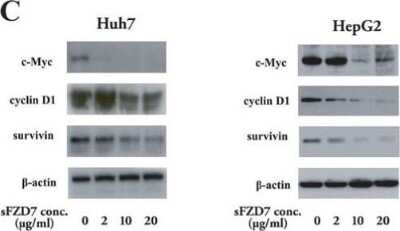
Western Blot: Survivin Antibody [HRP] [NB500-201H] - sFZD7 inhibits Wnt/ beta -catenin signaling & suppresses the expression of downstream oncoproteins. (A). sFZD7 decreased nuclear beta -catenin accumulation but did not decrease cytoplasmic beta -catenin in Huh7 & HepG2 cells. Histone-H3 & beta -actin were used as loading controls for nuclear & cytoplasmic proteins, respectively. (B). Tcf4 reporter assay of Tcf4-dependent transcriptional activity in Huh7 & HepG2 cells. Cells were co-transfected with plasmid encoding beta -gal (a control for transfection efficiency) & either the pTOPFLASH or pFOPFLASH reporters. Cells were incubated with control PBS or sFZD7 at various concentrations & harvested after 48 h to measure luciferase & beta -gal activities. Reporter gene activation is expressed as relative light units (RLU) detected in pTOPFLASH or pFOPFLASH transfected cells & normalized for beta -galactosidase activity. The results are expressed as mean ± SD (error bars). Experiments were performed in triplicates (Independent t-test, *P < 0.05.) (C). The effect of sFZD7 on the expression of beta -catenin/Tcf4 target genes c-Myc, cyclin D1, & survivin. Huh7 & HepG2 cells were incubated for 48 h with sFZD7 at various concentrations & c-Myc, cyclin D1, survivin, & beta -actin (loading control) levels were determined by Western blotting using specific antibodies. Image collected & cropped by CiteAb from the following publication (https://molecular-cancer.biomedcentral.com/articles/10.1186/1476-4598-1…), licensed under a CC-BY license. Not internally tested by Novus Biologicals.![Survivin Antibody [HRP]](https://resources.rndsystems.com/images/products/nb500-201h_rabbit-polyclonal-survivin-antibody-hrp-31020241618920.jpg "Western Blot: Survivin Antibody [HRP] [NB500-201H] -")
Western Blot: Survivin Antibody [HRP] [NB500-201H] -
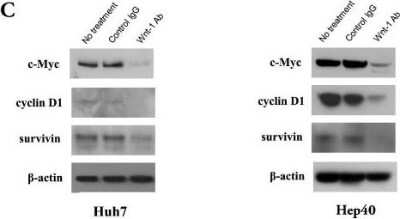
Western Blot: Survivin Antibody [HRP] [NB500-201H] - sFZD7 sensitizes HCC cells to the anti-proliferative effect of doxorubicin in vivo. (A). Combination of sFZD7 & Doxil enhanced xenograft growth inhibition in vivo. Mice bearing Huh7-tumor xenografts were intratumorally injected weekly with PBS control; sFZD7 only (12.5 mg/kg); Doxil only (2.5 mg/kg); or sFZD7 (12.5 mg/kg) combined with Doxil (2.5 mg/kg) (n=5 in each treatment group). Tumor size was measured with digital calipers every three days. Significant differences in the tumor volumes between all treatment groups & the PBS control were observed after 14 days of treatment (*P < 0.05). Additionally, the sFZD7 plus Doxil combination group showed significant differences in tumor volumes compared with sFZD7 only or Doxil only groups after 17 days of treatment (*P < 0.05). (B). TUNEL staining of xenograft specimens removed from PBS control & all treatment groups (200 × magnification). Red arrows indicate some positively stained, apoptotic cells. (C). Representative cyclin D1 immunostaining of xenograft specimens removed from PBS control & all treatment groups are shown (200 × magnification). (D). Protein levels of c-Myc, cyclin D1, survivin, & beta -actin (loading control) in tumor xenografts from two mice in each group were determined by Western blotting using specific antibodies. (E). The expression levels of c-Myc, cyclin D1, survivin were determined by analyzing Western blots with the ImageJ software, & normalizing their signal intensities to beta -actin. Image collected & cropped by CiteAb from the following publication (https://molecular-cancer.biomedcentral.com/articles/10.1186/1476-4598-1…), licensed under a CC-BY license. Not internally tested by Novus Biologicals.Applications for Survivin Antibody [HRP]
Application
Recommended Usage
Chromatin Immunoprecipitation (ChIP)
Optimal dilutions of this antibody should be experimentally determined.
Dual RNAscope ISH-IHC
Optimal dilutions of this antibody should be experimentally determined.
ELISA
Optimal dilutions of this antibody should be experimentally determined.
Flow Cytometry
Optimal dilutions of this antibody should be experimentally determined.
Immunocytochemistry/ Immunofluorescence
Optimal dilutions of this antibody should be experimentally determined.
Immunohistochemistry
Optimal dilutions of this antibody should be experimentally determined.
Immunohistochemistry-Frozen
Optimal dilutions of this antibody should be experimentally determined.
Immunohistochemistry-Paraffin
Optimal dilutions of this antibody should be experimentally determined.
Immunoprecipitation
Optimal dilutions of this antibody should be experimentally determined.
Knockdown Validated
Optimal dilutions of this antibody should be experimentally determined.
Western Blot
Optimal dilutions of this antibody should be experimentally determined.
Application Notes
This Survivin antibody is useful for Chromatin Immunoprecipitation, Immunocytochemistry/Immunofluorescence, Immunohistochemistry on paraffin-embedded sections, Immunoprecipitation and Western Blot. In WB, a band at ~16.5 kDa can be seen. For IHC, prior antigen retrieval (pressure cooking) is recommended for cytoplasmic and nuclear detection of Survivin. Immunohistochemistry-Frozen and Flow Cytometry were reported in scientific literature. The observed molecular weight of the protein may vary from the listed predicted molecular weight due to post translational modifications, post translation cleavages, relative charges, and other experimental factors.
Recommended applications are based on validated applications from the unconjugated base product NB500-201. This conjugated antibody is not kept in inventory and is made to order using validated conjugation protocols.
Recommended applications are based on validated applications from the unconjugated base product NB500-201. This conjugated antibody is not kept in inventory and is made to order using validated conjugation protocols.
Reviewed Applications
Read 1 review rated 5 using NB500-201H in the following applications:
Spectra Viewer
Plan Your Experiments
Use our spectra viewer to interactively plan your experiments, assessing multiplexing options. View the excitation and emission spectra for our fluorescent dye range and other commonly used dyes.
Spectra Viewer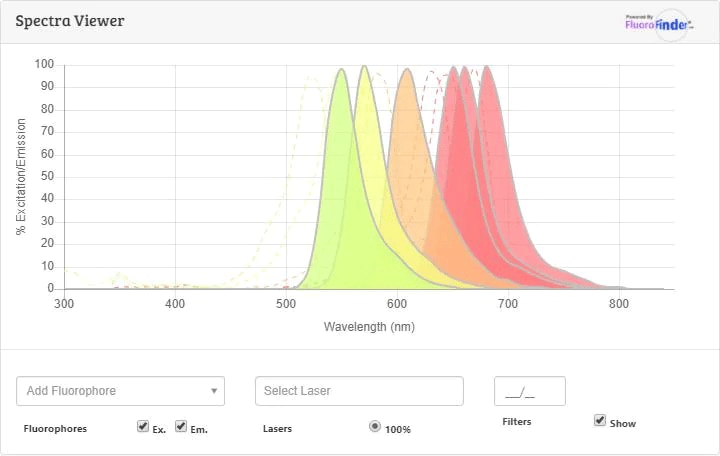
Flow Cytometry Panel Builder
Bio-Techne Knows Flow Cytometry
Save time and reduce costly mistakes by quickly finding compatible reagents using the Panel Builder Tool.
Advanced Features
- Spectra Viewer - Custom analysis of spectra from multiple fluorochromes
- Spillover Popups - Visualize the spectra of individual fluorochromes
- Antigen Density Selector - Match fluorochrome brightness with antigen density

Formulation, Preparation, and Storage
Purification
Immunogen affinity purified
Formulation
PBS
Preservative
No Preservative
Concentration
Please see the vial label for concentration. If unlisted please contact technical services.
Shipping
The product is shipped with polar packs. Upon receipt, store it immediately at the temperature recommended below.
Stability & Storage
Store at 4C in the dark.
Background: Survivin
Besides being highly abundant in fetal development and expressed in proliferating adult cells such as activated T lymphocytes, erythroblasts, and self-renewing stem cells, survivin is generally absent in adult tissues. However, it is elevated in common cancers such as lung, colon, pancreas, breast and prostate where it drives proliferation, metastasis, poor prognosis, and decreased patient survival (2).
Survivin has been shown to be involved in multiple cellular processes including cell cycle progression, mitotic spindle assembly, kinetochore attachment, angiogenesis, migration, and its anti-apoptotic activity has been linked to both its monomeric and homodimeric forms. Survivin impacts the function of other IAP members, c-IAP1 and c-IAP-2, or modulates the inhibitory activity of XIAP against caspases by forming a stable complex with XIAP and HBXIP. During the intrinsic apoptotic pathway, survivin may prevent the release of mitochondrial APAF1 into the cytoplasm or hinder the association of SMAC with other IAPS, which results in prolonged cell survival (3).
References
1. Sah NK, Seniya C. (2015) Survivin splice variants and their diagnostic significance. Tumour Biol. 36(9):6623-31. PMID: 26245993
2. Lladser A, Sanhueza C, Kiessling R, Quest AF. (2011) Is survivin the potential Achilles' heel of cancer? Adv Cancer Res. 111:1-37. PMID: 21704829
3. Wheatley SP, Altieri DC. (2019) Survivin at a glance. J Cell Sci. 132(7). PMID: 30948431
Alternate Names
API4, BIRC5
Gene Symbol
BIRC5
Additional Survivin Products
Product Documents for Survivin Antibody [HRP]
Certificate of Analysis
To download a Certificate of Analysis, please enter a lot or batch number in the search box below.
Product Specific Notices for Survivin Antibody [HRP]
This product is for research use only and is not approved for use in humans or in clinical diagnosis. Primary Antibodies are guaranteed for 1 year from date of receipt.
Related Research Areas
Citations for Survivin Antibody [HRP]
 Powered by Bioz
Customer Reviews for Survivin Antibody [HRP] (1)
5 out of 5
1 Customer Rating
Have you used Survivin Antibody [HRP]?
Submit a review and receive an Amazon gift card!
$25/€18/£15/$25CAN/¥2500 for a review with an image
$10/€7/£6/$10CAN/¥1110 for a review without an image
Submit a review
Customer Images
![Survivin Antibody [HRP] NB500-201H](https://resources.rndsystems.com/images/reviews/Immunohistochemistry_Survivin-Antibody-[HRP]---Astrocyte-Marker_NB500-201H_11781.JPG)
Showing
1
-
1 of
1 review
Showing All
Filter By:
-
Application: ImmunohistochemistryVerified Customer | Posted 11/07/2014Survivin in BIRC5 transfected 293 cells
![Survivin Antibody [HRP] NB500-201H](data:image/png;base64,R0lGODlhAQABAAD/ACwAAAAAAQABAAACADs=)
There are no reviews that match your criteria.
Protocols
Find general support by application which include: protocols, troubleshooting, illustrated assays, videos and webinars.
- 7-Amino Actinomycin D (7-AAD) Cell Viability Flow Cytometry Protocol
- Antigen Retrieval Protocol (PIER)
- Antigen Retrieval for Frozen Sections Protocol
- Appropriate Fixation of IHC/ICC Samples
- Cellular Response to Hypoxia Protocols
- ChIP Protocol Video
- Chromatin Immunoprecipitation (ChIP) Protocol
- Chromatin Immunoprecipitation Protocol
- Chromogenic IHC Staining of Formalin-Fixed Paraffin-Embedded (FFPE) Tissue Protocol
- Chromogenic Immunohistochemistry Staining of Frozen Tissue
- ClariTSA™ Fluorophore Kits
- Detection & Visualization of Antibody Binding
- ELISA Sample Preparation & Collection Guide
- ELISA Troubleshooting Guide
- Extracellular Membrane Flow Cytometry Protocol
- Flow Cytometry Protocol for Cell Surface Markers
- Flow Cytometry Protocol for Staining Membrane Associated Proteins
- Flow Cytometry Staining Protocols
- Flow Cytometry Troubleshooting Guide
- Fluorescent IHC Staining of Frozen Tissue Protocol
- Graphic Protocol for Heat-induced Epitope Retrieval
- Graphic Protocol for the Preparation and Fluorescent IHC Staining of Frozen Tissue Sections
- Graphic Protocol for the Preparation and Fluorescent IHC Staining of Paraffin-embedded Tissue Sections
- Graphic Protocol for the Preparation of Gelatin-coated Slides for Histological Tissue Sections
- How to Run an R&D Systems DuoSet ELISA
- How to Run an R&D Systems Quantikine ELISA
- How to Run an R&D Systems Quantikine™ QuicKit™ ELISA
- ICC Cell Smear Protocol for Suspension Cells
- ICC Immunocytochemistry Protocol Videos
- ICC for Adherent Cells
- IHC Sample Preparation (Frozen sections vs Paraffin)
- ISH-IHC Protocol for Chromogenic Detection on Formalin Fixed Paraffin Embedded (FFPE) Tissue
- Immunocytochemistry (ICC) Protocol
- Immunocytochemistry Troubleshooting
- Immunofluorescence of Organoids Embedded in Cultrex Basement Membrane Extract
- Immunofluorescent IHC Staining of Formalin-Fixed Paraffin-Embedded (FFPE) Tissue Protocol
- Immunohistochemistry (IHC) and Immunocytochemistry (ICC) Protocols
- Immunohistochemistry Frozen Troubleshooting
- Immunohistochemistry Paraffin Troubleshooting
- Immunoprecipitation Protocol
- Intracellular Flow Cytometry Protocol Using Alcohol (Methanol)
- Intracellular Flow Cytometry Protocol Using Detergents
- Intracellular Nuclear Staining Flow Cytometry Protocol Using Detergents
- Intracellular Staining Flow Cytometry Protocol Using Alcohol Permeabilization
- Intracellular Staining Flow Cytometry Protocol Using Detergents to Permeabilize Cells
- Preparing Samples for IHC/ICC Experiments
- Preventing Non-Specific Staining (Non-Specific Binding)
- Primary Antibody Selection & Optimization
- Propidium Iodide Cell Viability Flow Cytometry Protocol
- Protocol for Heat-Induced Epitope Retrieval (HIER)
- Protocol for Liperfluo
- Protocol for Making a 4% Formaldehyde Solution in PBS
- Protocol for VisUCyte™ HRP Polymer Detection Reagent
- Protocol for the Characterization of Human Th22 Cells
- Protocol for the Characterization of Human Th9 Cells
- Protocol for the Fluorescent ICC Staining of Cell Smears - Graphic
- Protocol for the Fluorescent ICC Staining of Cultured Cells on Coverslips - Graphic
- Protocol for the Preparation & Fixation of Cells on Coverslips
- Protocol for the Preparation and Chromogenic IHC Staining of Frozen Tissue Sections
- Protocol for the Preparation and Chromogenic IHC Staining of Frozen Tissue Sections - Graphic
- Protocol for the Preparation and Chromogenic IHC Staining of Paraffin-embedded Tissue Sections
- Protocol for the Preparation and Chromogenic IHC Staining of Paraffin-embedded Tissue Sections - Graphic
- Protocol for the Preparation and Fluorescent ICC Staining of Cells on Coverslips
- Protocol for the Preparation and Fluorescent ICC Staining of Non-adherent Cells
- Protocol for the Preparation and Fluorescent ICC Staining of Stem Cells on Coverslips
- Protocol for the Preparation and Fluorescent IHC Staining of Frozen Tissue Sections
- Protocol for the Preparation and Fluorescent IHC Staining of Paraffin-embedded Tissue Sections
- Protocol for the Preparation of Gelatin-coated Slides for Histological Tissue Sections
- Protocol for the Preparation of a Cell Smear for Non-adherent Cell ICC - Graphic
- Protocol: Annexin V and PI Staining by Flow Cytometry
- Protocol: Annexin V and PI Staining for Apoptosis by Flow Cytometry
- Quantikine HS ELISA Kit Assay Principle, Alkaline Phosphatase
- Quantikine HS ELISA Kit Principle, Streptavidin-HRP Polymer
- R&D Systems Quality Control Western Blot Protocol
- Sandwich ELISA (Colorimetric) – Biotin/Streptavidin Detection Protocol
- Sandwich ELISA (Colorimetric) – Direct Detection Protocol
- TUNEL and Active Caspase-3 Detection by IHC/ICC Protocol
- The Importance of IHC/ICC Controls
- Troubleshooting Guide: ELISA
- Troubleshooting Guide: Fluorokine Flow Cytometry Kits
- Troubleshooting Guide: Immunohistochemistry
- Troubleshooting Guide: Western Blot Figures
- Western Blot Conditions
- Western Blot Protocol
- Western Blot Protocol for Cell Lysates
- Western Blot Troubleshooting
- Western Blot Troubleshooting Guide
- View all Protocols, Troubleshooting, Illustrated assays and Webinars
FAQs for Survivin Antibody [HRP]
Showing
1
-
1 of
1 FAQ
Showing All
-
Q: Can I use this antibody with species other than those listed?
A: The species we have listed are validated and therefore have a 100% guarantee to work with this antibody. We cannot guarantee that this will work with other species.
Loading...
Associated Pathways
