CD45 Antibody - BSA Free
Novus Biologicals | Catalog # NBP2-15811

![Flow Cytometry: CD45 Antibody [NBP2-15811]](https://resources.rndsystems.com/images/products/CD45-Antibody-Flow-Cytometry-NBP2-15811-img0006.jpg "Flow Cytometry: CD45 Antibody [NBP2-15811]")
Scientific images may be resized, cropped, or adjusted for brightness or contrast for presentation purposes. These updates are limited to presentation and do not affect the underlying scientific interpretation of the data. Where available, additional source data may be provided upon request.
Loading...
Key Product Details
Species Reactivity
Validated:
Human, Mouse, Rat, Rabbit
Cited:
Equine
Applications
Validated:
Immunohistochemistry, Immunohistochemistry-Paraffin, Immunohistochemistry-Frozen, Western Blot, Flow Cytometry, Immunocytochemistry/ Immunofluorescence
Cited:
Flow Cytometry
Label
Unconjugated
Antibody Source
Polyclonal Rabbit IgG
Format
BSA Free
Loading...
Product Specifications
Immunogen
Carrier-protein conjugated synthetic peptide encompassing a sequence within the C-terminus region of human CD45. The exact sequence is proprietary.
Reactivity Notes
CD45 Antibody shows reactivity with Equine as reported in (PMID: 30297648). Immunogen displays the following percentage of sequence identity for non-tested species: Bovine (>80%).
Clonality
Polyclonal
Host
Rabbit
Isotype
IgG
Theoretical MW
147 kDa.
Disclaimer note: The observed molecular weight of the protein may vary from the listed predicted molecular weight due to post translational modifications, post translation cleavages, relative charges, and other experimental factors.
Disclaimer note: The observed molecular weight of the protein may vary from the listed predicted molecular weight due to post translational modifications, post translation cleavages, relative charges, and other experimental factors.
Scientific Data Images for CD45 Antibody - BSA Free
Flow Cytometry: CD45 Antibody [NBP2-15811]
Flow Cytometry: CD45 Antibody [NBP2-15811] - THP-1 cell. Black: Unlabelled sample was used as a control. Red: CD45 antibody [NBP2-15811], dilution: 1:50.![Flow Cytometry: CD45 Antibody [NBP2-15811]](https://resources.rndsystems.com/images/products/CD45-Antibody-Flow-Cytometry-NBP2-15811-img0005.jpg "Flow Cytometry: CD45 Antibody [NBP2-15811]")
Flow Cytometry: CD45 Antibody [NBP2-15811]
Flow Cytometry: CD45 Antibody [NBP2-15811] - Mouse splenocytes cell fixed in 4% paraformaldehyde at 4 C for 15 min. Black: Unlabelled sample was used as a control. Red: CD45 antibody [NBP2-15811], dilution: 1:50. Acquisition of 20,000 events were collected using a Dylight 488- Conjugated secondary antibody for FACS analysis.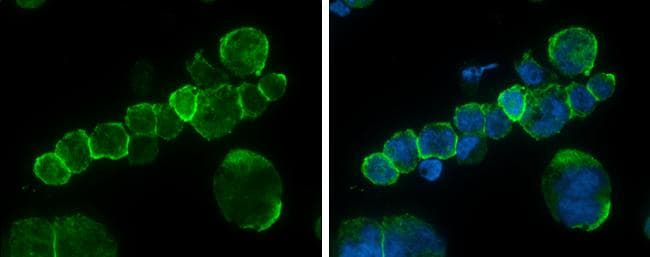
Immunocytochemistry/ Immunofluorescence: CD45 Antibody [NBP2-15811] -
CD45 antibody detects CD45 protein at cell membrane by immunofluorescent analysis.Sample: THP-1 cells were fixed in 4% paraformaldehyde at RT for 15 min.
Green: CD45 protein stained by CD45 antibody (NBP2-15811) diluted at 1:500.
Blue: Hoechst 33342 staining.
Applications for CD45 Antibody - BSA Free
Application
Recommended Usage
Flow Cytometry
1:50-1:200
Immunocytochemistry/ Immunofluorescence
1:100-1:1000
Immunohistochemistry
Assay dependent
Immunohistochemistry-Frozen
Assay dependent
Immunohistochemistry-Paraffin
Assay dependent
Western Blot
1:500-1:3000
Flow Cytometry Panel Builder
Bio-Techne Knows Flow Cytometry
Save time and reduce costly mistakes by quickly finding compatible reagents using the Panel Builder Tool.
Advanced Features
- Spectra Viewer - Custom analysis of spectra from multiple fluorochromes
- Spillover Popups - Visualize the spectra of individual fluorochromes
- Antigen Density Selector - Match fluorochrome brightness with antigen density

Formulation, Preparation, and Storage
Purification
Antigen Affinity-purified
Formulation
PBS, 20% Glycerol
Format
BSA Free
Preservative
0.025% Proclin 300
Concentration
Concentrations vary lot to lot. See vial label for concentration. If unlisted please contact technical services.
Shipping
The product is shipped with polar packs. Upon receipt, store it immediately at the temperature recommended below.
Stability & Storage
Aliquot and store at -20C or -80C. Avoid freeze-thaw cycles.
Background: CD45
Given its role in immune cell development and activation, CD45 has also been linked to a variety of diseases. The importance of CD45 in immunity has been revealed in human and mouse studies where CD45-deficiency leads to a severe-combined immunodeficiency (SCID) phenotype (2, 3, 6). A CD45-knockout mice study revealed inhibited thymocyte production and poor B-cell response, whereas CD45 activation in mice causes lymphoproliferation and autoantibody production (3). CD45 variants have been associated with altered immune function and autoimmune disorders including multiple sclerosis, systemic lupus erythematosus (SLE), and rheumatoid arthritis (6). Furthermore, altered CD45 expression has been implicated in oncological conditions including chronic lymphatic leukemia, acute lymphatic leukemia, Hodgkin lymphoma, multiple myeloma, and diffuse large B-cell lymphoma (6). Considering its role in autoimmune disorders, immunodeficiency and cancer, CD45 is an ideal therapeutic target (3, 6). The main approaches to control CD45 function is through either selective inhibitors or anti-CD45 antibodies (3).
Alternative names for CD45 includes B220, CD antigen: CD45, CD45 antigen, CD45R, EC 3.1.3.48, GP180, LCA, Leukocyte common antigen, LY5, protein tyrosine phosphatase receptor type c polypeptide, PTPRC, receptor-type tyrosine-protein phosphatase C, T200 Glycoprotein, and T200.
References
1. Trowbridge, I. S., & Thomas, M. L. (1994). CD45: an emerging role as a protein tyrosine phosphatase required for lymphocyte activation and development. Annual review of immunology. https://doi.org/10.1146/annurev.iy.12.040194.000505
2. Andersen, J. N., Jansen, P. G., Echwald, S. M., Mortensen, O. H., Fukada, T., Del Vecchio, R., Tonks, N. K., & Moller, N. P. (2004). A genomic perspective on protein tyrosine phosphatases: gene structure, pseudogenes, and genetic disease linkage. FASEB journal : official publication of the Federation of American Societies for Experimental Biology.
3. Hermiston, M. L., Xu, Z., & Weiss, A. (2003). CD45: a critical regulator of signaling thresholds in immune cells. Annual review of immunology. https://doi.org/10.1146/annurev.immunol.21.120601.140946
4. Tonks, N. K., Diltz, C. D., & Fischer, E. H. (1990). CD45, an integral membrane protein tyrosine phosphatase. Characterization of enzyme activity. The Journal of biological chemistry.
5. Nam, H. J., Poy, F., Saito, H., & Frederick, C. A. (2005). Structural basis for the function and regulation of the receptor protein tyrosine phosphatase CD45. The Journal of experimental medicine. https://doi.org/10.1084/jem.20041890
6. Rheinlander, A., Schraven, B., & Bommhardt, U. (2018). CD45 in human physiology and clinical medicine. Immunology letters. https://doi.org/10.1016/j.imlet.2018.01.009
Long Name
Cluster of Differentiation 45
Alternate Names
CD45, LCA, PTPRC, T200 Glycoprotein
Gene Symbol
PTPRC
UniProt
Additional CD45 Products
Product Documents for CD45 Antibody - BSA Free
Certificate of Analysis
To download a Certificate of Analysis, please enter a lot or batch number in the search box below.
Product Specific Notices for CD45 Antibody - BSA Free
This product is for research use only and is not approved for use in humans or in clinical diagnosis. Primary Antibodies are guaranteed for 1 year from date of receipt.
Related Research Areas
Citations for CD45 Antibody - BSA Free
 Powered by Bioz
Customer Reviews for CD45 Antibody - BSA Free
There are currently no reviews for this product. Be the first to review CD45 Antibody - BSA Free and earn rewards!
Have you used CD45 Antibody - BSA Free?
Submit a review and receive an Amazon gift card!
$25/€18/£15/$25CAN/¥2500 for a review with an image
$10/€7/£6/$10CAN/¥1110 for a review without an image
Submit a review
Protocols
Find general support by application which include: protocols, troubleshooting, illustrated assays, videos and webinars.
- 7-Amino Actinomycin D (7-AAD) Cell Viability Flow Cytometry Protocol
- Antigen Retrieval Protocol (PIER)
- Antigen Retrieval for Frozen Sections Protocol
- Appropriate Fixation of IHC/ICC Samples
- Cellular Response to Hypoxia Protocols
- Chromogenic IHC Staining of Formalin-Fixed Paraffin-Embedded (FFPE) Tissue Protocol
- Chromogenic Immunohistochemistry Staining of Frozen Tissue
- ClariTSA™ Fluorophore Kits
- Detection & Visualization of Antibody Binding
- Extracellular Membrane Flow Cytometry Protocol
- Flow Cytometry Protocol for Cell Surface Markers
- Flow Cytometry Protocol for Staining Membrane Associated Proteins
- Flow Cytometry Staining Protocols
- Flow Cytometry Troubleshooting Guide
- Fluorescent IHC Staining of Frozen Tissue Protocol
- Graphic Protocol for Heat-induced Epitope Retrieval
- Graphic Protocol for the Preparation and Fluorescent IHC Staining of Frozen Tissue Sections
- Graphic Protocol for the Preparation and Fluorescent IHC Staining of Paraffin-embedded Tissue Sections
- Graphic Protocol for the Preparation of Gelatin-coated Slides for Histological Tissue Sections
- ICC Cell Smear Protocol for Suspension Cells
- ICC Immunocytochemistry Protocol Videos
- ICC for Adherent Cells
- IHC Sample Preparation (Frozen sections vs Paraffin)
- Immunocytochemistry (ICC) Protocol
- Immunocytochemistry Troubleshooting
- Immunofluorescence of Organoids Embedded in Cultrex Basement Membrane Extract
- Immunofluorescent IHC Staining of Formalin-Fixed Paraffin-Embedded (FFPE) Tissue Protocol
- Immunohistochemistry (IHC) and Immunocytochemistry (ICC) Protocols
- Immunohistochemistry Frozen Troubleshooting
- Immunohistochemistry Paraffin Troubleshooting
- Intracellular Flow Cytometry Protocol Using Alcohol (Methanol)
- Intracellular Flow Cytometry Protocol Using Detergents
- Intracellular Nuclear Staining Flow Cytometry Protocol Using Detergents
- Intracellular Staining Flow Cytometry Protocol Using Alcohol Permeabilization
- Intracellular Staining Flow Cytometry Protocol Using Detergents to Permeabilize Cells
- Preparing Samples for IHC/ICC Experiments
- Preventing Non-Specific Staining (Non-Specific Binding)
- Primary Antibody Selection & Optimization
- Propidium Iodide Cell Viability Flow Cytometry Protocol
- Protocol for Heat-Induced Epitope Retrieval (HIER)
- Protocol for Liperfluo
- Protocol for Making a 4% Formaldehyde Solution in PBS
- Protocol for VisUCyte™ HRP Polymer Detection Reagent
- Protocol for the Characterization of Human Th22 Cells
- Protocol for the Characterization of Human Th9 Cells
- Protocol for the Fluorescent ICC Staining of Cell Smears - Graphic
- Protocol for the Fluorescent ICC Staining of Cultured Cells on Coverslips - Graphic
- Protocol for the Preparation & Fixation of Cells on Coverslips
- Protocol for the Preparation and Chromogenic IHC Staining of Frozen Tissue Sections
- Protocol for the Preparation and Chromogenic IHC Staining of Frozen Tissue Sections - Graphic
- Protocol for the Preparation and Chromogenic IHC Staining of Paraffin-embedded Tissue Sections
- Protocol for the Preparation and Chromogenic IHC Staining of Paraffin-embedded Tissue Sections - Graphic
- Protocol for the Preparation and Fluorescent ICC Staining of Cells on Coverslips
- Protocol for the Preparation and Fluorescent ICC Staining of Non-adherent Cells
- Protocol for the Preparation and Fluorescent ICC Staining of Stem Cells on Coverslips
- Protocol for the Preparation and Fluorescent IHC Staining of Frozen Tissue Sections
- Protocol for the Preparation and Fluorescent IHC Staining of Paraffin-embedded Tissue Sections
- Protocol for the Preparation of Gelatin-coated Slides for Histological Tissue Sections
- Protocol for the Preparation of a Cell Smear for Non-adherent Cell ICC - Graphic
- Protocol: Annexin V and PI Staining by Flow Cytometry
- Protocol: Annexin V and PI Staining for Apoptosis by Flow Cytometry
- R&D Systems Quality Control Western Blot Protocol
- TUNEL and Active Caspase-3 Detection by IHC/ICC Protocol
- The Importance of IHC/ICC Controls
- Troubleshooting Guide: Fluorokine Flow Cytometry Kits
- Troubleshooting Guide: Immunohistochemistry
- Troubleshooting Guide: Western Blot Figures
- Western Blot Conditions
- Western Blot Protocol
- Western Blot Protocol for Cell Lysates
- Western Blot Troubleshooting
- Western Blot Troubleshooting Guide
- View all Protocols, Troubleshooting, Illustrated assays and Webinars
FAQs for CD45 Antibody - BSA Free
Showing
1
-
5 的
5 FAQs
Showing All
-
Q: For use in Western Blot with CD45 antibodies, what molecular weight of the band should I expect to see?
A: The theoretical molecular weight for most of our CD45 antibodies is 147 kDa based off the first isoform. Any variation on 147 is due to the immunogen being from a different species and the protein being a slightly different size. CD45 is a family of single chain transmembraneous glycoproteins consisting of at least four isoforms (220, 205, 190, 180 kDa) which share a common large intracellular domain. Their extracellular domains are heavily glycosylated.
-
Q: I would like to perform ICC of human leukocytes with NBP2-15811. I am uncertain if this antibody is suitable since the ICC result on its datasheet is produced by mouse ESC D3. I also feel uncertain because I have failed with similar CD45 antibodies from Abcam and Genetex. Do you have any tips or suggestion for this application?
A:
Our CD45 antibody with catalog number NBP2-15811 is covered by the Novus Guarantee to detect CD45 in human and mouse samples by Western blotting and by ICC. Unfortunately we do not currently have any ICC data in human cells that we can share with you. The immunogen used to generate NBP2-15811 is a synthetic peptide containing a sequence corresponding to a region within amino acids 914 and 964 of human CD45. I ran an alignment for you between the human (P08575) and mouse (P06800) CD45 proteins, and can confirm that the sequence homology in this region is 94%. Therefore you would expect the antibody to detect the human protein. For reference, here is a link to our ICC protocol which you may find useful.
-
Q: If this product is used in an application or species as a part of a customer review, will that validate this product in the application/species?
A: If any of our primary antibodes are used in an untested application or species and it is shown to work through images from customer reviews or through publications, this validates the application/species for this product, allowing the tested application/species to fall under our 100% guarantee. Please check out our Innovator's Reward Program if you decide to test a primary antibody with a species or application that is not currently listed. Please note that the Innovator's Reward Program only applies to our primary antibodies.
-
Q: Is CD45 a good target for use in Neurodegeneration studies?
A: Yes, here are the approved research areas we have listed for our CD45 products: Adaptive Immunity, Cell Biology, Cellular Markers, Cytokine Research, Glia Markers, Hematopoietic Stem Cell Markers, Immunology, Innate Immunity, Mast Cell Markers, Mesenchymal Stem Cell Markers, Microglia Markers, Myeloid Cell Markers, Myeloid-derived Suppressor, Neurodegeneration, Neuroscience, Signal Transduction, Stem Cell Markers, Growth and Development.
-
Q: We would like to order a CD45 antibody to stain immune cells that were isolated from a ligated sciatic nerve of mice with double immunofluorescence (using PFA-fixed tissue on slides). Which of the following rat monoclonal CD45 antibodies would you recommend: 30-F11, IBL-3/16 or 5C16?
A:
I would recommend clone 30-F11. As clone IBL-3/16 has not yet been validated for IHC-P application, we would not be able to guarantee its workability on PFA-fixed tissue. Although both other clones i.e. 30-F11 and 5C16, would be good for your samples, CD45 30-F11 # NB100-77417 is a well known clone that offers more flexibility around protocol because of availability of its conjugated forms. It would be advantageous to use a conjugated primary as you are planning for double-immunostaining procedure.
-
Q: For use in Western Blot with CD45 antibodies, what molecular weight of the band should I expect to see?
A: The theoretical molecular weight for most of our CD45 antibodies is 147 kDa based off the first isoform. Any variation on 147 is due to the immunogen being from a different species and the protein being a slightly different size. CD45 is a family of single chain transmembraneous glycoproteins consisting of at least four isoforms (220, 205, 190, 180 kDa) which share a common large intracellular domain. Their extracellular domains are heavily glycosylated.
-
Q: I would like to perform ICC of human leukocytes with NBP2-15811. I am uncertain if this antibody is suitable since the ICC result on its datasheet is produced by mouse ESC D3. I also feel uncertain because I have failed with similar CD45 antibodies from Abcam and Genetex. Do you have any tips or suggestion for this application?
A:
Our CD45 antibody with catalog number NBP2-15811 is covered by the Novus Guarantee to detect CD45 in human and mouse samples by Western blotting and by ICC. Unfortunately we do not currently have any ICC data in human cells that we can share with you. The immunogen used to generate NBP2-15811 is a synthetic peptide containing a sequence corresponding to a region within amino acids 914 and 964 of human CD45. I ran an alignment for you between the human (P08575) and mouse (P06800) CD45 proteins, and can confirm that the sequence homology in this region is 94%. Therefore you would expect the antibody to detect the human protein. For reference, here is a link to our ICC protocol which you may find useful.
-
Q: If this product is used in an application or species as a part of a customer review, will that validate this product in the application/species?
A: If any of our primary antibodes are used in an untested application or species and it is shown to work through images from customer reviews or through publications, this validates the application/species for this product, allowing the tested application/species to fall under our 100% guarantee. Please check out our Innovator's Reward Program if you decide to test a primary antibody with a species or application that is not currently listed. Please note that the Innovator's Reward Program only applies to our primary antibodies.
-
Q: Is CD45 a good target for use in Neurodegeneration studies?
A: Yes, here are the approved research areas we have listed for our CD45 products: Adaptive Immunity, Cell Biology, Cellular Markers, Cytokine Research, Glia Markers, Hematopoietic Stem Cell Markers, Immunology, Innate Immunity, Mast Cell Markers, Mesenchymal Stem Cell Markers, Microglia Markers, Myeloid Cell Markers, Myeloid-derived Suppressor, Neurodegeneration, Neuroscience, Signal Transduction, Stem Cell Markers, Growth and Development.
-
Q: We would like to order a CD45 antibody to stain immune cells that were isolated from a ligated sciatic nerve of mice with double immunofluorescence (using PFA-fixed tissue on slides). Which of the following rat monoclonal CD45 antibodies would you recommend: 30-F11, IBL-3/16 or 5C16?
A:
I would recommend clone 30-F11. As clone IBL-3/16 has not yet been validated for IHC-P application, we would not be able to guarantee its workability on PFA-fixed tissue. Although both other clones i.e. 30-F11 and 5C16, would be good for your samples, CD45 30-F11 # NB100-77417 is a well known clone that offers more flexibility around protocol because of availability of its conjugated forms. It would be advantageous to use a conjugated primary as you are planning for double-immunostaining procedure.
-
Q: For use in Western Blot with CD45 antibodies, what molecular weight of the band should I expect to see?
A: The theoretical molecular weight for most of our CD45 antibodies is 147 kDa based off the first isoform. Any variation on 147 is due to the immunogen being from a different species and the protein being a slightly different size. CD45 is a family of single chain transmembraneous glycoproteins consisting of at least four isoforms (220, 205, 190, 180 kDa) which share a common large intracellular domain. Their extracellular domains are heavily glycosylated.
-
Q: I would like to perform ICC of human leukocytes with NBP2-15811. I am uncertain if this antibody is suitable since the ICC result on its datasheet is produced by mouse ESC D3. I also feel uncertain because I have failed with similar CD45 antibodies from Abcam and Genetex. Do you have any tips or suggestion for this application?
A:
Our CD45 antibody with catalog number NBP2-15811 is covered by the Novus Guarantee to detect CD45 in human and mouse samples by Western blotting and by ICC. Unfortunately we do not currently have any ICC data in human cells that we can share with you. The immunogen used to generate NBP2-15811 is a synthetic peptide containing a sequence corresponding to a region within amino acids 914 and 964 of human CD45. I ran an alignment for you between the human (P08575) and mouse (P06800) CD45 proteins, and can confirm that the sequence homology in this region is 94%. Therefore you would expect the antibody to detect the human protein. For reference, here is a link to our ICC protocol which you may find useful.
-
Q: If this product is used in an application or species as a part of a customer review, will that validate this product in the application/species?
A: If any of our primary antibodes are used in an untested application or species and it is shown to work through images from customer reviews or through publications, this validates the application/species for this product, allowing the tested application/species to fall under our 100% guarantee. Please check out our Innovator's Reward Program if you decide to test a primary antibody with a species or application that is not currently listed. Please note that the Innovator's Reward Program only applies to our primary antibodies.
-
Q: Is CD45 a good target for use in Neurodegeneration studies?
A: Yes, here are the approved research areas we have listed for our CD45 products: Adaptive Immunity, Cell Biology, Cellular Markers, Cytokine Research, Glia Markers, Hematopoietic Stem Cell Markers, Immunology, Innate Immunity, Mast Cell Markers, Mesenchymal Stem Cell Markers, Microglia Markers, Myeloid Cell Markers, Myeloid-derived Suppressor, Neurodegeneration, Neuroscience, Signal Transduction, Stem Cell Markers, Growth and Development.
-
Q: We would like to order a CD45 antibody to stain immune cells that were isolated from a ligated sciatic nerve of mice with double immunofluorescence (using PFA-fixed tissue on slides). Which of the following rat monoclonal CD45 antibodies would you recommend: 30-F11, IBL-3/16 or 5C16?
A:
I would recommend clone 30-F11. As clone IBL-3/16 has not yet been validated for IHC-P application, we would not be able to guarantee its workability on PFA-fixed tissue. Although both other clones i.e. 30-F11 and 5C16, would be good for your samples, CD45 30-F11 # NB100-77417 is a well known clone that offers more flexibility around protocol because of availability of its conjugated forms. It would be advantageous to use a conjugated primary as you are planning for double-immunostaining procedure.
-
Q: For use in Western Blot with CD45 antibodies, what molecular weight of the band should I expect to see?
A: The theoretical molecular weight for most of our CD45 antibodies is 147 kDa based off the first isoform. Any variation on 147 is due to the immunogen being from a different species and the protein being a slightly different size. CD45 is a family of single chain transmembraneous glycoproteins consisting of at least four isoforms (220, 205, 190, 180 kDa) which share a common large intracellular domain. Their extracellular domains are heavily glycosylated.
-
Q: I would like to perform ICC of human leukocytes with NBP2-15811. I am uncertain if this antibody is suitable since the ICC result on its datasheet is produced by mouse ESC D3. I also feel uncertain because I have failed with similar CD45 antibodies from Abcam and Genetex. Do you have any tips or suggestion for this application?
A:
Our CD45 antibody with catalog number NBP2-15811 is covered by the Novus Guarantee to detect CD45 in human and mouse samples by Western blotting and by ICC. Unfortunately we do not currently have any ICC data in human cells that we can share with you. The immunogen used to generate NBP2-15811 is a synthetic peptide containing a sequence corresponding to a region within amino acids 914 and 964 of human CD45. I ran an alignment for you between the human (P08575) and mouse (P06800) CD45 proteins, and can confirm that the sequence homology in this region is 94%. Therefore you would expect the antibody to detect the human protein. For reference, here is a link to our ICC protocol which you may find useful.
-
Q: If this product is used in an application or species as a part of a customer review, will that validate this product in the application/species?
A: If any of our primary antibodes are used in an untested application or species and it is shown to work through images from customer reviews or through publications, this validates the application/species for this product, allowing the tested application/species to fall under our 100% guarantee. Please check out our Innovator's Reward Program if you decide to test a primary antibody with a species or application that is not currently listed. Please note that the Innovator's Reward Program only applies to our primary antibodies.
-
Q: Is CD45 a good target for use in Neurodegeneration studies?
A: Yes, here are the approved research areas we have listed for our CD45 products: Adaptive Immunity, Cell Biology, Cellular Markers, Cytokine Research, Glia Markers, Hematopoietic Stem Cell Markers, Immunology, Innate Immunity, Mast Cell Markers, Mesenchymal Stem Cell Markers, Microglia Markers, Myeloid Cell Markers, Myeloid-derived Suppressor, Neurodegeneration, Neuroscience, Signal Transduction, Stem Cell Markers, Growth and Development.
-
Q: We would like to order a CD45 antibody to stain immune cells that were isolated from a ligated sciatic nerve of mice with double immunofluorescence (using PFA-fixed tissue on slides). Which of the following rat monoclonal CD45 antibodies would you recommend: 30-F11, IBL-3/16 or 5C16?
A:
I would recommend clone 30-F11. As clone IBL-3/16 has not yet been validated for IHC-P application, we would not be able to guarantee its workability on PFA-fixed tissue. Although both other clones i.e. 30-F11 and 5C16, would be good for your samples, CD45 30-F11 # NB100-77417 is a well known clone that offers more flexibility around protocol because of availability of its conjugated forms. It would be advantageous to use a conjugated primary as you are planning for double-immunostaining procedure.
-
Q: For use in Western Blot with CD45 antibodies, what molecular weight of the band should I expect to see?
A: The theoretical molecular weight for most of our CD45 antibodies is 147 kDa based off the first isoform. Any variation on 147 is due to the immunogen being from a different species and the protein being a slightly different size. CD45 is a family of single chain transmembraneous glycoproteins consisting of at least four isoforms (220, 205, 190, 180 kDa) which share a common large intracellular domain. Their extracellular domains are heavily glycosylated.
-
Q: I would like to perform ICC of human leukocytes with NBP2-15811. I am uncertain if this antibody is suitable since the ICC result on its datasheet is produced by mouse ESC D3. I also feel uncertain because I have failed with similar CD45 antibodies from Abcam and Genetex. Do you have any tips or suggestion for this application?
A:
Our CD45 antibody with catalog number NBP2-15811 is covered by the Novus Guarantee to detect CD45 in human and mouse samples by Western blotting and by ICC. Unfortunately we do not currently have any ICC data in human cells that we can share with you. The immunogen used to generate NBP2-15811 is a synthetic peptide containing a sequence corresponding to a region within amino acids 914 and 964 of human CD45. I ran an alignment for you between the human (P08575) and mouse (P06800) CD45 proteins, and can confirm that the sequence homology in this region is 94%. Therefore you would expect the antibody to detect the human protein. For reference, here is a link to our ICC protocol which you may find useful.
-
Q: If this product is used in an application or species as a part of a customer review, will that validate this product in the application/species?
A: If any of our primary antibodes are used in an untested application or species and it is shown to work through images from customer reviews or through publications, this validates the application/species for this product, allowing the tested application/species to fall under our 100% guarantee. Please check out our Innovator's Reward Program if you decide to test a primary antibody with a species or application that is not currently listed. Please note that the Innovator's Reward Program only applies to our primary antibodies.
-
Q: Is CD45 a good target for use in Neurodegeneration studies?
A: Yes, here are the approved research areas we have listed for our CD45 products: Adaptive Immunity, Cell Biology, Cellular Markers, Cytokine Research, Glia Markers, Hematopoietic Stem Cell Markers, Immunology, Innate Immunity, Mast Cell Markers, Mesenchymal Stem Cell Markers, Microglia Markers, Myeloid Cell Markers, Myeloid-derived Suppressor, Neurodegeneration, Neuroscience, Signal Transduction, Stem Cell Markers, Growth and Development.
-
Q: We would like to order a CD45 antibody to stain immune cells that were isolated from a ligated sciatic nerve of mice with double immunofluorescence (using PFA-fixed tissue on slides). Which of the following rat monoclonal CD45 antibodies would you recommend: 30-F11, IBL-3/16 or 5C16?
A:
I would recommend clone 30-F11. As clone IBL-3/16 has not yet been validated for IHC-P application, we would not be able to guarantee its workability on PFA-fixed tissue. Although both other clones i.e. 30-F11 and 5C16, would be good for your samples, CD45 30-F11 # NB100-77417 is a well known clone that offers more flexibility around protocol because of availability of its conjugated forms. It would be advantageous to use a conjugated primary as you are planning for double-immunostaining procedure.
Loading...
Associated Pathways