

Human FGF-19 Antibody

Catalog # Availability Size / Price Qty
AF969
AF969-SP
Detection of Human FGF‑19 by Western Blot.
14 Images
Product Details
Citations (9)
FAQs
Supplemental Products
Reviews

Human FGF-19 Antibody Summary

Species Reactivity
Human
Specificity
Detects human FGF-19 in direct ELISAs and Western blots. In direct ELISAs, less than 5% cross‑reactivity with recombinant human (rh) FGF-7, rhFGF-21 and recombinant mouse FGF-15 is observed.
Source
Polyclonal Goat IgG
Purification
Antigen Affinity-purified
Immunogen
E. coli-derived recombinant human FGF-19
Phe27-Lys216
Accession # O95750
Formulation
Lyophilized from a 0.2 μm filtered solution in PBS with Trehalose. *Small pack size (SP) is supplied either lyophilized or as a 0.2 µm filtered solution in PBS.
Endotoxin Level
<0.10 EU per 1 μg of the antibody by the LAL method.
Label
Unconjugated

Applications

Recommended Concentration
Sample
Western Blot
0.5 µg/mL
See below
Simple Western
10 µg/mL
See below
Blockade of Receptor-ligand Interaction
In a functional ELISA, 2-8 µg/mL of this antibody will block 50% of the binding of 250 ng/mL of Recombinant Human FGF-19 (Catalog # 969-FG) to immobilized Recombinant Human FGF R4 Fc Chimera (Catalog # 685-FR) coated at 2 µg/mL (100 µL/well). At 10 μg/mL, this antibody will block >90% of the binding.
 

Please Note: Optimal dilutions should be determined by each laboratory for each application. General Protocols are available in the Technical Information section on our website.

Scientific Data

Western Blot Detection of Human FGF-19 antibody by Western Blot. View Larger

Detection of Human FGF‑19 by Western Blot. Western blot shows lysates of COLO 205 human colorectal adenocarcinoma cell line, conditioned media from COLO 205 cell line, and HT-29 human colon adenocarcinoma cell line. PVDF membrane was probed with 0.5 µg/mL of Goat Anti-Human FGF-19 Antigen Affinity-purified Polyclonal Antibody (Catalog # AF969) followed by HRP-conjugated Anti-Goat IgG Secondary Antibody (Catalog # HAF017). A specific band was detected for FGF-19 at approximately 22 kDa (as indicated). This experiment was conducted under reducing conditions and using Immunoblot Buffer Group 1.

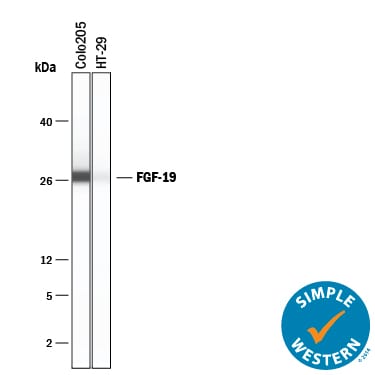
Simple Western Detection of Human FGF-19 antibody by Simple Western<sup>TM</sup>. View Larger

Detection of Human FGF‑19 by Simple WesternTM. Simple Western lane view shows conditioned media from COLO 205 human colorectal adenocarcinoma cell line and HT-29 human colon adenocarcinoma cell line, loaded at 0.2 mg/mL. A specific band was detected for FGF-19 at approximately 26 kDa (as indicated) using 10 µg/mL of Goat Anti-Human FGF-19 Antigen Affinity-purified Polyclonal Antibody (Catalog # AF969) followed by 1:50 dilution of HRP-conjugated Anti-Goat IgG Secondary Antibody (Catalog # HAF109). This experiment was conducted under reducing conditions and using the 2-40 kDa separation system.

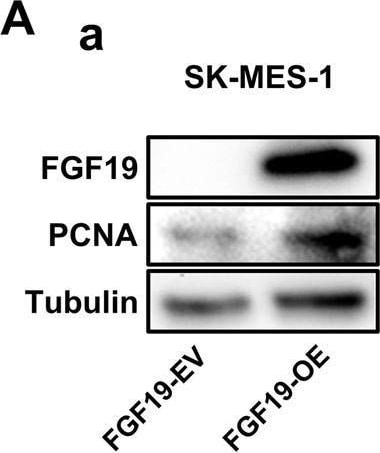
Western Blot Detection of FGF-19 by Western Blot View Larger

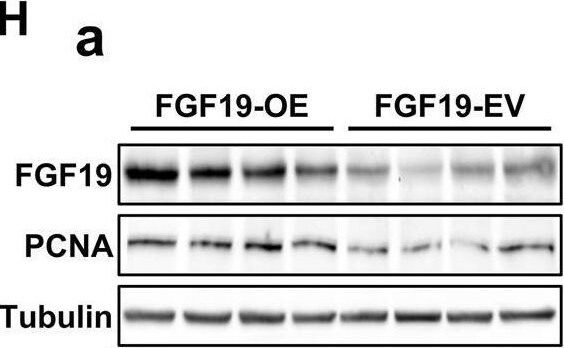
Detection of FGF-19 by Western Blot Overexpression of FGF19 promotes the proliferation of LSQ cells in vitro and in vivo.SK-MES-1 and HCC95 cells were transduced with FGF19 overexpression lentivirus (FGF19-OE), or control lentivirus (FGF19-EV) to construct stable cell lines. a Quantification of the overexpression of FGF19 in forms as cellular protein (a), mRNA (b) or secreted protein in conditioned medium (c) in SK-MES-1 cells. b Enrichment plots of PCNA expression signatures according to FGF19 expression levels in an LSQ cohort. c Cell proliferation assays of the SK-MES-1 and HCC95 stable cells with FGF19 overexpression. d Colony formation in SK-MES-1 cells with or without FGF19 overexpression. e The effect of overexpression of FGF19 on the apoptosis induced by cisplatin in HCC95 cell lines. f Enrichment plots of cell cycle signatures according to FGF19 expression levels in an LSQ cohort. g Images of tumor nodules from subcutaneous mouse xenograft model with or without FGF19 overexpression. h (a) Western blot analysis of FGF19 and PCNA expression in tumors; (b) serum samples of FGF19 expression; (c) volume of tumors; and (d) body weight of mice from the two groups. i IHC analysis of Ki-67 expression in tumors. j Oil red O analysis of tumors from the two groups. Data are represented as mean and SEM from three independent experiments. *p < 0.05; **p < 0.01; ***p < 0.001. Image collected and cropped by CiteAb from the following open publication (https://pubmed.ncbi.nlm.nih.gov/32111983), licensed under a CC-BY license. Not internally tested by R&D Systems.

Western Blot Detection of FGF-19 by Western Blot View Larger

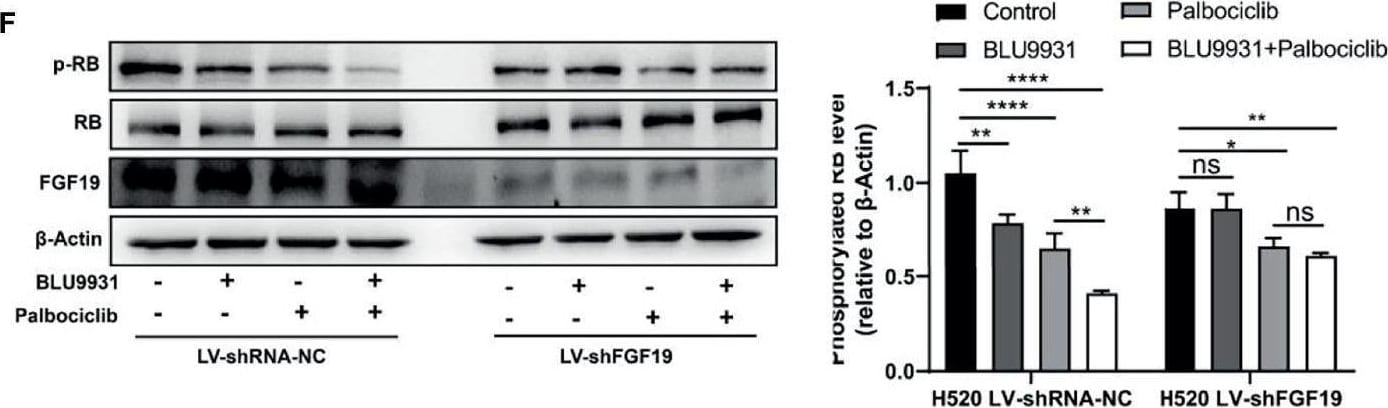
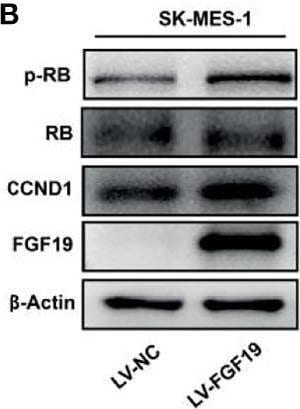
Detection of FGF-19 by Western Blot FGF19 enhances CCND1-induced inactivation of RB. (A) rhFGF19 phosphorylated RB and promoted expression of CCND1 in SK-MES-1 and H520 cells in a time-dependent manner. (B) pRB and CCND1levels in FGF19 overexpression (SK-MES-1 LV-FGF19) and control (LV-NC) LUSC cells. (C) SK-MES-1 LV-FGF19 cells was transduced with CCND1-knockdown lentivirus (LV-shCCND1), or control lentivirus (LV-shRNA-NC) to construct stable cell lines and quantification of CCND1 in forms as cellular protein and mRNA. (D) pRB and CCND1 levels in FGF19 overexpression and CCND1-knockdown cells (SK-MES-1 LV-FGF19-shCCND1) and control (SK-MES-1 LV-NC-shRNA-NC) LUSC cells. (E) pRB and CCND1 levels in CCND1 knockdown cells (H520-shCCND1) and control (H520-shRNA-NC) LUSC cells. (F) pRB levels in FGF19-knockdown cells (H520-shFGF19) and control (H520-shRNA-NC) LUSC cells, treated with BLU9931, palbociclib, BLU9931 & palbociclib, or DMSO. Right panel: quantifications of pRB. All the data were shown as the mean ± SD. *P <0.05; **P <0.01; ***p <0.001; ****p <0.0001; ns, not significant. Image collected and cropped by CiteAb from the following open publication (https://pubmed.ncbi.nlm.nih.gov/35463335), licensed under a CC-BY license. Not internally tested by R&D Systems.

Western Blot Detection of FGF-19 by Western Blot View Larger

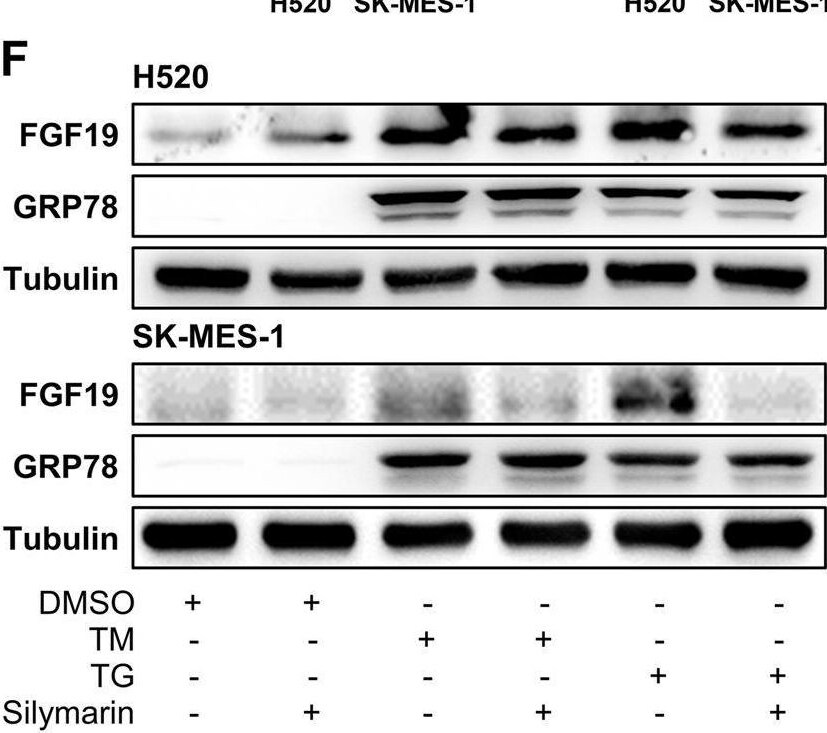
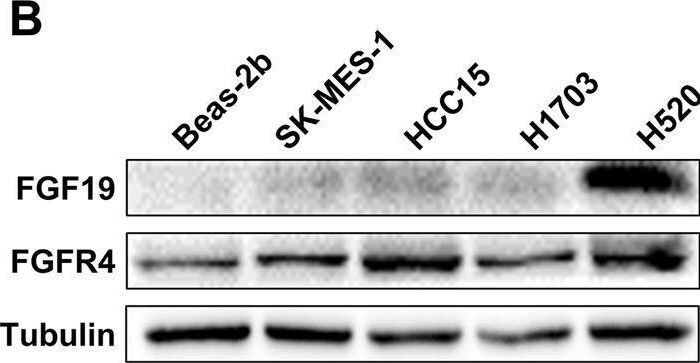
Detection of FGF-19 by Western Blot CDCA and ER stress induce FGF19 upregulation and hFGF19 activates ERK/AKT signaling to promote LSQ cell proliferation. A FGF19 (a) and FGFR4 (b) mRNA expression levels in LSQ cell lines and Beas-2b. b Protein expression levels of FGF19 and FGFR4 in LSQ cell lines and bronchial epithelial cell line Beas-2b. c The effects of chenodeoxycholic acid (CDCA) treatment on FGF19 protein levels in Beas-2b cells in a dose-dependent (ranging from 0 to 100 µM, upper panel) and time-dependent (within 48 h, lower panel) manner. d The effect of chenodeoxycholic acid treatment (50 µM) on the apoptosis of Beas-2b cells with quantifications of the results on the right panel. e mRNA expression of FGF19 (left panel) and GRP78 (right panel) of LSQ cell lines H520 and SK-MES-1 treated with thapsigargin (TG) or tunicamycin (TM) for 24 h. f FGF19 protein expression of H520 and SK-MES-1 treated with TG or TM for 24 h, in the presence or absence of ER stress suppressor silymarin. g Cell proliferation of SK-MES-1 cells treated with conditioned medium from H520 cells overexpressing FGF19 was determined by CCK-8 assays. h The effects of hFGF19 on the activation of ERK/AKT signaling in SK-MES-1 cells in a dose-dependent (left panel) or time-dependent (right panel) manner. i Enrichment plots of mTOR expression signatures according to FGF19 expression levels in an LSQ cohort. Image collected and cropped by CiteAb from the following open publication (https://pubmed.ncbi.nlm.nih.gov/32111983), licensed under a CC-BY license. Not internally tested by R&D Systems.

Western Blot Detection of FGF-19 by Western Blot View Larger

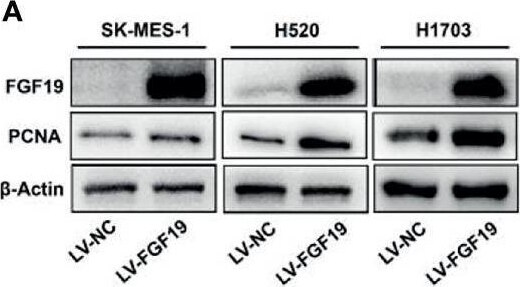
Detection of FGF-19 by Western Blot CCND1 is essential for FGF19 signaling-mediated LUSC proliferation. (A) Western blot analysis showing protein levels of FGF19 and PCNA in SK-MES-1, H520 and H1703 cells after lentivirus transfection. (B) Clone formation assay of SK-MES-1 cells with or without FGF19 overexpression. (C) Cell proliferation was measured by CCK8 assay in SK-MES-1 LV-FGF19 cells with or without CCND1 knockdown. (D) Clone formation assay of SK-MES-1 LV-FGF19 cells with or without CCND1 knockdown; cultures were stained with crystal violet. (E–J) Data of orthotopic lung cancer model. Cell suspension of SK-MES-1 LV-NC/LV-FGF19/LV-FGF19-shRNA-NC/LV-FGF19-shCCND1 (2 × 10⁶ cells) in a total volume of 50 μL mixed with Matrigel (Matrigel: PBS = 1: 4) were injected into the left lung of 5-week-old male BALB/C nude mice (N = 13 mice per group). (E) Experimental timeline for the animal experiment. (F) Representative bioluminescent images (BLI) of the different groups are shown 25 days after orthotopic implantation. Right panel: quantifications of the total flux. (G) Comparison of orthotopic lung cancer models. Tumor was indicated by the arrow. (H) Representative H&E and PCNA staining images of lung samples from each group. (I) Body weight change and (J) overall survival time of indicated groups of nude mice were showed. (K) Higher FGF19 and lower CCND1 mRNA levels are associated with longer overall survival. Data were showed as the mean ± SD. *p <0.05; **p <0.01; ***p <0.001; ****p <0.0001. H&E, hematoxylin and eosin. Image collected and cropped by CiteAb from the following open publication (https://pubmed.ncbi.nlm.nih.gov/35463335), licensed under a CC-BY license. Not internally tested by R&D Systems.

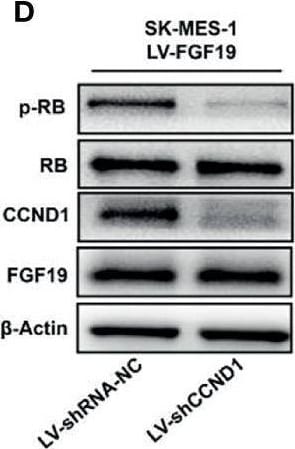
Western Blot Detection of FGF-19 by Western Blot View Larger

Detection of FGF-19 by Western Blot FGF19 enhances CCND1-induced inactivation of RB. (A) rhFGF19 phosphorylated RB and promoted expression of CCND1 in SK-MES-1 and H520 cells in a time-dependent manner. (B) pRB and CCND1levels in FGF19 overexpression (SK-MES-1 LV-FGF19) and control (LV-NC) LUSC cells. (C) SK-MES-1 LV-FGF19 cells was transduced with CCND1-knockdown lentivirus (LV-shCCND1), or control lentivirus (LV-shRNA-NC) to construct stable cell lines and quantification of CCND1 in forms as cellular protein and mRNA. (D) pRB and CCND1 levels in FGF19 overexpression and CCND1-knockdown cells (SK-MES-1 LV-FGF19-shCCND1) and control (SK-MES-1 LV-NC-shRNA-NC) LUSC cells. (E) pRB and CCND1 levels in CCND1 knockdown cells (H520-shCCND1) and control (H520-shRNA-NC) LUSC cells. (F) pRB levels in FGF19-knockdown cells (H520-shFGF19) and control (H520-shRNA-NC) LUSC cells, treated with BLU9931, palbociclib, BLU9931 & palbociclib, or DMSO. Right panel: quantifications of pRB. All the data were shown as the mean ± SD. *P <0.05; **P <0.01; ***p <0.001; ****p <0.0001; ns, not significant. Image collected and cropped by CiteAb from the following open publication (https://pubmed.ncbi.nlm.nih.gov/35463335), licensed under a CC-BY license. Not internally tested by R&D Systems.

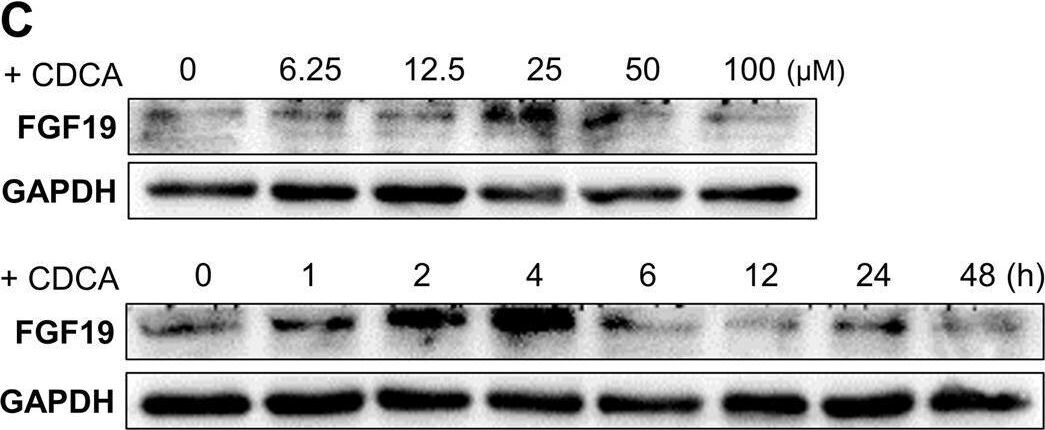
Western Blot Detection of FGF-19 by Western Blot View Larger

Detection of FGF-19 by Western Blot CDCA and ER stress induce FGF19 upregulation and hFGF19 activates ERK/AKT signaling to promote LSQ cell proliferation. A FGF19 (a) and FGFR4 (b) mRNA expression levels in LSQ cell lines and Beas-2b. b Protein expression levels of FGF19 and FGFR4 in LSQ cell lines and bronchial epithelial cell line Beas-2b. c The effects of chenodeoxycholic acid (CDCA) treatment on FGF19 protein levels in Beas-2b cells in a dose-dependent (ranging from 0 to 100 µM, upper panel) and time-dependent (within 48 h, lower panel) manner. d The effect of chenodeoxycholic acid treatment (50 µM) on the apoptosis of Beas-2b cells with quantifications of the results on the right panel. e mRNA expression of FGF19 (left panel) and GRP78 (right panel) of LSQ cell lines H520 and SK-MES-1 treated with thapsigargin (TG) or tunicamycin (TM) for 24 h. f FGF19 protein expression of H520 and SK-MES-1 treated with TG or TM for 24 h, in the presence or absence of ER stress suppressor silymarin. g Cell proliferation of SK-MES-1 cells treated with conditioned medium from H520 cells overexpressing FGF19 was determined by CCK-8 assays. h The effects of hFGF19 on the activation of ERK/AKT signaling in SK-MES-1 cells in a dose-dependent (left panel) or time-dependent (right panel) manner. i Enrichment plots of mTOR expression signatures according to FGF19 expression levels in an LSQ cohort. Image collected and cropped by CiteAb from the following open publication (https://pubmed.ncbi.nlm.nih.gov/32111983), licensed under a CC-BY license. Not internally tested by R&D Systems.

Western Blot Detection of FGF-19 by Western Blot View Larger

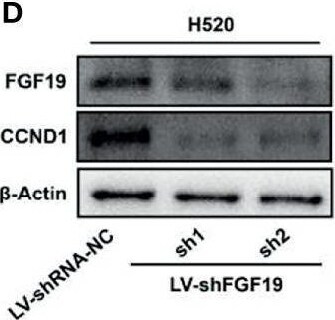
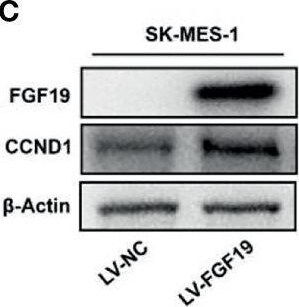
Detection of FGF-19 by Western Blot FGF19 enhances CCND1 expression by FGF19-FGFR4-ERK1/2 axis in LUSC cells. (A) Recombinant human FGF19 (rhFGF19) (25 ng/ml) promoted expression of CCND1 in SK-MES-1 and H520 cells (serum starved for 12 h before treatment) in a time-dependent manner. (B) CCND1 mRNA expression levels in LUSC cell lines after treatment with rhFGF2 for 12 h. (C) Expression of CCND1 in FGF19 overexpression LUSC cell line. (D) Expression of CCND1 in FGF19 knockdown LUSC cell line. (E) A panel of inhibitors against a number of signaling pathways was used to dissect the leading factors of regulated by FGF19. (F) Western blot and (G) qPCR analysis of CCND1 expression in H520 and HCC95 LUSC cells after treatment of FGF19, FGF19 and SCH772984, FGF19 & BLU9931, or DMSO as control. (H) Effects of the FGF19/FGFR4 pathway on protein levels of CCND1, p-FGFR4, and p-ERK1/2 by western blot analysis. H520, SK-MES-1 and HCC95 cells were treated with FGF19 (25 ng/ml, 0/0.5/6/12 h) to activate the FGF19/FGFR4 signaling pathway. Data were shown as mean ± SD bars and compared by unpaired t-test. **p <0.01; ****p <0.0001; ns, not significant. Image collected and cropped by CiteAb from the following open publication (https://pubmed.ncbi.nlm.nih.gov/35463335), licensed under a CC-BY license. Not internally tested by R&D Systems.

Western Blot Detection of FGF-19 by Western Blot View Larger

Detection of FGF-19 by Western Blot CDCA and ER stress induce FGF19 upregulation and hFGF19 activates ERK/AKT signaling to promote LSQ cell proliferation. A FGF19 (a) and FGFR4 (b) mRNA expression levels in LSQ cell lines and Beas-2b. b Protein expression levels of FGF19 and FGFR4 in LSQ cell lines and bronchial epithelial cell line Beas-2b. c The effects of chenodeoxycholic acid (CDCA) treatment on FGF19 protein levels in Beas-2b cells in a dose-dependent (ranging from 0 to 100 µM, upper panel) and time-dependent (within 48 h, lower panel) manner. d The effect of chenodeoxycholic acid treatment (50 µM) on the apoptosis of Beas-2b cells with quantifications of the results on the right panel. e mRNA expression of FGF19 (left panel) and GRP78 (right panel) of LSQ cell lines H520 and SK-MES-1 treated with thapsigargin (TG) or tunicamycin (TM) for 24 h. f FGF19 protein expression of H520 and SK-MES-1 treated with TG or TM for 24 h, in the presence or absence of ER stress suppressor silymarin. g Cell proliferation of SK-MES-1 cells treated with conditioned medium from H520 cells overexpressing FGF19 was determined by CCK-8 assays. h The effects of hFGF19 on the activation of ERK/AKT signaling in SK-MES-1 cells in a dose-dependent (left panel) or time-dependent (right panel) manner. i Enrichment plots of mTOR expression signatures according to FGF19 expression levels in an LSQ cohort. Image collected and cropped by CiteAb from the following open publication (https://pubmed.ncbi.nlm.nih.gov/32111983), licensed under a CC-BY license. Not internally tested by R&D Systems.

Western Blot Detection of FGF-19 by Western Blot View Larger

Detection of FGF-19 by Western Blot Overexpression of FGF19 promotes the proliferation of LSQ cells in vitro and in vivo.SK-MES-1 and HCC95 cells were transduced with FGF19 overexpression lentivirus (FGF19-OE), or control lentivirus (FGF19-EV) to construct stable cell lines. a Quantification of the overexpression of FGF19 in forms as cellular protein (a), mRNA (b) or secreted protein in conditioned medium (c) in SK-MES-1 cells. b Enrichment plots of PCNA expression signatures according to FGF19 expression levels in an LSQ cohort. c Cell proliferation assays of the SK-MES-1 and HCC95 stable cells with FGF19 overexpression. d Colony formation in SK-MES-1 cells with or without FGF19 overexpression. e The effect of overexpression of FGF19 on the apoptosis induced by cisplatin in HCC95 cell lines. f Enrichment plots of cell cycle signatures according to FGF19 expression levels in an LSQ cohort. g Images of tumor nodules from subcutaneous mouse xenograft model with or without FGF19 overexpression. h (a) Western blot analysis of FGF19 and PCNA expression in tumors; (b) serum samples of FGF19 expression; (c) volume of tumors; and (d) body weight of mice from the two groups. i IHC analysis of Ki-67 expression in tumors. j Oil red O analysis of tumors from the two groups. Data are represented as mean and SEM from three independent experiments. *p < 0.05; **p < 0.01; ***p < 0.001. Image collected and cropped by CiteAb from the following open publication (https://pubmed.ncbi.nlm.nih.gov/32111983), licensed under a CC-BY license. Not internally tested by R&D Systems.

Western Blot Detection of FGF-19 by Western Blot View Larger

Detection of FGF-19 by Western Blot FGF19 enhances CCND1-induced inactivation of RB. (A) rhFGF19 phosphorylated RB and promoted expression of CCND1 in SK-MES-1 and H520 cells in a time-dependent manner. (B) pRB and CCND1levels in FGF19 overexpression (SK-MES-1 LV-FGF19) and control (LV-NC) LUSC cells. (C) SK-MES-1 LV-FGF19 cells was transduced with CCND1-knockdown lentivirus (LV-shCCND1), or control lentivirus (LV-shRNA-NC) to construct stable cell lines and quantification of CCND1 in forms as cellular protein and mRNA. (D) pRB and CCND1 levels in FGF19 overexpression and CCND1-knockdown cells (SK-MES-1 LV-FGF19-shCCND1) and control (SK-MES-1 LV-NC-shRNA-NC) LUSC cells. (E) pRB and CCND1 levels in CCND1 knockdown cells (H520-shCCND1) and control (H520-shRNA-NC) LUSC cells. (F) pRB levels in FGF19-knockdown cells (H520-shFGF19) and control (H520-shRNA-NC) LUSC cells, treated with BLU9931, palbociclib, BLU9931 & palbociclib, or DMSO. Right panel: quantifications of pRB. All the data were shown as the mean ± SD. *P <0.05; **P <0.01; ***p <0.001; ****p <0.0001; ns, not significant. Image collected and cropped by CiteAb from the following open publication (https://pubmed.ncbi.nlm.nih.gov/35463335), licensed under a CC-BY license. Not internally tested by R&D Systems.

Western Blot Detection of FGF-19 by Western Blot View Larger

Detection of FGF-19 by Western Blot FGF19 enhances CCND1 expression by FGF19-FGFR4-ERK1/2 axis in LUSC cells. (A) Recombinant human FGF19 (rhFGF19) (25 ng/ml) promoted expression of CCND1 in SK-MES-1 and H520 cells (serum starved for 12 h before treatment) in a time-dependent manner. (B) CCND1 mRNA expression levels in LUSC cell lines after treatment with rhFGF2 for 12 h. (C) Expression of CCND1 in FGF19 overexpression LUSC cell line. (D) Expression of CCND1 in FGF19 knockdown LUSC cell line. (E) A panel of inhibitors against a number of signaling pathways was used to dissect the leading factors of regulated by FGF19. (F) Western blot and (G) qPCR analysis of CCND1 expression in H520 and HCC95 LUSC cells after treatment of FGF19, FGF19 and SCH772984, FGF19 & BLU9931, or DMSO as control. (H) Effects of the FGF19/FGFR4 pathway on protein levels of CCND1, p-FGFR4, and p-ERK1/2 by western blot analysis. H520, SK-MES-1 and HCC95 cells were treated with FGF19 (25 ng/ml, 0/0.5/6/12 h) to activate the FGF19/FGFR4 signaling pathway. Data were shown as mean ± SD bars and compared by unpaired t-test. **p <0.01; ****p <0.0001; ns, not significant. Image collected and cropped by CiteAb from the following open publication (https://pubmed.ncbi.nlm.nih.gov/35463335), licensed under a CC-BY license. Not internally tested by R&D Systems.

Western Blot Detection of FGF-19 by Western Blot View Larger

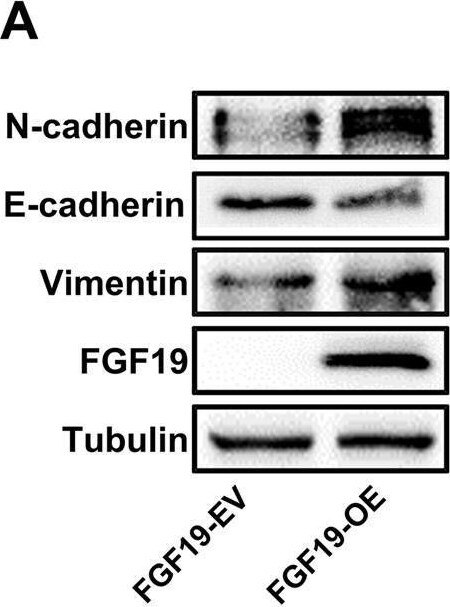
Detection of FGF-19 by Western Blot Overexpression of FGF19 promotes metastasis of LSQ cells in vitro and in vivo. A Protein and b mRNA expression of EMT markers in the cells treated with FGF19-EV or FGF19-OE for 48 h in SK-MES-1 cells. c Analysis of correlation between CDH2 and FGF19 from Oncomine TCGA datasets. The images of migration abilities in FGF19-OE transfected cells in trans-well (d) and wound healing (e) assays, respectively. f Overexpression of FGF19 increased tumor growth in vivo in orthotopic lung cancer models. Representative image of primary tumors in the left lungs of orthotropic models on day 21 from each group after implantation of SK-MES-1 cells transfected with FGF19-OE and FGF19-EV. g Metastatic tumors in other organs. h Representative images of IHC analysis of Ki-67 expression in lung and tumors. Right panel: Quantification of Ki-67 expression. i (a) Evaluation of FGF19 expression in serum samples from two groups. (b) Mean primary tumor body weight and (c) survival curve for the mice in each treatment group evaluated. j Within the 57 NSCLC patients’ group, the serum levels of FGF19 in patients with metastasis (n = 34) were shown side by side with those of patients without metastasis (n = 23). Data are represented as mean and SEM from three independent experiments. *p < 0.05; **p < 0.01; ***p < 0.001. Image collected and cropped by CiteAb from the following open publication (https://pubmed.ncbi.nlm.nih.gov/32111983), licensed under a CC-BY license. Not internally tested by R&D Systems.

Reconstitution Calculator

Reconstitution Calculator

The reconstitution calculator allows you to quickly calculate the volume of a reagent to reconstitute your vial. Simply enter the mass of reagent and the target concentration and the calculator will determine the rest.

=
÷

Preparation and Storage

Reconstitution
Reconstitute at 0.2 mg/mL in sterile PBS.
Loading...
Shipping
Lyophilized product is shipped at ambient temperature. Liquid small pack size (-SP) is shipped with polar packs. Upon receipt, store immediately at the temperature recommended below.
Stability & Storage
Use a manual defrost freezer and avoid repeated freeze-thaw cycles.
  • 12 months from date of receipt, -20 to -70 °C as supplied.
  • 1 month, 2 to 8 °C under sterile conditions after reconstitution.
  • 6 months, -20 to -70 °C under sterile conditions after reconstitution.

Background: FGF-19

Fibroblast growth factor 19 (FGF-19) belongs to the large FGF family which has at least 23 members (1, 2). All FGF family members are heparin-binding growth factors with a core 120 amino acid (aa) FGF domain that allows for a common tertiary structure. FGFs are expressed during embryonic development and in restricted adult tissues. They act on cells of mesodermal and neuroectodermal origin to regulate diverse physiologic functions including angiogenesis, cell growth, pattern formation, embryonic development, metabolic regulation, cell migration, neurotrophic effects and tissue repair (3, 4). Signaling receptors for FGFs are type I transmembrane receptor tyrosine kinases belonging to the Ig superfamily. Four distinct but related classes of FGF receptors, FGF R1, 2, 3, and 4, exist. Through alternative splicing, multiple isoforms for FGF R1, 2 and 3, with distinct ligand recognition profiles, are also generated (4).

Human FGF-19 cDNA predicts a 251 aa precursor protein with a 22 aa signal peptide and a 229 aa secreted mature protein with no potential N-linked glycosylation sites (1, 2). Among FGF family members, human FGF-19 is most closely related to chicken FGF-19 and murine FGF-15, sharing approximately 61% and 51% aa sequence identity, respectively (1, 2, 5). Neither the human orthologue of mouse FGF-15, nor the mouse counterpart of human FGF-19 has been identified. With the exception of adult gall bladder epithelium, FGF-19 expression is restricted to fetal tissues (1, 2). Unlike most FGFs which bind to and activate more than one FGF receptor, FGF-19 is a specific ligand for FGF R4 (2). Similarly, another FGF family member, FGF-7 (KGF), only activates KGF R, the IIIb isoform of FGF R2 (4). During chick embryogenesis, FGF-19 has been shown to act synergistically with Wnt-8c to initiate inner ear development (5).

References
  1. Nishimura, T. et al. (1999) Biocheim. Biophys. Acta 1444:148.
  2. Xie, M. et al. (1999) Cytokine 11:729.
  3. Goldfarb, M. (1996) Cytokine & Growth Factor Reviews 7:311.
  4. Green, P. et al. (1996) BioEssays 18:639.
  5. Ladher, R.K. et al. (2000) Science 290:1965.
Long Name
Fibroblast Growth Factor 19
Entrez Gene IDs
9965 (Human)
Alternate Names
FGF19; FGF-19; fibroblast growth factor 19

Product Datasheets

You must select a language.

x

Citations for Human FGF-19 Antibody

R&D Systems personnel manually curate a database that contains references using R&D Systems products. The data collected includes not only links to publications in PubMed, but also provides information about sample types, species, and experimental conditions.

9 Citations: Showing 1 - 9
Filter your results:

Filter by:

  1. FGF19‐Induced Inflammatory CAF Promoted Neutrophil Extracellular Trap Formation in the Liver Metastasis of Colorectal Cancer
    Authors: Chen Li, Tianli Chen, Jialiang Liu, Yue Wang, Chunhuan Zhang, Lu Guo et al.
    Advanced Science
  2. Soluble alpha -klotho and heparin modulate the pathologic cardiac actions of fibroblast growth factor 23 in chronic kidney disease
    Authors: Christopher Yanucil, Dominik Kentrup, Isaac Campos, Brian Czaya, Kylie Heitman, David Westbrook et al.
    Kidney International
  3. FGF19 Is Coamplified With CCND1 to Promote Proliferation in Lung Squamous Cell Carcinoma and Their Combined Inhibition Shows Improved Efficacy
    Authors: Yanshuang Zhang, Tingyu Wu, Fan Li, Yirui Cheng, Qing Han, Xin Lu et al.
    Frontiers in Oncology
  4. Soluble alpha -klotho and heparin modulate the pathologic cardiac actions of fibroblast growth factor 23 in chronic kidney disease
    Authors: Christopher Yanucil, Dominik Kentrup, Isaac Campos, Brian Czaya, Kylie Heitman, David Westbrook et al.
    Kidney International
    Species: N/A
    Sample Types: Beads
    Applications: Western Blot
  5. FGF19 Is Coamplified With CCND1 to Promote Proliferation in Lung Squamous Cell Carcinoma and Their Combined Inhibition Shows Improved Efficacy
    Authors: Yanshuang Zhang, Tingyu Wu, Fan Li, Yirui Cheng, Qing Han, Xin Lu et al.
    Frontiers in Oncology
    Applications: Western Blot
  6. Characterization of a FGF19 variant with altered receptor specificity revealed a central role for FGFR1c in the regulation of glucose metabolism.
    Authors: Ge H, Baribault H, Vonderfecht S, Lemon B, Weiszmann J, Gardner J, Lee KJ, Gupte J, Mookherjee P, Wang M, Sheng J, Wu X, Li Y
    PLoS ONE, 2012-03-23;7(3):e33603.
    Species: Mouse
    Sample Types: Plasma
    Applications: ELISA Development
  7. FGF19 Regulates Cell Proliferation, Glucose and Bile Acid Metabolism via FGFR4-Dependent and Independent Pathways.
    Authors: Wu AL, Coulter S, Liddle C, Wong A, Eastham-Anderson J, French DM, Peterson AS, Sonoda J
    PLoS ONE, 2011-03-18;6(3):e17868.
    Species: Human
    Sample Types: Recombinant Protein
    Applications: ELISA Development
  8. The hepatic response to FGF19 is impaired in patients with nonalcoholic fatty liver disease and insulin resistance.
    Authors: Schreuder TC, Marsman HA, Lenicek M
    Am. J. Physiol. Gastrointest. Liver Physiol., 2010-01-21;298(3):G440-5.
    Species: Human
    Sample Types: Plasma
    Applications: ELISA Development
  9. High expression of the bile salt-homeostatic hormone fibroblast growth factor 19 in the liver of patients with extrahepatic cholestasis.
    Authors: Schaap FG, van der Gaag NA, Gouma DJ
    Hepatology, 2009-04-01;49(4):1228-35.
    Species: Human
    Sample Types: Plasma
    Applications: ELISA Development

FAQs

No product specific FAQs exist for this product, however you may

View all Antibody FAQs
Loading...

Reviews for Human FGF-19 Antibody

There are currently no reviews for this product. Be the first to review Human FGF-19 Antibody and earn rewards!

Have you used Human FGF-19 Antibody?

Submit a review and receive an Amazon gift card.

$25/€18/£15/$25CAN/¥75 Yuan/¥2500 Yen for a review with an image

$10/€7/£6/$10 CAD/¥70 Yuan/¥1110 Yen for a review without an image

Submit a Review
