

Key Product Details

Validated by

Biological Validation

Species Reactivity

Validated:

Human, Mouse, Rat

Cited:

Human, Mouse, Rat, Transgenic Rat

Applications

Validated:

Western Blot, Simple Western

Cited:

Immunohistochemistry, Western Blot, Simple Western

Label

Unconjugated

Antibody Source

Polyclonal Rabbit IgG
Loading...

Product Specifications

Immunogen

E. coli-derived recombinant human ERK1/ERK2
XM_055766 and NM_138957, respectively

Specificity

Detects human, mouse and rat ERK1/ERK2.

Clonality

Polyclonal

Host

Rabbit

Isotype

IgG

Scientific Data Images for Human/Mouse/Rat ERK1/ERK2 Antibody

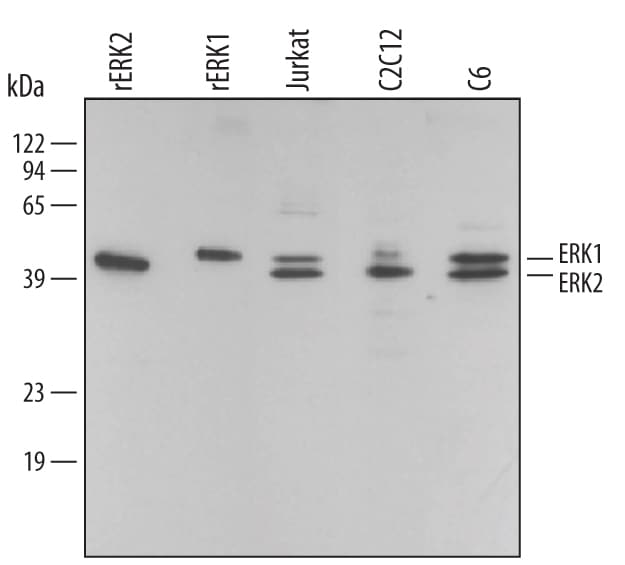
Detection of Human/Mouse/Rat ERK1/ERK2 antibody by Western Blot.

Detection of Human/Mouse/Rat ERK1/ERK2 by Western Blot.

Western blot shows lysates of Jurkat human acute T cell leukemia cell line, C2C12 mouse myoblast cell line myoblast cell line, and C6 rat glioma cell line. PVDF membrane was probed with 0.2 µg/mL Rabbit Anti-Human/Mouse/Rat ERK1/ERK2 Antigen Affinity-purified Polyclonal Antibody (Catalog # AF1576) followed by HRP-conjugated Anti-Rabbit IgG Secondary Antibody (Catalog # HAF008). For additional reference, Recombinant Human Active ERK1 (Catalog # 1879-KS) and Recombinant Human Active ERK2 (Catalog # 1230-KS) (2 ng/lane) were included. A specific band for ERK1/ERK2 was detected at approximately 44 kDa (as indicated). This experiment was conducted under reducing conditions and using Immunoblot Buffer Group 1.

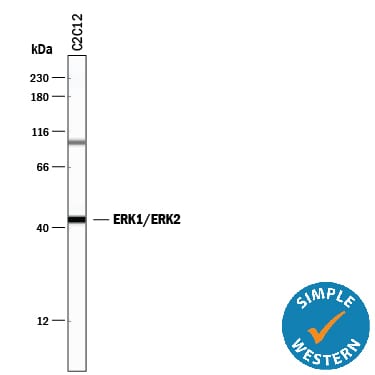
Detection of Mouse ERK1/ERK2 antibody by Simple WesternTM.

Detection of Mouse ERK1/ERK2 by Simple WesternTM.

Simple Western lane view shows lysates of C2C12 mouse myoblast cell line, loaded at 0.2 mg/mL. A specific band was detected for ERK1/ERK2 at approximately 44 kDa (as indicated) using 10 µg/mL of Rabbit Anti-Human/Mouse/Rat ERK1/ERK2 Antigen Affinity-purified Polyclonal Antibody (Catalog # AF1576). This experiment was conducted under reducing conditions and using the 12-230 kDa separation system.
Detection of Human ERK1/ERK2 by Western Blot

Detection of Human ERK1/ERK2 by Western Blot

Phospho-proteome profiling results of LX-2 cells co-cultured with C3A–CYP2E1 cells with or without DDC treatment and detection of the effect of DDC on intracellular kinases in LX-2 cells of co-cultures200 μg of total cell lysates from LX-2 cells co-cultured with C3A-2E1 cells with or without 100 μM DDC for 1 h were incubated with membranes of the human phospho-MAPK Array Kit according to the manufacturer's instructions. Phospho MAPK Array data were developed on X-ray films following exposure to chemiluminescent reagents. 20 μg aliquots of total cell lysates from LX-2 cells were subjected to Western blotting analysis. (A) Template showing the location of MAPK antibodies spotted onto the human phospho-MAPK Array Kit. (B) The activation status of ERK1/2 in LX-2 cells co-cultured with C3A-2E1 cells after DDC treatment. (C) The activation status of p38 in LX-2 cells co-cultured with C3A-2E1 cells after DDC treatment. (D) The activation status of Akt in LX-2 cells co-cultured with C3A-2E1 cells after DDC treatment. (E) The activation status of ERK1/2, p38 and Akt in LX-2 cells co-cultured with C3A cells after DDC treatment. Image collected and cropped by CiteAb from the following publication (https://pubmed.ncbi.nlm.nih.gov/23577625), licensed under a CC-BY license. Not internally tested by R&D Systems.
Detection of Human ERK1/ERK2 by Western Blot

Detection of Human ERK1/ERK2 by Western Blot

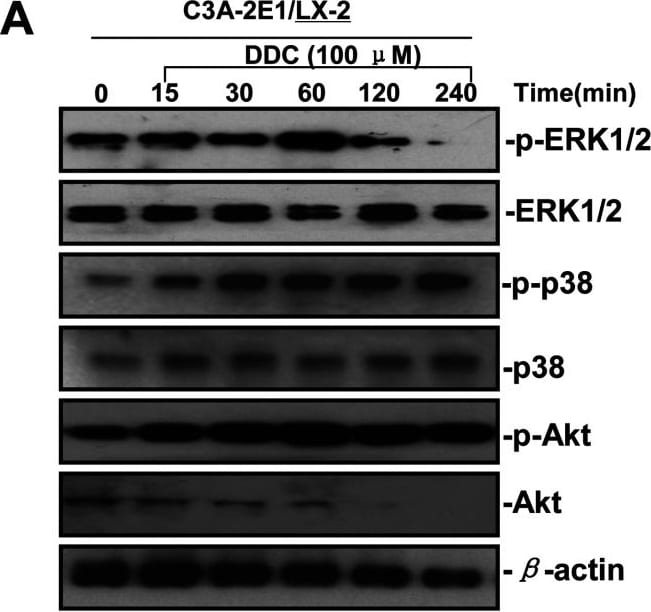
DDC up-regulates MMP-1 through ERK1/2 and Akt activation(A) Co-cultures were treated with 100 μM DDC for the indicated time. Phosphorylation of ERK1/2, p38 and Akt were determined by Western blotting analysis. The corresponding non-phosphorylated ERK1/2, p38, Akt and beta -actin were used for protein loading control. (B) Co-cultures were treated with or without 100 μM DDC for 24 h in the presence or absence of ERK1/2 inhibitor (U0126, 10 μM). MMP-1 protein levels were analysed by Western blotting. (C) Co-cultures were treated with or without 100 μM DDC for 24 h in the presence or absence of p38 inhibitor (SB203580, 10 μM). MMP-1 protein levels were analysed by Western blotting. (D) Co-cultures were treated with or without 100 μM DDC for 24 h in the presence or absence of Akt inhibitor (T3830, 50 μM). MMP-1 protein levels were analysed by Western blotting. Image collected and cropped by CiteAb from the following publication (https://pubmed.ncbi.nlm.nih.gov/23577625), licensed under a CC-BY license. Not internally tested by R&D Systems.
Detection of Human ERK1/ERK2 by Western Blot

Detection of Human ERK1/ERK2 by Western Blot

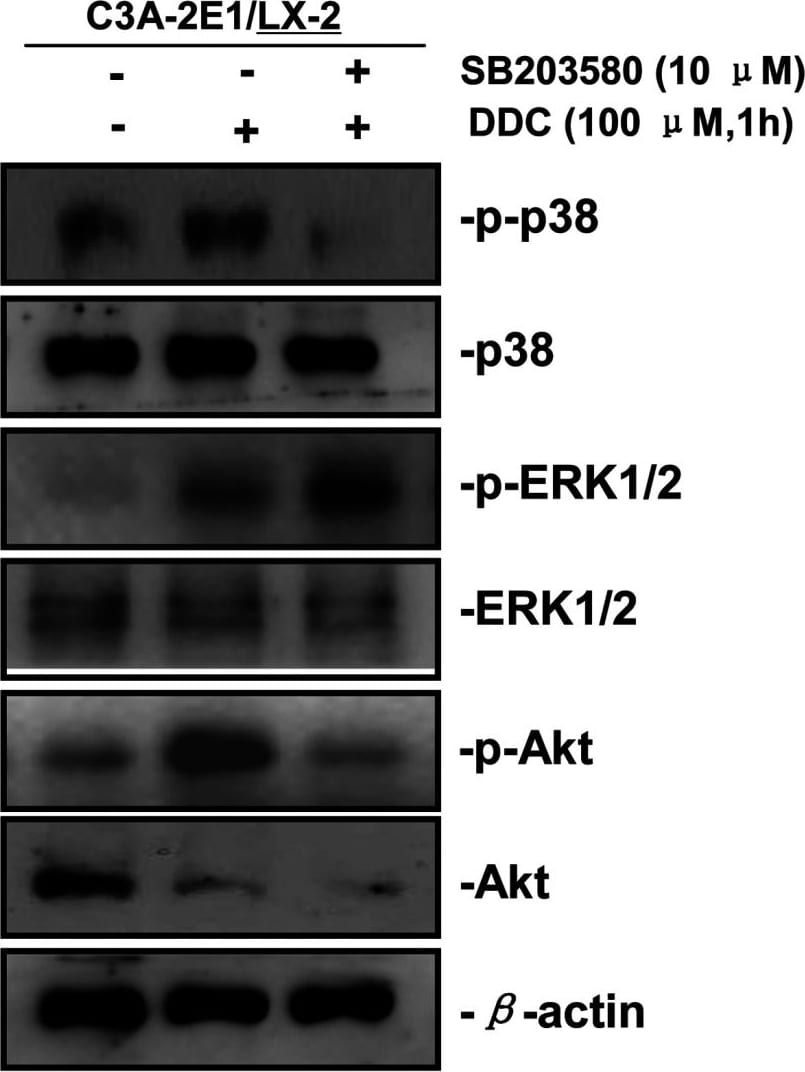
p38 inhibitor SB203580 improves the up-regulation of MMP-1 by DDC through stimulating ERK1/2Co-cultures were treated with or without 100 μM DDC for 1 h in the presence or absence of p38 inhibitor (SB203580, 10 μM). Phosphorylation of ERK1/2, p38 and Akt in LX-2 cells of co-cultures were determined by Western blotting analysis. Image collected and cropped by CiteAb from the following publication (https://pubmed.ncbi.nlm.nih.gov/23577625), licensed under a CC-BY license. Not internally tested by R&D Systems.
Detection of Human ERK1/ERK2 by Western Blot

Detection of Human ERK1/ERK2 by Western Blot

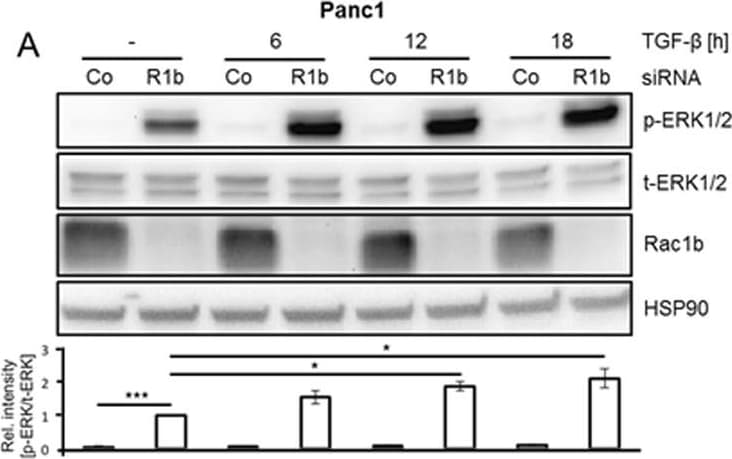
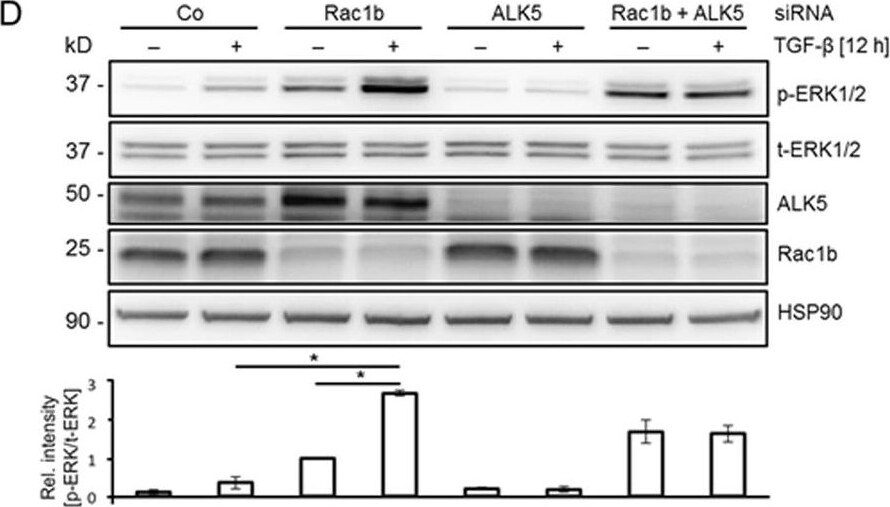
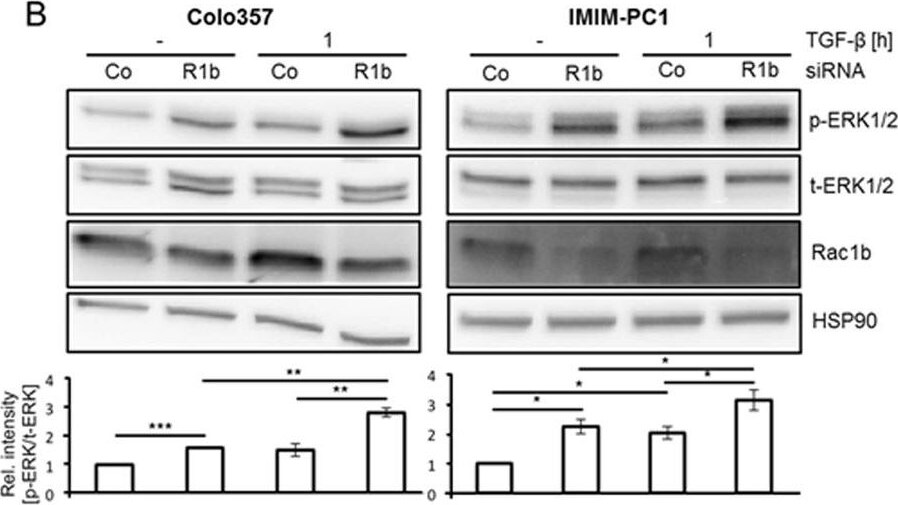
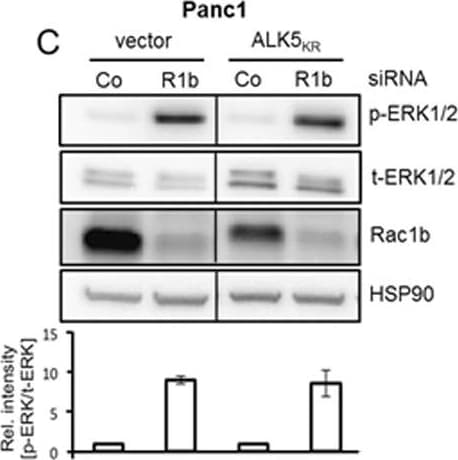
Depletion of Rac1b increases constitutive and growth factor-induced ERK1/2 phosphorylation. (A) Panc1 cells were transiently transfected with siRNA specific to Rac1b (R1b) or irrelevant control siRNA (Co), serum-starved for 24 h and treated with TGF-beta 1 as indicated. Cells were subjected to immunoblotting for p-ERK1/2, t-ERK1/2 and HSP90 as well as Rac1b as a control for transfection efficiency. The chart below shows the relative intensities of the p-ERK1/2 bands normalized to those for t-ERK1/2 from three independent experiments (mean ± SD, n = 3). Data are displayed relative to non-stimulated Rac1b siRNA-transfected cells set arbitrarily at 1. Asterisks indicate a significant difference. (B) Colo357 and IMIM-PC1 cells were transiently transfected twice on two consecutive days with 50 nM each of a siRNA specific for Rac1b (R1b), or an irrelevant control siRNA (Co), serum-starved for 24 h and subjected to immunoblotting for phospho-ERK1/2 (p-ERK1/2) and total ERK1/2 (t-ERK1/2) as well al HSP90 as a loading control. The charts below the blots show the relative intensity of the p-ERK1/2 bands normalized to the t-ERK1/2 bands of three independent experiments (mean ± SD, n = 3). Asterisks indicate a significant difference. (C) Panc1 cells stably expressing a dominant negative ALK5 mutant (ALK5KR) or empty vector were transfected twice with 50 nM each of Co siRNA or Rac1b siRNA and subjected to immunoblot analysis of p-ERK1/2. The blot was stripped and reprobed with antibodies against and t-ERK1/2 and Rac1b. The graph below the blots show the relative intensities of p-ERK1/2 normalized to those for t-ERK1/2 from three independent experiments (mean ± SD, n = 3). (D) Panc1 cells were transfected with 50 nM of irrelevant Co siRNA, Rac1b siRNA or ALK5 siRNA, or 25 nM each of Rac1b + ALK5 siRNA. Cells were serum-starved, treated with TGF-beta 1 for 12 h and subjected to immunoblotting for p-ERK1/2, t-ERK1/2 and HSP90 as well as for Rac1b and ALK5 to verify successful depletion. The graph below the blots shows the relative intensities of p-ERK1/2 bands normalized to those for t-ERK1/2 from three independent experiments (mean ± SD, n = 3). Data are displayed relative to non-stimulated Rac1b siRNA-transfected cells set arbitrarily at 1. The asterisks indicate significance. Data displayed in each panel are from the same blot/gel treated subsequently with antibodies to p-ERK1/2, Rac1b, HSP90, and ALK5, then stripped and reincubated with an antibody to t-ERK1/2. Image collected and cropped by CiteAb from the following publication (https://www.nature.com/articles/s41598-017-15170-6), licensed under a CC-BY license. Not internally tested by R&D Systems.
Detection of Human ERK1/ERK2 by Western Blot

Detection of Human ERK1/ERK2 by Western Blot

Depletion of Rac1b increases constitutive and growth factor-induced ERK1/2 phosphorylation. (A) Panc1 cells were transiently transfected with siRNA specific to Rac1b (R1b) or irrelevant control siRNA (Co), serum-starved for 24 h and treated with TGF-beta 1 as indicated. Cells were subjected to immunoblotting for p-ERK1/2, t-ERK1/2 and HSP90 as well as Rac1b as a control for transfection efficiency. The chart below shows the relative intensities of the p-ERK1/2 bands normalized to those for t-ERK1/2 from three independent experiments (mean ± SD, n = 3). Data are displayed relative to non-stimulated Rac1b siRNA-transfected cells set arbitrarily at 1. Asterisks indicate a significant difference. (B) Colo357 and IMIM-PC1 cells were transiently transfected twice on two consecutive days with 50 nM each of a siRNA specific for Rac1b (R1b), or an irrelevant control siRNA (Co), serum-starved for 24 h and subjected to immunoblotting for phospho-ERK1/2 (p-ERK1/2) and total ERK1/2 (t-ERK1/2) as well al HSP90 as a loading control. The charts below the blots show the relative intensity of the p-ERK1/2 bands normalized to the t-ERK1/2 bands of three independent experiments (mean ± SD, n = 3). Asterisks indicate a significant difference. (C) Panc1 cells stably expressing a dominant negative ALK5 mutant (ALK5KR) or empty vector were transfected twice with 50 nM each of Co siRNA or Rac1b siRNA and subjected to immunoblot analysis of p-ERK1/2. The blot was stripped and reprobed with antibodies against and t-ERK1/2 and Rac1b. The graph below the blots show the relative intensities of p-ERK1/2 normalized to those for t-ERK1/2 from three independent experiments (mean ± SD, n = 3). (D) Panc1 cells were transfected with 50 nM of irrelevant Co siRNA, Rac1b siRNA or ALK5 siRNA, or 25 nM each of Rac1b + ALK5 siRNA. Cells were serum-starved, treated with TGF-beta 1 for 12 h and subjected to immunoblotting for p-ERK1/2, t-ERK1/2 and HSP90 as well as for Rac1b and ALK5 to verify successful depletion. The graph below the blots shows the relative intensities of p-ERK1/2 bands normalized to those for t-ERK1/2 from three independent experiments (mean ± SD, n = 3). Data are displayed relative to non-stimulated Rac1b siRNA-transfected cells set arbitrarily at 1. The asterisks indicate significance. Data displayed in each panel are from the same blot/gel treated subsequently with antibodies to p-ERK1/2, Rac1b, HSP90, and ALK5, then stripped and reincubated with an antibody to t-ERK1/2. Image collected and cropped by CiteAb from the following publication (https://www.nature.com/articles/s41598-017-15170-6), licensed under a CC-BY license. Not internally tested by R&D Systems.
Detection of Human ERK1/ERK2 by Western Blot

Detection of Human ERK1/ERK2 by Western Blot

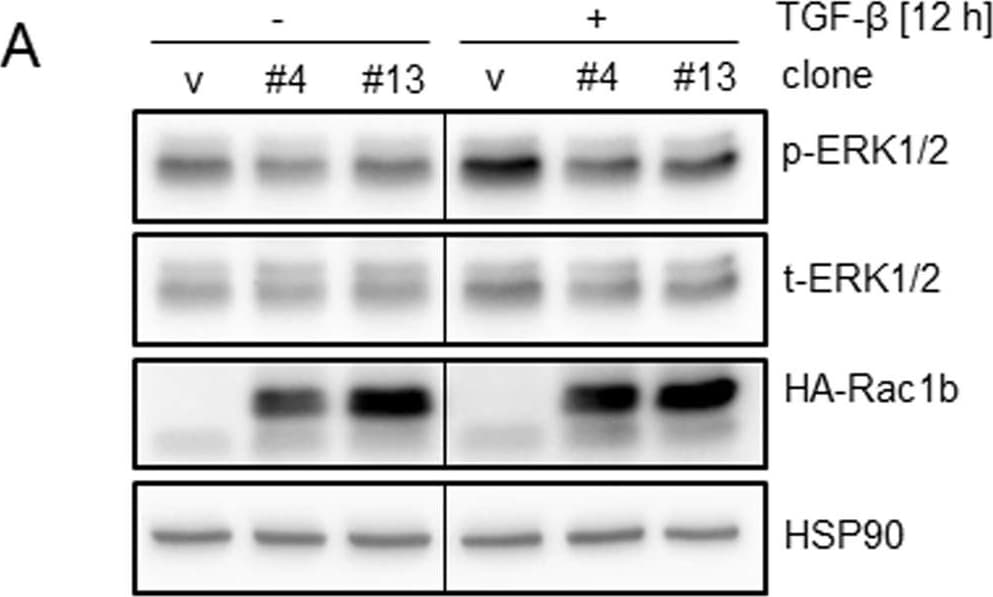
Effects of ectopic overexpression of Rac1b on TGF-beta 1-induced ERK1/2 activation and gene expression. (A) Panc1 cells stably overexpressing Rac1b from the pCGN vector (two independent clones, #4 and #13) as well as empty-vector control cells (v) were serum-starved, treated with TGF-beta 1 for 12 h and subjected to immunoblotting for p-ERK1/2, t-ERK1/2, and HA-Rac1b. The graph underneath the blot shows results from densitometric analysis of the respective bands for p-ERK1/2 normalized to those for t-ERK1/2 and derived from four independent experiments (mean ± SD, n = 4). Data are displayed relative to TGF-beta 1 stimulated vector control cells set arbitrarily at 1. Asterisks indicate a significant difference of p-ERK1/2 band intensity between the vector control and the two HA-Rac1b expressing clones. Due to the short exposure time, endogenous Rac1b protein is not visible. (B) The same cells as in (A) were stimulated with TGF-beta 1 for 24 h and subjected to qPCR for E-cadherin and PAR2. Data are displayed as TGF-beta 1-treated over control cells and are the mean ± SD of 3 experiments. Asterisks indicate significant differences. Data are from the same blot/gel treated subsequently with antibodies to p-ERK1/2, Rac1b, and HSP90, then stripped and reincubated with an antibody to t-ERK1/2. The vertical lines between lanes 3 and 4 indicate removal of irrelevant lanes from the blot. Image collected and cropped by CiteAb from the following publication (https://www.nature.com/articles/s41598-017-15170-6), licensed under a CC-BY license. Not internally tested by R&D Systems.
Detection of Human ERK1/ERK2 by Western Blot

Detection of Human ERK1/ERK2 by Western Blot

Depletion of Rac1b increases constitutive and growth factor-induced ERK1/2 phosphorylation. (A) Panc1 cells were transiently transfected with siRNA specific to Rac1b (R1b) or irrelevant control siRNA (Co), serum-starved for 24 h and treated with TGF-beta 1 as indicated. Cells were subjected to immunoblotting for p-ERK1/2, t-ERK1/2 and HSP90 as well as Rac1b as a control for transfection efficiency. The chart below shows the relative intensities of the p-ERK1/2 bands normalized to those for t-ERK1/2 from three independent experiments (mean ± SD, n = 3). Data are displayed relative to non-stimulated Rac1b siRNA-transfected cells set arbitrarily at 1. Asterisks indicate a significant difference. (B) Colo357 and IMIM-PC1 cells were transiently transfected twice on two consecutive days with 50 nM each of a siRNA specific for Rac1b (R1b), or an irrelevant control siRNA (Co), serum-starved for 24 h and subjected to immunoblotting for phospho-ERK1/2 (p-ERK1/2) and total ERK1/2 (t-ERK1/2) as well al HSP90 as a loading control. The charts below the blots show the relative intensity of the p-ERK1/2 bands normalized to the t-ERK1/2 bands of three independent experiments (mean ± SD, n = 3). Asterisks indicate a significant difference. (C) Panc1 cells stably expressing a dominant negative ALK5 mutant (ALK5KR) or empty vector were transfected twice with 50 nM each of Co siRNA or Rac1b siRNA and subjected to immunoblot analysis of p-ERK1/2. The blot was stripped and reprobed with antibodies against and t-ERK1/2 and Rac1b. The graph below the blots show the relative intensities of p-ERK1/2 normalized to those for t-ERK1/2 from three independent experiments (mean ± SD, n = 3). (D) Panc1 cells were transfected with 50 nM of irrelevant Co siRNA, Rac1b siRNA or ALK5 siRNA, or 25 nM each of Rac1b + ALK5 siRNA. Cells were serum-starved, treated with TGF-beta 1 for 12 h and subjected to immunoblotting for p-ERK1/2, t-ERK1/2 and HSP90 as well as for Rac1b and ALK5 to verify successful depletion. The graph below the blots shows the relative intensities of p-ERK1/2 bands normalized to those for t-ERK1/2 from three independent experiments (mean ± SD, n = 3). Data are displayed relative to non-stimulated Rac1b siRNA-transfected cells set arbitrarily at 1. The asterisks indicate significance. Data displayed in each panel are from the same blot/gel treated subsequently with antibodies to p-ERK1/2, Rac1b, HSP90, and ALK5, then stripped and reincubated with an antibody to t-ERK1/2. Image collected and cropped by CiteAb from the following publication (https://www.nature.com/articles/s41598-017-15170-6), licensed under a CC-BY license. Not internally tested by R&D Systems.
Detection of Human ERK1/ERK2 by Western Blot

Detection of Human ERK1/ERK2 by Western Blot

Phospho-proteome profiling results of LX-2 cells co-cultured with C3A–CYP2E1 cells with or without DDC treatment and detection of the effect of DDC on intracellular kinases in LX-2 cells of co-cultures200 μg of total cell lysates from LX-2 cells co-cultured with C3A-2E1 cells with or without 100 μM DDC for 1 h were incubated with membranes of the human phospho-MAPK Array Kit according to the manufacturer's instructions. Phospho MAPK Array data were developed on X-ray films following exposure to chemiluminescent reagents. 20 μg aliquots of total cell lysates from LX-2 cells were subjected to Western blotting analysis. (A) Template showing the location of MAPK antibodies spotted onto the human phospho-MAPK Array Kit. (B) The activation status of ERK1/2 in LX-2 cells co-cultured with C3A-2E1 cells after DDC treatment. (C) The activation status of p38 in LX-2 cells co-cultured with C3A-2E1 cells after DDC treatment. (D) The activation status of Akt in LX-2 cells co-cultured with C3A-2E1 cells after DDC treatment. (E) The activation status of ERK1/2, p38 and Akt in LX-2 cells co-cultured with C3A cells after DDC treatment. Image collected and cropped by CiteAb from the following publication (https://pubmed.ncbi.nlm.nih.gov/23577625), licensed under a CC-BY license. Not internally tested by R&D Systems.
Detection of Human ERK1/ERK2 by Western Blot

Detection of Human ERK1/ERK2 by Western Blot

Depletion of Rac1b increases constitutive and growth factor-induced ERK1/2 phosphorylation. (A) Panc1 cells were transiently transfected with siRNA specific to Rac1b (R1b) or irrelevant control siRNA (Co), serum-starved for 24 h and treated with TGF-beta 1 as indicated. Cells were subjected to immunoblotting for p-ERK1/2, t-ERK1/2 and HSP90 as well as Rac1b as a control for transfection efficiency. The chart below shows the relative intensities of the p-ERK1/2 bands normalized to those for t-ERK1/2 from three independent experiments (mean ± SD, n = 3). Data are displayed relative to non-stimulated Rac1b siRNA-transfected cells set arbitrarily at 1. Asterisks indicate a significant difference. (B) Colo357 and IMIM-PC1 cells were transiently transfected twice on two consecutive days with 50 nM each of a siRNA specific for Rac1b (R1b), or an irrelevant control siRNA (Co), serum-starved for 24 h and subjected to immunoblotting for phospho-ERK1/2 (p-ERK1/2) and total ERK1/2 (t-ERK1/2) as well al HSP90 as a loading control. The charts below the blots show the relative intensity of the p-ERK1/2 bands normalized to the t-ERK1/2 bands of three independent experiments (mean ± SD, n = 3). Asterisks indicate a significant difference. (C) Panc1 cells stably expressing a dominant negative ALK5 mutant (ALK5KR) or empty vector were transfected twice with 50 nM each of Co siRNA or Rac1b siRNA and subjected to immunoblot analysis of p-ERK1/2. The blot was stripped and reprobed with antibodies against and t-ERK1/2 and Rac1b. The graph below the blots show the relative intensities of p-ERK1/2 normalized to those for t-ERK1/2 from three independent experiments (mean ± SD, n = 3). (D) Panc1 cells were transfected with 50 nM of irrelevant Co siRNA, Rac1b siRNA or ALK5 siRNA, or 25 nM each of Rac1b + ALK5 siRNA. Cells were serum-starved, treated with TGF-beta 1 for 12 h and subjected to immunoblotting for p-ERK1/2, t-ERK1/2 and HSP90 as well as for Rac1b and ALK5 to verify successful depletion. The graph below the blots shows the relative intensities of p-ERK1/2 bands normalized to those for t-ERK1/2 from three independent experiments (mean ± SD, n = 3). Data are displayed relative to non-stimulated Rac1b siRNA-transfected cells set arbitrarily at 1. The asterisks indicate significance. Data displayed in each panel are from the same blot/gel treated subsequently with antibodies to p-ERK1/2, Rac1b, HSP90, and ALK5, then stripped and reincubated with an antibody to t-ERK1/2. Image collected and cropped by CiteAb from the following publication (https://www.nature.com/articles/s41598-017-15170-6), licensed under a CC-BY license. Not internally tested by R&D Systems.
Detection of Human ERK1/ERK2 by Western Blot

Detection of Human ERK1/ERK2 by Western Blot

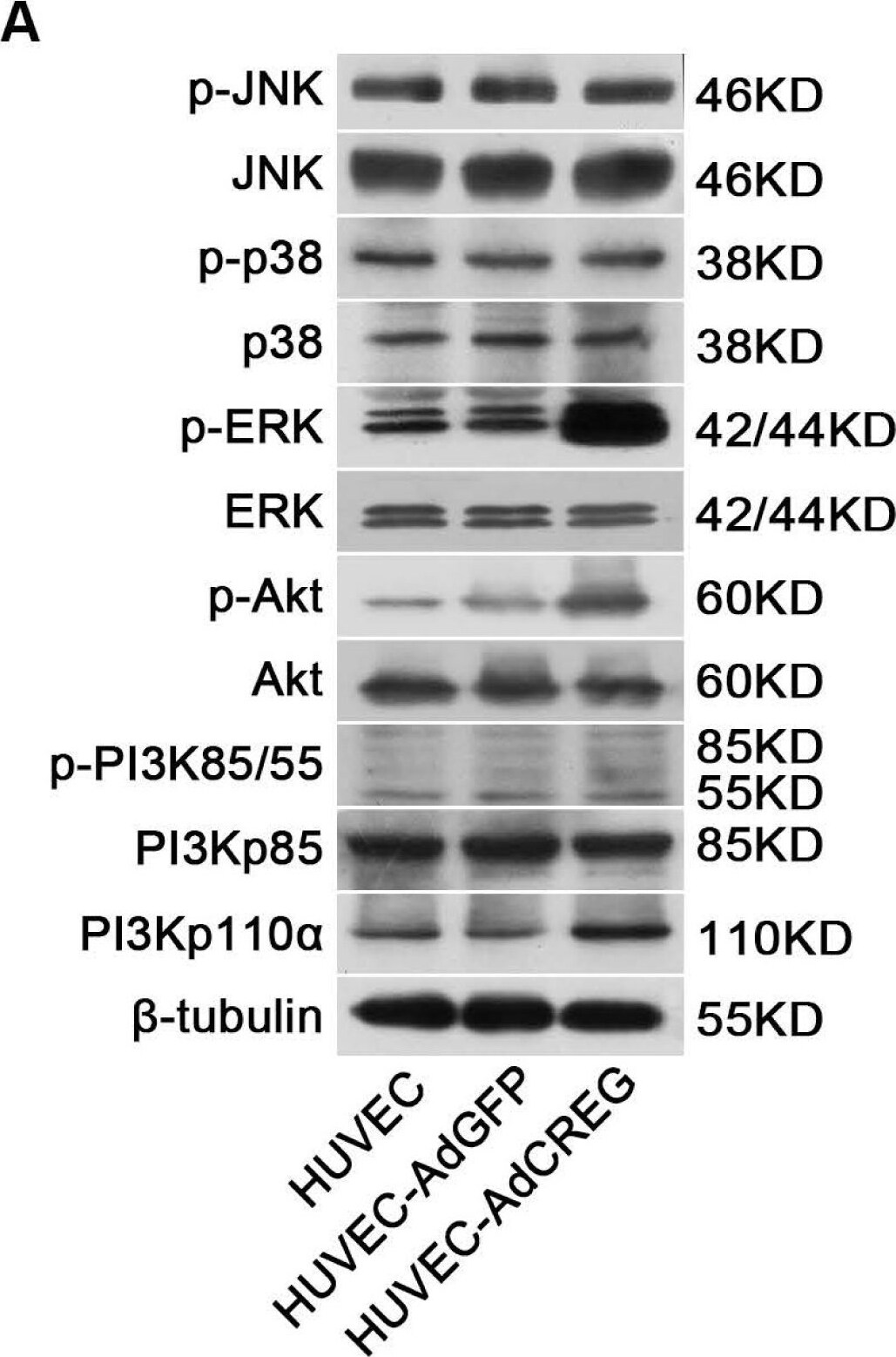
CREG overexpression activates both ERK&PI3K/Akt signaling pathways,&ERK, but not PI3K/Akt, mediates CREG effects on HUVEC proliferation. (A) In the three groups of cells (HUVEC, AdGFP&AdCREG), expression of JNK, p38, ERK, PI3K&Akt signaling molecules&their phosphorylated (p-) forms detected by WB, with beta -tubulin as the loading control. Image collected & cropped by CiteAb from the following open publication (https://pubmed.ncbi.nlm.nih.gov/24018888), licensed under a CC-BY license. Not internally tested by R&D Systems.
Detection of Human ERK1/ERK2 by Western Blot

Detection of Human ERK1/ERK2 by Western Blot

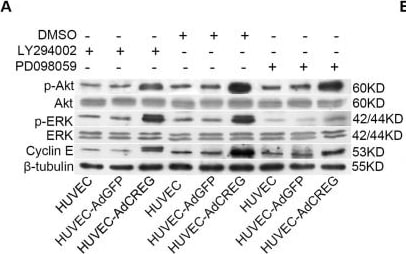
ERK, but not PI3K/Akt, mediates the increase of cyclin E induced by CREG overexpression in HUVEC. (A) Expression of p-ERK, ERK, p-Akt, Akt, cyclin E and beta -tubulin was detected by Western blotting in the three groups of cells with LY294002 (50 μM) or PD098059 (20 μM) treatment. Vehicle (DMSO)-treated cells were used as control, and beta -tubulin was used as a loading control; (B,C) Pooled analysis of the levels of Akt (B) and ERK (C) signaling activation accessed by the grayscale ratios of p-Akt/Akt and p-ERK/ERK, respectively. Data are given as the mean ± SD (n = 3). *p < 0.05; **p < 0.01. NS: no significant difference. (D) After normalization to beta -tubulin, the difference in the expression of cyclin E between the HUVEC-AdGFP and HUVEC-AdCREG group was reduced by the treatment of PD098059, but not LY294002. Data are given as the mean ± SD (n = 3). **p < 0.01. NS: no significant difference. Image collected and cropped by CiteAb from the following open publication (https://pubmed.ncbi.nlm.nih.gov/24018888), licensed under a CC-BY license. Not internally tested by R&D Systems.

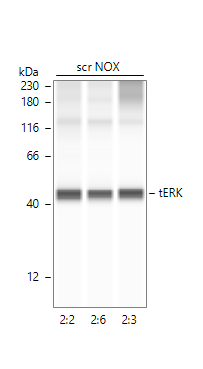
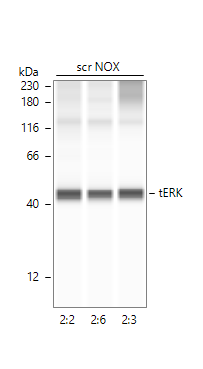
Detection of Human ERK1/ERK2 by Simple WesternTM.

Image of total ERK in A549 cells. Primary antibody dilution - 1:20 in antibody diluent 2. 60 min of incubation. Image from a verified customer review.
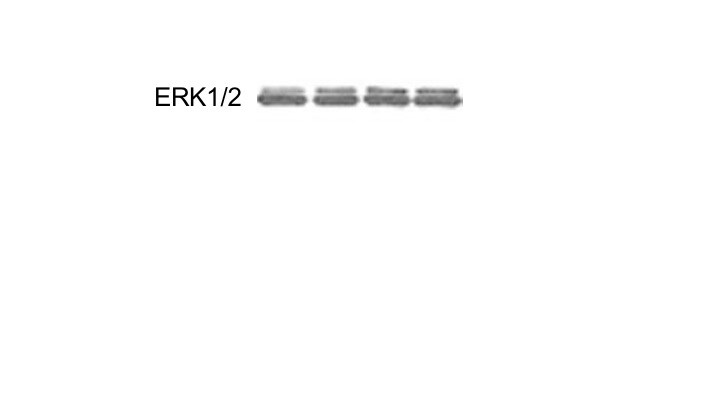
Detection of ERK1/ERK2 by Western Blot

Detection of ERK1/ERK2 by Western Blot

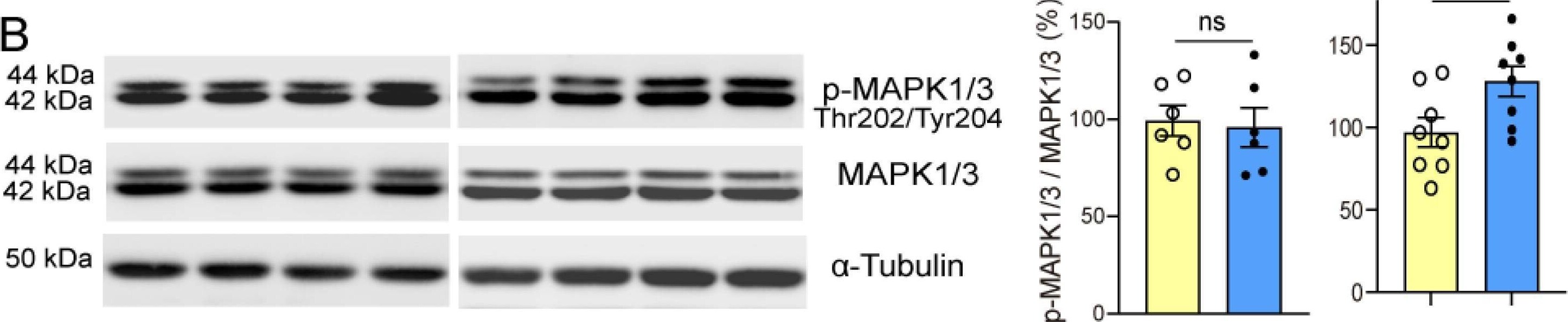
rpS6 activity is preserved and MAPK1/3 and p90S6K are activated in the striatum of R6/1 mice after prolonged treatment with PPX. Western blot for the total and phosphorylated forms of rpS6 at Ser235/236 (A), MAPK1/3 at Thr222/Tyr204 (B), and p90S6K at Ser380 (C) in WT and R6/1 mice. The densitometric analysis showed that Ser235/236-rpS6 phosphorylation was unaffected (A) and that PPX induced phosphorylations of Thr202/Tyr204-MAPK1/3 (B) and Ser380-p90S6K (C) in R6/1 mice. No changes were detected in WT mice. n = 6–12 mice per experimental group, unpaired t-test; ns = non-significant; * p < 0.05; ** p < 0.01. Image collected and cropped by CiteAb from the following open publication (https://pubmed.ncbi.nlm.nih.gov/40358175), licensed under a CC-BY license. Not internally tested by R&D Systems.

Applications for Human/Mouse/Rat ERK1/ERK2 Antibody

Application
Recommended Usage

Simple Western

10 µg/mL
Sample: C2C12 mouse myoblast cell line

Western Blot

0.2 µg/mL
Sample: Jurkat human acute T cell leukemia cell line, C2C12 mouse myoblast cell line myoblast cell line, and C6 rat glioma cell line

Reviewed Applications

Read 4 reviews rated 4.8 using AF1576 in the following applications:

Formulation, Preparation, and Storage

Purification

Antigen Affinity-purified

Reconstitution

Reconstitute at 0.2 mg/mL in sterile PBS. For liquid material, refer to CoA for concentration.


Loading...

Formulation

Lyophilized from a 0.2 μm filtered solution in PBS with Trehalose. *Small pack size (SP) is supplied either lyophilized or as a 0.2 µm filtered solution in PBS.

Shipping

Lyophilized product is shipped at ambient temperature. Liquid small pack size (-SP) is shipped with polar packs. Upon receipt, store immediately at the temperature recommended below.

Stability & Storage

Use a manual defrost freezer and avoid repeated freeze-thaw cycles.
  • 12 months from date of receipt, -20 to -70 °C as supplied.
  • 1 month, 2 to 8 °C under sterile conditions after reconstitution.
  • 6 months, -20 to -70 °C under sterile conditions after reconstitution.

Calculators

The reconstitution calculator allows you to quickly calculate the volume of a reagent to reconstitute your vial. Simply enter the mass of reagent and the target concentration and the calculator will determine the rest.

=
÷

Background: ERK1/ERK2

ERK1 and ERK2 (also known as MAPK3 and MAPK1) are 44 and 42 kDa Ser/Thr kinases, respectively. They are part of the Ras-Raf-ERK signal transduction cascade often found downstream of growth factor receptor activation. ERK1 and ERK2 were initially isolated and cloned as kinases activated in response to insulin and NGF. They are expressed in most, if not all, mammalian tissues. Dual threonine and tyrosine phosphorylation activate both ERKs, at Thr202/Tyr204 for human ERK1 and Thr185/Tyr187 for human ERK2.

ERK5, also known as Big Mitogen-activated Protein Kinase 1 (BMK1) and MAPK7, is activated by several mechanisms, including receptor tyrosine kinases, G protein-coupled receptors, and osmotic stress. Like ERK1 and ERK2, ERK5 contains the conserved Thr-Glu-Tyr activation motif in its activation loop. Unlike these ERKs, however, ERK5 contains a unique C-terminal domain that regulates its activation and nuclear translocation.

Long Name

Extracellular Signal-regulated Kinase 1/2

Alternate Names

ERK1, ERK-1, ERT2, Extracellular signal-regulated kinase 1, extracellular signal-related kinase 1, HS44KDAP, HUMKER1A, Insulin-stimulated MAP2 kinase, MAPK 1, Microtubule-associated protein 2 kinase, mitogen-activated protein kinase 3, p44erk1, p44-ERK1, p44mapk, p44-MAPK, PRKM3

Additional ERK1/ERK2 Products

Product Documents for Human/Mouse/Rat ERK1/ERK2 Antibody

Certificate of Analysis

To download a Certificate of Analysis, please enter a lot or batch number in the search box below.

Note: Certificate of Analysis not available for kit components.

Product Specific Notices for Human/Mouse/Rat ERK1/ERK2 Antibody

For research use only

Citations for Human/Mouse/Rat ERK1/ERK2 Antibody

Customer Reviews for Human/Mouse/Rat ERK1/ERK2 Antibody (4)

4.8 out of 5
4 Customer Ratings
5 Stars
75%
4 Stars
25%
3 Stars
0%
2 Stars
0%
1 Stars
0%

Have you used Human/Mouse/Rat ERK1/ERK2 Antibody?

Submit a review and receive an Amazon gift card!

$25/€18/£15/$25CAN/¥2500 Yen for a review with an image

$10/€7/£6/$10CAN/¥1110 Yen for a review without an image

Submit a review
Amazon Gift Card

Customer Images


Showing  1 - 4 of 4 reviews Showing All
Filter By:
  • ERK1/ERK2 in A549
    Name: Anonymous
    Application: Simple Western
    Sample Tested: A549 human lung carcinoma cell line
    Species: Human
    Verified Customer | Posted 02/12/2025
    Total ERK in A549 cells
    1:20 in antibody diluent 2. 60 min of incubation
    Human/Mouse/Rat ERK1/ERK2 Antibody AF1576
  • Human/Mouse/Rat ERK1/ERK2 Antibody
    Name: Anonymous
    Application: Western Blot
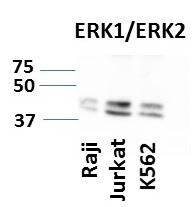
    Sample Tested: Hematological Cancer cell lines
    Species: Human
    Verified Customer | Posted 11/16/2019
    20 ug protein per sample 1:1000 dilution for Antibody.
    Human/Mouse/Rat ERK1/ERK2 Antibody AF1576
  • Human/Mouse/Rat ERK1/ERK2 Antibody
    Name: Anonymous
    Application: Western Blot
    Sample Tested: HEK293 human embryonic kidney cell line
    Species: Human
    Verified Customer | Posted 07/17/2018
    Human/Mouse/Rat ERK1/ERK2 Antibody AF1576
  • Name: Anonymous
    Application: Western Blot
    Sample Tested: See PMID 24382894
    Species: Mouse
    Verified Customer | Posted 01/05/2015

There are no reviews that match your criteria.

Showing  1 - 4 of 4 reviews Showing All

FAQs

No product specific FAQs exist for this product.

View all FAQs for Antibodies