
Axl (Ufo, Ark), Dtk (Sky, Tyro3, Rse, Brt), and Mer (human and mouse homologues of chicken c-Eyk) constitute a subfamily of the receptor tyrosine kinases (1, 2). The extracellular domains of these proteins contain two Ig-like motifs and two fibronectin type III motifs. This characteristic topology is also found in neural cell adhesion molecules and in receptor tyrosine phosphatases. The human Axl cDNA encodes an 887 amino acid (aa) precursor that includes an 18 aa signal sequence, a 426 aa extracellular domain, a 21 aa transmembrane segment, and a 422 aa cytoplasmic domain. The extracellular domains of human and mouse Axl share 81% aa sequence identity. A short alternately spliced form of human Axl is distinguished by a 9 aa deletion in the extracellular juxtamembrane region. These receptors bind the vitamin K‑dependent protein growth arrest specific gene 6 (Gas6) which is structurally related to the anticoagulation factor protein S. Binding of Gas6 induces receptor autophosphorylation and downstream signaling pathways that can lead to cell proliferation, migration, or the prevention of apoptosis (3). This family of tyrosine kinase receptors is involved in hematopoiesis, embryonic development, tumorigenesis, and regulation of testicular functions.
Human phospho-Axl (Y779) Antibody
R&D Systems | Catalog # AF2228

Scientific images may be resized, cropped, or adjusted for brightness or contrast for presentation purposes. These updates are limited to presentation and do not affect the underlying scientific interpretation of the data. Where available, additional source data may be provided upon request.
Key Product Details
Species Reactivity
Validated:
Cited:
Applications
Validated:
Cited:
Label
Antibody Source
Product Specifications
Immunogen
Specificity
Clonality
Host
Isotype
Scientific Data Images for Human phospho-Axl (Y779) Antibody
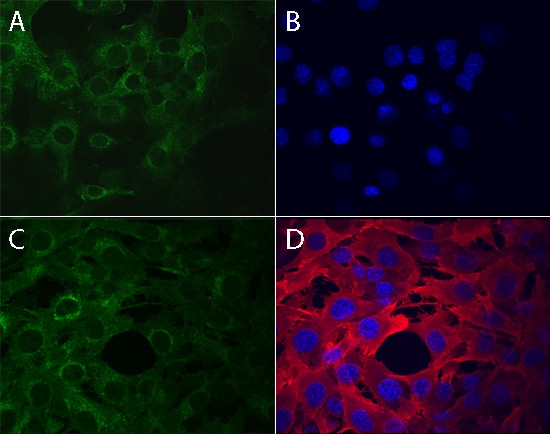
Phospho-Axl (Y779) in A172 Human Cell Line.
Axl phosphorylated at Y779 (panels B, D) and total Axl (panels A, C) were assessed in immersion fixed A172 human glioblastoma cells incubated with (panels C, D) or without (panels A, B) pervanadate. Phospho-Axl was detected using Rabbit Anti-Human Phospho-Axl (Y779) Antigen Affinity-purified Polyclonal Antibody (Catalog # AF2228) at 10 µg/mL for 3 hours at room temperature. Cells were stained using the NorthernLights™ 557-conjugated Anti-Rabbit IgG Secondary Antibody (red, panels B, D); NL004) and counterstained using DAPI (blue). Total Axl was detected using Goat Anti-Human Axl Antigen Affinity-purified Polyclonal Antibody (AF154). Cells were stained using the NorthernLights™ 493-conjugated Anti-Goat IgG Secondary Antibody (green, panels A, C); NL003). Specific staining was localized to cytoplasm. View our protocol for Fluorescent ICC Staining of Cells on Coverslips.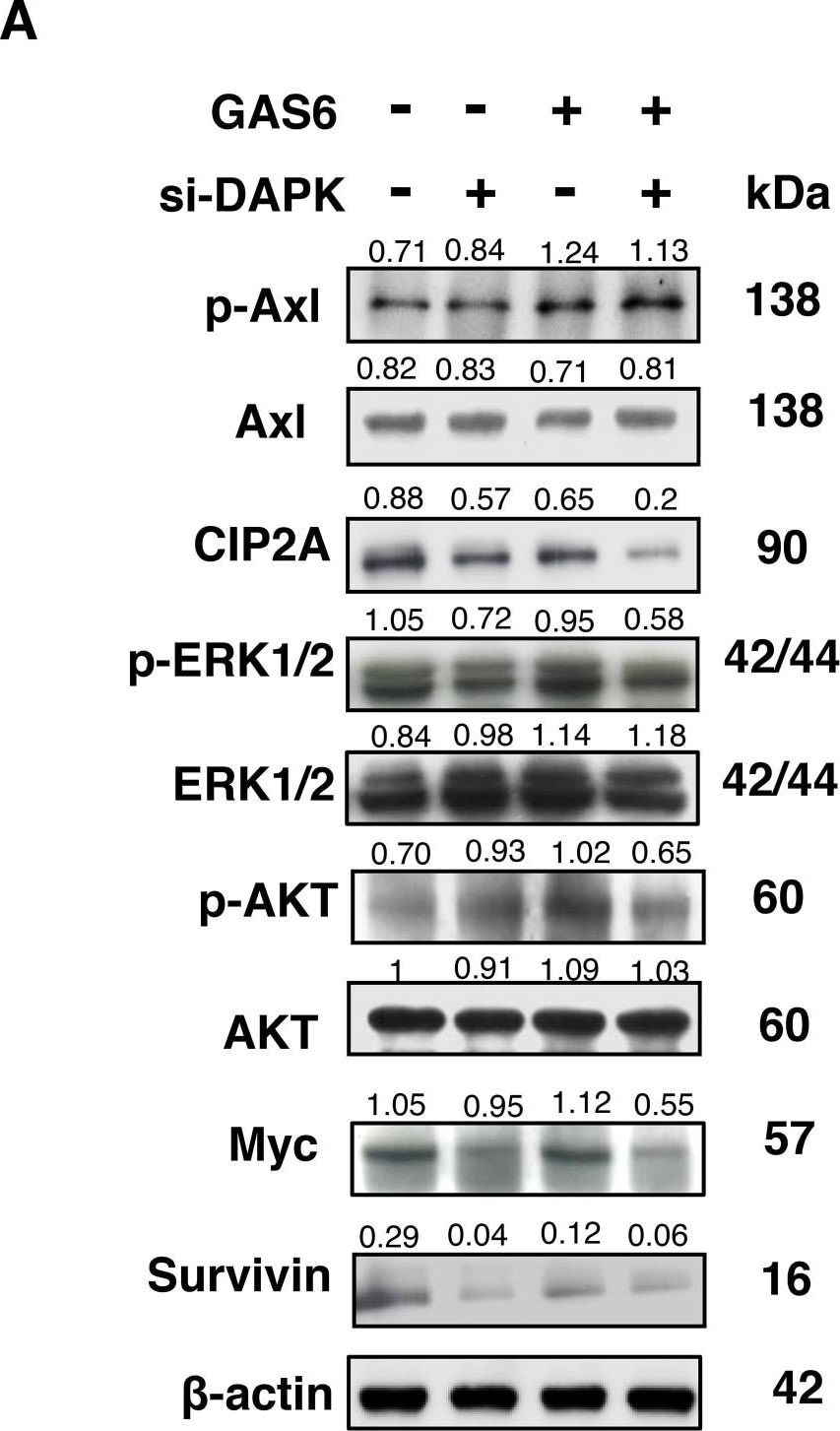
Detection of Rat Human Phospho-Axl (Y779) Antibody by Western Blot
GAS6 triggered Schwann cell proliferation primarily through CIP2A and DAPK(A) RSC96 cells were transfected with either control or DAPK siRNA for 48 h and then exposed to GAS6 (100 ng/ml) for 30 min. Immunoblotting evaluations of pAxl, Axl, CIP2A, DAPK, pERK1/2, ERK1/2, pAKT, AKT, Myc and Survivin. (B) RSC96 cells were transfected with either control or CIP2A siRNA for 48 h and then exposed to GAS6 (100 ng/ml) for 30 min. Immunoblotting evaluations of pAxl, Axl, DAPK, pDAPK, pERK1/2, ERK1/2, pAKT, AKT, Myc and Survivin. (C) DAPK or CIP2A was knocked down for 48 h then RSC96 cells were incubated with GAS6 (100 ng/ml) at the indicated hours. Cell viability was analysed via the WST-1 assay. Data are the mean ± SD, and n = 3 for each time point. * p < 0.05, ** p < 0.01 vs. scramble. Image collected and cropped by CiteAb from the following publication (https://pubmed.ncbi.nlm.nih.gov/29464081), licensed under a CC-BY license. Not internally tested by R&D Systems.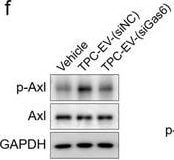
Detection of Human Axl by Western Blot
TPC‐EV‐induced EPC vasculogenic properties are regulated by Gas6 in vitro. (f) The phosphorylated&total forms of Axl, Akt&Erk1/2 in EPCs after the indicated treatments determined. Representative blots&quantification of the ratio of p‐Axl/Axl (n = 3). TPC‐EV‐(siNC), EVs derived from TPCs transfected with NC siRNA. TPC‐EV‐(siGas6), EVs derived from TPCs transfected with Gas6 siRNA. Image collected & cropped by CiteAb from the following open publication (https://pubmed.ncbi.nlm.nih.gov/34035882), licensed under a CC-BY license. Not internally tested by R&D Systems.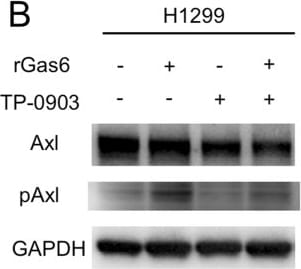
Detection of Human Axl by Western Blot
Migration of H1299 NSCLC cells enhanced by ligand-dependent Axl activation. (A) Western blotting to assess Gas6 expression in H1299 cells. Expression of Gas6 in LCAFhTERT cells was used as a positive control. (B) Phosphorylation of Axl was analyzed by Western blotting of whole cell lysates using different antibodies. GAPDH was used as an internal control. H1299 cells were stimulated for 15 min with 400 nM recombinant human Gas6 (rGas6). H1299 cells were treated with or without TP-0903 (0.2 µmol/L) for 24 h. (C) Migration of H1299 cells was analyzed using rGas6 (400 nM) added to the lower chamber. H1299 cells were treated with or without TP-0903 (0.2 µmol/L) for 24 h. (D) Western blotting of conditioned medium from LCAFhTERT transfected with siGas6 or siScr (control) to assess whether they contains Gas6 secreted by CAFs. (E) Phosphorylation of Axl in H1299 cells analyzed by Western blotting after stimulation with conditioned medium from siRNA-transfected LCAFhTERT. H1299 cells were treated with or without TP-0903 (0.2 µmol/L) for 24 h. The medium (DMEM containing 10% FBS) was used as control. (F) Migration of H1299 cells analyzed using conditioned medium of siRNA-transfected LCAFhTERT. H1299 cells were treated with or without TP-0903 (0.2 µmol/L) for 24 h. The medium (DMEM containing 10% FBS) was used as control. The relative number of migrated H1299 cells is indicated on the y-axis. Data show the mean ± SEM (n = 3); **p < 0.01. Image collected and cropped by CiteAb from the following open publication (https://pubmed.ncbi.nlm.nih.gov/28878389), licensed under a CC-BY license. Not internally tested by R&D Systems.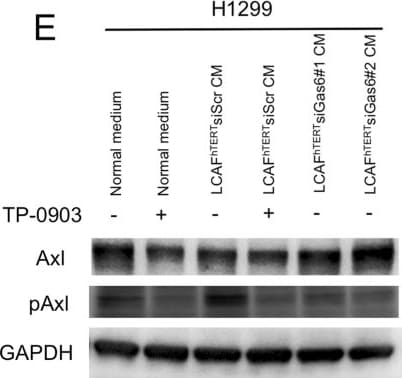
Detection of Human Axl by Western Blot
Migration of H1299 NSCLC cells enhanced by ligand-dependent Axl activation. (A) Western blotting to assess Gas6 expression in H1299 cells. Expression of Gas6 in LCAFhTERT cells was used as a positive control. (B) Phosphorylation of Axl was analyzed by Western blotting of whole cell lysates using different antibodies. GAPDH was used as an internal control. H1299 cells were stimulated for 15 min with 400 nM recombinant human Gas6 (rGas6). H1299 cells were treated with or without TP-0903 (0.2 µmol/L) for 24 h. (C) Migration of H1299 cells was analyzed using rGas6 (400 nM) added to the lower chamber. H1299 cells were treated with or without TP-0903 (0.2 µmol/L) for 24 h. (D) Western blotting of conditioned medium from LCAFhTERT transfected with siGas6 or siScr (control) to assess whether they contains Gas6 secreted by CAFs. (E) Phosphorylation of Axl in H1299 cells analyzed by Western blotting after stimulation with conditioned medium from siRNA-transfected LCAFhTERT. H1299 cells were treated with or without TP-0903 (0.2 µmol/L) for 24 h. The medium (DMEM containing 10% FBS) was used as control. (F) Migration of H1299 cells analyzed using conditioned medium of siRNA-transfected LCAFhTERT. H1299 cells were treated with or without TP-0903 (0.2 µmol/L) for 24 h. The medium (DMEM containing 10% FBS) was used as control. The relative number of migrated H1299 cells is indicated on the y-axis. Data show the mean ± SEM (n = 3); **p < 0.01. Image collected and cropped by CiteAb from the following open publication (https://pubmed.ncbi.nlm.nih.gov/28878389), licensed under a CC-BY license. Not internally tested by R&D Systems.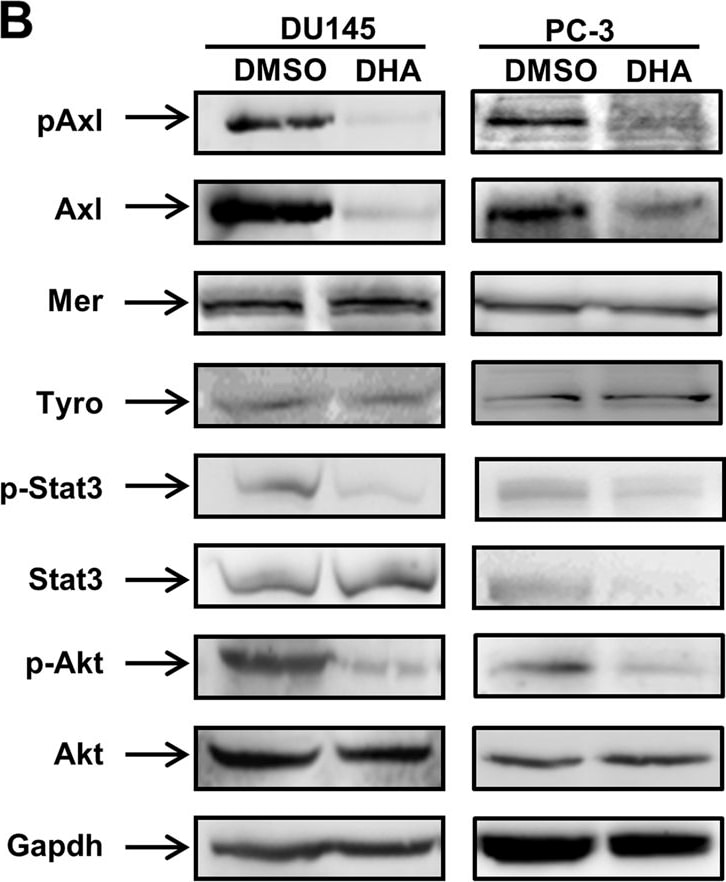
Detection of Human Axl by Western Blot
DHA treatment inhibits Axl expression and proteins involved in the Axl signaling pathway, reduces cell migration and invasion and induces apoptosis in mCRPCa cell lines.a qRT-PCR for Axl in PCa cells treated with 5 μM of DHA for 24 h. Values were normalized to Gapdh levels and to DMSO control. The experiment was performed in triplicate. Data are representative of 3 independent experiments; *p < 0.05 two-tailed Student’s t-test. b Immunoblot analysis of protein extracts obtained from DU145 and PC-3 treated with 5 μM DHA for 24 h using anti-phospho-Axl, anti-phospho-Akt and anti-phospho-Stat3 and anti-Axl, anti-Akt, anti-Stat3 and anti- GAPDH. c Migration and d invasion analysis of mCRPC cell lines 24 h post treatment with 5 μM of DHA. Cells were fixed and stained, and 3–5 random microscopic fields were counted. Data are representative of three independent experiments and all values shown are mean ± SD from a representative experiment; **p < 0.01, two-tailed Student’s t-test. e Apoptosis assay for mCRPCa cell lines treated with 5 μM of DHA for 8 h. DMSO 0.05% was used as a control. Data are representative of three independent experiments and all values shown are mean ± SD from a representative experiment; *p < 0.05, two-tailed Student’s t-test Image collected and cropped by CiteAb from the following open publication (https://pubmed.ncbi.nlm.nih.gov/30783079), licensed under a CC-BY license. Not internally tested by R&D Systems.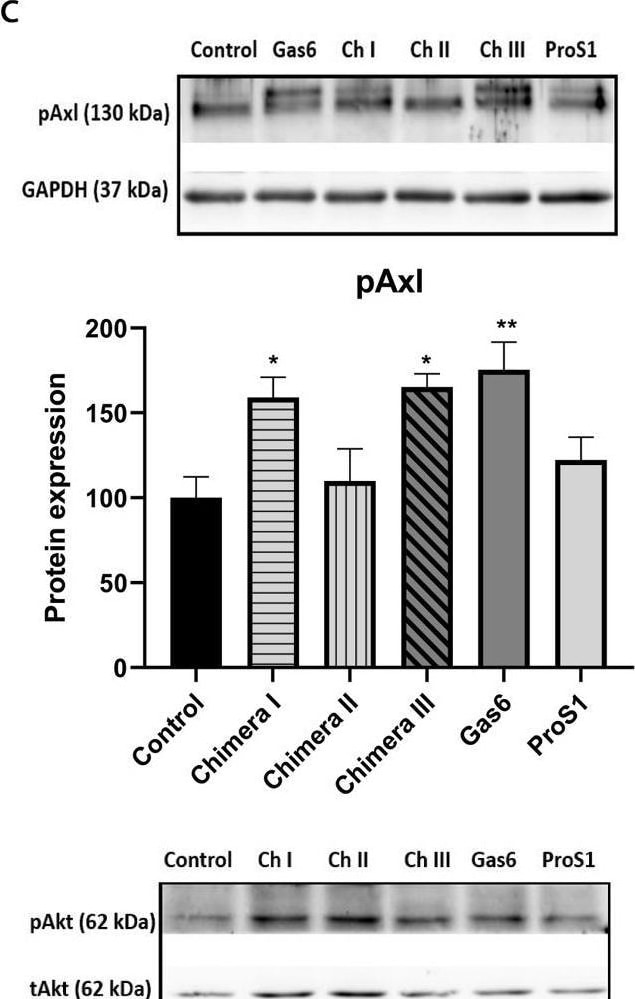
Detection of Phospho-Axl (Y779) by Western Blot
The effects of ProS1, Gas6 and chimeras on TAM receptor and coupled downstream signalling molecule activation in SCC-25 cells. (a) Schematic representation of recombinant TAM ligand constructs used in this study. These included human ProS1, Gas6, and three ProS1/Gas6 chimeras. All of the chimeras contained the Gla domain and EGF-like domains of ProS1. Light grey colour denotes regions corresponding to ProS1 amino acid sequence, whereas dark grey denotes regions corresponding to Gas6 amino acid sequence. (b) Western blot showing phosphorylated Tyro3 (pTyro3) and Erk (pErk) levels after stimulation with recombinant Gas6, ProS1 and three chimeras (7.5 nM) for 9 min. (c) Western blot showing phosphorylated Axl (pAxl) and Akt (pAkt) levels under the same experimental conditions as in (b). Each representative blot image is followed by accompanying graphs of densitometric quantification of bands (n = 3 separate experiments). Data as mean ± SEM expression for each phosphoprotein was normalized against the total protein/loading control (tTyro3, tERK, GAPDH, actin). ANOVA with Tukey's multiple comparison post-hoc analysis; ***p < 0.001, **p < 0.01, *p < 0.05 versus control (untreated). While the sample loading order is different in the pAxl blot, the quantification bar charts are presented in the same order for consistency. Image collected and cropped by CiteAb from the following open publication (https://pubmed.ncbi.nlm.nih.gov/35518197), licensed under a CC-BY license. Not internally tested by R&D Systems.Applications for Human phospho-Axl (Y779) Antibody
Immunocytochemistry
Sample: Immersion fixed A172 human glioblastoma cell line with and without pervanadate co-staining with total Axl (Catalog # AF154)
Reviewed Applications
Read 6 reviews rated 4.2 using AF2228 in the following applications:
Formulation, Preparation, and Storage
Purification
Reconstitution
Reconstitute at 0.2 mg/mL in sterile PBS. For liquid material, refer to CoA for concentration.
Formulation
Shipping
Stability & Storage
- 12 months from date of receipt, -20 to -70 °C as supplied.
- 1 month, 2 to 8 °C under sterile conditions after reconstitution.
- 6 months, -20 to -70 °C under sterile conditions after reconstitution.
Calculators
Background: Axl
References
- Yanagita, M. (2004) Curr. Opin. Nephrol. Hypertens. 13:465.
- Nagata, K. et al. (1996) J. Biol. Chem. 22:30022.
- Holland, S. et al. (2005) Canc. Res. 65:9294.
Long Name
Alternate Names
Gene Symbol
Additional Axl Products
Product Documents for Human phospho-Axl (Y779) Antibody
Certificate of Analysis
To download a Certificate of Analysis, please enter a lot or batch number in the search box below.
Note: Certificate of Analysis not available for kit components.
Product Specific Notices for Human phospho-Axl (Y779) Antibody
For research use only
Related Research Areas
Citations for Human phospho-Axl (Y779) Antibody
 Powered by Bioz
Customer Reviews for Human phospho-Axl (Y779) Antibody (6)
Have you used Human phospho-Axl (Y779) Antibody?
Submit a review and receive an Amazon gift card!
$25/€18/£15/$25CAN/¥2500 for a review with an image
$10/€7/£6/$10CAN/¥1110 for a review without an image
Submit a review
Customer Images
-
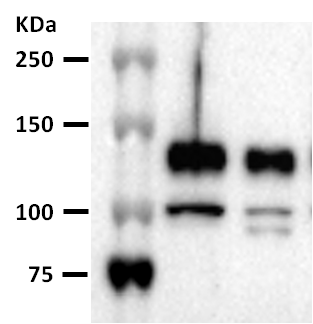
Application: Western BlotSample Tested: DU145 human prostate carcinoma cell lineSpecies: HumanVerified Customer | Posted 11/14/2020

-
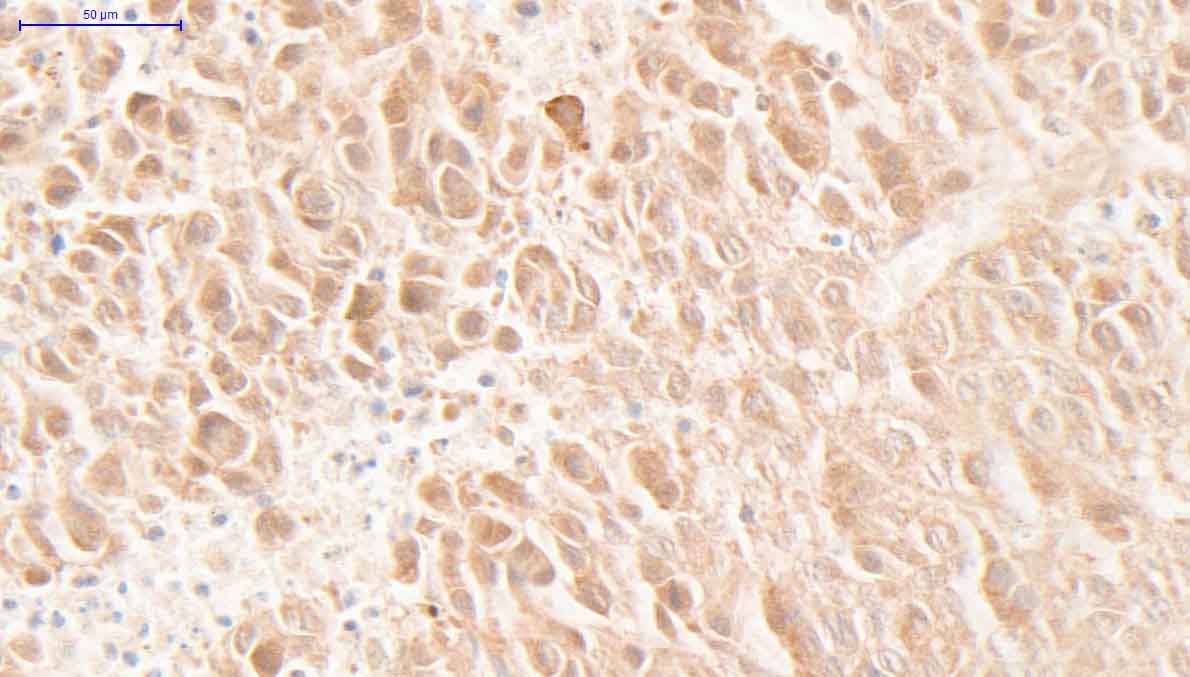
Application: ImmunohistochemistrySample Tested: B16F0 melanoma tumourSpecies: MouseVerified Customer | Posted 01/03/2019
-
Application: Western BlotSample Tested: Brain tissueSpecies: MouseVerified Customer | Posted 06/23/2017
-
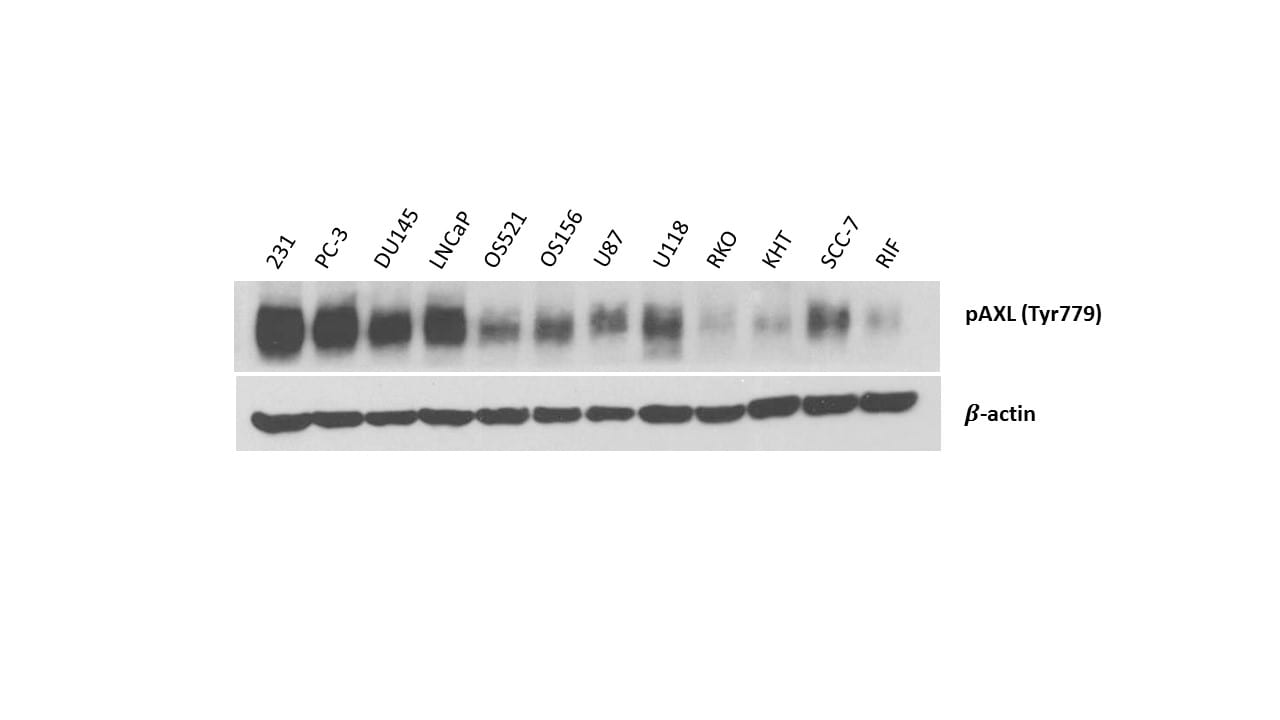
Application: Western BlotSample Tested: MDA-MB-231 human breast cancer cell line, PC-3 human prostate cancer cell line, DU145 human prostate carcinoma cell line, LNCaP human prostate cancer cell line, S521, S156, U-87 MG human glioblastoma/astrocytoma cell line, U-118-MG human glioblastoma/astrocytoma cell line, RKO, KHT and SCC-7Species: Mouse and HumanVerified Customer | Posted 10/06/2016
-
Application: Western BlotSample Tested: MCF 10A human breast epithelial cell line, mcf10aDCIS.com and MDA-MB-231 human breast cancer cell lineSpecies: HumanVerified Customer | Posted 04/25/2016
-
Application: Immunohistochemistry-ParaffinSample Tested: See Pmid 24687913Species: HumanVerified Customer | Posted 01/06/2015
There are no reviews that match your criteria.
Protocols
Find general support by application which include: protocols, troubleshooting, illustrated assays, videos and webinars.
- Appropriate Fixation of IHC/ICC Samples
- Cellular Response to Hypoxia Protocols
- ClariTSA™ Fluorophore Kits
- Detection & Visualization of Antibody Binding
- ICC Cell Smear Protocol for Suspension Cells
- ICC Immunocytochemistry Protocol Videos
- ICC for Adherent Cells
- Immunocytochemistry (ICC) Protocol
- Immunocytochemistry Troubleshooting
- Immunofluorescence of Organoids Embedded in Cultrex Basement Membrane Extract
- Immunohistochemistry (IHC) and Immunocytochemistry (ICC) Protocols
- Preparing Samples for IHC/ICC Experiments
- Preventing Non-Specific Staining (Non-Specific Binding)
- Primary Antibody Selection & Optimization
- Protocol for VisUCyte™ HRP Polymer Detection Reagent
- Protocol for the Fluorescent ICC Staining of Cell Smears - Graphic
- Protocol for the Fluorescent ICC Staining of Cultured Cells on Coverslips - Graphic
- Protocol for the Preparation and Fluorescent ICC Staining of Cells on Coverslips
- Protocol for the Preparation and Fluorescent ICC Staining of Non-adherent Cells
- Protocol for the Preparation and Fluorescent ICC Staining of Stem Cells on Coverslips
- Protocol for the Preparation of a Cell Smear for Non-adherent Cell ICC - Graphic
- TUNEL and Active Caspase-3 Detection by IHC/ICC Protocol
- The Importance of IHC/ICC Controls
- View all Protocols, Troubleshooting, Illustrated assays and Webinars