Key Product Details

Species Reactivity

Validated:

Human

Cited:

Human, Mouse, Rat, Primate - Papio anubis (Olive Baboon), Rabbit

Applications

Validated:

Immunohistochemistry, Western Blot, Blockade of Receptor-ligand Interaction, Simple Western

Cited:

Immunohistochemistry, Immunohistochemistry-Paraffin, Immunohistochemistry-Frozen, Western Blot, Neutralization, Flow Cytometry, Immunocytochemistry, Immunoprecipitation

Label

Unconjugated

Antibody Source

Polyclonal Goat IgG
Loading...

Product Specifications

Immunogen

Mouse myeloma cell line NS0-derived recombinant human Tie‑2
Ala23-Lys745
Accession # Q02763

Specificity

Detects human Tie-2 in direct ELISAs and Western blots.

Clonality

Polyclonal

Host

Goat

Isotype

IgG

Endotoxin Level

<0.10 EU per 1 μg of the antibody by the LAL method.

Scientific Data Images for Human Tie‑2 Antibody

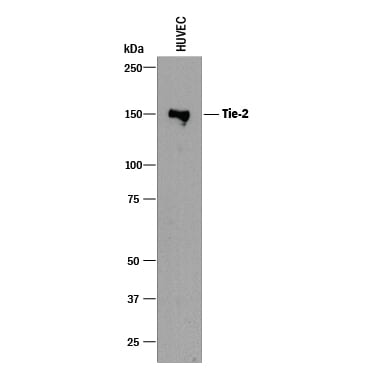
Detection of Human Tie-2 antibody by Western Blot.

Detection of Human Tie‑2 by Western Blot.

Western blot shows lysate of HUVEC human umbilical vein endothelial cells. PVDF membrane was probed with 1 µg/mL of Goat Anti-Human Tie-2 Antigen Affinity-purified Polyclonal Antibody (Catalog # AF313) followed by HRP-conjugated Anti-Goat IgG Secondary Antibody (HAF017). A specific band was detected for Tie-2 at approximately 150 kDa (as indicated). This experiment was conducted under reducing conditions and using Immunoblot Buffer Group 1.

Tie-2 antibody in Human Placenta by Immunohistochemistry (IHC-P).

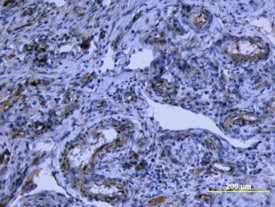
Tie‑2 in Human Placenta.

Tie-2 was detected in immersion fixed paraffin-embedded sections of human placenta using Goat Anti-Human Tie-2 Antigen Affinity-purified Polyclonal Antibody (Catalog # AF313) at 10 µg/mL overnight at 4 °C. Tissue was stained using the Anti-Goat HRP-DAB Cell & Tissue Staining Kit (brown; CTS008) and counterstained with hematoxylin (blue). View our protocol for Chromogenic IHC Staining of Paraffin-embedded Tissue Sections.

Detection of Human Tie-2 antibody by Simple WesternTM.

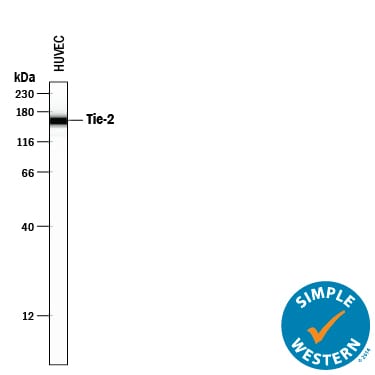
Detection of Human Tie‑2 by Simple WesternTM.

Simple Western lane view shows lysates of HUVEC human umbilical vein endothelial cells, loaded at 0.2 mg/mL. A specific band was detected for Tie-2 at approximately 161 kDa (as indicated) using 10 µg/mL of Goat Anti-Human Tie-2 Antigen Affinity-purified Polyclonal Antibody (Catalog # AF313) followed by 1:50 dilution of HRP-conjugated Anti-Goat IgG Secondary Antibody (HAF109). This experiment was conducted under reducing conditions and using the 12-230 kDa separation system.

Detection of Human Tie-2 by Western Blot

Detection of Human Tie-2 by Western Blot

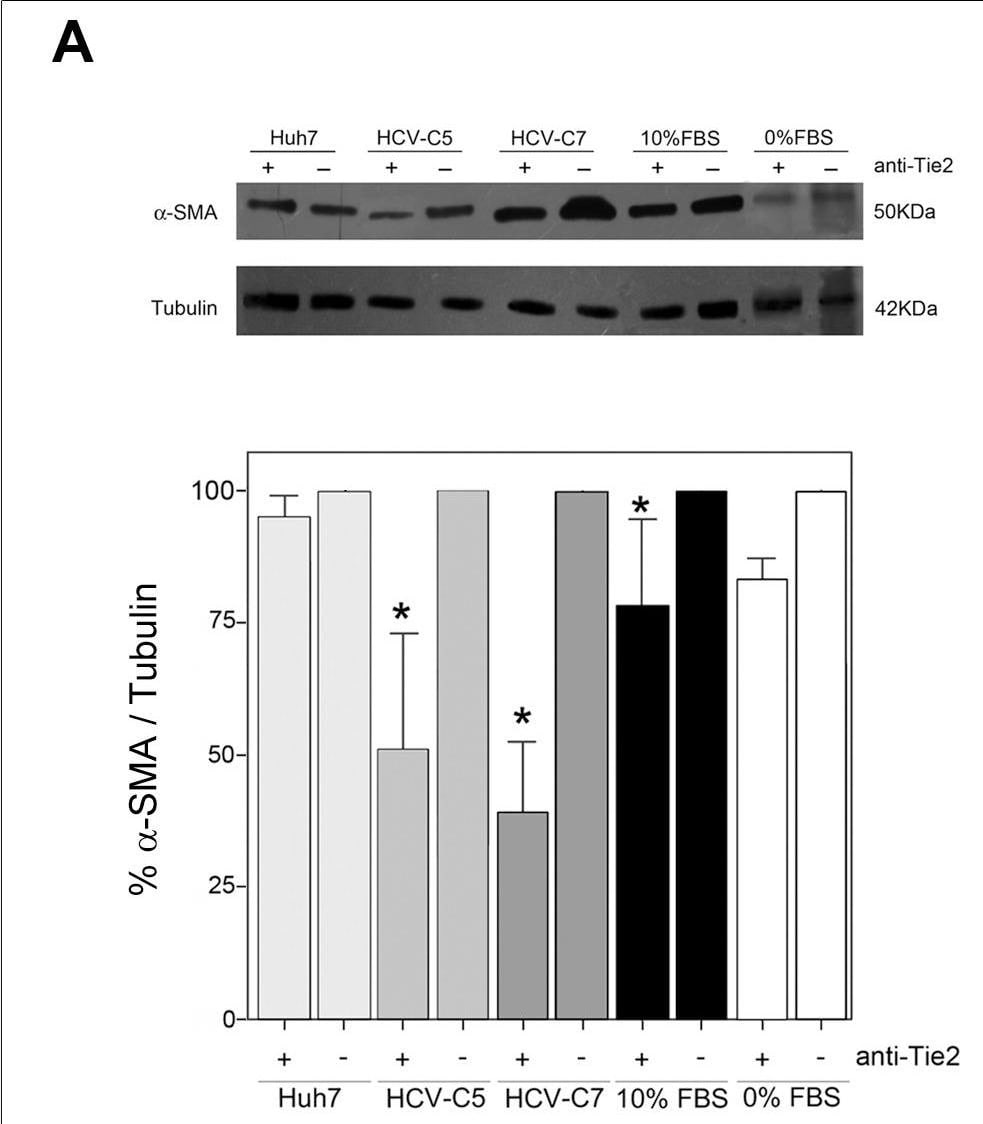
The activation and invasive potential of HSC are prevented by a Tie2 neutralizing antibody or by the inhibition of Akt/PI3k and MAPK signaling pathways.(A) alpha -SMA expression was assessed by western blotting (1A4, 1∶1000) in 20 µL of Laemmli lysates from HSC exposed during 24 h to different culture conditions (hepatic-derived CM, 0% FBS DMEM or 10% FBS DMEM) in presence (+) or absence (-) anti-Tie2 blocking antibody (AF313, 8 µg/ml). Quantitative analysis of alpha -SMA/tubulin bands in presence of neutralizing antibody is displayed in the graph as percentage of expression observed without anti-Tie2 (100%) for each experimental condition. Bars show mean +SD of 3 independent experiments. *p<0.05. Image collected and cropped by CiteAb from the following open publication (https://pubmed.ncbi.nlm.nih.gov/25302785), licensed under a CC-BY license. Not internally tested by R&D Systems.
Detection of Human Tie-2 by Western Blot

Detection of Human Tie-2 by Western Blot

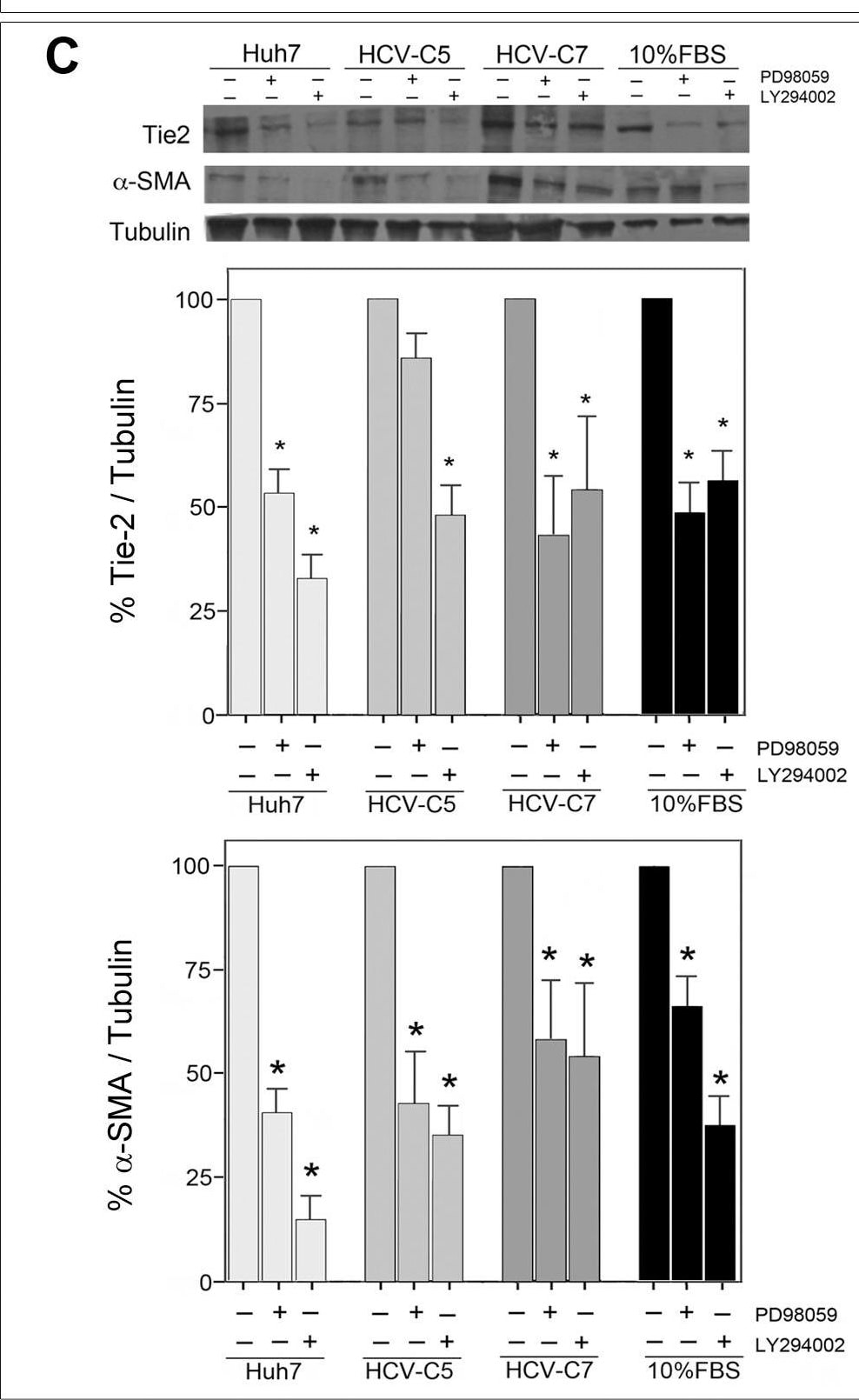
The activation and invasive potential of HSC are prevented by a Tie2 neutralizing antibody or by the inhibition of Akt/PI3k and MAPK signaling pathways. (C) The influence of different CM in presence or absence of LY294002 and PD98059 at 25 µmol/ml each (Akt/PI3k and MAPK inhibitors, respectively) on the expression of Tie2 (AF313, 1∶200) and alpha -SMA (1A4, 1∶1000) by HSC is illustrated. Respective western blots were analyzed in relation to tubulin to normalize total protein loading and the expression in presence of inhibitors was displayed as percentage of the expression without the respective compound (100%) in the same experimental conditions. Data from 3 experiments in duplicate are shown. *p<0.05. (D) Invasive potential of HSC (5×10⁴ cells/100 µL) under the influence of LY294002 and PD98059 (25 µmol/ml both) at different experimental conditions (hepatic-derived CM, 0% FBS DMEM or 10% FBS DMEM) is shown by fluorescence images (400x). Graph depicts the mean +SD of average migrating HSC/field (5 microscope fields) per experiment (3 independent) of denoted HSC culture conditions. *p<0.05: statistical difference of presence versus absence of inhibitors. Image collected and cropped by CiteAb from the following open publication (https://pubmed.ncbi.nlm.nih.gov/25302785), licensed under a CC-BY license. Not internally tested by R&D Systems.
Detection of Human Tie-2 by Western Blot

Detection of Human Tie-2 by Western Blot

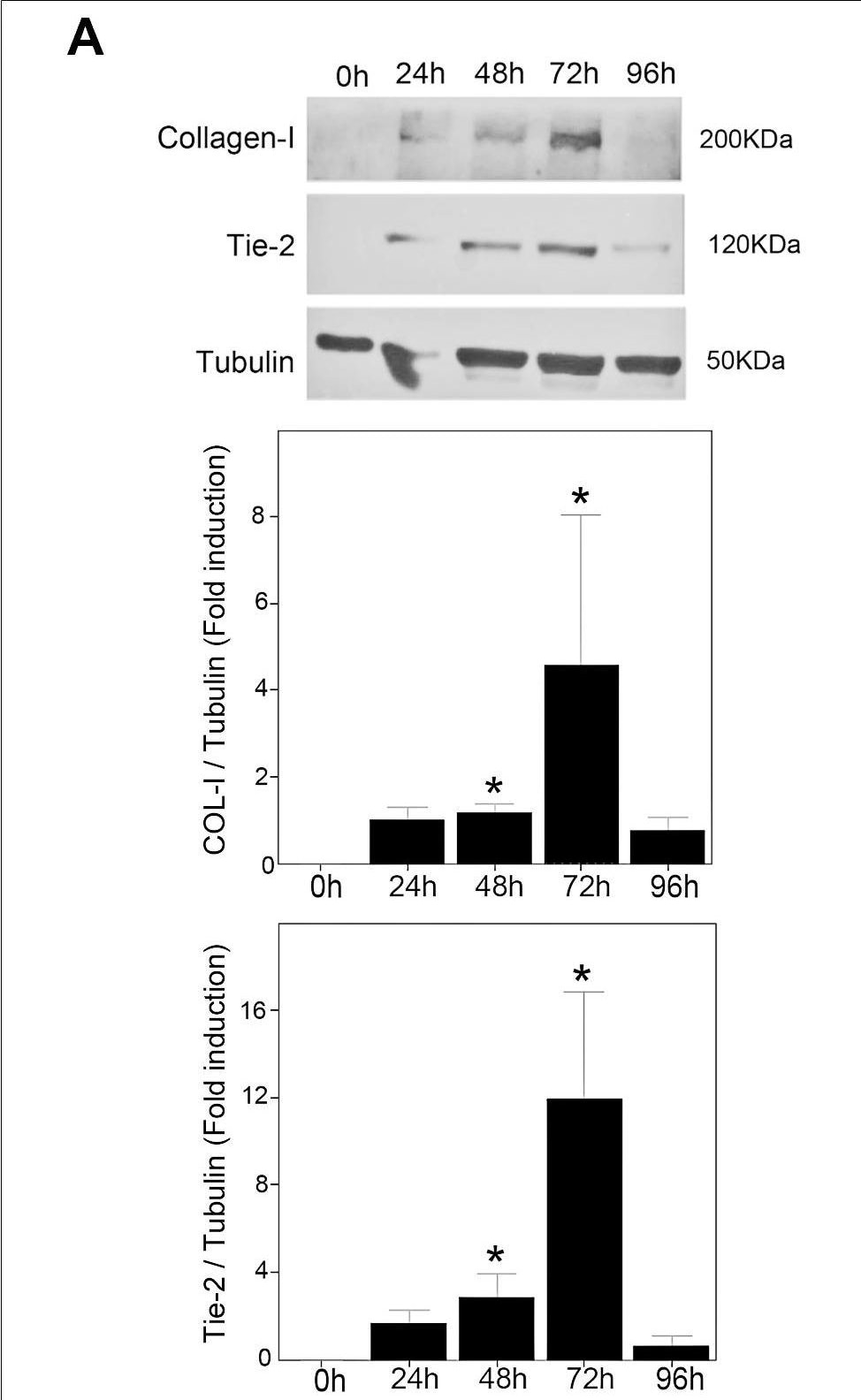
Activation of HSC increases Tie2 expression.(A) Kinetics of Tie2 expression during in vitro activation of HSC. HSC, plated at 50,000 cells/cm2 density and grown in 2% DMEM during 24, 48, 72 and 96 hours, were lysed in Laemmli buffer and loaded in 7% acrylamide gels (20 µL of total protein extract per well). SDS-PAGE resolved proteins were transferred to nitrocellulose membranes and probed with respective antibodies against COL-I (H-197, 1∶2000), Tie2 (AF313, 1∶200) or tubulin (DM1A, 1∶5000). Quantitative analysis of Tie2 or COL-1 chemiluminescence in relation to tubulin (FUJIFILM Science Lab Image Gauge) is shown in respective graphs. *p<0.05 versus 24 h (mean +SD, 3 independent experiments). Image collected and cropped by CiteAb from the following open publication (https://pubmed.ncbi.nlm.nih.gov/25302785), licensed under a CC-BY license. Not internally tested by R&D Systems.
Detection of Human Tie-2 by Western Blot

Detection of Human Tie-2 by Western Blot

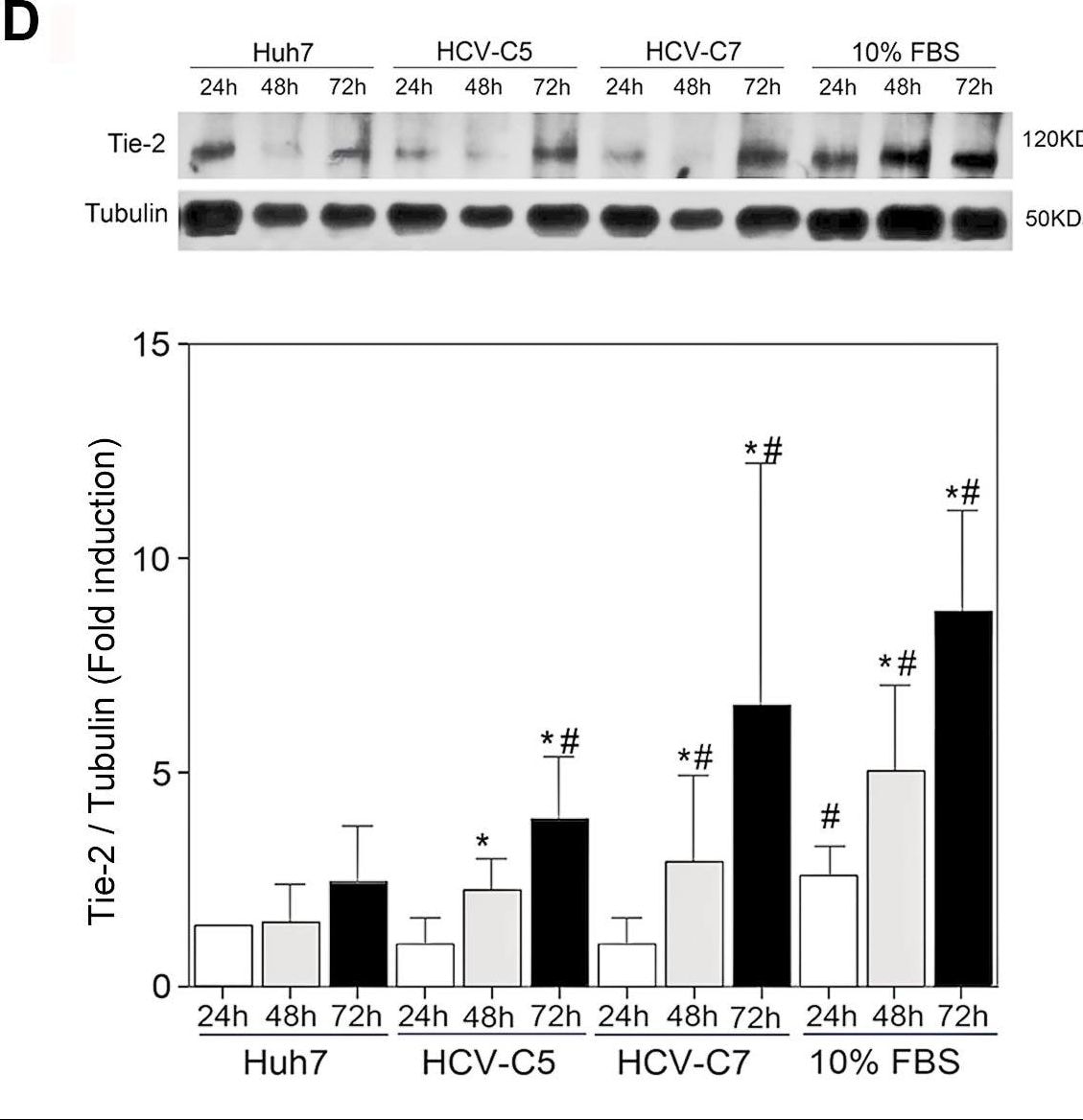
Activation of HSC increases Tie2 expression. (D) HSC conditioned during different times with media from hepatic cells (Huh7 or HCV replicons) or 10% FBS DMEM. HSC, plated at same density in 0% FBS DMEM 24 h before, were exposed during 24, 48 or 72 h to 10% FBS DMEM or CM from hepatic cell lines and the expression of Tie2 (AF313, 1∶200), normalized with tubulin (DM1A, 1∶5000), was analyzed. Graph shows quantitative densitometric analysis of western blot bands (mean +SD of 3 independent experiments). #p<0.05: statistic differences versus Huh7 at same times; *p<0.05, same CM versus 24 h. Image collected and cropped by CiteAb from the following open publication (https://pubmed.ncbi.nlm.nih.gov/25302785), licensed under a CC-BY license. Not internally tested by R&D Systems.

Applications for Human Tie‑2 Antibody

Application
Recommended Usage

Blockade of Receptor-ligand Interaction

In a functional ELISA, Human Tie-2 Antibody (Catalog # AF313) blocks the binding of Recombinant Human Tie-2 Fc Chimera (Catalog # 313-TI) to Biotinylated Recombinant Human Angiopoietin-2. The Neutralization Dose (ND50) for this effect is typically 1.00-12.0 µg/mL.

Immunohistochemistry

5-15 µg/mL
Sample: Immersion fixed paraffin-embedded sections of human placenta

Simple Western

10 µg/mL
Sample: HUVEC human umbilical vein endothelial cells

Western Blot

1 µg/mL
Sample: HUVEC human umbilical vein endothelial cells

Reviewed Applications

Read 2 reviews rated 3.5 using AF313 in the following applications:

Formulation, Preparation, and Storage

Purification

Antigen Affinity-purified

Reconstitution

Reconstitute at 0.2 mg/mL in sterile PBS. For liquid material, refer to CoA for concentration.


Loading...

Formulation

Lyophilized from a 0.2 μm filtered solution in PBS with Trehalose. See Certificate of Analysis for details.
*Small pack size (-SP) is supplied either lyophilized or as a 0.2 µm filtered solution in PBS.

Shipping

Lyophilized product is shipped at ambient temperature. Liquid small pack size (-SP) is shipped with polar packs. Upon receipt, store immediately at the temperature recommended below.

Stability & Storage

Use a manual defrost freezer and avoid repeated freeze-thaw cycles.
  • 12 months from date of receipt, -20 to -70 °C as supplied.
  • 1 month, 2 to 8 °C under sterile conditions after reconstitution.
  • 6 months, -20 to -70 °C under sterile conditions after reconstitution.

Calculators

The reconstitution calculator allows you to quickly calculate the volume of a reagent to reconstitute your vial. Simply enter the mass of reagent and the target concentration and the calculator will determine the rest.

=
÷

Background: Tie-2

Tie-1/Tie (tyrosine kinase with Ig and EGF homology domains 1) and Tie-2/Tek comprise a receptor tyrosine kinase (RTK) subfamily with unique structural characteristics: two immunoglobulin-like domains flanking three epidermal growth factor (EGF)-like domains and followed by three fibronectin type III-like repeats in the extracellular region and a split tyrosine kinase domain in the cytoplasmic region. These receptors are expressed primarily on endothelial and hematopoietic progenitor cells and play critical roles in angiogenesis, vasculogenesis and hematopoiesis.

Human Tie-2 cDNA encodes a 1124 amino acid (aa) residue precursor protein with an 18 residue putative signal peptide, a 727 residue extracellular domain and a 354 residue cytoplasmic domain. Two ligands, angiopoietin-1 (Ang-1) and angiopoietin-2 (Ang-2), which bind Tie-2 with high-affinity have been identified. Ang-2 has been reported to act as an antagonist for Ang-1. Mice engineered to overexpress Ang-2 or to lack Ang-1 or Tie-2 display similar angiogenesis defects.

References

  1. Partanen, J. and D.J. Dumont (1999) Curr. Top. Microbiol. Immunol. 237:159.
  2. Takakura, N. et al. (1998) Immunity 9:677.
  3. Procopio, W. et al. (1999) J. Biol. Chem. 274:30196.

Long Name

Tyrosine Kinase with Immunoglobulin and Epidermal Growth Factor Homology Domains 2

Alternate Names

CD202b, TEK, Tie2

Entrez Gene IDs

7010 (Human); 21687 (Mouse); 89804 (Rat); 396729 (Porcine); 403714 (Canine); 102122204 (Cynomolgus Monkey); 30747 (Zebrafish)

Gene Symbol

TEK

UniProt

Additional Tie-2 Products

Product Documents for Human Tie‑2 Antibody

Certificate of Analysis

To download a Certificate of Analysis, please enter a lot or batch number in the search box below.

Note: Certificate of Analysis not available for kit components.

Product Specific Notices for Human Tie‑2 Antibody

For research use only

Citations for Human Tie‑2 Antibody

Customer Reviews for Human Tie‑2 Antibody (2)

3.5 out of 5
2 Customer Ratings
5 Stars
0%
4 Stars
50%
3 Stars
50%
2 Stars
0%
1 Stars
0%

Have you used Human Tie‑2 Antibody?

Submit a review and receive an Amazon gift card!

$25/€18/£15/$25CAN/¥2500 Yen for a review with an image

$10/€7/£6/$10CAN/¥1110 Yen for a review without an image

Submit a review
Amazon Gift Card

Customer Images


Showing  1 - 2 of 2 reviews Showing All
Filter By:
  • Human Tie-2 Antibody
    Name: Anonymous
    Application: ELISA
    Sample Tested: HASMC human aortic smooth muscle cells
    Species: Human
    Verified Customer | Posted 10/17/2018
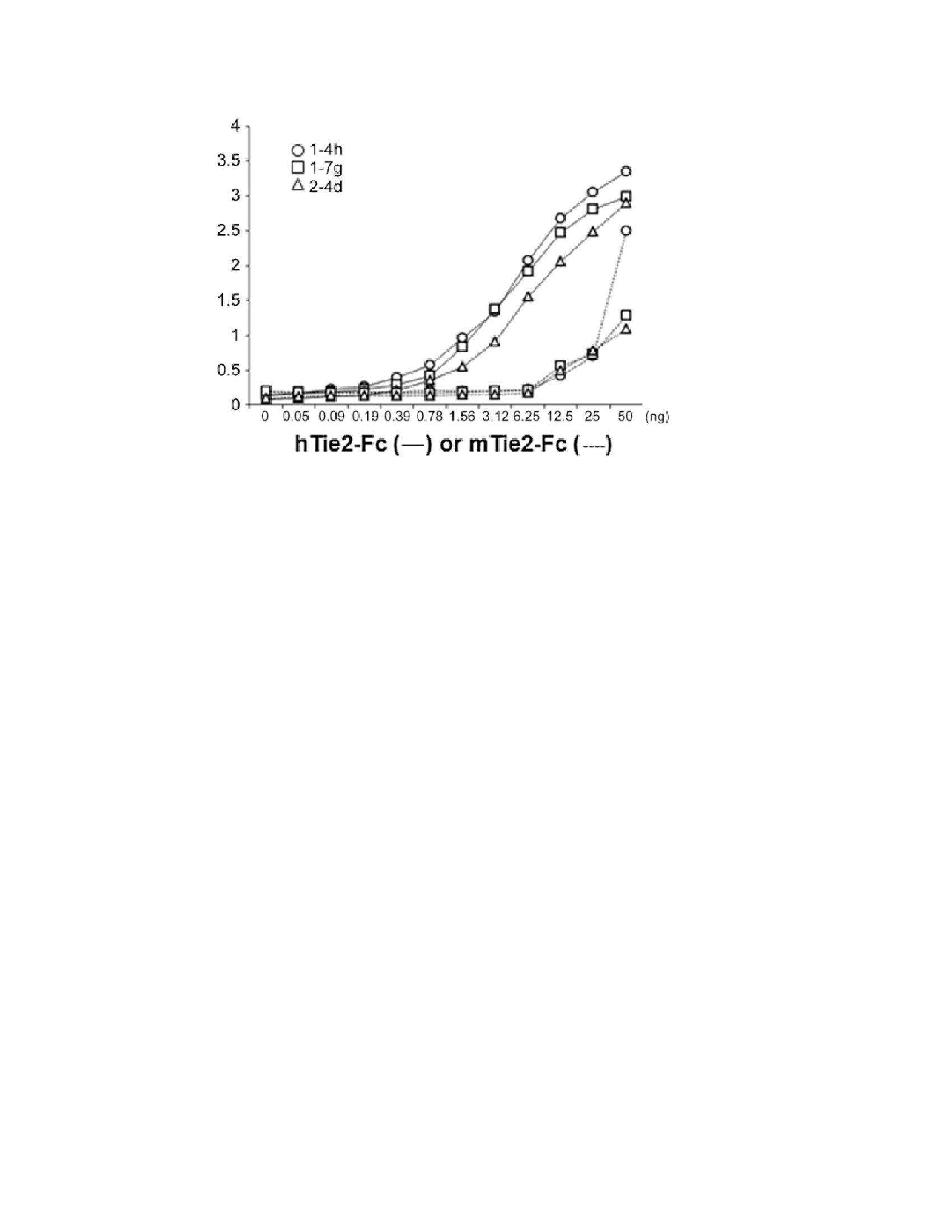
    Binding activity of Tie2 antibody via antigen binding ELISA
    Human Tie‑2 Antibody AF313
  • Name: Anonymous
    Application: Immunofluorescence
    Sample Tested: See PMID 22357955
    Species: Human
    Verified Customer | Posted 01/07/2015

There are no reviews that match your criteria.

Showing  1 - 2 of 2 reviews Showing All

Protocols

Find general support by application which include: protocols, troubleshooting, illustrated assays, videos and webinars.

FAQs

No product specific FAQs exist for this product.

View all FAQs for Antibodies