Mouse/Rat/Canine/Porcine TGF-beta 2 Quantikine ELISA Kit

R&D Systems | Catalog # MB200

R&D Systems
Loading...

Key Product Details

Assay Length

4.5 hours

Sample Type & Volume Required Per Well

Cell Culture Supernates (25 µL), Cell Lysates (25 µL), Serum (13 µL), EDTA Plasma (13 µL), Heparin Plasma (13 µL)

Sensitivity

4.26 pg/mL

Assay Range

12.5-800 pg/mL (Cell Culture Supernates, Cell Lysates, Serum, EDTA Plasma, Heparin Plasma)
Loading...

Product Specifications

Assay Type

Solid Phase Sandwich ELISA

Format

96-well strip plate

Measurement

Quantitative ELISA

Detection Method

Colorimetric - 450nm (TMB)

Conjugate

HRP

Species

Mouse, Rat, Porcine, Canine

Specificity

Recombinant and natural mouse, rat, canine and porcine TGF-beta 2.

Cross-reactivity

Cross-reactivity observed with 1 or more available related molecules. Cross-species reactivity observed with 1 or more species tested.

Interference

No significant interference observed with available related molecules.

Precision

Intra-Assay Precision (Precision within an assay) Three samples of known concentration were tested on one plate to assess intra-assay precision.

Inter-Assay Precision (Precision between assays) Three samples of a known concentration were tested in twenty separate assays to assess inter-assay precision. Assays were performed by at least three technicians using two lots of kit components.

Cell Culture Supernates, Cell Lysates, EDTA Plasma, Heparin Plasma, Serum

Intra-Assay Precision Inter-Assay Precision
Sample 1 2 3 1 2 3
n 20 20 20 20 20 20
Mean (pg/mL) 29.0 102 323 29.9 115 337
Standard Deviation 2.43 4.97 21.0 2.80 8.20 30.7
CV% 8.4 4.9 6.5 9.4 7.2 9.1

Recovery for Mouse/Rat/Canine/Porcine TGF-beta 2 Quantikine ELISA Kit

The recovery of TGF-beta 2 spiked to levels throughout the range of the assay in various matrices was evaluated.

Sample Type Average % Recovery Range %
Cell Culture Supernates (n=4) 92 80-102
Cell Lysates (n=2) 94 86-98
EDTA Plasma (n=4) 84 78-94
Heparin Plasma (n=4) 82 74-92
Serum (n=4) 98 85-114

Linearity

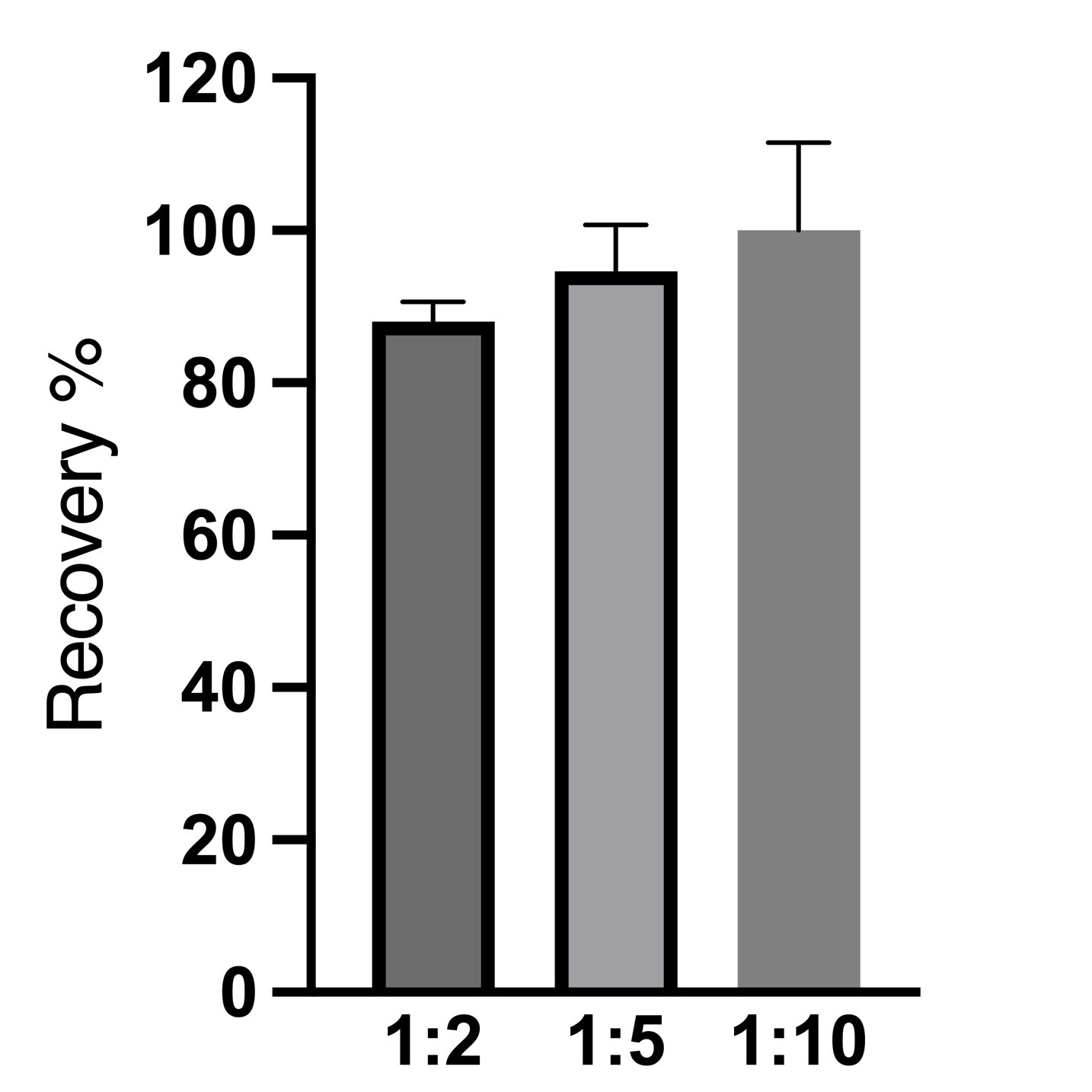
To assess the linearity of the assay, samples spiked with high concentrations of TGF-beta 2 were serially diluted with Calibrator Diluent to produce samples with values within the dynamic range of the assay. Samples were diluted prior to assay.

Mouse/Rat/Porcine/Canine TGF-beta 2 ELISA Linearity

Scientific Data Images for Mouse/Rat/Canine/Porcine TGF-beta 2 Quantikine ELISA Kit

Mouse/Rat/Porcine/Canine TGF-beta 2 ELISA Standard Curve

Mouse/Rat/Porcine/Canine TGF-beta 2 ELISA Standard Curve

Preparation and Storage

Shipping

The product is shipped at ambient temperature. Upon receipt, store it immediately at the temperature recommended below.

Stability & Storage

Store the unopened product at 2 - 8 °C. Do not use past expiration date.

Background: TGF-beta 2

TGF-beta 2 (Transforming Growth Factor beta 2) is one of three closely related mammalian members of the large TGF-beta superfamily that share a characteristic cysteine knot structure (1-7). TGF-beta 1, 2 and 3 are encoded by separate genes, but are often called isoforms. They are highly pleiotropic cytokines that are proposed to act as cellular switches regulating processes such as immune function, proliferation and epithelial-mesenchymal transition (4-8). Mammalian TGF-beta 2 is secreted as a 395 amino acid (aa) proprotein that is processed by a furin-like convertase to generate an N-terminal latency-associated peptide (LAP, ~232 aa) and a C-terminal mature TGF-beta 2 (~112 aa) that remain associated via hydrogen bonding (9-13). Serine proteases such as plasmin, matrix metalloproteases, or thrombospondin-1, along with cofactors such as certain integrins, can dissociate LAP and release active TGF-beta 2 (11-14). In many types of cells, latent TGF-beta binding protein (LTBP) is covalently linked to the LAP homodimer prior to secretion. LTBP creates a large latent complex that is secreted, but may bind and localize to the extracellular matrix (10, 11). For TGF-beta isoforms, the latency components act as natural antagonists of TGF-beta activity, target TGF-beta to distinct tissues, and maintain a reservoir of TGF-beta (1). Mature mouse and rat TGF-beta 2 share 100% aa sequence identity, and share 97% aa identity with human, porcine, canine, equine and bovine TGF-beta 2. 
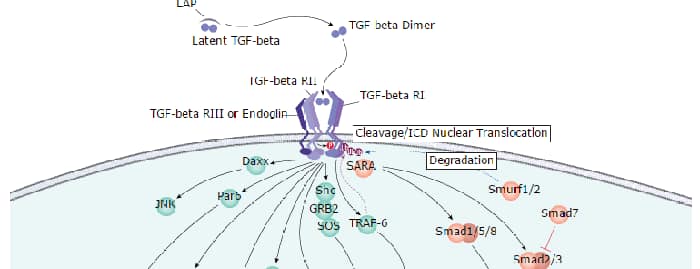
TGF-beta 2 signaling begins with binding to a complex of the accessory receptor betaglycan (also known as TGF-beta RIII) and the TGF-beta RII type II ser/thr kinase receptor (15). In contrast, TGF-beta 1 and 3 have higher affinity for TGF-beta RII and do not require betaglycan (15). TGF-beta RII then phosphorylates and activates another ser/thr kinase receptor, TGF-beta RI (also called activin receptor-like kinase (ALK) -5), or alternatively, ALK-1. The whole complex phosphorylates and activates Smad proteins that regulate transcription (1, 6, 15, 16). Differences in structure of the prodomains and mature sequences of TGF-beta isoforms, and use of Smad-independent signaling pathways, allow for disparate actions observed in response to different TGF-beta isoforms and contexts (1-3, 12, 13, 15, 16). 
Although many functions are overlapping, each TGF-beta isoform has some non-redundant functions. TGF-beta 2 plays a non-redundant role in human and mouse developmental heart valve remodeling, and mice with targeted deletions of TGF-beta 2 show defects in development of the cardiac system as well as lung, craniofacial, limb, eye, ear and urogenital systems (2, 7, 17, 28). TGF-beta 2 plays a unique positive regulatory role in hematopoiesis by enhancing Flt-3 signaling in hematopoietic progenitors (19). In humans, TGF-beta isoforms, especially TGF-beta 2, are identified as key factors in the progression of malignant glioma, gastric and ovarian cancer (8, 20-22). TGF-beta isoforms, particularly TGF-beta 2, suppress macrophage cytokine production and mucosal inflammatory responses in the developing intestine (23). In turn, macrophage LRP-1 can downregulate expression of TGF-beta 2 during vascular remodeling, which suppresses neo-intima formation (24).

Long Name

Transforming Growth Factor beta 2

Alternate Names

TGFB2, TGFbeta 2

Entrez Gene IDs

7042 (Human); 21808 (Mouse); 397084 (Porcine)

Gene Symbol

TGFB2

Additional TGF-beta 2 Products

Product Documents for Mouse/Rat/Canine/Porcine TGF-beta 2 Quantikine ELISA Kit

Certificate of Analysis

To download a Certificate of Analysis, please enter a lot or batch number in the search box below.

Note: Certificate of Analysis not available for kit components.

Product Specific Notices for Mouse/Rat/Canine/Porcine TGF-beta 2 Quantikine ELISA Kit

For research use only

⚠ WARNING: This product can expose you to chemicals including N,N-Dimethylforamide, which is known to the State of California to cause cancer. For more information, go to www.P65Warnings.ca.gov.

Citations for Mouse/Rat/Canine/Porcine TGF-beta 2 Quantikine ELISA Kit

Customer Reviews for Mouse/Rat/Canine/Porcine TGF-beta 2 Quantikine ELISA Kit (2)

5 out of 5
2 Customer Ratings
5 Stars
100%
4 Stars
0%
3 Stars
0%
2 Stars
0%
1 Stars
0%

Have you used Mouse/Rat/Canine/Porcine TGF-beta 2 Quantikine ELISA Kit?

Submit a review and receive an Amazon gift card!

$25/€18/£15/$25CAN/¥2500 Yen for a review with an image

$10/€7/£6/$10CAN/¥1110 Yen for a review without an image

Submit a review
Amazon Gift Card

Customer Images


Showing  1 - 2 of 2 reviews Showing All
Filter By:
  • Mouse/Rat/Canine/Porcine TGF-beta 2 Quantikine ELISA Kit
    Name: Anonymous
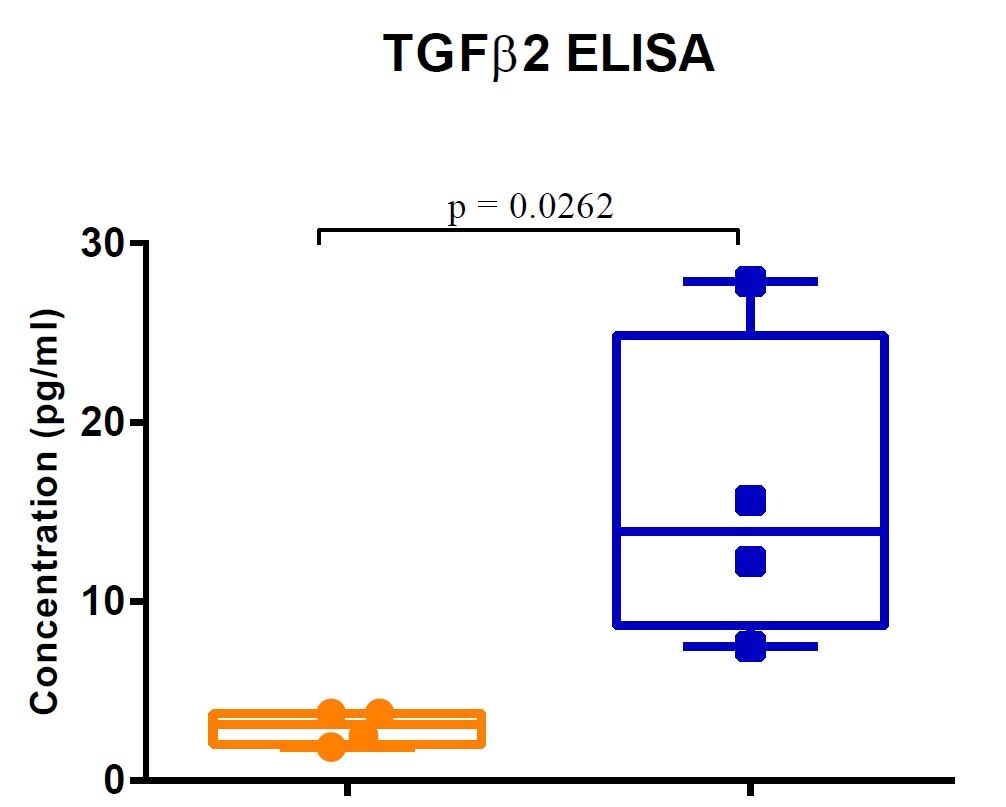
    Sample Tested: mouse serum
    Verified Customer | Posted 04/16/2024
    Mouse/Rat/Canine/Porcine TGF-beta 2 Quantikine ELISA Kit MB200
  • Mouse/Rat/Canine/Porcine TGF-beta 2 Quantikine ELISA Kit
    Name: Anonymous
    Sample Tested: Cell culture supernatant
    Verified Customer | Posted 04/08/2024
    Mouse/Rat/Canine/Porcine TGF-beta 2 Quantikine ELISA Kit MB200

There are no reviews that match your criteria.

Showing  1 - 2 of 2 reviews Showing All

Protocols

View specific protocols for Mouse/Rat/Canine/Porcine TGF-beta 2 Quantikine ELISA Kit (MB200):

Refer to the product for complete assay procedure.

Bring all reagents and samples to room temperature before use. It is recommended that all samples, standards, and controls be assayed in duplicate.
  1.   Prepare all reagents, standard dilutions, and samples as directed in the product insert.
  2.   Remove excess microplate strips from the plate frame, return them to the foil pouch containing the desiccant pack, and reseal.

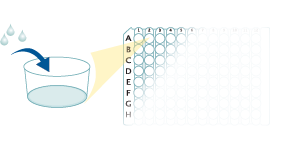
  3. 50 µL Assay Diluent
  4.   Add 50 µL of Assay Diluent to each well.

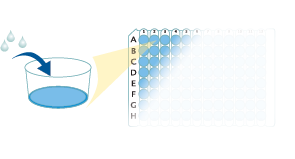
  5. 50 µL Standard, Control, or Sample
  6.   Add 50 µL of Standard, Control, or sample to each well. Cover with a plate sealer, and incubate at room temperature for 2 hours on a horizontal orbital microplate shaker.
  7.   Aspirate each well and wash, repeating the process 3 times for a total of 4 washes.

  8. 100 µL Conjugate
  9.   Add 100 µL of Conjugate to each well. Cover with a new plate sealer, and incubate at room temperature for 2 hours on the shaker.
  10.   Aspirate and wash 4 times.

  11. 100 µL Substrate Solution
  12.   Add 100 µL Substrate Solution to each well. Incubate at room temperature for 30 minutes on the benchtop. PROTECT FROM LIGHT.

  13. 100 µL Stop Solution
  14.   Add 100 µL of Stop Solution to each well. Read at 450 nm within 30 minutes. Set wavelength correction to 540 nm or 570 nm.

Find general support by application which include: protocols, troubleshooting, illustrated assays, videos and webinars.

FAQs

No product specific FAQs exist for this product.

View all FAQs for ELISA Kits