
Mouse SorCS2 is a 110‑130 kDa member of the Vps10p (vacuolar protein sorting 10 protein)-D family of sorting receptors. It is synthesized as a 1159 amino acid (aa) preproprecursor that undergoes proteolytic processing to generate a 1042 aa mature type I transmembrane receptor. The extracellular domain shows an imperfect LRR and a Vps10p domain. SorCS2 is plasma membrane expressed and may undergo proteolytic cleavage. Over aa 118-1078, mouse SorCS2 is 88% and 98% aa identical to human and rat SorCs2, respectively.


Scientific images may be resized, cropped, or adjusted for brightness or contrast for presentation purposes. These updates are limited to presentation and do not affect the underlying scientific interpretation of the data. Where available, additional source data may be provided upon request.
Key Product Details
Species Reactivity
Validated:
Mouse
Cited:
Mouse, Transgenic Mouse
Applications
Validated:
Immunohistochemistry, Western Blot
Cited:
Immunohistochemistry, Immunohistochemistry-Frozen, Western Blot, Immunocytochemistry, Immunoprecipitation
Label
Unconjugated
Antibody Source
Polyclonal Sheep IgG
Loading...
Product Specifications
Immunogen
Mouse myeloma cell line NS0-derived recombinant mouse SorCS2
Ala118-Gly1078
Accession # Q9EPR5
Ala118-Gly1078
Accession # Q9EPR5
Specificity
Detects mouse SorCS2 in direct ELISAs and Western blots. In direct ELISAs, approximately 10% cross-reactivity with recombinant human (rh) SorCS2 and less than 5% cross-reactivity with rhSorCS1 and recombinant mouse SorCS1 is observed.
Clonality
Polyclonal
Host
Sheep
Isotype
IgG
Scientific Data Images for Mouse SorCS2 Antibody
SorCS2 in Mouse Brain.
SorCS2 was detected in perfusion fixed frozen sections of mouse brain using Sheep Anti-Mouse SorCS2 Antigen Affinity-purified Polyclonal Antibody (Catalog # AF4237) at 15 µg/mL overnight at 4 °C. Tissue was stained using the Anti-Sheep HRP-DAB Cell & Tissue Staining Kit (brown; Catalog # CTS019) and counterstained with hematoxylin (blue). View our protocol for Chromogenic IHC Staining of Frozen Tissue Sections.
SorCS2 in Mouse Brain.
SorCS2 was detected in perfusion fixed frozen sections of mouse brain using Sheep Anti-Mouse SorCS2 Antigen Affinity-purified Polyclonal Antibody (Catalog # AF4237) at 15 µg/mL overnight at 4 °C. Tissue was stained using the NorthernLights™ 557-conjugated Anti-Sheep IgG Secondary Antibody (red; Catalog # NL010) and counterstained with DAPI (blue). View our protocol for Fluorescent IHC Staining of Frozen Tissue Sections.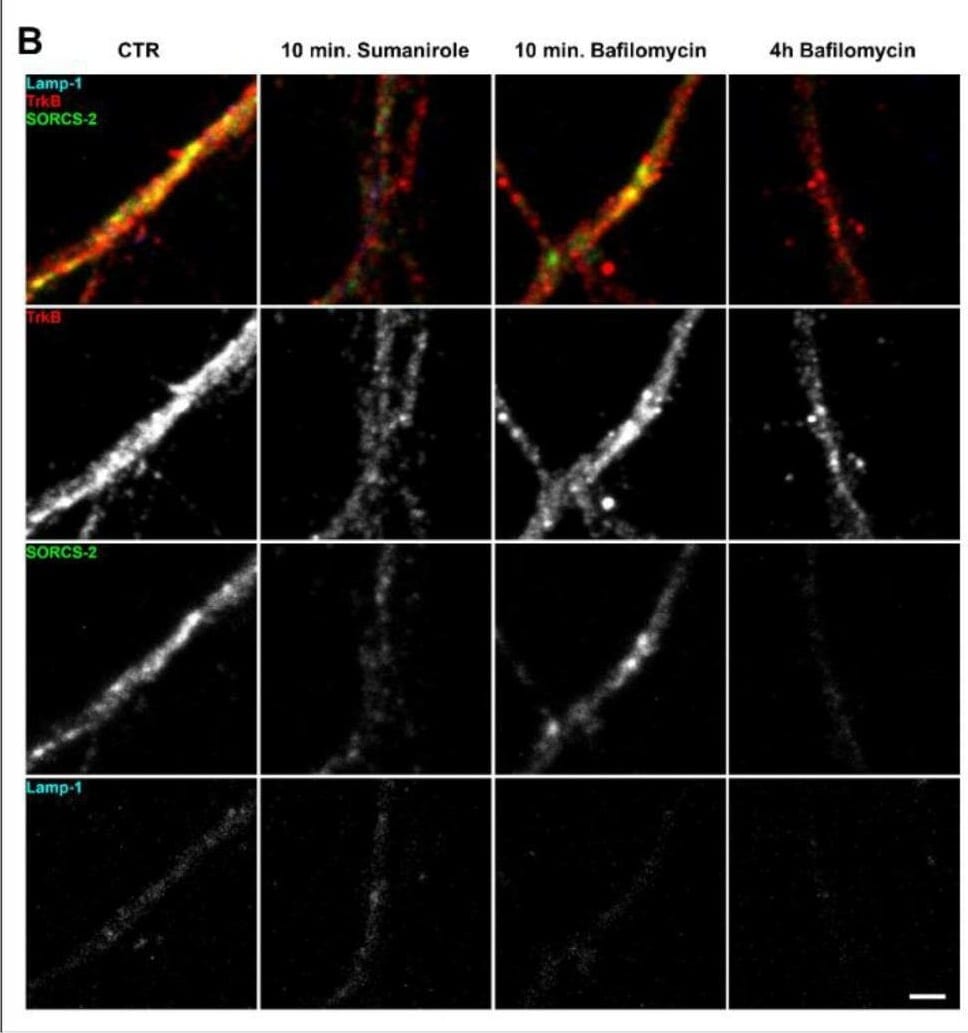
Detection of SorCS2 by Immunocytochemistry/ Immunofluorescence
DRD2 activation with sumanirole removes TrkB from the peripheral dendrites in iSPNs. (A) TrkB and SORCS-2 immunoreactivity in purified DRD2-SPNs. Neurons were stimulated with sumanirole for 10 min or bafilomycin for 10 min or 4 h and compared with untreated controls. DRD2 activation with sumanirole reduces surface TrkB expression in iSPNs. Prolonged treatment with bafilomycin leads to an accumulation of SORCS-2- and Lamp-1-positive structures in the soma but not in the dendrites of iSPNs. Scale bar: 10 µm. (B) TrkB immunoreactivity in the peripheral dendrites of DRD2 neurons. Sumanirole treatment leads to a retraction of TrkB from the peripheral dendrites and less association with the cargo receptor SORCS-2. The bafilomycin treatment also decreased TrkB/SORCS-2 association. Scale bar: 2 µm. (C) Quantification of TrkB/SORCS-2 colocalization in peripheral dendrites stimulated with sumanirole (Sum) or bafilomycin (Baf). Data are shown as the mean ± SEM in % of TrkB/SORCS-2 colocalization. n = 3 for every condition. One-way ANOVA with Tukey’s multiple comparisons test. * p < 0.05. Image collected and cropped by CiteAb from the following open publication (https://pubmed.ncbi.nlm.nih.gov/37887070), licensed under a CC-BY license. Not internally tested by R&D Systems.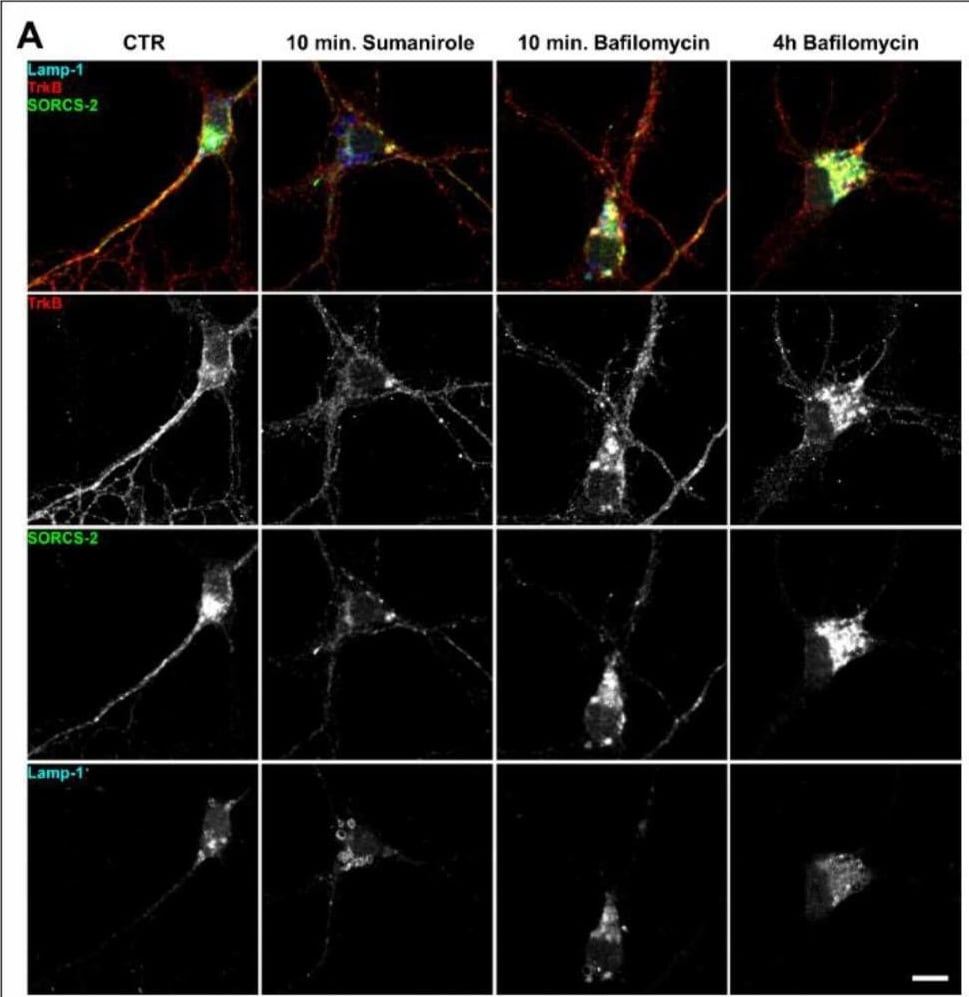
Detection of SorCS2 by Immunocytochemistry/ Immunofluorescence
DRD2 activation with sumanirole removes TrkB from the peripheral dendrites in iSPNs. (A) TrkB and SORCS-2 immunoreactivity in purified DRD2-SPNs. Neurons were stimulated with sumanirole for 10 min or bafilomycin for 10 min or 4 h and compared with untreated controls. DRD2 activation with sumanirole reduces surface TrkB expression in iSPNs. Prolonged treatment with bafilomycin leads to an accumulation of SORCS-2- and Lamp-1-positive structures in the soma but not in the dendrites of iSPNs. Scale bar: 10 µm. (B) TrkB immunoreactivity in the peripheral dendrites of DRD2 neurons. Sumanirole treatment leads to a retraction of TrkB from the peripheral dendrites and less association with the cargo receptor SORCS-2. The bafilomycin treatment also decreased TrkB/SORCS-2 association. Scale bar: 2 µm. (C) Quantification of TrkB/SORCS-2 colocalization in peripheral dendrites stimulated with sumanirole (Sum) or bafilomycin (Baf). Data are shown as the mean ± SEM in % of TrkB/SORCS-2 colocalization. n = 3 for every condition. One-way ANOVA with Tukey’s multiple comparisons test. * p < 0.05. Image collected and cropped by CiteAb from the following open publication (https://pubmed.ncbi.nlm.nih.gov/37887070), licensed under a CC-BY license. Not internally tested by R&D Systems.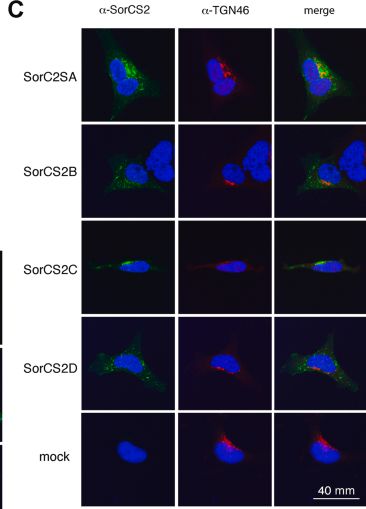
Detection of SorCS2 by Immunocytochemistry/ Immunofluorescence
SorCS2 splice variants display different trafficking.A, SorCS2-immunostained HEK293 cells transfected with SorCS2A and SorCS2C show a more paranuclear staining pattern compared to cells transfected with SorCS2B and SorCS2D for which staining is distributed in vesicular structures throughout the cell. B, surface SorCS2 was labeled with an antibody directed against its extracellular domain on ice. Trafficking was subsequently monitored by incubation at 37 °C, followed by fixation, permeabilization, and staining with a secondary antibody at indicated time points. C, after 30 min, more SorCS2A and SorCS2C accumulate in paranuclear structures positive for the trans-Golgi marker TGN46 compared to SorCS2B, and D. D, quantification of C. The data in the graph is shown as mean ± SD and comparisons between groups conducted using a t test. Image collected and cropped by CiteAb from the following open publication (https://pubmed.ncbi.nlm.nih.gov/37507021), licensed under a CC-BY license. Not internally tested by R&D Systems.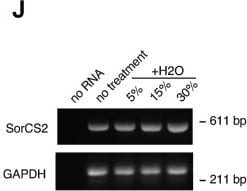
Detection of SorCS2 by Western Blot
Cellular stress regulates SorCS2 alternative splicing.A, RT-PCR of SORCS2 mRNA from HEK293 cells subjected to cellular stress as indicated. Cellular stress increases the expression of SorCS2 long and decreases the expression of SorCS2 short. B, densitometric quantification of A. C, quantification of SORCS2 mRNA isoforms in HEK293 cells subjected to stress. D and G, RT-PCR of SORCS2 mRNA from HepG2 (D) or SH-SY5Y (G) cells were subjected to hypoosmotic conditions. E and H, densitometric quantification of D and G, respectively. F and I, quantification of SORCS2A, SORCS2B, SORCS2C, and SORCS2D mRNA in HepG2 (F) and SH-SY5Y (I) cells were subjected to hypoosmotic stress. J, six DIV hippocampal cultures were treated with hypoosmotic medium as indicated for 24 h and Sorcs2 mRNA was assessed by RT-PCR. K, densitometric quantification of J. L, representative Western blot showing increased SorCS2 levels after hypoosmotic shock. M and N, normalized expression of SORCS2 transcripts in prefrontal cortex of autism patients (M) and amygdala of schizophrenia patients (N) compared to healthy control groups. Data in B, C, E, F, H, I, and K represents mean ± SD of three experiments. Relative stress-induced mRNA expression of SORCS2 isoforms was compared to the corresponding isoform from nontreated cells using a t test. Variances in SorCS2 mRNA levels in patients suffering from autism or schizophrenia and control groups were compared using an F-test. HEK, human embryonic kidney. Image collected and cropped by CiteAb from the following open publication (https://pubmed.ncbi.nlm.nih.gov/37507021), licensed under a CC-BY license. Not internally tested by R&D Systems.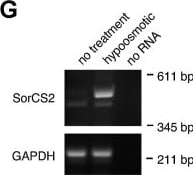
Detection of SorCS2 by Western Blot
Cellular stress regulates SorCS2 alternative splicing.A, RT-PCR of SORCS2 mRNA from HEK293 cells subjected to cellular stress as indicated. Cellular stress increases the expression of SorCS2 long and decreases the expression of SorCS2 short. B, densitometric quantification of A. C, quantification of SORCS2 mRNA isoforms in HEK293 cells subjected to stress. D and G, RT-PCR of SORCS2 mRNA from HepG2 (D) or SH-SY5Y (G) cells were subjected to hypoosmotic conditions. E and H, densitometric quantification of D and G, respectively. F and I, quantification of SORCS2A, SORCS2B, SORCS2C, and SORCS2D mRNA in HepG2 (F) and SH-SY5Y (I) cells were subjected to hypoosmotic stress. J, six DIV hippocampal cultures were treated with hypoosmotic medium as indicated for 24 h and Sorcs2 mRNA was assessed by RT-PCR. K, densitometric quantification of J. L, representative Western blot showing increased SorCS2 levels after hypoosmotic shock. M and N, normalized expression of SORCS2 transcripts in prefrontal cortex of autism patients (M) and amygdala of schizophrenia patients (N) compared to healthy control groups. Data in B, C, E, F, H, I, and K represents mean ± SD of three experiments. Relative stress-induced mRNA expression of SORCS2 isoforms was compared to the corresponding isoform from nontreated cells using a t test. Variances in SorCS2 mRNA levels in patients suffering from autism or schizophrenia and control groups were compared using an F-test. HEK, human embryonic kidney. Image collected and cropped by CiteAb from the following open publication (https://pubmed.ncbi.nlm.nih.gov/37507021), licensed under a CC-BY license. Not internally tested by R&D Systems.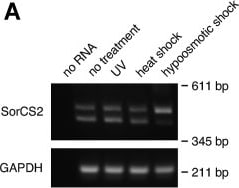
Detection of SorCS2 by Western Blot
Cellular stress regulates SorCS2 alternative splicing.A, RT-PCR of SORCS2 mRNA from HEK293 cells subjected to cellular stress as indicated. Cellular stress increases the expression of SorCS2 long and decreases the expression of SorCS2 short. B, densitometric quantification of A. C, quantification of SORCS2 mRNA isoforms in HEK293 cells subjected to stress. D and G, RT-PCR of SORCS2 mRNA from HepG2 (D) or SH-SY5Y (G) cells were subjected to hypoosmotic conditions. E and H, densitometric quantification of D and G, respectively. F and I, quantification of SORCS2A, SORCS2B, SORCS2C, and SORCS2D mRNA in HepG2 (F) and SH-SY5Y (I) cells were subjected to hypoosmotic stress. J, six DIV hippocampal cultures were treated with hypoosmotic medium as indicated for 24 h and Sorcs2 mRNA was assessed by RT-PCR. K, densitometric quantification of J. L, representative Western blot showing increased SorCS2 levels after hypoosmotic shock. M and N, normalized expression of SORCS2 transcripts in prefrontal cortex of autism patients (M) and amygdala of schizophrenia patients (N) compared to healthy control groups. Data in B, C, E, F, H, I, and K represents mean ± SD of three experiments. Relative stress-induced mRNA expression of SORCS2 isoforms was compared to the corresponding isoform from nontreated cells using a t test. Variances in SorCS2 mRNA levels in patients suffering from autism or schizophrenia and control groups were compared using an F-test. HEK, human embryonic kidney. Image collected and cropped by CiteAb from the following open publication (https://pubmed.ncbi.nlm.nih.gov/37507021), licensed under a CC-BY license. Not internally tested by R&D Systems.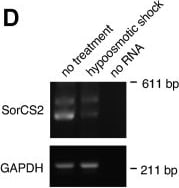
Detection of SorCS2 by Western Blot
Cellular stress regulates SorCS2 alternative splicing.A, RT-PCR of SORCS2 mRNA from HEK293 cells subjected to cellular stress as indicated. Cellular stress increases the expression of SorCS2 long and decreases the expression of SorCS2 short. B, densitometric quantification of A. C, quantification of SORCS2 mRNA isoforms in HEK293 cells subjected to stress. D and G, RT-PCR of SORCS2 mRNA from HepG2 (D) or SH-SY5Y (G) cells were subjected to hypoosmotic conditions. E and H, densitometric quantification of D and G, respectively. F and I, quantification of SORCS2A, SORCS2B, SORCS2C, and SORCS2D mRNA in HepG2 (F) and SH-SY5Y (I) cells were subjected to hypoosmotic stress. J, six DIV hippocampal cultures were treated with hypoosmotic medium as indicated for 24 h and Sorcs2 mRNA was assessed by RT-PCR. K, densitometric quantification of J. L, representative Western blot showing increased SorCS2 levels after hypoosmotic shock. M and N, normalized expression of SORCS2 transcripts in prefrontal cortex of autism patients (M) and amygdala of schizophrenia patients (N) compared to healthy control groups. Data in B, C, E, F, H, I, and K represents mean ± SD of three experiments. Relative stress-induced mRNA expression of SORCS2 isoforms was compared to the corresponding isoform from nontreated cells using a t test. Variances in SorCS2 mRNA levels in patients suffering from autism or schizophrenia and control groups were compared using an F-test. HEK, human embryonic kidney. Image collected and cropped by CiteAb from the following open publication (https://pubmed.ncbi.nlm.nih.gov/37507021), licensed under a CC-BY license. Not internally tested by R&D Systems.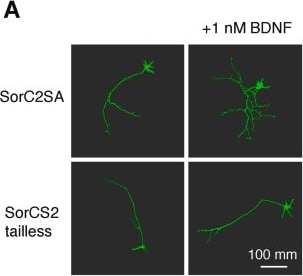
Detection of SorCS2 by Immunocytochemistry/ Immunofluorescence
Insertion of S1104 in SorCS2 hampers BDNF-induced neuronal branching. SorCS2 KO hippocampal neurons were cotransfected with GFP and indicated SorCS2 constructs and treated with 1 nM BDNF for 72 h. A, representative images of neurons transfected with SorCS2A or SorCS2 tailless in the presence or absence of BDNF. Images have been reconstructed using Imaris software (https://imaris.oxinst.com/). B, quantification of neuronal branching for neurons transfected with SorCS2A, SorCS2B, SorCS2C, or SorCS2D in the presence or absence of BDNF. Data in graphs represent mean ± SD of three or four experiments. Treatment responses in different groups were compared by two-way ANOVA. If the analysis of variance revealed significant differences, a t test was carried out to elucidate the pattern of differences. Image collected and cropped by CiteAb from the following open publication (https://pubmed.ncbi.nlm.nih.gov/37507021), licensed under a CC-BY license. Not internally tested by R&D Systems.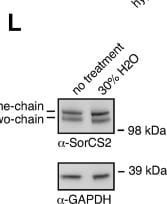
Detection of SorCS2 by Western Blot
Cellular stress regulates SorCS2 alternative splicing.A, RT-PCR of SORCS2 mRNA from HEK293 cells subjected to cellular stress as indicated. Cellular stress increases the expression of SorCS2 long and decreases the expression of SorCS2 short. B, densitometric quantification of A. C, quantification of SORCS2 mRNA isoforms in HEK293 cells subjected to stress. D and G, RT-PCR of SORCS2 mRNA from HepG2 (D) or SH-SY5Y (G) cells were subjected to hypoosmotic conditions. E and H, densitometric quantification of D and G, respectively. F and I, quantification of SORCS2A, SORCS2B, SORCS2C, and SORCS2D mRNA in HepG2 (F) and SH-SY5Y (I) cells were subjected to hypoosmotic stress. J, six DIV hippocampal cultures were treated with hypoosmotic medium as indicated for 24 h and Sorcs2 mRNA was assessed by RT-PCR. K, densitometric quantification of J. L, representative Western blot showing increased SorCS2 levels after hypoosmotic shock. M and N, normalized expression of SORCS2 transcripts in prefrontal cortex of autism patients (M) and amygdala of schizophrenia patients (N) compared to healthy control groups. Data in B, C, E, F, H, I, and K represents mean ± SD of three experiments. Relative stress-induced mRNA expression of SORCS2 isoforms was compared to the corresponding isoform from nontreated cells using a t test. Variances in SorCS2 mRNA levels in patients suffering from autism or schizophrenia and control groups were compared using an F-test. HEK, human embryonic kidney. Image collected and cropped by CiteAb from the following open publication (https://pubmed.ncbi.nlm.nih.gov/37507021), licensed under a CC-BY license. Not internally tested by R&D Systems.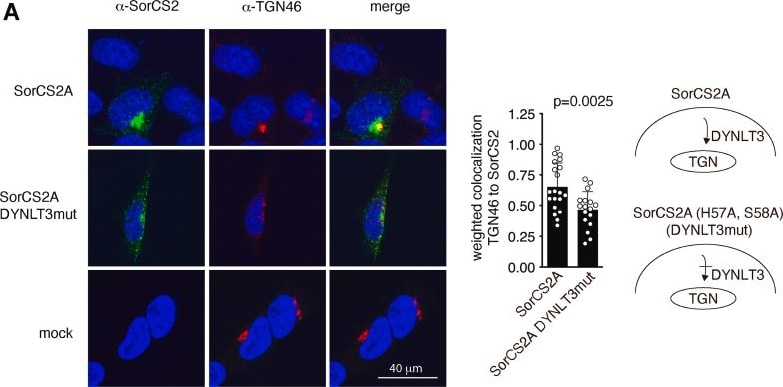
Detection of SorCS2 by Immunocytochemistry/ Immunofluorescence
Interactions with KLC1 and DYNLT3 regulate SorCS2 isoform anterograde and retrograde trafficking. Trafficking of cell surface SorCS2 variants were followed by antibody uptake experiments. Data represent SorCS2 subcellular distribution after 30 min at 37 °C. A, mutation of the DYNLT3-binding site of SorCS2A reduces its accumulation in TGN46-positive paranuclear compartments. B, mutation of the KLC1-binding site of SorCS2B increases its accumulation in TGN46-positive paranuclear compartments. The data in the graphs are shown as mean ± SD and comparisons between groups conducted using a t test. DYNLT3, dynein light chain Tctex-type 3; KLC, kinesin light chain. Image collected and cropped by CiteAb from the following open publication (https://pubmed.ncbi.nlm.nih.gov/37507021), licensed under a CC-BY license. Not internally tested by R&D Systems.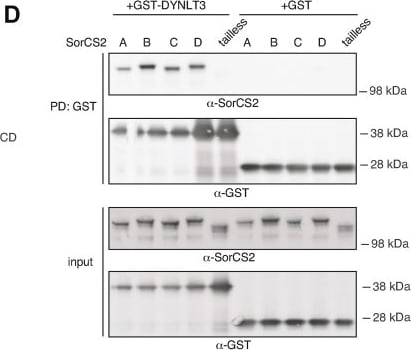
Detection of SorCS2 by Western Blot
SorCS2 variants selectively interacts with KLC1 and DYNLT3.A, illustration of yeast two-hybrid screen used for identification of SorCS2D ICD–binding partners. SorCS2D ICD fused to the DNA-binding protein LexA constitutes the bait, which binds upstream of a histidine reporter gene. Protein fragments from an adult human brain library fused to the activation domain (AD) of the Gal4 transcription factor is referred to as the prey. Only a physical interaction between bait and prey allows transcription of the histidine reporter gene and growth in the absence of histidine. Aside from fragments covering KLC1 and DYNLT3, the remaining eight fragments covering five proteins reached a score of 3 or less. B, representative yeast two-hybrid assay showing an interaction between SorCS2B and SorCS2D ICD with KLC1 and between ICD of all four isoforms with DYNLT3. C, SorCS2B and SorCS2D ICD fused to GST pull-down endogenous KLC1 from HEK293 cell lysate. D, DYNLT3-GST pulls down all SorCS2 isoforms from transfected HEK293 cell lysate. E, mapping by yeast two-hybrid shows that deletion of the C-terminal 20 amino acids of SorCS2D ICD compromises interactions with KLC1 and DYNLT3. F, representative yeast two-hybrid assay showing that substitutions with alanine mainly within the acidic cluster of SorCS2D ICD abrogates interactions with KLC1. In contrast, only substitutions outside the acidic cluster abrogates interactions with DYNLT3. DYNLT3, dynein light chain Tctex-type 3; ICD, intracellular domain; KLC, kinesin light chain; PD, pull down. Image collected and cropped by CiteAb from the following open publication (https://pubmed.ncbi.nlm.nih.gov/37507021), licensed under a CC-BY license. Not internally tested by R&D Systems.Applications for Mouse SorCS2 Antibody
Application
Recommended Usage
Immunohistochemistry
5-15 µg/mL
Sample: Perfusion fixed frozen sections of mouse brain (cortex)
Sample: Perfusion fixed frozen sections of mouse brain (cortex)
Western Blot
0.1 µg/mL
Sample: Recombinant Mouse SorCS2 (Catalog # 4237-SR)
Sample: Recombinant Mouse SorCS2 (Catalog # 4237-SR)
Reviewed Applications
Read 5 reviews rated 4.4 using AF4237 in the following applications:
Formulation, Preparation, and Storage
Purification
Antigen Affinity-purified
Reconstitution
Reconstitute at 0.2 mg/mL in sterile PBS. For liquid material, refer to CoA for concentration.
Loading...
Formulation
Lyophilized from a 0.2 μm filtered solution in PBS with Trehalose. *Small pack size (SP) is supplied either lyophilized or as a 0.2 µm filtered solution in PBS.
Shipping
Lyophilized product is shipped at ambient temperature. Liquid small pack size (-SP) is shipped with polar packs. Upon receipt, store immediately at the temperature recommended below.
Stability & Storage
Use a manual defrost freezer and avoid repeated freeze-thaw cycles.
- 12 months from date of receipt, -20 to -70 °C as supplied.
- 1 month, 2 to 8 °C under sterile conditions after reconstitution.
- 6 months, -20 to -70 °C under sterile conditions after reconstitution.
Calculators
Background: SorCS2
Long Name
Sortilin-related VPS10 Domain Containing Receptor 2
Alternate Names
KIAA1329VPS10 domain receptor protein, sortilin-related VPS10 domain containing receptor 2, VPS10 domain-containing receptor SorCS2
Gene Symbol
SORCS2
UniProt
Additional SorCS2 Products
Product Documents for Mouse SorCS2 Antibody
Certificate of Analysis
To download a Certificate of Analysis, please enter a lot or batch number in the search box below.
Note: Certificate of Analysis not available for kit components.
Product Specific Notices for Mouse SorCS2 Antibody
For research use only
Citations for Mouse SorCS2 Antibody
 Powered by Bioz
Customer Reviews for Mouse SorCS2 Antibody (5)
4.4 out of 5
5 Customer Ratings
Have you used Mouse SorCS2 Antibody?
Submit a review and receive an Amazon gift card!
$25/€18/£15/$25CAN/¥2500 for a review with an image
$10/€7/£6/$10CAN/¥1110 for a review without an image
Submit a review
Showing
1
-
5 of
5 reviews
Showing All
Filter By:
-
Application: Western BlotSample Tested: Hippocampal lysates from p20 miceSpecies: MouseVerified Customer | Posted 12/17/2014
-
Application: Western BlotSample Tested: Primary rat Schwann cellsSpecies: RatVerified Customer | Posted 12/17/2014
-
Application: ImmunoprecipitationSample Tested: IP of endogenous SorCS2 in mouse tissues as well as SorCS2 knockout mouseSpecies: MouseVerified Customer | Posted 12/17/2014
-
Application: ImmunocytochemistrySample Tested: Mouse TissuesSpecies: MouseVerified Customer | Posted 12/16/2014
-
Application: Western BlotSample Tested: mouse tissue homogenatesSpecies: OtherVerified Customer | Posted 12/16/2014
There are no reviews that match your criteria.
Protocols
Find general support by application which include: protocols, troubleshooting, illustrated assays, videos and webinars.
- Antigen Retrieval Protocol (PIER)
- Antigen Retrieval for Frozen Sections Protocol
- Appropriate Fixation of IHC/ICC Samples
- Cellular Response to Hypoxia Protocols
- Chromogenic IHC Staining of Formalin-Fixed Paraffin-Embedded (FFPE) Tissue Protocol
- Chromogenic Immunohistochemistry Staining of Frozen Tissue
- ClariTSA™ Fluorophore Kits
- Detection & Visualization of Antibody Binding
- Fluorescent IHC Staining of Frozen Tissue Protocol
- Graphic Protocol for Heat-induced Epitope Retrieval
- Graphic Protocol for the Preparation and Fluorescent IHC Staining of Frozen Tissue Sections
- Graphic Protocol for the Preparation and Fluorescent IHC Staining of Paraffin-embedded Tissue Sections
- Graphic Protocol for the Preparation of Gelatin-coated Slides for Histological Tissue Sections
- IHC Sample Preparation (Frozen sections vs Paraffin)
- Immunofluorescent IHC Staining of Formalin-Fixed Paraffin-Embedded (FFPE) Tissue Protocol
- Immunohistochemistry (IHC) and Immunocytochemistry (ICC) Protocols
- Immunohistochemistry Frozen Troubleshooting
- Immunohistochemistry Paraffin Troubleshooting
- Preparing Samples for IHC/ICC Experiments
- Preventing Non-Specific Staining (Non-Specific Binding)
- Primary Antibody Selection & Optimization
- Protocol for Heat-Induced Epitope Retrieval (HIER)
- Protocol for Making a 4% Formaldehyde Solution in PBS
- Protocol for VisUCyte™ HRP Polymer Detection Reagent
- Protocol for the Preparation & Fixation of Cells on Coverslips
- Protocol for the Preparation and Chromogenic IHC Staining of Frozen Tissue Sections
- Protocol for the Preparation and Chromogenic IHC Staining of Frozen Tissue Sections - Graphic
- Protocol for the Preparation and Chromogenic IHC Staining of Paraffin-embedded Tissue Sections
- Protocol for the Preparation and Chromogenic IHC Staining of Paraffin-embedded Tissue Sections - Graphic
- Protocol for the Preparation and Fluorescent IHC Staining of Frozen Tissue Sections
- Protocol for the Preparation and Fluorescent IHC Staining of Paraffin-embedded Tissue Sections
- Protocol for the Preparation of Gelatin-coated Slides for Histological Tissue Sections
- R&D Systems Quality Control Western Blot Protocol
- TUNEL and Active Caspase-3 Detection by IHC/ICC Protocol
- The Importance of IHC/ICC Controls
- Troubleshooting Guide: Immunohistochemistry
- Troubleshooting Guide: Western Blot Figures
- Western Blot Conditions
- Western Blot Protocol
- Western Blot Protocol for Cell Lysates
- Western Blot Troubleshooting
- Western Blot Troubleshooting Guide
- View all Protocols, Troubleshooting, Illustrated assays and Webinars
Loading...