
Nestin Antibody (10C2) - BSA Free
Novus Biologicals | Catalog # NB300-266

![Immunohistochemistry: Nestin Antibody (10C2) - BSA Free [NB300-266]](https://resources.rndsystems.com/images/products/Nestin-Antibody-10C2-Immunohistochemistry-NB300-266-img0020.jpg "Immunohistochemistry: Nestin Antibody (10C2) - BSA Free [NB300-266]")
Scientific images may be resized, cropped, or adjusted for brightness or contrast for presentation purposes. These updates are limited to presentation and do not affect the underlying scientific interpretation of the data. Where available, additional source data may be provided upon request.
Key Product Details
Validated by
Species Reactivity
Validated:
Cited:
Applications
Validated:
Cited:
Label
Antibody Source
Format
Product Specifications
Immunogen
Reactivity Notes
Localization
Marker
Clonality
Host
Isotype
Scientific Data Images for Nestin Antibody (10C2) - BSA Free
Immunohistochemistry: Nestin Antibody (10C2) - BSA Free [NB300-266]
Nestin-Antibody-10C2-Immunohistochemistry-NB300-266-img0020.jpg![Western Blot: Nestin Antibody (10C2)BSA Free [NB300-266]](https://resources.rndsystems.com/images/products/Nestin-Antibody-10C2-Western-Blot-NB300-266-img0012.jpg "Western Blot: Nestin Antibody (10C2)BSA Free [NB300-266]")
Western Blot: Nestin Antibody (10C2)BSA Free [NB300-266]
Western Blot: Nestin Antibody (10C2) [NB300-266] - WB analysis of 5 ug lysate from (1) Rat's total brain tissue, and (2) human CNS progenitor cells using Nestin antibody (clone 10C2) at 1:1000 dilution. The antibody did not react with rat, whereas, in lysate from human samples, it generated a doublet band representing the phosphorylated and the non-phosphorylated forms of Nestin protein.![Immunocytochemistry/ Immunofluorescence: Nestin Antibody (10C2) - BSA Free [NB300-266]](https://resources.rndsystems.com/images/products/Nestin-Antibody-10C2-Immunocytochemistry-Immunofluorescence-NB300-266-img0015.jpg "Immunocytochemistry/ Immunofluorescence: Nestin Antibody (10C2) - BSA Free [NB300-266]")
Immunocytochemistry/ Immunofluorescence: Nestin Antibody (10C2) - BSA Free [NB300-266]
Immunocytochemistry/Immunofluorescence: Nestin Antibody (10C2) [NB300-266] - Analysis of formalin fixed, 0.1% Triton X-100 permeabilized F9 cells (Mouse teratocarcinoma) using Nestin antibody (clone 10C2) at 1:50 dilution. The primary antibody was detected using Alexa Fluor 488 labeled donkey anti-mouse IgG (H+L) cross-adsorbed secondary antibody (green) and nuclei were counterstained with DAPI (blue). An isotype control set was inclubated with mouse IgG1 isotype control antibody and the above mentioned secondary antibody. Nestin antibody (clone 10C2) generated a specific membrane-cytoplasmic staining of Nestin while the isotype control samples did not show any staining under same assay conditions.![Immunohistochemistry-Paraffin: Nestin Antibody (10C2) - BSA Free [NB300-266]](https://resources.rndsystems.com/images/products/Nestin-Antibody-10C2-Immunohistochemistry-Paraffin-NB300-266-img0013.jpg "Immunohistochemistry-Paraffin: Nestin Antibody (10C2) - BSA Free [NB300-266]")
Immunohistochemistry-Paraffin: Nestin Antibody (10C2) - BSA Free [NB300-266]
Immunohistochemistry-Paraffin: Nestin Antibody (10C2) [NB300-266] - Nestin was detected in immersion fixed paraffin-embedded sections of human kidney using anti-human mouse monoclonal antibody (Catalog # NB300-266) at 1:500 dilution overnight at 4C. Tissue was stained using the VisuCyte anti-mouse HRP polymer detection reagent (Catalog # VC001) with DAB chromogen (brown) and counterstained with hematoxylin (blue).Images may not be copied, printed or otherwise disseminated without express written permission of Novus Biologicals a bio-techne brand.
![Flow Cytometry: Nestin Antibody (10C2) - BSA Free [NB300-266]](https://resources.rndsystems.com/images/products/Nestin-Antibody-10C2-Flow-Cytometry-NB300-266-img0011.jpg "Flow Cytometry: Nestin Antibody (10C2) - BSA Free [NB300-266]")
Flow Cytometry: Nestin Antibody (10C2) - BSA Free [NB300-266]
Flow Cytometry: Nestin Antibody (10C2) [NB300-266] - Intracellular flow cytometric staining of 1 x 10^6 CHO (A) and HEK-293 (B) cells using Nestin antibody (dark blue). Isotype control shown in orange. An antibody concentration of 1 ug/1 x 10^6 cells was used.![Immunocytochemistry/ Immunofluorescence: Nestin Antibody (10C2) - BSA Free [NB300-266]](https://resources.rndsystems.com/images/products/Nestin-Antibody-10C2-Immunocytochemistry-Immunofluorescence-NB300-266-img0006.jpg "Immunocytochemistry/ Immunofluorescence: Nestin Antibody (10C2) - BSA Free [NB300-266]")
Immunocytochemistry/ Immunofluorescence: Nestin Antibody (10C2) - BSA Free [NB300-266]
Immunocytochemistry/Immunofluorescence: Nestin Antibody (10C2) [NB300-266] - Visualization of Nestin in PC-3 cells using NB300-266. Courtesy of Dolnick Lab, Roswell Park Cancer Institute.![Flow Cytometry: Nestin Antibody (10C2) - BSA Free [NB300-266]](https://resources.rndsystems.com/images/products/Nestin-Antibody-10C2-Flow-Cytometry-NB300-266-img0017.jpg "Flow Cytometry: Nestin Antibody (10C2) - BSA Free [NB300-266]")
Flow Cytometry: Nestin Antibody (10C2) - BSA Free [NB300-266]
Flow Cytometry: Nestin Antibody (10C2) [NB300-266] - An intracellular stain was performed on SH-SY5Y cells with Nestin [10C2] Antibody NB300-266C (blue) and a matched isotype control (orange). Cells were fixed with 4% PFA and then permeabilized with 0.1% saponin. Cells were incubated in an antibody dilution of 2.5 ug/mL for 30 minutes at room temperature. Both antibodies were conjugated to DyLight 650.![Flow Cytometry: Nestin Antibody (10C2) - BSA Free [NB300-266]](https://resources.rndsystems.com/images/products/Nestin-Antibody-10C2-Flow-Cytometry-NB300-266-img0016.jpg "Flow Cytometry: Nestin Antibody (10C2) - BSA Free [NB300-266]")
Flow Cytometry: Nestin Antibody (10C2) - BSA Free [NB300-266]
Flow Cytometry: Nestin Antibody (10C2) [NB300-266] - An intracellular stain was performed on HeLa cells with Nestin Antibody (10C2)NB300-266PE (blue) and a matched isotype control (orange). Cells were fixed with 4% PFA and then permeabilized with 0.1% saponin. Cells were incubated in an antibody dilution of 2.5 ug/mL for 30 minutes at room temperature. Both antibodies were conjugated to phycoerythrin.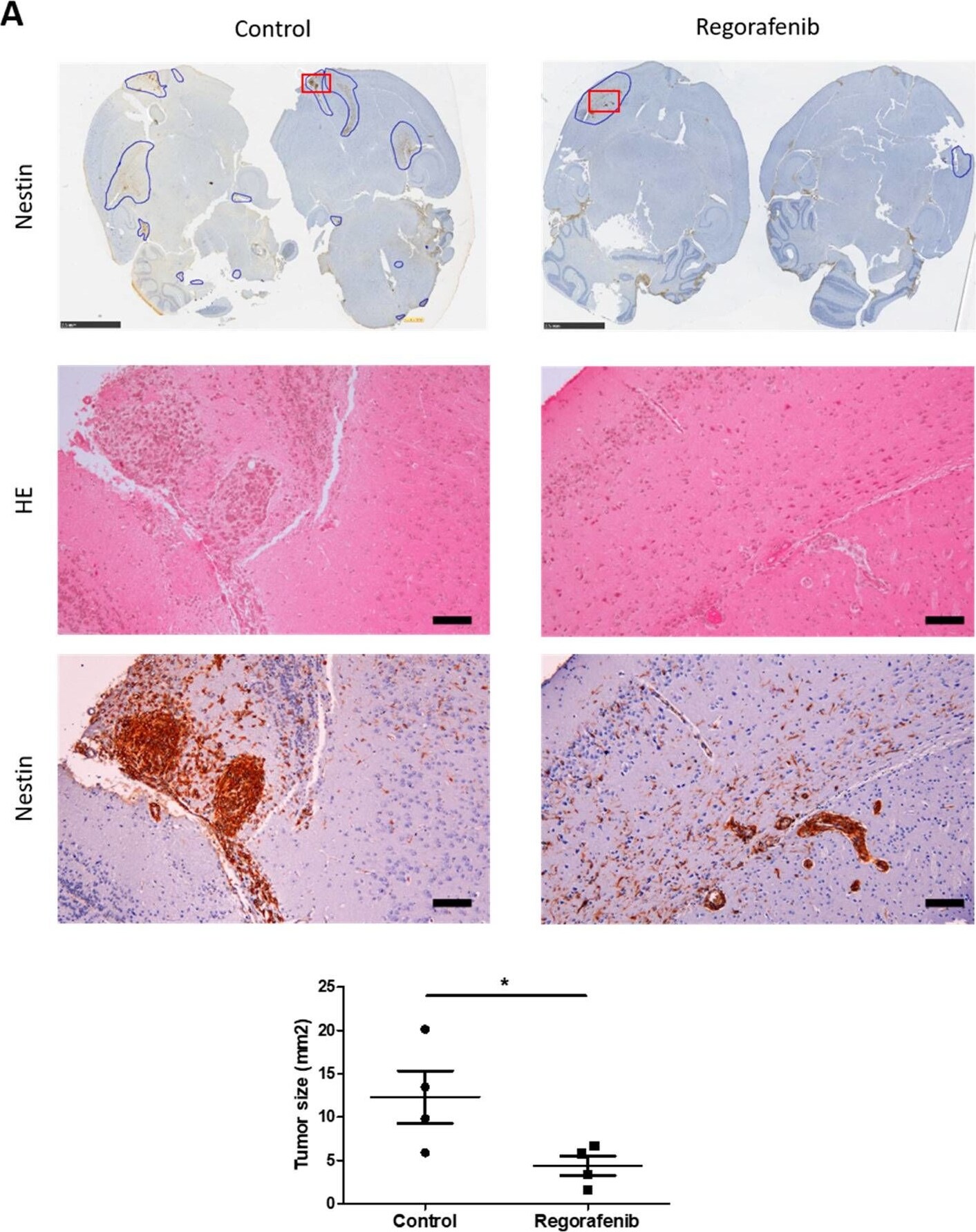
Immunohistochemistry: Nestin Antibody (10C2) - BSA Free [NB300-266] -
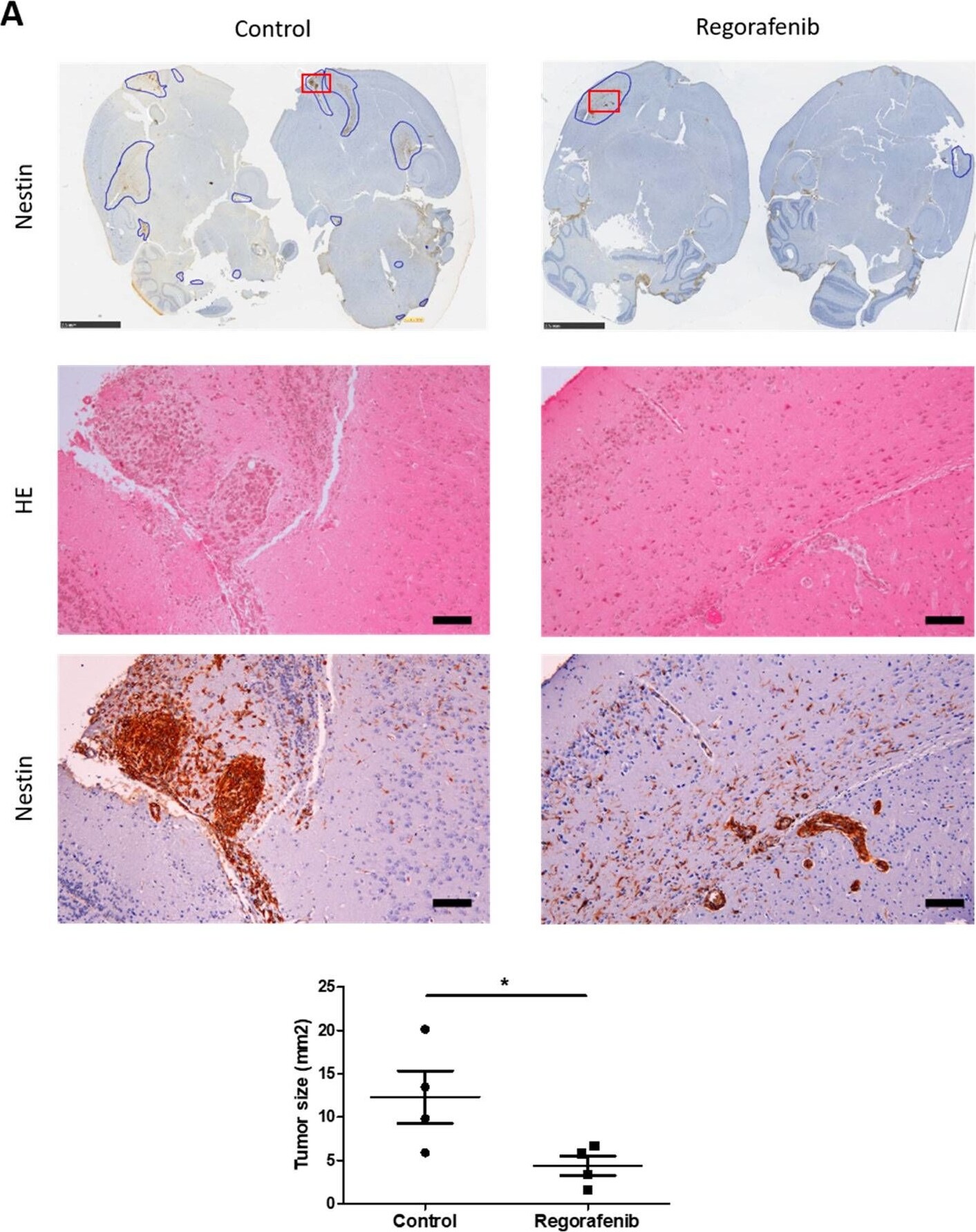
Immunohistochemistry: Nestin Antibody (10C2) - BSA Free [NB300-266] - Regorafenib inhibits tumour growth & vascularisation in xenograft mice. GC1 were implanted into the right forebrain of mice. The mice then received daily oral vehicle or regorafenib at 30 mg/kg for 45 days. (A) Representative photographs of mice brain tumours treated with regorafenib (right panel) or without regorafenib (left panel) stained by hemalun–eosin (median panel) or with nestin antibody (upper & lower panel). The upper panel shows whole brains of mice stained with nestin antibody. The tumour areas were circled in blue, & each surface was measured in mm2. The red rectangles indicate the zone of the tumour shown in median (hemalun–eosin staining) & lower (nestin IHC) panel. Scale bars, upper panel 2.5 mm, median & lower panel 100 µm. The graph shows the tumour size in mm2 (expressed as the mean ± SEM of 4 mice). (B) Representative immunohistochemistry photographs of CD31+ vessels in brain tumour areas of 3 different mice treated with regorafenib (right panel) or without regorafenib (control, left panel). Arrows indicate CD31+ blood vessels. Scale bars, 20 µm. The graph shows the number of CD31+ vessels in tumours per mm2 (expressed as mean ± SEM of 4 mice). * p < 0.05. Image collected & cropped by CiteAb from the following publication (https://pubmed.ncbi.nlm.nih.gov/35326702), licensed under a CC-BY license. Not internally tested by Novus Biologicals.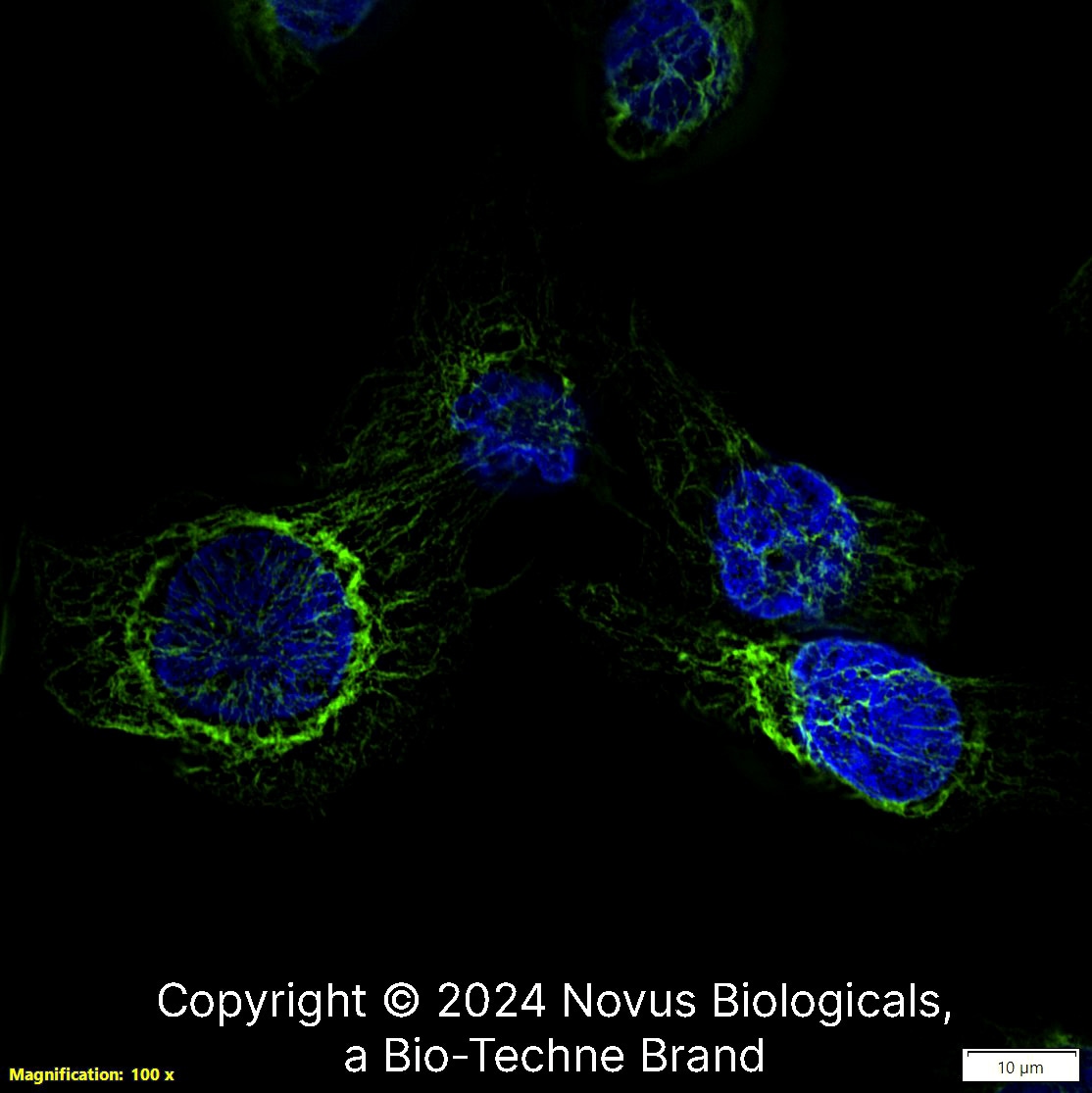
Nestin (10C2) in SJCRH30 Human Cell Line.
Nestin (10C2) was detected in immersion fixed SJCRH30 human Rhabdomyosarcoma cell line with Mouse anti-Nestin (10C2) Protein-G purified Monoclonal Antibody conjugated to Alexa Fluor® 488 (Catalog # NB300-266AF488) (green) at 5 µg/mL overnight at 4C. Cells were counterstained with DAPI (dark blue). Cells were imaged using a 100X objective and digitally deconvolved.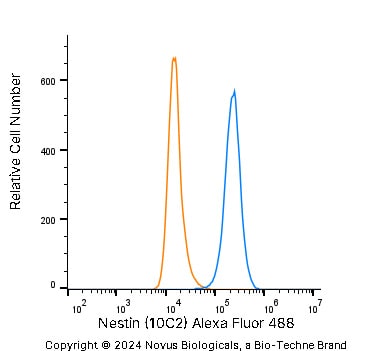
Detection of Nestin (10C2) in SJCRH30 Human Cell Line by Flow Cytometry.
An intracellular stain was performed on SJCRH30 human Rhabdomyosarcoma cell line with Mouse anti-Nestin (10C2) Protein-G purified Monoclonal Antibody conjugated to Alexa Fluor® 488 (Catalog # NB300-266AF488, blue histogram) or matched control antibody (orange histogram) at 5 µg/mL for 30 minutes at RT.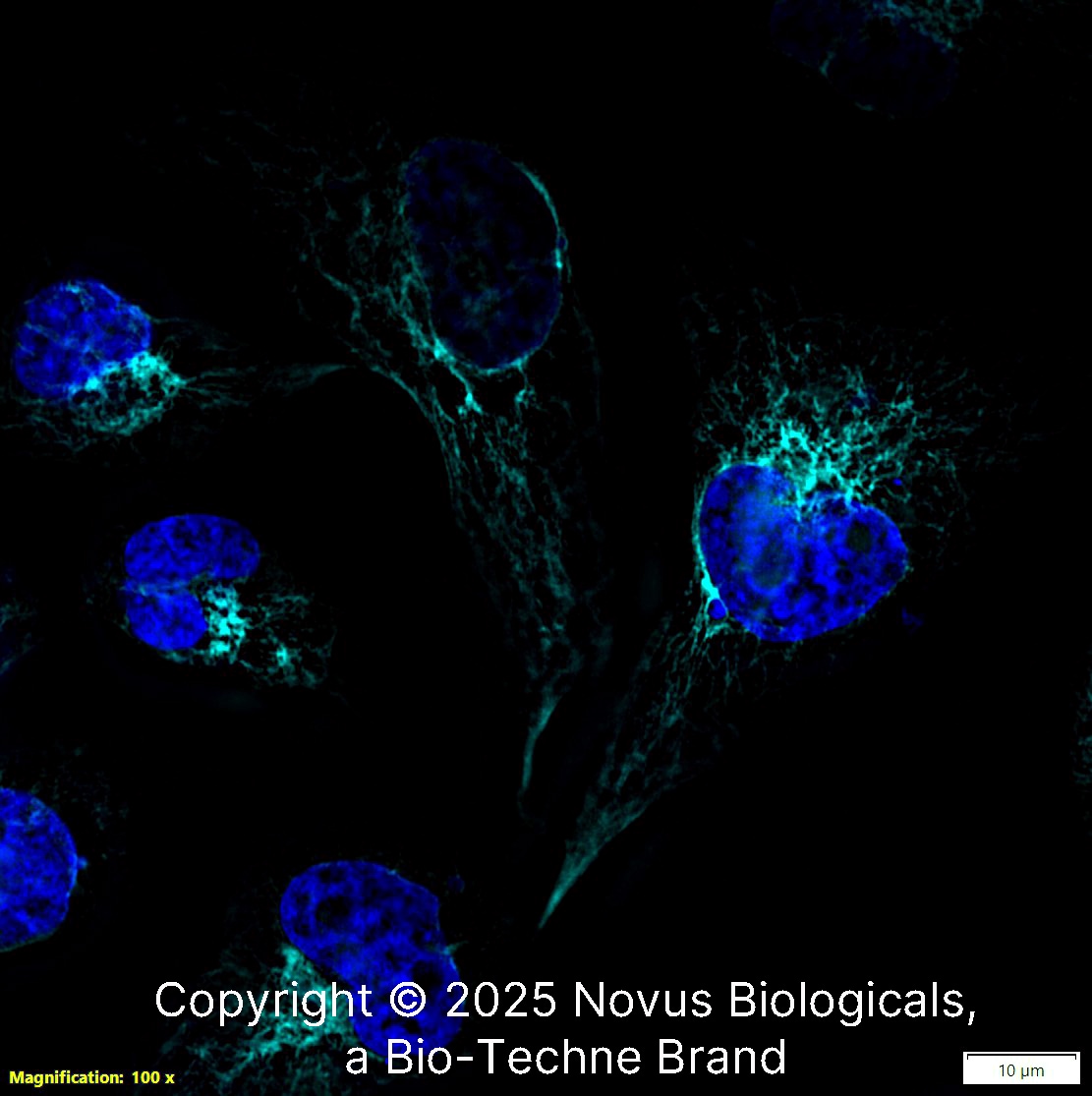
Nestin (10C2) in SJCRH30 Human Cell Line.
Nestin (10C2) was detected in immersion fixed SJCRH30 human Rhabdomyosarcoma cell line with Mouse anti-Nestin (10C2) Protein-G purified Monoclonal Antibody conjugated to DyLight 650 (Catalog # NB300-266C) (light blue) at 5 µg/mL overnight at 4C. Cells were counterstained with DAPI (dark blue). Cells were imaged using a 100X objective and digitally deconvolved.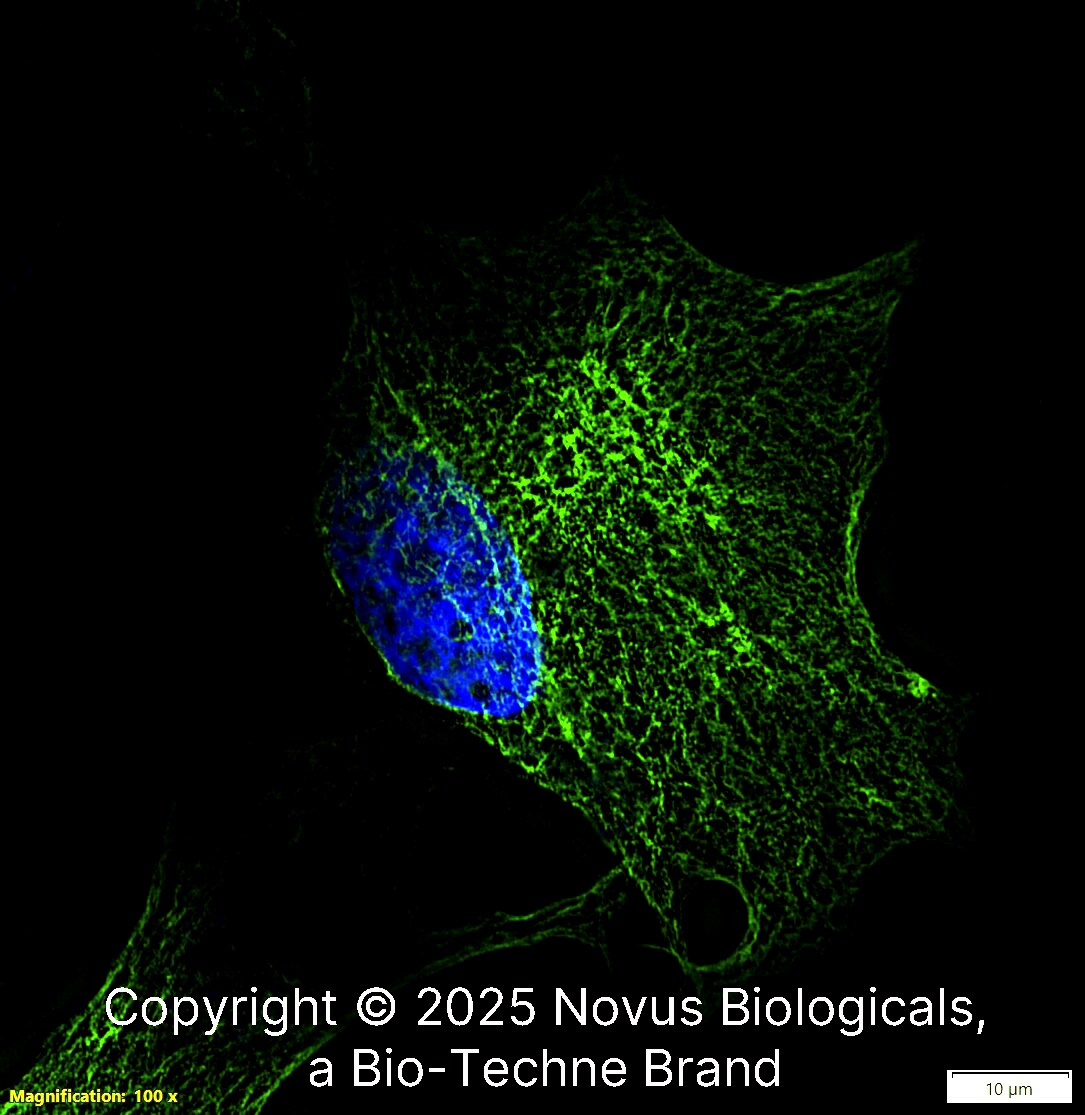
Nestin (10C2) in SJCRH30 Human Cell Line.
Nestin (10C2) was detected in immersion fixed SJCRH30 human Rhabdomyosarcoma cell line using Mouse anti-Nestin (10C2) Protein G-purified Monoclonal Antibody (Catalog # NB300-266) at 2.0 µg/mL overnight at 4C. Cells were stained using DyLight 488-conjugated Anti-Mouse IgG (H+L) Cross-Absorbed Secondary Antibody (green), and counterstained with DAPI (blue). Cells were imaged using a 100X objective and digitally deconvolved.Applications for Nestin Antibody (10C2) - BSA Free
Flow Cytometry
Immunocytochemistry/ Immunofluorescence
Immunohistochemistry
Immunohistochemistry-Frozen
Immunohistochemistry-Paraffin
Western Blot
Reviewed Applications
Read 2 reviews rated 5 using NB300-266 in the following applications:
Flow Cytometry Panel Builder
Bio-Techne Knows Flow Cytometry
Save time and reduce costly mistakes by quickly finding compatible reagents using the Panel Builder Tool.
Advanced Features
- Spectra Viewer - Custom analysis of spectra from multiple fluorochromes
- Spillover Popups - Visualize the spectra of individual fluorochromes
- Antigen Density Selector - Match fluorochrome brightness with antigen density

Formulation, Preparation, and Storage
Purification
Formulation
Format
Preservative
Concentration
Shipping
Stability & Storage
Background: Nestin
Alternate Names
Gene Symbol
Additional Nestin Products
Product Documents for Nestin Antibody (10C2) - BSA Free
Certificate of Analysis
To download a Certificate of Analysis, please enter a lot or batch number in the search box below.
Product Specific Notices for Nestin Antibody (10C2) - BSA Free
This product is for research use only and is not approved for use in humans or in clinical diagnosis. Primary Antibodies are guaranteed for 1 year from date of receipt.
Citations for Nestin Antibody (10C2) - BSA Free
 Powered by Bioz
Customer Reviews for Nestin Antibody (10C2) - BSA Free (2)
Have you used Nestin Antibody (10C2) - BSA Free?
Submit a review and receive an Amazon gift card!
$25/€18/£15/$25CAN/¥2500 for a review with an image
$10/€7/£6/$10CAN/¥1110 for a review without an image
Submit a review
-
Application: Western BlotSample Tested: Primary glioblastoma cells - whole cell lysate and Primary glioblastoma cellsSpecies: HumanVerified Customer | Posted 07/13/201740 ug whole cell lysate Blocking - 5% Milk TBST Antibody - 1:2000 overnight at 4C
-
Application: Western BlotSample Tested:Species: HumanVerified Customer | Posted 08/14/2014
There are no reviews that match your criteria.
Protocols
Find general support by application which include: protocols, troubleshooting, illustrated assays, videos and webinars.
- 7-Amino Actinomycin D (7-AAD) Cell Viability Flow Cytometry Protocol
- Antigen Retrieval Protocol (PIER)
- Antigen Retrieval for Frozen Sections Protocol
- Appropriate Fixation of IHC/ICC Samples
- Cellular Response to Hypoxia Protocols
- Chromogenic IHC Staining of Formalin-Fixed Paraffin-Embedded (FFPE) Tissue Protocol
- Chromogenic Immunohistochemistry Staining of Frozen Tissue
- ClariTSA™ Fluorophore Kits
- Detection & Visualization of Antibody Binding
- Extracellular Membrane Flow Cytometry Protocol
- Flow Cytometry Protocol for Cell Surface Markers
- Flow Cytometry Protocol for Staining Membrane Associated Proteins
- Flow Cytometry Staining Protocols
- Flow Cytometry Troubleshooting Guide
- Fluorescent IHC Staining of Frozen Tissue Protocol
- Graphic Protocol for Heat-induced Epitope Retrieval
- Graphic Protocol for the Preparation and Fluorescent IHC Staining of Frozen Tissue Sections
- Graphic Protocol for the Preparation and Fluorescent IHC Staining of Paraffin-embedded Tissue Sections
- Graphic Protocol for the Preparation of Gelatin-coated Slides for Histological Tissue Sections
- ICC Cell Smear Protocol for Suspension Cells
- ICC Immunocytochemistry Protocol Videos
- ICC for Adherent Cells
- IHC Sample Preparation (Frozen sections vs Paraffin)
- Immunocytochemistry (ICC) Protocol
- Immunocytochemistry Troubleshooting
- Immunofluorescence of Organoids Embedded in Cultrex Basement Membrane Extract
- Immunofluorescent IHC Staining of Formalin-Fixed Paraffin-Embedded (FFPE) Tissue Protocol
- Immunohistochemistry (IHC) and Immunocytochemistry (ICC) Protocols
- Immunohistochemistry Frozen Troubleshooting
- Immunohistochemistry Paraffin Troubleshooting
- Intracellular Flow Cytometry Protocol Using Alcohol (Methanol)
- Intracellular Flow Cytometry Protocol Using Detergents
- Intracellular Nuclear Staining Flow Cytometry Protocol Using Detergents
- Intracellular Staining Flow Cytometry Protocol Using Alcohol Permeabilization
- Intracellular Staining Flow Cytometry Protocol Using Detergents to Permeabilize Cells
- Preparing Samples for IHC/ICC Experiments
- Preventing Non-Specific Staining (Non-Specific Binding)
- Primary Antibody Selection & Optimization
- Propidium Iodide Cell Viability Flow Cytometry Protocol
- Protocol for Heat-Induced Epitope Retrieval (HIER)
- Protocol for Liperfluo
- Protocol for Making a 4% Formaldehyde Solution in PBS
- Protocol for VisUCyte™ HRP Polymer Detection Reagent
- Protocol for the Characterization of Human Th22 Cells
- Protocol for the Characterization of Human Th9 Cells
- Protocol for the Fluorescent ICC Staining of Cell Smears - Graphic
- Protocol for the Fluorescent ICC Staining of Cultured Cells on Coverslips - Graphic
- Protocol for the Preparation & Fixation of Cells on Coverslips
- Protocol for the Preparation and Chromogenic IHC Staining of Frozen Tissue Sections
- Protocol for the Preparation and Chromogenic IHC Staining of Frozen Tissue Sections - Graphic
- Protocol for the Preparation and Chromogenic IHC Staining of Paraffin-embedded Tissue Sections
- Protocol for the Preparation and Chromogenic IHC Staining of Paraffin-embedded Tissue Sections - Graphic
- Protocol for the Preparation and Fluorescent ICC Staining of Cells on Coverslips
- Protocol for the Preparation and Fluorescent ICC Staining of Non-adherent Cells
- Protocol for the Preparation and Fluorescent ICC Staining of Stem Cells on Coverslips
- Protocol for the Preparation and Fluorescent IHC Staining of Frozen Tissue Sections
- Protocol for the Preparation and Fluorescent IHC Staining of Paraffin-embedded Tissue Sections
- Protocol for the Preparation of Gelatin-coated Slides for Histological Tissue Sections
- Protocol for the Preparation of a Cell Smear for Non-adherent Cell ICC - Graphic
- Protocol: Annexin V and PI Staining by Flow Cytometry
- Protocol: Annexin V and PI Staining for Apoptosis by Flow Cytometry
- R&D Systems Quality Control Western Blot Protocol
- TUNEL and Active Caspase-3 Detection by IHC/ICC Protocol
- The Importance of IHC/ICC Controls
- Troubleshooting Guide: Fluorokine Flow Cytometry Kits
- Troubleshooting Guide: Immunohistochemistry
- Troubleshooting Guide: Western Blot Figures
- Western Blot Conditions
- Western Blot Protocol
- Western Blot Protocol for Cell Lysates
- Western Blot Troubleshooting
- Western Blot Troubleshooting Guide
- View all Protocols, Troubleshooting, Illustrated assays and Webinars
FAQs for Nestin Antibody (10C2) - BSA Free
-
Q: Why do you show the reactivity of mouse as “negative”? Could you provide me any further information for this description?
A: Upon review of the publication, it seems that the authors were testing nestin-GFP-transgenic mice. This may have affected the results versus endogenous detection, which we have performed in our lab. Per our testing, we have found that this clone usually does not detect the mouse protein in endogenous samples. That is why we list this species as negative on our datasheet. Additionally, the immunogen for this antibody only shares 45% homology to the mouse sequence.
-
Q: We are interested in your item, NB300-266 and is it possible to provide me the % of predicted cross-reactivity with pig based on sequence homology?
A: The immunogen of NB300-266 is a fragment of the human Nestin protein corresponding to residues 1464-1614. [UniProt P48681] and the BLAST results of this sequence may be seen at : Uniprot Site This sequence shows ~64% or less similarity with some un-characterized proteins in pig some of which might be NES. The alignment results of your mentioned sequence with the immunogen sequence of this product may be seen at: Uniprot Site There are several amino acids which are similar to immunogen of NB300-266, however, considering it being a monoclonal, I am not very hopeful that it will cross-react with the putative NES in pig. Accordingly, we will not guarantee it for Pig samples.
-
Q: Why do you show the reactivity of mouse as “negative”? Could you provide me any further information for this description?
A: Upon review of the publication, it seems that the authors were testing nestin-GFP-transgenic mice. This may have affected the results versus endogenous detection, which we have performed in our lab. Per our testing, we have found that this clone usually does not detect the mouse protein in endogenous samples. That is why we list this species as negative on our datasheet. Additionally, the immunogen for this antibody only shares 45% homology to the mouse sequence.
-
Q: We are interested in your item, NB300-266 and is it possible to provide me the % of predicted cross-reactivity with pig based on sequence homology?
A: The immunogen of NB300-266 is a fragment of the human Nestin protein corresponding to residues 1464-1614. [UniProt P48681] and the BLAST results of this sequence may be seen at : Uniprot Site This sequence shows ~64% or less similarity with some un-characterized proteins in pig some of which might be NES. The alignment results of your mentioned sequence with the immunogen sequence of this product may be seen at: Uniprot Site There are several amino acids which are similar to immunogen of NB300-266, however, considering it being a monoclonal, I am not very hopeful that it will cross-react with the putative NES in pig. Accordingly, we will not guarantee it for Pig samples.

