
PI 3-Kinase p85 alpha Antibody - BSA Free
Novus Biologicals | Catalog # NBP1-89731

![Immunohistochemistry-Paraffin: PI 3-Kinase p85 alpha Antibody [NBP1-89731]](https://resources.rndsystems.com/images/products/PI-3-Kinase-p85-alpha-Antibody-Immunohistochemistry-Paraffin-NBP1-89731-img0001.jpg "Immunohistochemistry-Paraffin: PI 3-Kinase p85 alpha Antibody [NBP1-89731]")
Scientific images may be resized, cropped, or adjusted for brightness or contrast for presentation purposes. These updates are limited to presentation and do not affect the underlying scientific interpretation of the data. Where available, additional source data may be provided upon request.
Loading...
Key Product Details
Species Reactivity
Human
Applications
Immunohistochemistry, Immunohistochemistry-Paraffin, Western Blot, Immunocytochemistry/ Immunofluorescence
Label
Unconjugated
Antibody Source
Polyclonal Rabbit IgG
Format
BSA Free
Loading...
Product Specifications
Immunogen
This PI 3-Kinase p85 alpha Antibody was developed against recombinant Protein corresponding to amino acids: LADAFKRYLLDLPNPVIPAAVYSEMISLAPEVQSSEEYIQLLKKLIRSPSIPHQYWLTLQYLLKHFFKLSQTSSKNLLNARVLSEIFSPMLFRFSAASSDNTENLIKVIEILISTEWNERQPAPALPPKPPKPTTVANNGMNNNMSL
Reactivity Notes
Immunogen displays the following percentage of sequence identity for non-tested species: Mouse (88%), Rat (86%).
Clonality
Polyclonal
Host
Rabbit
Isotype
IgG
Theoretical MW
84 kDa.
Disclaimer note: The observed molecular weight of the protein may vary from the listed predicted molecular weight due to post translational modifications, post translation cleavages, relative charges, and other experimental factors.
Disclaimer note: The observed molecular weight of the protein may vary from the listed predicted molecular weight due to post translational modifications, post translation cleavages, relative charges, and other experimental factors.
Scientific Data Images for PI 3-Kinase p85 alpha Antibody - BSA Free
Immunohistochemistry-Paraffin: PI 3-Kinase p85 alpha Antibody [NBP1-89731]
Immunohistochemistry-Paraffin: PI 3-Kinase p85 alpha Antibody [NBP1-89731] - Staining of human stomach shows strong cytoplasmic positivity in parietal cells.![PI 3-Kinase p85 alpha Antibody - BSA Free Western Blot: PI 3-Kinase p85 alpha Antibody - BSA Free [NBP1-89731]](https://resources.rndsystems.com/images/products/nbp1-89731_rabbit-polyclonal-pi-3-kinase-p85-alpha-antibody-13520251661884.jpg "Western Blot: PI 3-Kinase p85 alpha Antibody - BSA Free [NBP1-89731]")
Western Blot: PI 3-Kinase p85 alpha Antibody - BSA Free [NBP1-89731]
Analysis in control (vector only transfected HEK293T lysate) and LY403619 over-expression lysate (Co-expressed with a C-terminal myc-DDK tag (~3.1 kDa) in mammalian HEK293T cells).![PI 3-Kinase p85 alpha Antibody - BSA Free Immunocytochemistry/ Immunofluorescence: PI 3-Kinase p85 alpha Antibody [NBP1-89731]](https://resources.rndsystems.com/images/products/nbp1-89731_-immunocytochemistry-immunofluorescence-639174076792563513.jpg "Immunocytochemistry/ Immunofluorescence: PI 3-Kinase p85 alpha Antibody [NBP1-89731]")
Immunocytochemistry/ Immunofluorescence: PI 3-Kinase p85 alpha Antibody [NBP1-89731]
Staining of human cell line U-251 MG shows localization to cytosol.Applications for PI 3-Kinase p85 alpha Antibody - BSA Free
Application
Recommended Usage
Immunocytochemistry/ Immunofluorescence
0.25-2 ug/ml
Immunohistochemistry
1:50 - 1:200
Immunohistochemistry-Paraffin
1:50 - 1:200
Western Blot
0.04-0.4 ug/ml
Application Notes
For IHC-Paraffin, HIER pH 6 retrieval is recommended. ICC/IF Fixation Permeabilization: Use PFA/Triton X-100.
Formulation, Preparation, and Storage
Purification
Affinity purified
Formulation
PBS (pH 7.2) and 40% Glycerol
Format
BSA Free
Preservative
0.02% Sodium Azide
Concentration
Concentrations vary lot to lot. See vial label for concentration. If unlisted please contact technical services.
Shipping
The product is shipped with polar packs. Upon receipt, store it immediately at the temperature recommended below.
Stability & Storage
Store at 4C short term. Aliquot and store at -20C long term. Avoid freeze-thaw cycles.
Background: PI 3-Kinase p85 alpha
The PI3K pathway functions in a broad range of cellular processes, so it is understandable that pathway dysfunction can lead to an array of diseases and disorders (2,5). Elevated PI3K signaling is a key feature of many cancers (5). PI3K pathway dysregulation has also been implicated in neurological, metabolic, and cardiovascular disorders (5). Furthermore, both overactivation or under-activation of the PI3K delta (p85 alpha subunit + p110 delta subunit) pathway has been shown to cause immunodeficiency and pathologies related to immune system dysfunction (2). Therapeutics to target the PI3K pathway and treat related cancers include PI3K inhibitors and, specifically, isoform-selective inhibitors which have a lot of promise when used as part of a combination therapy (5).
References
1. Okkenhaug, K., & Vanhaesebroeck, B. (2001). New responsibilities for the PI3K regulatory subunit p85 alpha. Science's STKE : signal transduction knowledge environment. https://doi.org/10.1126/stke.2001.65.pe1
2. Nunes-Santos, C. J., Uzel, G., & Rosenzweig, S. D. (2019). PI3K pathway defects leading to immunodeficiency and immune dysregulation. The Journal of allergy and clinical immunology. https://doi.org/10.1016/j.jaci.2019.03.017
3. Chen, P. H., Yao, H., & Huang, L. J. (2017). Cytokine Receptor Endocytosis: New Kinase Activity-Dependent and -Independent Roles of PI3K. Frontiers in endocrinology. https://doi.org/10.3389/fendo.2017.00078
4. Uniprot (P27986)
5. Fruman, D. A., Chiu, H., Hopkins, B. D., Bagrodia, S., Cantley, L. C., & Abraham, R. T. (2017). The PI3K Pathway in Human Disease. Cell. https://doi.org/10.1016/j.cell.2017.07.029
Long Name
PI 3-Kinase p85 alpha
Alternate Names
GRB1, PI 3Kinase p85 alpha, PIK3R1
Gene Symbol
PIK3R1
Additional PI 3-Kinase p85 alpha Products
Product Documents for PI 3-Kinase p85 alpha Antibody - BSA Free
Certificate of Analysis
To download a Certificate of Analysis, please enter a lot or batch number in the search box below.
Product Specific Notices for PI 3-Kinase p85 alpha Antibody - BSA Free
This product is for research use only and is not approved for use in humans or in clinical diagnosis. Primary Antibodies are guaranteed for 1 year from date of receipt.
Citations for PI 3-Kinase p85 alpha Antibody - BSA Free
 Powered by Bioz
Customer Reviews for PI 3-Kinase p85 alpha Antibody - BSA Free
There are currently no reviews for this product. Be the first to review PI 3-Kinase p85 alpha Antibody - BSA Free and earn rewards!
Have you used PI 3-Kinase p85 alpha Antibody - BSA Free?
Submit a review and receive an Amazon gift card!
$25/€18/£15/$25CAN/¥2500 for a review with an image
$10/€7/£6/$10CAN/¥1110 for a review without an image
Submit a review
Protocols
Find general support by application which include: protocols, troubleshooting, illustrated assays, videos and webinars.
- Antigen Retrieval Protocol (PIER)
- Antigen Retrieval for Frozen Sections Protocol
- Appropriate Fixation of IHC/ICC Samples
- Cellular Response to Hypoxia Protocols
- Chromogenic IHC Staining of Formalin-Fixed Paraffin-Embedded (FFPE) Tissue Protocol
- Chromogenic Immunohistochemistry Staining of Frozen Tissue
- ClariTSA™ Fluorophore Kits
- Detection & Visualization of Antibody Binding
- Fluorescent IHC Staining of Frozen Tissue Protocol
- Graphic Protocol for Heat-induced Epitope Retrieval
- Graphic Protocol for the Preparation and Fluorescent IHC Staining of Frozen Tissue Sections
- Graphic Protocol for the Preparation and Fluorescent IHC Staining of Paraffin-embedded Tissue Sections
- Graphic Protocol for the Preparation of Gelatin-coated Slides for Histological Tissue Sections
- ICC Cell Smear Protocol for Suspension Cells
- ICC Immunocytochemistry Protocol Videos
- ICC for Adherent Cells
- IHC Sample Preparation (Frozen sections vs Paraffin)
- Immunocytochemistry (ICC) Protocol
- Immunocytochemistry Troubleshooting
- Immunofluorescence of Organoids Embedded in Cultrex Basement Membrane Extract
- Immunofluorescent IHC Staining of Formalin-Fixed Paraffin-Embedded (FFPE) Tissue Protocol
- Immunohistochemistry (IHC) and Immunocytochemistry (ICC) Protocols
- Immunohistochemistry Frozen Troubleshooting
- Immunohistochemistry Paraffin Troubleshooting
- Preparing Samples for IHC/ICC Experiments
- Preventing Non-Specific Staining (Non-Specific Binding)
- Primary Antibody Selection & Optimization
- Protocol for Heat-Induced Epitope Retrieval (HIER)
- Protocol for Making a 4% Formaldehyde Solution in PBS
- Protocol for VisUCyte™ HRP Polymer Detection Reagent
- Protocol for the Fluorescent ICC Staining of Cell Smears - Graphic
- Protocol for the Fluorescent ICC Staining of Cultured Cells on Coverslips - Graphic
- Protocol for the Preparation & Fixation of Cells on Coverslips
- Protocol for the Preparation and Chromogenic IHC Staining of Frozen Tissue Sections
- Protocol for the Preparation and Chromogenic IHC Staining of Frozen Tissue Sections - Graphic
- Protocol for the Preparation and Chromogenic IHC Staining of Paraffin-embedded Tissue Sections
- Protocol for the Preparation and Chromogenic IHC Staining of Paraffin-embedded Tissue Sections - Graphic
- Protocol for the Preparation and Fluorescent ICC Staining of Cells on Coverslips
- Protocol for the Preparation and Fluorescent ICC Staining of Non-adherent Cells
- Protocol for the Preparation and Fluorescent ICC Staining of Stem Cells on Coverslips
- Protocol for the Preparation and Fluorescent IHC Staining of Frozen Tissue Sections
- Protocol for the Preparation and Fluorescent IHC Staining of Paraffin-embedded Tissue Sections
- Protocol for the Preparation of Gelatin-coated Slides for Histological Tissue Sections
- Protocol for the Preparation of a Cell Smear for Non-adherent Cell ICC - Graphic
- R&D Systems Quality Control Western Blot Protocol
- TUNEL and Active Caspase-3 Detection by IHC/ICC Protocol
- The Importance of IHC/ICC Controls
- Troubleshooting Guide: Immunohistochemistry
- Troubleshooting Guide: Western Blot Figures
- Western Blot Conditions
- Western Blot Protocol
- Western Blot Protocol for Cell Lysates
- Western Blot Troubleshooting
- Western Blot Troubleshooting Guide
- View all Protocols, Troubleshooting, Illustrated assays and Webinars
Loading...
Associated Pathways


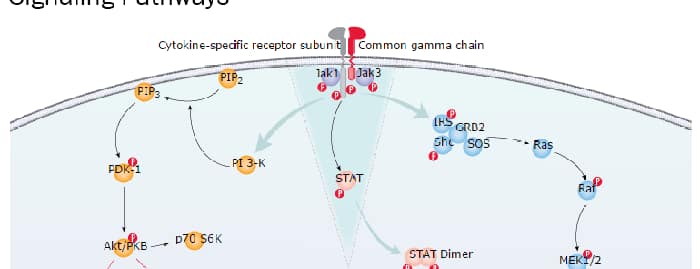
Common Cytokine Receptor Gamma-Chain Family Signaling Pathways
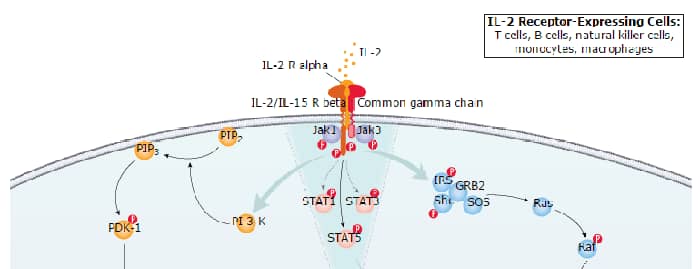
 IL-2 Signaling Pathways
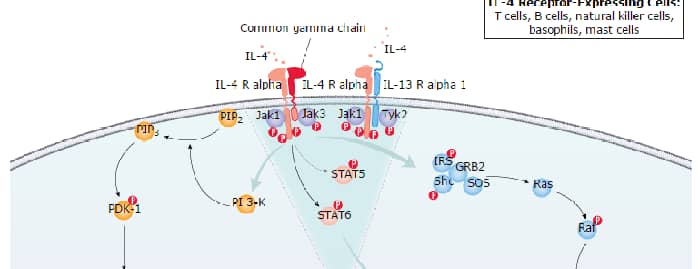
 IL-4 Signaling Pathways
 IL-7 Signaling Pathways
 IL-9 Signaling Pathways
 IL-15 Signaling Pathways
 IL-21 Signaling Pathways
 mTOR Signaling Pathway
 Notch Signaling Pathways
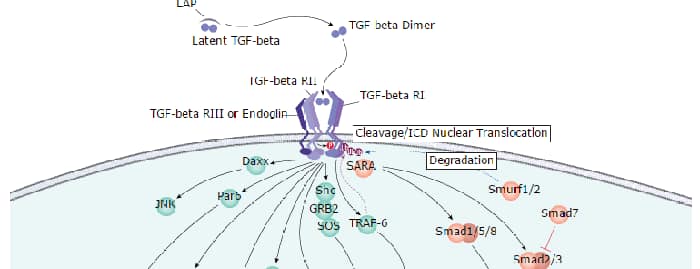
 TGF-beta Signaling Pathways
 VEGF - VEGF R2 Signaling Pathways
