
c-Fos Antibody (14C10) - BSA Free
Novus Biologicals | Catalog # NBP3-26573
Recombinant Monoclonal Antibody

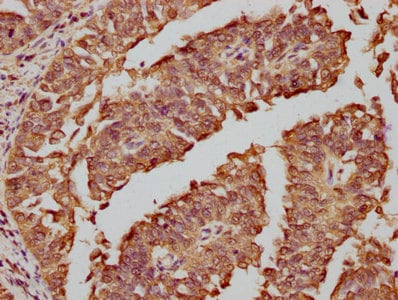
Scientific images may be resized, cropped, or adjusted for brightness or contrast for presentation purposes. These updates are limited to presentation and do not affect the underlying scientific interpretation of the data. Where available, additional source data may be provided upon request.
Loading...
Key Product Details
Species Reactivity
Human, Mouse
Applications
Immunohistochemistry, Western Blot, ELISA, Flow Cytometry, Immunocytochemistry/ Immunofluorescence
Label
Unconjugated
Antibody Source
Recombinant Monoclonal Rabbit IgG Clone # 14C10 expressed in HEK293
Format
BSA Free
Loading...
Product Specifications
Immunogen
A synthesized peptide derived from Human c-Fos [UniProt P01100]
Clonality
Monoclonal
Host
Rabbit
Isotype
IgG
Scientific Data Images for c-Fos Antibody (14C10) - BSA Free
Immunohistochemistry: c-Fos Antibody (14C10) [NBP3-26573] -
Immunohistochemistry: c-Fos Antibody (14C10) [NBP3-26573] - Image of c-Fos Antibody (14C10) diluted at 1:81 and staining in paraffin-embedded human adrenal gland tissue performed. After dewaxing and hydration, antigen retrieval was mediated by high pressure in a citrate buffer (pH 6.0). Section was blocked with 10% normal goat serum 30min at RT. Then primary antibody (1% BSA) was incubated at 4C overnight. The primary is detected by a biotinylated secondary antibody and visualized using an HRP conjugated SP system.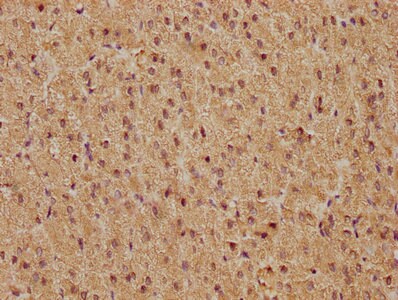
Immunohistochemistry: c-Fos Antibody (14C10) [NBP3-26573] -
Immunohistochemistry: c-Fos Antibody (14C10) [NBP3-26573] - Image of c-Fos Antibody (14C10) diluted at 1:81 and staining in paraffin-embedded human adrenal gland tissue performed. After dewaxing and hydration, antigen retrieval was mediated by high pressure in a citrate buffer (pH 6.0). Section was blocked with 10% normal goat serum 30min at RT. Then primary antibody (1% BSA) was incubated at 4C overnight. The primary is detected by a biotinylated secondary antibody and visualized using an HRP conjugated SP system.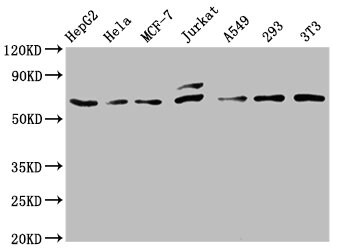
Western Blot: c-Fos Antibody (14C10) [NBP3-26573] -
Western Blot: c-Fos Antibody (14C10) [NBP3-26573] - Positive Western Blot detected in: HepG2 whole cell lysate, Hela whole cell lysate, MCF-7 whole cell lysate, Jurkat whole cell lysate, A549 whole cell lysate, 293 whole cell lysate, NIH/3T3 whole cell lysate.All lanes: c-Fos Antibody at 0.81ug/ml.
Secondary: Goat polyclonal to rabbit IgG at 1/50000 dilution.
Predicted band size: 41, 29, 37 KDa
Observed band size: 62 KDa
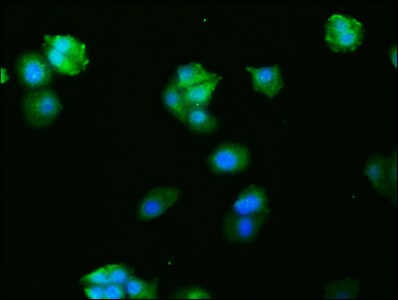
Immunocytochemistry/Immunofluorescence: c-Fos Antibody (14C10) [NBP3-26573] -
Immunocytochemistry/Immunofluorescence: c-Fos Antibody (14C10) [NBP3-26573] - Staining of HepG2 cells with c-Fos Antibody (14C10) at 1:27, counter-stained with DAPI. The cells were fixed in 4% formaldehyde, permeabilized using 0.2% Triton X-100 and blocked in 10% normal Goat Serum. The cells were then incubated with the antibody overnight at 4C. The secondary antibody was Alexa Fluor 488-conjugated Goat Anti-Rabbit IgG (H+L).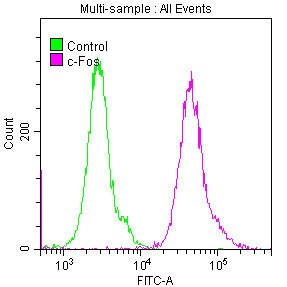
Flow Cytometry: c-Fos Antibody (14C10) [NBP3-26573] -
Flow Cytometry: c-Fos Antibody (14C10) [NBP3-26573] - Overlay histogram showing Hela cells stained with c-Fos Antibody (14C10) (red line) at 1:50. The cells were fixed with 70% Ethylalcohol (18h) and then permeabilized with 0.3% Triton X-100 for 2 min. The cells were then incubated in 1x PBS /10% normal goat serum to block non-specific protein-protein interactions followed by primary antibody for 1 h at 4C. The secondary antibody used was FITC goat anti-rabbit IgG (H+L) at 1/200 dilution for 1 h at 4C. Control antibody (green line) was used under the same conditions. Acquisition of >10,000 events was performed.Applications for c-Fos Antibody (14C10) - BSA Free
Application
Recommended Usage
Immunocytochemistry/ Immunofluorescence
1:20-1:200
Immunohistochemistry
1:50-1:200
Western Blot
1:500-1:5000
Flow Cytometry Panel Builder
Bio-Techne Knows Flow Cytometry
Save time and reduce costly mistakes by quickly finding compatible reagents using the Panel Builder Tool.
Advanced Features
- Spectra Viewer - Custom analysis of spectra from multiple fluorochromes
- Spillover Popups - Visualize the spectra of individual fluorochromes
- Antigen Density Selector - Match fluorochrome brightness with antigen density

Formulation, Preparation, and Storage
Purification
Affinity purified
Formulation
PBS, pH 7.4, 150mM NaCl, and 50% glycerol
Format
BSA Free
Preservative
0.02% Sodium Azide
Concentration
Please see the vial label for concentration. If unlisted please contact technical services.
Shipping
The product is shipped with polar packs. Upon receipt, store it immediately at the temperature recommended below.
Stability & Storage
Store at -20 to -70C. Avoid freeze-thaw cycles.
Background: c-Fos
In response to stimuli, c-Fos, which is encoded by protooncogenes, has a role in cell proliferation, differentiation, and transformation (3,6). A variety of stimuli can increase c-Fos expression such as growth factors, proinflammatory cytokines, UV radiation, neurotransmitters, hormones, injury, and stress (1,6). c-Fos has long been used as a marker for neuronal activity and is associated with neural and behavioral responses following stimuli (1-3, 6-7). Mouse studies have revealed that c-Fos is important for efficient neurogenesis and cortical development (3). Additionally, c-Fos signal can be used as a molecular marker for learning and memory, such as recognition and fear (2,7). Studies have found that repeated positive stimuli result in increased Fos expression while, conversely, repeated negative value stimuli are indicated by decreased signal (7). Intermediate early genes have also been implicated in neuropsychiatric disorders including showing altered c-Fos expression in a schizophrenia animal model (2). Furthermore, antipsychotics and antidepressants are both capable of impacting c-Fos expression (2).
References
1. Kovacs K. J. (1998). c-Fos as a transcription factor: a stressful (re)view from a functional map. Neurochemistry International. https://doi.org/10.1016/s0197-0186(98)00023-0
2. Gallo, F. T., Katche, C., Morici, J. F., Medina, J. H., & Weisstaub, N. V. (2018). Immediate Early Genes, Memory and Psychiatric Disorders: Focus on c-Fos, Egr1 and Arc. Frontiers in Behavioral Neuroscience. https://doi.org/10.3389/fnbeh.2018.00079
3. Velazquez, F. N., Caputto, B. L., & Boussin, F. D. (2015). c-Fos importance for brain development. Aging. https://doi.org/10.18632/aging.100862
4. Uniprot (P01100)
5. Wu, Z., Nicoll, M., & Ingham, R. J. (2021). AP-1 family transcription factors: a diverse family of proteins that regulate varied cellular activities in classical hodgkin lymphoma and ALK+ ALCL. Experimental Hematology & Oncology. https://doi.org/10.1186/s40164-020-00197-9
6. Shaulian, E., & Karin, M. (2001). AP-1 in cell proliferation and survival. Oncogene. https://doi.org/10.1038/sj.onc.1204383
7. Chung L. (2015). A Brief Introduction to the Transduction of Neural Activity into Fos Signal. Development & Reproduction. https://doi.org/10.12717/DR.2015.19.2.061
Long Name
FBJ/Finkel–Biskis–Jinkins Murine Osteosarcoma Viral Oncogene Homolog
Alternate Names
cFos, FOS, G0S7
Gene Symbol
FOS
Additional c-Fos Products
Product Documents for c-Fos Antibody (14C10) - BSA Free
Certificate of Analysis
To download a Certificate of Analysis, please enter a lot or batch number in the search box below.
Product Specific Notices for c-Fos Antibody (14C10) - BSA Free
This product is for research use only and is not approved for use in humans or in clinical diagnosis. Primary Antibodies are guaranteed for 1 year from date of receipt.
Customer Reviews for c-Fos Antibody (14C10) - BSA Free
There are currently no reviews for this product. Be the first to review c-Fos Antibody (14C10) - BSA Free and earn rewards!
Have you used c-Fos Antibody (14C10) - BSA Free?
Submit a review and receive an Amazon gift card!
$25/€18/£15/$25CAN/¥2500 for a review with an image
$10/€7/£6/$10CAN/¥1110 for a review without an image
Submit a review
Protocols
Find general support by application which include: protocols, troubleshooting, illustrated assays, videos and webinars.
- 7-Amino Actinomycin D (7-AAD) Cell Viability Flow Cytometry Protocol
- Antigen Retrieval Protocol (PIER)
- Antigen Retrieval for Frozen Sections Protocol
- Appropriate Fixation of IHC/ICC Samples
- Cellular Response to Hypoxia Protocols
- Chromogenic IHC Staining of Formalin-Fixed Paraffin-Embedded (FFPE) Tissue Protocol
- Chromogenic Immunohistochemistry Staining of Frozen Tissue
- ClariTSA™ Fluorophore Kits
- Detection & Visualization of Antibody Binding
- ELISA Sample Preparation & Collection Guide
- ELISA Troubleshooting Guide
- Extracellular Membrane Flow Cytometry Protocol
- Flow Cytometry Protocol for Cell Surface Markers
- Flow Cytometry Protocol for Staining Membrane Associated Proteins
- Flow Cytometry Staining Protocols
- Flow Cytometry Troubleshooting Guide
- Fluorescent IHC Staining of Frozen Tissue Protocol
- Graphic Protocol for Heat-induced Epitope Retrieval
- Graphic Protocol for the Preparation and Fluorescent IHC Staining of Frozen Tissue Sections
- Graphic Protocol for the Preparation and Fluorescent IHC Staining of Paraffin-embedded Tissue Sections
- Graphic Protocol for the Preparation of Gelatin-coated Slides for Histological Tissue Sections
- How to Run an R&D Systems DuoSet ELISA
- How to Run an R&D Systems Quantikine ELISA
- How to Run an R&D Systems Quantikine™ QuicKit™ ELISA
- ICC Cell Smear Protocol for Suspension Cells
- ICC Immunocytochemistry Protocol Videos
- ICC for Adherent Cells
- IHC Sample Preparation (Frozen sections vs Paraffin)
- Immunocytochemistry (ICC) Protocol
- Immunocytochemistry Troubleshooting
- Immunofluorescence of Organoids Embedded in Cultrex Basement Membrane Extract
- Immunofluorescent IHC Staining of Formalin-Fixed Paraffin-Embedded (FFPE) Tissue Protocol
- Immunohistochemistry (IHC) and Immunocytochemistry (ICC) Protocols
- Immunohistochemistry Frozen Troubleshooting
- Immunohistochemistry Paraffin Troubleshooting
- Intracellular Flow Cytometry Protocol Using Alcohol (Methanol)
- Intracellular Flow Cytometry Protocol Using Detergents
- Intracellular Nuclear Staining Flow Cytometry Protocol Using Detergents
- Intracellular Staining Flow Cytometry Protocol Using Alcohol Permeabilization
- Intracellular Staining Flow Cytometry Protocol Using Detergents to Permeabilize Cells
- Preparing Samples for IHC/ICC Experiments
- Preventing Non-Specific Staining (Non-Specific Binding)
- Primary Antibody Selection & Optimization
- Propidium Iodide Cell Viability Flow Cytometry Protocol
- Protocol for Heat-Induced Epitope Retrieval (HIER)
- Protocol for Liperfluo
- Protocol for Making a 4% Formaldehyde Solution in PBS
- Protocol for VisUCyte™ HRP Polymer Detection Reagent
- Protocol for the Characterization of Human Th22 Cells
- Protocol for the Characterization of Human Th9 Cells
- Protocol for the Fluorescent ICC Staining of Cell Smears - Graphic
- Protocol for the Fluorescent ICC Staining of Cultured Cells on Coverslips - Graphic
- Protocol for the Preparation & Fixation of Cells on Coverslips
- Protocol for the Preparation and Chromogenic IHC Staining of Frozen Tissue Sections
- Protocol for the Preparation and Chromogenic IHC Staining of Frozen Tissue Sections - Graphic
- Protocol for the Preparation and Chromogenic IHC Staining of Paraffin-embedded Tissue Sections
- Protocol for the Preparation and Chromogenic IHC Staining of Paraffin-embedded Tissue Sections - Graphic
- Protocol for the Preparation and Fluorescent ICC Staining of Cells on Coverslips
- Protocol for the Preparation and Fluorescent ICC Staining of Non-adherent Cells
- Protocol for the Preparation and Fluorescent ICC Staining of Stem Cells on Coverslips
- Protocol for the Preparation and Fluorescent IHC Staining of Frozen Tissue Sections
- Protocol for the Preparation and Fluorescent IHC Staining of Paraffin-embedded Tissue Sections
- Protocol for the Preparation of Gelatin-coated Slides for Histological Tissue Sections
- Protocol for the Preparation of a Cell Smear for Non-adherent Cell ICC - Graphic
- Protocol: Annexin V and PI Staining by Flow Cytometry
- Protocol: Annexin V and PI Staining for Apoptosis by Flow Cytometry
- Quantikine HS ELISA Kit Assay Principle, Alkaline Phosphatase
- Quantikine HS ELISA Kit Principle, Streptavidin-HRP Polymer
- R&D Systems Quality Control Western Blot Protocol
- Sandwich ELISA (Colorimetric) – Biotin/Streptavidin Detection Protocol
- Sandwich ELISA (Colorimetric) – Direct Detection Protocol
- TUNEL and Active Caspase-3 Detection by IHC/ICC Protocol
- The Importance of IHC/ICC Controls
- Troubleshooting Guide: ELISA
- Troubleshooting Guide: Fluorokine Flow Cytometry Kits
- Troubleshooting Guide: Immunohistochemistry
- Troubleshooting Guide: Western Blot Figures
- Western Blot Conditions
- Western Blot Protocol
- Western Blot Protocol for Cell Lysates
- Western Blot Troubleshooting
- Western Blot Troubleshooting Guide
- View all Protocols, Troubleshooting, Illustrated assays and Webinars
FAQs for c-Fos Antibody (14C10) - BSA Free
Showing
1
-
1 of
1 FAQ
Showing All
-
Q: I am looking for some c-fos antibodies that could work in IHC.
A:
Here are a list of products which might be of interest to you: Product List. We have additional filters on the left which may help you narrow down based on host species, target species, clonality, etc. We will guarantee these to work for all stated species and applications listed on the datasheet.
Loading...
Associated Pathways

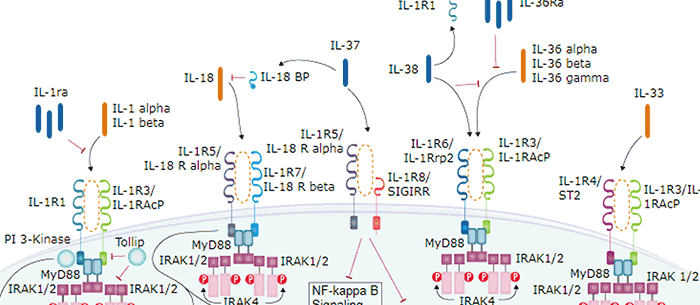


NOD-like Receptor Signaling Pathways
 Pathogen or Damage-activated C-Type Lectin Receptor Signaling Pathways
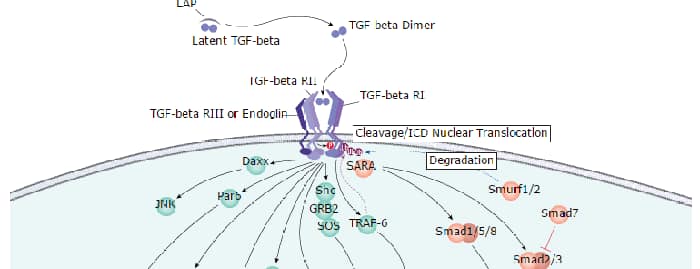
 TGF-beta Signaling Pathways
 Th1 Differentiation Pathway
 Toll-Like Receptor Signaling Pathways
 VEGF - VEGF R2 Signaling Pathways
