
Key Product Details

Species Reactivity

Validated:

Mouse

Cited:

Human, Mouse, Transgenic Mouse

Applications

Validated:

Immunohistochemistry, Western Blot, Flow Cytometry, CyTOF-ready

Cited:

Immunohistochemistry, Immunohistochemistry-Frozen, Western Blot, Flow Cytometry, Immunocytochemistry, Immunoprecipitation, CyTof

Label

Unconjugated

Antibody Source

Polyclonal Goat IgG
Loading...

Product Specifications

Immunogen

Mouse myeloma cell line NS0-derived recombinant mouse Leptin R
Ala20-Gly839
Accession # Q3US58

Specificity

Detects mouse Leptin R in direct ELISAs and Western blots. In direct ELISAs, approximately 30% cross-reactivity with recombinant human Leptin R is observed.

Clonality

Polyclonal

Host

Goat

Isotype

IgG

Scientific Data Images for Mouse Leptin R Antibody

Detection of Leptin R in Mouse Brain

Leptin R was detected in immersion fixed frozen sections of mouse brain using Goat Anti-Mouse Leptin R Antigen Affinity-purified Polyclonal Antibody (Catalog # AF497) at 1 µg/ml for 1 hour at room temperature followed by incubation with the Anti-Goat IgG VisUCyte™ HRP Polymer Antibody (VC004). Tissue was stained using DAB (brown) and counterstained with hematoxylin (blue). Specific staining was localized to the cell surface. View our protocol for Chromogenic IHC Staining of Frozen Tissue Sections.

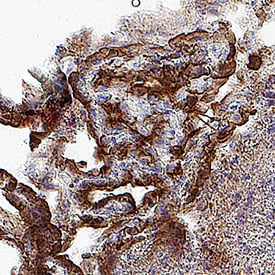
Leptin R antibody in Rat Brain by Immunohistochemistry (IHC-Fr).

Leptin R in Rat Brain.

Leptin R was detected in perfusion fixed frozen sections of rat brain using 15 µg/mL Goat Anti-Mouse Leptin R Antigen Affinity-purified Polyclonal Antibody (Catalog # AF497) overnight at 4 °C. Tissue was stained with the Anti-Goat HRP-DAB Cell & Tissue Staining Kit (brown; CTS008) and counterstained with hematoxylin (blue). Specific labeling was localized to the cytoplasm of cells in the choroid plexus. View our protocol for Chromogenic IHC Staining of Frozen Tissue Sections.

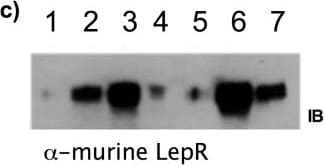
Detection of Human Leptin R by Western Blot

Detection of Human Leptin R by Western Blot

Expression and isolation of recombinant murine LepRec-Fc fusion proteins.a) Expression of murine LepRec-Fc constructs in adherent HEK293T/17 cells. Supernatants containing LepRec-Fc chimera proteins from 24 and 48 hours post-transfection were cleared of cellular debris, subjected to SDS PAGE and western blotted with antibodies against domains of murine IgG1 (Fc specific for lanes 1–5 and Ab specific for lanes 6–8). Lane 1: Mock transfected at 48 hours. Lane 2: WT transfected at 24 hours. Lane 3: WT transfected at 48 hours. Lane 4: Q223R transfected at 24 hours. Lane 5: Q223R transfected at 48 hours. Lane 6: Mock transfected at 48 hours. Lane 7: WT transfected at 48 hours. Lane 8: Q223R transfected at 48 hours. b) Concentration and buffer exchange of murine LepRec-Fc chimeras. Supernatants were collected 48 hours after growth medium was replaced with expression medium (serum free Optimem +2 mM sodium butyrate). These supernatant preparations were concentrated by Amicon ultrafiltration (NMWCO of 100 kDa). Supernatants, concentrates, and filtrates from each chimera were subjected to SDS-PAGE followed by coomassie staining (top) and western blotting with alpha -murine IgG1 specific to the Fc region (bottom). Lane 1: Expression medium. Lane 2: WT supernatant. Lane 3: WT concentrate. Lane 4: WT filtrate. Lane 5: Q223R supernatant. Lane 6: Q223R Concentrate. Lane 7: Q223R Filtrate. c) Supernatants, concentrates, and filtrates (as in b) from each chimera were subjected to SDS-PAGE followed by transfer to PVDF membrane and western blotting with alpha -murine leptin receptor (R&D scientific). Lane 1: Expression medium. Lane 2: WT supernatant. Lane 3: WT concentrate. Lane 4: WT filtrate. Lane 5: Q223R Filtrate. Lane 6: Q223R Concentrate. Lane 7: Q223R supernatant. Image collected and cropped by CiteAb from the following publication (https://pubmed.ncbi.nlm.nih.gov/24743494), licensed under a CC-BY license. Not internally tested by R&D Systems.

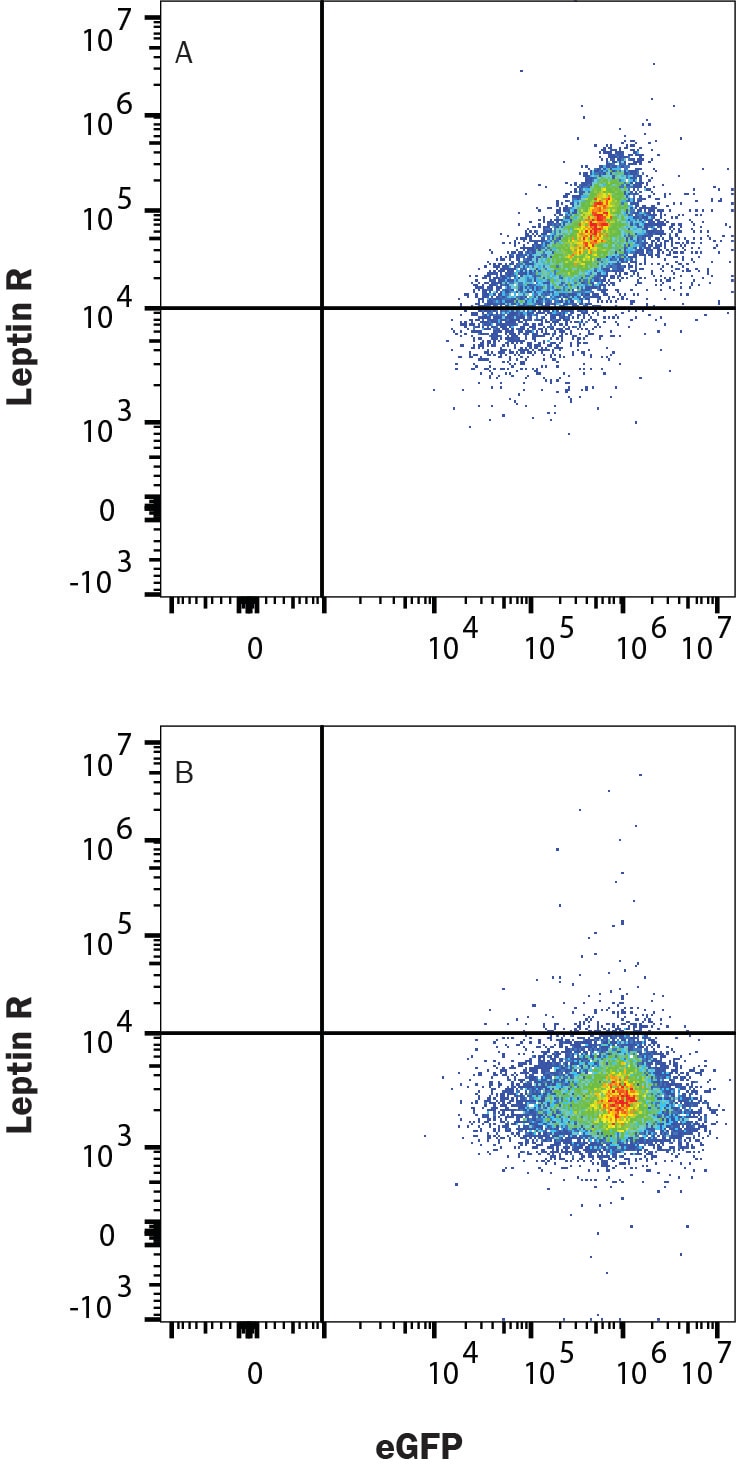
Detection of Leptin R in HEK293 Human Cell Line transfected with Mouse Leptin R and EGFP by Flow Cytometry.

HEK293 human cell line transfected with (A) Mouse Leptin R and EGFP or (B) irrelevant protein was stained with Goat Anti-Mouse Leptin R Polyclonal Antibody (AF497) followed by Allophycocyanin-conjugated anti-Goat IgG Secondary Antibody (F0108). Staining was performed using our Staining Membrane-associated Proteins protocol.

Applications for Mouse Leptin R Antibody

Application
Recommended Usage

CyTOF-ready

Ready to be labeled using established conjugation methods. No BSA or other carrier proteins that could interfere with conjugation.

Flow Cytometry

2.5 µg/106 cells
Sample: HEK293 human cell line transfected with mouse Leptin R and EGFP

Immunohistochemistry

1-15 µg/mL
Sample: Perfusion fixed frozen sections of rat and mouse brain

Western Blot

0.1 µg/mL
Sample: Recombinant Mouse Leptin R Fc Chimera (Catalog # 497-LR)

Reviewed Applications

Read 2 reviews rated 4.5 using AF497 in the following applications:

Flow Cytometry Panel Builder

Bio-Techne Knows Flow Cytometry

Save time and reduce costly mistakes by quickly finding compatible reagents using the Panel Builder Tool.

Advanced Features

  • Spectra Viewer - Custom analysis of spectra from multiple fluorochromes
  • Spillover Popups - Visualize the spectra of individual fluorochromes
  • Antigen Density Selector - Match fluorochrome brightness with antigen density
Build Your Panel Now

Formulation, Preparation, and Storage

Purification

Antigen Affinity-purified

Reconstitution

Reconstitute at 0.2 mg/mL in sterile PBS. For liquid material, refer to CoA for concentration.


Loading...

Formulation

Lyophilized from a 0.2 μm filtered solution in PBS with Trehalose. See Certificate of Analysis for details.
*Small pack size (-SP) is supplied either lyophilized or as a 0.2 µm filtered solution in PBS.

Shipping

Lyophilized product is shipped at ambient temperature. Liquid small pack size (-SP) is shipped with polar packs. Upon receipt, store immediately at the temperature recommended below.

Stability & Storage

Use a manual defrost freezer and avoid repeated freeze-thaw cycles.
  • 12 months from date of receipt, -20 to -70 °C as supplied.
  • 1 month, 2 to 8 °C under sterile conditions after reconstitution.
  • 6 months, -20 to -70 °C under sterile conditions after reconstitution.

Calculators

The reconstitution calculator allows you to quickly calculate the volume of a reagent to reconstitute your vial. Simply enter the mass of reagent and the target concentration and the calculator will determine the rest.

=
÷

Background: Leptin R

Leptin receptor (OB-R), also named B219, is a type I cytokine receptor family protein with significant amino acid sequence identity with gp130, G-CSF receptor, and the LIF receptor. Multiple isoforms of human and mouse OB-R, including a long form (OB-RL) with a large cytoplasmic domain capable of signal-transduction, and several receptor isoforms with short cytoplasmic domains (OB-Rs) lacking signal-transducing capabilities, have been identified. The extracellular domains of the short and long forms of OB-R are identical. An OB-R transcript lacking a transmembrane domain and potentially encoding a soluble form of the receptor has also been described. Circulating soluble OB-R, complexed to leptin, has been detected in mouse serum. Serum soluble OB-R levels have been shown to increase during pregnancy. OB-RL transcripts were reported to be expressed predominantly in regions of the hypothalamus previously thought to be important in body weight regulation. Expression of OB-Rs transcripts have been found in multiple tissues, including the choroid plexus, lung, kidney and primitive hematopoietic cell populations. OB-R has recently been shown to be encoded by the mouse diabetes (db) and rat fatty (fa) genes. Rodents homozygous for the db or fa mutations have been known to exhibit an obesity phenotype.

Mouse OB-R long form encodes a 1162 amino acid (aa) residue precursor protein with a 22 aa residue signal peptide, an 817 aa residue extracellular domain, a 21 aa residue transmembrane domain, and a 302 aa residue cytoplasmic domain. The extracellular domain of OB-R contains two hemopoietin receptor domains, a fibronectin type III domain and the WSXWS domain. Recombinant murine soluble OB-R has been shown to bind leptin with high affinity and is a potent leptin antagonist.

References

  1. Tartaglia, L.A. et al. (1995) Cell 83:1263.
  2. Cioffi, J.A. et al. (1996) Nature Medicine 2:585.
  3. Lee, J.I. and J.M. Friedman (1996) Nature 379:632.
  4. Tartaglia, L.A. (1997) J. Biol. Chem. 272:6093.
  5. Gavrilova, O. et al. (1997) J. Biol. Chem. 272:30546.

Long Name

Leptin Receptor

Alternate Names

B219, CD295, LEPR, LeptinR, OB R

Entrez Gene IDs

3953 (Human); 16847 (Mouse)

Gene Symbol

LEPR

UniProt

Additional Leptin R Products

Product Documents for Mouse Leptin R Antibody

Certificate of Analysis

To download a Certificate of Analysis, please enter a lot or batch number in the search box below.

Note: Certificate of Analysis not available for kit components.

Product Specific Notices for Mouse Leptin R Antibody

For research use only

Citations for Mouse Leptin R Antibody

Customer Reviews for Mouse Leptin R Antibody (2)

4.5 out of 5
2 Customer Ratings
5 Stars
50%
4 Stars
50%
3 Stars
0%
2 Stars
0%
1 Stars
0%

Have you used Mouse Leptin R Antibody?

Submit a review and receive an Amazon gift card!

$25/€18/£15/$25CAN/¥2500 Yen for a review with an image

$10/€7/£6/$10CAN/¥1110 Yen for a review without an image

Submit a review
Amazon Gift Card

Customer Images


Showing  1 - 2 of 2 reviews Showing All
Filter By:
  • Mouse Leptin R Antibody
    Name: Anonymous
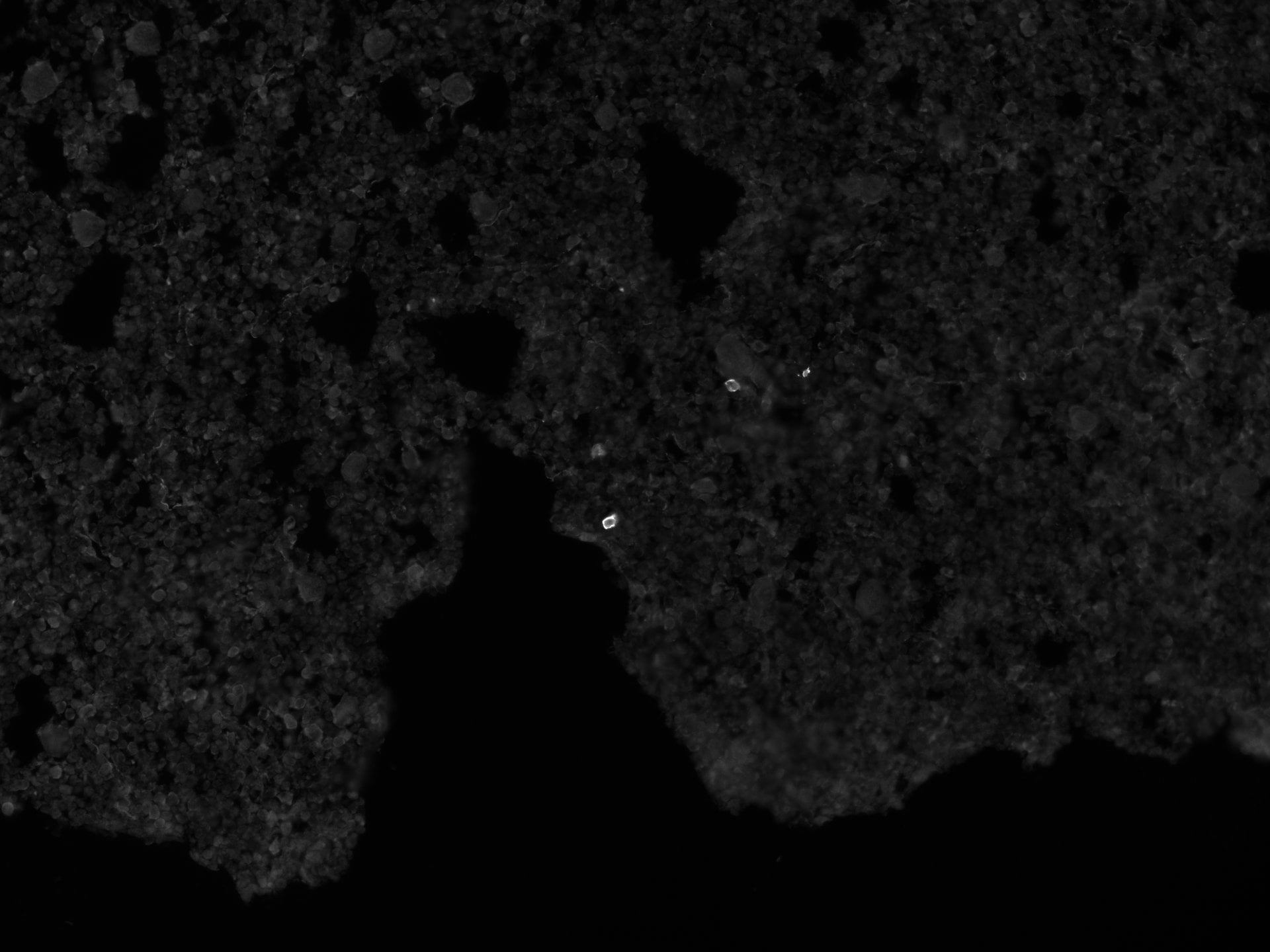
    Application: Immunocytochemistry/Immunofluorescence
    Sample Tested: bone marrow
    Species: Mouse
    Verified Customer | Posted 08/31/2018
    Mouse Leptin R Antibody AF497
  • Mouse Leptin R Antibody
    Name: Michele Doucet
    Application: Flow Cytometry
    Sample Tested: Bone marrow cells
    Species: Goat
    Verified Customer | Posted 04/21/2016
    0.2ug/ml/10^6 cells

There are no reviews that match your criteria.

Showing  1 - 2 of 2 reviews Showing All

Protocols

Find general support by application which include: protocols, troubleshooting, illustrated assays, videos and webinars.

FAQs

No product specific FAQs exist for this product.

View all FAQs for Antibodies