PKC alpha Antibody (MC5) - BSA Free
Novus Biologicals | Catalog # NB600-201

![Immunocytochemistry/ Immunofluorescence: PKC alpha Antibody (MC5) [NB600-201]](https://resources.rndsystems.com/images/products/PKC-alpha-Antibody-MC5-Immunocytochemistry-Immunofluorescence-NB600-201-img0001.jpg "Immunocytochemistry/ Immunofluorescence: PKC alpha Antibody (MC5) [NB600-201]")
Scientific images may be resized, cropped, or adjusted for brightness or contrast for presentation purposes. These updates are limited to presentation and do not affect the underlying scientific interpretation of the data. Where available, additional source data may be provided upon request.
Key Product Details
Species Reactivity
Validated:
Cited:
Applications
Validated:
Cited:
Label
Antibody Source
Format
Product Specifications
Immunogen
Reactivity Notes
Specificity
Clonality
Host
Isotype
Scientific Data Images for PKC alpha Antibody (MC5) - BSA Free
Immunocytochemistry/ Immunofluorescence: PKC alpha Antibody (MC5) [NB600-201]
Immunocytochemistry/Immunofluorescence: PKC alpha Antibody (MC5) [NB600-201] - PKC alpha (MC5) antibody was tested in SH-SY5Y cells with DyLight 488 (green). Nuclei and beta-tubulin were counterstained with DAPI (blue) and DyLight 550 (red).![Immunohistochemistry-Paraffin: PKC alpha Antibody (MC5) [NB600-201]](https://resources.rndsystems.com/images/products/PKC-alpha-Antibody-MC5-Immunohistochemistry-Paraffin-NB600-201-img0004.jpg "Immunohistochemistry-Paraffin: PKC alpha Antibody (MC5) [NB600-201]")
Immunohistochemistry-Paraffin: PKC alpha Antibody (MC5) [NB600-201]
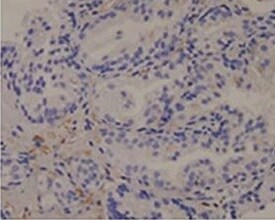
Immunohistochemistry-Paraffin: PKC alpha Antibody (MC5) [NB600-201] - PKC alpha detected in muse prostate tissue using PKC alpha Antibody (MC5). IHC-P image submitted by a verified customer review.![Flow Cytometry: PKC alpha Antibody (MC5) [NB600-201]](https://resources.rndsystems.com/images/products/PKC-alpha-Antibody-MC5-Flow-Cytometry-NB600-201-img0003.jpg "Flow Cytometry: PKC alpha Antibody (MC5) [NB600-201]")
Flow Cytometry: PKC alpha Antibody (MC5) [NB600-201]
Flow Cytometry: PKC alpha Antibody (MC5) [NB600-201] - Detection of PKC alpha in Human HeLa Cell Line by Flow Cytometry. Human HeLa cell line was stained with Mouse Anti- PKC alpha Monoclonal Antibody (Catalog # NB600-201, filled histogram), or Mouse IgG2A isotype control (Catalog # MAB003, open histogram) followed by APC-conjugated Anti-Mouse IgG Secondary Antibody (Catalog # F0101B). To facilitate intracellular staining, cells were fixed with Flow Cytometry Fixation Buffer (Catalog # FC004) and permeabilized with Flow Cytometry Permeabilization/Wash Buffer I (Catalog # FC005).Images may not be copied, printed or otherwise disseminated without express written permission of Novus Biologicals a bio-techne brand.
![Immunohistochemistry-Paraffin: PKC alpha Antibody (MC5) [NB600-201]](https://resources.rndsystems.com/images/products/PKC-alpha-Antibody-MC5-Immunohistochemistry-Paraffin-NB600-201-img0002.jpg "Immunohistochemistry-Paraffin: PKC alpha Antibody (MC5) [NB600-201]")
Immunohistochemistry-Paraffin: PKC alpha Antibody (MC5) [NB600-201]
Immunohistochemistry-Paraffin: PKC alpha Antibody (MC5) [NB600-201] - IHC staining of PKC alpha in mouse brain using DAB with hematoxylin counterstain.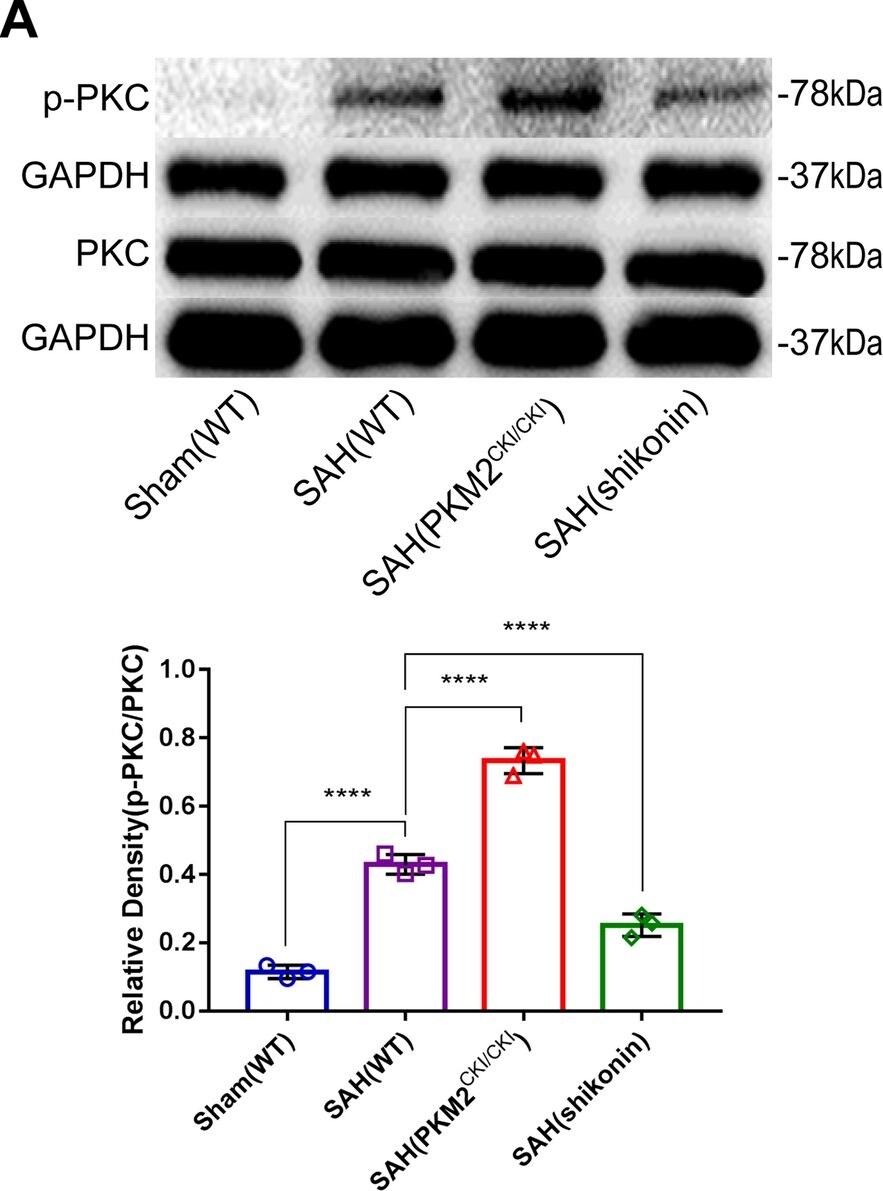
Western Blot: PKC alpha Antibody (MC5) - BSA Free [NB600-201] -
Expression of proteins downstream of PKM2 after SAH. A–D Western blotting and quantitative analysis of p-PKC, PKC, p-ERK and ERK. The following four kinds of mice were used for the in vivo study: WT sham mice and WT mice 24 h after SAH; PKM2CKI/CKI and Aldh1| 1-creERT2 mice 24 h after SAH; and WT mice 24 h after SAH. The cell grouping method was the same as that described in Sect. 3.6 (n = 3 per group); one-way ANOVA, *P < 0.05; **P < 0.01; ***P < 0.001; ****P < 0.0001 Image collected and cropped by CiteAb from the following open publication (https://fluidsbarrierscns.biomedcentral.com/articles/10.1186/s12987-024…), licensed under a CC-BY license. Not internally tested by Novus Biologicals.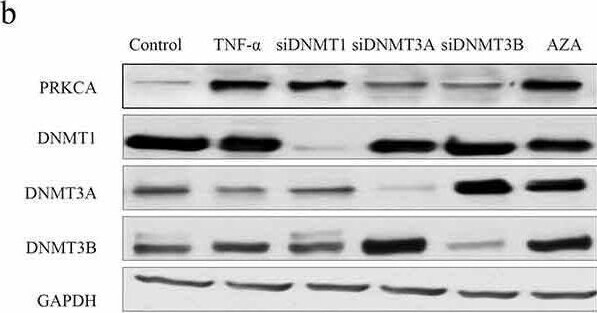
Western Blot: PKC alpha Antibody (MC5) - BSA Free [NB600-201] -
The effect of DNMTs on DNA methylation of PRKCA in human cardiomyocyte cells. (a) the mRNA and (b) protein of PRKCA in AC16 cells induced by TNF-alpha, DNMTs RNA interference and 5-azacytidine. (c) the mRNA and (d) protein of PRKCA in RL-14 cells induced by TNF-alpha, DNMTs RNA interference and 5-azacytidine. DNA methylation on 5ʹ terminal of PRKCA (promoter, first exon and first intron) in (e) AC16 and (f) RL-14 cells induced by TNF-alpha, DNMTs RNA interference and 5-azacytidine. the given data from triplicate experiments was processed as mean +/- standard error and compared by student’s t-test. No. 1 to 6 indicate six comparison with control group. ‘FC’: fold change; ‘si’: siRNA; ‘AZA’: 5-azacytidine Image collected and cropped by CiteAb from the following open publication (https://pubmed.ncbi.nlm.nih.gov/34482802), licensed under a CC-BY license. Not internally tested by Novus Biologicals.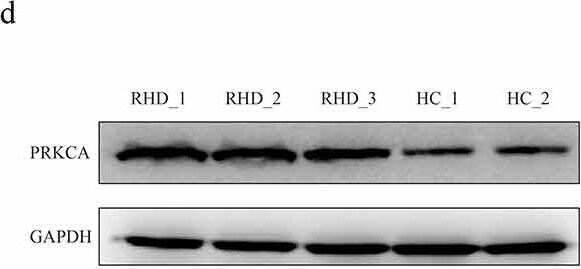
Western Blot: PKC alpha Antibody (MC5) - BSA Free [NB600-201] -
DNA methylation of PRKCA in mitral valve of RHD. (a) the overview of CpG loci distribution within human PRKCA gene. (b) DNA methylation on 5ʹ terminal of PRKCA (promoter, first exon and first intron) in mitral valve of RHD by MeDIP-qPCR assay. (c) PRKCA transcription levels in mitral valve of RHD by qPCR assay. (d) PRKCA protein levels in mitral valve of RHD by WB assay. (e) PRKCA protein levels calculated by gray intensity analysis. (f) the correlation between DNA methylation and PRKCA transcription by pearson correlation analysis. the given data was processed as mean +/- standard error and compared between RHD and HC groups by student’s t-test. ‘RHD’: rheumatic heart disease; ‘HC’: healthy control; ‘FC’: fold change Image collected and cropped by CiteAb from the following open publication (https://pubmed.ncbi.nlm.nih.gov/34482802), licensed under a CC-BY license. Not internally tested by Novus Biologicals.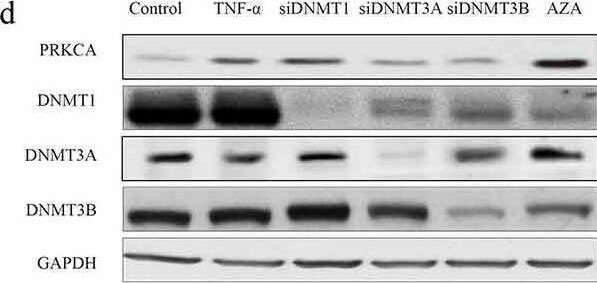
Western Blot: PKC alpha Antibody (MC5) - BSA Free [NB600-201] -
The effect of DNMTs on DNA methylation of PRKCA in human cardiomyocyte cells. (a) the mRNA and (b) protein of PRKCA in AC16 cells induced by TNF-alpha, DNMTs RNA interference and 5-azacytidine. (c) the mRNA and (d) protein of PRKCA in RL-14 cells induced by TNF-alpha, DNMTs RNA interference and 5-azacytidine. DNA methylation on 5ʹ terminal of PRKCA (promoter, first exon and first intron) in (e) AC16 and (f) RL-14 cells induced by TNF-alpha, DNMTs RNA interference and 5-azacytidine. the given data from triplicate experiments was processed as mean +/- standard error and compared by student’s t-test. No. 1 to 6 indicate six comparison with control group. ‘FC’: fold change; ‘si’: siRNA; ‘AZA’: 5-azacytidine Image collected and cropped by CiteAb from the following open publication (https://pubmed.ncbi.nlm.nih.gov/34482802), licensed under a CC-BY license. Not internally tested by Novus Biologicals.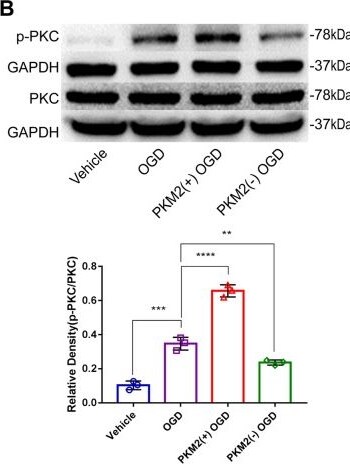
Western Blot: PKC alpha Antibody (MC5) - BSA Free [NB600-201] -
Expression of proteins downstream of PKM2 after SAH. A–D Western blotting and quantitative analysis of p-PKC, PKC, p-ERK and ERK. The following four kinds of mice were used for the in vivo study: WT sham mice and WT mice 24 h after SAH; PKM2CKI/CKI and Aldh1| 1-creERT2 mice 24 h after SAH; and WT mice 24 h after SAH. The cell grouping method was the same as that described in Sect. 3.6 (n = 3 per group); one-way ANOVA, *P < 0.05; **P < 0.01; ***P < 0.001; ****P < 0.0001 Image collected and cropped by CiteAb from the following open publication (https://fluidsbarrierscns.biomedcentral.com/articles/10.1186/s12987-024…), licensed under a CC-BY license. Not internally tested by Novus Biologicals.Applications for PKC alpha Antibody (MC5) - BSA Free
ELISA
Flow Cytometry
Immunocytochemistry/ Immunofluorescence
Immunohistochemistry
Immunohistochemistry-Frozen
Immunohistochemistry-Paraffin
Immunoprecipitation
Western Blot
Reviewed Applications
Read 1 review rated 5 using NB600-201 in the following applications:
Flow Cytometry Panel Builder
Bio-Techne Knows Flow Cytometry
Save time and reduce costly mistakes by quickly finding compatible reagents using the Panel Builder Tool.
Advanced Features
- Spectra Viewer - Custom analysis of spectra from multiple fluorochromes
- Spillover Popups - Visualize the spectra of individual fluorochromes
- Antigen Density Selector - Match fluorochrome brightness with antigen density

Formulation, Preparation, and Storage
Purification
Formulation
Format
Preservative
Concentration
Shipping
Stability & Storage
Background: PKC alpha
Long Name
Alternate Names
Gene Symbol
UniProt
Additional PKC alpha Products
Product Documents for PKC alpha Antibody (MC5) - BSA Free
Certificate of Analysis
To download a Certificate of Analysis, please enter a lot or batch number in the search box below.
Product Specific Notices for PKC alpha Antibody (MC5) - BSA Free
This product is for research use only and is not approved for use in humans or in clinical diagnosis. Primary Antibodies are guaranteed for 1 year from date of receipt.
Related Research Areas
Citations for PKC alpha Antibody (MC5) - BSA Free
 Powered by Bioz
Customer Reviews for PKC alpha Antibody (MC5) - BSA Free (1)
Have you used PKC alpha Antibody (MC5) - BSA Free?
Submit a review and receive an Amazon gift card!
$25/€18/£15/$25CAN/¥2500 for a review with an image
$10/€7/£6/$10CAN/¥1110 for a review without an image
Submit a review
Customer Images
-
Application: Immunohistochemistry-ParaffinSample Tested: prostateSpecies: MouseVerified Customer | Posted 07/30/2021PKC alpha Antibody in prostate tissue

There are no reviews that match your criteria.
Protocols
Find general support by application which include: protocols, troubleshooting, illustrated assays, videos and webinars.
- 7-Amino Actinomycin D (7-AAD) Cell Viability Flow Cytometry Protocol
- Antigen Retrieval Protocol (PIER)
- Antigen Retrieval for Frozen Sections Protocol
- Appropriate Fixation of IHC/ICC Samples
- Cellular Response to Hypoxia Protocols
- Chromogenic IHC Staining of Formalin-Fixed Paraffin-Embedded (FFPE) Tissue Protocol
- Chromogenic Immunohistochemistry Staining of Frozen Tissue
- ClariTSA™ Fluorophore Kits
- Detection & Visualization of Antibody Binding
- ELISA Sample Preparation & Collection Guide
- ELISA Troubleshooting Guide
- Extracellular Membrane Flow Cytometry Protocol
- Flow Cytometry Protocol for Cell Surface Markers
- Flow Cytometry Protocol for Staining Membrane Associated Proteins
- Flow Cytometry Staining Protocols
- Flow Cytometry Troubleshooting Guide
- Fluorescent IHC Staining of Frozen Tissue Protocol
- Graphic Protocol for Heat-induced Epitope Retrieval
- Graphic Protocol for the Preparation and Fluorescent IHC Staining of Frozen Tissue Sections
- Graphic Protocol for the Preparation and Fluorescent IHC Staining of Paraffin-embedded Tissue Sections
- Graphic Protocol for the Preparation of Gelatin-coated Slides for Histological Tissue Sections
- How to Run an R&D Systems DuoSet ELISA
- How to Run an R&D Systems Quantikine ELISA
- How to Run an R&D Systems Quantikine™ QuicKit™ ELISA
- ICC Cell Smear Protocol for Suspension Cells
- ICC Immunocytochemistry Protocol Videos
- ICC for Adherent Cells
- IHC Sample Preparation (Frozen sections vs Paraffin)
- Immunocytochemistry (ICC) Protocol
- Immunocytochemistry Troubleshooting
- Immunofluorescence of Organoids Embedded in Cultrex Basement Membrane Extract
- Immunofluorescent IHC Staining of Formalin-Fixed Paraffin-Embedded (FFPE) Tissue Protocol
- Immunohistochemistry (IHC) and Immunocytochemistry (ICC) Protocols
- Immunohistochemistry Frozen Troubleshooting
- Immunohistochemistry Paraffin Troubleshooting
- Immunoprecipitation Protocol
- Intracellular Flow Cytometry Protocol Using Alcohol (Methanol)
- Intracellular Flow Cytometry Protocol Using Detergents
- Intracellular Nuclear Staining Flow Cytometry Protocol Using Detergents
- Intracellular Staining Flow Cytometry Protocol Using Alcohol Permeabilization
- Intracellular Staining Flow Cytometry Protocol Using Detergents to Permeabilize Cells
- Preparing Samples for IHC/ICC Experiments
- Preventing Non-Specific Staining (Non-Specific Binding)
- Primary Antibody Selection & Optimization
- Propidium Iodide Cell Viability Flow Cytometry Protocol
- Protocol for Heat-Induced Epitope Retrieval (HIER)
- Protocol for Liperfluo
- Protocol for Making a 4% Formaldehyde Solution in PBS
- Protocol for VisUCyte™ HRP Polymer Detection Reagent
- Protocol for the Characterization of Human Th22 Cells
- Protocol for the Characterization of Human Th9 Cells
- Protocol for the Fluorescent ICC Staining of Cell Smears - Graphic
- Protocol for the Fluorescent ICC Staining of Cultured Cells on Coverslips - Graphic
- Protocol for the Preparation & Fixation of Cells on Coverslips
- Protocol for the Preparation and Chromogenic IHC Staining of Frozen Tissue Sections
- Protocol for the Preparation and Chromogenic IHC Staining of Frozen Tissue Sections - Graphic
- Protocol for the Preparation and Chromogenic IHC Staining of Paraffin-embedded Tissue Sections
- Protocol for the Preparation and Chromogenic IHC Staining of Paraffin-embedded Tissue Sections - Graphic
- Protocol for the Preparation and Fluorescent ICC Staining of Cells on Coverslips
- Protocol for the Preparation and Fluorescent ICC Staining of Non-adherent Cells
- Protocol for the Preparation and Fluorescent ICC Staining of Stem Cells on Coverslips
- Protocol for the Preparation and Fluorescent IHC Staining of Frozen Tissue Sections
- Protocol for the Preparation and Fluorescent IHC Staining of Paraffin-embedded Tissue Sections
- Protocol for the Preparation of Gelatin-coated Slides for Histological Tissue Sections
- Protocol for the Preparation of a Cell Smear for Non-adherent Cell ICC - Graphic
- Protocol: Annexin V and PI Staining by Flow Cytometry
- Protocol: Annexin V and PI Staining for Apoptosis by Flow Cytometry
- Quantikine HS ELISA Kit Assay Principle, Alkaline Phosphatase
- Quantikine HS ELISA Kit Principle, Streptavidin-HRP Polymer
- R&D Systems Quality Control Western Blot Protocol
- Sandwich ELISA (Colorimetric) – Biotin/Streptavidin Detection Protocol
- Sandwich ELISA (Colorimetric) – Direct Detection Protocol
- TUNEL and Active Caspase-3 Detection by IHC/ICC Protocol
- The Importance of IHC/ICC Controls
- Troubleshooting Guide: ELISA
- Troubleshooting Guide: Fluorokine Flow Cytometry Kits
- Troubleshooting Guide: Immunohistochemistry
- Troubleshooting Guide: Western Blot Figures
- Western Blot Conditions
- Western Blot Protocol
- Western Blot Protocol for Cell Lysates
- Western Blot Troubleshooting
- Western Blot Troubleshooting Guide
- View all Protocols, Troubleshooting, Illustrated assays and Webinars
FAQs for PKC alpha Antibody (MC5) - BSA Free
-
Q: I'm planning to use PKC alpha Antibody (MC5) (NB600-201) for my next research, can you provide me with the protocol? I can't access the two publications stated on your website for the protocol.
A:
We do not have any protocols specific for this particular antibody, but we do have many general technique-specific protocols. These protocols are good starting points, but we do recommend that the methods are optimized by the end user, because they will depend to some extent on the sample/reagents being used.
-
Q: I'm planning to use PKC alpha Antibody (MC5) (NB600-201) for my next research. I'd like to know how many antibody kit I'll need for my sample (approx. 90 specimens).
A: Unfortunately, we have neither an ELISA kit for PKC alpha nor a PKC alpha extraction kit. The PKC alpha antibodies we supply are simply the primary antibodies, with no other reagents. However, we do also sell secondary antibodies, some of which are already conjugated, and antibody labeling kits. I'm afraid all I can suggest is that you consult the literature for more information on your application.
-
Q: In our data base it is stated as PKC pan, on your data sheet is stated PKC alpha. Could you please confirm, if it is really PKC alpha, because from other suppliers this clone is stated for detecting other isoforms from PKC as well and in previous product lists from Novus, it is stated as "pan" as well. It would be very important, because the customer needs a product, which detects PKC pan and not only alpha.
A: According to our licensing agreement for this clone, it appears to be a pan PKC antibody. It is most strongly associated with PKC alpha, but testing indicates that it detects PKC beta and gamma as well.
-
Q: We are looking into protein kinase C-alpha antibodies for immunohistochemistry on formalin fixed, paraffin embedded tissue. I see that you have many antibodies, including several monoclonals. I wanted to confirm with you that the following antibodies are specific for C-alpha. NB600-201=MC5 (an older paper suggested that this might react with alpha, beta, gamm), NB110-57356=Y124, NB110-57353=Y143. Also, if you have an comparator data or feedback regarding PKC-alpha antibodies for IHC on FFPE, that would be very helpful. We would like to pick 1 antibody that is easy to titer and robust, so that we can move forward with our studies.
A:
We have never heard any feedback that these cross-react with other PKC proteins. If you have seen data that MC5 may cross-react, then I would consider avoiding this antibody if you are concerned. The immunogens for NB110-57356 and NB110-57353 come from the N- and C-terminals, which is where the PKC proteins vary the most, so these are not expected to cross-react and we have had no feedback or testing data that suggests that they do. I would recommend NB110-57356, since it has been published with. You may want to review the published data to determine if it seems this antibody will suit your needs.
-
Q: I'm planning to use PKC alpha Antibody (MC5) (NB600-201) for my next research, can you provide me with the protocol? I can't access the two publications stated on your website for the protocol.
A:
We do not have any protocols specific for this particular antibody, but we do have many general technique-specific protocols. These protocols are good starting points, but we do recommend that the methods are optimized by the end user, because they will depend to some extent on the sample/reagents being used.
-
Q: I'm planning to use PKC alpha Antibody (MC5) (NB600-201) for my next research. I'd like to know how many antibody kit I'll need for my sample (approx. 90 specimens).
A: Unfortunately, we have neither an ELISA kit for PKC alpha nor a PKC alpha extraction kit. The PKC alpha antibodies we supply are simply the primary antibodies, with no other reagents. However, we do also sell secondary antibodies, some of which are already conjugated, and antibody labeling kits. I'm afraid all I can suggest is that you consult the literature for more information on your application.
-
Q: In our data base it is stated as PKC pan, on your data sheet is stated PKC alpha. Could you please confirm, if it is really PKC alpha, because from other suppliers this clone is stated for detecting other isoforms from PKC as well and in previous product lists from Novus, it is stated as "pan" as well. It would be very important, because the customer needs a product, which detects PKC pan and not only alpha.
A: According to our licensing agreement for this clone, it appears to be a pan PKC antibody. It is most strongly associated with PKC alpha, but testing indicates that it detects PKC beta and gamma as well.
-
Q: We are looking into protein kinase C-alpha antibodies for immunohistochemistry on formalin fixed, paraffin embedded tissue. I see that you have many antibodies, including several monoclonals. I wanted to confirm with you that the following antibodies are specific for C-alpha. NB600-201=MC5 (an older paper suggested that this might react with alpha, beta, gamm), NB110-57356=Y124, NB110-57353=Y143. Also, if you have an comparator data or feedback regarding PKC-alpha antibodies for IHC on FFPE, that would be very helpful. We would like to pick 1 antibody that is easy to titer and robust, so that we can move forward with our studies.
A:
We have never heard any feedback that these cross-react with other PKC proteins. If you have seen data that MC5 may cross-react, then I would consider avoiding this antibody if you are concerned. The immunogens for NB110-57356 and NB110-57353 come from the N- and C-terminals, which is where the PKC proteins vary the most, so these are not expected to cross-react and we have had no feedback or testing data that suggests that they do. I would recommend NB110-57356, since it has been published with. You may want to review the published data to determine if it seems this antibody will suit your needs.
-
Q: I'm planning to use PKC alpha Antibody (MC5) (NB600-201) for my next research, can you provide me with the protocol? I can't access the two publications stated on your website for the protocol.
A:
We do not have any protocols specific for this particular antibody, but we do have many general technique-specific protocols. These protocols are good starting points, but we do recommend that the methods are optimized by the end user, because they will depend to some extent on the sample/reagents being used.
-
Q: I'm planning to use PKC alpha Antibody (MC5) (NB600-201) for my next research. I'd like to know how many antibody kit I'll need for my sample (approx. 90 specimens).
A: Unfortunately, we have neither an ELISA kit for PKC alpha nor a PKC alpha extraction kit. The PKC alpha antibodies we supply are simply the primary antibodies, with no other reagents. However, we do also sell secondary antibodies, some of which are already conjugated, and antibody labeling kits. I'm afraid all I can suggest is that you consult the literature for more information on your application.
-
Q: In our data base it is stated as PKC pan, on your data sheet is stated PKC alpha. Could you please confirm, if it is really PKC alpha, because from other suppliers this clone is stated for detecting other isoforms from PKC as well and in previous product lists from Novus, it is stated as "pan" as well. It would be very important, because the customer needs a product, which detects PKC pan and not only alpha.
A: According to our licensing agreement for this clone, it appears to be a pan PKC antibody. It is most strongly associated with PKC alpha, but testing indicates that it detects PKC beta and gamma as well.
-
Q: We are looking into protein kinase C-alpha antibodies for immunohistochemistry on formalin fixed, paraffin embedded tissue. I see that you have many antibodies, including several monoclonals. I wanted to confirm with you that the following antibodies are specific for C-alpha. NB600-201=MC5 (an older paper suggested that this might react with alpha, beta, gamm), NB110-57356=Y124, NB110-57353=Y143. Also, if you have an comparator data or feedback regarding PKC-alpha antibodies for IHC on FFPE, that would be very helpful. We would like to pick 1 antibody that is easy to titer and robust, so that we can move forward with our studies.
A:
We have never heard any feedback that these cross-react with other PKC proteins. If you have seen data that MC5 may cross-react, then I would consider avoiding this antibody if you are concerned. The immunogens for NB110-57356 and NB110-57353 come from the N- and C-terminals, which is where the PKC proteins vary the most, so these are not expected to cross-react and we have had no feedback or testing data that suggests that they do. I would recommend NB110-57356, since it has been published with. You may want to review the published data to determine if it seems this antibody will suit your needs.
-
Q: I'm planning to use PKC alpha Antibody (MC5) (NB600-201) for my next research, can you provide me with the protocol? I can't access the two publications stated on your website for the protocol.
A:
We do not have any protocols specific for this particular antibody, but we do have many general technique-specific protocols. These protocols are good starting points, but we do recommend that the methods are optimized by the end user, because they will depend to some extent on the sample/reagents being used.
-
Q: I'm planning to use PKC alpha Antibody (MC5) (NB600-201) for my next research. I'd like to know how many antibody kit I'll need for my sample (approx. 90 specimens).
A: Unfortunately, we have neither an ELISA kit for PKC alpha nor a PKC alpha extraction kit. The PKC alpha antibodies we supply are simply the primary antibodies, with no other reagents. However, we do also sell secondary antibodies, some of which are already conjugated, and antibody labeling kits. I'm afraid all I can suggest is that you consult the literature for more information on your application.
-
Q: In our data base it is stated as PKC pan, on your data sheet is stated PKC alpha. Could you please confirm, if it is really PKC alpha, because from other suppliers this clone is stated for detecting other isoforms from PKC as well and in previous product lists from Novus, it is stated as "pan" as well. It would be very important, because the customer needs a product, which detects PKC pan and not only alpha.
A: According to our licensing agreement for this clone, it appears to be a pan PKC antibody. It is most strongly associated with PKC alpha, but testing indicates that it detects PKC beta and gamma as well.
-
Q: We are looking into protein kinase C-alpha antibodies for immunohistochemistry on formalin fixed, paraffin embedded tissue. I see that you have many antibodies, including several monoclonals. I wanted to confirm with you that the following antibodies are specific for C-alpha. NB600-201=MC5 (an older paper suggested that this might react with alpha, beta, gamm), NB110-57356=Y124, NB110-57353=Y143. Also, if you have an comparator data or feedback regarding PKC-alpha antibodies for IHC on FFPE, that would be very helpful. We would like to pick 1 antibody that is easy to titer and robust, so that we can move forward with our studies.
A:
We have never heard any feedback that these cross-react with other PKC proteins. If you have seen data that MC5 may cross-react, then I would consider avoiding this antibody if you are concerned. The immunogens for NB110-57356 and NB110-57353 come from the N- and C-terminals, which is where the PKC proteins vary the most, so these are not expected to cross-react and we have had no feedback or testing data that suggests that they do. I would recommend NB110-57356, since it has been published with. You may want to review the published data to determine if it seems this antibody will suit your needs.
Associated Pathways