
Doxorubicin hydrochloride
Tocris Bioscience | Catalog # 2252

Key Product Details
Description
Alternative Names
Product Description
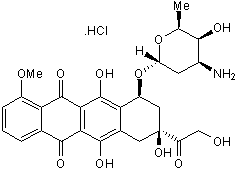
Doxorubicin hydrochloride is a 14-hydroxylated version of Daunorubicin (Cat. No. 1467) that is naturally fluorescent. Doxorubicin is an antitumor antibiotic agent that inhibits DNA topoisomerase II. It is a DNA intercalator that inhibits nucleic acid synthesis and induces apoptosis. Doxorubicin reduces intracellular tau levels. Doxorubicin promotes formation of free radicals that disrupt membrane lipids and DNA strands causing cell injury or cell division. Doxorubicin fluorescence is quenched upon intercalation into the DNA; binding to histones or partitioning into the phospholipid phase of PEG-phospholipid micelles or hydrophobic cores of polymeric micelles increases Doxorubicin fluorescence. Doxorubicin fluorescence enables the monitoring of its localization within lipid bilayers and liposomal delivery systems, and interaction of the drug with DNA and other macromolecules, as well as drug efflux pump activities.Scientific Data Images for Doxorubicin hydrochloride
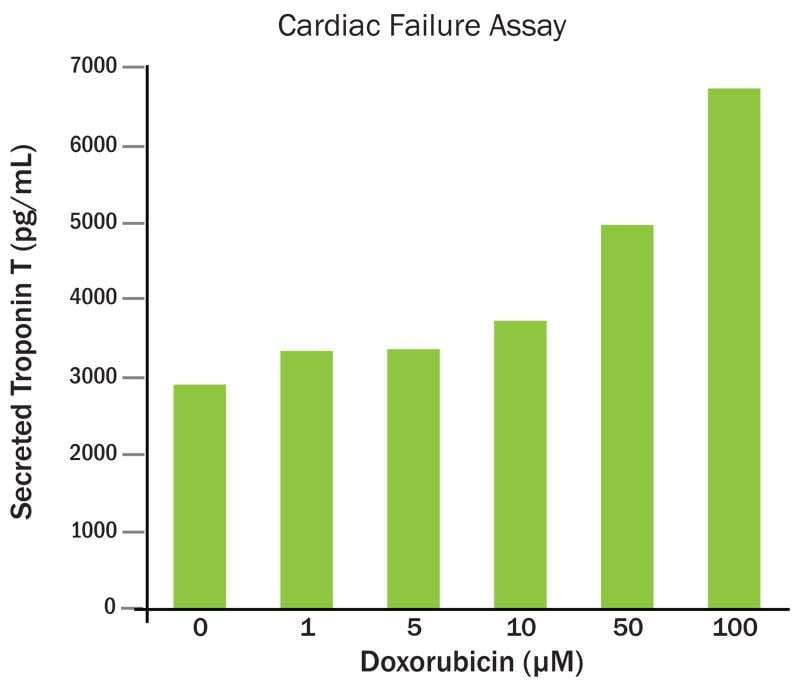
Doxorubicin induces secretion of Troponin T from pluripotent stem cell-derived cardiomyocytes
Cardiomyocytes were treated with increasing doses of Doxorubicin (Catalog # 2252) for 24 hours. High concentration or extended exposure to Doxorubicin is known to induce heart failure. Doxorubicin-induced cardiac failure was quantified by measuring secreted Troponin T, a known biomarker of heart failure. Troponin T was detected via Luminex® bead-based multiplex assay (Catalog # LXSAH). Increased levels of secreted Troponin T are observed with increasing concentrations of Doxorubicin.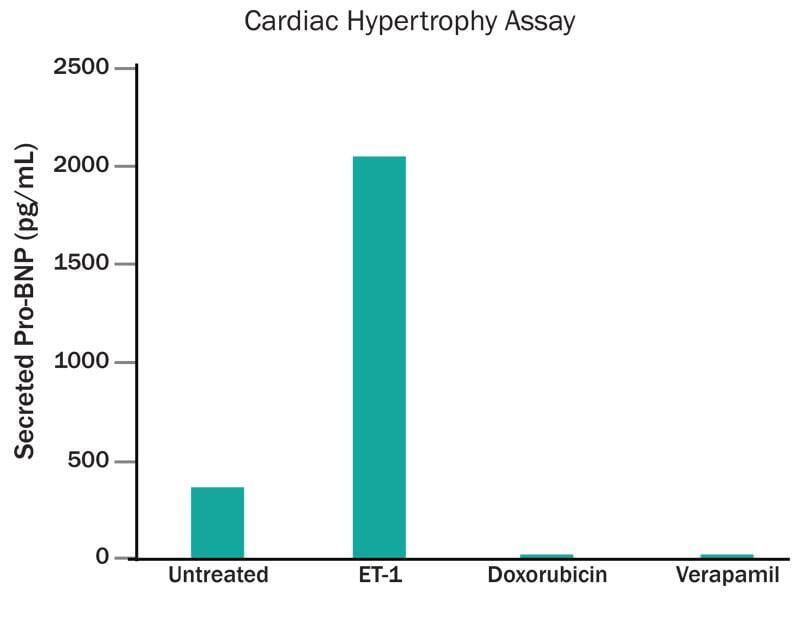
Pluripotent stem cell-derived cardiomyocytes secrete Pro-BNP in response to small molecule-induction of cardiac hypertrophy
Cardiomyocytes were treated with the vasoconstrictor, ET-1 (Endothelin-1; Catalog # 1160), or one of two L-type calcium channel inhibitors, Doxorubicin (Catalog # 2252) or Verapamil (Catalog # 0654). Levels of the cardiac hypertrophy marker, Pro-Brain Natriuretic Peptide (Pro-BNP), were detected via Luminex® bead-based multiplex assay (Catalog # LXSAH). A substantial increase in Pro-BNP was detected in the medium of cardiomyocytes treated with ET-1, a known inducer of cardiac hypertrophy. Conversely, Doxorubicin and Verapamil decreased Pro-BNP secretion from cardiomyocytes.
Product Specifications for Doxorubicin hydrochloride
Molecular Weight
Formula
Storage
Purity
Chemical Name
CAS Number
PubChem ID
InChI Key
SMILES
The technical data provided above is for guidance only. For batch specific data refer to the Certificate of Analysis.
Solubility
| Solvent | Max Conc. mg/mL | Max Conc. mM | |
|---|---|---|---|
| Solubility | |||
| water | 29 | 50 | |
| DMSO | 29 | 50 |
Preparing Stock Solutions for Doxorubicin hydrochloride
The following data is based on the product molecular weight 579.99.
Batch specific molecular weights may vary from batch to batch due to the degree of hydration, which all affect the solvent volumes required to prepare stock solutions.
| Concentration / Solvent Volume / Mass | 1 mg | 5 mg | 10 mg |
|---|---|---|---|
| 0.5 mM | 3.45 mL | 17.24 mL | 34.48 mL |
| 2.5 mM | 0.69 mL | 3.45 mL | 6.90 mL |
| 5 mM | 0.34 mL | 1.72 mL | 3.45 mL |
| 25 mM | 0.07 mL | 0.34 mL | 0.69 mL |
Calculators
Background References
References are publications that support the biological activity of the product. See our Citations tab to view 106 publications citing the usage of this product.
- Mohan Doxorubicin as a molecular nanotheranostic agent: effect of doxorubicin encapsulation in micelles or nanoemulsions on the ultrasound-mediated intracellular delivery and nuclear trafficking. Mol.Pharm. 2010 PMID: 20957997
- Dickey Pharmacologic reductions of total tau levels; implications for the role of microtubule dynamics in regulating tau expression. Mol.Neurodegen. 2006 PMID: 16930453
- Gewirtz A critical evaluation of the mechanisms of action proposed for the antitumor effects of the anthracycline antibiotics adriamycin and daunoru. Biochem.Pharmacol. 1999 PMID: 10075079
- Karukstis Deciphering the fluorescence signature of daunomycin and doxorubicin. Biophys.Chem 1998 PMID: 9700924
- Patel Identification of yeast DNA topoisomerase II mutants resistant to the antitumor drug doxorubicin: implications for the mechanisms of dox. action and cyotoxicity. Mol.Pharmacol. 1997 PMID: 9380029
- Skladanowski and Konopa Adriamycin and daunomycin induce programmed cell death (apoptosis) in tumour cells. Biochem.Pharmacol. 1993 PMID: 8347161
Product Documents for Doxorubicin hydrochloride
Certificate of Analysis
To download a Certificate of Analysis, please enter a lot or batch number in the search box below.
Product Specific Notices for Doxorubicin hydrochloride
For research use only
⚠ WARNING: This product can expose you to chemicals including Doxorubicin hydrochloride (Adriamycin), which is known to the State of California to cause cancer. For more information, go to www.P65Warnings.ca.govCitations for Doxorubicin hydrochloride
 Powered by Bioz
Customer Reviews for Doxorubicin hydrochloride (1)
Have you used Doxorubicin hydrochloride?
Submit a review and receive an Amazon gift card!
$25/€18/£15/$25CAN/¥2500 for a review with an image
$10/€7/£6/$10CAN/¥1110 for a review without an image
Submit a review
Customer Images
-
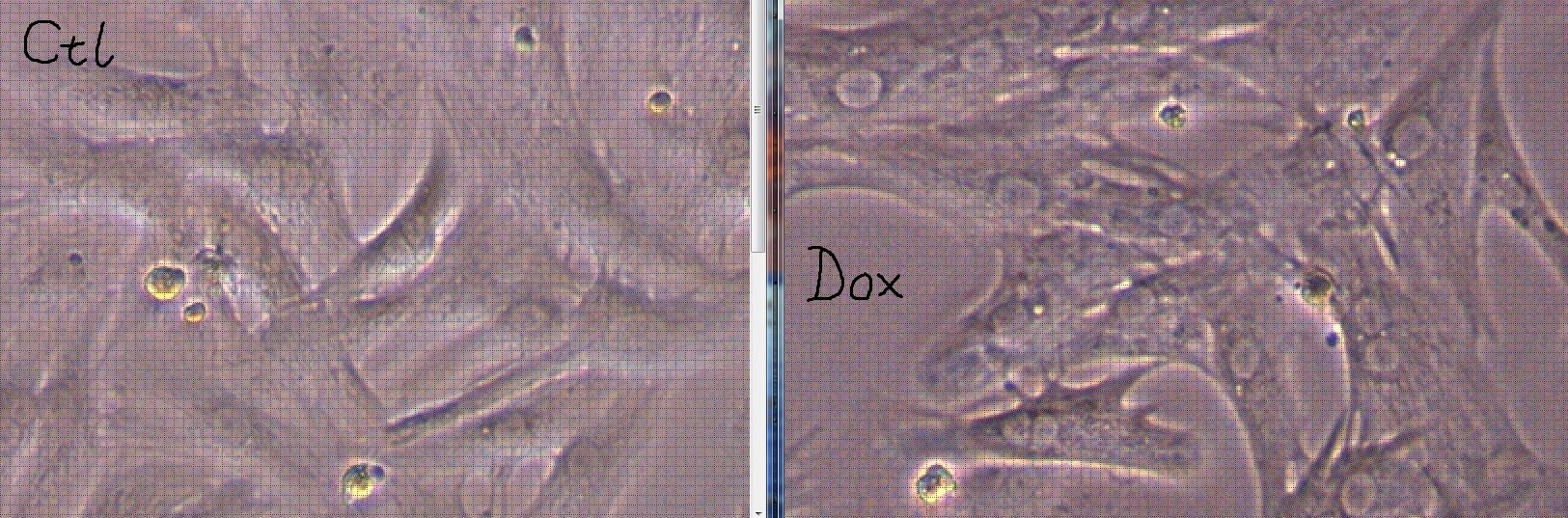
Assay Type: In VitroCell Line/Tissue: Heart myocyteVerified Customer | Posted 12/12/2017Used 2uM Doxorubicin hydrochloride to treat Neonatal rat ventricular myocytes for 12 hr to 24 hr, see clear effect of cell damage.

There are no reviews that match your criteria.