Human CCL5/RANTES DuoSet ELISA

R&D Systems | Catalog # DY278

R&D Systems
Loading...

Key Product Details

Assay Type

Solid Phase Sandwich ELISA

Assay Range

15.6-1000 pg/mL

Sample Type

Cell culture supernates, serum, and plasma
Note: Diluents for complex matrices, such as serum and plasma, should be evaluated prior to use in this DuoSet

Reactivity

Human

Human CCL5/RANTES DuoSet ELISA Features

  • Optimized capture and detection antibody pairings with recommended concentrations save lengthy development time
  • Development protocols are provided to guide further assay optimization
  • Assay can be customized to your specific needs
  • Economical alternative to complete kits
Loading...

Product Summary for Human CCL5/RANTES DuoSet ELISA

This DuoSet ELISA Development kit contains the basic components required for the development of sandwich ELISAs to measure natural and recombinant human CCL5/RANTES. The suggested diluent is suitable for the analysis of most cell culture supernate samples. Diluents for complex matrices, such as serum and plasma, should be evaluated prior to use in this DuoSet.


Product Specifications

Assay Format

96-well strip plate (sold separately)

Sample Volume Required

100 µL

Detection Method

Colorimetric ELISA - 450nm (TMB)

Conjugate

Biotin

Label

HRP

Scientific Data Images for Human CCL5/RANTES DuoSet ELISA

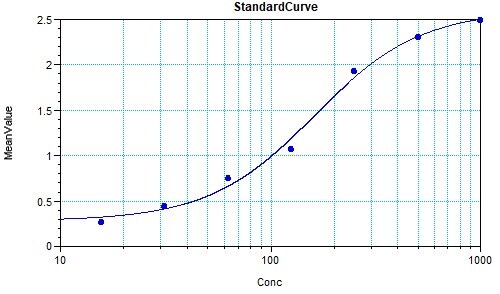
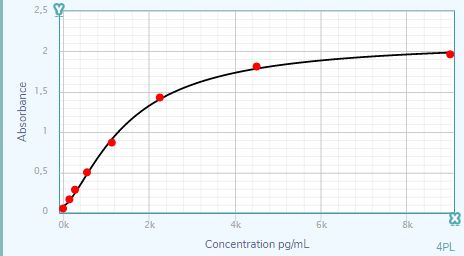
Human CCL5 ELISA / RANTES ELISA Standard Curve

Human CCL5 / RANTES ELISA Standard Curve

Kit Contents for Human CCL5/RANTES DuoSet ELISA

  • Capture Antibody
  • Detection Antibody
  • Recombinant Standard
  • Streptavidin conjugated to horseradish-peroxidase (Streptavidin-HRP)

Other Reagents Required

DuoSet Ancillary Reagent Kit 2 (5 plates): (Catalog # DY008) containing 96 well microplates, plate sealers, substrate solution, stop solution, plate coating buffer (PBS), wash buffer, and Reagent Diluent Concentrate 2.

The components listed above may be purchased separately:

PBS: (Catalog # DY006), or 137 mM NaCl, 2.7 mM KCl, 8.1 mM Na2HPO4, 1.5 mM KH2PO4, pH 7.2 - 7.4, 0.2 µm filtered

Wash Buffer: (Catalog # WA126), or 0.05% Tween® 20 in PBS, pH 7.2-7.4

Reagent Diluent: (Catalog # DY995), or 1% BSA in PBS, pH 7.2-7.4, 0.2 µm filtered

Substrate Solution: 1:1 mixture of Color Reagent A (H2O2) and Color Reagent B (Tetramethylbenzidine) (Catalog # DY999)

Stop Solution: 2 N H2SO4 (Catalog # DY994)

Microplates: R&D Systems (Catalog # DY990)

Plate Sealers: ELISA Plate Sealers (Catalog # DY992)

Preparation and Storage

Shipping

The product is shipped at ambient temperature. Upon receipt, store it immediately at the temperature recommended below.

Stability & Storage

Store the unopened product at 2 - 8 °C. Do not use past expiration date.

Background: CCL5/RANTES

RANTES (Regulated upon Activation, Normal T cell Expressed and presumably Secreted), also known as CCL5, is a member of the "CC" subfamily of chemokines. It plays a primary role in the inflammatory immune response via its ability to chemoattract leukocytes and modulate their function. The cDNA for RANTES was initially discovered by subtractive hybridization as a T cell specific sequence (1, 2). Human RANTES cDNA encodes a highly basic 91 amino acid (aa) residue precursor polypeptide with a 23 aa hydrophobic signal peptide that is cleaved to generate the 68 aa mature protein (1, 2). Human RANTES exhibits approximately 85% homology with mouse RANTES at the deduced aa level (3, 4). 
RANTES is a potent chemoattractant for a number of different cell types including unstimulated CD4+/CD45RO+ memory T cells and stimulated CD4+ and CD8+ T cells with naive and memory phenotypes, NK cells, basophils, eosinophils, dendritic cells, mast cells, monocytes, and microglia (5-13). In addition to its effects on migration, RANTES can activate a number of cell types including T cells (14-16), monocytes (17), neutrophils (17), NK cells (7), dendritic cells (18), and astrocytes (19). T cell activation generally requires relatively high RANTES concentrations (~ 1 μM) and is dependent upon aggregation of the molecule and association with cell surface glycosaminoglycans (GAGs) (15-17). Whether this activity occurs in vivo remains unclear although in mice, intraperitoneally injected RANTES mutants that are unable to aggregate and/or bind GAG, are not capable of attracting leukocytes when compared to wild-type controls (20). Other in vivo studies show that RANTES knockout mice exhibit deficient recruitment of leukocytes to sites of acute inflammation (21). 
RANTES, is known to interact with four identified seven transmembrane G-protein coupled receptors: CCR1, CCR3, CCR4, and CCR5 (22-25). RANTES stimulation can initiate a variety of signaling cascades that are cell context dependent. For instance, in T-cells, RANTES can stimulate elevations of intracellular Ca2+ (26), and activation of focal adhesion kinase (FAK) (27), protein kinase A (28), PI3-kinase (14), Rho GTPase (29), and JAK/STAT signaling pathways (30). The cytomegalovirus protein US28 exhibits significant homology with CC chemokine receptors and is capable of binding RANTES (31). Membrane-spanning US28 can, depending on the context, signal in a constitutive manner (32), bind RANTES and initiate G-protein-mediated signaling cascades (33), or sequester RANTES and potentially alter inflammatory responses (34-36). 
The RANTES receptor CCR5 is also the primary co-receptor for R5 (M-tropic) variants of HIV-1 (37, 38). It has been demonstrated that RANTES, as well as the other CCR5 ligands, macrophage inflammatory protein (MIP)-1 alpha and MIP-1 beta, can competitively inhibit CCR5/HIV-1 interaction and suppress viral infection in vitro (39, 40). These effects apparently do not require fully intact signaling from the CCR5 receptor (41). Consequently, modified forms of RANTES and non-peptide compounds that block the interaction of HIV-1 with CCR5 show promise for future therapies (41-44). In contrast, several reports show that RANTES can enhance in vitro replication of X4 (T-tropic) variants of HIV-1 that use CXCR4 as a co-receptor rather than CCR5 (45, 46). This activity usually requires relatively high RANTES concentrations (~μM) and is dependent upon interaction with cell surface GAGs, oligomerization, and activation of tyrosine kinase and MAP kinase signaling cascades (46, 47).

Alternate Names

RANTES, SISd

Entrez Gene IDs

6352 (Human); 20304 (Mouse); 403522 (Canine); 493689 (Feline)

Gene Symbol

CCL5

Additional CCL5/RANTES Products

Product Documents for Human CCL5/RANTES DuoSet ELISA

Certificate of Analysis

To download a Certificate of Analysis, please enter a lot or batch number in the search box below.

Note: Certificate of Analysis not available for kit components.

Product Specific Notices for Human CCL5/RANTES DuoSet ELISA

For research use only

Citations for Human CCL5/RANTES DuoSet ELISA

Customer Reviews for Human CCL5/RANTES DuoSet ELISA (4)

4.8 out of 5
4 Customer Ratings
5 Stars
75%
4 Stars
25%
3 Stars
0%
2 Stars
0%
1 Stars
0%

Have you used Human CCL5/RANTES DuoSet ELISA?

Submit a review and receive an Amazon gift card!

$25/€18/£15/$25CAN/¥2500 Yen for a review with an image

$10/€7/£6/$10CAN/¥1110 Yen for a review without an image

Submit a review
Amazon Gift Card

Customer Images


Showing  1 - 4 of 4 reviews Showing All
Filter By:
  • Human CCL5/RANTES DuoSet ELISA
    Name: Anonymous
    Sample Tested: Human cells
    Verified Customer | Posted 11/12/2025
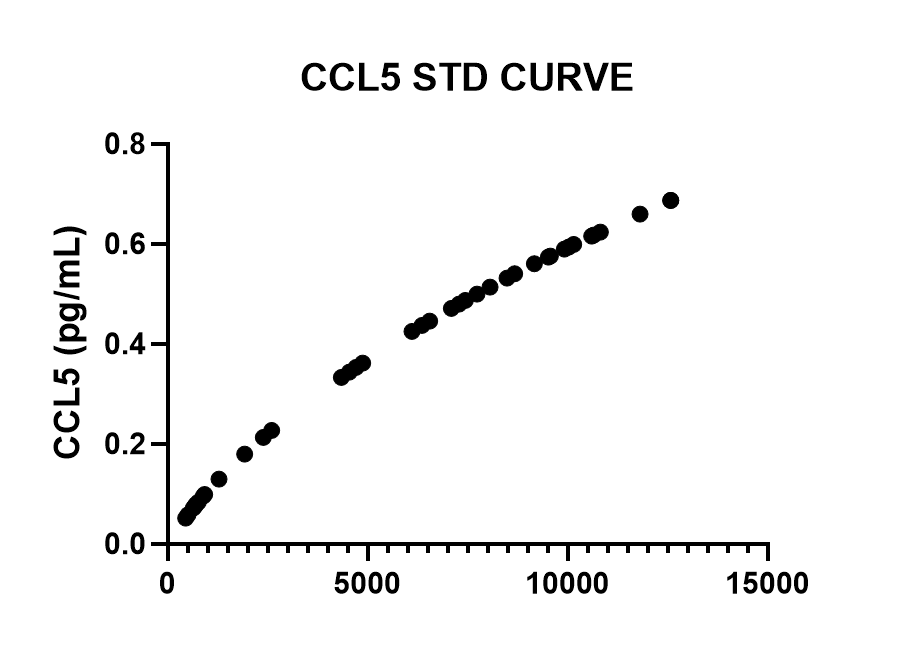
    I used this kit to quantify CCL5 release from Human Airway Smooth Muscle (HASM) cells treated under different inflammatory and pharmacological conditions. The kit performed excellently with a clear standard curve and high reproducibility across replicates. The sensitivity and dynamic range were appropriate for detecting CCL5 levels in cell culture supernatants. The protocol was straightforward and very well explained. The standard curve showed excellent linearity (see uploaded image), and the assay had minimal background signal. Overall, this ELISA kit is highly reliable for quantifying low to mid-range CCL5 concentrations in primary cell culture samples. I would definitely use it again and recommend it for publication-grade data.
    Human CCL5/RANTES DuoSet ELISA DY278
  • Human CCL5/RANTES DuoSet ELISA
    Name: Teresa Williams
    Sample Tested: Cell culture supernatant
    Verified Customer | Posted 12/14/2020
    Human CCL5/RANTES DuoSet ELISA DY278
  • Human CCL5/RANTES DuoSet ELISA
    Name: Anonymous
    Sample Tested: Mouse macrophages
    Verified Customer | Posted 09/11/2019
  • Human CCL5/RANTES DuoSet ELISA
    Name: Anonymous
    Sample Tested: EDTA Plasma
    Verified Customer | Posted 07/17/2018
    Human CCL5/RANTES DuoSet ELISA DY278

There are no reviews that match your criteria.

Showing  1 - 4 of 4 reviews Showing All

Protocols

View specific protocols for Human CCL5/RANTES DuoSet ELISA (DY278):

GENERAL ELISA PROTOCOL

Plate Preparation

  1. Dilute the Capture Antibody to the working concentration in PBS without carrier protein. Immediately coat a 96-well microplate with 100 μL per well of the diluted Capture Antibody. Seal the plate and incubate overnight at room temperature.
  2. Aspirate each well and wash with Wash Buffer, repeating the process two times for a total of three washes. Wash by filling each well with Wash Buffer (400 μL) using a squirt bottle, manifold dispenser, or autowasher. Complete removal of liquid at each step is essential for good performance. After the last wash, remove any remaining Wash Buffer by aspirating or by inverting the plate and blotting it against clean paper towels.
  3. Block plates by adding 300 μL Reagent Diluent to each well. Incubate at room temperature for a minimum of 1 hour.
  4. Repeat the aspiration/wash as in step 2. The plates are now ready for sample addition.

Assay Procedure

  1. Add 100 μL of sample or standards in Reagent Diluent, or an appropriate diluent, per well. Cover with an adhesive strip and incubate 2 hours at room temperature.
  2. Repeat the aspiration/wash as in step 2 of Plate Preparation.
  3. Add 100 μL of the Detection Antibody, diluted in Reagent Diluent, to each well. Cover with a new adhesive strip and incubate 2 hours at room temperature.
  4. Repeat the aspiration/wash as in step 2 of Plate Preparation.
  5. Add 100 μL of the working dilution of Streptavidin-HRP to each well. Cover the plate and incubate for 20 minutes at room temperature. Avoid placing the plate in direct light.
  6. Repeat the aspiration/wash as in step 2.
  7. Add 100 μL of Substrate Solution to each well. Incubate for 20 minutes at room temperature. Avoid placing the plate in direct light.
  8. Add 50 μL of Stop Solution to each well. Gently tap the plate to ensure thorough mixing.
  9. Determine the optical density of each well immediately, using a microplate reader set to 450 nm. If wavelength correction is available, set to 540 nm or 570 nm. If wavelength correction is not available, subtract readings at 540 nm or 570 nm from the readings at 450 nm. This subtraction will correct for optical imperfections in the plate. Readings made directly at 450 nm without correction may be higher and less accurate.


Find general support by application which include: protocols, troubleshooting, illustrated assays, videos and webinars.

FAQs

No product specific FAQs exist for this product.

View all FAQs for ELISA Kits