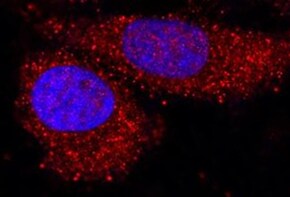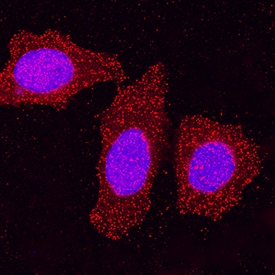
Homeodomain-interacting protein kinase-2 (HIPK2) is a serine/threonine kinase which interacts with transcription factors, including p53, CREB1, SMAD1, SMAD2, RUNX1 and others, and can act as a corepressor or coactivator depending on the transcription factor and subcellular localization. Post-translational modifications control HIPK2 activity, including phosphorylation, small ubiquitin-like modifier modification, acetylation, and ubiquitination. HIPK2 regulation of cell proliferation makes it a key effector of proliferative diseases including cancer and kidney fibrosis. For example, HIPK2 can repress the proliferative Wnt-1/b-catenin pathway and HIF-1, promote apoptosis by activation of p53 and repression of delta Np63 alpha, MDM2 and CtBP, and its activity is enhanced by anti-cancer drugs such as cisplatin and etoposide. HIPK2 oncorepession can be blocked by cytoplasmic localization, hypoxia, gene mutation and loss of heterozygosity.