

Key Product Details

Validated by

Biological Validation

Species Reactivity

Validated:

Human

Cited:

Human, Bovine, Primate - Papio cynocephalus (Yellow Baboon)

Applications

Validated:

Western Blot, ELISA Detection (Matched Antibody Pair), Immunocytochemistry

Cited:

ELISA, Antibody Array Development, Array Development, Electrochemiluminescent Assay, ELISA Detection, ELISA Development, ELISA Development (Detection), Luminex Development

Label

Biotin

Antibody Source

Polyclonal Goat IgG
Loading...

Product Specifications

Immunogen

E. coli-derived recombinant human IL-8/CXCL8
Ser28-Ser99
Accession # P10145

Specificity

Detects human IL-8/CXCL8 in ELISAs and Western blots. In Western blots, less than 5% cross-reactivity with recombinantporcine IL-8/CXCL8, recombinant rat (rr) CINC-2 alpha, and rrCINC-2 beta is observed.

Clonality

Polyclonal

Host

Goat

Isotype

IgG

Scientific Data Images for Human IL-8/CXCL8 Biotinylated Antibody

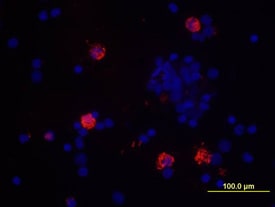
IL-8/CXCL8 antibody in Human PBMCs by Immunocytochemistry (ICC).

IL-8/CXCL8 in Human PBMCs.

IL-8/CXCL8 was detected in immersion fixed PMA-, ionomycin- and monensin-activated human peripheral blood mononuclear cells (PBMCs) using Human IL-8/CXCL8 Biotinylated Antigen Affinity-purified Polyclonal Antibody (Catalog # BAF208) at 10 µg/mL for 3 hours at room temperature. Cells were stained using the NorthernLights™ 557-conjugated Streptavidin (red; Catalog # NL999) and counterstained with DAPI (blue). View our protocol for Fluorescent ICC Staining of Non-adherent Cells.
Detection of Human CXCL8/IL-8 by ELISA

Detection of Human CXCL8/IL-8 by ELISA

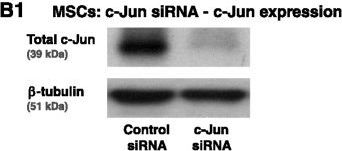
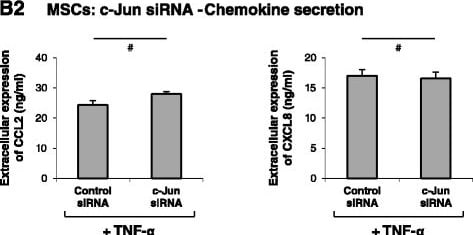
Induction of CCL2 and CLXL8 in TNF alpha -stimulated MSCs is not mediated via the AP-1 pathway. (A) Human BM-derived MSCs were stimulated by TNF-alpha (50 ng/ml) for 5 and 10 minutes. Control cells were treated by the vehicle of TNF-alpha. c-Jun levels and phosphorylation were determined by western blot (WB) analyses. Glyceraldehyde 3-phosphate dehydrogenase (GAPDH) was used as loading control. (B) Human BM-derived MSCs were transiently transfected by small interfering RNA (siRNA) to c-Jun or by control siRNA. (B1) c-Jun expression was determined by WB analyses. beta -Tubulin was used as loading control. (B2) Following siRNA transfection, the cells were stimulated by TNF-alpha (25 ng/ml; in this part of the study we used a suboptimal concentration of TNF-alpha in order to facilitate detection of inhibitory effects) for 24 hours. Expression levels of CCL2 and CXCL8 in the supernatants of the cells were determined by ELISA, in the linear range of absorbance. #siRNA to c-Jun has yielded minor increases or reductions in CCL2 and CXCL8 secretion in different experiments (see Results and discussion), and thus overall there was no significant effect on CCL2 and CXCL8 secretion. In all panels, the findings are representatives of n = 3 independent experiments that have shown similar results. Image collected and cropped by CiteAb from the following publication (https://stemcellres.biomedcentral.com/articles/10.1186/s13287-015-0080-7), licensed under a CC-BY license. Not internally tested by R&D Systems.
Detection of Human CXCL8/IL-8 by ELISA

Detection of Human CXCL8/IL-8 by ELISA

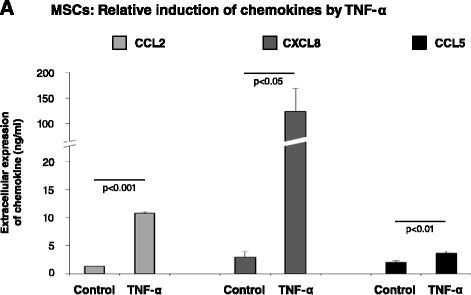
TNF-alpha upregulates the inflammatory profile of MSCs via receptors TNF-RI and TNF-RII. (A) Relative induction of CCL2, CXCL8 and CCL5 in MSCs by TNF-alpha. Human BM-derived MSCs were stimulated by TNF-alpha (50 ng/ml) for 24 hours and the expression of the inflammatory chemokines CCL2, CXCL8 and CCL5 in supernatants of MSCs was determined by ELISA, in the linear range of absorbance. Results are from an experiment in which all three chemokines were analyzed in parallel, and the ratios between the three chemokines are representatives of the values obtained in many experimental repeats. (B) Human BM-derived MSCs were exposed to neutralizing antibodies against tumor necrosis factor receptors TNF-RI and TNF-RII or nonrelevant isotype-matched control antibodies (Control Ab) 1 hour prior to stimulation with TNF-alpha (50 ng/ml), and in the course of 24 hours of stimulation by the cytokine. Control, cells stimulated with vehicle. Expression of CCL2 was determined by ELISA, in the linear range of absorbance. The findings are representatives of at least n = 3 independent experiments that have shown similar results. Image collected and cropped by CiteAb from the following publication (https://stemcellres.biomedcentral.com/articles/10.1186/s13287-015-0080-7), licensed under a CC-BY license. Not internally tested by R&D Systems.
Detection of Human CXCL8/IL-8 by ELISA

Detection of Human CXCL8/IL-8 by ELISA

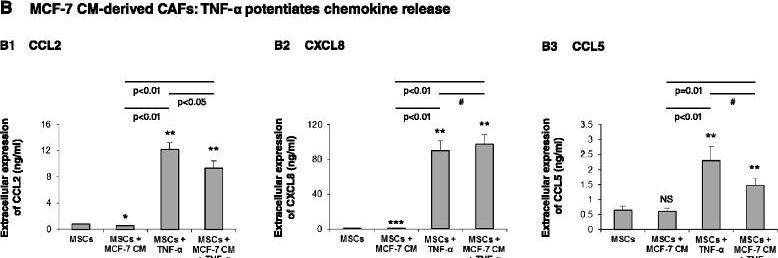
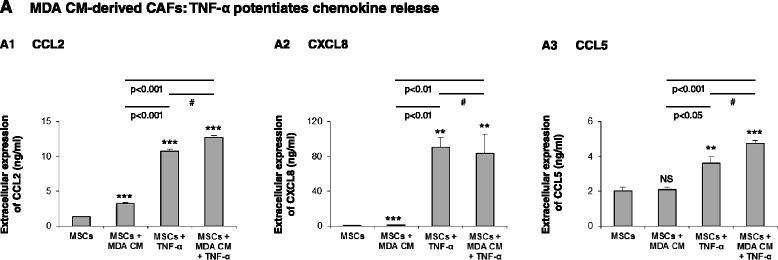
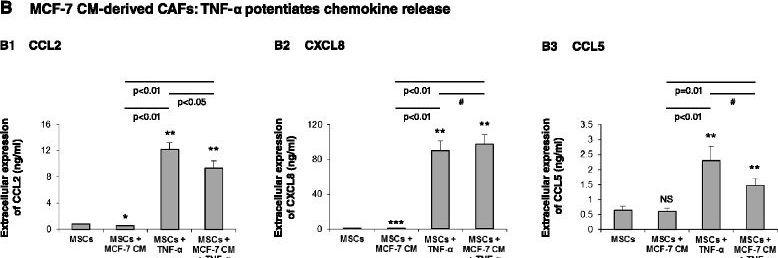
TNF-alpha induces potent elevation in inflammatory traits in MSCs and Tumor-CM-generated CAFs. Human BM-derived MSCs were cultured with Tumor CM from MDA-MB-231 cells (MDA) (A) or from MCF-7 cells (B) over a prolonged period of time (~30 days). TNF-alpha (50 ng/ml) or its vehicle (in control cells) was added for the last 24 hours. Expression of CCL2, CXCL8 and CCL5 was then determined in supernatants of the cells. (A) Expression of the chemokines in the four experimental groups included in the study: MSCs grown in culture for ~30 days without any additional stimulus (MSCs); MSCs grown in culture for ~30 days in the presence of Tumor CM derived from MDA-MB-231 cells (MSCs + MDA CM); MSCs grown in culture for ~30 days and stimulated by TNF-alpha at the last 24 hours of culture (MSCs + TNF-alpha ); and MSCs grown in culture for ~30 days in the presence of Tumor CM derived from MDA-MB-231 cells and stimulated by TNF-alpha at the last 24 hours of culture (MSCs + MDA CM + TNF-alpha ). Expression of CCL2 (A1), CXCL8 (A2) and CCL5 (A3) was determined by ELISA, in the linear range of absorbance. (B) Experimental design as in (A), but with MCF-7-derived CM. In each panel, the findings are representatives of at least n = 3 experiments that have shown similar results. In comparisons between MSCs and all other groups: *P <0.05, **P ≤0.01, ***P ≤0.001. NS, not significant. #Differences between the two indicated groups have shown variability in n ≥ 3 independent experiments and overall were not significant. Image collected and cropped by CiteAb from the following publication (https://stemcellres.biomedcentral.com/articles/10.1186/s13287-015-0080-7), licensed under a CC-BY license. Not internally tested by R&D Systems.
Detection of Human CXCL8/IL-8 by ELISA

Detection of Human CXCL8/IL-8 by ELISA

TNF-alpha induces potent elevation in inflammatory traits in MSCs and Tumor-CM-generated CAFs. Human BM-derived MSCs were cultured with Tumor CM from MDA-MB-231 cells (MDA) (A) or from MCF-7 cells (B) over a prolonged period of time (~30 days). TNF-alpha (50 ng/ml) or its vehicle (in control cells) was added for the last 24 hours. Expression of CCL2, CXCL8 and CCL5 was then determined in supernatants of the cells. (A) Expression of the chemokines in the four experimental groups included in the study: MSCs grown in culture for ~30 days without any additional stimulus (MSCs); MSCs grown in culture for ~30 days in the presence of Tumor CM derived from MDA-MB-231 cells (MSCs + MDA CM); MSCs grown in culture for ~30 days and stimulated by TNF-alpha at the last 24 hours of culture (MSCs + TNF-alpha ); and MSCs grown in culture for ~30 days in the presence of Tumor CM derived from MDA-MB-231 cells and stimulated by TNF-alpha at the last 24 hours of culture (MSCs + MDA CM + TNF-alpha ). Expression of CCL2 (A1), CXCL8 (A2) and CCL5 (A3) was determined by ELISA, in the linear range of absorbance. (B) Experimental design as in (A), but with MCF-7-derived CM. In each panel, the findings are representatives of at least n = 3 experiments that have shown similar results. In comparisons between MSCs and all other groups: *P <0.05, **P ≤0.01, ***P ≤0.001. NS, not significant. #Differences between the two indicated groups have shown variability in n ≥ 3 independent experiments and overall were not significant. Image collected and cropped by CiteAb from the following publication (https://stemcellres.biomedcentral.com/articles/10.1186/s13287-015-0080-7), licensed under a CC-BY license. Not internally tested by R&D Systems.
Detection of Human CXCL8/IL-8 by ELISA

Detection of Human CXCL8/IL-8 by ELISA

Induction of CCL2 and CLXL8 in TNF alpha -stimulated MSCs is not mediated via the AP-1 pathway. (A) Human BM-derived MSCs were stimulated by TNF-alpha (50 ng/ml) for 5 and 10 minutes. Control cells were treated by the vehicle of TNF-alpha. c-Jun levels and phosphorylation were determined by western blot (WB) analyses. Glyceraldehyde 3-phosphate dehydrogenase (GAPDH) was used as loading control. (B) Human BM-derived MSCs were transiently transfected by small interfering RNA (siRNA) to c-Jun or by control siRNA. (B1) c-Jun expression was determined by WB analyses. beta -Tubulin was used as loading control. (B2) Following siRNA transfection, the cells were stimulated by TNF-alpha (25 ng/ml; in this part of the study we used a suboptimal concentration of TNF-alpha in order to facilitate detection of inhibitory effects) for 24 hours. Expression levels of CCL2 and CXCL8 in the supernatants of the cells were determined by ELISA, in the linear range of absorbance. #siRNA to c-Jun has yielded minor increases or reductions in CCL2 and CXCL8 secretion in different experiments (see Results and discussion), and thus overall there was no significant effect on CCL2 and CXCL8 secretion. In all panels, the findings are representatives of n = 3 independent experiments that have shown similar results. Image collected and cropped by CiteAb from the following publication (https://stemcellres.biomedcentral.com/articles/10.1186/s13287-015-0080-7), licensed under a CC-BY license. Not internally tested by R&D Systems.
Detection of Human CXCL8/IL-8 by ELISA

Detection of Human CXCL8/IL-8 by ELISA

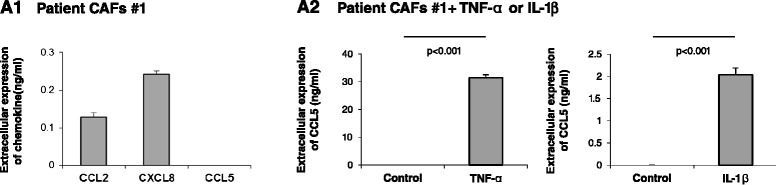
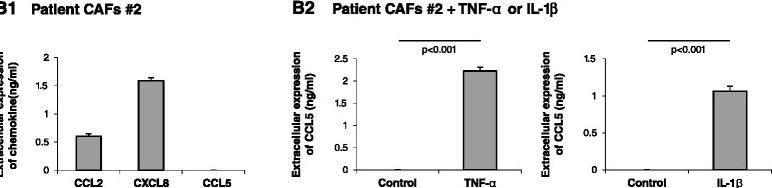
Basal and cytokine-induced release of inflammatory chemokines by patient CAFs. CAFs were isolated from lung metastasis of a breast cancer patient (CAFs #1) or from a primary tumor of a different breast cancer patient (CAFs #2). (A1, B1) Expression of the pro-malignancy chemokines CCL2, CXCL8 and CCL5 was determined by ELISA, in the linear range of absorbance. (A2, B2) Expression of CCL5 was determined following TNFa and IL-1 beta stimulation (TNF-alpha, 50 ng/ml; IL-1 beta, 500 pg/ml; 48 hours). Control cells were stimulated by vehicle. Expression of the chemokines was determined by ELISA, in the linear range of absorbance. In all panels, the findings are representatives of at least n = 3 independent experiments that have shown similar results. Image collected and cropped by CiteAb from the following publication (https://stemcellres.biomedcentral.com/articles/10.1186/s13287-015-0080-7), licensed under a CC-BY license. Not internally tested by R&D Systems.
Detection of Human CXCL8/IL-8 by ELISA

Detection of Human CXCL8/IL-8 by ELISA

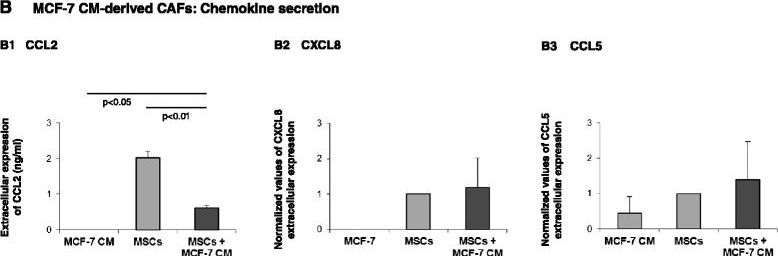
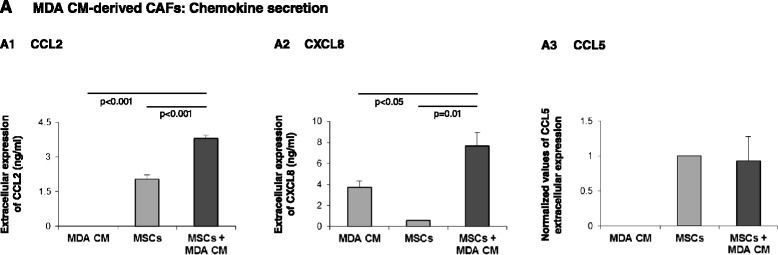
Impact of prolonged stimulation by Tumor CM on the release of inflammatory chemokines by the resulting CAFs. Human BM-derived MSCs were cultured with Tumor CM from MDA-MB-231 cells (MDA) (A) or MCF-7 cells (B) over a prolonged period of time (~30 days; MSCs + MDA CM or MSCs + MCF-7 CM, respectively). Twenty-four hours after medium exchange to fresh Tumor CM, cell supernatants were collected and the expression of CCL2 (A1, B1), CXCL8 (A2, B2) and CCL5 (A3, B3) was determined in comparison with supernatants of MSCs that were not supplemented with CM (MSCs) and with the original Tumor CM of MDA-MB-231 or MCF-7 cells alone (MDA CM or MCF-7 CM, respectively). Chemokine expression was determined by ELISA, in the linear range of absorbance. (A1), (A2), (B1) Representatives of n = 3 independent experiments that have shown similar results. (A3), (B2), (B3) Ratios between MSCs and MSCs + Tumor CM were not consistent in different experimental repeats. Therefore, in these panels, the findings are presented as mean ± standard deviation of normalized values (MSCs were given the value of 1) obtained in relevant experimental repeats (at least n = 3). Image collected and cropped by CiteAb from the following publication (https://stemcellres.biomedcentral.com/articles/10.1186/s13287-015-0080-7), licensed under a CC-BY license. Not internally tested by R&D Systems.
Detection of Human CXCL8/IL-8 by ELISA

Detection of Human CXCL8/IL-8 by ELISA

Basal and cytokine-induced release of inflammatory chemokines by patient CAFs. CAFs were isolated from lung metastasis of a breast cancer patient (CAFs #1) or from a primary tumor of a different breast cancer patient (CAFs #2). (A1, B1) Expression of the pro-malignancy chemokines CCL2, CXCL8 and CCL5 was determined by ELISA, in the linear range of absorbance. (A2, B2) Expression of CCL5 was determined following TNFa and IL-1 beta stimulation (TNF-alpha, 50 ng/ml; IL-1 beta, 500 pg/ml; 48 hours). Control cells were stimulated by vehicle. Expression of the chemokines was determined by ELISA, in the linear range of absorbance. In all panels, the findings are representatives of at least n = 3 independent experiments that have shown similar results. Image collected and cropped by CiteAb from the following publication (https://stemcellres.biomedcentral.com/articles/10.1186/s13287-015-0080-7), licensed under a CC-BY license. Not internally tested by R&D Systems.
Detection of Human Human IL-8/CXCL8 Biotinylated Antibody by ELISA

Detection of Human Human IL-8/CXCL8 Biotinylated Antibody by ELISA

Impact of prolonged stimulation by Tumor CM on the release of inflammatory chemokines by the resulting CAFs. Human BM-derived MSCs were cultured with Tumor CM from MDA-MB-231 cells (MDA) (A) or MCF-7 cells (B) over a prolonged period of time (~30 days; MSCs + MDA CM or MSCs + MCF-7 CM, respectively). Twenty-four hours after medium exchange to fresh Tumor CM, cell supernatants were collected and the expression of CCL2 (A1, B1), CXCL8 (A2, B2) and CCL5 (A3, B3) was determined in comparison with supernatants of MSCs that were not supplemented with CM (MSCs) and with the original Tumor CM of MDA-MB-231 or MCF-7 cells alone (MDA CM or MCF-7 CM, respectively). Chemokine expression was determined by ELISA, in the linear range of absorbance. (A1), (A2), (B1) Representatives of n = 3 independent experiments that have shown similar results. (A3), (B2), (B3) Ratios between MSCs and MSCs + Tumor CM were not consistent in different experimental repeats. Therefore, in these panels, the findings are presented as mean ± standard deviation of normalized values (MSCs were given the value of 1) obtained in relevant experimental repeats (at least n = 3). Image collected and cropped by CiteAb from the following publication (https://pubmed.ncbi.nlm.nih.gov/25928089), licensed under a CC-BY license. Not internally tested by R&D Systems.
Detection of Human Human IL-8/CXCL8 Biotinylated Antibody by ELISA

Detection of Human Human IL-8/CXCL8 Biotinylated Antibody by ELISA

TNF-alpha induces potent elevation in inflammatory traits in MSCs and Tumor-CM-generated CAFs. Human BM-derived MSCs were cultured with Tumor CM from MDA-MB-231 cells (MDA) (A) or from MCF-7 cells (B) over a prolonged period of time (~30 days). TNF-alpha (50 ng/ml) or its vehicle (in control cells) was added for the last 24 hours. Expression of CCL2, CXCL8 and CCL5 was then determined in supernatants of the cells. (A) Expression of the chemokines in the four experimental groups included in the study: MSCs grown in culture for ~30 days without any additional stimulus (MSCs); MSCs grown in culture for ~30 days in the presence of Tumor CM derived from MDA-MB-231 cells (MSCs + MDA CM); MSCs grown in culture for ~30 days and stimulated by TNF-alpha at the last 24 hours of culture (MSCs + TNF-alpha ); and MSCs grown in culture for ~30 days in the presence of Tumor CM derived from MDA-MB-231 cells and stimulated by TNF-alpha at the last 24 hours of culture (MSCs + MDA CM + TNF-alpha ). Expression of CCL2 (A1), CXCL8 (A2) and CCL5 (A3) was determined by ELISA, in the linear range of absorbance. (B) Experimental design as in (A), but with MCF-7-derived CM. In each panel, the findings are representatives of at least n = 3 experiments that have shown similar results. In comparisons between MSCs and all other groups: *P <0.05, **P ≤0.01, ***P ≤0.001. NS, not significant. #Differences between the two indicated groups have shown variability in n ≥ 3 independent experiments and overall were not significant. Image collected and cropped by CiteAb from the following publication (https://pubmed.ncbi.nlm.nih.gov/25928089), licensed under a CC-BY license. Not internally tested by R&D Systems.

Applications for Human IL-8/CXCL8 Biotinylated Antibody

Application
Recommended Usage

Immunocytochemistry

5-15 µg/mL
Sample: Immersion fixed human peripheral blood mononuclear cells treated with PMA, calcium ionomycin, and monensin 

Western Blot

0.1 µg/mL
Sample: Recombinant Human IL-8/CXCL8 (Catalog # 208-IL)

Human IL-8/CXCL8 Sandwich Immunoassay

ELISA Detection (Matched Antibody Pair)
Recommended Concentration: 0.1-0.4 µg/mL
Use in combination with these reagents:
  • Capture Reagent: Human IL-8/CXCL8 Antibody (Catalog # MAB208)
  • Standard: Recombinant Human IL-8/CXCL8 Protein (Catalog # 208-IL)
Please Note: Optimal dilutions of this antibody should be experimentally determined.

Reviewed Applications

Read 1 review rated 4 using BAF208 in the following applications:

Formulation, Preparation, and Storage

Purification

Antigen Affinity-purified

Reconstitution

Reconstitute at 0.2 mg/mL in sterile PBS.


Loading...

Formulation

Lyophilized from a 0.2 μm filtered solution in PBS with BSA as a carrier protein.

Shipping

The product is shipped at ambient temperature. Upon receipt, store it immediately at the temperature recommended below.

Stability & Storage

Use a manual defrost freezer and avoid repeated freeze-thaw cycles.
  • 12 months from date of receipt, -20 to -70 °C as supplied.
  • 1 month, 2 to 8 °C under sterile conditions after reconstitution.
  • 6 months, -20 to -70 °C under sterile conditions after reconstitution.

Calculators

The reconstitution calculator allows you to quickly calculate the volume of a reagent to reconstitute your vial. Simply enter the mass of reagent and the target concentration and the calculator will determine the rest.

=
÷

Background: IL-8/CXCL8

CXCL8 was originally discovered and purified independently by a number of laboratories as a neutrophil chemotactic and activating factor. It was also referred to as neutrophil chemotactic factor (NCF), neutrophil activating protein (NAP), monocyte-derived neutrophil chemotactic factor (MDNCF), T-lymphocyte chemotactic factor (TCF), granulocyte chemotactic protein (GCP) and leukocyte adhesion inhibitor (LAI). Many cell types, including monocyte/macrophages, T cells, neutrophils, fibroblasts, endothelial cells, keratinocytes, hepatocytes, chondrocytes, and various tumor cell lines, can produce CXCL8 in response to a wide variety of
pro-inflammatory stimuli such as exposure to IL-1, TNF, LPS, and viruses. CXCL8 is a member of the alpha (CXC) subfamily of chemokines, which also includes platelet factor 4, GRO, IP-10, etc.

CXCL8 is a potent chemoattractant for neutrophils. In addition, CXCL8 also has a wide range of other pro-inflammatory effects. CXCL8 causes degranulation of neutrophil specific granules and azurophilic granules. CXCL8 induces expression of the cell adhesion molecules CD11/CD18 and enhances the adherence of neutrophils to endothelial cells and sub-endothelial matrix proteins. Besides neutrophils, CXCL8 is also chemotactic for basophils, T cells and eosinophils. CXCL8 has been reported to be a co-mitogen for keratinocytes and was also shown to be an autocrine growth factor for melanoma cells. CXCL8 was also reported to be angiogenic both in vivo and in vitro.

Long Name

Interleukin 8

Alternate Names

CXCL8, GCP1, IL8, LAI, LECT, LUCT, LYNAP, MDNCF, MONAP, NAF, NAP1, NCF, TCF, TSG1

Entrez Gene IDs

3576 (Human); 396880 (Porcine); 403850 (Canine); 493836 (Feline)

Gene Symbol

CXCL8

UniProt

Additional IL-8/CXCL8 Products

Product Documents for Human IL-8/CXCL8 Biotinylated Antibody

Certificate of Analysis

To download a Certificate of Analysis, please enter a lot or batch number in the search box below.

Note: Certificate of Analysis not available for kit components.

Product Specific Notices for Human IL-8/CXCL8 Biotinylated Antibody

For research use only

Citations for Human IL-8/CXCL8 Biotinylated Antibody

Customer Reviews for Human IL-8/CXCL8 Biotinylated Antibody (1)

4 out of 5
1 Customer Rating
5 Stars
0%
4 Stars
100%
3 Stars
0%
2 Stars
0%
1 Stars
0%

Have you used Human IL-8/CXCL8 Biotinylated Antibody?

Submit a review and receive an Amazon gift card!

$25/€18/£15/$25CAN/¥2500 Yen for a review with an image

$10/€7/£6/$10CAN/¥1110 Yen for a review without an image

Submit a review
Amazon Gift Card
Showing  1 - 1 of 1 review Showing All
Filter By:
  • Name: Anonymous
    Application: ELISA
    Sample Tested: See PMID 19234219
    Species: Human
    Verified Customer | Posted 01/12/2015

There are no reviews that match your criteria.

Showing  1 - 1 of 1 review Showing All

Protocols

Find general support by application which include: protocols, troubleshooting, illustrated assays, videos and webinars.

FAQs

No product specific FAQs exist for this product.

View all FAQs for Antibodies
