
NOV, also called CCN3, is one of six CCN (CYR61/CTGF/NOV) secreted proteins which share a common multimodular organization (1 - 4). NOV/CCN3 contains an N-terminal IGFBP domain that appears to be non-functional and a vWF type C and thrombospondin type I domain which mediate oligomerization and matrix interactions, respectively (1, 2). The C-terminal cysteine knot domain interacts with several partners, including the matrix protein fibulin 1C (5), Notch-1 (6), and CCN2, with which it may heterodimerize (2). NOV/CCN3 also interacts with the gap junction protein Connexin43 and mediates suppression of proliferation (7). It also binds the calcium binding protein S100A4 and promotes calcium channel activation (8). The 357 amino acid (aa), 44 kDa human NOV/CCN3 shares 80% aa identity with mouse, rat and dog NOV/CCN3, and 78% aa identity with cow NOV/CCN3. NOV/CCN3 also shows 38 - 50% aa identity with other family members including WISP proteins, except for WISP-2/CCN5 which lacks the cysteine knot (1). NOV/CCN3 is widely expressed developmentally, especially in muscle, endothelium, nervous system, adrenal cortex and chondrocytes (1 - 4). In transformed cells, a 32 kDa N-terminally truncated form lacks the signal sequence is localized to the nucleus. Truncation allows a C-terminal nuclear localization sequence to be active (9). Nuclear NOV/CCN3 acts as a transcriptional repressor but promotes proliferation, presumably by interfering with growth control (9). Full length NOV/CCN3 is a secreted matricellular protein which inhibits cell growth. Interaction of NOV/CCN3 with integrins alpha v beta 3 and alpha 5 beta 1 mediates endothelial cell adhesion, chemotaxis, and promotes angiogenesis (10, 11). Over-expression of NOV/CCN3 downregulates myogenic genes such as MyoD (12).
Human NOV/CCN3 Antibody (209808)
R&D Systems | Catalog # MAB1640


Key Product Details
Species Reactivity
Validated:
Human
Cited:
Human, Rat
Applications
Validated:
Western Blot
Cited:
Western Blot, ELISA Capture, ELISA Development
Label
Unconjugated
Antibody Source
Monoclonal Mouse IgG1 Clone # 209808
Loading...
Product Specifications
Immunogen
Mouse myeloma cell line NS0-derived recombinant human NOV/CCN3
Thr32-Met357
Accession # P48745
Thr32-Met357
Accession # P48745
Specificity
Detects human NOV/CCN3 in direct ELISAs and Western blots. In direct ELISAs and Western blots, this antibody does not cross-react with recombinant mouse NOV, recombinant human (rh) CTGF, or rhWISP-1.
Clonality
Monoclonal
Host
Mouse
Isotype
IgG1
Applications for Human NOV/CCN3 Antibody (209808)
Application
Recommended Usage
Western Blot
1 µg/mL
Sample: Recombinant Human NOV/CCN3 (Catalog # 1640-NV)
under non-reducing conditions only
Sample: Recombinant Human NOV/CCN3 (Catalog # 1640-NV)
under non-reducing conditions only
Reviewed Applications
Read 4 reviews rated 3.8 using MAB1640 in the following applications:
Formulation, Preparation, and Storage
Purification
Protein A or G purified from hybridoma culture supernatant
Reconstitution
Reconstitute at 0.5 mg/mL in sterile PBS. For liquid material, refer to CoA for concentration.
Loading...
Formulation
Lyophilized from a 0.2 μm filtered solution in PBS with Trehalose. *Small pack size (SP) is supplied either lyophilized or as a 0.2 µm filtered solution in PBS.
Shipping
Lyophilized product is shipped at ambient temperature. Liquid small pack size (-SP) is shipped with polar packs. Upon receipt, store immediately at the temperature recommended below.
Stability & Storage
Use a manual defrost freezer and avoid repeated freeze-thaw cycles.
- 12 months from date of receipt, -20 to -70 °C as supplied.
- 1 month, 2 to 8 °C under sterile conditions after reconstitution.
- 6 months, -20 to -70 °C under sterile conditions after reconstitution.
Calculators
Background: NOV/CCN3
References
- Perbal, B. (2004) Lancet 363:62.
- Perbal, B. (2006) Cell Commun. Signal. 4:3.
- Martinerie, C. et al. (1994) Oncogene 9:2729.
- Snaith, M.R. et al. (1996) Genomics 38:425.
- Perbal, B. et al. (1999) Proc. Natl. Acad. Sci. USA 96:869.
- Sakamoto, K. et al. (2002) J. Biol. Chem. 277:29399.
- Fu, C.T. et al. (2004) J. Biol. Chem. 279:36943.
- Li, C.L. et al. (2002) Mol. Pathol. 55:250.
- Planque, N. et al. (2006) J. Cell. Biochem. 99:105.
- Lin, C.G. et al. (2003) J. Biol. Chem. 278:24200.
- Lin, C.G. et al. (2003) J. Biol. Chem. 280:8229.
- Calhabeu, F. et al. (2006) Exp. Cell. Res. 312:1876.
Long Name
Nephroblastoma Overexpressed Gene
Alternate Names
CCN3, IGFBP-9
Gene Symbol
CCN3
UniProt
Additional NOV/CCN3 Products
Product Documents for Human NOV/CCN3 Antibody (209808)
Certificate of Analysis
To download a Certificate of Analysis, please enter a lot or batch number in the search box below.
Note: Certificate of Analysis not available for kit components.
Product Specific Notices for Human NOV/CCN3 Antibody (209808)
For research use only
Related Research Areas
Citations for Human NOV/CCN3 Antibody (209808)
 Powered by Bioz
Customer Reviews for Human NOV/CCN3 Antibody (209808) (4)
3.8 out of 5
4 Customer Ratings
Have you used Human NOV/CCN3 Antibody (209808)?
Submit a review and receive an Amazon gift card!
$25/€18/£15/$25CAN/¥2500 for a review with an image
$10/€7/£6/$10CAN/¥1110 for a review without an image
Submit a review
Customer Images
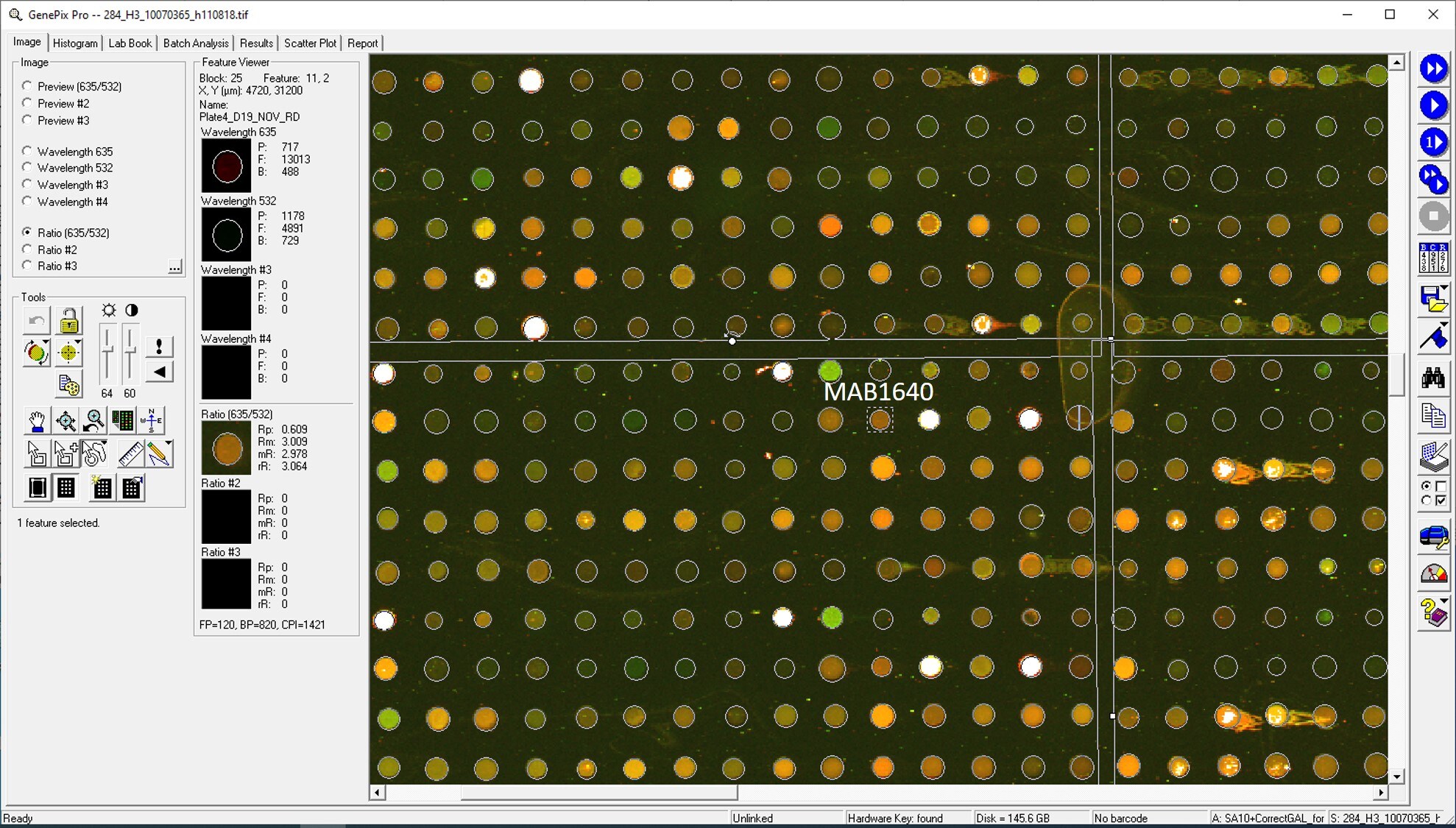
Showing
1
-
4 of
4 reviews
Showing All
Filter By:
-
Application: MicroarraysSample Tested: EDTA PlasmaSpecies: HumanVerified Customer | Posted 01/14/2021

-
Application: MicroarraysSample Tested: EDTA PlasmaSpecies: HumanVerified Customer | Posted 11/14/2018
-
Application: ELISASample Tested: PlasmaSpecies: HumanVerified Customer | Posted 11/10/2018
-
Application: MicroarraySample Tested: EDTA PlasmaSpecies: HumanVerified Customer | Posted 10/09/2018
There are no reviews that match your criteria.
Protocols
Find general support by application which include: protocols, troubleshooting, illustrated assays, videos and webinars.
- Cellular Response to Hypoxia Protocols
- R&D Systems Quality Control Western Blot Protocol
- Troubleshooting Guide: Western Blot Figures
- Western Blot Conditions
- Western Blot Protocol
- Western Blot Protocol for Cell Lysates
- Western Blot Troubleshooting
- Western Blot Troubleshooting Guide
- View all Protocols, Troubleshooting, Illustrated assays and Webinars
Loading...
Associated Pathways
