
Lipocalin-2, also known as neutrophil gelatinase-associated Lipocalin and uterocalin (NGAL), has been implicated in a variety of processes including cell differentiation, tumorigenesis, and apoptosis (1‑3). It binds a bacterial catecholate sidropore bound to ferric ion such as enterobactin with a subnanomolar dissociation constant (KD = 0.41 nM) (4). The bound ferric enterobactin complex breaks down slowly in a month into dihydroxybenzoyl serine and dihydroxybenzoic acid (DHBA). It also binds to a ferric DHBA complex with much less KD values (7.9 nM) (4). Secretion of Lipocalin-2 in immune cells increases by stimulation of Toll-like receptor as a acute phase response to infection. As a result, it acts as a potent bacteriostatic reagents by sequestering iron (5). Moreover, Lipocalin-2 can alter the invasive and metastatic behavior of Ras-transformed breast cancer cells in vitro and in vivo by reversing epithelial to mesenchymal transition inducing activity of Ras, through restoration of E-cadherin expression, via effects on the Ras-MAPK signaling pathway (6). In the kidney, Lipocalin-2-mediated iron trafficking may be involved in protection from renal injury, and it has been implicated as a marker for early kidney failure (7, 8).


Scientific images may be resized, cropped, or adjusted for brightness or contrast for presentation purposes. These updates are limited to presentation and do not affect the underlying scientific interpretation of the data. Where available, additional source data may be provided upon request.
Key Product Details
Species Reactivity
Validated:
Cited:
Applications
Validated:
Cited:
Label
Antibody Source
Product Specifications
Immunogen
Gln21-Asn198
Accession # P30152
Specificity
Clonality
Host
Isotype
Scientific Data Images for Rat Lipocalin-2/NGAL Antibody
Detection of Mouse and Rat Lipocalin‑2/NGAL by Western Blot.
Western blot shows lysates of rat ovary tissue and mouse lung tissue. PVDF membrane was probed with 1 µg/mL of Mouse/Rat Lipocalin-2/NGAL Antigen Affinity-purified Polyclonal Antibody (Catalog # AF3508) followed by HRP-conjugated Anti-Goat IgG Secondary Antibody (Catalog # HAF019). A specific band was detected for Lipocalin-2/NGAL at approximately 25 kDa (as indicated). This experiment was conducted under reducing conditions and using Immunoblot Buffer Group 8.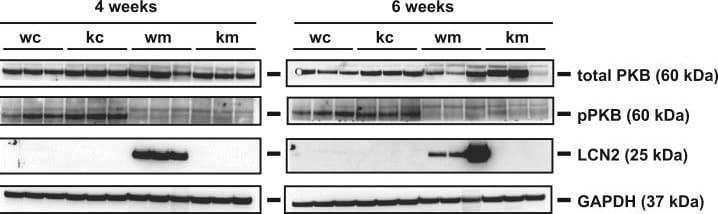
Detection of Mouse Lipocalin-2/NGAL by Western Blot
Visualization of expression of selected proteins by Western blot analysis. Protein extracts were prepared from livers of WT and Lcn2-/- mice that were subjected to indicated diets for 4 or 6 weeks (n=3 animals/group). Antibodies used are mentioned in the Section 2. GAPDH was used as the loading control. Image collected and cropped by CiteAb from the following publication (https://pubmed.ncbi.nlm.nih.gov/28725667), licensed under a CC-BY license. Not internally tested by R&D Systems.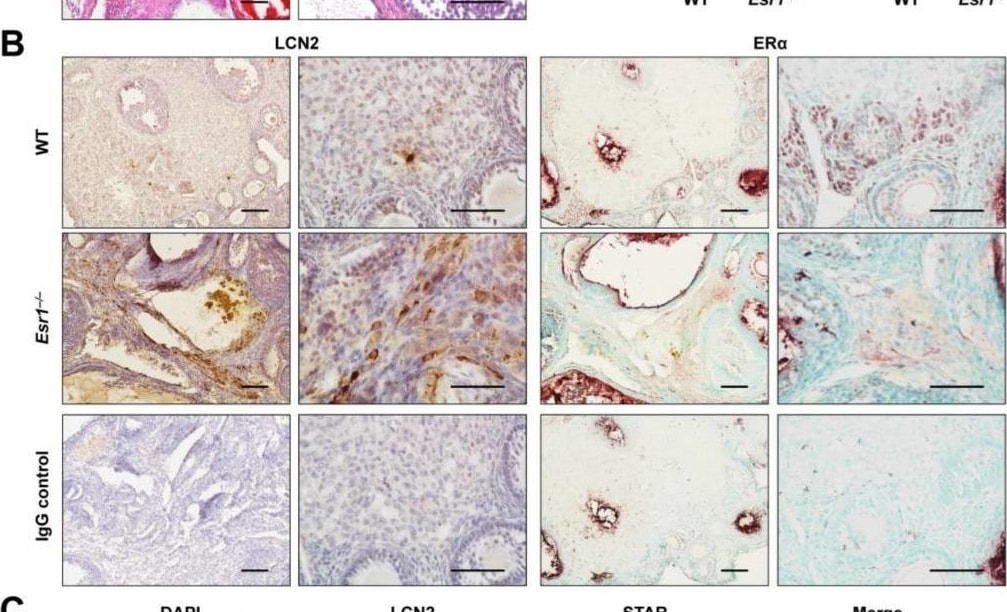
Detection of Mouse Lipocalin-2/NGAL by Immunohistochemistry-Paraffin
Increased LCN2 expression in Esr1-deficient ovaries. Ovaries from wild-type (WT, n = 8) and Esr1 null mice (n = 6) were dissected and either embedded in paraffin or prepared for RNA analysis. (A) Hematoxylin and eosin (H & E) staining showed characteristic histological changes in Esr1-deficient compared to WT ovaries. (B) Immunohistochemical staining for LCN2 and ER alpha was performed. Sections were counterstained with hematoxylin (LCN2) or methyl green (ER alpha ). Magnifications: 100×, 400×; scale bars: 100 µm, 50 µm. (C) Tissue samples were subjected to immunofluorescence double staining for LCN2 and STAR. Magnifications: 100×; scale bars: 100 µm. (D) Lcn2 and Star expression was analyzed in ovarian tissues using RT-qPCR. Data are displayed as means ± SD. In case of normal distribution, Student’s t-tests were chosen for statistical analysis, otherwise a Mann–Whitney test was performed. Significant differences between groups are marked with asterisks: *** p < 0.001. Image collected and cropped by CiteAb from the following open publication (https://pubmed.ncbi.nlm.nih.gov/37298232), licensed under a CC-BY license. Not internally tested by R&D Systems.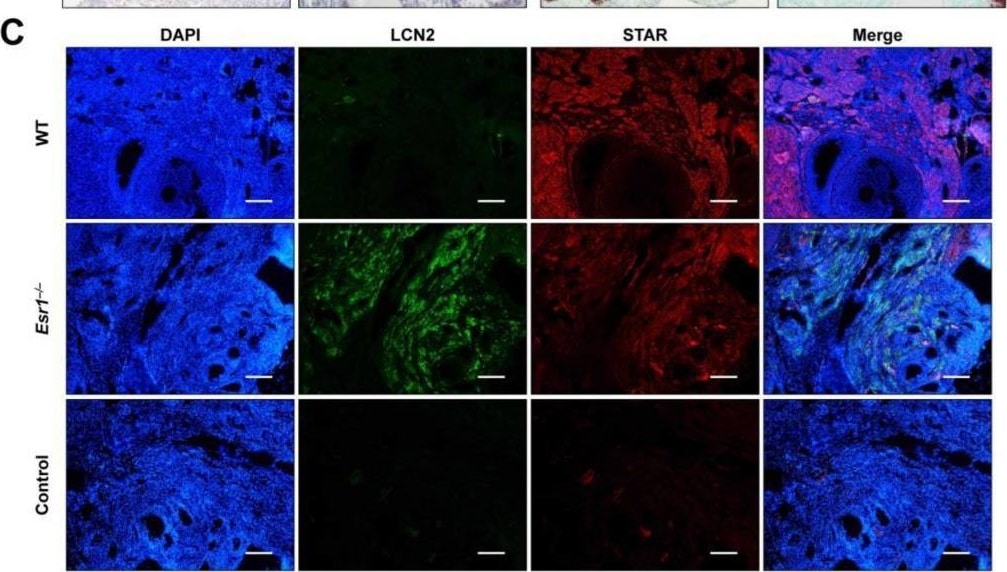
Detection of Mouse Lipocalin-2/NGAL by Immunohistochemistry
Increased LCN2 expression in Esr1-deficient ovaries. Ovaries from wild-type (WT, n = 8) and Esr1 null mice (n = 6) were dissected and either embedded in paraffin or prepared for RNA analysis. (A) Hematoxylin and eosin (H & E) staining showed characteristic histological changes in Esr1-deficient compared to WT ovaries. (B) Immunohistochemical staining for LCN2 and ER alpha was performed. Sections were counterstained with hematoxylin (LCN2) or methyl green (ER alpha ). Magnifications: 100×, 400×; scale bars: 100 µm, 50 µm. (C) Tissue samples were subjected to immunofluorescence double staining for LCN2 and STAR. Magnifications: 100×; scale bars: 100 µm. (D) Lcn2 and Star expression was analyzed in ovarian tissues using RT-qPCR. Data are displayed as means ± SD. In case of normal distribution, Student’s t-tests were chosen for statistical analysis, otherwise a Mann–Whitney test was performed. Significant differences between groups are marked with asterisks: *** p < 0.001. Image collected and cropped by CiteAb from the following open publication (https://pubmed.ncbi.nlm.nih.gov/37298232), licensed under a CC-BY license. Not internally tested by R&D Systems.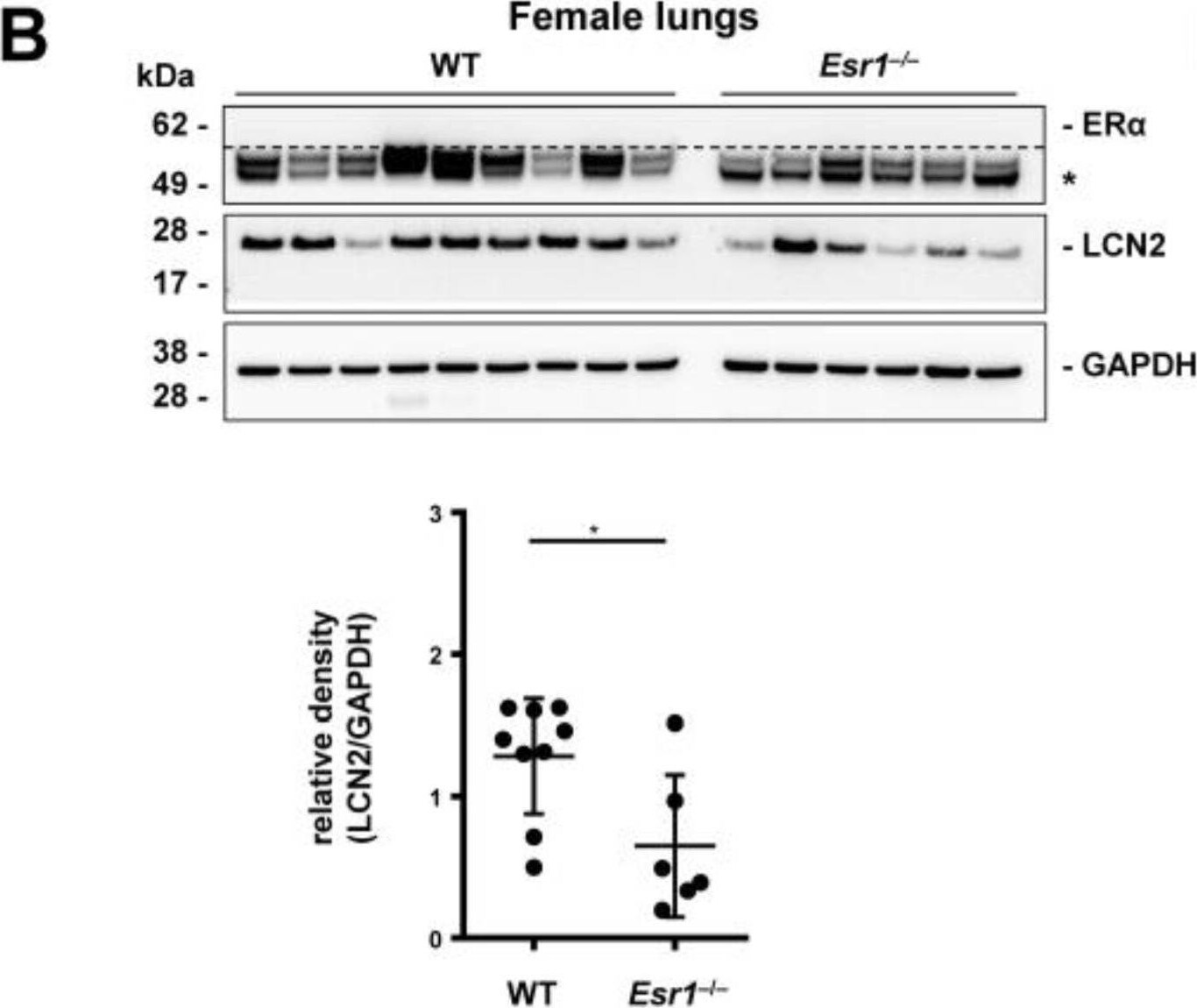
Detection of Mouse Lipocalin-2/NGAL by Western Blot
LCN2 and ER alpha expression in the lung and kidney. Tissues from wild-type (WT, female: n = 9, male: n = 8) and Esr1 knockout (female: n = 6, male: n = 8) mice were either embedded in paraffin for immunostaining or processed for protein analysis. Immunohistochemistry staining was performed to localize LCN2 expression in (A) lung and (C) kidney tissue. Isotope-specific negative control IgG staining was performed to document antibody specificity. Magnifications: 100×; scale bar: 100 µm. LCN2 and ER alpha protein expression was analyzed in (B) lung and (D) kidney tissues by Western blot analysis in WT and Esr1 null mice. The expression of GAPDH (lungs) and vinculin (kidneys) was used to demonstrate equal protein loading. Unspecific bands are marked with asterisks (*) and are separated from specific bands by dashed lines. Protein expression of LCN2 was quantified densitometrically and plotted relative to the expression of the loading control. Mann–Whitney test (lungs) or Student’s t-tests (kidney) was used for statistical analysis. Significant differences between groups are indicated with asterisks: * p < 0.05. Data are displayed as means ± SD and non-significant results are marked with ns. Image collected and cropped by CiteAb from the following open publication (https://pubmed.ncbi.nlm.nih.gov/37298232), licensed under a CC-BY license. Not internally tested by R&D Systems.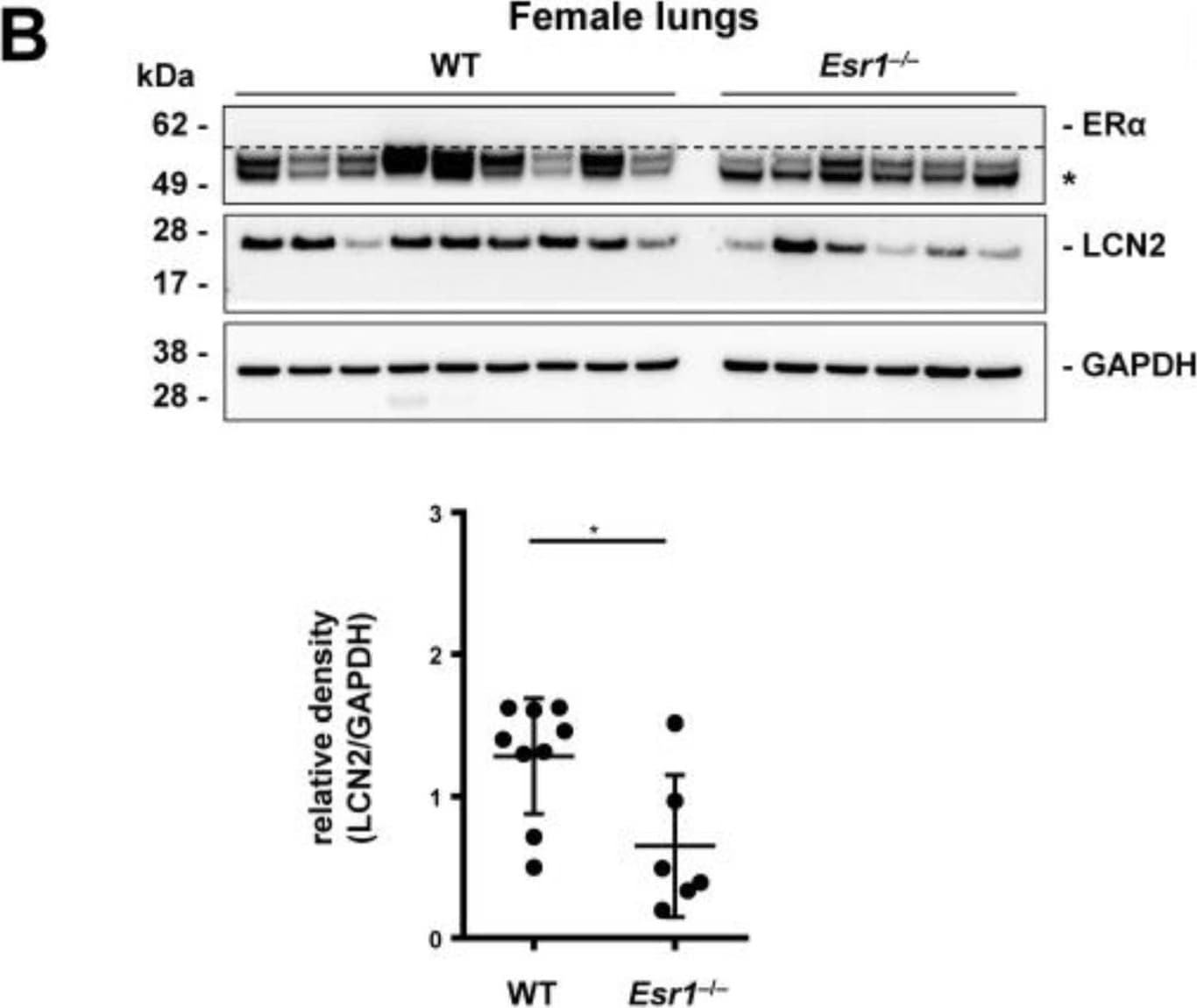
Detection of Mouse Lipocalin-2/NGAL by Western Blot
LCN2 and ER alpha expression in the lung and kidney. Tissues from wild-type (WT, female: n = 9, male: n = 8) and Esr1 knockout (female: n = 6, male: n = 8) mice were either embedded in paraffin for immunostaining or processed for protein analysis. Immunohistochemistry staining was performed to localize LCN2 expression in (A) lung and (C) kidney tissue. Isotope-specific negative control IgG staining was performed to document antibody specificity. Magnifications: 100×; scale bar: 100 µm. LCN2 and ER alpha protein expression was analyzed in (B) lung and (D) kidney tissues by Western blot analysis in WT and Esr1 null mice. The expression of GAPDH (lungs) and vinculin (kidneys) was used to demonstrate equal protein loading. Unspecific bands are marked with asterisks (*) and are separated from specific bands by dashed lines. Protein expression of LCN2 was quantified densitometrically and plotted relative to the expression of the loading control. Mann–Whitney test (lungs) or Student’s t-tests (kidney) was used for statistical analysis. Significant differences between groups are indicated with asterisks: * p < 0.05. Data are displayed as means ± SD and non-significant results are marked with ns. Image collected and cropped by CiteAb from the following open publication (https://pubmed.ncbi.nlm.nih.gov/37298232), licensed under a CC-BY license. Not internally tested by R&D Systems.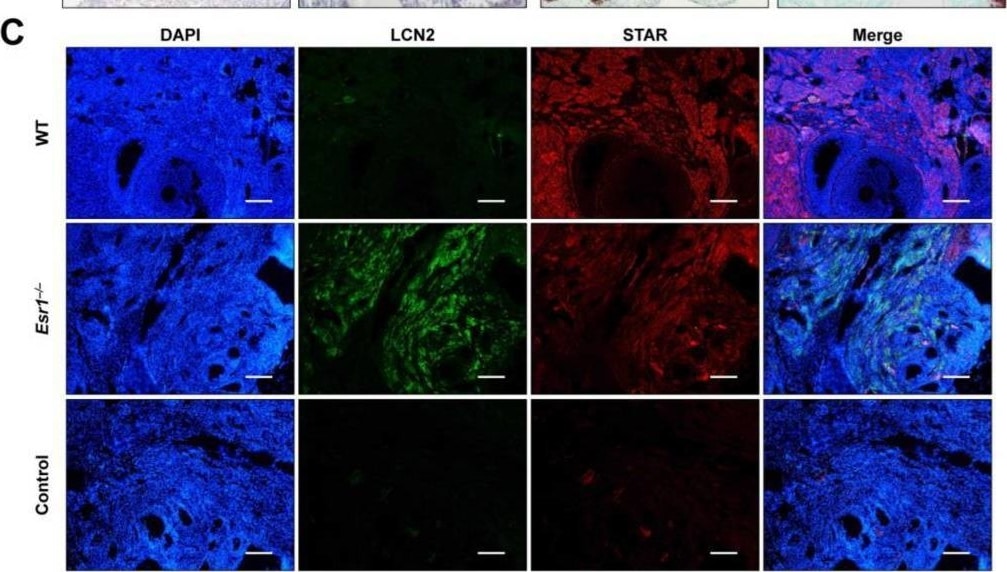
Detection of Mouse Lipocalin-2/NGAL by Immunohistochemistry
Increased LCN2 expression in Esr1-deficient ovaries. Ovaries from wild-type (WT, n = 8) and Esr1 null mice (n = 6) were dissected and either embedded in paraffin or prepared for RNA analysis. (A) Hematoxylin and eosin (H & E) staining showed characteristic histological changes in Esr1-deficient compared to WT ovaries. (B) Immunohistochemical staining for LCN2 and ER alpha was performed. Sections were counterstained with hematoxylin (LCN2) or methyl green (ER alpha ). Magnifications: 100×, 400×; scale bars: 100 µm, 50 µm. (C) Tissue samples were subjected to immunofluorescence double staining for LCN2 and STAR. Magnifications: 100×; scale bars: 100 µm. (D) Lcn2 and Star expression was analyzed in ovarian tissues using RT-qPCR. Data are displayed as means ± SD. In case of normal distribution, Student’s t-tests were chosen for statistical analysis, otherwise a Mann–Whitney test was performed. Significant differences between groups are marked with asterisks: *** p < 0.001. Image collected and cropped by CiteAb from the following open publication (https://pubmed.ncbi.nlm.nih.gov/37298232), licensed under a CC-BY license. Not internally tested by R&D Systems.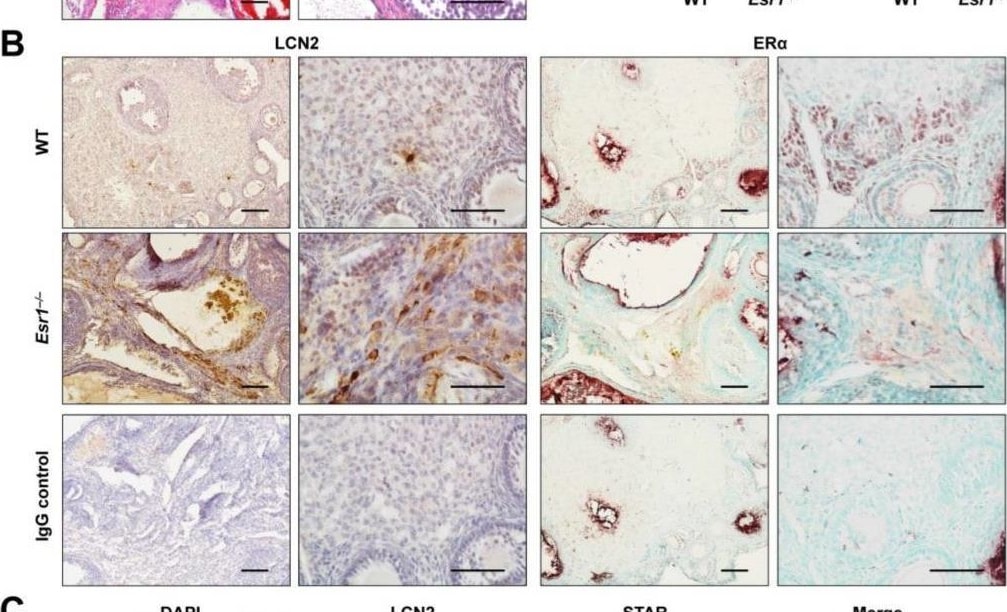
Detection of Mouse Lipocalin-2/NGAL by Immunohistochemistry-Paraffin
Increased LCN2 expression in Esr1-deficient ovaries. Ovaries from wild-type (WT, n = 8) and Esr1 null mice (n = 6) were dissected and either embedded in paraffin or prepared for RNA analysis. (A) Hematoxylin and eosin (H & E) staining showed characteristic histological changes in Esr1-deficient compared to WT ovaries. (B) Immunohistochemical staining for LCN2 and ER alpha was performed. Sections were counterstained with hematoxylin (LCN2) or methyl green (ER alpha ). Magnifications: 100×, 400×; scale bars: 100 µm, 50 µm. (C) Tissue samples were subjected to immunofluorescence double staining for LCN2 and STAR. Magnifications: 100×; scale bars: 100 µm. (D) Lcn2 and Star expression was analyzed in ovarian tissues using RT-qPCR. Data are displayed as means ± SD. In case of normal distribution, Student’s t-tests were chosen for statistical analysis, otherwise a Mann–Whitney test was performed. Significant differences between groups are marked with asterisks: *** p < 0.001. Image collected and cropped by CiteAb from the following open publication (https://pubmed.ncbi.nlm.nih.gov/37298232), licensed under a CC-BY license. Not internally tested by R&D Systems.
Rat Lipocalin-2 / NGAL ELISA Standard Curve
Recombinant Rat Lipocalin‑2/NGAL (Catalog # 3508-LC) was serially diluted and captured by Goat Anti-Rat Lipocalin‑2/NGAL Antigen Affinity-purified Polyclonal Antibody (Catalog # AF3508) coated on a Clear Polystyrene Microplate (Catalog # DY990). Goat Anti-Rat Lipocalin‑2/NGAL Antigen Affinity-purified Polyclonal Antibody (Catalog # AF3508) was biotinylated and incubated with the protein captured on the plate. Detection of the standard curve was achieved by incubating Streptavidin-HRP (Catalog # DY998)
Rat Lipocalin-2 / NGAL ELISA Standard Curve
Recombinant Rat Lipocalin‑2/NGAL (Catalog # 3508-LC) was serially diluted and captured by Goat Anti-Rat Lipocalin‑2/NGAL Antigen Affinity-purified Polyclonal Antibody (Catalog # AF3508) coated on a Clear Polystyrene Microplate (Catalog # DY990). Goat Anti-Rat Lipocalin‑2/NGAL Antigen Affinity-purified Polyclonal Antibody (Catalog # AF3508) was biotinylated and incubated with the protein captured on the plate. Detection of the standard curve was achieved by incubating Streptavidin-HRP (Catalog # DY998)Applications for Rat Lipocalin-2/NGAL Antibody
Immunoprecipitation
Sample: Conditioned cell culture medium spiked with Recombinant Rat Lipocalin‑2/NGAL (Catalog # 3508-LC), see our available Western blot detection antibodies
Western Blot
Sample: Rat ovary tissue and mouse lung tissue
Rat Lipocalin-2 Sandwich Immunoassay
Reviewed Applications
Read 1 review rated 5 using AF3508 in the following applications:
Formulation, Preparation, and Storage
Purification
Reconstitution
Reconstitute at 0.2 mg/mL in sterile PBS. For liquid material, refer to CoA for concentration.
Formulation
Shipping
Stability & Storage
- 12 months from date of receipt, -20 to -70 °C as supplied.
- 1 month, 2 to 8 °C under sterile conditions after reconstitution.
- 6 months, -20 to -70 °C under sterile conditions after reconstitution.
Calculators
Background: Lipocalin-2/NGAL
References
- Kjeldsen L, et al. (2000) Biochim Biophys Acta. 1482:272.
- Devireddy, L.R. et al. (2001) Science 293:829.
- Yang, M.B. et al. (2002) Mol. Cell. 10:1045.
- Goetz, D.H. et al. (2002) Mol. Cell 10:1033.
- Flo, T.H. et al. (2004) Nature 432:917.
- Hanai, J. et al. (2005) J. Biol. Chem. 280:13641.
- Mori, K. et al. (2005) J. Clin. Invest. 115:610.
- Mishra, J. et al. (2005) Lancet 365:1231.
Long Name
Alternate Names
Gene Symbol
UniProt
Additional Lipocalin-2/NGAL Products
Product Documents for Rat Lipocalin-2/NGAL Antibody
Certificate of Analysis
To download a Certificate of Analysis, please enter a lot or batch number in the search box below.
Note: Certificate of Analysis not available for kit components.
Product Specific Notices for Rat Lipocalin-2/NGAL Antibody
For research use only
Related Research Areas
Citations for Rat Lipocalin-2/NGAL Antibody
 Powered by Bioz
Customer Reviews for Rat Lipocalin-2/NGAL Antibody (1)
Have you used Rat Lipocalin-2/NGAL Antibody?
Submit a review and receive an Amazon gift card!
$25/€18/£15/$25CAN/¥2500 for a review with an image
$10/€7/£6/$10CAN/¥1110 for a review without an image
Submit a review
-
Application: Western BlotSample Tested: See PMID 21457438Species: RatVerified Customer | Posted 01/07/2015
There are no reviews that match your criteria.
Protocols
Find general support by application which include: protocols, troubleshooting, illustrated assays, videos and webinars.
- Cellular Response to Hypoxia Protocols
- Immunoprecipitation Protocol
- R&D Systems Quality Control Western Blot Protocol
- Troubleshooting Guide: Western Blot Figures
- Western Blot Conditions
- Western Blot Protocol
- Western Blot Protocol for Cell Lysates
- Western Blot Troubleshooting
- Western Blot Troubleshooting Guide
- View all Protocols, Troubleshooting, Illustrated assays and Webinars