Human CXCL10/IP-10/CRG-2 Antibody

Catalog # Availability Size / Price Qty
MAB266-SP
MAB266-100
MAB266-500

Save 15% on Select RUO Reagents. See Details

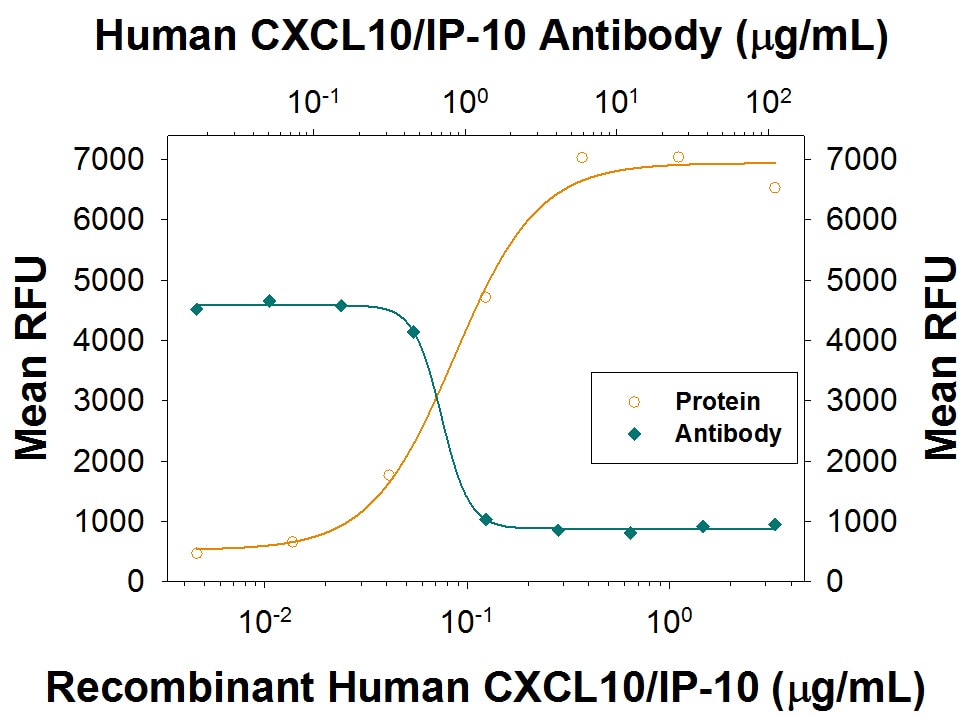
Chemotaxis Induced by CXCL10/IP‑10 and Neutralization by Human CXCL10/IP‑10 Antibody.
1 Image
Product Details
Citations (44)
FAQs
Supplemental Products
Reviews (5)

Human CXCL10/IP-10/CRG-2 Antibody Summary

Species Reactivity
Human
Specificity
Detects human CXCL10/IP-10/CRG-2 in ELISAs.
Source
Monoclonal Mouse IgG1 Clone # 33036
Purification
Protein A or G purified from ascites
Immunogen
E. coli-derived recombinant human CXCL10/IP-10/CRG-2
Val22-Pro98
Accession # P02778.2
Formulation
Lyophilized from a 0.2 μm filtered solution in PBS with Trehalose. *Small pack size (SP) is supplied either lyophilized or as a 0.2 µm filtered solution in PBS.
Endotoxin Level
<0.10 EU per 1 μg of the antibody by the LAL method.
Label
Unconjugated

Applications

Recommended Concentration
Sample
CyTOF-ready
Ready to be labeled using established conjugation methods. No BSA or other carrier proteins that could interfere with conjugation.
 
Intracellular Staining by Flow Cytometry
2.5 µg/106 cells
Human peripheral blood monocytes treated with Recombinant Human IFN‑ gamma (Catalog # 285‑IF), fixed with paraformaldehyde, and permeabilized with saponin

Human CXCL10/IP-10 Sandwich Immunoassay

Recommended Concentration
Reagent
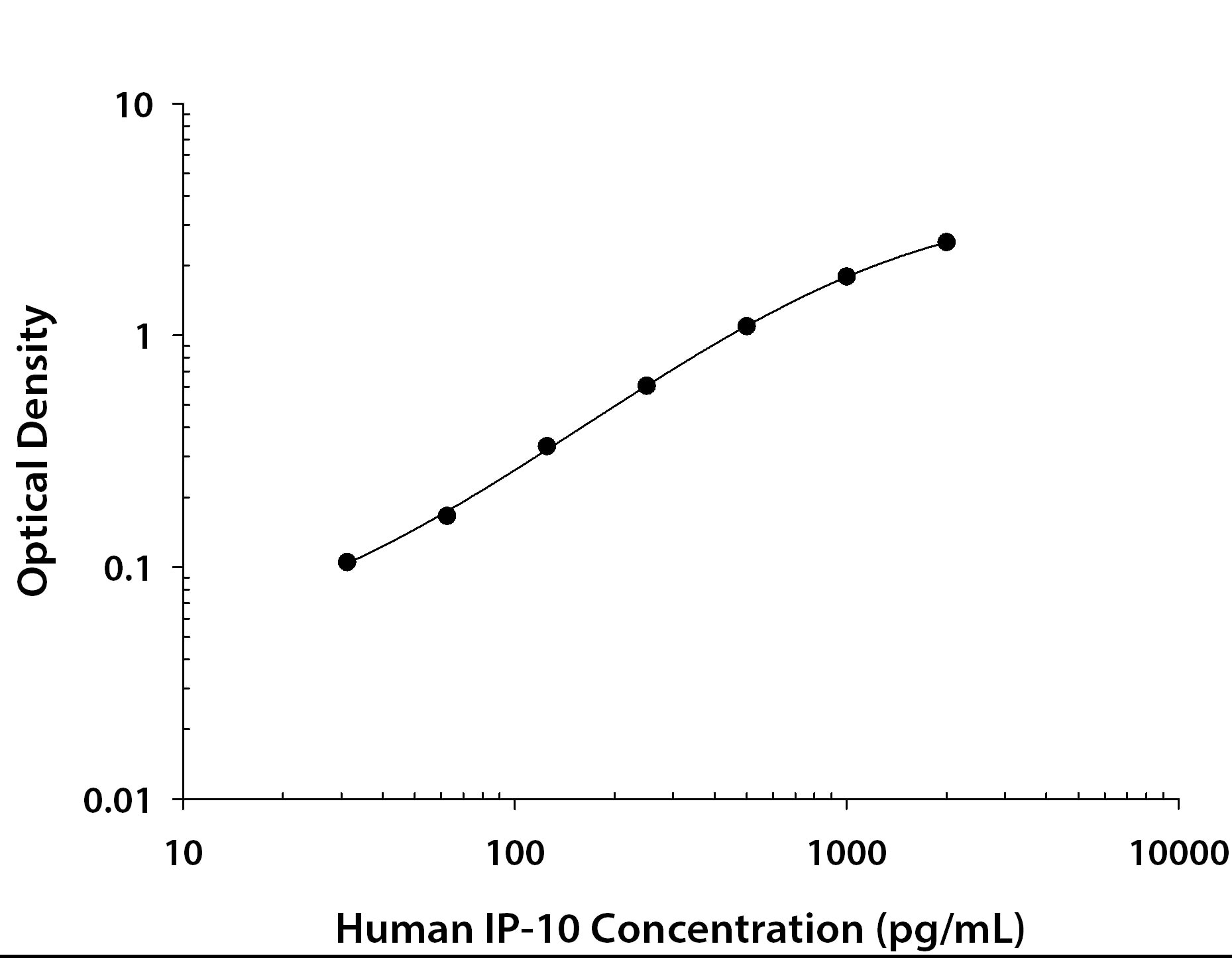
ELISA Capture (Matched Antibody Pair)
2-8 µg/mL 

Use in combination with:

Detection Reagent: Human CXCL10/IP‑10/CRG‑2 Biotinylated Antibody (Catalog # BAF266)

Standard: Recombinant Human CXCL10/IP-10 Protein (Catalog # 266-IP)

Neutralization
Measured by its ability to neutralize CXCL10/IP‑10/CRG‑2-induced chemotaxis in the BaF3 mouse pro‑B cell line transfected with human CXCR3. The Neutralization Dose (ND50) is typically 0.5-2.0 µg/mL in the presence of 0.2 µg/mL Recombinant Human CXCL10/IP‑10/CRG‑2.

Please Note: Optimal dilutions should be determined by each laboratory for each application. General Protocols are available in the Technical Information section on our website.

Scientific Data

Neutralization Chemotaxis Induced by CXCL10/IP‑10 and Neutralization by Human CXCL10/IP‑10 Antibody. View Larger

Chemotaxis Induced by CXCL10/IP‑10 and Neutralization by Human CXCL10/IP‑10 Antibody. Recombinant Human CXCL10/ IP-10 (Catalog # 266-IP) chemo-attracts the BaF3 mouse pro-B cell line transfected with human CXCR3 in a dose-dependent manner (orange line). The amount of cells that migrated through to the lower chemotaxis chamber was measured by Resazurin (Catalog # AR002). Chemotaxis elicited by Recombinant Human CXCL10/ IP-10 (0.2 µg/mL) is neutralized (green line) by increasing concentrations of Mouse Anti-Human CXCL10/IP-10 Mono-clonal Antibody (Catalog # MAB266). The ND50 is typically 0.5-2.0 µg/mL.
Reconstitution Calculator

Reconstitution Calculator

The reconstitution calculator allows you to quickly calculate the volume of a reagent to reconstitute your vial. Simply enter the mass of reagent and the target concentration and the calculator will determine the rest.

=
÷

Preparation and Storage

Reconstitution
Reconstitute at 0.5 mg/mL in sterile PBS.
Loading...
Shipping
Lyophilized product is shipped at ambient temperature. Liquid small pack size (-SP) is shipped with polar packs. Upon receipt, store immediately at the temperature recommended below.
Stability & Storage
Use a manual defrost freezer and avoid repeated freeze-thaw cycles.
  • 12 months from date of receipt, -20 to -70 °C as supplied.
  • 1 month, 2 to 8 °C under sterile conditions after reconstitution.
  • 6 months, -20 to -70 °C under sterile conditions after reconstitution.

Background: CXCL10/IP-10/CRG-2

CXCL10 was originally identified as an IFN-gamma -inducible gene in monocytes, fibroblasts and endothelial cells. It has since been shown that CXCL10 mRNA is also induced by LPS, IL-1 beta, TNF-alpha, IL-12, and viruses. Additional cell types that have been shown to express CXCL10 include activated T-lymphocytes, splenocytes, keratinocytes, osteoblasts, astrocytes, and smooth muscle cells. CXCL10 is also expressed in psoriatic and lepromatous lesions of skin. The mouse homologue of human CXCL10, CRG-2, has been cloned and shown to share approximately 67% amino acid sequence identity with human CXCL10. Human CXCL10 cDNA encodes a 98 amino acid (aa) residue precursor protein with a 21 aa residue signal peptide that is cleaved to form the 77 aa residue secreted protein. The amino acid sequence of CXCL10 identified the protein as a member of the chemokine alpha subfamily that lacks the ELR domain. CXCL10 has been shown to be a chemoattractant for activated T-lymphocytes. CXCL10 has been reported to be a potent inhibitor of angiogenesis and to display a potent thymus-dependent antitumor effect. A chemokine receptor specific for CXCL10 and Mig has been cloned and shown to be highly expressed in IL-2-activated T-lymphocytes.

References
  1. Loetscher, M. et al. (1996) J. Exp. Med. 184:963.
  2. Wang, X. et al. (1996) J. Biol. Chem. 271:24286.
Entrez Gene IDs
3627 (Human); 15945 (Mouse)
Alternate Names
C7; chemokine (C-X-C motif) ligand 10; CRG2; CRG-2; CXCL10; gIP-10; IFI10; INP10; IP-10; mob-1; SCYB10

Product Datasheets

You must select a language.

x

Citations for Human CXCL10/IP-10/CRG-2 Antibody

R&D Systems personnel manually curate a database that contains references using R&D Systems products. The data collected includes not only links to publications in PubMed, but also provides information about sample types, species, and experimental conditions.

44 Citations: Showing 1 - 10
Filter your results:

Filter by:

  1. Cervico-Vaginal Inflammatory Cytokine and Chemokine Responses to Two Different SIV Immunogens
    Authors: Nikki P. L. Toledo, Hongzhao Li, Robert W. Omange, Tamara G. Dacoba, Jose Crecente-Campo, Dane Schalk et al.
    Frontiers in Immunology
  2. Epigenetic Repression of STING by MYC Promotes Immune Evasion and Resistance to Immune Checkpoint Inhibitors in Triple-Negative Breast Cancer
    Authors: Kyung-min Lee, Chang-Ching Lin, Alberto Servetto, Joonbeom Bae, Vishal Kandagatla, Dan Ye et al.
    Cancer Immunology Research
  3. TBK1 Targeting Is Identified as a Therapeutic Strategy to Enhance CAR T-Cell Efficacy Using Patient-Derived Organotypic Tumor Spheroids
    Authors: Sun, Y;Maggs, L;Panda, A;Wright, SJ;Cicerchia, AM;Jenney, A;Perricone, MD;Mills, CE;Cattaneo, G;Ventin, M;Chen, F;Rasmussen, MQ;Miranda, A;Revach, OY;Fang, J;Fu, A;Bowling, PJ;Sharova, T;Lawless, A;Sorger, PK;Bardeesy, N;Wang, X;Flaherty, KT;Boland, GM;Mehta, A;Sade-Feldman, M;Ferrone, CR;Jenkins, RW;
    Cancer immunology research
    Species: Human
    Sample Types: Whole Cells
    Applications: Neutralization
  4. Targeting high circDNA2v levels in colorectal cancer induces cellular senescence and elicits an anti-tumor secretome
    Authors: Wu, S;Dai, X;Xia, Y;Zhao, Q;Zhao, H;Shi, Z;Yin, X;Liu, X;Zhang, A;Yao, Z;Zhang, H;Li, Q;Thorne, RF;Zhang, S;Sheng, W;Hu, W;Gu, H;
    Cell reports
    Species: Human
    Sample Types: Transduced Whole Cells
    Applications: Neutralization
  5. Astrocytic response mediated by the CLU risk allele inhibits OPC proliferation and myelination in a human iPSC model
    Authors: Zhenqing Liu, Jianfei Chao, Cheng Wang, Guihua Sun, Daniel Roeth, Wei Liu et al.
    Cell Reports
  6. Immune response dynamics in COVID-19 patients to SARS-CoV-2 and other human coronaviruses
    Authors: R Ravindran, C McReynolds, J Yang, BD Hammock, A Ikram, A Ali, A Bashir, T Zohra, WLW Chang, DJ Hartigan-O, HH Rashidi, IH Khan
    PLoS ONE, 2021-07-09;16(7):e0254367.
    Species: Human
    Sample Types: Plasma
    Applications: ELISA Capture
  7. Multiplexed, quantitative serological profiling of COVID-19 from blood by a point-of-care test
    Authors: Jacob T. Heggestad, David S. Kinnamon, Lyra B. Olson, Jason Liu, Garrett Kelly, Simone A. Wall et al.
    Science Advances
  8. Immune-Stimulatory Effects of Curcumin on the Tumor Microenvironment in Head and Neck Squamous Cell Carcinoma
    Authors: C Kötting, L Hofmann, R Lotfi, D Engelhardt, S Laban, PJ Schuler, TK Hoffmann, C Brunner, MN Theodoraki
    Cancers, 2021-03-16;13(6):.
    Species: Human
    Sample Types: Cell Culture Supernates
    Applications: ELISA Capture
  9. Induction of CXCL10-Mediated Cell Migration by Different Types of Galectins
    Authors: DB AbuSamra, N Panjwani, P Argüeso
    Cells, 2021-01-30;10(2):.
    Species: Human
    Sample Types: Whole Cells
    Applications: Neutralization
  10. Multiplexed, quantitative serological profiling of COVID-19 from a drop of blood by a point-of-care test
    Authors: JT Heggestad, D Kinnamon, L Olson, J Liu, G Kelly, S Wall, C Fontes, D Joh, A Hucknall, C Pieper, I Naqvi, L Chen, L Que, T Oguin, S Nair, B Sullenger, C Woods, G Sempowski, B Kraft, A Chilkoti
    medRxiv, 2020-11-07;0(0):.
    Species: Human
    Sample Types: Protein
    Applications: Bioassay
  11. Human Nasal Turbinate Tissues in Organ Culture as a Model for Human Cytomegalovirus Infection at the Mucosal Entry Site
    Authors: Or Alfi, Ido From, Arkadi Yakirevitch, Michael Drendel, Michael Wolf, Karen Meir et al.
    Journal of Virology
    Species: Human
    Sample Types: Cell Culture Supernates
    Applications: Neutralization
  12. DNA hypomethylation promotes transposable element expression and activation of immune signaling in renal cell cancer
    Authors: AA de Cubas, W Dunker, A Zaninovich, RA Hongo, A Bhatia, A Panda, KE Beckermann, G Bhanot, S Ganesan, J Karijolich, WK Rathmell
    JCI Insight, 2020-06-04;5(11):.
    Species: Human
    Sample Types: Whole Cells
    Applications: Neutralization
  13. Herpes Simplex Virus Type 2 Infection-Induced Expression of CXCR3 Ligands Promotes CD4+ T Cell Migration and Is Regulated by the Viral Immediate-Early Protein ICP4
    Authors: Mudan Zhang, Xu Deng, Xinmeng Guan, Lanlan Geng, Ming Fu, Binman Zhang et al.
    Frontiers in Immunology
  14. Dipeptidyl Peptidase 4 Inhibitors Reduce Hepatocellular Carcinoma by Activating Lymphocyte Chemotaxis in Mice
    Authors: S Nishina, A Yamauchi, T Kawaguchi, K Kaku, M Goto, K Sasaki, Y Hara, Y Tomiyama, F Kuribayash, T Torimura, K Hino
    Cell Mol Gastroenterol Hepatol, 2018-09-11;7(1):115-134.
    Species: Mouse
    Sample Types: Whole Cells
    Applications: Cell Selection, Neutralization
  15. Impairment of CCR6+ and CXCR3+ Th Cell Migration in HIV-1 Infection Is Rescued by Modulating Actin Polymerization
    Authors: Valentina Cecchinato
    J. Immunol, 2016-11-28;0(0):.
    Species: Primate - Macaca mulatta (Rhesus Macaque)
    Sample Types: Whole Tissue
    Applications: IHC-P
  16. Association of MIF, but not type I interferon-induced chemokines, with increased disease activity in Asian patients with systemic lupus erythematosus
    Sci Rep, 2016-07-25;6(0):29909.
    Species: Human
    Sample Types: Serum
  17. Escherichia coli Pyruvate Dehydrogenase Complex Is an Important Component of CXCL10-Mediated Antimicrobial Activity.
    Authors: Schutte K, Fisher D, Burdick M, Mehrad B, Mathers A, Mann B, Nakamoto R, Hughes M
    Infect Immun, 2015-11-09;84(1):320-8.
    Species: Human
    Sample Types: Recombinant Protein
    Applications: Immunoassay Development
  18. Intracellular coexpression of CXC- and CC- chemokine receptors and their ligands in human melanoma cell lines and dynamic variations after xenotransplantation.
    Authors: Pinto S, Martinez-Romero A, O'Connor J, Gil-Benso R, San-Miguel T, Terradez L, Monteagudo C, Callaghan R
    BMC Cancer, 2014-02-22;14(0):118.
    Species: Human
    Sample Types: Whole Cells
    Applications: Flow Cytometry
  19. Allergen challenge in vivo alters rhinovirus-induced chemokine secretion from human airway macrophages.
    Authors: Karta, Maya R, Wickert, Lisa E, Curran, Colleen, Gavala, Monica L, Denlinger, Loren C, Gern, James E, Bertics, Paul J
    J Allergy Clin Immunol, 2014-02-14;133(4):1227-30.
    Species: Human
    Sample Types: Cell Culture Supernates
    Applications: ELISA Development (Capture)
  20. Human rhinovirus-induced ISG15 selectively modulates epithelial antiviral immunity.
    Authors: Zaheer R, Wiehler S, Hudy M, Traves S, Pelikan J, Leigh R, Proud D
    Mucosal Immunol, 2014-01-22;7(5):1127-38.
    Species: Human
    Sample Types: Cell Culture Supernates
    Applications: ELISA Development (Capture)
  21. Cetuximab-activated natural killer and dendritic cells collaborate to trigger tumor antigen-specific T-cell immunity in head and neck cancer patients.
    Authors: Srivastava R, Lee S, Andrade Filho P, Lord C, Jie H, Davidson H, Lopez-Albaitero A, Gibson S, Gooding W, Ferrone S, Ferris R
    Clin Cancer Res, 2013-02-26;19(7):1858-72.
    Species: Human
    Sample Types: Whole Cells
    Applications: Functional Assay
  22. Pathological study of archival lung tissues from five fatal cases of avian H5N1 influenza in Vietnam.
    Authors: Nakajima N, Van Tin N, Sato Y, Thach H, Katano H, Diep P, Kumasaka T, Thuy N, Hasegawa H, San L, Kawachi S, Liem N, Suzuki K, Sata T
    Mod Pathol, 2012-11-23;26(3):357-69.
    Species: Human
    Sample Types: Whole Tissue
    Applications: IHC-P
  23. Macrophages induce differentiation of plasma cells through CXCL10/IP-10.
    J. Exp. Med., 2012-09-17;209(10):1813-23.
    Species: Human
    Sample Types: Whole Cells
    Applications: Neutralization
  24. Evidence for a pathophysiological role of keratinocyte-derived type III interferon (IFN-lambda) in cutaneous lupus erythematosus.
    Authors: Zahn S, Rehkamper C, Kummerer BM, Ferring-Schmidt S, Bieber T, Tuting T, Wenzel J
    J. Invest. Dermatol., 2010-08-19;131(1):133-40.
    Species: Human
    Sample Types: Whole Tissue
    Applications: IHC-P
  25. Distinct roles for CCR4 and CXCR3 in the recruitment and positioning of regulatory T cells in the inflamed human liver.
    Authors: Oo YH, Weston CJ, Lalor PF, Curbishley SM, Withers DR, Reynolds GM, Shetty S, Harki J, Shaw JC, Eksteen B, Hubscher SG, Walker LS, Adams DH
    J. Immunol., 2010-02-17;184(6):2886-98.
    Species: Human
    Sample Types: Whole Cells
    Applications: Neutralization
  26. Expression of CXCL9, -10, -11, and CXCR3 in the tear film and ocular surface of patients with dry eye syndrome.
    Authors: Yoon KC, Park CS, You IC, Choi HJ, Lee KH, Im SK, Park HY, Pflugfelder SC
    Invest. Ophthalmol. Vis. Sci., 2009-10-22;51(2):643-50.
    Species: Human
    Sample Types: Whole Tissue
    Applications: IHC-P
  27. Intratumoral induction of CD103 triggers tumor-specific CTL function and CCR5-dependent T-cell retention.
    Authors: Franciszkiewicz K, Le Floc'h A, Jalil A, Vigant F, Robert T, Vergnon I, Mackiewicz A, Benihoud K, Validire P, Chouaib S, Combadiere C, Mami-Chouaib F
    Cancer Res., 2009-07-28;69(15):6249-55.
    Species: Human
    Sample Types: Whole Cells
    Applications: ICC
  28. Upregulation of human cytomegalovirus by HIV type 1 in human lymphoid tissue ex vivo.
    Authors: Biancotto A, Iglehart SJ, Lisco A, Vanpouille C, Grivel JC, Lurain NS, Reichelderfer PS, Margolis LB
    AIDS Res. Hum. Retroviruses, 2008-03-01;24(3):453-62.
    Species: Human
    Sample Types: Cell Culture Supernates
    Applications: Luminex Development
  29. Fluorescence single-molecule counting assays for high-sensitivity detection of cytokines and chemokines.
    Authors: Qui H, Ferrell EP, Nolan N, Phelps BH, Tabibiazar R, Whitney DH, Naelfski EA
    Clin. Chem., 2007-11-01;53(11):2010-2.
    Species: Human
    Sample Types: Plasma
    Applications: ELISA Development
  30. Effect of serum content and diluent selection on assay sensitivity and signal intensity in multiplex bead-based immunoassays.
    Authors: Pfleger C, Schloot N, ter Veld F
    J. Immunol. Methods, 2007-10-22;329(1):214-8.
    Species: Human
    Sample Types: Serum
    Applications: Luminex Development
  31. Generation of Th1 and Th2 chemokines by human eosinophils: evidence for a critical role of TNF-alpha.
    Authors: Liu LY, Bates ME, Jarjour NN, Busse WW, Bertics PJ, Kelly EA
    J. Immunol., 2007-10-01;179(7):4840-8.
    Species: Human
    Sample Types: Cell Culture Supernates
    Applications: ELISA Development
  32. Eotaxin-2 and colorectal cancer: a potential target for immune therapy.
    Authors: Cheadle EJ, Riyad K, Subar D, Rothwell DG, Ashton G, Batha H, Sherlock DJ, Hawkins RE, Gilham DE
    Clin. Cancer Res., 2007-10-01;13(19):5719-28.
    Species: Human
    Sample Types: Tissue Homogenates
    Applications: ELISA Development
  33. Down-modulation of CXCR3 surface expression and function in CD8+ T cells from cutaneous T cell lymphoma patients.
    Authors: Winter D, Moser J, Kriehuber E, Wiesner C, Knobler R, Trautinger F, Bombosi P, Stingl G, Petzelbauer P, Rot A, Maurer D
    J. Immunol., 2007-09-15;179(6):4272-82.
    Species: Human
    Sample Types: Whole Cells
    Applications: Immunodepletion
  34. Abnormal activation and cytokine spectra in lymph nodes of people chronically infected with HIV-1.
    Authors: Biancotto A, Grivel JC, Iglehart SJ, Vanpouille C, Lisco A, Sieg SF, Debernardo R, Garate K, Rodriguez B, Margolis LB, Lederman MM
    Blood, 2007-02-08;109(10):4272-9.
    Species: Human
    Sample Types: Cell Culture Supernates
    Applications: Luminex Development
  35. HIV-1 pathogenesis differs in rectosigmoid and tonsillar tissues infected ex vivo with CCR5- and CXCR4-tropic HIV-1.
    Authors: Grivel JC, Elliott J, Lisco A, Biancotto A, Condack C, Shattock RJ, McGowan I, Margolis L, Anton P
    AIDS, 2007;21(10):1263-72.
    Species: Human
    Sample Types: Cell Culture Supernates
    Applications: Luminex Development
  36. Increased expression of Th2-associated chemokines in bullous pemphigoid disease. Role of eosinophils in the production and release of these chemokines.
    Authors: Gounni Abdelilah S, Wellemans V, Agouli M, Guenounou M, Hamid Q, Beck LA, Lamkhioued B
    Clin. Immunol., 2006-06-16;120(2):220-31.
    Species: Human
    Sample Types: Blister Fluid, Cell Culture Supernates
    Applications: ELISA Development, Neutralization
  37. Combination therapy: Synergistic suppression of virus-induced chemokines in airway epithelial cells.
    Authors: Edwards MR, Johnson MW, Johnston SL
    Am. J. Respir. Cell Mol. Biol., 2006-01-19;34(5):616-24.
    Species: Human
    Sample Types: Cell Culture Supernates
    Applications: ELISA Development
  38. Enhanced type I interferon signalling promotes Th1-biased inflammation in cutaneous lupus erythematosus.
    Authors: Wenzel J, Worenkamper E, Freutel S, Henze S, Haller O, Bieber T, Tuting T
    J. Pathol., 2005-03-01;205(4):435-42.
    Species: Human
    Sample Types: Whole Cells, Whole Tissue
    Applications: ICC, IHC-P
  39. Simian human immunodeficiency virus-associated pneumonia correlates with increased expression of MCP-1, CXCL10, and viral RNA in the lungs of rhesus macaques.
    Authors: Sui Y, Li S, Pinson D, Adany I, Li Z, Villinger F, Narayan O, Buch S
    Am. J. Pathol., 2005-02-01;166(2):355-65.
    Species: Primate - Macaca mulatta (Rhesus Macaque)
    Sample Types: Whole Cells, Whole Tissue
    Applications: IHC-P, Neutralization
  40. Plasmacytoid dendritic cell recruitment by immobilized CXCR3 ligands.
    Authors: Kohrgruber N, Groger M, Meraner P, Kriehuber E, Petzelbauer P, Brandt S, Stingl G, Rot A, Maurer D
    J. Immunol., 2004-12-01;173(11):6592-602.
    Species: Human
    Sample Types: Whole Tissue
    Applications: IHC
  41. Rapid chemokine secretion from endothelial cells originates from 2 distinct compartments.
    Authors: Oynebraten I, Bakke O, Brandtzaeg P, Johansen FE, Haraldsen G
    Blood, 2004-03-25;104(2):314-20.
    Species: Human
    Sample Types: Cell Culture Supernates, Whole Cells
    Applications: ELISA Development, ICC
  42. Secretion of oncostatin M by infiltrating neutrophils: regulation of IL-6 and chemokine expression in human mesothelial cells.
    Authors: Hurst SM, McLoughlin RM, Monslow J, Owens S, Morgan L, Fuller GM, Topley N, Jones SA
    J. Immunol., 2002-11-01;169(9):5244-51.
    Species: Human
    Sample Types: Cell Culture Supernates
    Applications: ELISA Development
  43. Targeting KDM4C enhances CD8+ T cell mediated antitumor immunity by activating chemokine CXCL10 transcription in lung cancer
    Authors: Jie X, Chen Y, Zhao Y et al.
    Journal for immunotherapy of cancer
  44. Interleukin-12 induces sustained activation of multiple host inflammatory mediator systems in chimpanzees.
    Authors: Lauw FN, Dekkers PE, te Velde AA, Speelman P, Levi M, Kurimoto M, Hack CE, Van Deventer SJ, van der Poll T
    J. Infect. Dis., 1999-03-01;179(3):646-52.
    Species: Primate - Pan troglodytes (Chimpanzee)
    Sample Types: Plasma
    Applications: ELISA Development

FAQs

No product specific FAQs exist for this product, however you may

View all Antibody FAQs
Loading...

Reviews for Human CXCL10/IP-10/CRG-2 Antibody

Average Rating: 4.6 (Based on 5 Reviews)

5 Star
60%
4 Star
40%
3 Star
0%
2 Star
0%
1 Star
0%

Have you used Human CXCL10/IP-10/CRG-2 Antibody?

Submit a review and receive an Amazon gift card.

$25/€18/£15/$25CAN/¥75 Yuan/¥2500 Yen for a review with an image

$10/€7/£6/$10 CAD/¥70 Yuan/¥1110 Yen for a review without an image

Submit a Review

Filter by:


Human CXCL10/IP-10/CRG-2 Antibody
By Anonymous on 11/12/2025
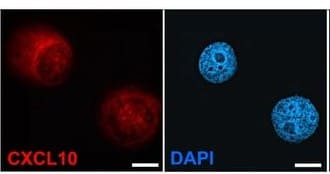
Application: Immunocytochemistry/Immunofluorescence Sample Tested: Breast cancer cells Species: Human

Human CXCL10/IP-10/CRG-2 Antibody
By Katie Myers on 11/28/2022
Application: ELISA Sample Tested: Serum Species: Primate

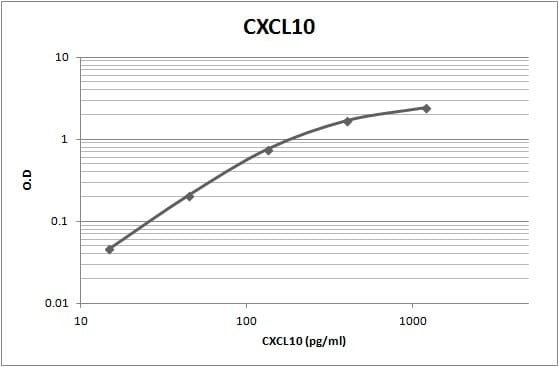
Worked as capture antibody


Human CXCL10/IP-10/CRG-2 Antibody
By Anonymous on 08/17/2018
Application: ELISA Sample Tested: EDTA Plasma Species: Human

Human CXCL10/IP-10/CRG-2 Antibody
By Anonymous on 07/13/2018
Application: ELISA Sample Tested: Plasma Species: Human

Human CXCL10/IP-10/CRG-2 Antibody
By Anonymous on 11/17/2017
Application: ELISA Sample Tested: Serum and Plasma Species: Human

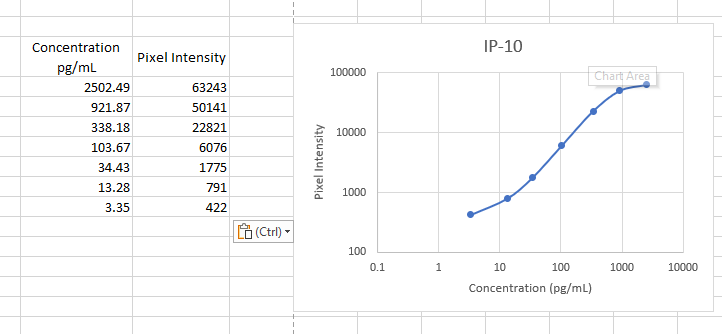
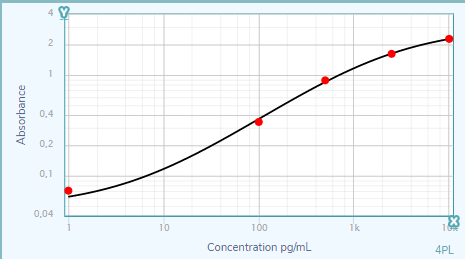
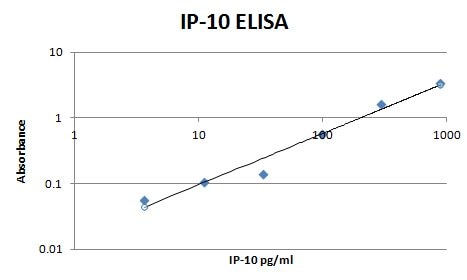
Sandwich ELISA using MAB266 on solid phase and BAF266 as detection.